
Middle East
German think tank urges cooperation with Türkiye in Syria

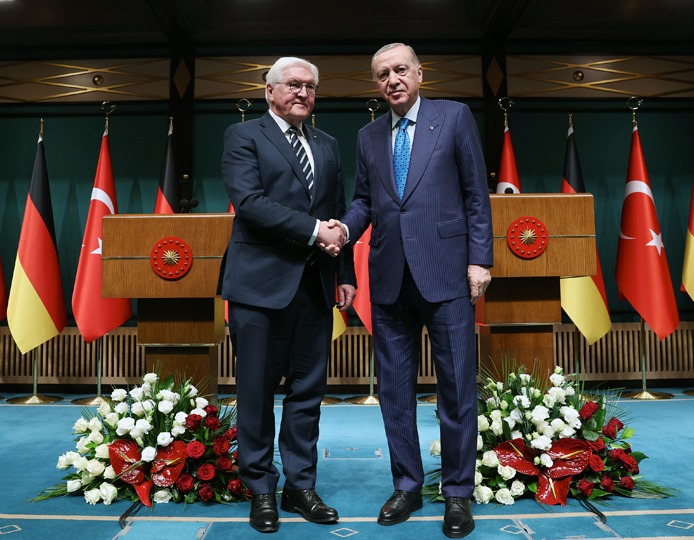
The German state should cooperate with the countries of the region, especially Türkiye, in the “reconstruction” of Syria, writes the influential Berlin-based German think tank, the Institute for International and Security Policy (SWP).
In recent days, Berlin and Brussels have intensified their efforts to gain influence in Syria. German President Frank-Walter Steinmeier visited Saudi Arabia, Jordan, and Türkiye this week to discuss the situation and prospects in Syria, while Chancellor Olaf Scholz discussed all these issues in a telephone conversation with the emir of Qatar on Tuesday.
EU foreign ministers also decided on Monday to suspend certain sanctions against Syria for a period of one year (e.g., those concerning the transport and financial sectors and energy infrastructure). However, the EU will also set up a mechanism for the immediate reinstatement of sanctions.
The EU is also campaigning for the HTS leadership in Syria to expel Russia’s Tartus naval base and the Khmeimim airbase from the region. On Wednesday, French President Emmanuel Macron telephoned Abu Mohammed al-Jolani (Ahmed al-Shara) and invited him to visit Paris in the coming weeks, suggesting that Paris has gained an advantage over Berlin in its quest for influence in Syria.
Years of German aid to Idlib not enough
This is why German government advisers are urging Berlin to work closely with Ankara, Riyadh, and Doha in its efforts to exert influence in Damascus. As German Development Minister Svenja Schulze reported in December, Berlin has for years maintained good relations with Idlib, which is controlled by the “terrorist organization” HTS, by funding aid projects there. However, while the interim government in Damascus is largely drawn from the power circles in Idlib, this is clearly not enough to have the desired effect.
That is why the Berlin-based Institute for International and Security Affairs (SWP) is calling for cooperation with Türkiye in the “reorganization and reconstruction of Syria.”
Ankara and Berlin propose a ‘geopolitical partnership’
According to an assessment by Yaşar Aydın in SWP, the first area of cooperation could be joint humanitarian aid and reconstruction projects for the reintegration of returning refugees. Another area would be reconstruction assistance for the Syrian armed forces, the disarmament of militias, and the securing and destruction of chemical weapons.
Pointing out that at the EU Foreign Ministers’ meeting Germany advocated the easing of EU sanctions and announced that it might work for their complete lifting in order to strengthen the transitional government and encourage it to accept Syrian refugees “fleeing the civil war,” the SWP writer said: “Berlin and Ankara should also act together geopolitically in the region. Both are interested in pushing back Iran’s hegemonic ambitions, especially in Syria, and in maintaining a balanced position vis-à-vis China, which has recently increased its influence through its mediation efforts between Iran and Saudi Arabia.”
German-Turkish partnership to stop Israeli operations?
Aydin argues that cooperation on Israel is also possible despite differences, arguing that a prolonged Israeli occupation of Syria would “alienate the population” and “push HTS towards an anti-Israel agenda.” Aydın reminds that the German Foreign Ministry has called on Israel not to establish any settlements on Syrian territory and reaffirmed its position that the Golan Heights belong to Syria according to international law, pointing out that Ankara and Berlin may have a common interest in reducing Israeli military operations.
Acknowledging that there may be a disagreement between the two countries on the issue of Kurdish autonomy and the YPG in Syria, Aydın argues that this disagreement can be overcome by Berlin mediating between Ankara and the YPG-led Syrian Democratic Forces, and writes: “Berlin is already holding talks with the YPG in coordination with Ankara.”
Ankara and Berlin’s Syria statements show ‘surprising synchronization’
“Türkiye is playing a central role in the reconstruction of Syria after the fall of the Assad regime,” Aydın said, arguing that Germany and Türkiye have a common interest in stabilizing Syria and the region “for both geopolitical and humanitarian reasons.” He argues that the Syria statements from Berlin and Ankara show a “surprising synchronization” in terms of content and believes that the two countries should work together despite their differences.
Aydin concludes his assessment as follows:
“The political stabilization of Syria through the reconciliation of interests between Ankara and the YPG in Syria would also create opportunities for the resolution of Türkiye’s armed conflict with the PKK. The advantages for Türkiye are obvious: Renewed economic ties with Syria, dynamic growth in both countries and the prospect of deeper regional economic integration. For Germany there will be opportunities for a development-oriented return policy and a better image in the Arab-Muslim world.”
EU-Gulf cooperation for Syria
Furthermore, the European Council on Foreign Relations (ECFR) writes that the EU “will not be the most important player” in Syria in the near future but could take a common position with the Gulf Arab states in shaping Syria’s future.
The ECFR argues that the current Euro-Gulf relations offer great potential to “bring Syria the stability it deserves” and that despite its past, HTS has shown signs of “moderation” and “pragmatism” and that the Gulf countries therefore have a common interest in “making the New Syria work.”
The ECFR argues that the Europeans should seize the opportunity to define a common position with the Gulf on the future of Syria and that they share important interests with the Gulf Arab states in promoting a “stable Syria that contributes to regional stability,” “preventing the country from becoming a base for extremism” and ensuring the voluntary return of refugees.
On the other hand, ECFR writes that both the EU and the Gulf “should press Türkiye and Israel to end destabilizing military interventions that risk undermining the transition.”








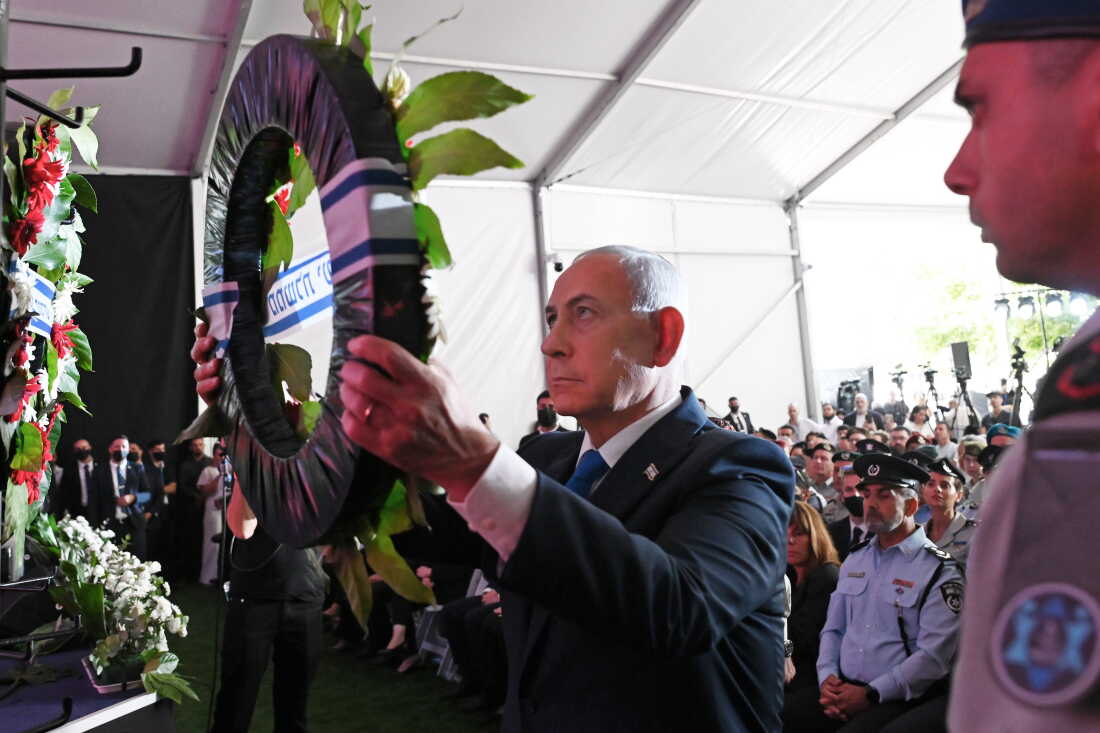
Avi Gil, the former military secretary to Israeli Prime Minister Benjamin Netanyahu, has claimed that attempts were made within the Prime Minister’s Office to alter the timestamps of official call logs from the morning of 7 October 2023.
Following these disclosures, the Israeli opposition petitioned Attorney General Gali Baharav-Miara, demanding the opening of a criminal investigation into Netanyahu and his staff.
Gil, who served as military secretary at the time of the attack, said in an interview with the Israel Hayom newspaper and Channel 12 television that Netanyahu’s chief of staff, Tzachi Braverman, attempted to alter the timing of a critical conversation held that morning.
Arguing that the initiative formed part of a “criminal pattern of behaviour”, Gil stated that he had remained silent until now in anticipation of a state commission of inquiry, but noted that what had been conveyed to the public did not reflect the truth.
Braverman is known to have been questioned and investigated by police over fraud and forgery allegations on suspicion of illegally tampering with official protocols.
Claim that official call time was shifted back
Gil recounted that on the morning of 7 October 2023, he received a call from the office of Shin Bet chief Ronen Bar at 06:12, and during a conversation with Bar over a secure line at 06:17, he was informed that SIM cards had been activated in Gaza and that Hamas operatives had moved underground.
Stating that he first telephoned Netanyahu at 06:29 to wake him, Gil noted that he informed the Prime Minister that Hamas had launched a surprise attack and that he was continuing to gather information.
Gil stated that during a second telephone call at 06:40, he conveyed to Netanyahu the message: “We are at war.”
The former military secretary said that months later, in January, a stenographer approached him and disclosed that Braverman had asked her to alter the time of the second conversation in the official records from 06:40 to 06:29.
Gil noted that this step may have been intended to create the impression that Netanyahu had been issuing instructions from the very first moment of the attack, or to lay the groundwork for the thesis that intelligence had been withheld from the Prime Minister by fostering the perception that the information conveyed in the second call was already known during the first.
Stating that he noticed Netanyahu’s team collecting documents in an unusual manner two weeks after the events began, Gil said that, suspecting minutes were being falsified, he approached Attorney General Baharav-Miara and requested clarification of the rules. Gil pointed out that any prospective commission of inquiry should not content itself with written records alone and must examine the original audio recordings.
Responding to a question regarding allegations that Egypt had issued a warning prior to the attack, Gil stated that he had no knowledge of such a message, but noted that an Egyptian intelligence aircraft had landed in Israel in late September and remained for more than an hour.
Remarking that no aircraft arrives without reason, Gil suggested that the officials who met the delegation or received the message were continuing to conceal it.
Gil also asserted that the security documentation Netanyahu submitted to the state comptroller was incomplete, noting that the document did not reflect the whole truth.
Likud rejects claims: “Gil did not wake PM in time”
The ruling Likud Party rejected the allegations, stating that the claims were politically motivated propaganda targeting Netanyahu and the party.
In a post on his social media account, Netanyahu argued that the opposition’s campaign of lies could not alter the truth.
Likud’s statement alleged that Gil was attempting to cover up his own negligence, claiming that despite an alert message received from the military secretariat’s intelligence officer at 03:55 on the morning of 7 October, Gil took no action and failed to wake the Prime Minister in time.
The party maintained that had Netanyahu been informed in time, developments would have unfolded differently.
Opposition levels treason accusations
Opposition parties, meanwhile, called for legal steps against Netanyahu and his team to be accelerated following the statements.
The Yashar Party, led by Gadi Eisenkot, cited Ronen Bergman’s investigation in Yedioth Ahronoth alongside Gil’s statements to call on the Attorney General to open a criminal probe. The party accused Netanyahu of concealing critical assessments regarding the strengthening of Hamas and its ties to the Iranian axis from the state comptroller.
Yisrael Beiteinu leader Avigdor Liberman said Attorney General Baharav-Miara must immediately launch an investigation into Netanyahu and his aides on allegations of treason and conspiracy.
Liberman also called on the Chief of the General Staff to block attempts to use the military for political ends.
The Democrats Party leader, Yair Golan, described Gil’s testimony as historic, noting that responsibility for the events in which 1,200 people were killed and 251 taken hostage could not be concealed.
Golan demanded that all original audio recordings and documents within the Prime Minister’s Office be placed under immediate protective custody.
The leadership of the October 7 Council also stated that Gil’s remarks refuted the government’s arguments that it was unaware of the situation prior to the attack.
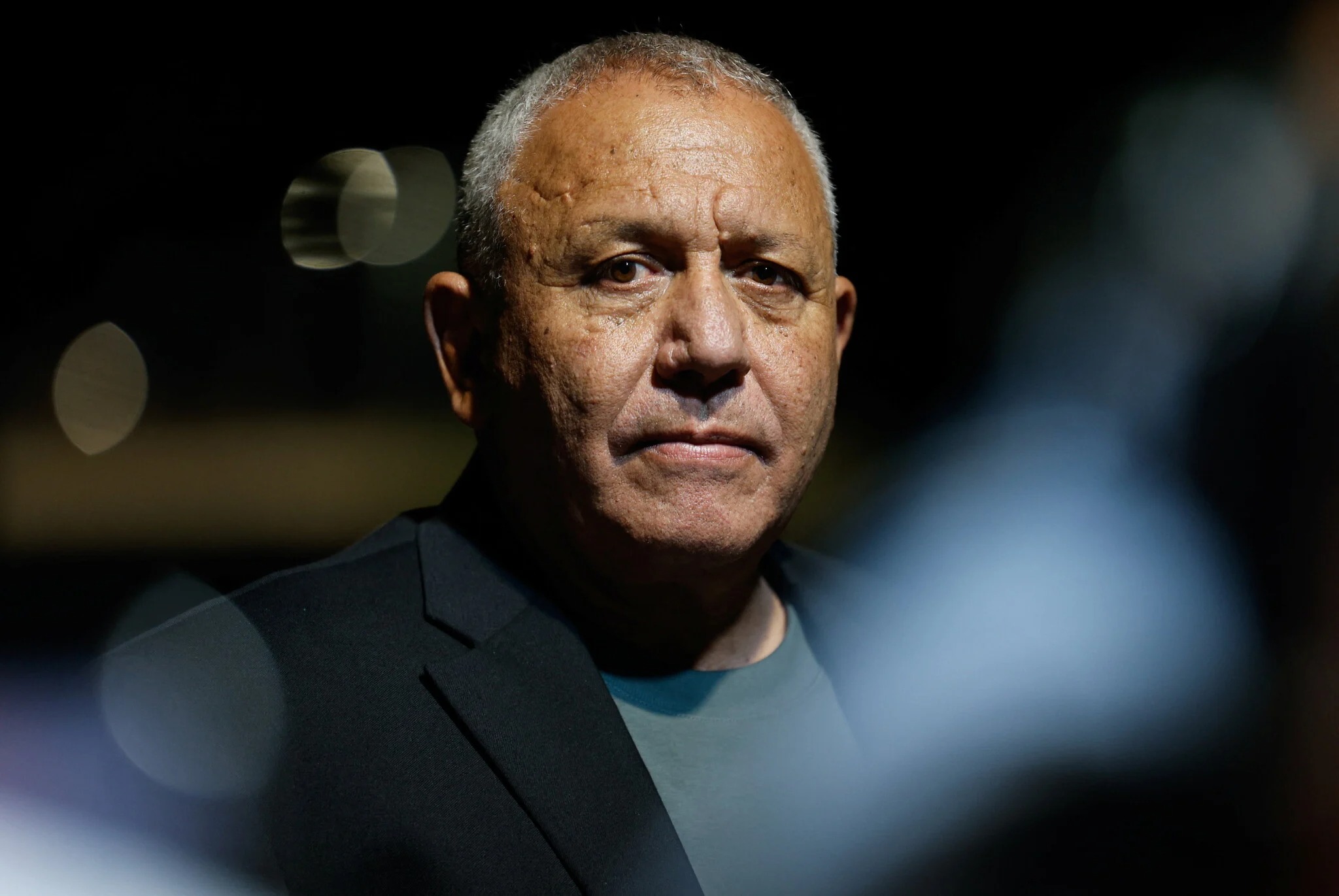
Gadi Eisenkot, Benjamin Netanyahu’s fiercest challenger in this month’s elections, has conditioned any agreement with Syria on the complete withdrawal of Turkish and Russian forces.
In an extensive interview with The Times of Israel (ToI), the leader of the Yashar Party and former chief of staff said it was necessary to take advantage of the “fluid situation” in Syria.
Contending that Syria’s transitional leader, Ahmed al-Sharaa, is “originally a very extreme person, an ISIS member,” Eisenkot remarked: “I have no illusions about him; together with the Americans operating in Syria, I killed many people from his organisation.”
Nevertheless, the opposition leader emphasised that a crucial question must be posed:
“Is there an opportunity to take the 1974 Kissinger interim agreements and significantly upgrade them, with tight security arrangements that will ultimately bring about the withdrawal of foreign forces from Syria?”
Asked by the reporter whether this included Israel withdrawing from Mount Hermon and key strategic positions in Syria, Eisenkot replied:
“The fundamental condition is the complete expulsion of the Turks and the Russians from the area. As for Mount Hermon and the relevant security arrangements, these must be negotiated.”
Arguing that Israel must speak from a “position of strength” backed by “unshakeable American guarantees,” Eisenkot added: “There must be an American protective umbrella, oversight, and commitment that will enable Israel to take calculated risks.”
Pointing to the “extremely problematic situation” created by Netanyahu over the past three years, the Yashar leader described it as an “ever-widening and dangerous gap between American interests in the Middle East and Israel’s interests.”
Noting that Israel shares “deep common interests” with the US, Eisenkot listed them as: “maintaining stability in the Middle East, strengthening the moderate Sunni camp, weakening the radical Shiite axis, weakening the fundamentalist Sunni axis, and subsequently achieving economic prosperity in the region.”
Stating that a “strong Israel as a strategic asset” for the Middle East is also an asset for the US, the Israeli politician emphasised his support for moving towards the establishment of a “NATO of Sunni states.” He stressed that Israel could make major contributions in early-warning intelligence and defence systems, adding:
“We have proven this capability. Today, there are Arab countries in the Gulf that quietly receive Israeli protection. I also connect this to the broader peace effort that Israeli leaders have unfortunately stopped talking about. We want peace.”
Within this framework, Eisenkot noted the necessity of strengthening already signed peace treaties: “These must never be taken for granted, as there is also deep concern that these agreements could slide backwards. Therefore, we must strengthen our relations with Egypt, Jordan, and the signatory countries of the Abraham Accords, and actively involve other countries in the process. I believe there may also be an opportunity regarding Lebanon.”
Contending that Netanyahu’s “blatant foolishness and dreadful political-strategic judgment” had dragged Israel to rock bottom, the opposition leader pointed out that 12 countries are currently waiting to impose sanctions on Israel.
“Even the Americans have begun considering the possibility of imposing sanctions on official Israeli actors in Judea and Samaria [the West Bank],” Eisenkot said.
Noting that the steps he would take in the West Bank would not be a political gesture aimed at bringing Saudi Arabia into the Abraham Accords, but would be done “entirely in Israel’s interests,” Eisenkot said he would improve security conditions in the region, prevent the burning of Palestinian homes and villages by extremist Jewish settlers, and intervene with an “iron fist” against anyone acting outside the law.
“That is exactly how I acted throughout my military service. [Those attacks] did not happen when I was Chief of Staff,” Eisenkot said, referring to assaults by illegal Jewish settlers on Palestinian villages in the West Bank.
The Yashar leader argued that anyone seeking to establish full sovereignty over the West Bank and incorporate another 2.8 million Palestinians into Israel is “endangering the Zionist project and the Jewish demographic majority.”
Addressing Netanyahu’s judicial overhaul, Eisenkot said: “Anyone who seeks to weaken the Supreme Court and crush the judiciary is endangering democracy.”
Accusing Netanyahu of desiring “endless wars,” the opposition leader said: “We will change this through a rational government. Netanyahu’s government is pursuing an entirely irrational policy: it incites conflict solely to consolidate its domestic political base. For this single purpose, it clashes with everyone.”
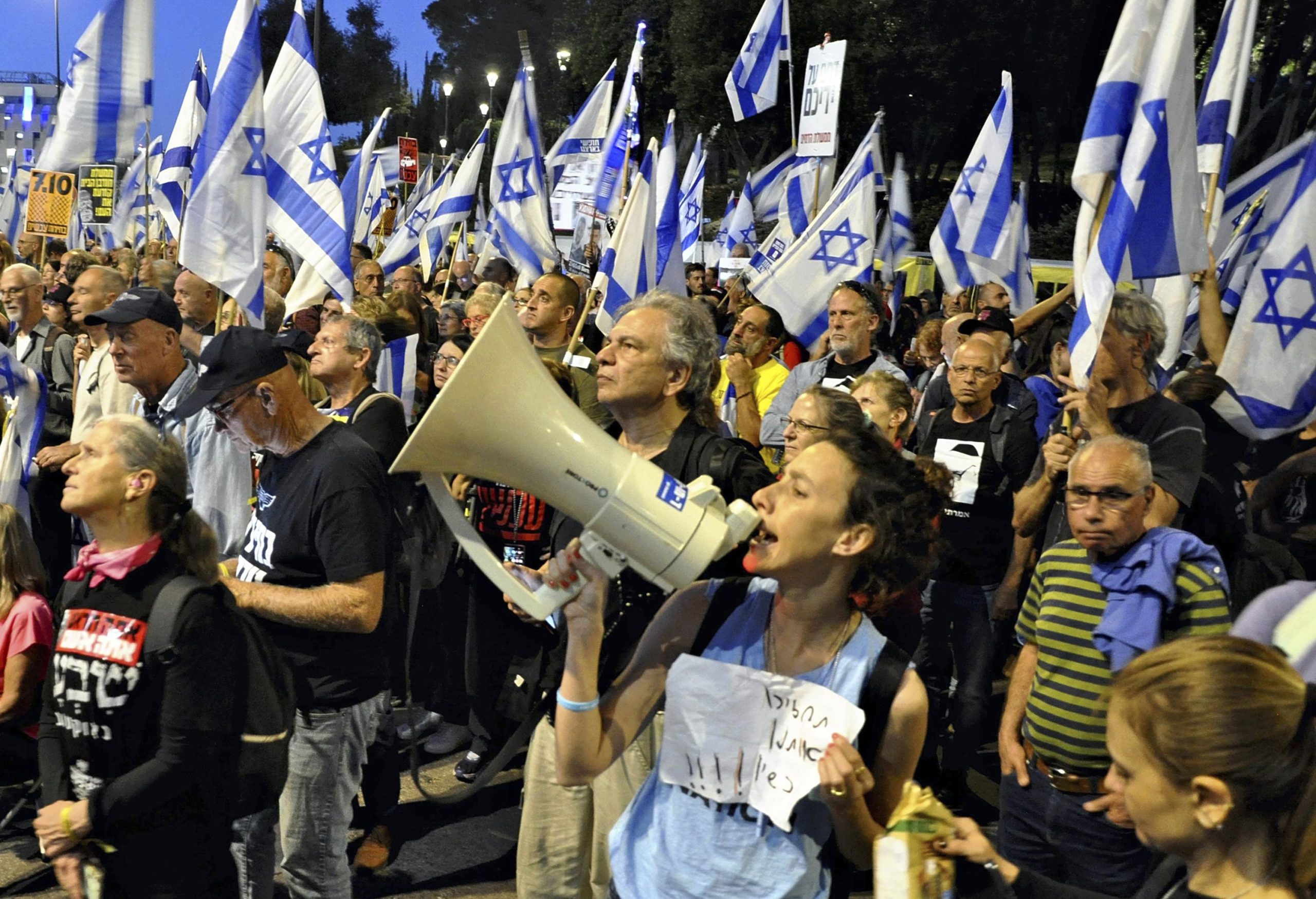
Deepening political fractures, economic strains, and societal fault lines in Israel are confronting the country with the potential for civil conflict and the breakdown of state mechanisms.
According to a report by Drop Site News citing two US sources, these findings are detailed in a classified Central Intelligence Agency (CIA) assessment drafted in August.
The report by Aída Chávez notes that the assessment, titled “Fracturing from Within”, was authored by experts within the CIA’s Red Cell unit, which is tasked with examining alternative and contrarian scenarios.
The CIA declined to answer questions regarding the assessment, which was compiled by combining open-source data with US intelligence holdings.
The report emphasises that the assessment focuses solely on Israel’s Jewish population, excluding from its analysis the country’s Palestinian citizens, who make up approximately 20% of the population.
It notes that Amnesty International and various human rights organisations characterise the practices endured by this segment of the population as part of a broad apartheid system.
The report outlines multilayered risks accumulating across the country ahead of the 27 October elections.
These factors include economic bottlenecks fuelled by surging military expenditures, heavily armed soldiers returning from protracted combat with severe psychological trauma, escalating settler violence in the occupied West Bank, and a constitutional crisis sparked by Prime Minister Benjamin Netanyahu’s efforts to retain power.
Speaking to Drop Site News, an intelligence source pointed out that the team responsible for the report comprises experts deeply familiar with the Israeli landscape, stating: “This is not an imaginary ‘what if’ scenario. Considering the upcoming elections and divisions in Israel, we must take seriously its findings that the country is only one spark away from real civil conflict.”
One of the sharpest points of tension in Israeli domestic politics involves mandatory military service exemptions granted to ultra-Orthodox men. The divide is widening between the ultra-Orthodox community, which continues to receive state subsidies while enjoying sweeping draft exemptions, and reservists being repeatedly mobilised to the front lines.
The rationale cited by religious leaders for rejecting military service is not opposition to war, but the argument that Torah study and religious life would be threatened.
A deteriorating economic landscape is also aggravating pressure on households. According to data, basic food prices, including fresh fruits and vegetables, have surged by 9.5% over the past two years, reaching record highs.
The report states that the majority of domestic opposition to Netanyahu focuses not on violence directed against Palestinians, but on how these policies are executed and on the security failures of 7 October.
Major Zionist parties remain divided over coalition strategies, while opinion polls indicate that neither the governing nor the opposition blocs can attain the 61-seat majority required to form a government.
Recalling historical eras in which traumatised, armed veterans coincided with intense political division, one consulted source cited the Freikorps units in post-First World War Germany.
The source remarked that while modern Israel is not identical to interwar Germany, certain parallels can be observed.
The CIA assessment also considers Israel’s mounting international isolation and the erosion of US support as factors that could accelerate collapse dynamics.
Israeli officials are reported to be concerned that reliance on billions of dollars in direct US military aid may prove unsustainable amid weakening political consensus.
Spring data from the Pew Research Center indicates that 60% of Americans view Israel unfavourably, up from 53% a year earlier.
The report projects that foreign technology and artificial intelligence investments could be withdrawn if the domestic crisis deepens. It underscores that such an outcome would further destabilise under-pressure economic fundamentals.
Additionally, regional countries could question the strategic value of normalisation processes, while Hamas or Hezbollah might exploit internal vulnerabilities within the country.
Intelligence sources emphasise that the assessment deliberately adopted the term “civil conflict”, warning that the compounding array of domestic pressures may ultimately prove impossible to contain through military means.

European industry urges EU action against China trade practices

Israel opposition seeks Netanyahu probe over 7 October call logs

German exports pivot to Eastern Europe amid drops in US and China

Thiel targets Pope and Obama over AI in new ‘Antichrist’ lectures

Energy firms enlist ex-US officials to tap Venezuelan oil
-
 Diplomacy2 weeks ago
East-West Forum in Istanbul highlights irreversible shift to multipolarity
-

 Europe2 weeks ago
European unions urge governments to scrap all Palantir deals
-
 Europe2 weeks ago
Emmanuel Todd says West faces collapse amid Ukraine and Iran crises
-
 Europe2 weeks ago
Rome protests AfD poster depicting South Tyrol as independent state
-
 Europe1 week ago
German interior ministers drop unanimity rule to counter AfD veto
-
 Europe2 weeks ago
German industry stockpiles critical minerals before EU-China talks
-
 Europe1 week ago
Key European allies excluded from US-led NATO meeting in Poland
-
 Europe2 weeks ago
Hamburg drill tests Baltic deployment prior to formal defense alert
