
Opinion
In Bishkek, the ‘new order’ gathers to see whether it can become real

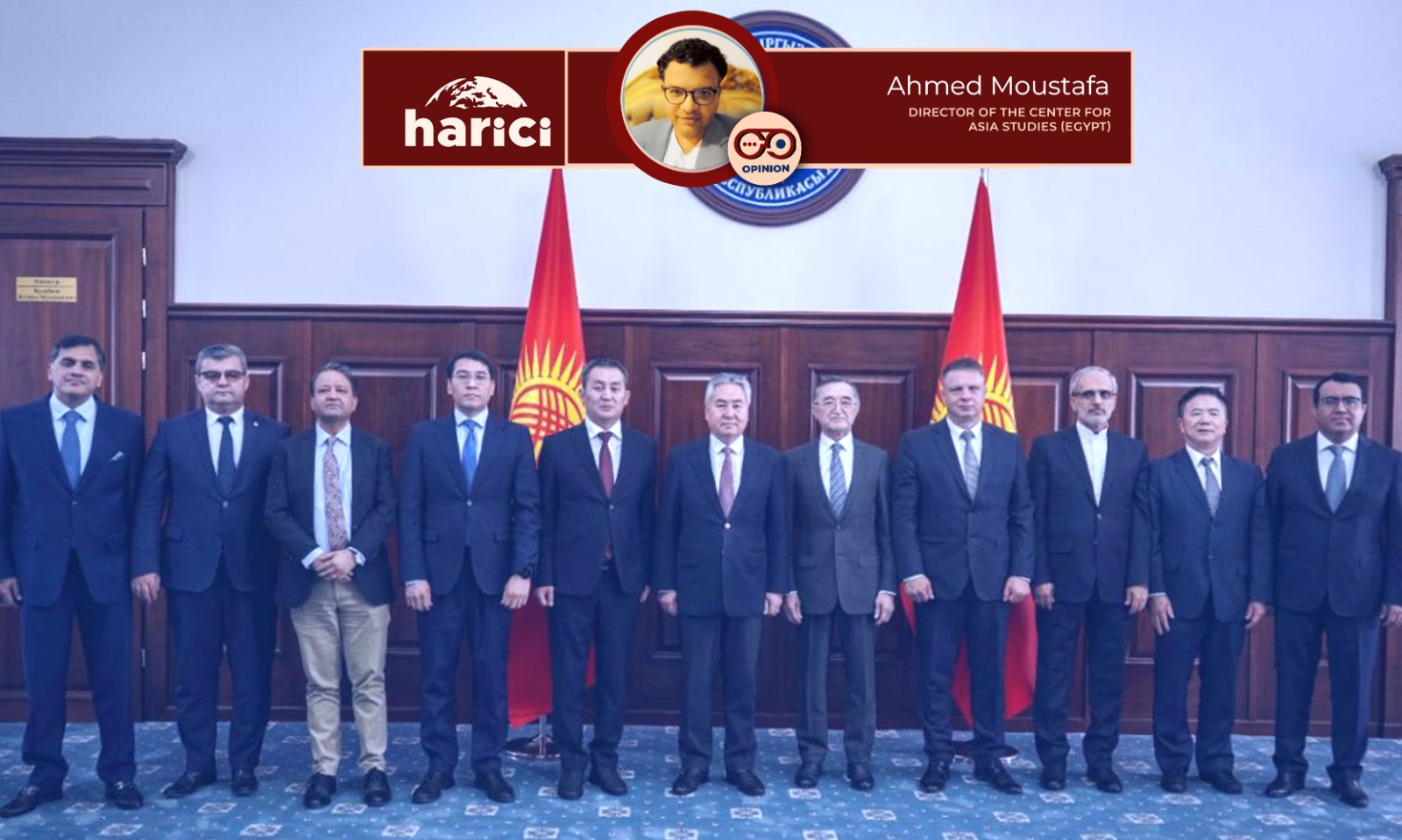
Dr. Ahmed Moustafa, Director & Founder, Asia Center for Studies & Translation, Egypt
Ten heads of states and governments, a cast of partners spanning half of Eurasia meet in the Kyrgyz capital promising a world beyond Western dominance. The summit’s quiet battles over money, media and the club’s own contradictions will matter more than its communiqué.
BISHKEK, Kyrgyzstan: This is a city that understands great powers. Soviet engineers drew its street grid. Its economy runs substantially on money earned by Kyrgyz workers in Russia. And when the Shanghai Cooperation Organization holds its annual summit here Aug. 31st to Sept. 1st 2026 the mountain-ringed capital will become, for 48 hours, the seat of this era’s most consequential open question: What does the world look like after Western dominance?
What will the world look like beyond Western dominance?
The participant list alone is enough to illustrate the scale of the stakes. Chinese President Xi Jinping, Russian President Vladimir Putin, and Iranian President Masoud Pezeshkian will lead the SCO’s ten full members, representing roughly 40 percent of humanity. They include India and Pakistan, Belarus, and the four Central Asian republics, led by Kazakhstan and its President Kassym-Jomart Tokayev, alongside dialogue partners whose presence stretches from Cairo to the Gulf and all the way to Ankara.
No Western institution has ever had to accommodate such a company under one roof. No American administration has had to watch it from the outside.
On paper, the agenda is deliberately unremarkable: counterterrorism cooperation through the organization’s Tashkent-based coordinating body, Afghanistan’s instability, trade facilitation, energy, digital development and the ritual invocation of the “Shanghai Spirit” mutual trust, mutual benefit, respect among civilizations. The organizing principle, as ever, is consensus, which is another way of saying nothing said in the plenary hall will offend anyone.
The real summit will happen in the margins, in three conversations the final declaration will not be recorded.
The first is about money and how to move it where Washington cannot reach it
No communiqué will use the word “sanctions.” Yet diplomats from three member states, speaking on the condition of anonymity to describe preparatory talks, said the financial file has consumed more negotiating time than any other: the long-delayed SCO Development Bank, given fresh impetus at last year’s Tianjin summit; the expansion of local-currency trade; the stitching together of national payment systems that would let members settle accounts without touching the Belgium-based SWIFT network and therefore without touching U.S. financial law.
The urgency is not abstract. Russia’s central bank operates under sweeping penalties. Iran has been locked out of the dollar system for a generation. Even India, a Western partner, buys Russian oil in non-dollar currencies to keep its options open. Tariffs and secondary sanctions have turned “financial inclusiveness,” in the organization’s diplomatese, into the summer’s quiet rallying cry.
The obstacles are equally concrete. The development bank has been discussed for more than a decade without being built, partly because every founding member wants it capitalized, headquartered and denominated on its own terms. “Nobody in that room is against de-dollarization,” said one economist who advises a member-state government. “Everybody in that room is against a bank China controls.”
The second conversation is about the United States absent, and everywhere
The months before the summit have seen a burst of American diplomacy conducted largely through intermediaries: reported contacts between the CIA director and Russian intelligence; a Pakistani army chief’s travels to Tehran; Gulf foreign ministers, and on one reading the Jordanian monarch, carrying messages to Beijing. Washington describes the traffic as routine management of a complicated world. In the capitals gathering in Bishkek, it is read as something more evidence that the superpower wants deals.
“Diplomacy by intermediary is either sophistication or exhaustion,” said a European ambassador in Beijing, who like others spoke on the condition of anonymity. “The Americans say the first. This summit will spend two days staging the second.”
The calendar sharpens the drama. U.S. midterm elections fall ten weeks after the leaders leave Bishkek, and a president who has staked his brand on ending wars and winning trade disputes has delivered a durable settlement of neither. Advisors openly worry that losing the House would hand the opposition subpoena power and the machinery of impeachment. Analysts expect the summit’s choreography to be calibrated accordingly: handshakes and family photos projecting an alternative order, measured carefully enough not to hand Washington an enemy at the worst possible moment.
Yet the “declining America” narrative has limits that the summit’s own design reveals. India attends in large part to ensure the organization does not become a Chinese-Russian instrument; it has blocked anti-Western language before and is expected to again. The Central Asian states hedge between Russian security, Chinese financing and Western markets. And every member’s sanctions-resistance project is, in the end, a measure of how much the dollar world still matters.
The third conversation is the one an Egyptian started
Among the more concrete proposals at Tianjin came not from a head of state but from Dr Ahmed Moustafa, an Egyptian scholar and specialist in Asian and Eurasian Affairs, who directs the Cairo-based Asia Center for Studies and Translation, attending as his country an SCO dialogue partner continues testing the club’s outer circle. His argument: the organization’s deepest deficit is neither military nor financial but informational.
The West’s real advantage runs through its media platforms and professional networks, which shape the aspirations of the very youth the organization claims to speak for. His proposal, a standing, professionally sponsored mechanism binding member-state think tanks and media, and a professional social platform for the region’s young people, “similar to or stronger than LinkedIn” circulated this summer in summit working groups.
The idea matters less as a business plan than as a diagnosis that Beijing and Moscow have reached by harder roads. For all its demographic weight, the information environment in which the organization’s citizens actually live is dominated by Western platforms and Western languages. Member states have answered with firewalls, copycat apps and an annual media forum. What they have not produced is a digital ecosystem anyone would choose.
Skeptics see a structural reason: professional networks create value through the free flow of information precisely what several member governments are professionally committed to restricting. “You can build a LinkedIn for the Shanghai Spirit,” one diplomat joked. “Good luck making anyone network in it.”
The last conversation is with itself
The family photo will not show the feuds beneath it: India and China, India and Pakistan, Iran which left Tianjin with expressions of sympathy and no security guarantees after its war with Israel and a host government whose national strategy is to be courted by all sides at once. A quarter-century after the organization’s founding, its signature achievement remains the summit itself: proof that rivals can meet, not yet proof that they can build.
“Bishkek will be perfectly staged,” said a veteran analyst of Eurasian institutions. “The question is whether anything survives the motorcades.”
When the leaders fly home over Bishkek on the first of September, they will leave behind banners, a communiqué and a claim: that a new order is not merely desired but operational.
The quieter truth of this summit is that an order cannot be declared into existence. It has to be built payment system by payment system, platform by platform, in the unphotographed rooms where the Shanghai Spirit is tested against arithmetic.








Following Israel’s strike on the Abu al-Duhur Airbase in Syria on August 18, relations between Damascus and Tel Aviv have reportedly broken down. Syrian Foreign Minister Asaad Hassan Sheybani announced in the wake of the attack that all communication with Israel had been severed. “We anticipate that talks regarding a security agreement with Israel will resume in the near future. At present, we do not trust Israel. Our priority is the cessation of attacks against our sovereign territory,” he stated.
The minister’s utter helplessness reverberates through his words.
The post-Assad regime in Damascus ascended to power on the back of American and Israeli support. Consequently, the United States and Israel stand as the primary arbiters of Syria’s destiny. It is precisely for this reason that the Damascus administration has abandoned all claims to its rights over the Israeli-occupied Golan Heights—virtually resigning itself to the occupation and striking it from the agenda. Upon seizing power, it pledged immediate fealty to Washington: “We will pose no security threat to Israel, and we shall thwart anyone who attempts to do so.” It operated under the delusion that it could forge a functional relationship with Israel—led by Netanyahu, a perpetrator of genocide and a convicted war criminal—by appeasing it through concessions. It was gravely mistaken.
For Israel currently holds sway over a substantial portion of Syrian territory. It establishes military outposts across the country, carries out airstrikes at will, and deploys its armor unimpeded.
Similarly, the Israeli-backed PYD-YPG terrorist organization exercises control over an expanse of land vastly disproportionate to its actual strength—territory exceptionally rich in energy resources—solely through the patronage of the US and Israel. Leveraging that very support, it wrenches outsized political, military, and administrative concessions from the Damascus government.
Evidently, the displacement of Iranian and Russian influence in Syria by that of the United States and Israel has brought profound satisfaction to certain circles in our country. Yet what these quarters fail to see, refuse to see, or cannot bring themselves to acknowledge even when confronted with it, is this fundamental reality: Washington envisions a Middle Eastern order wherein Israel commands supremacy, projects expanding power, and dictates terms, while Türkiye raises no objection whatsoever and instead accommodates itself to this architecture. To compel Türkiye’s acquiescence, the US is actively deploying its vast and varied arsenal of leverage.
Lest we forget, the United States had already brought several Arab states to the desired threshold through the Abraham Accords. That process was ultimately intended to culminate in the open, formal consecration of the de facto rapprochement between Saudi Arabia and Israel. That trajectory has not been abandoned; it has merely been placed on ice for the time being. Behind the scenes, Washington maintains an intense flurry of diplomacy with Saudi Arabia, Qatar, Egypt, the United Arab Emirates, and Jordan. Once the wider Middle East, the Islamic world, and the Arab sphere have been fully conditioned to accept the ongoing reality in Gaza—and once the oppressed, grieving, and beleaguered Palestinian people have been driven entirely from their ancestral homeland—this shelved agenda will be revived.
We know that the Zionist establishment in Israel, aligned with American imperialism, chose not to strike Iran first before confronting the Iranian-backed Axis of Resistance, the Shia Crescent, and Tehran’s proxy forces. It executed the exact inverse: it struck first at Syria, at Hamas in Palestine, and at Hezbollah in Lebanon. Only after eroding their efficacy did it turn its sights directly upon Iran. In Syria, the previous regime held out far longer than anticipated—enduring for 13 years and 8 months. As a consequence of the civil war that erupted in March 2011, Assad was ultimately overthrown, finding refuge in Moscow.
When 61 years of Baathist rule, including 53 years of the Assad dynasty, came to a close in December 2024, the emergent regime in Damascus wasted no time in pledging its allegiance to the United States, to Israel, and to the Arab states that backed it, chief among them Saudi Arabia. It proclaimed that it would erect a bulwark against Iran, raise not the slightest objection to Israel, and execute Washington’s directives to the letter.
A broad demographic in Türkiye that welcomed this turn of events swiftly began asserting—under the banner of religious and sectarian fraternity—that this transition worked entirely in Türkiye’s favor. The sheer fallacy of this premise was exposed in short order.
And how was it exposed?
It was exposed by Israel immediately laying the groundwork for a Syria partitioned into four enclaves (Druze, Kurdish, Alawite, and Arab). It was exposed by the renewed revelation that the US-Israel axis intends, sooner or later, to carve up Syria along sectarian and ethnic fault lines—mirroring the precedents of Lebanon and Iraq—in a country roughly composed of 70 percent Sunni Arabs, 10 percent Alawites, 10 percent Kurds, 5 percent Christians, and 5 percent Druze and Turkmens.
It was exposed by the fact that the PYD-YPG terrorist organization, even if denied the entirety of its territorial ambitions, has managed to secure a portion of its political, military, and administrative demands through US–Israeli patronage, thereby being permitted to preserve its existence by settling for a reduced perimeter.
And it was exposed by the resilience of Iran, which, despite suffering immense exhaustion and attrition in the face of American and Israeli aggression, refused to capitulate and maintained its resistance. It was exposed by the failure of the US-Israel tandem to achieve its overarching political and military objectives in Iran, bringing to the fore once again the undeniable truth that Iran possesses an institutionalized state tradition, a national consciousness, and an armed force of a depth and resilience that defy any comparison to Libya, Iraq, or Syria.

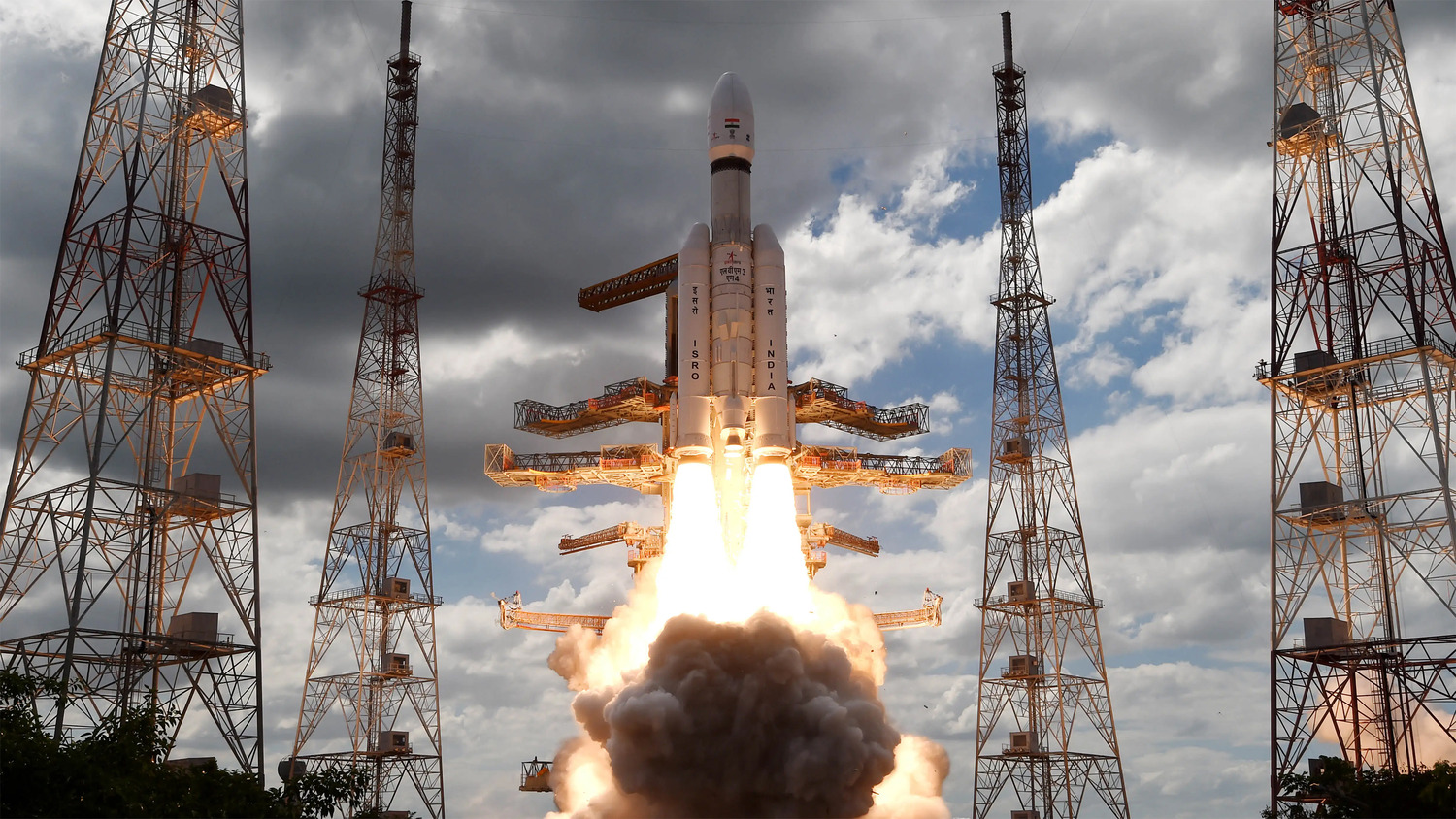
Ambassador Gurjit Singh, former Indian Ambassador to Germany, Indonesia, Ethiopia, and the ASEAN and African Union missions
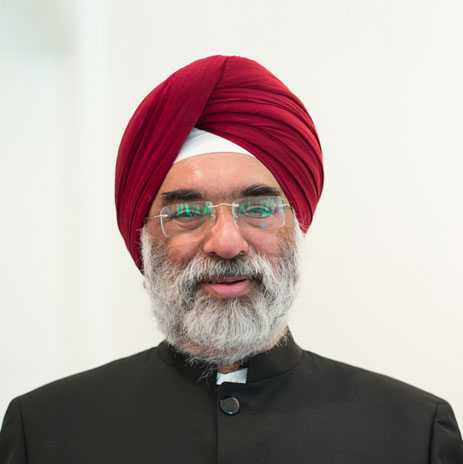
Growing competition in outer space provides India with a unique opportunity to shape a narrative in which collaboration, rather than confrontation, drives space exploration. Recognised as a trustworthy and cost-effective spacefaring nation, India is now well placed to transform its technological advances into enduring international partnerships that contribute to scientific progress, economic growth, and sustainable development.
India’s journey into space has been distinctive. Unlike many space programmes that emerged from Cold War rivalries, India’s programme was conceived as an instrument of national development. Dr. Vikram Sarabhai anchored India’s space vision in practical applications that would improve the lives of ordinary people. Under his leadership, satellites were developed to strengthen communications, weather forecasting, disaster management, healthcare, agriculture and education. This development-oriented philosophy remains central to India’s space programme and resonates strongly with the needs of countries in the Global South, which seek practical applications of space technology rather than prestige alone.
Today, India’s achievements extend beyond developmental applications. The Chandrayaan missions, the Mars Orbiter Mission, the Aditya-L1 solar observatory, and the forthcoming Gaganyaan human spaceflight programme have established India as a nation capable of executing sophisticated and reliable space missions. Chandrayaan-3’s successful soft landing near the Moon’s south pole placed India among an exclusive group of space powers while demonstrating that world-class innovation can be achieved at comparatively modest cost.
India’s growing credibility comes at a time when the global space economy is expanding rapidly. Valued at over US$600 billion today and projected to approach US$1.8 trillion by 2035, the sector is increasingly driven by commercial activity in satellite communications, Earth observation, navigation, climate services, broadband connectivity, and emerging fields such as in-orbit servicing and lunar exploration. Many countries aspire to participate but lack indigenous capabilities. They seek dependable long-term partners rather than merely launch providers.
India possesses the capabilities to meet these requirements. The liberalisation of the space sector in 2020 transformed the ecosystem by opening it to private participation. The establishment of the Indian National Space Promotion and Authorisation Centre (IN-SPACe), the expanding commercial role of NewSpace India Limited, and the growth of private enterprises have created one of the world’s most dynamic emerging space ecosystems. Indian startups are developing launch vehicles, satellite platforms, geospatial applications and propulsion technologies that are attracting global investment and customers. Companies such as Skyroot Aerospace, Pixxel and Agnikul Cosmos have demonstrated that Indian private enterprise can compete internationally in advanced space technologies.
The next step is to internationalise this ecosystem.
Rather than positioning itself only as a low-cost launch destination, India will offer comprehensive partnerships encompassing satellite design, launch services, mission operations, ground stations, astronaut training, capacity building and downstream applications in agriculture, disaster management and maritime security. Such integrated partnerships would be valuable for countries across the Global South and the Indo-Pacific seeking affordable, customised and reliable technologies to meet their development priorities.
India has demonstrated the diplomatic value of such cooperation. Through the South Asia Satellite, it provided communication and developmental benefits to neighbouring countries. Indian launch vehicles have successfully placed hundreds of foreign satellites into orbit for governments, universities and commercial operators around the world. India’s decision to join the Artemis Accords reflects its willingness to participate in the peaceful exploration of the Moon through international collaboration. Cooperation with NASA, the European Space Agency and JAXA has strengthened India’s scientific and technological capabilities.
These partnerships reinforce India’s standing as a leading voice of the Global South. India offers development partnerships based on affordability, reliability and mutual respect rather than creating technological dependence. Space cooperation has therefore become an increasingly important instrument of Indian diplomacy, strengthening bilateral relationships while delivering tangible developmental benefits.
To realise its full potential, India will aim to sustain the momentum of reform. Faster regulatory approvals, greater access to venture capital, stronger intellectual property protection, and closer collaboration among research institutions, industry and academia will be essential. Public procurement policies would continue supporting Indian startups, enabling them to scale up, innovate and integrate into global supply chains.
India is positioned to play a larger role in shaping the governance of outer space. Orbital congestion, space debris, responsible resource utilisation and equitable access to emerging space opportunities are becoming pressing international concerns. As space activities expand, there will be an increasing need for countries capable of building consensus on responsible norms and practices. India’s long-standing commitment to the peaceful uses of outer space, combined with its growing technological capabilities, equips it to contribute meaningfully to the development of rules that promote transparency, sustainability and equitable access.
The coming decade will determine not only which countries lead in space but also how space is governed. With its scientific capabilities, entrepreneurial ecosystem and international credibility, India is uniquely placed to bridge the gap between established and emerging space nations. By building collaborative partnerships founded on inclusivity, mutual benefit and innovation, India can transform its space programme into a major pillar of its global engagement.
In an increasingly divided world, India’s space sector offers a powerful reminder that the greatest achievements in space are those that bring nations together. That may well become India’s most enduring contribution to humanity’s next frontier.
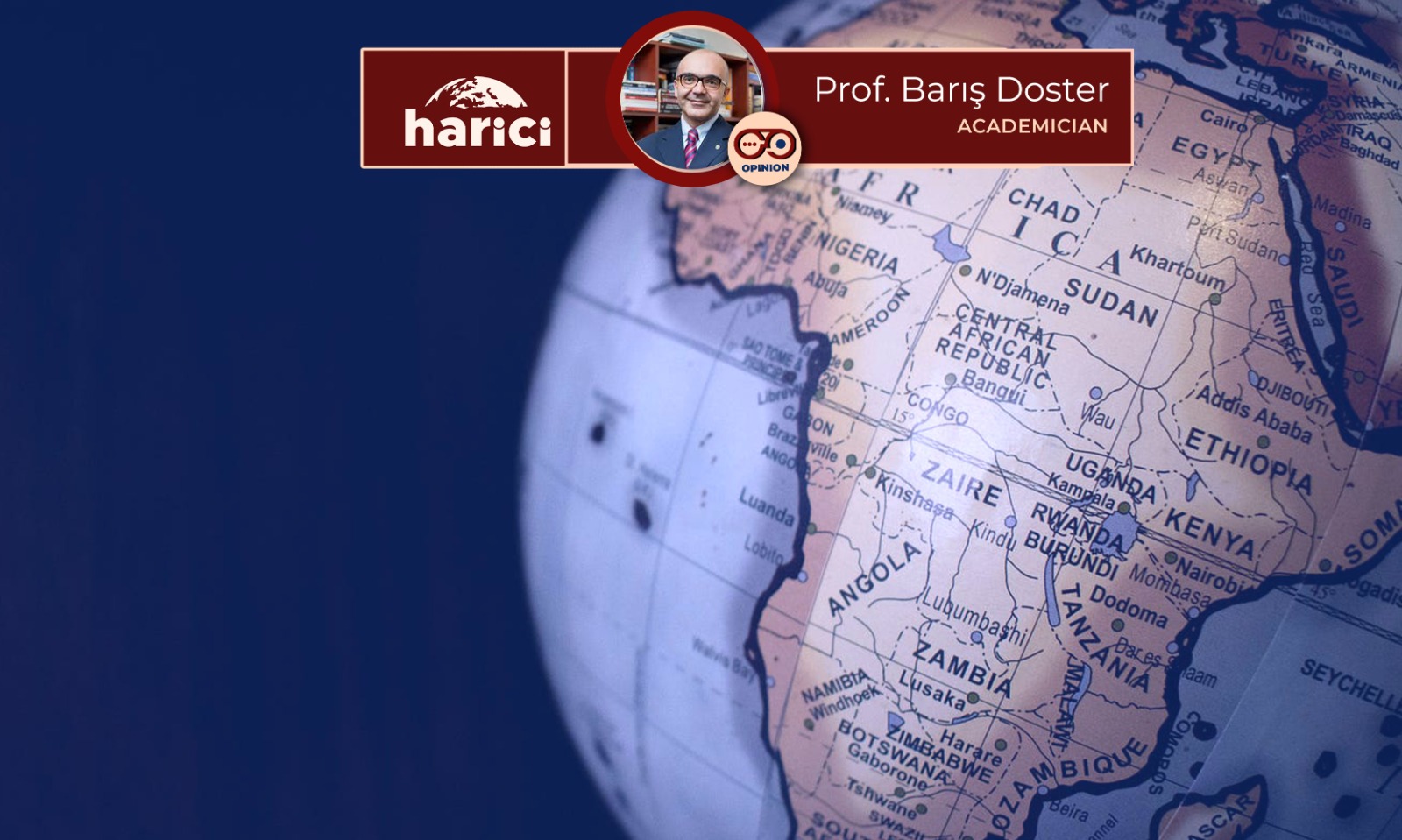
In tandem with the retreat of US imperialism and the erosion of its hegemonic capacity, the rivalry among the world’s great powers is intensifying across vast geographies and divergent fronts alike. From Africa to Central Asia, from electric vehicles to artificial intelligence, an acute contest is unfolding—most conspicuously between the United States and China.
History instructs us that wherever great power rivalry takes root, peace remains elusive. Stability cannot endure there. Wars, internal conflicts, coups d’état, and the mass migrations they inevitably trigger dominate the horizon. Nor do great powers desire the cultivation of participatory democracy, human rights, the rule of law, or class consciousness in these lands. Instead, they bolster dictatorships, authoritarian regimes, totalitarian systems, and repressive governance. The imperialist powers harbor no concern for the scarcity of water, drought, or famine in Africa. Their focus is solely fixed on exploitation, plunder, pillaging the resources of the nations upon which they descend, and capturing their domestic markets.
Africa holds singular importance in this context. It commands attention simultaneously by virtue of its sheer expanse, its demographic weight, and its subterranean wealth. In the rivalry across this ancient and impoverished continent, the United States and China lead the vanguard. Russia, too, makes notable maneuvers, though on a less extensive scale. Between the United States and China, the race is particularly fierce regarding the extraction, processing, and conveyance of subterranean resources to world markets.
Africa—endowed with abundant mineral wealth, a population approaching 1.5 billion, and critical strategic importance along global trade routes—whet the appetites of capitalist, advanced, industrialized, imperialist states as a vast, populous, and expanding market. Geopolitically as well, its position cannot be ignored. Africa’s wealth in rare earth elements, precious minerals such as diamonds and gold, and strategic minerals indispensable to advanced technologies—notably copper, cobalt, and lithium—is indisputable.
AFRICA CARRIES NO WEIGHT IN GLOBAL POLITICS
Unlike other continents such as Europe, Asia, or the Americas, Africa possesses no single country that commands prominence in global politics or the world economy. Nor does Africa host an alliance, international organization, or bloc of comparable global stature. In the Americas, there stands a superpower: the United States. In Asia, there are great powers: Russia and China, with India also ascending. In Europe, major, consequential powers endure: the United Kingdom, France, and Germany. Yet on the African continent, no such states exist. What exists in Africa is the rivalry of non-African great powers. Even the 55-member African Union, the institutional body of the continent’s nations, remains far from exerting any real influence—not only in global politics, but even across the African continent itself.
Over the past fifteen to twenty years, Africa has undergone substantial upheavals. Armed conflicts, civil wars, and violence have become pervasive. From Ethiopia to Somalia, Libya to Sudan, armed hostilities have claimed countless lives, destabilized governments, and provoked massive waves of displacement. Terrorist organizations have seized upon these conditions as an opportune opening, and the great powers, in turn, have instrumentalized these terror networks.
In Africa, former nineteenth- and twentieth-century colonial powers such as Britain and France indulge in reveries of bygone eras. They attempt to assert themselves, yet their efforts prove futile. Germany, as Europe’s leading economic, industrial, and technological powerhouse, takes a keen interest in Africa; yet despite this attention, its institutional knowledge and historical experience regarding the continent pale in comparison to those of the British and French. Italy strives to act, but lacks the requisite capacity. The Netherlands and Belgium, once deeply entrenched in Africa, are far removed from their imperial past. Spain and Portugal assert no claim to global primacy. All of these nations languish, to borrow Ahmet Hamdi Tanpınar’s phrase, in “a vague longing for a bygone past.”
China, well aware of Africa’s significance, is investing heavily across the continent. It stands as Africa’s largest trading partner and the primary destination for the continent’s exports. In the provision of loans, credit facilities, and grants to African states, it has outpaced Western institutions. China’s investment and foreign aid capacity, economic leverage, and extensive commercial ties naturally consolidate its political and diplomatic influence across Africa, elevating its visibility and prestige. Under the auspices of the Belt and Road Initiative, Beijing continues to finance large-scale infrastructure investments as well as major communications and transport projects.
THE FEROCITY AND DIMENSIONS OF THE RIVALRY
It is, of course, impossible for Russia to mount massive economic investments, conduct extensive aid operations, or sustain the volume of trade in Africa that China commands. Consequently, it seeks to distinguish itself by guaranteeing the security of local leaders, corporate enterprises, and ruling elites, relying predominantly on private military companies (the operations of the Wagner Group being a case in point). Russia has deployed mercenaries to Mali and the Central African Republic.
The United States, for its part, endeavors to counter China’s expanding influence, economic footprint, visibility, and public diplomacy initiatives in Africa, while simultaneously laboring to reinforce its own economic and political ties with African states. One need only recall that the United States, having intervened in Libya in 2011 through NATO, has directly struck ISIS targets in Somalia. The strategic depth of Washington’s relationship with Cairo is likewise well known.
The United States, China, and Russia also stand out prominently in arms sales to African nations. As the great power rivalry on the continent grows ever sharper, the spectrum of contestation widens accordingly. Cultural rivalry is superimposed upon economic, political, and military dimensions. Because every great power seeking to expand its sphere of influence and reach is determined to block the advance of its competitors, Africa serves both as the stage for and the witness to this unsparing contest. Some experts explain this rivalry through the lens of a new strain of colonialism; others account for it by pointing to the inherent nature, complexity, and multifaceted character of competition between imperialist metropoles.

Russia warns NATO over Arctic militarisation and conflict risks

German ruling parties urge EU to act against Chinese overcapacity

India faces mounting hurdles to reach developed economy status by 2047

Iceland rejects resumption of EU membership talks in referendum

Germany and Britain hold talks on nuclear force cooperation
-
 Interview2 weeks ago
Daniel Davis warns US strategy fails against Iranian defense grid
-
 Diplomacy2 weeks ago
Erdogan blocked CIA-Mossad plan for armed Kurdish uprising in Iran, report says
-

 Europe2 weeks ago
Marine Le Pen plans French constitutional referendum on immigration
-
 Middle East2 weeks ago
US considers land blockade on Iran involving Türkiye and neighbours
-

 America2 weeks ago
AIPAC super PAC pours millions into key Democratic primary races
-

 America2 weeks ago
US-Brazil rift widens over proposed sanctions and trade tariffs
-

 Diplomacy2 weeks ago
The two terrorists: Britain jails tweets while the West crowns al-Qaeda’s man in Damascus
-
 Europe2 weeks ago
Greece secures EU sanctions carve-out for billionaire’s LNG fleet
