
America
James Carden warns US foreign policy elite cling to global dominance

In an in-depth interview broadcast on the Harici YouTube channel, James W. Carden, an American journalist, author, and former foreign affairs adviser to the US State Department during the administration of President Barack Obama, conducted an exhaustive assessment of global geopolitics and Washington’s foreign policy trajectory with journalist Sarp Sinan Hacır. Carden, who served as a special adviser on US-Russia policy, addressed recent international speculation surrounding reported intelligence contacts in Moscow, the long-term drivers of the armed conflict in Eastern Europe, Washington’s military and economic campaign against Iran, shifting dynamics across the Middle East, escalating pressures in Latin America, and the institutional dogma shaping American strategic posture toward major Eurasian powers including Türkiye.
Opening the dialogue, Hacır raised reports concerning a visit to Moscow by US Central Intelligence Agency Director John Ratcliffe amid heightened Western narratives alleging an imminent Russian attack against a North Atlantic Treaty Organization member state. Hacır asked whether Moscow truly represents a threat to Western nations or if the current framing is driven by political rhetoric.
Carden unequivocally dismissed the assertion that Moscow maintains expansionist military ambitions against Western capitals, offering a direct critique of prevailing mainstream media narratives and intelligence leaks.
“No, I don’t think that Russia poses a threat to the West. It certainly doesn’t pose a threat to the United States,” Carden stated. “It does pose a threat to Ukraine and the leadership in Kiev. And I think that part of the reason for Ratcliffe’s trip was to find a way out to perhaps spur the Russians to the negotiating table.”
He explained that official political posturing sharply diverges from the realities established across the battlefront.
“Because the facts on the ground are that the US ally, the European ally in this war, Ukraine, is losing the war,” Carden said. “Ukraine is not winning the war, despite the recent spate of headlines that we see coming out of Western corporate media. So I think that the report in the New York Times today is unfortunately very typical of the sorts of reports that we see from the Times. The Times is basically acting not as reporters and journalists should, but as stenographers for the intelligence community.”
“The Origin Story of the Ukraine Crisis Begins With NATO Expansion”
Asked by Hacır to assess whether the conflict in Ukraine could have been averted through different policy choices under the Obama administration—which faced domestic criticism from hawkish factions over its handling of Russia’s 2014 annexation of Crimea—Carden underscored that the crisis stems from foundational miscalculations dating back decades.
“Well, your second question is the easiest one to answer. And the answer is, yes, of course, this whole thing could have and should have been avoided,” Carden noted. “With regard to President Obama’s interest in Russia and Eastern Europe, it was minimal. Mr. Obama outsourced his policy on Russia and Ukraine to very hawkish people with a long history of wanting to surround and isolate Russia. And the policies reflected that.”
Carden argued that starting the historical timeline in 2014 obscures the root causes of the broader confrontation.
“So while people might claim that, you know, Obama should have met the annexation of Crimea with force or with a stronger reaction, well, they kind of are missing the point,” Carden said. “If you begin your timeline with the Russian annexation of Crimea, then you’re missing the whole story, or at least you’re starting in the middle of the story, and you’re neglecting the beginning of the story. And the beginning of the story goes back even before Mr. Obama took office. It goes back to when President Bill Clinton was in office. And the story begins with NATO expansion. And NATO expansion was the policy that sparked this entire thing.”
He continued: “And it was a bipartisan project launched in the early 1990s for really no apparent reason. And the Russians, whether it be Mikhail Gorbachev, Boris Yeltsin, Vladimir Putin, the entire Russian foreign policy and defence establishment had been warning the United States that their red lines for NATO expansion were Ukraine and Georgia, which, of course, had been integral parts of the Soviet Union. But we ignored those red lines constantly.”
“And so the genesis, right, the origin story of the Ukraine crisis begins in the 1990s with the decision to expand NATO and then later decisions to expand NATO all the way to Russia’s borders,” Carden emphasised. “That’s where the story has to begin. And Mr. Obama and the people that he surrounded himself with did not heed Russia’s red lines, did not heed the advice of people like Bill Burns, who would later become CIA director under Joe Biden. And it was Bill Burns who, while serving as ambassador to Russia, said that Ukrainian membership in NATO was the brightest of Russia’s red lines that we should not cross. But we tried to cross it, and now we see what happened.”
“Ukraine Is Going to Be a Shadow of Itself, a Rump State”
Turning to the internal ideological balance within previous and current administrations, Hacır noted that early realists who cautioned against foreign entanglements appeared to have lost ground. Questioned on the strength of the realist faction during his tenure in the Obama administration, Carden pointed out a recurrent historical trend wherein American chief executives discard initial restraint over the course of their presidencies.
“Yes, at first,” Carden replied. “So during the first year or so, there were people who were inclined, I wouldn’t necessarily even call them realists, but they were people who had learned the lessons of the Iraq War, the 2003 Bush-Cheney War in Iraq. And so Mr. Obama himself was, when he entered office, something of a realist. They were men who were going to be more cautious about the exercise of American power. But with time, and this happens with American presidents, as I document in a new book that I have coming out, what happens is that over time, they become less cautious, progressively less so. And that’s what happened to Mr. Obama.”
Regarding realism within the inner circle of President Donald Trump, Carden expressed deep scepticism about the presence of genuine realist advisers.
“With regard to there being, you know, realists in the Trump administration, I’m not really sure who you could point to anymore,” he said. “One could have made an argument that Tulsi Gabbard was one such realist, but she’s gone. And Donald Trump really only listens to people within his inner circle of friends and family anyway. And those people happen to be—and I think that I’m trying to put this in a charitable way—they tend to be unofficial, perhaps agents of Israeli influence. And so Mr. Trump’s actions with regard to Iran reflect that. They do not reflect in any way the recommendations or advice laid out by the realists in Washington, such as there are. And I think that that’s a very, very small group of people.”
Addressing the military trajectory of the Donbas campaign and the final political disposition of Ukraine, Carden projected severe demographic, territorial, and economic fallout for Kiev.
“Well, I think what Ukraine looks like at the end of this is going to be somewhat similar to what happened in Kosovo, but on a very, very large scale,” Carden stated. “Ukraine is going to be a shadow of itself. It’s going to be a rump state. It is certainly going to, you know, lose the Donbas. It’s never going to get Crimea back and it may also lose the port at Odessa. So it’s going to be hemmed in by Russia.”
Carden argued that a fundamental diplomatic resolution requires political change in Kiev.
“What you are going to see at some point is a change at the top. There has to be a change at the top in Ukraine in order for there to be a serious effort to be made at ending the war,” Carden said. “And it’s my view that, you know, there’s intransigence on both sides. Right. However, Mr. Zelensky has, it seems to me, to be singularly opposed to serious talks about ending the war. And so this is a terrible, in the end anyway, this is a terrible tragedy for Ukraine. It’s a terrible tragedy for its people.”
Outlining the catastrophic structural transformation of the country, he added: “And you know, it’s going to go from a country that at the end of the Cold War had something like 53 to 55 million people and was the largest country in Europe outside of Russia, and now is going to perhaps have 20 million people with Russia controlling fully 20, maybe eventually 25% of the territory that it once had. And the Ukrainians who left, the millions and millions of Ukrainians who have fled are not going to come back.”
Carden also criticised European institutional promises regarding accession: “But still worse is the fact that European Union nations are telling Ukraine, they’re lying to Ukraine, telling them that, ‘Oh sure, we’re going to let you into the EU and everything will be better.’ I don’t believe that for a second and neither should they. So in the process of also losing an entire generation of young people at war with casualties probably well over a million, they’ve alienated what was once their largest trading partner, Russia.”
“So this idea that Ukraine has a happy future in the West, I think is a myth and I think it’s a cruel myth that our leaders in the West have sold credulous leaders like Zelensky,” Carden remarked. “And I think the whole thing was preventable because we didn’t have to and should not have pursued a policy of NATO expansion. So the whole thing is a waste and it’s a terrible stain, I think, on the conscience of the United States and the West.”
“This Has Been a Terribly Counterproductive, Stupid War by Donald Trump”
Hacır moved the conversation to the conflict surrounding Iran, reviewing the legacy of the Joint Comprehensive Plan of Action (JCPOA) negotiated under Obama and subsequently abandoned by the Trump administration. Asked whether a diplomatic framework resembling the JCPOA could be revived, Carden pointed out that American credibility has been severely compromised.
“Well, that second question is a difficult one, because in order for a deal like that to have a chance, you have to have buy-in by the parties,” Carden said. “And it’s very difficult for me to envision Iran ever trusting the word of the United States again, particularly after its experience with Donald Trump. Now, with regard to the JCPOA and its success, I think that it could have been a success. The problem was is that as soon as Donald Trump got into office, he tore it up. But I think that that was one of a handful of actual successes of the Obama administration in the realm of foreign policy.”
Carden warned that coercive policies have produced the exact nuclear escalation they purported to prevent.
“You know, the tragedy of the Iran war, aside from the very obvious human cost, is that what Trump has done is basically ensured the outcome that we have been claiming that we’re fighting against,” he stated. “In other words, there was no evidence that the Iranians were pursuing the nuclear option. None. Even our own intelligence services in the United States had come to that conclusion. Right. But once Trump decided to assassinate, you know, the Iranian leader, the very Iranian leader who issued a fatwa against nuclear weapons, they all but ensured that hardliners would come into the government. And probably now they are going to pursue it when there was no evidence prior that they had any interest in doing so.”
“And so the JCPOA had codified this outcome that we and the Israelis claimed that we wanted,” Carden noted. “So this has been a terribly counterproductive and, if I may say, stupid war on the part of Donald Trump. And we are in far worse shape now strategically in the region than we were six months ago when he decided to launch this thing. So anyway, this has been a terrible, terrible mistake by the administration.”
Asked directly whether he anticipates Tehran developing an operational nuclear deterrent, Carden affirmed: “I think they might try now. I think now they have the motive. Now they’ve seen what the word of the United States is really worth, which is very little, and they may well do so. They have ample motivation now to do it.”
“Washington Doesn’t Learn Very Quickly”
When asked about the future footprint of the US military in the Middle East following drawdowns in Syria and Iraq alongside base damage incurred during hostilities with Iran, Carden expressed deep pessimism regarding Washington’s strategic learning capacity.
“Unfortunately, we don’t have a good track record of learning lessons in the United States,” Carden remarked. “So my wish is very different from what my analysis is going to be. Obviously I would like for the United States to withdraw from the region. I don’t believe that we have any business in the region and that it’s been detrimental to not only the region, but to us. I suspect, however, that we are going to remain and we’re going to find a way to do so.”
He added: “My guess is that the anchor of our presence in the region is going to be the Gulf and on the Arabian Peninsula. And you already see that Trump has been busy deepening our ties to the Kingdom of Saudi Arabia over the past several years. And I think that in short order we will be rebuilding the bases that were destroyed by Iran and rebuilding our presence in the Emiratis. So the short answer is that Washington doesn’t learn very quickly. So we’ll be back to where we were in the Middle East, in West Asia, if you will.”
Hacır then raised the newly emerging Mecca security agreement signed by Saudi Arabia, Pakistan, and Türkiye, querying whether it represented a defensive pact or an anti-Israeli or anti-Iranian alignment.
“That’s a good question,” Carden replied. “I mean, the little that I read about it, there seems to be—and you can correct me on this if I’m wrong—there were some comments coming from the alliance that they were kind of leaving the door open a little bit even for Iran to eventually join, which is pretty notable given the divisions between the Sunni Arab states and Iran. If it’s a purely defensive alliance, I don’t see how we can possibly make an argument against it. After all, for 80 years we’ve been touting the benefits of our so-called purely defensive alliance in Europe.”
“From an American strategic point of view, the way I look at it is that if the major powers in the Middle East want to band together to come up with a way to coordinate regional defence and regional military matters, that’s none of the business of the United States,” Carden stated. “However, and here’s where we come to a lot of the problems in Washington: there is a country in the Middle East that I could see being rather upset about this, and that country is Israel. And so if the Israelis are upset about this, then we’re going to be upset about it.”
He continued: “Our decisions and our force posture is largely dictated by what the Israelis want. So the real question to me anyway is how are the Israelis going to react to this? If they react favourably, then we should be fine. If they begin to find a reason to dislike or disrupt this new alliance, then unfortunately we’re going to be dragged into some kind of confrontation, which I hope doesn’t happen.”
“Netanyahu Is Capable of Any Sort of Atrocity”
Evaluating escalating tensions between Israel and Türkiye following Israeli strikes in northern Syria near the Turkish border, alongside domestic political pressures facing Israeli Prime Minister Benjamin Netanyahu, Carden warned of extreme instability.
“Well, it’s anyone’s guess. You can never really predict what Netanyahu is going to do,” Carden said. “I would say that as the election in Israel approaches and his prospects dim, he’s capable of doing anything. And so I think that we’re in a real, real dangerous period over the next, what is it, about a month and a half or so before the election. He’s capable of any sort of atrocity, as we have seen. So I think it’s a dangerous period. But I can’t predict. I don’t know.”
Hacır noted statements from US Vice President JD Vance criticising foreign lobbying operations that target American public opinion, asking whether Washington’s alignment with Israel faces an institutional fracture.
“I think that’s a possibility,” Carden observed. “I think what’s interesting is that the criticism came from the vice president, and I think this points to something that I long suspected: that views in the United States about Israel are divided along generational lines. So Vice President Vance is fully a generation or more, a generation and a half younger than the president. And among the president’s generation, among the so-called baby boom generation, there’s very little appetite for criticising Israel. But that isn’t so among people of JD Vance’s generation. JD Vance is fully a decade younger than I am. And so people of my generation and younger are more comfortable criticising Israel and want to see the United States treat Israel as just another country.”
“The special relationship has not been good for Israel; it’s not been good for the United States,” Carden stressed. “And what we want is for Israel to exist, but exist as a member in good standing of the international community within recognised borders. And many of us believe that Netanyahu’s project to create a ‘Greater Israel’ out of the territory of his neighbours has been an absolute disaster, resulting in the moral atrocity of Gaza. So I think that Israel will have American support, but down the line, when a new generation of American leaders comes into power, they’re not going to have the blank check that they’ve had since at least 1967. That’s going to change.”
“The Pivot to Asia Is Dead in the Water”
Examining Washington’s strategic prioritisation, Hacır highlighted how initial pledges to pivot resources away from foreign battlegrounds to confront China have stalled amid military entanglements in the Middle East and Eastern Europe.
“Yes, I think that the pivot to Asia, which was a policy that was inaugurated under President Obama, where we were going to spend less of our resources and time meddling in Europe and meddling in the Middle East, and we were going to begin to focus on trying to contain China—that’s dead in the water, at least for now,” Carden said. “Precisely because we are overstretched not only in the Middle East, but in Ukraine. Ukraine has been bleeding the US armaments industry. So we are currently fighting on two fronts in Europe and in the Middle East. Neither effort is going well. So, yes, I think that for now any plans to confront or isolate China are on hold. And I think that that’s a very good thing.”
Regarding Latin American policy, where US actions in Venezuela, covert operations in Mexico, and heightened economic sanctions against Cuba have surged, Carden drew a clear distinction between anti-narcotics policing and ideological regime-change campaigns.
“Well, I think that there’s a difference, or I hope there is, between US involvement in Mexico and US objectives in Cuba,” Carden explained. “The objective in Mexico seems to be aimed at drug running and waging a kind of covert war on the drug cartels. Cuba seems to be an outright case of regime change. I don’t think that, or at least I hope we aren’t trying to overthrow the democratically elected president of Mexico.”
He singled out US Secretary of State Marco Rubio’s ideological priorities regarding Havana: “I do suspect that it is Secretary of State Marco Rubio’s fervent wish to overthrow the Communist regime in Cuba. And this doesn’t get a lot of press here because we’re busy elsewhere, but we’re busy cutting that country off, starving it, waging an economic war on a country that’s already very poor. And it’s unconscionable. But Marco Rubio comes from a community of Cuban exiles in South Florida, and all they care about is Cuba. They don’t care about the United States, and when they do, they only care about it as a means to overthrow the government in Cuba.”
“So I suspect that before Marco Rubio leaves office—and I don’t think that he’s going to serve out the entire term because I strongly suspect he’s going to run for president—Mr. Rubio is going to get his war and get his desired result in Cuba,” Carden said. “Because the administration, the lessons that they learned from the Venezuela operation was that we can do these things quick and easy with very little loss of life, and we can decide the governments of the region. I think that that’s atrocious and wrong and it’s a terrible lesson to draw, but that seems to be the lesson that they’re drawing.”
“American Foreign Policy Elites Believe America Must Rule the World”
Assessing the domestic political landscape ahead of the upcoming US midterm elections, Carden dismissed suggestions that electoral losses for the Republican Party in Congress would constrain White House foreign operations.
“I don’t think that the midterm results are going to affect US foreign policy at all,” Carden said. “I think that the Democrats are going to win the House, but they will not win the Senate, which gives them very limited leverage over the administration. The Iran war will go on as long as Netanyahu wants it to go on. Now, will a change in leadership in Israel mean a different policy? I don’t know. Do I think that there are other surprises in store? I do. I think that Cuba is probably next on the list. So the Trump administration has a lot of life left in it, unfortunately, regardless of what happens in November.”
Addressing the broader structural shift toward multipolarity, Hacır cited remarks by Mark Carney regarding the erosion of the unipolar global order, asking whether a future Democratic administration in 2028 would depart from the interventionist policies of previous decades.
“Well, I’m glad that you mentioned Mark Carney’s speech because I think when we look back at this era, the speech will stand out as a visionary statement,” Carden said. “That was a very, very important statement, especially coming as it did from an American ally. The problem, however, with Carney’s vision is that it is unlikely to be accepted by any Democratic president. The Democrats are every bit as enthralled to the vision and the idea of American exceptionalism and American global leadership as the Republicans are. And that is a function partially of personnel, of the people who make up the Democratic elite.”
“And so I fear that no matter who wins in 2028, be it a Democrat or Republican or even a progressive left-leaning Democrat, as unlikely as that is, nothing will change,” Carden stated. “Because the American foreign policy elite are still united around the idea that America must rule the world. And I think that that’s a very dangerous idea. It’s an idea that we should abandon. It’s an idea that has hurt us and hurt the world. But unfortunately that’s what is on offer in 2028.”
“Erdogan Is Seen as a Force for Authoritarianism”
In the final segment of the interview, Hacır requested Carden’s analysis of US-Turkish bilateral relations, observing that tensions during the Obama and Biden administrations had partially eased under Trump, and asking how a potential Democratic return to power in 2028 might impact ties with Ankara.
Carden detailed how ideological paradigms among Democratic foreign policy thinkers perpetuate friction with Türkiye.
“So with regard to the Democrats, Türkiye has an image problem,” Carden said. “It is an image problem not quite as serious as the image problem that Russia has, but it is an image problem all the same. And the problem is that Democratic foreign policy elites are deeply invested in a vision of the world that is divided. It’s a new Cold War mentality. So the old Cold War, as you remember, the world was divided between capitalists and communists, right? Democracies and communist countries.”
He concluded: “The vision of the world that they now embrace is a world divided between democracies and authoritarians. And the authoritarians in their telling are oligarchic, they’re kleptocratic, they’re deeply corrupt, they kill their own people, etc. And obviously the face of the global authoritarian axis, as they have it, is Vladimir Putin. However, there are other important players on the other side of the democratic divide: Xi Jinping obviously, and President Erdogan. And so Erdogan is seen as a force for authoritarianism. And that’s a big problem because the Democrats deeply believe that the global democracies have to square off against these so-called global authoritarians. So I don’t expect relations between the United States and Türkiye to improve if a Democrat wins in 2028. Quite the contrary.”




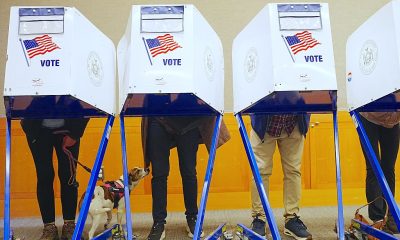



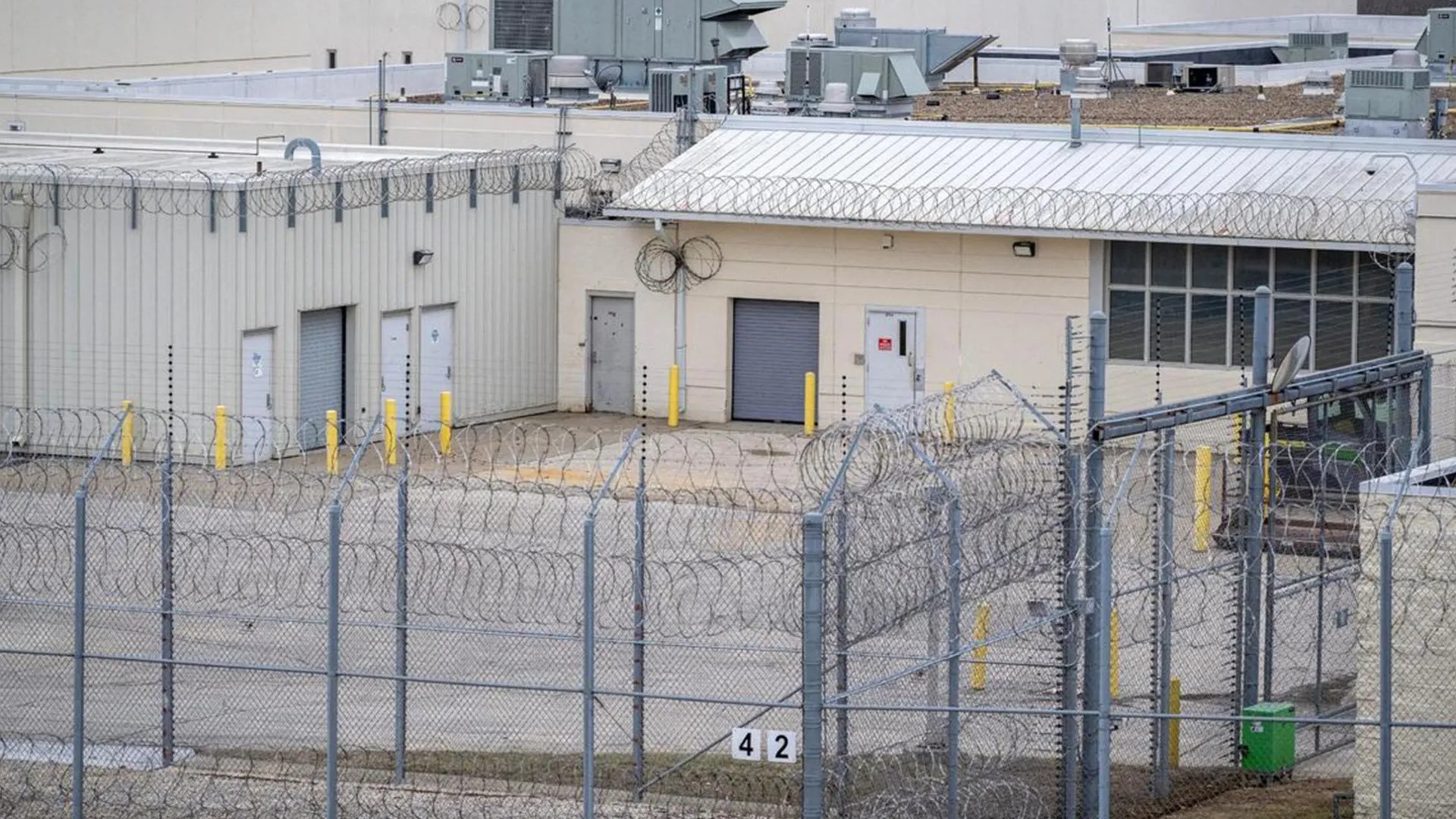
A total of $12 million in donations has been identified in connection with CoreCivic, Palantir, GEO Group, NANA Regional, and CSI Aviation, among the companies profiting most from operations run by Immigration and Customs Enforcement (ICE).
An investigation conducted by the Emancipator covers political spending since President Donald Trump returned to the Oval Office.
These firms develop the software that ICE uses to target migrants.
They also charter the aircraft used to deport migrants to other countries and run the large detention centres where migrants are held.
The donations detailed appear to be legal. By law, federal contractors cannot contribute directly to political campaigns.
However, they can still influence electoral races through individuals in their employ and affiliated political action committees (PACs).
Previous reporting noted that several of these companies had lobbied for legislative bills supporting ICE spending.
The Emancipator revealed that while these firms primarily donated to back Republicans, they also steered funds to Democrats.
In some instances, these money flows took place in states with contested congressional and Senate races where the companies own or operate detention facilities.
To trace the political money flows, the Emancipator used a company list based on earlier reporting by The Project on Government Oversight.
It then independently reviewed affiliated PACs and federal campaign contribution records linked to company executives.
According to the Emancipator’s findings, at least 10 executives connected to ICE-linked firms, including some former executives, directed more than $9.7 million in political contributions since 2025.
For example, Allen Weh, the chief executive of CSI Aviation, donated more than $250,000. The company is the primary entity behind the majority of ICE deportation flights.
Weh’s contributions went to bodies such as the Republican National Committee and “Our Values”, a Republican-aligned super PAC.
Weh also contributed to the campaigns of Republican Senate candidates, including Jon Husted in Ohio and Thomas Cotton in Arkansas.
More than $2.5 million flowed over the past two years from CoreCivic, one of the largest private detention operators in the US, which runs 23 ICE facilities.
This money represents political spending reported in campaign finance filings and Section 527 disclosures on behalf of a PAC and company-affiliated executives.
According to a 527 filing, CoreCivic directed $675,000 to the Republican Governors Association over the past two years. During the same period, CoreCivic also contributed $330,000 to the Democratic Governors Association.
Governors hold significant authority over detention facilities and state legislation, and these groups channel support to governors aligned with their respective parties.
CoreCivic sent $135,000 to the Republican State Leadership Committee, the nation’s largest organization supporting down-ballot Republican state politicians.
Just over $200,000 was channelled through CoreCivic’s PAC.
Tracking records show the PAC directed its largest contributions to jurisdictions where it operates facilities, including Georgia, where it runs an ICE facility; Texas, where it operates seven; and Tennessee, where the company is headquartered.
CoreCivic’s PAC gave the maximum allowable contribution of $5,000 to both US Senate and House campaigns in Montana, Virginia, and Arizona.
Recipients of the PAC’s funding included Michael Whatley’s Senate campaign in North Carolina, as well as Republican-aligned PACs such as the National Republican Senatorial Committee, the Fund for America’s Future, and Texas First.
CoreCivic donated $5,000 to the campaign of Maine Republican Senator Susan Collins.
Collins faced fierce criticism on immigration, even though Maine recently enacted state-level “ICE Out of Maine” legislation.
CoreCivic executives also donated directly to candidates.
Lucibeth Mayberry, the current chief executive of CoreCivic, made a modest $500 donation to support Alaska Republican Senator Dan Sullivan in his bid for re-election.
Meanwhile, former chief executive Damon Hininger donated more than $1 million. Over the past two years, Hininger sent roughly $660,000 to the Republican National Committee and more than $100,000 to the National Republican Senatorial Committee.
Palantir, a provider of data platforms used by ICE across the country, channelled roughly $8.3 million to politicians across the political spectrum and throughout the nation through executive spending and its PAC.
The vast majority of this political spending, over $8 million, came from the company’s executives.
Federal election records show that over the past few years, Palantir co-founder and board chairman Peter Thiel donated just over $3.2 million to Republican-leaning campaigns, candidates, and political action committees.
Chief executive Alex Karp also gave more than $1.9 million in total, largely to back Republican candidates, while contributing to Democratic campaign funds as well.
Weeks before Abigail Spanberger’s election as governor of Virginia, Karp donated $10,000 to the Democratic Party of Virginia.
GEO Group, which operates private prisons and detention facilities, runs 28 ICE facilities in states such as Texas, Georgia, and California.
At least two of these facilities are situated in the swing states of Michigan and Pennsylvania.
Senior company executives and an affiliated PAC directed roughly $1.5 million nationwide so far during Trump’s second term.
More than half of this sum was routed through the firm’s PAC, while about a quarter of a million dollars came from executives.
GEO Group founder and chief executive George Zoley holds several dozen campaign receipts showing total contributions of $210,000 to various Republican campaigns.
NANA Regional Corporation, an Alaska Native corporation, profits by selling security services to ICE.
This entity spent the smallest amount. Over the past few years, NANA’s PAC channelled just over $50,000 to politicians and political groups.
Records for company executives and 527 accounts showed no notable political spending.

It has emerged that Flavio Bolsonaro, who lost the presidential election in Brazil, left the country for Argentina accompanied by a former operative of Israel’s foreign intelligence service, Mossad.
According to a report by CNN Brasil citing an investigation conducted by Brazilian authorities, the former Israeli agent, who later obtained US citizenship, entered Brazil on 19 October and accompanied Bolsonaro as he departed the country following his electoral defeat.
Records show that the former agent was in the same vehicle as the Brazilian politician while crossing the Argentine border on 27 October.
Brazilian authorities believe that Bolsonaro’s departure was organized with the support of Buenos Aires and Washington.
Citing investigative findings, CNN Brasil reported that Bolsonaro left Brazil for Argentina alongside his wife and two daughters in two minivans.
Agencies investigating the politician’s departure established that security cameras captured the vehicles crossing the Tancredo Neves Bridge on the border between the two countries.
The television network noted that the drivers were identified because they presented their passports upon entering Argentina.
A former member of the municipal council of the Brazilian city of Foz do Iguacu was driving the minivan carrying Bolsonaro, while that former council member’s son was driving the family of the former presidential candidate.
In the Argentine border city of Puerto Iguazu, Bolsonaro boarded an aircraft belonging to the Argentine airline Baires Fly together with his wife and daughters.
After a refuelling stop in Ecuador en route, the plane landed in Miami on the morning of 28 October.
According to data from Brazilian authorities, the operation was carried out with the assistance of at least two countries.
Officials leading the inquiry believe Bolsonaro received backing during the final phase of the election’s second round.
Brazilian government representatives said this support constituted “assistance from the governments of Argentina and the US.”
Investigative bodies believe Bolsonaro’s departure was not organized at the last minute, but was instead an extensive international operation codenamed “Operation Alba”.
Election defeat, revoked passports, and US entry permit
Bolsonaro was defeated by current President Luiz Inacio Lula da Silva in the second round of Brazil’s presidential election, held on 25 October.
After the results were announced, Bolsonaro declared that he did not recognize the outcome of the vote and left Brazil.
In an open letter published on the social media platform X on 28 October, Bolsonaro described himself as the “president-elect”, though he later deleted that version and shared a new post proclaiming himself the country’s “leader”.
Meanwhile, media reports suggested that US President Donald Trump was not inclined to recognize Bolsonaro as Brazil’s leader, while also mentioning the possibility that the Brazilian politician could be granted an expedited green card.
The Reuters news agency reported that Bolsonaro made the decision to travel to the US at the last minute, after a Brazilian Supreme Court justice revoked all of his passports.
Law enforcement agencies are investigating Bolsonaro’s potential links to two separate money-laundering schemes.
A source speaking to Reuters claimed that Jason Miller, an adviser to Trump who is close to the Bolsonaro family, helped organize the flight from Argentina.
US Secretary of State Marco Rubio also advised President Donald Trump to permit the Brazilian politician to enter the country, a recommendation Trump accepted.
Bolsonaro and his family were subsequently granted temporary entry permission on humanitarian grounds.
Rubio, however, denied allegations that the US government played a direct role in Bolsonaro’s departure from Brazil.
Stating that the Brazilian politician held a visa and that Trump had decided to permit his entry, Rubio maintained that US authorities took no part in organizing the travel.
Former Brazilian President Jair Bolsonaro, the father of Flavio Bolsonaro, remains imprisoned in Brazil in connection with a case concerning an attempted coup following his defeat in the 2022 election.
The younger Bolsonaro had promised that his first act upon winning the election would be to free his father from prison.
During his presidency, Jair Bolsonaro was commonly referred to as the “Trump of the Tropics”.
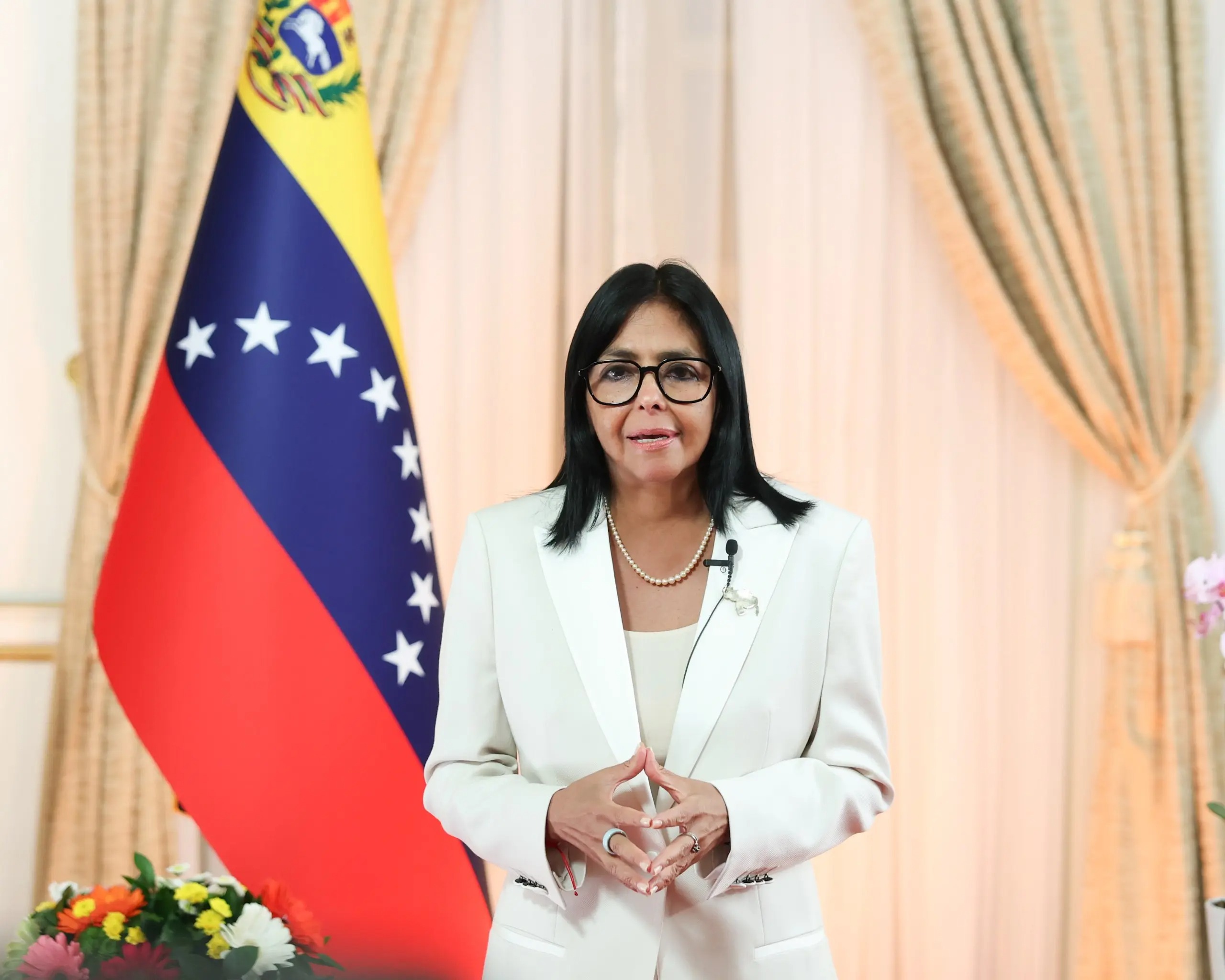
Venezuela’s interim president, Delcy Rodríguez, on Thursday defended a plan to privatize state assets and return nationalized companies to their former owners.
In a televised address to the nation, Rodríguez said: “I have ordered an assessment of non-essential state assets, so that these assets can be offered to the private sector or returned to their previous owners.” She added:
“This process is already under way. The right to private property is guaranteed by our Constitution.”
In April, the interim president established a commission tasked with evaluating the “strategic” value of state enterprises, land, and other assets to determine whether they should be retained, privatized, or liquidated.
During the 2000s, former President Hugo Chávez carried out a nationalization programme aimed at consolidating state control over strategic sectors including electricity, telecommunications, and heavy industry.
Having enacted a comprehensive, business-friendly reform of hydrocarbons and mining legislation earlier this year, Venezuela’s parliament is on the verge of approving the partial privatization of the electricity sector.
Foreign companies are also in talks to acquire the country’s largest aluminium smelter, while a consortium led by Sunergon Oil is reportedly pushing to take over several industrial facilities linked to the oil industry.
Luigi Pisella, a business representative heading the commission, recently presented a legislative proposal.
The legislation aims to guarantee the participation of local capital alongside multinational corporations in privatized public entities.
In an interview with the magazine Banca y Negocios, Pisella said:
“I have not encountered any resistance to this idea. Most investors agree that having local partners, whose experience is vital for navigating the complex Venezuelan environment, is indispensable.”
Pisella added that “different models of private-sector participation” were being evaluated, but he rejected “strategic alliances” in which the state retains ownership rights while transferring assets through concession-type agreements.
The business spokesperson argued that “no one will invest” unless ownership is transferred completely.
In her Thursday address, Vice President Rodríguez also promised that workers’ income would be increased quarterly next year at a rate at least matching GDP growth:
“For 2027, we are planning increases in workers’ income across four distinct periods; the amount of these increases will never fall below the economic growth of the preceding quarters.”
Rodríguez made no mention of adjusting the minimum wage, which has been frozen since 2022 and is currently worth approximately 0.15 US dollars.
Instead, Venezuelan authorities have leaned heavily on non-wage bonuses. These bonuses act as a de facto subsidy for employers, as they are excluded from holiday pay, severance calculations, and other labour entitlements.
Public sector employees currently receive a minimum monthly income of 240 dollars.
Although Venezuela’s GDP is projected to expand by 5% to 10% in 2026, increasing non-wage bonuses at that pace falls short of keeping up with inflation.
The financial website Ecoanalitica estimates that prices measured in US dollars will climb by 20% to 30% in 2026.
This means that an income adjustment tied to GDP growth would result in an erosion of purchasing power.
In her address, Rodríguez went on to praise ongoing labour reform talks involving business lobby groups and selected trade unions.
Private-sector associations such as FEDECAMARAS and FEDEINDUSTRIA want to lower labour costs for employers, further reduce social security contributions, and eliminate the retroactive application of severance pay and other benefits, ensuring that future wage increases do not trigger corresponding liabilities.
Finally, the interim leader defended recent judicial reforms and ongoing talks with a faction of the US-backed Venezuelan opposition that will appoint a new Supreme Court and National Electoral Council.
The US State Department had claimed that new presidential elections would be held in 2027.
Rodríguez did not provide any specifics regarding the electoral timetable, stating only: “Elections will be held under the auspices of a renewed electoral authority and before the eyes of the world.”

“Blue wave” fears at Mar-a-Lago: What will the midterms bring for the US?

What are Europe’s ignorant leaders failing to see?

Protesters storm Kyiv site holding soldiers over torture allegations

Right-wing calls to ban left parties and groups mount in Europe

Low EU gas stocks risk stoking global prices, IEA report warns
-

 America2 weeks ago
US wealthy demolish multimillion-dollar mansions for land
-
 Middle East2 weeks ago
Netanyahu unveils security doctrine and regional alliance map
-

 America2 weeks ago
At least 47 major US data centre projects halted or cancelled
-

 Diplomacy2 days ago
Secular dress code dispute exposes deeper Türkiye-Azerbaijan strains
-

 Europe2 weeks ago
EU rejects US proposal to resume Russian gas flows through Ukraine
-
 Middle East2 weeks ago
Netanyahu trails Eisenkot in Israeli polls despite Trump backing
-

 Europe1 week ago
Merz visits Asia to seek new markets for German defence firms
-

 Russia6 days ago
US and Russia weigh energy deals and corporate return in peace talks
