
America
Marginalia on the Epstein emails

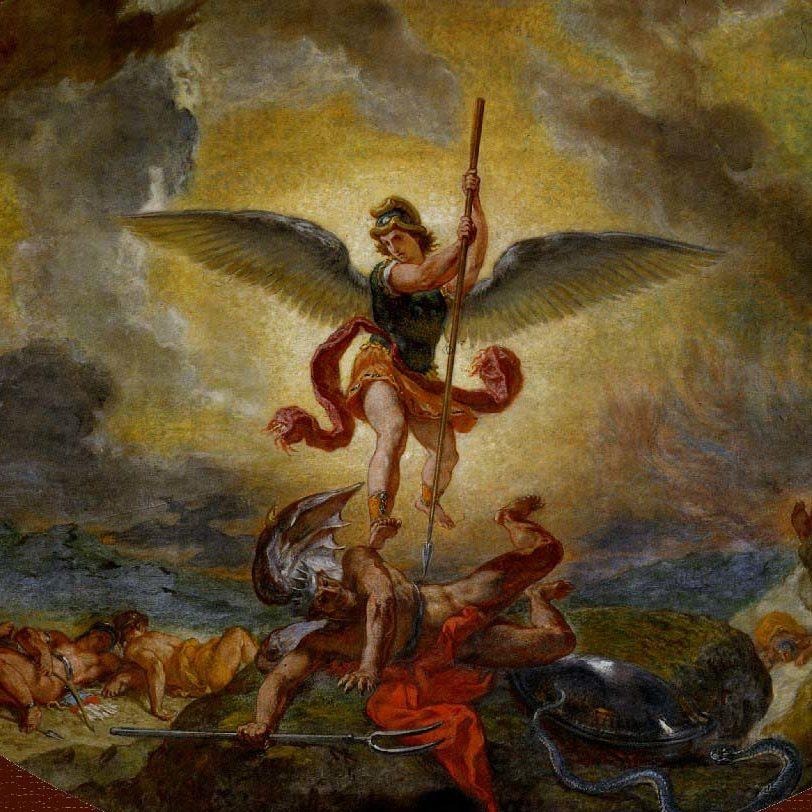
The new tranche of Jeffrey Epstein files released by the US Department of Justice appears to have made a far greater impact than previous batches.
In these documents—which the Trump administration initially turned a blind eye to, only to later release piecemeal—truth, gossip, conspiracy, lies, and brutality are inextricably intertwined.
Judaism, esotericism, child sacrifice, and occult pursuits coalesce with financial capitalism and imperialist occupation. Epstein and his cabal were in contact with so many individuals that this labyrinthine heap of information and documentation mesmerizes, bewilders, and enervates the observer. One cannot help but think that the release of these documents in this specific manner was designed to achieve precisely this effect.
Therefore, I will attempt to expose certain trends by partially simplifying the narrative and partially venturing to seek answers by posing specific questions.
- The Social Media Trap: Cui bono?
While certain emails shared piecemeal on social media offer insight into Epstein’s relationships, they serve no purpose other than to obfuscate the political consequences.(1)
How could they do otherwise? Epstein and his gang walked hand-in-hand with the Democratic establishment while simultaneously linking arms with “MAGA” Republicans and American nationalists. The man engaged in intricate dealings with Steve Bannon and Peter Thiel on one side, while dispensing counsel to Ehud Barak and Lord Mandelson on the other. He provided consultancy to “traditional” Wall Street giants like JPMorgan, as well as to upstart asset management firms like Apollo. He embraced trans ideology yet funded anti-woke X accounts and the 4Chan crew. The “globalists” are there, and so are the “nationalists.”(2)
At this juncture, it seems more plausible to define Epstein as a “broker” or “fixer”—one of the most lucrative professions in the era of hyper-financialized capitalism. We must assume, until proven otherwise, that anyone seeking access to hard currency, liquidity, financing, the commanding heights of American global finance, the City of London, or Israel, came into contact with Epstein or someone in his orbit at some point. The fact that this profession of brokerage and deal-making became intertwined with all branches of “fictitious” capital (real estate, cryptocurrency, speculation, credit institutions, asset management, etc.) and engaged in intermediation between individuals, institutions, and states, is consistent with the capitalist world’s response to the crisis of 50 years ago.
I hope to address this point more thoroughly later, but in passing, I must recall the following: The relationship between Robert Maxwell (father of Epstein’s accomplice Ghislaine Maxwell) and Adnan Khashoggi; and the critical role played by Khashoggi and the BCCI in organizing the Afghan jihad are well known today. Tax havens and offshore financial centers were the response to the crisis of the 1970s. The Khashoggi-Maxwell-Epstein lineage represented the parasites operating within these fissures and dark crevices. Once they set to work, they became both cause and effect.
- Passed Over in Silence
Anyone who has even cursorily glanced at the documents will have noticed that, despite the distinct Jewish character of Epstein and his circle, and their view of themselves as superior to non-Jews (“goyim”)—even while breaking bread with everyone—one figure and his circle are conspicuously absent: Benjamin Netanyahu and Likud.
Is this possible? I highly doubt it. This point alone offers yet another reason to approach the documents and the manner of their release with skepticism. Furthermore, it offers clues regarding the question, “Who benefits?” The founding political line of Israel—the Labor Party and its predecessors—is further delegitimized by having the relationship between Ehud Barak, one of that line’s leaders, and Epstein shoved in our faces. It bears repeating, but the idea that “everyone is guilty” when truth and falsehood, exaggeration and reality are conflated, brings to mind the maxim: “For everything to remain the same, everything must change.”
Indeed, it has previously been claimed that Epstein played a role in reintroducing the disgraced Barak as a challenger to Netanyahu; moreover, Netanyahu had shared a Jacobin article asserting that Epstein was a Mossad agent.
- The Universalization of Zionism as an Oxymoron
Connected to the point above, the issue of the thorough Zionization of Judaism gains importance.
In an audio recording between Ehud Barak and Jeffrey Epstein, Barak’s suggestion is noteworthy: that the definition of Jewishness be loosened and the bloodline requirement eliminated, so that the state might have the chance to “select” the convert population—thereby potentially counting no one from Africa or the Arab world as Jewish, unlike what Israel’s founders were forced to do. For this to happen, the monopoly of the Orthodox rabbinate over areas such as marriage and burial must be broken.
Here, the oxymoron manifests in two ways: Zionism, as a colonial/particularist project, blurring the boundaries of Judaism; and Judaism, to the extent that it is universalized, becoming nativist, turning inward, and being elevated to its highest level as a racist ideology.
The raison d’être for Epstein’s defense of Brexit in an email to Thiel—heralding it as a return to “tribalism” and the beginning of anti-globalization—should be sought here.
At this point, the questioning of Israel’s founding and the shaking of Zionism’s foundations should surprise no one. I would go even further and suggest that the universalization of Zionism and the obsolescence of Israel might be different moments of the same process.
In the fantasy of a digitally interconnected global network state, the fact that nativist tendencies find a place for themselves, and are even supported, is not as strange as it first appears. In a universe where the economic subject is ostensibly anonymized/digitalized, it is more likely to see ethno-nationalist currents becoming a universal model rather than the cultural homogenization invoked by modernity.
In this context, it is inevitable that Evangelicalism, Hindutva, and Zionism generate excitement. Since Zionized Judaism is one of the most “successful” examples in history—perhaps the most successful—it naturally plays a “unifying” role. Meanwhile, the panic over “the collapse of the West/Western values” serves to incorporate new and occasionally “Eastern” forms of slavery into the repertoires of the ruling classes.
- Ideology: The Normalization of Destruction and Power
I have written previously about Peter Thiel and his circle’s American “frontier mentality” (see here and see here). However, I must point out the significance of Zionism finding a habitat on the frontier in the context of these American New Right movements affiliating themselves with it.
The frontier mentality corresponds to a state of ecstasy where there are no rules, no laws, no stasis; where the law of the jungle, living as a fugitive, destruction, annihilation, and innovation are embraced. This is where brutal stories of how the American Indians were exterminated merge with the dark rituals conducted on Epstein’s island. Common to both is the capitalist’s desire to be rid of flesh-and-blood labor and the colonizer’s appetite to eliminate the native, mirroring ancient and dark teachings that reflect a tendency to transcend the material existence of the flesh-and-blood human. Borders, in both the metaphorical and literal sense, vanish.
Here, Epstein appears as the embodiment of themes such as “reactionary modernism,” Counter-Enlightenment, and Nietzschean aristocratic rebellion. Example: Bill Gates wants to include Epstein in his “philanthropy” work in Africa. Epstein seems very disturbed by this. He asks Gates not to involve him. He finds the idea that all lives are equal “ridiculous.” He views the work being done as “Catholicism at its worst.” One is tempted to say that Nietzsche is the natural philosopher of the ruling classes. Values such as mercy, kindness, and love are deemed “slave morality”; the nature [fitra] changes, but the blood remains the same.
Another example: In a previously unpublished interview given to Steve Bannon, Epstein discusses the failure of the Newtonian universe’s tendency to measure everything. According to him, Newtonian sciences cannot explain subjective matters, such as the “strange phenomenon” called consciousness. Therefore, he believes there must be a spirit separate from matter.(3) He speaks of miracles. He asserts that women, unlike men like himself, possess a power of intuition that cannot be explained by reason. But of course, it does not end there: Naturally, women (and minorities), cast out of the rational world, are not capable of being members of a secret society named “Zodiac,” considered “the last of its kind,” as mentioned in another email!
But this delusion of ostensible “complexity” and “unpredictability” also emerges regarding the crisis-prone nature of financial markets. Here, “ideology” in the worst sense of the word grins at us: Epstein argues that the financial world is like the organic world—citing the unpredictability in our bodies, for example. Mathematics, forecasting, planning… these are futile endeavors. No one understands how the system works; the system is a miracle. Mystification and myth-making combine with destruction and the will to power. Perhaps this tendency unites today’s “philosophers” of every stripe and hue: A friend advises Epstein to read Aleksandr Dugin. He finds his views interesting and “perhaps useful.”
The final example comes from a widely circulated email: Together with Thiel, they take special pleasure in the destruction of Libya, Iraq, and Syria. According to Thiel, the more the countries in the Middle East descend into chaos and the more “bad guys” start eating each other, the less the US will have to interfere/intervene in these countries. Epstein views all this as Obama’s strategy and argues that it was “brilliantly executed.”
- Belated Conspirators
When the documents were scattered into the open, an observation by Fredric Jameson began to circulate again: Conspiracy theories were part of the poor person’s “cognitive mapping” system in the postmodern era.
Here, we are talking about making sense of a world that cannot be understood. Yet Jameson, while tracking the transformation of American metropolises in the 20th century, points to a genuine conspiracy: Financial capital and land speculation.
Discussing Robert Fitch’s book The Assassination of New York, Jameson attempts to distinguish what is a conscious conspiracy and what is the natural result of the logic of capital within the framework of production being (consciously) removed from the city and financial speculation prevailing.
A city plan prepared in the 1920s, for example, openly discusses seizing lands occupied by small businesses and laborers and driving them out of the city. It is clear there is a “conspiracy”: The ruling classes did not want to deal with the turmoil of workers, immigrants, and the petty bourgeoisie in big cities; fearing their wrath, they were simultaneously calculating how to shift capital accumulation, which was stagnating in the 1920s, to more profitable sectors such as real estate and insurance. “Unequal investment opportunities” were becoming both the result and the cause of the crisis of capitalist production.
Here, I wish to remind you that the general fear created by the working classes, while wealth increasingly accumulates in private hands, itself generates conspiracy: What could be more natural than a group of property owners—whom we might call a mere handful in number—resorting to intrigue to resist the multitude of the propertyless and maintain their order? Where does the idea come from that a class—which aims to dehumanize production from the moment it comes into the world dripping with blood and dirt, which renders the population “surplus” to accumulate ever more, and which plans to conquer even space to hide its wealth from the dispossessed—was ever “moral”?
Even Adam Smith expresses the (negative) role of secret agreements in social life in the harshest terms. People of the same trade, he says in The Wealth of Nations, seldom meet together, even for merriment and diversion, but the conversation ends in a conspiracy against the public (he uses exactly this word) or in some contrivance to raise prices. Some may argue that this is an objection to the use of “guild” style organization as a tool to suppress competition; but I would remind you that Smith uses the same idea of “conspiracy against the public” for merchants, colonial companies, and even the nobility. The wealthy few need malice and conspiracy to rule the propertyless many.
Let us return to Jameson. Those who prepared the New York city plan were the same people who belonged to that city’s business world. The property owners organized a great upheaval through a conspiracy within the partnership of capital, planning, and scientific production. Class struggle could not be conducted any other way.
- Trends: What are we on the dawn of?
The only point we need to underline is this: Again, Lukács argues that the place where non-proletarian masses realize they are being directly exploited is monetary and commercial capital. Fascism turns this into racist demagoguery by distinguishing between “rapacious” capital and “productive” capital.
I suspect the trend that the Epstein documents vaguely offer us regarding the future consists of a narrative that the “old style” financial regime is to be left behind. The emphasis—sometimes demagogic, sometimes genuine—placed by Trump and the capital group behind him on “Main Street,” production, and re-industrialization against the Wall Street elites shaken by the 2008 crisis, may form the background of these documents.(4) The disconnect with Netanyahu and techno-capital’s fascination with Zionism strengthens this opinion. In a world where representatives of the proletariat are rarely seen, it is not surprisingly that non-proletarian masses take sides on the ground where they believe the source of exploitation lies.
Indeed, the fact that no judicial consequences arise while the filth is scattered about implies that certain individuals likely to be liquidated are being cleared from underfoot to sharpen the line they actually represent. In this respect, looking at what is left out of the Clintons’ testimonies to the US Congress, rather than what is in them, will provide us with a better idea.
(1) Lunatic ideas or ravings are also present: For example, former Norwegian Prime Minister Thorbjørn Jagland wants the new world currency to be the ruble, not the renminbi, in an email. There is no stopping wagging tongues!
(2) A very striking example: In an email sent in 2017 to Landon Thomas, then a New York Times reporter, Epstein offers significant clues regarding the Qatar-Deutsche Bank-Donald Trump relationship. According to Epstein, Qatar is Deutsche Bank’s largest financier (along with BlackRock, according to market data); and Deutsche Bank finances Trump.
(3) In The Destruction of Reason, György Lukács lists the introduction of “supra-rational” concepts such as intuition among the distinguishing features of philosophical irrationalism. The failure of the mechanical philosophical view and the new problems it created are thus seen as proof of the “supra-rational” in natural phenomena as well: “This is the basis on which all social progress can be questioned, the Devil can be presented as the ‘first revolutionary,’ and every effort towards freedom and equality can be vilified.”
(4) It is obvious that there is disagreement within the “Trumpist” camp as well. For instance, speaking at a meeting in the Vatican in 2014, Steve Bannon stated that he was opposed to libertarian capitalism, which he termed “Ayn Rand capitalism,” as well as “state-sponsored” capitalism. Bannon is also known for his verbal spats with Elon Musk, one of the leaders of the techno-libertarian camp in the second Trump era.










The economic toll of the conflict on the US has reached $265 billion in the roughly eight months since the start of joint US and Israeli strikes against Iran.
According to calculations by Moody’s Analytics Chief Economist Mark Zandi, this amount imposes an additional burden of approximately $2,000 on the budget of an average American family.
Sharing data on his X account on Tuesday, Zandi noted that the cost per household since the war began stands at about $2,000, with nationwide economic losses reaching $265 billion.
This estimate is seven times higher than the direct military spending figure reported to Congress by Secretary of War Pete Hegseth, which covers the period between the start of the strikes on 28 February and the end of July.
While Hegseth’s official figures cover only direct military operations, the conflict’s impact on global markets and oil prices is driving up inflation and day-to-day living costs, deepening the real burden on household budgets.
Fuel and heating costs strain budgets
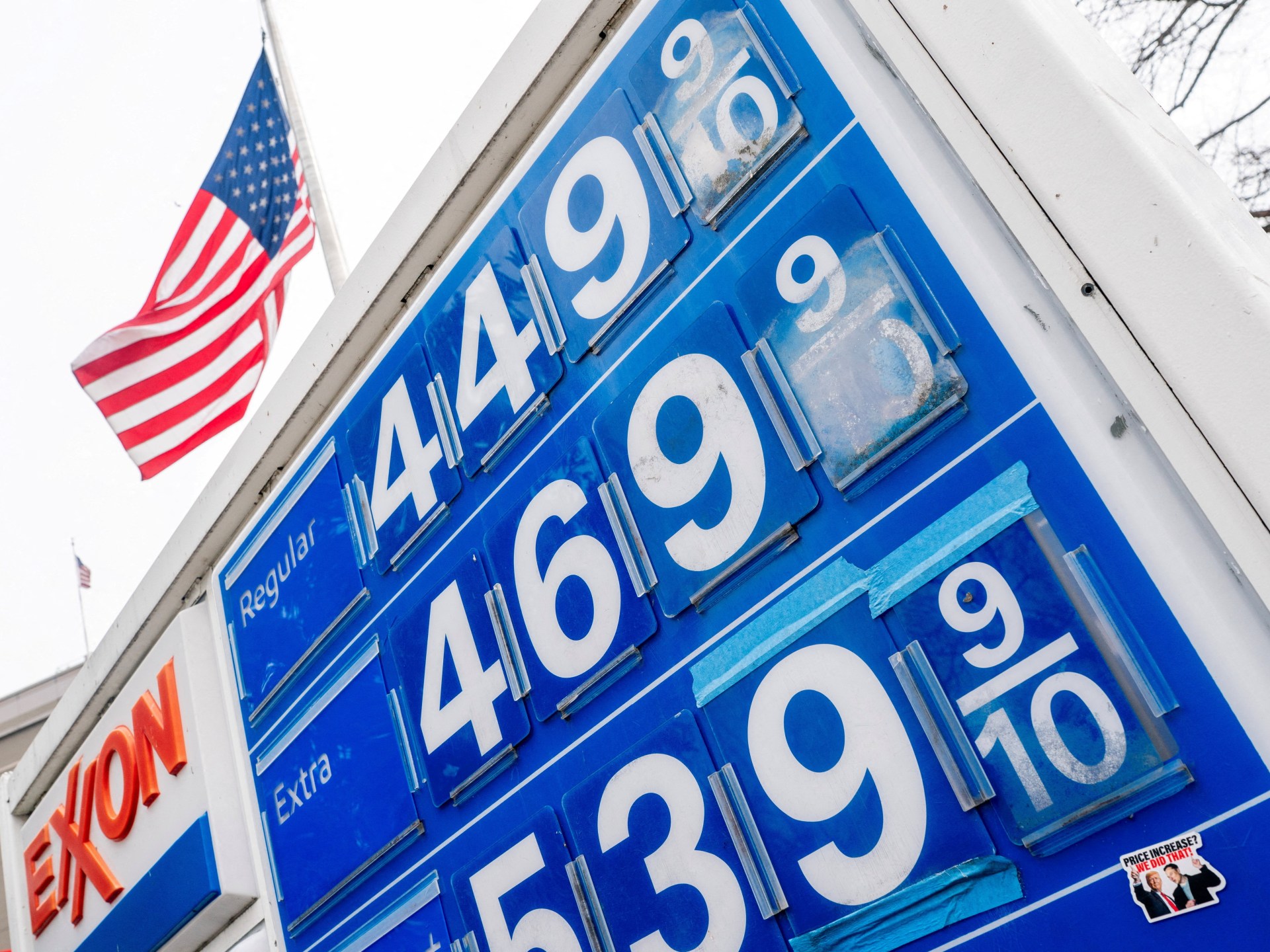
Energy items account for the largest share of the additional expenses facing American households. The surge in fuel, home heating, and transport costs has generated an extra bill of about $1,100 per family.
Zandi noted that the price of regular petrol, which hovered just below $3 per gallon before the war, has risen to $4.37, while diesel has exceeded $6 and jet fuel has nearly doubled.
Pointing out that a marked rise in residential heating fuel costs is driving up spending as winter approaches, Zandi said current price levels continue to add roughly $50 a week to family budgets.
Researchers at Brown University’s Watson Institute for International and Public Affairs are also tracking the impact of rising fuel prices on consumers.
According to data from the institute, US consumers have paid an extra $133.3 billion for fuel products since 28 February.
During this period, petrol prices rose by more than 46% and diesel climbed by over 70%. Of this additional burden borne by consumers, $73.5 billion stemmed from petrol and $59.8 billion from diesel. This calculation translates into an extra cost of $1,017.76 per household nationwide.
Loan interest rates and operational outlays inflate the bill
Another decisive factor in the economic picture has been the rise in interest rates.
Zandi reported that climbing interest rates have created a cost of approximately $540 per household.
Fixed-rate home mortgage rates, which stood below 6% before the war, have climbed to roughly 7.5%, Zandi said, adding that long-term rates have also increased substantially.
Direct military operations, meanwhile, represent a cost of $360 per household based on Pentagon data.
However, experts point out that repair, maintenance, and equipment replenishment expenses are excluded from the published figures, meaning actual military spending on the ground could exceed Pentagon estimates.
Linda Bilmes, a war budget specialist who teaches public policy at Harvard Kennedy School, said she is certain the conflict’s bill will reach $1 trillion, adding, “Maybe we’re already there.”
Trump defends spending as public support drops
The mounting economic strain is fuelling backlash against the military campaign and US President Donald Trump’s handling of the process.
A Pew Research Centre survey conducted on 28 September-4 October among 5,062 adults revealed that 65% of Americans disapprove of the way Trump is handling the Iran strikes.
The proportion of those who consider the use of military force justified dropped four percentage points compared with March, falling to 34%.
Emphasizing that the total cost has wiped out roughly half of the average American household’s income gains over the past eight months, Zandi said it is natural for public support for the war to remain so low.
According to figures shared by pollster Nate Silver, Trump’s net approval rating has tumbled to an all-time low of minus 23.5 points.
Defending the military intervention against Iran, Trump described the costs as “a small price to pay to keep our country and the world safe.”
With the surging cost of living piling pressure on Republicans ahead of the November midterm elections, Trump announced last month that he would provide a $5,000 cash payment to every adult in the country if his party maintains its majorities in both chambers of Congress.
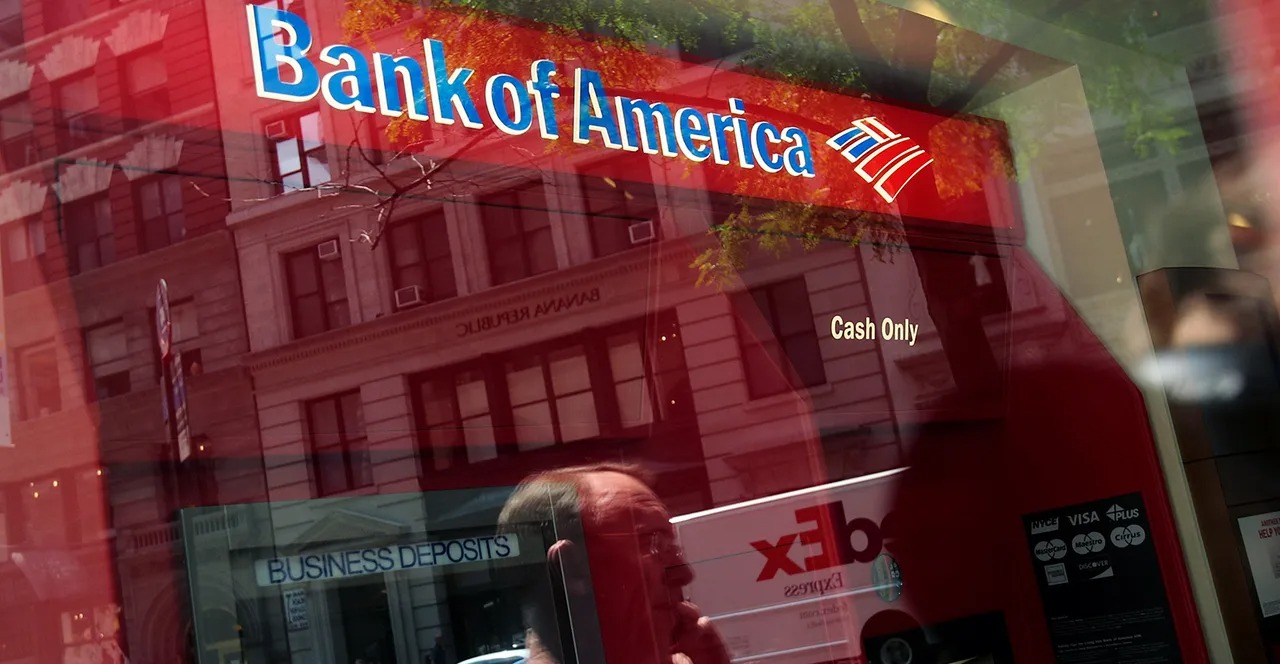
The US Department of the Treasury has imposed a total of $1.21 billion in financial penalties on Bank of America, one of the country’s largest financial institutions, for violating anti-money laundering legislation and sanctions regimes.
According to a statement published by the department, the bank was accused of failing to report suspicious transactions in a timely manner, failing to monitor financial movements that posed national security risks, and providing services to clients on sanctions lists.
Decisions by units operating under the Treasury Department accounted for the largest components of the penalty package.
The Financial Crimes Enforcement Network (FinCEN) penalised the bank for failing to report more than $5 billion in suspicious transactions in a timely manner.
More than $1 billion of that amount was noted to be directly linked to national security risks, including the operations of China-based money laundering networks.
Under the settlement reached with FinCEN, Bank of America admitted to willfully violating the Bank Secrecy Act. The bank was required to conduct an additional review covering suspicious transactions and to assess the effectiveness of its financial monitoring system.
The Office of the Comptroller of the Currency (OCC) separately fined the bank $750 million over structural deficiencies in its financial monitoring system.
The OCC stated that the bank failed to maintain adequate oversight over trillions of dollars in fund transfers and did not remedy the violations despite a formal notice served in December 2024.
The Office of Foreign Assets Control (OFAC) also stepped in over millions of dollars in transactions carried out in breach of sanctions regulations. OFAC reached an $11.6 million settlement agreement with Bank of America concerning 475 distinct potential sanctions violations.
Assessing the matter, US Treasury Secretary Scott Bessent said, “The actions taken today send a clear message that even the largest financial institutions are not above the law.”
UK fines banks over breaches of Russia sanctions
Alongside the penalty decision in the US, similar sanctions scrutiny is being carried out across European financial centres.
In September, the Office of Financial Sanctions Implementation (OFSI), an agency of the UK Treasury, fined Citibank’s London branch (CBNA London) £4.7 million for violating sanctions targeting Russia.
According to findings by the British regulator, between February and November 2022 following the outbreak of armed conflict between Russia and Ukraine, the bank processed 970 payments worth a combined £19.7 million, circumventing asset freezes and other restrictions. The government stated that the majority of the violations were linked to corporate accounts owned or controlled by sanctioned individuals. Russia, meanwhile, describes sanctions imposed by Western nations as illegal.
During the spring, OFSI also fined the London branch of Germany’s Deutsche Bank £165,000 ($221,000) for transferring funds to the Russian online streaming platform Okko.
Over the same period, the watchdog imposed a £390,000 fine on Apple’s European entity, Apple Distribution International (ADI), for a similar violation.
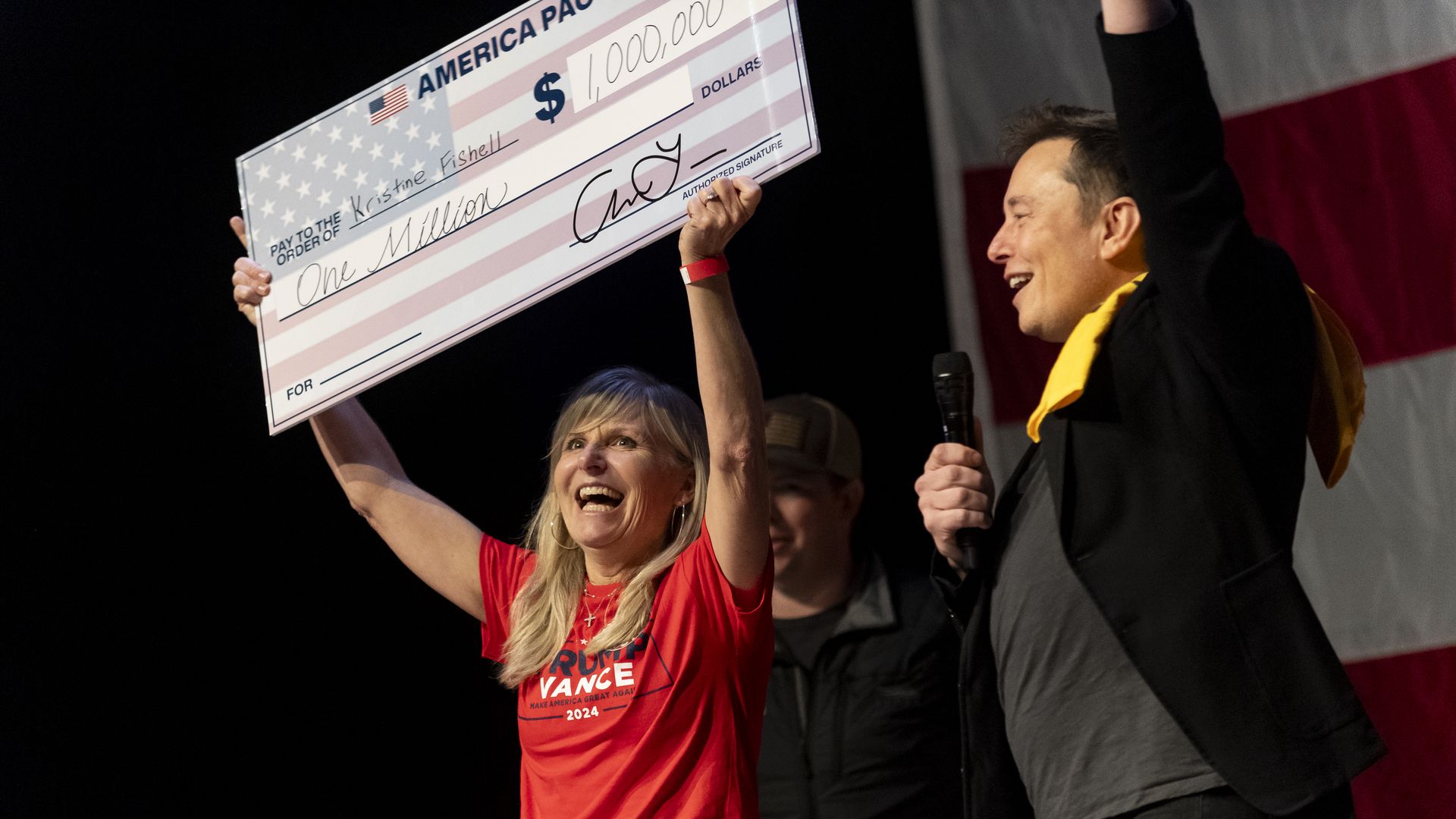
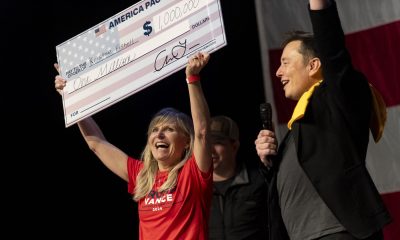
The world’s richest person, Elon Musk, has donated $276 million over the past three months to political action committees and conservative organizations supporting Republicans ahead of the upcoming US midterm elections.
The latest transfer brings the total midterm donations from Musk, the chief executive of Tesla and SpaceX, to $366 million.
First reported by The New York Times, the figures were confirmed to The Hill by a spokesperson for America PAC, which Musk founded. These latest expenditures establish Musk as the largest known donor of the 2026 midterms.
The bulk of Musk’s financial backing between July and September was directed towards congressional races.
The US billionaire transferred $158 million to the Senate Leadership Fund, a super PAC supporting Republican Senate candidates, and $20 million to the Congressional Leadership Fund, which finances House Republicans.
Millions divided among various committees
Musk, who provided more than $76 million during the period to America PAC, an entity he founded during the 2024 election cycle, also funded state-level contests.
The businessman transferred $10 million to the Lone Star Liberty PAC, which supports Texas Republican Senate candidate Ken Paxton, while donating $10 million to the Republican Governors Association and $2 million to the Republican Attorneys General Association.
In statements given to The New York Times and confirmed by The Hill, America PAC spokesperson Andrew Romeo argued that if Democrats take control in Washington and win critical state races, the country faces the risk of becoming one with indefensible borders.
Romeo said the investments enable the Republican apparatus to deliver its messages to voters.
Field spending continues despite talk of retreat
Musk, who kept his distance from politics for many years, entered the arena by spending hundreds of millions of dollars for Donald Trump during the 2024 election.
Accompanying Trump on campaign trails, Musk subsequently took charge of the Department of Government Efficiency (DOGE), which sparked controversy through federal employment and budget cuts.
Musk stepped down from his White House role in late May 2025 and remained politically quiet for months following a public rift with Trump.
After announcing last May that he would sharply scale back his political spending, Musk told The Economist in a July interview that he had become overly involved in politics and had gone too far.
Despite those remarks, Musk pressed ahead with political activity in July by authorizing America PAC to spend between $100 million and $120 million on a fresh field operation aimed at driving conservative voter turnout in the 2026 midterms.
Having repaired ties with Trump following their public spat, Musk joined the US president on an official visit to China in May and was also present during Chinese President Xi Jinping’s visit to Washington last month.

Ex-BND head Hanning tied to former Mossad chief amid spy inquiry

Iran war costs US economy $265 billion as household burden mounts

Trump dismisses US envoy to Greece Kimberly Guilfoyle

Most EU citizens reject fast-track Ukraine accession, poll finds

Ex-US official says air defences fail against Yemeni airport strike
-

 Europe2 weeks ago
German interior ministers drop unanimity rule to counter AfD veto
-
 Europe2 weeks ago
Key European allies excluded from US-led NATO meeting in Poland
-

 Diplomacy2 weeks ago
While the West breeds crises, Eurasia weaves peace and development, says Prof. Zhang Weiwei
-

 Middle East2 weeks ago
Netanyahu holds secret UAE talks with Saudi Arabia and Arab officials
-

 Diplomacy2 weeks ago
The European Union’s peace project has collapsed, MEP von der Schulenburg says
-
 America2 weeks ago
Musk appointed co-director of Pentagon future warfare initiative
-

 Opinion2 weeks ago
A new world in the East, old dogmas in the West
-
 Asia2 weeks ago
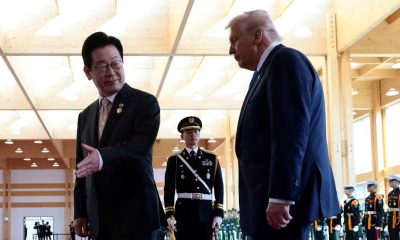
South Korea plans $120B spend on eight US nuclear power plants
