
Diplomacy
NATO faces severe structural and logistical deficits, Professor Erenel warns

In an extensive analytical interview conducted for the Harici digital news platform, retired Brigadier General Professor Fahri Erenel provided a comprehensive assessment of shifting global security dynamics, the structural limitations of NATO, regional conflict vectors in the Middle East, and the strategic calculus governing US, Israeli, and European defense postures.
Erenel, who serves as a faculty member at Istanbul Aydin University, argued that the persistent turbulence across the Middle East—marked by ongoing hostilities involving Israel, Iran, and various non-state actors—must be understood through the lens of domestic economic imperatives and political survival strategies, particularly within the United States. He noted that despite diplomatic interventions and post-summit declarations, the underlying drivers of regional instability remain largely unaddressed.
“Trump is executing a wartime economy strategy”
Evaluating the strategic behavior of Washington and the vacillating rhetoric surrounding potential military interventions, Erenel asserted that the US administration under Donald Trump is leveraging controlled geopolitical tension to stimulate domestic economic output. Drawing explicitly on international political economy theory, Erenel stated, “As Charles Kindleberger clearly articulated, maintaining global primacy carries immense costs. The US has sustained the burden of being a dominant power for decades, but the conflict with Iran revealed a critical shift: traditional allies did not immediately offer unqualified support to Trump’s military calls.”
Erenel contended that the frequent shifts in US messaging—alternating between aggressive threats of bombardment and sudden overtures toward diplomatic resolution—serve specific domestic market functions. “Trump is executing a wartime economy strategy,” Erenel stated. “By keeping markets on edge, talking up severe military action one day and impending negotiations the next, the administration influences global energy markets and drives up oil prices. This is a calculated attempt to address a massive US current account deficit approaching $40 billion and to spur domestic employment ahead of upcoming elections.”
Comparing current US industrial policy to the economic mobilization observed prior to direct US entry into the Second World War, Erenel emphasized that heightened global security risks directly benefit defense contractors and key industrial sectors. “During the World War years, American industry achieved full employment by supplying European belligerents long before deploying its own troops,” he explained. “Today, we see defense enterprise valuations surging alongside selective automotive and high-tech manufacturing partnerships focused on artificial intelligence and advanced air defense systems. The continuous consumption of munitions in regional theaters forces defense supply chains to run at maximum capacity, creating jobs and driving domestic spending within the US economy.”
“European nations face severe logistical and structural barriers”
Addressing the evolution of transatlantic security structures, Erenel expressed deep skepticism regarding the operational viability of initiatives dubbed “NATO 3.0” and European strategic autonomy. While recent alliance summits highlighted a transition from qualitative readiness toward quantitative buildup, Erenel argued that European defense integration remains severely constrained by deep-seated structural fragmentation, industrial dependency, and inadequate infrastructure.
“The concept of NATO 3.0 represents a narrative shift rather than a fundamental realignment of military capability,” Erenel said. “European nations face severe logistical and structural barriers that prevent the rapid deployment of heavy forces. For instance, while key allies like the US, Germany, and the UK rely on specific main battle tank platforms, European NATO members collectively operate 14 distinct tank variants utilizing up to 168 different types of ammunition. Standardizing logistics across such a fragmented inventory is an extraordinary challenge.”
Erenel further highlighted critical physical infrastructure deficits across the European continent, noting that bridges and transit corridors built for lighter vehicle loads cannot support modern 60-ton armored formations. “During recent exercises, heavy units encountered immediate bottlenecks at cross-border transit points, such as the German-Hungarian frontier, simply because the underlying infrastructure could not support their tonnage,” he observed. “European proposals to allocate a fraction of defense budgets to dual-use infrastructure reflect a belated realization that advanced hardware is ineffective if it cannot be mobilized. Given these constraints, together with the political refusal of several member states to drastically increase spending, Europe will remain heavily dependent on US military capacity for the foreseeable future.”
In contrast, Erenel pointed to Türkiye’s established manufacturing base and alignment with NATO standardized cataloging since 1952. He noted that as European stockpiles of critical ordnance—such as 155mm artillery shells—dwindle due to sustained high-intensity warfare in Eastern Europe, Turkish industrial capacity stands out as a vital operational asset for alliance readiness.
“Washington seeks a low-intensity, controlled escalation strategy”
Turning to the confrontation between the United States and Iran, Erenel detailed the operational constraints preventing a full-scale ground invasion of Iranian territory, while warning that targeted actions could focus on critical peripheral vulnerabilities. “A full-scale ground campaign penetrating into the Iranian heartland is militarily cost-prohibitive and politically untenable for Washington,” Erenel stated. “An airborne or amphibious assault toward major population centers would result in catastrophic casualties, far exceeding acceptable thresholds for the American public.”
Instead, Erenel outlined a strategy of sustained pressure directed at Iran’s economically and ethnically sensitive border regions. “Washington seeks a low-intensity, controlled escalation strategy designed to maintain psychological and economic friction,” he explained. “If external forces seek to project physical control, the primary axis of vulnerability lies in regions like Khuzestan, the Strait of Hormuz periphery, and Sistan-Baluchestan. The Sistan-Baluchestan corridor, bordering Pakistan and Afghanistan, represents Iran’s exposed flank. Operating in tandem with internal socio-economic pressures and active insurgent elements such as PJAK in the northwest, selective external pressure aims to fragment state coherence without requiring deep territorial occupation.”
Erenel added that sustained economic isolation, combined with targeted strikes on energy infrastructure and dual-use logistics, exacerbates internal political divisions within Tehran. He noted visible friction between hardline factions, notably within the Islamic Revolutionary Guard Corps (IRGC), and moderate elements favoring diplomatic compromise. However, he emphasized that hardline security structures maintain decisive operational control over strategic decision-making.
“Israel is pursuing a peripheral containment strategy”
Evaluating the diplomatic and military posture of Israel, Erenel dismissed the notion of a fundamental strategic rift between Washington and Tel Aviv, characterizing public disagreements as tactical theater designed for domestic audiences. “The apparent friction between top US officials and Israeli leadership reflects political maneuvering rather than a structural divergence,” Erenel asserted. “Both leaderships are managing precarious domestic political landscapes ahead of major electoral cycles.”
Erenel warned of expanding Israeli strategic activity in the Eastern Mediterranean, specifically highlighting Cyprus as a central pillar of Tel Aviv’s long-term security matrix. “Israel is pursuing a peripheral containment strategy, expanding its operational depth far beyond its immediate land borders,” Erenel stated. “Historical and geopolitical imperatives drive Tel Aviv’s focus on Cyprus. Because Israel lacks geographical depth and possesses limited maritime forces relative to regional landmasses, it views the island of Cyprus as an essential forward operating node.”
Erenel detailed the steady accumulation of Israeli real estate acquisitions, intelligence installations, and military training agreements across both the northern and southern sectors of Cyprus. “Through significant land purchases, infrastructure investments, and joint security arrangements, Israel is securing a forward position in the Eastern Mediterranean,” he stated. “The installation of advanced radar systems on the Troodos Mountains and joint intelligence initiatives with the Greek Cypriot administration directly impact regional equilibrium. From a strategic standpoint, this alignment—linking Israel, Greece, and the Greek Cypriot administration under the umbrella of shared opposition to Ankara—constitutes a deliberate attempt to encircle Türkiye from the south.”
Concluding his assessment, Erenel emphasized that Türkiye must take proactive countermeasures to safeguard its maritime rights and military presence in the Eastern Mediterranean. He urged the formal adoption of comprehensive maritime domain legislation and called for the continued enhancement of Turkish naval and air capabilities based in the Turkish Republic of Northern Cyprus. “Türkiye remains the indispensable power in the region,” Erenel concluded. “In response to shifting alliances and forward deployments in Cyprus, maintaining robust forward defenses, establishing permanent naval infrastructure, and protecting the integrity of the Mavi Vatan (Blue Homeland) framework are absolute strategic necessities.”






Diplomacy
Europe has been under US occupation since World War II, Italian journalist and author Thomas Fazi says
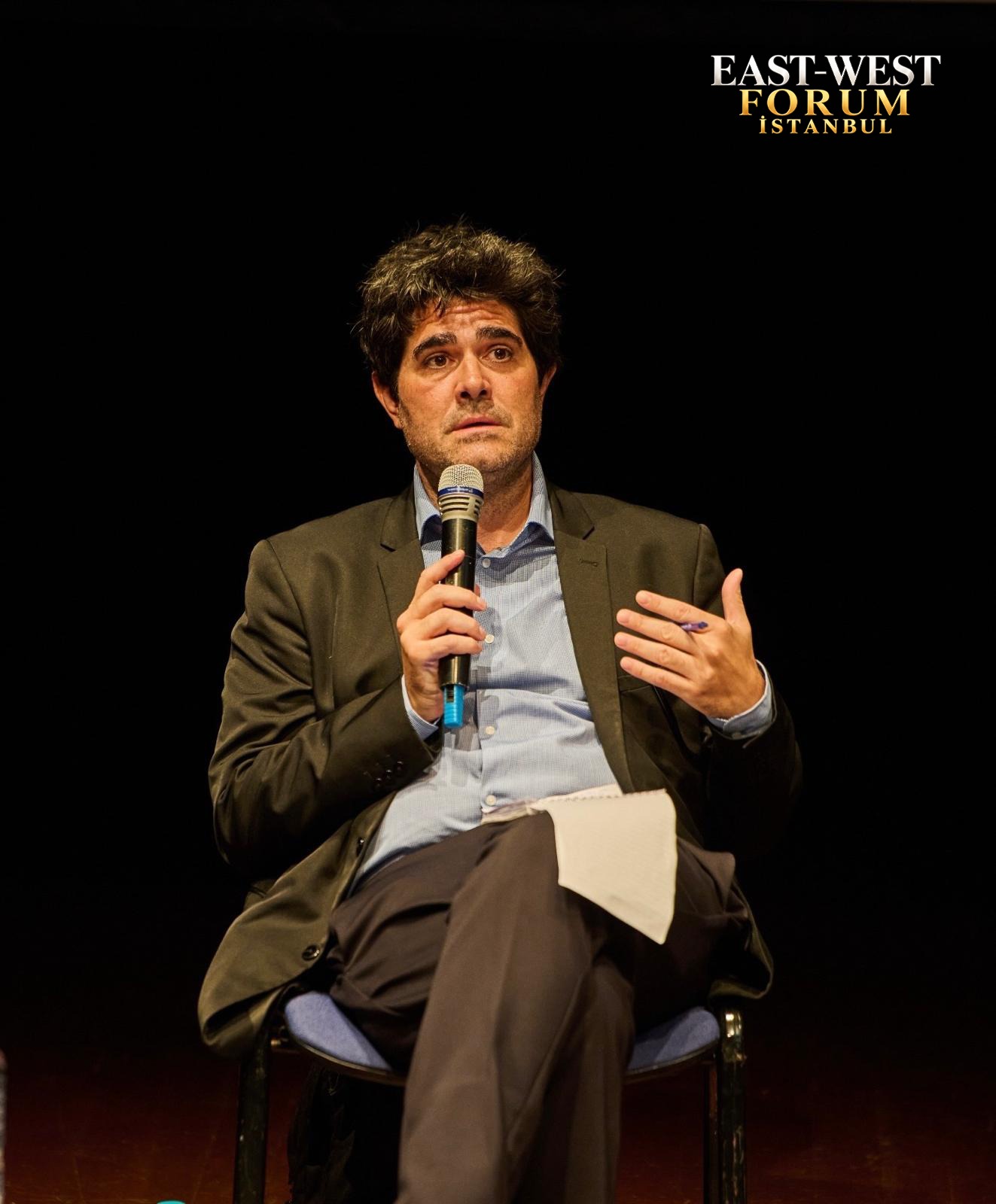
Editor’s note: Italian journalist and author Thomas Fazi, in his speech at the East-West Forum held in Istanbul on September 26, stated that European countries disregard their own fundamental economic and security interests, particularly in the context of the Ukraine war. Pointing out that this irrational policy cannot be explained by mere lack of foresight, Fazi expressed that the European continent has been turned into a “vassal” subordinate to transatlantic interests as a result of an ongoing process since the Second World War. Emphasizing that NATO operates as an apparatus to keep the continent under control rather than functioning as a defense organization, the author noted that the EU serves as the political wing of this imperialist order.
Thank you, Isabelle. And obviously a big thanks to the European Transcontinental Initiative and to Ulrike for setting up this amazing conference, which is a much needed breath of sanity. Amid the insanity that we’re experiencing in Europe at the moment.
Yeah, I’d like to start with something that Professor Panda said this morning when he spoke of the return of the national interest. And I think that got me thinking because I think that’s true for most countries. But there is one big exception, I think, to that rule. That big exception is Europe.
I think if we look at the actions of European countries in recent years in economic policy, security policy, geopolitics, most notably when it comes to the war in Ukraine, I think it’s really impossible to make the case that European countries have been pursuing their national interests, no matter how loosely you want to define it. European countries have systematically undermined their core economic interests, security interests and geopolitical interests. And so the question, the obvious question is why? And I think there are two explanations.
So one is that European leaders were simply misguided, foolish, that they were and still are pursuing what they believe to be their country’s national interest, even if even in the face of overwhelming evidence to the contrary. I think this may be conceivable if the consequences of these actions had been impossible to predict. But this clearly was not the case. It was self evident, for example, that decoupling from cheap Russian gas would have disastrous consequences for Europe, as has been.
And I, and many of us wrote about this in February and March of 2022, not because we were profits, but because it was obvious, just as it was obvious to everyone Ukraine had no chance of militarily defeating Russia, even with NATO support, support, and that therefore to push for a maximalist, military only solution to the conflict would have devastating consequences, first and foremost for Ukraine, obviously, but also for Europe, as has been not only in economic terms, but in security terms as well.
Of course, and again, many of us have said this right from day one. So unless we assume that European leaders didn’t understand this, that they would, that they’re just dumb, and as much as some of them clearly are, unless we assume that the entire EU establishment was simply too dumb to see what was clear to many observers, that is that these policies clearly ran counter to Europe’s interests and then doubled down on these policies when it became evident how contrary they were to those interests, I think then we have to consider an alternative explanation, and that is that Europe’s elites have not for a long time had the national interest in mind or even the collective interest of Europe as a whole, no matter how you want to define it.
In other words, I think the classic rule realist framework that contends that all states tend to defend and maximize their interests economically, militarily, et cetera. Really doesn’t apply to Europe because based on that framework, Euro’s policies are totally irrational. So I think in order to understand European policy, we need a different framework. And I think the framework that is most useful in Europe’s case is vassalization. Simply put, Europe, and by that I mean virtually every EU country, plus the entire Brussels establishment, has been hijacked by a transnational transatlantic elite that couldn’t care less about the objective interests of their countries, but is beholden to a completely different set of interests.
These are private oligarchic interests. Nowadays mostly transnational financial interests and military industrial interests, and of course foreign interests, namely the interests of Washington’s imperial establishment and by definition of Israel as well. So how did we get here? And this was clearly a very long process in the making, and one that started in the immediate aftermath of World War II, when the US identified Europe as a key pillar in their strategy of global dominance. Projecting US power globally required control in Europe economically, militarily, but also culturally. And Europe has effectively been under US military occupation since World War II, 80 years since the end of that war. We still have almost 100,000 US soldiers stationed in Europe. Europe still has about 30 key military bases across the continent. Officially, these are here to protect us. Protect us from whom? From Russia, which doesn’t represent a real threat to Europe.
In fact, I would argue never really represented a threat, not even during the Cold War. That threat was largely created and inflated by NATO itself. So NATO was never about defending Europe, of course. So it was always about controlling Europe and ensuring Europe’s strategic subordination to US strategic interests and about projecting US power globally. And this is still true, I would say even truer today. Not only is NATO obviously still used to ensure Europe’s alignment to US interests, and the Russia Ukraine war is the most obvious example of that, but also to project US power globally. Just the other day, NATO’s Secretary General, Mark Rutte, who tends to say the quiet part out loud, very often said that 5,000 sorties were launched from U.S. bases in Europe in support of the U.S. israeli aggression of Iran.
So Europe, despite the condemnation of some leaders, is actually fully complicit in the attack against Iran. In fact, Europe represents a key part of American military logistical infrastructure for military projection eastward towards Russia, but also southward towards the Middle east and, you know, NATO. And again, all the talk about NATO 3.0 and the supposed decoupling of Europe and America, this is just theater. In fact, NATO 3.0 will simply entrench Europe’s subordination to NATO further.
But of course, NATO was just one tool. America obviously had very, you know, America’s national security state developed very strong ties with the national security states of European countries. And America’s always exercised massive economic, technological and financial control over Europe. And of course it’s exercised massive cultural and ideological influence over the continent, not only through pop culture, clearly, but in the political domain through the English language media and the sprawling ecosystem of transatlantic think tanks and fake NGOs. And then you have a final pillar and I move you towards the conclusion which is often overlooked, but is crucial, I would say, and that’s the EU itself.
The EU has always been presented as a counterweight, potential counterweight to American power, but it’s never really been that. It’s always been a key tool for keeping Europe anchored to the transatlantic US led NATO system. It’s always been the political arm of NATO. And I think that is particularly obvious today under the rule of Ursula von der Leyen, who has gone out of her way to ensure the alignment of European countries to US interests, often against the will of individual governments themselves.
So now we’re in a very dangerous situation because through the eu, which is a structurally anti democratic institution, the transatlantic NATO establishment has achieved effectively full control, economic and political control over European countries. European countries are not sovereign and by definition they’re not democratic. And this makes the challenge of achieving systemic change through the electoral process all the more difficult.
And so to conclude, I would say that Europe is in many respects a continent under occupation. And so the question of how the people of Europe can achieve decolonization from the transatlantic system is maybe the key question facing Europe today. And hopefully a question that we will be analyzing throughout this panel.
So obviously political activism and political change necessarily occurred through violent struggles. That’s just the history of pre democratic Europe. So he wasn’t advocating, I mean, he was just like acknowledging the reality of the working class. And, and so I think this really points to, you know, a deeper problem, which of course, you know, I focused on my talk on the US’s role. But Europe’s problems predate America.
You know, America’s, America’s rise, the global empire by, By. By a very long time. And the problem has to do with, I mean, the visceral opposition of European economic political elites to democracy and to the working class for centuries. Today we speak of liberal democracy and we imply that somehow democracy is an outgrowth of liberalism. This is a total lie. All the great Liberal thinkers were viscerally opposed to democracy, mass democracy, democracy for everyone, a vote for everyone.
They the idea of democracy was democracy for the property owning classes, for the capital owning classes. Mass democracy was achieved through often violent struggles by the working, by the working classes and often the socialist movement. So that’s a problem. And we’ve had to, you know, the people of Europe have had to fight tooth and nail against their elites forever. It’s been a constant struggle.
We have the worst elites in the world and that’s, you know, who not only have no interest in the well being of other people in the global south, but have no interest in the well being of their own people, of the European people. Which is why Europe has always been mired in violence, political violence, class conflict. Even during the, you know, so called heyday of post war, you know, democracy, mass democracy was incredibly violent. And we had political, I come from Italy, my country had insane levels of political violence through the, you know, 60s, 70s and 80s. And it was the same in Germany and France and all major European countries. And this was the heyday of mass democracy. But that those were the years, the decades in which we achieved the greatest social and economic progress for the masses in Europe.
But it was also achieved through often violent struggle, not simply through voting. So this I think points to a deeper problem. I mean the gains that we achieved in the sort of the post war period were not just given to the people. They were the result of, of for a brief period the exist sort of the collective organized strength of the working classes, of the masses. And they were able to wrestle away some power from the organized power of the elites.
That’s basically, and it was always very relative victories. But they were able to wrestle away some power and control from the organized power of capital throughout the sort of, you know, first 30, 40 years after World War II and of course even preceding World War II. But the conditions that allowed that and that allowed mass to mass democracy no longer exist in many respects.
You know, the mass sites of production, big factories where workers could meet and unionize, none of that exists. And so the, the conditions that allowed for mass democracy no longer exist. Structural, material conditions. And so the real question is, you know, how do you rebuild democracy and wrestle away some power at least from, from, from, you know, from these political economic elites when the conditions that allowed us to do, to do that in the past no longer, no longer exist. Which is why you have our elites who are completely unleashed because they have, there is no real counter power anymore. I think that’s a big part of the problem.
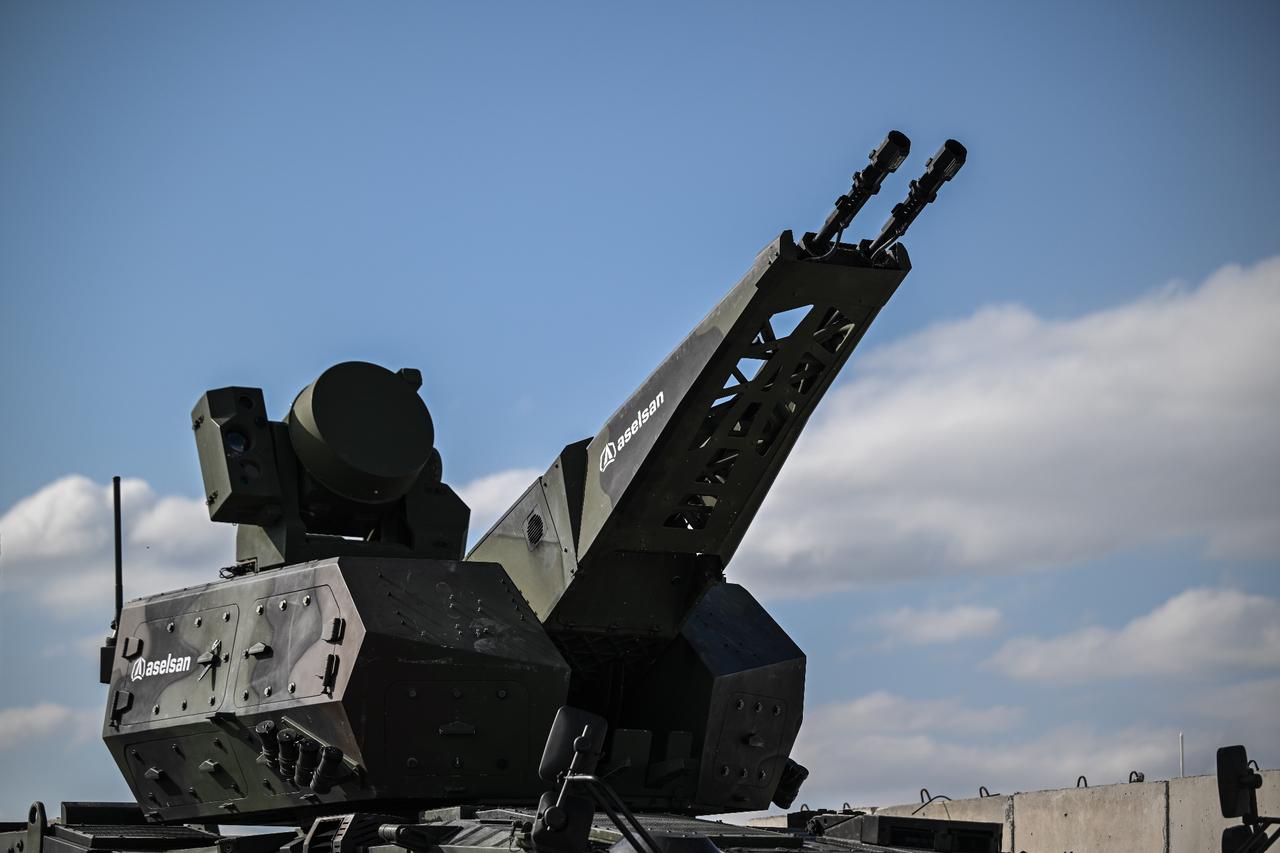
Türkiye has reportedly delivered a small number of Korkut air defence systems to Ukraine at the beginning of the year to bolster its air defence capabilities and test them in the field.
A report by the Middle East Eye (MEE) portal, citing sources familiar with the matter, stated that the delivered systems were placed under operational evaluation by the Ukrainian military.
Manufactured by Aselsan, a standard set of the Korkut system consists of three weapon system vehicles and one command-and-control vehicle.
The sources did not share information regarding how many sets or vehicles were deployed to the field in Ukraine.
Developed to destroy a range of aerial targets, including cruise missiles and unmanned aerial vehicles, the system also possesses the capability to counter FPV drones and wire-guided drones using 25 mm ammunition.
Ukraine interested in additional purchases
Evaluating the system’s performance in the field to MEE, a Ukrainian official stated that Korkut passed the combat test.
Regarding the operational process, the Ukrainian official said: “There were some problems, but they are not the kind that cannot be overcome with minor adjustments.” The same official expressed that the Kyiv administration is interested in purchasing additional Korkut systems if the terms and price are favourable.
Ukrainian sources speaking to MEE reported that many Turkish defence industry companies are collaborating with the Ukrainian military to test and refine their systems.
The report recalled that since the start of the war, Türkiye has supplied Ukraine with various defence equipment, such as Bayraktar TB2s, laser-guided missiles, artillery ammunition, and machine guns.
Meanwhile, the US State Department notified Congress in August of its intention to approve the transfer of 70 M39 ATACMS tactical ballistic missiles from Türkiye’s inventory to Ukraine.
Following this potential shipment valued at approximately $280 million, the Russian Foreign Ministry demanded an explanation from Washington and Ankara regarding the matter.
Russian Foreign Ministry spokeswoman Maria Zakharova maintained that new arms shipments to Kyiv could not seriously alter the course of the military operation on the ground, but would adversely affect Russia’s relations with the US and Türkiye.
Zakharova said that providing weapons to Kyiv while using peace rhetoric undermined mutual trust. Ivan Timofeev, Director General of the Russian International Affairs Council (RIAC), noted that the possible transfer of US weapons to Ukraine via Türkiye could complicate prospects for a settlement.
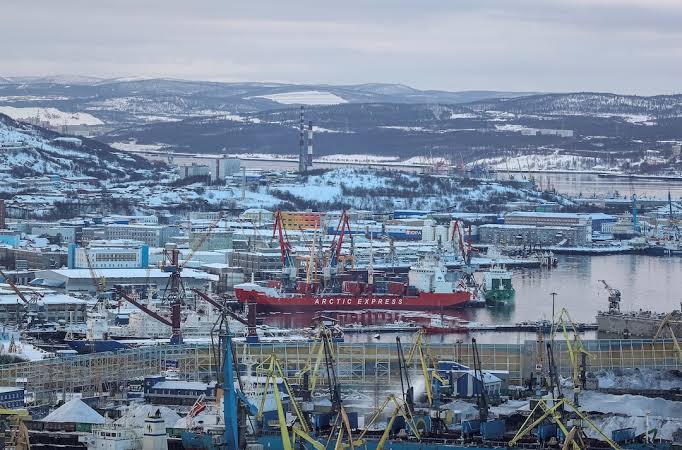
The melting of Arctic glaciers and disruptions across Middle Eastern shipping lanes have markedly increased interest in the Northern Sea Route.
According to a report by the Financial Times based on Lloyd’s List Intelligence data, 133 voyages were recorded on this route in September.
This figure represented a 46% increase compared with August and quadrupled the 2022 data, reaching a record level.
The newspaper noted that nearly half of the voyages were carried out by Russian-flagged vessels.
Chinese shipping companies, seeking alternative corridors to the European market due to disruptions in the Red Sea and the Middle East, are also among the actors choosing this line.
The increase in maritime transport is seen as directly linked to the retreat of the ice cover in polar seas and risks across traditional trade routes.
The threat posed by Yemeni Houthis in the Bab al-Mandab Strait at the entrance to the Red Sea is cited among the primary reasons.
Bridget Diakun, head of maritime analytics and research at Lloyd’s List, stated that official authorities and shipping companies are turning to routes that are less affected by geopolitical upheavals.
It saves 16 days compared with the Red Sea
The Chinese-owned container vessel Dubai Tower reached Felixstowe in Britain from the port of Qingdao via the North Pole in 24 days in September.
The newspaper noted that a voyage undertaken via the Suez Canal or the Cape of Good Hope would take at least 40 days.
Another vessel belonging to the same company entered the polar route on 27 September en route from Ningbo to Felixstowe.
September, when the ice sheet recedes to its seasonal low, forms the busiest period in the region as it allows vessels to pass without an icebreaker.
Asian companies turn to the route
The infrastructure operations of the Northern Sea Route, which extends along Russia’s northern coastline, are managed by Rosatom, the Russian State Atomic Energy Corporation, which is responsible for regulating maritime traffic and developing facilities.
Transit permits for vessels are issued by GlavSevmorput, which operates within the agency.
Aleksey Likhachev, director general of Rosatom, reported in August that transit permits had been granted for seven vessels belonging to the Chinese shipping company Sealegend Shipping.
The company planned eight voyages between China and Europe between August and October, ice conditions permitting. Likhachev stated that the plan included weekly voyages throughout the navigation season.
South Korea is also among the countries taking an interest in the Northern Sea Route. According to an August report by Reuters, preparations were made for a first commercial voyage from Busan to Europe over the pole using the container vessel PanStar Acro.
While the voyage encompassing the ports of Felixstowe, Rotterdam, and Gdańsk was projected to take 40 to 45 days, South Korean officials calculated that the polar corridor shortened travel time by about 35%.
In a statement in April, Likhachev announced that Rosatom aims to exceed 40 million tonnes of cargo carried along the Northern Sea Route in 2026.
Cargo volume carried over the past two years has remained above 37 million tonnes.

The era of corridor alliances in the Middle East

Bill to drop NATO membership goal submitted to Ukrainian parliament

AfD softens EU exit stance to seek reform of bloc and eurozone

Marine Le Pen unveils fiscal programme pledging French budget cuts

EU seeks Chinese trade signal in Beijing as surplus widens
-

 Diplomacy1 week ago
East-West Forum in Istanbul highlights irreversible shift to multipolarity
-

 Europe1 week ago
European unions urge governments to scrap all Palantir deals
-

 Europe2 weeks ago
Emmanuel Todd says West faces collapse amid Ukraine and Iran crises
-
 Diplomacy2 weeks ago
East-West Forum in Istanbul to debate multipolarity and global order
-
 Europe2 weeks ago
European intelligence chiefs divide over risk of Russian attack
-
 Middle East2 weeks ago
Sharaa says 7 October must not shape Israel policy on Syria
-
 Europe1 week ago
Rome protests AfD poster depicting South Tyrol as independent state
-
 America2 weeks ago
Republican support for Trump’s war with Iran drops sharply in polls
