
Diplomacy
Prof. Doster outlines strategic limits of US and Israeli campaigns on Iran

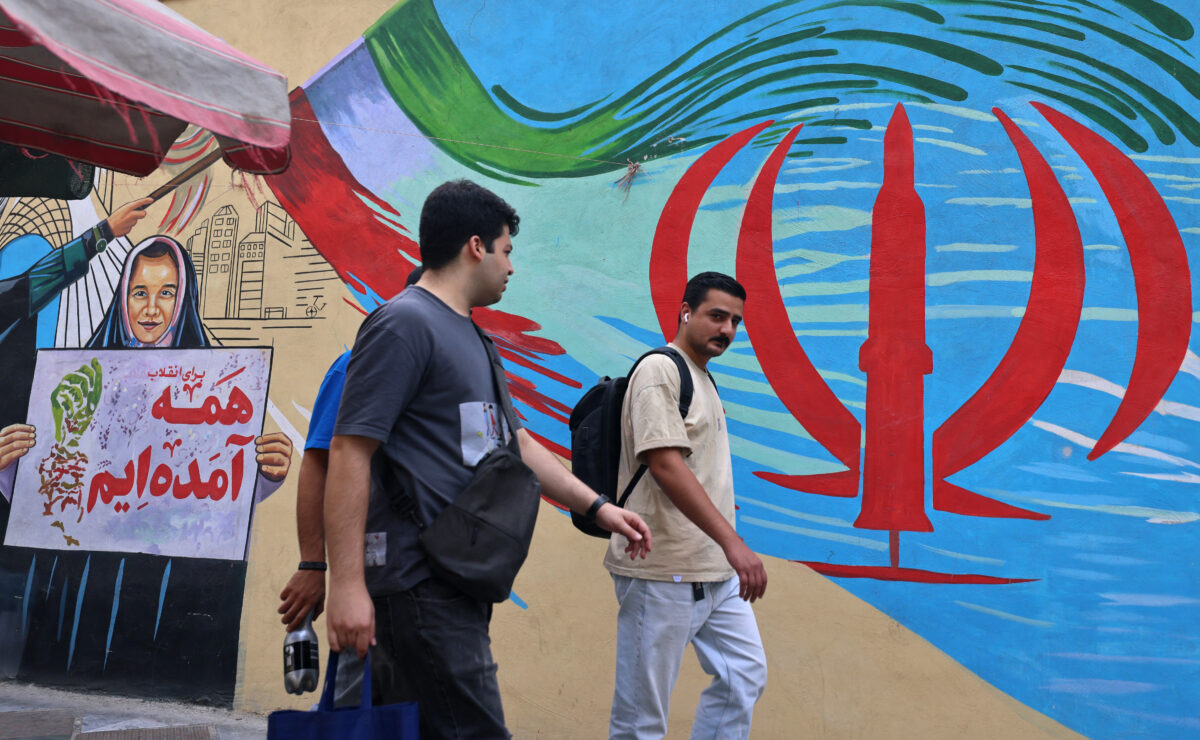
The strategic shifts within the Shanghai Cooperation Organisation (SCO), the historical balance governing Turkish-Russian relations, and the compounding geopolitical pressures confronting the US and Israeli leaderships in the Middle East formed the central themes of an extensive interview conducted by Dr Elif İlhamoğlu with Professor Dr Barış Doster, a senior academic in international relations, on the Harici digital broadcast network.
Dr İlhamoğlu opened the discussion by noting the leaders’ summit of the SCO convened in Bishkek, observing that the gathering had not received the attention it deserved in Western media despite the attendance of major global figures, including Turkish President Recep Tayyip Erdogan, Russian President Vladimir Putin, Chinese President Xi Jinping, and Indian Prime Minister Narendra Modi. Setting the context of the proceedings scheduled to run through 3 September, Dr İlhamoğlu reviewed the opening statements delivered by the leaders. President Erdogan characterised the SCO as an indispensable component of a multipolar order and issued a call for a more equitable international system. President Putin affirmed that Russia would exert every effort to eliminate elements that provoke armed conflict. President Xi urged the implementation of global initiatives, particularly promoting Chinese-led frameworks such as the Global Security Initiative to establish a just and peaceful order. Prime Minister Modi appealed for an end to endless wars. Dr İlhamoğlu then asked Prof. Doster how he evaluated the summit and what expectations should be drawn from it.
“The SCO proves its self-confidence by admitting rivals”
Prof. Doster stressed the institutional maturity and growing significance of the organisation, charting its historical trajectory:
“First of all, this summit is positive and important. If we date it from 1996, from the Shanghai Five, that makes 30 years. If we date it from its transformation into the Shanghai Cooperation Organisation in 2001, because initially it was five members—the Shanghai Five under the leadership of Russia and China, along with Kazakhstan, Kyrgyzstan, and Tajikistan—and in 2001 Uzbekistan joined, leading them to rename the Shanghai Five as a cooperation organisation, that makes 25 years from 2001. Now, whether one counts a quarter-century or 30 years from 1996, this represents an important process in terms of institutionalisation. It is an important period for taking stock, for self-criticism regarding what was achieved, how it was done, and what could not be achieved and why.”
Prof. Doster underscored the complex internal dynamics of the expanding bloc, which grew from five to six, then to eight with India and Pakistan, and subsequently to ten members with the accession of Iran and Belarus:
“Among the members, geography is expanding, but there are also differences in scale. The number of members is increasing—from five to six, from six to eight, from eight to ten. However, there are also differences in expectations, interests, threat perceptions, and priorities. Not all members enjoy sweet and harmonious relations. Among the members are states with serious mutual rivalries, such as India and Pakistan, who were admitted simultaneously. Then comes Iran, a state currently locked in struggle with the US and Israel in the Middle East.
“What does this show? It demonstrates that as the organisation institutionalises, expands, and diversifies its membership, and as large disparities in scale emerge among its members, it asserts a major ambition and seeks to demonstrate self-confidence by incorporating members that have serious disputes between them. The founders and leaders of the SCO, foremost among them Russia and China, are saying: ‘Look, who wanted India’s membership most? Russia. Who wanted Pakistan’s most? China.’ But by simultaneously admitting two nuclear-armed states that experience severe tensions, particularly the Kashmir dispute, and which have been on the verge of hot conflict, they are asserting an ambition. They are saying, ‘We can resolve the problems between these two members within the framework of the Shanghai spirit by admitting them on the exact same day; we have confidence in ourselves.’ They want to convey this message.”
Prof. Doster rejected characterisations equating the SCO to a Eurasian counterpart to NATO:
“Is this important? Naturally, it is important. Is it important for a multipolar world? Yes. Is it important for the evolution of an organisation? Yes. For instance, many of our colleagues argue that this organisation is a ‘Eurasian NATO’. I do not agree with that view. NATO is an organisation established in a different geography, under different regimes, within a different global context, and under the leadership of a different state. The Shanghai Cooperation Organisation, by contrast, is the product of another geography, other leading major powers, and a completely different international climate.
“One emerged at the onset of the Cold War; the other was established after the Cold War had ended. One is explicitly an Atlantic alliance, the North Atlantic alliance; the other is the Shanghai Cooperation, with a distinctly Eurasian weight. One is an organisation of regimes that prioritise liberal values and capitalism, such as democracy, human rights, freedom, and the rule of law, emerging from a context similar to the IMF, the World Bank, and the European Union. The other belongs to a climate and era marked by the dissolution of the Soviet Union, the collapse of the socialist and communist bloc, the relegation of the Warsaw Pact to history, and the downfall of the Eastern Bloc. Who is the founder and master of the former? The US. In the latter, Russia and China hold primacy.”
He observed that the perspectives of Moscow and Beijing within the SCO have converged over time:
“Initially, their expectations differed. While Russia viewed the Shanghai Five and subsequently the Shanghai Cooperation Organisation through the prism of separatism, extremism, crime, and border issues, China approached it more from a trade-oriented perspective. With new accessions, these perspectives multiplied, diversified, and began to harmonise. Today we see Russia moving closer to China on commercial matters, and China moving closer to Russia on security issues. The structure takes into account the concerns, threat definitions, priorities, and interests of new members. Its secretariat, its institutionalisation, and its dialogue partners have matured accordingly.”
Prof. Doster situated the SCO alongside the BRICS platform and the Belt and Road Initiative as drivers of a broader systemic shift:
“BRICS is a different structure—it is a platform rather than an institutional mechanism with a permanent secretariat in the conventional sense. If we add the Belt and Road Initiative, also spearheaded by China, this diversification is beneficial for the transition toward global multipolarity and for the Global South, or the Third World, a term I personally favour. As our great liberator and leader Gazi Mustafa Kemal Pasha, the great Ataturk, defined it, the proliferation and diversification of organisations that belong to, support, and empower oppressed nations is positive both for checking, restraining, and slowing imperialism, and for advancing multipolarity.
“This holds an added advantage for countries like Türkiye. For states defined as middle powers, as well as for smaller, less powerful nations, a multipolar system is beneficial because it expands their alternatives and strategic options.”
Dr İlhamoğlu noted the structural contrast between the two blocs, observing that if the US were removed from NATO, the alliance would face dissolution, whereas the SCO embeds multipolarity into its governance.
“NATO has operated as an instrument of US imperialism”
Prof. Doster elaborated on the structural divergences separating NATO and the SCO, reiterating his analytical critique:
“NATO has 32 members, while the Shanghai Cooperation Organisation has 10. Look at NATO’s structure when it was founded, and look at the geography across which it expanded after the collapse of the Soviet Union by rapidly absorbing former Soviet republics and former Warsaw Pact members. Are they the same? Certainly not. In the Black Sea, Türkiye joined NATO in 1952, followed later by Bulgaria and Romania. If they had the capacity, they would seek to include Ukraine and Georgia as well. The most recent two members are Sweden and Finland.
“Consider the geography of NATO’s expansion versus the geography of its founding. Look at its political economy, and examine what NATO signifies for the US arms industry. Then compare that to the founders of the Shanghai Cooperation Organisation and the states it incorporated during its expansion. There is an immense divide between them. Because of the historical context, the time frame, the domestic regimes of the member states, and their numbers, they cannot easily be compared.
“Alliances typically form around common denominators: liberal regimes sharing values like democracy, human rights, and the rule of law; shared threat perceptions; geographic proximity; and shared interests. When we look at NATO from its inception, including during the period following the September 11 terrorist attacks when its famous Article 5 was invoked, it has functioned according to the priorities of US imperialism and served as an instrument of aggression and occupation for US imperialism. Comparing NATO, founded in 1949 and now comprising 32 members, expanding despite assurances given to the Russians, with the Shanghai Cooperation Organisation shows that these structures are not comparable.”
Dr İlhamoğlu turned to bilateral diplomacy on the summit margins, highlighting the meeting between President Erdogan and President Putin. President Erdogan stated that Türkiye-Russia relations were far more advanced than ever, while President Putin described Türkiye as remaining one of Russia’s privileged partners in foreign policy and economics. Both leaders indicated that the Akkuyu Nuclear Power Plant project had reached its final stage and signalled potential new joint ventures. Dr İlhamoğlu asked Prof. Doster how he assessed bilateral ties, taking into account past tensions such as the S-400 dispute and recent developments in the Black Sea regarding attacks on Turkish commercial vessels.
“Ankara and Moscow know their ties must not be severed”
Prof. Doster framed Turkish-Russian relations within an enduring historical and institutional continuum:
“Whatever the political leaderships governing these countries or their political-economic preferences may be, relations between the two countries represent the ties of two great civilisations that are the heirs of empires, possess profound state traditions, and constitute two great nations. Whether Türkiye produces centre-right, centre-left, political Islamist, or nationalist traditions, and whether it is the era of Menderes, Demirel, Ozal, Erdogan, or Ecevit, Türkiye views the Soviet Union and its successor, Russia, through a historical lens. Moscow looks at Ankara through the exact same prism.
“The periods when bilateral relations peaked were the founding eras of both modern states. The Great Soviet Revolution, the October Revolution of 1917, overthrew the empire, bringing the Bolsheviks under Lenin to power. In Türkiye, under our great liberator Gazi Mustafa Kemal Pasha Ataturk, the National War of Independence took place, dismantling an empire as well. These two historical processes, which formed the subject of my doctoral dissertation, occurred concurrently through war and revolution following the dissolution of empires, and both possessed an anti-imperialist character, particularly against Britain. The Russians knew the Turks would not become communists, yet Lenin recognised Mustafa Kemal as a brilliant leader fighting the British and resolved to support him.”
He reviewed the long historical trajectory spanning the Ottoman and Romanov empires:
“Prior to that, two empires—the House of Osman and the Romanovs—fought, competed, and struggled. Over roughly the past century, the Russians changed their name three times and changed their regime three times: Tsarist Russia collapsed and was replaced through war and revolution by a communist regime under the Bolsheviks; the USSR collapsed in December 1991, leading to the Russian Federation with a semi-presidential system and a rapid transition to capitalism. Yet did this diminish the weight of the Russians on the world stage, their qualified human capital, their diplomatic ambition, or their historical pursuit of access to warm seas? It did not.
“The periods when our relations with Russia were strongest coincided with times when centrist political cadres governed Türkiye, such as the Demirel and Ozal eras. The Turkish construction sector carried out its successful African projects in Libya, while to the north it executed major projects across Russia, the Soviet Union, and Moscow. When this historical memory is kept in view, commercial relations, Russian tourism to Türkiye, our grain purchases—which President Erdogan also emphasised—and our defence acquisitions all fit within this perspective.”
Prof. Doster addressed acute diplomatic crises in recent years, noting how structural pragmatism prevailed:
“Under the Justice and Development Party, severe problems were experienced with Russia. We shot down their aircraft, which was a first in the history of a NATO member state. Subsequently, their ambassador was assassinated in Ankara, an incident that 300 years ago would have constituted a casus belli. Yet both states acted with great restraint.
“Naturally, there exists what we term a historical and balanced tension, a historical and balanced rivalry between them. They hold differing views on Central Asia, diverging positions on Chechnya, and disagreements over Ukraine—even as Türkiye relies on the Montreux Convention, one of the brilliant achievements of Gazi Mustafa Kemal Pasha. Disagreements persist regarding Crimea, over influence in the Caucasus, and President Putin has likely made a note of the S-400 issue.
“Nevertheless, no matter how strained relations become, both capitals understand that ties must not be broken or allowed to deteriorate into unmanageable phases. They value mutual friendship geographically, historically, politically, and economically. Russia is consistently one of Türkiye’s top three foreign trade partners, alongside Germany within the EU and China. We import grain, natural gas, and petroleum from Russia, and welcome large numbers of Russian tourists, while exporting fruits and vegetables to Russia and undertaking construction projects there.
“Taking all these factors together, Türkiye is a NATO member, and a loyal one, which Russia understands. However, Russia positions Türkiye in a distinct category. While they would not admit a NATO member to the SCO, they recognise Türkiye as a significant actor that experiences friction within NATO, and they position it accordingly.”
Dr İlhamoğlu turned to the intersection of ongoing armed conflicts and electoral politics. She pointed to the upcoming November midterm elections in the US amid the war involving Iran, where President Donald Trump has altered his rhetoric and actions to mitigate potential electoral damage. Similarly, in Israel, Prime Minister Benjamin Netanyahu faces domestic instability and risks losing partial US support, drawing criticism. Dr İlhamoğlu asked how leaders are managing the dynamic between warfare and election campaigns.
“Netanyahu cannot defeat Iran without US troops in combat”
Prof. Doster analysed the domestic political vulnerabilities confronting the US and Israeli leaderships:
“From the US perspective, oil prices driven by volatile conditions in the Strait of Hormuz represent a clear vulnerability for Trump. Having lived in the US, I know that ordinary citizens are not ideological in the way we are, but they care deeply about the price of fuel for their cars. Furthermore, the midterm elections take place in November. In US political science terminology, if a president loses, he becomes a lame duck for the remaining two years, a weak president. Therefore, ahead of November, Trump requires a foreign policy or military achievement that can be presented effectively at home and abroad.
“However, such an outcome is not achievable regarding Iran. The US has not defeated Iran militarily. Despite rhetoric claiming Iran had two, three, or twenty-four hours left, events demonstrated otherwise. In fact, stockpiles of expensive missiles and rockets produced by the US defence industry have been depleted. Politically, no objective was secured; the regime was not changed, and the combat capability and resolve of the Iranian armed forces, the Revolutionary Guard, and other armed formations were not broken. On the contrary, the Iranian nation, including opponents of the regime, set domestic opposition aside to rally behind their state. Trump did not achieve his aims in Hormuz, and there is no indication that conditions will shift to his desired scale before November.”
Turning to Israel, Prof. Doster assessed the strategic limits of its military operations against Tehran:
“What has become evident is that even with complete US backing, Israel cannot defeat Iran on the battlefield if the US itself is not fighting directly. Israel received US funds, weapons, intelligence, foreign policy backing, financial support, munitions, artillery, missiles, and radar systems. Yet if US combat aircraft are not bombing Tehran, Israel cannot defeat Iran on the battlefield alone. Furthermore, Iran demonstrated that through the range, technology, and cost efficiency of its missiles and radar systems, it could carry out highly effective counter-strikes and penetrate Israel’s defensive domes.
“This constitutes Netanyahu’s vulnerability. During periods of war and armed conflict, security-driven policies typically gain traction among electorates as concerns over physical survival rise. Netanyahu argues that Arabs and Iran are hostile and claims the public must unite behind him. Yet he and his spouse face documented charges; he is being tried for genocide at international courts and faces severe domestic corruption allegations. He attempts to suppress these issues by claiming the country faces an existential threat.
“However, he cannot convince the Israeli public as easily as before. If his primary opponent were a liberal figure, Netanyahu might find it easier to persuade the electorate on security grounds. But his strongest opponent is a former Chief of General Staff. Netanyahu cannot credibly claim that a former Chief of General Staff is an overly peaceful figure sympathetic to Arabs or Iran. On matters of security, existential threats, and armed conflict, his rival possesses professional training and military expertise far exceeding Netanyahu’s.
“This places severe pressure on Netanyahu. Israeli voters sympathetic to hardline policies who perceive Netanyahu as ineffective look toward the former military chief. Open sources indicate significant losses for the Israeli military, depletion among reserve units, and severe psychological trauma among returning soldiers. When critics argue that Netanyahu has failed to wage the war effectively, they direct their support toward a former Chief of General Staff rather than leftist or Marxist candidates.”
Dr İlhamoğlu observed that following the inability to achieve a military breakthrough against Iran, US Treasury Secretary Scott Bessent had initially signalled the implementation of unprecedented sanctions targeting Iran and third-party facilitators, including Chinese banks. However, after extensive media buildup, no sweeping measures were enacted, with Bessent citing the risk of triggering a global economic crisis. Dr İlhamoğlu noted that analysts pointed to ongoing US-China negotiations and a projected reciprocal visit by President Xi Jinping to the US in late September as factors restraining Washington, and asked Prof. Doster for his appraisal.
“US tariff measures against China have acted like a boomerang”
Prof. Doster addressed the broader efficacy of international sanctions and the structural constraints limiting US leverage:
“Having studied the history of sanctions, one sees that sanctions have rarely achieved their stated objectives globally. Since the 1979 Iranian Islamic Revolution, Iran has faced continuous sanctions, blockades, and embargoes. Iran has suffered strain, economic exhaustion, brain drain, periods lacking basic goods, and technological impediments, but it has not surrendered. Sanctions are likewise imposed on North Korea and Cuba, yet none of these states have been brought to their knees. In certain instances, countries transform sanctions into national mobilisation, achieving domestic breakthroughs in targeted sectors and technology.
“Regarding diplomacy, Trump frequently refers to foreign leaders as personal friends—including the leader of North Korea, President Putin, President Erdogan, President Xi, Egyptian President Sisi, and Ahmad al-Sharaa. He is exceptionally generous with such characterisations.
“More importantly, Iran possesses strategic depth supported principally by two major powers: Russia and China. If secondary sanctions are attempted against this rear guard, they will face defiance. Furthermore, when trade tariffs on China were raised to levels between 15% and 165%, the measures ultimately rebounded against the US itself and its European allies, without hurting China to the degree Washington intended. In accordance with the principle of reciprocity, China responded by introducing proportional tariffs and export restrictions on rare earth elements and critical minerals.
“Having taught in Australia, where the term is widely used, I view this as a boomerang: it struck the US, damaged its European allies, and failed to inflict the intended damage on China. Attempting comprehensive sanctions against the world’s second-largest economy and one of your top three trading partners inevitably causes severe domestic blowback. Consequently, despite aggressive rhetoric and high initial demands, substantive follow-through did not materialise.”
Dr İlhamoğlu concluded by asking whether the US could sustain military operations under prevailing conditions, noting renewed strikes in the Strait of Hormuz, Iranian retaliatory strikes on US bases, Trump’s assertions of harsher retaliation, and reported institutional discord within the Pentagon between Defense Secretary Pete Hegseth, military commanders, and the resignation of Secretary of the Army Dan Driscoll.
“I do not expect sustained strikes against Iranian infrastructure”
Prof. Doster dismissed the prospect of an expanded, sustained US air campaign against Iranian territory:
“To be clear, I do not expect a sustained campaign resembling the 40-day intensive strikes where US and Israeli forces targeted the Iranian mainland, Tehran, nuclear sites, infrastructure, military facilities, and energy installations. Harassment-style strikes or isolated exchanges may occur, but an intensive, uninterrupted 40-day campaign mobilising large numbers of aircraft, missiles, and radar systems against major Iranian infrastructure is unlikely.
“I rule this out not only on military grounds, but also due to economic and financial constraints, alongside depleted US inventories. This assessment is shared by prominent analysts such as John Mearsheimer, an eminent political scientist at the University of Chicago, leading international relations scholar, former military officer, and the pioneer of offensive realism. Mearsheimer articulates these precise constraints. When I make these arguments, domestic critics often attach labels, calling me a nationalist, Kemalist, or Eurasianist. But these realities are documented by leading American realist scholars who understand these military and strategic balances thoroughly.”





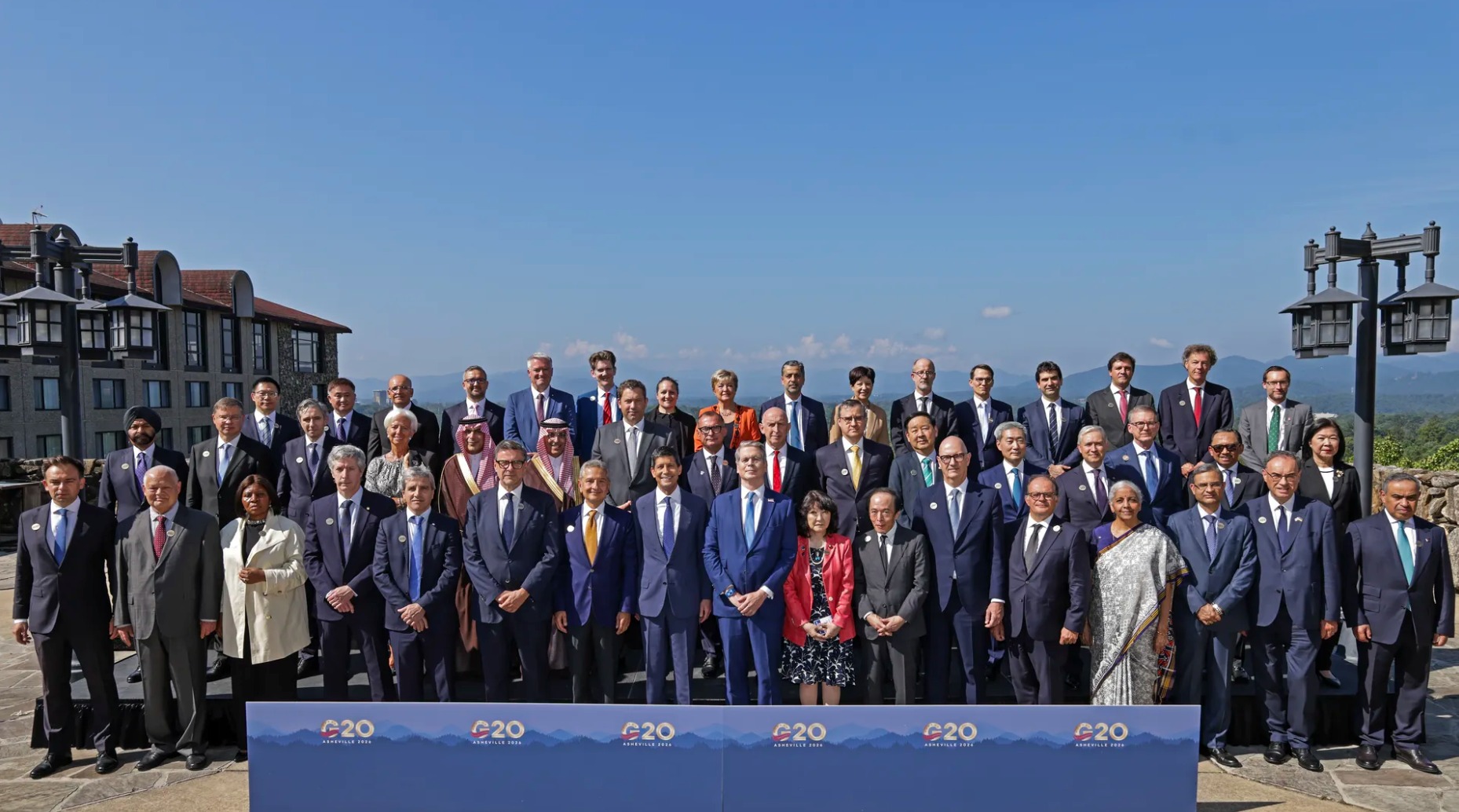
G20 finance ministers gathered in Asheville, North Carolina, against the backdrop of rising global interest rates and a massive debt burden.
Although the pursuit of stronger growth formed the summit’s primary agenda, specifics on the matter varied from country to country.
US Treasury Secretary Scott Bessent streamlined the G20 finance agenda by focusing on economic growth.
In his opening address at the finance meeting, Bessent argued that years of “mission creep” had diverted the group from its core purpose.
On this year’s agenda, the space dedicated to climate change and inequality, which had served as the main docket items of G20 meetings in recent years, was substantially reduced.
This development caused significant unease, particularly among European delegations.
Instead, the US focused on deregulation, private sector investment, global commercial imbalances, and government debt.
US officials state that G20 members largely agree with Bessent on the necessity of prioritising growth.
However, they acknowledge that what works in one economy may not yield the same outcome in another.
For example, Under Secretary of the Treasury Erin Browne said in an interview with Axios on the sidelines of the conference: “I think the principles Secretary Bessent has laid out; these are well-understood and agreed-upon principles,” adding:
“However, different economies face different challenges. We have members here from the African Union, and they face challenges very different from Germany, for instance.”
Referring to countries that receive more from foreign trade and investment than they send, Browne said: “You could be a surplus country because you do not have enough investment demand, or you could be a surplus country because you do not have enough consumer demand.”
Federal Reserve Chair Kevin Warsh struck a similar note in his opening remarks, speaking of “a massive shift in the global economy” and noting: “We are all experiencing this a bit differently.”
Although climate change was absent from the official agenda, European officials stressed on the sidelines of the meetings that the issue remains a priority.
European Commissioner Valdis Dombrovskis told reporters: “This is part of the problem surrounding economic growth and economic resilience,” arguing that they are witnessing an increasing number of extreme weather events that damage both the economy and public finances.
Dombrovskis continued:
“This new energy deficit arising from the Iran war once again demonstrates the need to reduce our dependence on fossil fuels and strengthen green manufacturing.”
Meanwhile, China’s export surge is exerting far greater pressure on Europe’s growth model than on that of the US.
“China shock 2.0” is devastating Germany’s manufacturing sector and forcing officials to consider tougher measures.
Indeed, Commissioner for Economy and Productivity Dombrovskis said: “It is important to move from analysis to action.”
US tariffs have contributed to redirecting a portion of Chinese goods toward other markets.
“I warned the rest of the developed world and top emerging nations that when the US erects a tariff wall, surplus goods from China will wash up on their shores. And unfortunately, I was proven right,” Bessent said, adding:
“This is a problem for the G7-plus-plus excluding the US. We took our measures… and now the countries receiving these goods must do something about it.”
Bank of England Governor Andrew Bailey, who chairs the Financial Stability Board, warned G20 ministers ahead of the meetings that the war with Iran had produced a “significant supply shock” triggering energy inflation and rising interest rates.
Bessent sought to downplay the long-term economic risk, saying: “We will overcome this Iran conflict, and the world will become a better place for it.”
China objects to G20 communique
Bessent said on Tuesday that China was the sole G20 member to oppose a joint communique stating that “it is unsustainable for non-market economies to maintain an unending flow of cheap exports.”
Bessent indicated that other G20 members would act “in the coming days, weeks, or months” to “reach a solution regarding this unsustainable balance.”
The communique released by the Treasury Department later on Tuesday includes a footnote stating that China objected to a paragraph in which 19 members agreed that “countries must take steps to eliminate non-market policies and practices that exacerbate imbalances.”
The paragraph in question states: “In particular, countries running excessive and persistent external surpluses must eliminate distortions that constrain domestic consumption and lead to an overreliance on exports for growth.”
The Treasury Department noted that China also objected to a paragraph expressing concern over ongoing shipping disruptions in the Strait of Hormuz, a vital oil transit corridor effectively blocked by Iran in its war with the US.
China further opposed paragraphs praising the International Monetary Fund’s (IMF) “surveillance of global imbalances” and specifically highlighting “countries that owe a significant portion of their external debt to G20 members.”
At a press conference, Bessent said, “I had hoped to announce a unanimously adopted joint communique today,” while stressing that the agreement among the other 19 members “demonstrates how vast the problem is.”
Bessent also remarked on the Iran and China issue:
“On Iran, we have more common ground with China than differences. China agrees that Iran cannot possess nuclear weapons. China also agrees that there must be freedom of navigation in the Strait of Hormuz. China sources 50% of its energy from the Gulf. Therefore, I believe it is up to China, or China’s responsibility, to make efforts toward a solution. We will see how they implement this.”
Mixed signals from Europe and Canada on China
At a press conference, Dombrovskis said China is the primary source of economic imbalances, while adding that the US and Europe also have roles to play in resolving them.
Speaking more directly, German Finance Minister Lars Klingbeil said the US- and Israeli-led war with Iran, alongside ongoing US tariff disputes, are the primary drivers of the uncertainty hampering the global economy:
“Uncertainty is poison for economic growth. The tariff conflicts pursued by the US, such as the current dispute with Canada, destroy confidence.”
The UK stated that attempting to curb imbalances is a delicate matter, announcing it would maintain a pragmatic trade relationship with China.
Canadian Finance Minister Francois-Philippe Champagne, whose country has built closer economic ties with China since the start of the year, stated that Canada engages with China on the same footing as other G7 nations and within “clear guardrails.”
IMF Managing Director Kristalina Georgieva told Reuters she believes China recognizes the need to act, but noted Beijing is calling for coordinated action with other nations like the US, such as Washington reducing its widening fiscal deficits that fuel excessive import demand.
Speaking late Monday, Japanese Finance Minister Satsuki Katayama said she told her G20 counterparts that arbitrary export restrictions on critical minerals harm the global economy.
This issue was also incorporated into the G20 chair’s statement.
“We urge countries to avoid unnecessary export restrictions to ensure global supply chains continue to function normally,” the statement said.
In April 2025, Beijing leveraged its dominance in critical mineral processing by imposing export restrictions on rare earth elements in response to tariffs implemented by US President Donald Trump that also affected non-US companies.
US push on artificial intelligence
At a meeting held Tuesday in North Carolina attended by industry leaders and trade ministers, the US pressed G20 members to adopt a hands-off approach to artificial intelligence regulation and refrain from introducing new rules for the technology.
US objectives align closely with the views of the world’s largest AI companies, almost all of which are American.
These companies seek fewer regulations globally or want rules shaped by themselves for their fast-growing businesses.
Requirements imposed by federal governments could weigh on industry profits if they slow the rollout of new models or force companies to alter product operations to address safety concerns.
US technology adviser Michael Kratsios, who co-chaired the two-day meeting, advocated for countries to adopt the “Carolina Principles.”
Kratsios told G20 officials at the meeting that signatory countries agree to “reserve new regulation only for novel issues” when crafting AI rules.
He added that these nations would invest in “basic research to accelerate discoveries” and enhance commercial opportunities for emerging technologies.
“Policymakers do not need to treat every innovation in isolation, nor should they treat every emerging technology as a first-of-its-kind policy challenge,” Kratsios said.
Big Tech executives to address G20 ministers
SpaceX CEO Elon Musk criticised European Union technology regulations on Tuesday morning, stating that EU policy “stifles progress” for companies.
He also urged non-Chinese leaders to develop new power sources to fuel data centres.
A US Department of Commerce spokesperson said Meta CEO Mark Zuckerberg would address ministers via video conference in place of company president Dina Powell McCormick, who had previously been scheduled to speak.
A Google spokesperson said on Monday that Demis Hassabis, co-founder of Google DeepMind, had also been added to the roster of speakers addressing ministers by video link.
Reuters previously reported that OpenAI CEO Sam Altman and Nvidia CEO Jensen Huang would appear separately before delegates on Wednesday alongside host Commerce Secretary Howard Lutnick.
A White House official said that during the G20 technology meeting, the US would press member nations not to establish new regulatory bodies to oversee artificial intelligence development.
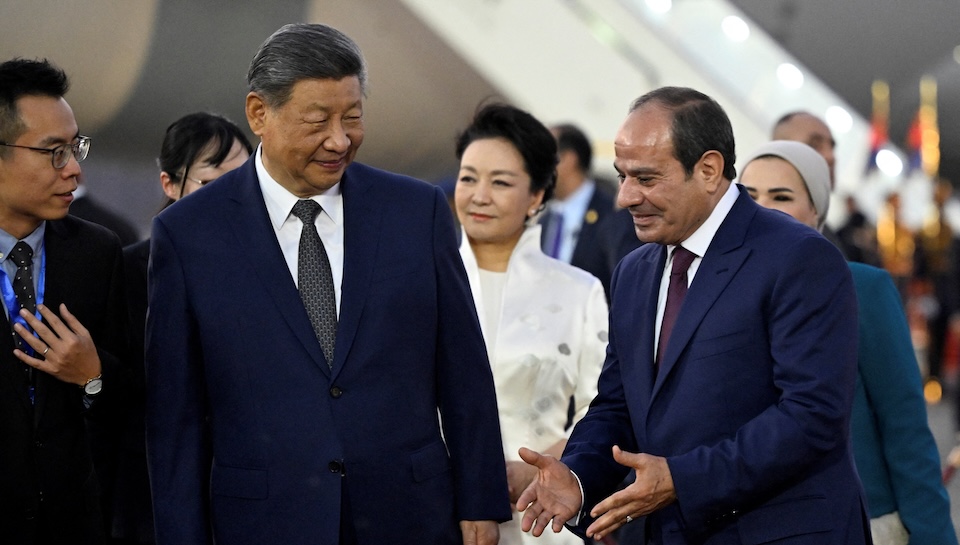
Chinese President Xi Jinping has arrived in the Egyptian capital, Cairo, for a two-day official visit marking the 70th anniversary of the establishment of diplomatic relations.
Xi was welcomed at Cairo International Airport by Egyptian President Abdel Fattah el-Sisi. Xi travelled to Egypt following the 26th summit of the Shanghai Cooperation Organisation held in Bishkek, the capital of Kyrgyzstan.
During the two-day talks, the leaders are scheduled to address the development of bilateral relations, the implementation of the comprehensive strategic partnership established in 2014, and regional as well as global affairs.
Relations between Egypt and China were elevated to the level of a comprehensive strategic partnership in December 2014, and Xi last visited Egypt in January 2016. The two leaders had most recently met in May within the framework of the China-Arab States Cooperation Forum.
Leaders deliver message on strengthening strategic partnership
In an article published ahead of his visit in the Egyptian newspapers Al-Ahram, Al-Akhbar, and Al-Gomhuria, Xi stated that after 70 years of diplomatic relations, ties are in “the best period in their history”. Noting that the two countries are reliable partners, Xi said: “China and Egypt today are determined to work together on the basis of equality and mutual respect for the stability of the international order.”
Xi called for the strengthening of political trust, mutual support on core interests, and the expansion of concrete cooperation under the Belt and Road Initiative.
President Sisi, in an article published in Al-Ahram Weekly, recalled that Egypt was the first Arab and African country to establish diplomatic relations with China in 1956.
Emphasising that their shared heritage fuels the desire for equal participation in technological progress, Sisi stated that technological cooperation would contribute to the development of their peoples.
Sisi also noted that Cairo and Beijing share the view that the spillover of armed conflicts serves the interests of no regional or international actor.
Global Times, one of China’s official media outlets, described the visit in an editorial as “passing the torch of China-Egypt friendship from generation to generation”. The editorial traced the foundation of relations between the two countries to the 1955 Bandung Conference and Beijing’s support for Egypt’s struggle for sovereignty over the Suez Canal.
New axis in technology and defence cooperation
A Cairo-based European diplomat told Al-Ahram Weekly that information technology and defence would feature prominently in the cooperation.
The diplomat stated that Cairo prioritises information technology and aims to diversify its military procurement beyond its traditional US-centred structure.
Some foreign diplomats point out that growing defence and technology cooperation with Beijing could cause unease in Washington and Moscow.
An Egyptian government official, meanwhile, emphasised that relations with China are pragmatic and unconditional, adding that Cairo is aligned with Beijing on the goal of regional stability regarding Sudan, the Horn of Africa, Iran, the Palestinian-Israeli issue, and Bab el-Mandeb.
Trade, energy, and space projects expand
Chinese investments in Egypt, which have reached a total of $10 billion, are projected to rise to $15 billion within one to two years.
The Beijing administration introduced a full tariff exemption on imports from Egypt in May, with oranges becoming the first product to benefit from the measure.
Renewable energy, electric vehicles, solar panel glass, textiles, and aluminium manufacturing are among the sectors where investments are concentrated.
Waleed Gamal El-Dien, chairman of the Suez Canal Economic Zone, announced that Chinese investments in the zone have exceeded $3 billion.
In the financial domain, Egypt issued sustainable Panda bonds denominated in yuan equivalent to $500 million in October 2023, supported by the African Development Bank and the Asian Infrastructure Investment Bank.
In the military sphere, the two countries launched the “Eagles of Civilisation 2026” exercise on 22 August.
In the space sector, the Satellite Assembly, Integration and Testing Centre, built with grants totalling $117 million provided by China in 2018 and 2019 and handed over to Egypt in 2024, provided Cairo with the capability to assemble and test its own satellites.
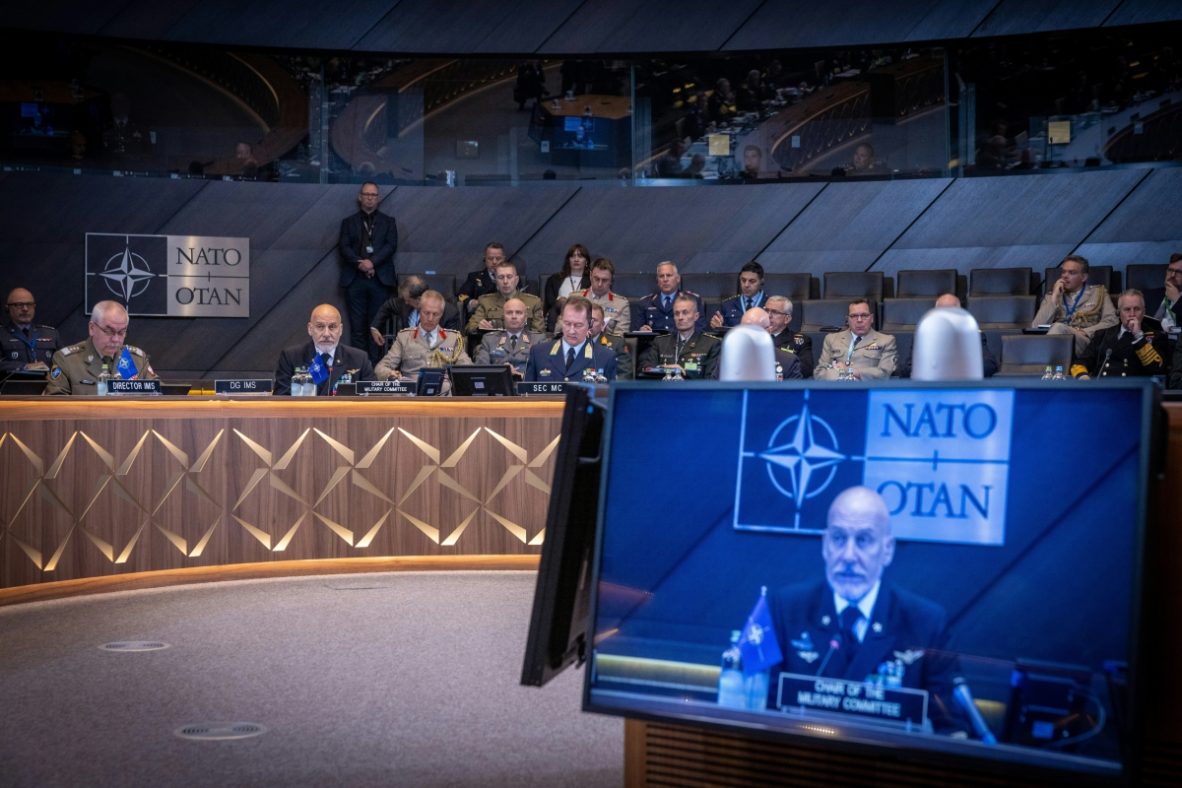
Representatives from Germany and Canada will contest the leadership of the NATO Military Committee in a vote scheduled for 19 September in Denmark.
The defence chiefs of the 32 allied nations are expected to select the successor to the current chair, Admiral Giuseppe Cavo Dragone. The winner is slated to take office in January 2028.
Berlin is actively campaigning for Germany’s chief of defence, Carsten Breuer, urging European allies to back his candidacy, whilst Canada has nominated General Jennie Carignan.
“Being elected chair means advancement for any country within NATO,” Aylin Matle, a security expert at the German Council on Foreign Relations (DGAP), told Euractiv.
Matle added that, given the need to reinforce Europe’s—and specifically Germany’s—defence posture within NATO, Breuer’s election would carry greater significance and weight.
The chair serves as a key liaison between NATO’s political and military echelons, advising the North Atlantic Council, the alliance’s highest political body, as well as the Nuclear Planning Group.
At a time when the US is pressing European allies to assume greater responsibility for the continent’s defence, Berlin’s drive to position itself as a leading provider of European security has added momentum to its bid.
Germany has also sought to reassure Washington that it can serve as a dependable partner.
According to a NATO diplomat, Berlin indicated at the NATO summit in Ankara that it was prepared to shoulder a major share of the responsibility for replacing the military capabilities that the US plans to withdraw from Europe.
The diplomat noted that this wider push to expand Germany’s role in European defence has also bolstered its campaign for the NATO chairmanship.
Germany put forward Breuer’s candidacy at a relatively early stage, announcing it in February 2026.
Matle said:
“Germany would not have announced his candidacy so early had it not known that the vast majority of allies—particularly the US, the United Kingdom, and France—supported Breuer, at least at that time. According to NATO diplomats, the fact that the US took a position in Germany’s favour early this year is certainly a factor working in his interest.”
Although security ties between Canada and Germany were recently bolstered by a submarine agreement, Ottawa put forward its own candidate in May.
Amid strained relations between Ottawa and Washington, Canada’s campaign behind Carignan faces a more complex political backdrop.
With the US administration pressing Europe to step up burden-sharing, this environment could make securing support more difficult.
“Her nomination reflects Canada’s enduring commitment to NATO and to strengthening collective defence and transatlantic security,” a spokesperson for the Canadian Department of National Defence told Euractiv.
Compared with Canada, Germany has spent significantly more on defence and has recently played a far more prominent role in NATO.
Matle indicated that this considerably improves Breuer’s prospects.
However, another NATO official stated that there is currently no clear frontrunner and that predictions remain difficult.
Nevertheless, the official emphasised that the Canadian candidate has so far been more active than her German counterpart.
“She has sent several letters to support her candidacy, whereas the German candidate has sent only one since the start of his campaign,” the second NATO official said.
According to the same official, Carignan has set out a broader vision for NATO’s military structure, whereas Breuer has focused more heavily on Ukraine.
Even so, Breuer may enjoy a more favourable political environment.
“Escalating political tensions between Canada and the US could ultimately work in favour of the German candidate,” the official said.
Although the vote will take place in three weeks, the chosen candidate is not expected to replace Cavo Dragone immediately, whose term runs until early 2028.

US economic agenda dominates G20 ministerial summit in Asheville

German industrial bosses push for return to 40-hour working week

Russia aids Iran in covert supersonic cruise missile project, FT says

Xi arrives in Cairo on official visit to deepen Egypt strategic ties

Prof. Doster outlines strategic limits of US and Israeli campaigns on Iran
-
 Europe2 weeks ago
Marine Le Pen plans French constitutional referendum on immigration
-
 Diplomacy1 week ago
US strikes fail to break Iran as regional anchors rise, Dr. Moeini says
-
 Diplomacy1 week ago
Blackwater founder Erik Prince creates air defence venture with Kyiv
-
 Asia2 weeks ago
Japan sharpens defense posture while strengthening Turkish ties
-
 Europe1 week ago
UK and Russia edge closer to conflict over long-range drone supply
-
 Asia2 weeks ago
China outpaces India in race for Russian crude oil supplies
-
 America2 weeks ago
Independent US oil firms set to sign output deals in Venezuela
-
 Europe2 weeks ago
Europe builds drone defence walls along eastern flank against UAVs
