
Russia
Putin circle weighs tactical nuclear risk as Ukraine talks stall

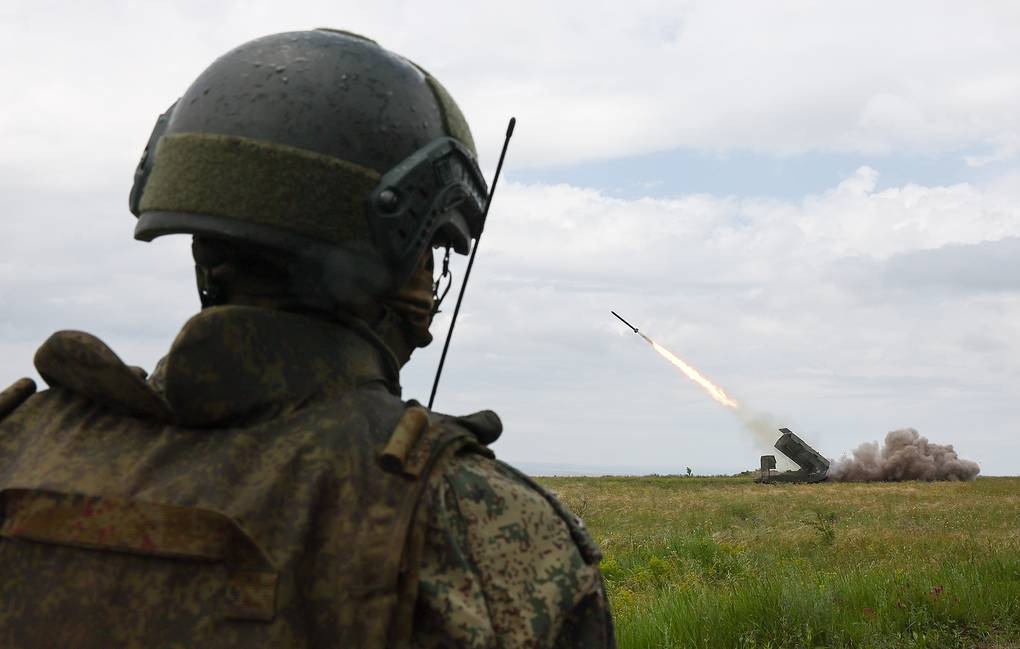
Western media reports indicate that Russia is preparing to escalate hostilities. According to a Bloomberg report citing sources close to the Kremlin, concerns are mounting within Russian President Vladimir Putin’s circle that he may ultimately resort to tactical nuclear weapons.
Sources speaking to the agency said Russia plans in the near future to intensify ballistic missile strikes against Kyiv, particularly targeting the city centre, as well as infrastructure facilities in other Ukrainian cities.
The sources said negotiations conducted over approximately a year and a half under the mediation of Donald Trump’s administration have effectively collapsed, with both sides remaining entrenched in their initial positions.
Moscow views Ukrainian strikes inside Russian territory targeting dozens of oil refineries, ports, and market warehouses as direct attacks by NATO, given that the alliance supplies weapons and intelligence to Kyiv.
Officials speaking to Bloomberg stressed that despite economic pressure, the petrol crisis, and strikes against logistical hubs, Putin has no plans to end the war.
According to the sources, the current phase of reciprocal attacks does not yet represent the peak of military tension.
Within circles close to the Kremlin, an increasing number of Russian officials are concluding that Putin may use tactical nuclear weapons against Ukraine as a last resort.
While calls in this direction from the pro-war hawk faction have reportedly grown louder recently, it is emphasised that losing the war remains a completely unacceptable scenario for Putin.
Four sources close to the Kremlin stated that with diplomacy over Ukraine exhausted, Moscow sees few alternatives other than escalating tensions.
Officials noted that although expectations of a breakthrough are very low, there is still hope in the Kremlin that Donald Trump’s special envoys Steven Witkoff and Jared Kushner will bring new proposals to Moscow.
Bloomberg noted that there is currently no concrete indication that Putin is preparing to use nuclear weapons.
Russia’s partners firmly oppose such a step, with China reportedly issuing a stern warning to the Kremlin to refrain from such a move.
Fiona Hill, a senior fellow at the Brookings Institution and former adviser to three US presidents, recalled that the Joe Biden administration had previously warned Putin about the consequences of a potential nuclear strike.
Hill said that under the Biden administration, the US conveyed to Putin that such a step would be met with a conventional strike by the American armed forces against Russia.
Hill stated that Putin is testing how far he can push until his interlocutors back down.
Alexander Gabuev, director of the Carnegie Russia Eurasia Centre in Berlin, evaluated the risk of Putin using tactical nuclear weapons as “extremely low”.
Emphasising that the effectiveness of such an attack on today’s battlefield would be limited and the political cost of breaking the nuclear taboo would be high, Gabuev offered the following assessment:
“As long as Moscow has room to escalate with conventional weapons, including intensifying missile strikes, it has very little reason to cross the nuclear threshold.”









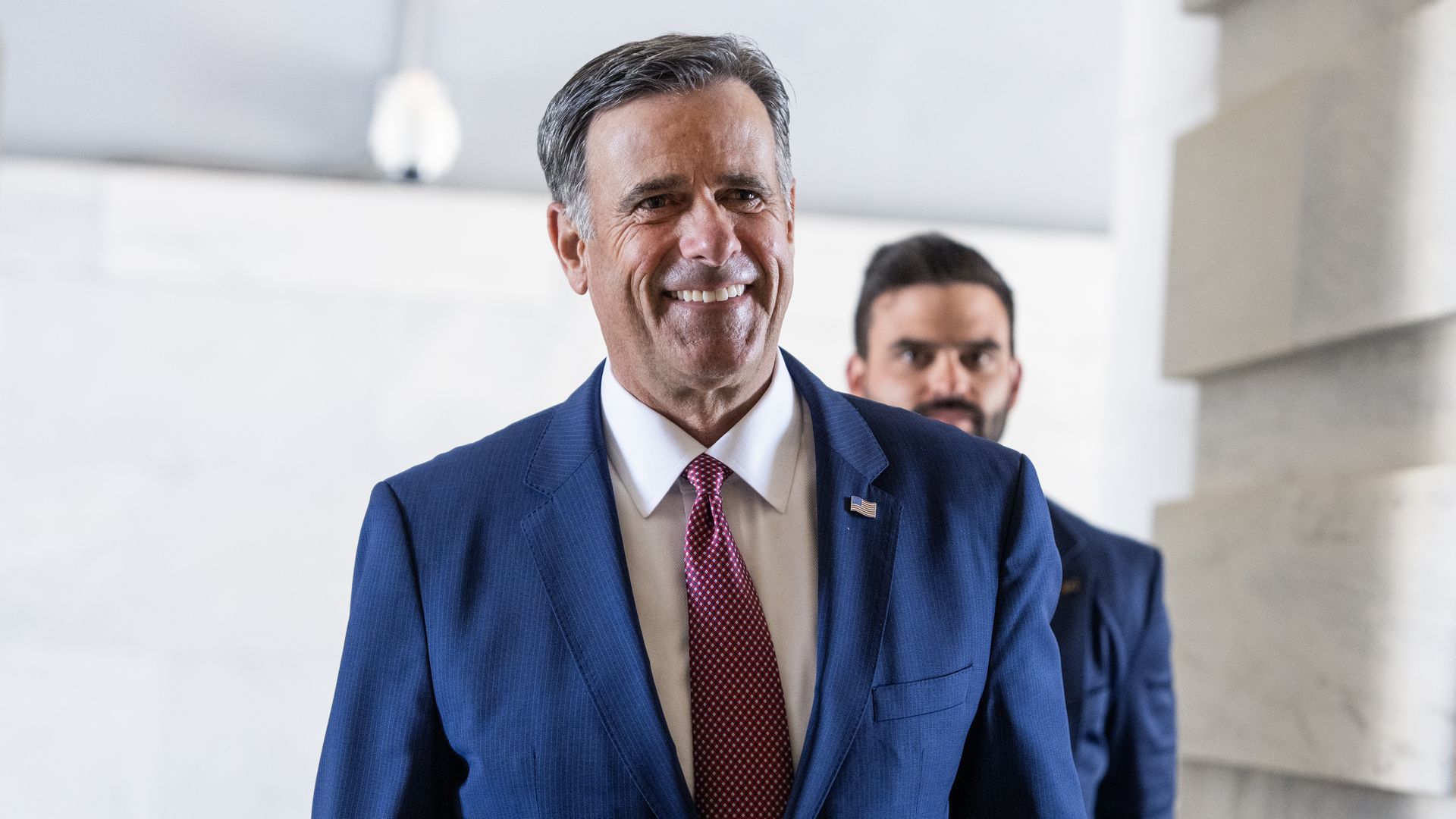
Central Intelligence Agency (CIA) Director John Ratcliffe has travelled to the Russian capital, Moscow, to hold talks with Russian officials, according to reports.
The development was reported by CBS correspondent Jennifer Jacobs and Axios reporter Barak Ravid, citing sources familiar with the matter. Two US officials also confirmed that Ratcliffe would visit Moscow. Jacobs reported that the CIA director travelled to Russia aboard a US Air Force C-17 military transport aircraft and that the purpose of the visit was “talks in Moscow”.
According to data from the flight-tracking service Flightradar24, a Boeing C-17A Globemaster III military transport aircraft with the tail number “RCH4555” took off from Riga, the capital of Latvia, at approximately 08:50 Moscow time and landed at Vnukovo Airport in Moscow at around 10:04. It was noted that the aircraft had earlier, on 23 August, arrived in Riga from Joint Base Andrews in Camp Springs, Maryland, where the US presidential aircraft Air Force One is also based. The CBS network reported that a US diplomatic convoy was seen at the airport alongside the US military aircraft.
Kremlin spokesman Dmitry Peskov stated that he had no information regarding the American plane that landed in Moscow. No further response has yet been provided by Peskov or the CIA to a request for information from the RBC news organisation.
US asked Ukraine to halt strikes
Another notable development during the visit was reported by Financial Times (FT) correspondent Christopher Miller. According to the report, which cited sources, officials from the administration of US President Donald Trump approached Kyiv to request that it refrain from carrying out attacks against Moscow, St Petersburg, and northern regions of Russia between 24 and 26 August. Axios also confirmed that a similar request had been conveyed.
Washington reportedly justified the request on the grounds that a plane carrying a senior US official would be travelling to the capital, whilst Axios reported that the suspension of attacks was requested due to the visit of a high-level delegation until talks were completed and the departure had taken place. It was noted that the Ukrainian side accepted the request.
Trump administration’s highest-level visit since January
John Ratcliffe, who took office as CIA Director on 23 January 2025, previously served as US Director of National Intelligence between May 2020 and January 2021, becoming the first person to lead both agencies.
Ratcliffe holds the National Security Medal and the Department of Defense Medal for Distinguished Public Service.
Axios emphasised that this trip marked Ratcliffe’s first visit to Moscow since taking office and represented the highest-level contact the Donald Trump administration has conducted with Russia since January.
The previous CIA Director, William Burns, last visited Russia in November 2021. At the time, Burns held in-person talks with the then Secretary of the Russian Security Council, Nikolai Patrushev, and the Director of the Foreign Intelligence Service (SVR), Sergei Naryshkin, as well as a telephone conversation with Russian President Vladimir Putin. CNN reported that those contacts focused on military movements along the Ukrainian border.
CBS recalled that the CIA has recently played a direct role in prisoner swaps between Russia and the US. The agency took part in the April 2025 release of dual US-Russian citizen Ksenia Karelina, whose case Ratcliffe personally monitored, as well as the major prisoner exchange in 2024 that secured the return to the US of Wall Street Journal reporter Evan Gershkovich and former Marine Paul Whelan.
Meanwhile, Moscow Mayor Sergei Sobyanin had earlier stated that the capital’s air defence systems were extremely effective against unmanned aerial vehicles and that the proportion of UAVs capable of penetrating defence lines remained below one-tenth of 1%.
Russian President Vladimir Putin, speaking in early July, stated that strikes on Russian territory would be met with retaliation many times stronger, remarking: “Wherever they try to strike on the territory of the Russian Federation, we will respond in kind, but several times stronger. The enemy will feel it.”
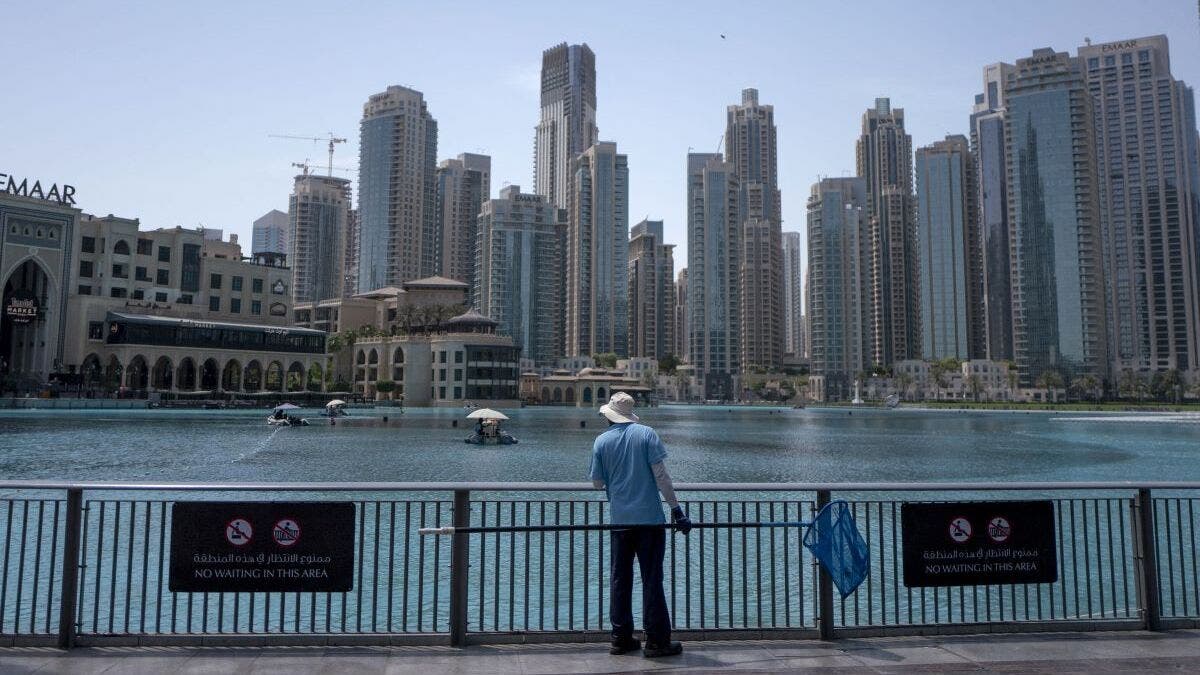
A report titled “Foreign Policy Synergy of Russia and the UAE Under Regional Crisis Conditions: Opportunities and Risks”, prepared by the Y. M. Primakov Center for Foreign Policy Cooperation, states that the war in Iran and strikes on Persian Gulf countries have tested the strategic partnership between Russia and the UAE, without shaking its economic foundations.
The author of the report, Andrey Shelkovnikov, an expert at the HSE University Centre for African Studies, assesses that under current conditions, developing alternative logistics routes and jointly participating in the post-war reconstruction of Iran could serve as promising areas of cooperation.
Factors sustaining and straining Moscow-Abu Dhabi ties
According to the author of the report, Russia-UAE relations are experiencing “one of the most dynamic periods in their fifty-year diplomatic history.” UAE President Mohammed bin Zayed visited Moscow in January 2026, marking his second visit in six months and his fifth since the beginning of 2022. Over the past year alone, the two countries signed agreements on trade in services and investment, an economic partnership between the Eurasian Economic Union (EAEU) and the UAE, and the avoidance of double taxation.
According to data from Economic Development Minister Maksim Reshetnikov, mutual investments exceeded $40 billion in 2024, comprising $17 billion invested by the Emirates in Russia and over $25 billion invested by Russia in the UAE economy. Trade volume in 2025 exceeded $12 billion, reaching roughly four times the pre-pandemic 2019 level ($3.5 billion). The sides aim to double this figure within five years. Non-oil trade grew more than fourfold, supported by exports of Russian agricultural products, technology, and services. The Emirates has also become a major hub for Russian business under sanctions conditions.
The author attributes the political closeness between the two countries to a shared orientation toward a multipolar world order. The UAE joined BRICS in January 2024, obtained dialogue partner status in the Shanghai Cooperation Organisation, and is expanding cooperation with the EAEU. The Emirates did not join Western sanctions against Russia and adopted a neutral stance on the Ukraine conflict. Having repeatedly mediated prisoner exchanges in particular, the UAE hosted trilateral security-focused talks between Russia, the US, and Ukraine in Abu Dhabi in early 2026.
However, with the outbreak of hostilities around Iran, a distinct asymmetry emerged in relations between Moscow and Abu Dhabi. The report notes: “While for the UAE, Iran constitutes a fundamental threat to national security, Russia shapes its own position from the perspective of a broader strategic balance that envisages preserving ties both with Tehran and with Arab countries that are Moscow’s strategic partners in the region.”
The US and Israel launched a war against Iran on 28 February 2026. Washington announced the objectives of the war as destroying Iran’s missile capacity and military infrastructure, weakening its naval forces, and preventing Tehran from acquiring nuclear weapons. Supreme Leader Ayatollah Ali Khamenei and numerous senior officials and military personnel were killed in the initial strikes. Tehran responded to these attacks with heavy missile and drone strikes against Israel, American facilities, and the energy infrastructure of Gulf countries, while bringing maritime traffic in the Strait of Hormuz to an effective standstill. The sides reached a temporary ceasefire in early April through Pakistani mediation and agreed on a 60-day memorandum of understanding in June. Despite this document officially expiring on 18 August, clashes flared up again in early July.
Among the countries in the Gulf region most affected by the strikes, the UAE became the target of more than 2,000 attacks in the very first month of the conflict. Tourist districts, hotels, airports, and oil facilities in Abu Dhabi, Dubai, Sharjah, and Fujairah were damaged. Amid these developments, the UAE withdrew from OPEC and the OPEC+ group as of 1 May (Abu Dhabi officially justified this decision by its long-term energy strategy). On 18 August, the UAE accused Iran of attempting to launch ballistic missiles at its territory. Following Tehran’s denial of the claims, Abu Dhabi indefinitely suspended all commercial and financial transactions with the Islamic Republic.
Differences of opinion regarding the conflict were also reflected in votes at the United Nations Security Council. While Russia and China abstained on a draft resolution condemning Iran’s attacks on Persian Gulf countries, in April they vetoed a resolution submitted by Bahrain authorising international forces to ensure the safety of navigation in the Strait of Hormuz (the Emirates had participated in drafting both documents). The report states that Arab countries received this stance with mixed feelings: although regional capitals understand Russia’s strategic interests in its relations with Iran, they expect Moscow to exert harsher pressure on Tehran. Shelkovnikov notes that Western claims alleging Russian intelligence support for Iran (which the Russian side denies) further complicate the situation.
An understanding reached between Ukraine and the UAE in the security and defence sphere, including the sharing of counter-drone operational experience, created a new friction point in bilateral ties. The expert assesses: “This rapprochement carries risks for Abu Dhabi’s mediation role between Russia and Ukraine, as it could cast a shadow over the Emirates’ neutrality.” Shelkovnikov also emphasises that Russia could supply air defence systems to Gulf countries to counter ballistic missiles and drones.
Ukrainian President Volodymyr Zelenskyy embarked on a tour of Persian Gulf countries in late March 2026, agreeing on long-term defence cooperation with Saudi Arabia, the UAE, and Qatar. A memorandum of understanding was signed with Riyadh on 27 March, followed by an intergovernmental agreement with Doha the next day. Announcing on the same day that they had reached an understanding with the Emirates on security matters, Zelenskyy stated that details were being finalised. In late April, the Ukrainian President announced the signing of ten-year agreements dubbed the “Drone Deal” with all three countries. According to Zelenskyy’s statement, these agreements encompass the transfer of experience in defending critical infrastructure against heavy attacks, as well as the joint development and production of unmanned aerial vehicles, air defence systems, and electronic warfare equipment.
What opportunities lie ahead for Russia and the UAE?
The crisis surrounding Iran has made the Collective Security Concept for the Persian Gulf Region, which Moscow has advocated since the 1990s, as necessary as it is difficult to implement. The latest version of the periodically updated document was published on the Russian Foreign Ministry’s website in July 2026. The draft envisages establishing direct military communication lines, arms control agreements including the creation of demilitarised zones, and commitments by Gulf countries not to open their territory for third parties to attack neighbours.
Heavy Iranian strikes targeting the six Gulf Cooperation Council member states and Iraq exposed the fragility of the security architecture based on bilateral defence agreements with the US. According to the author’s assessment, American bases on the territory of Arab monarchies turned into open targets for Iranian strikes rather than a protective shield. In this picture, although Russia reminds its Middle Eastern partners of its own security initiative, this approach faces various obstacles. Trust in Iran among Arab countries, with the exception of Oman, has been shattered; furthermore, any step by Russia that could be interpreted as support for Tehran is viewed with caution. Nevertheless, despite its harsh rhetoric toward Iran, the UAE does not entirely close the door to dialogue and emphasises that lasting regional security can be achieved not through temporary measures, but through a comprehensive political settlement.
According to Shelkovnikov, Moscow faces several fundamental issues to resolve: convincingly demonstrating to Arab partners that communication channels established with Tehran serve de-escalation rather than supporting military actions, adapting its security concept to changing military realities, and taking into account that the crisis of trust between Iran and Gulf monarchies could endure for decades. The report states: “It would be appropriate for Russia to firmly maintain its non-involvement stance in the conflict and focus on positioning itself as an actor facilitating a political solution.” According to the author, Russia could reinforce this mediation role through concrete steps such as contributing to the opening of humanitarian corridors, taking part in diplomatic efforts to lift the blockade in the Strait of Hormuz, and creating negotiation platforms that take into account the interests of all sides.
The author of the report views the economy as the foremost concrete area where the partnership can demonstrate growth. The crisis in the Strait of Hormuz, through which roughly 20% of global oil exports passed prior to the war, increased the importance of Russia-UAE coordination in the oil market; indeed, oil prices surged by 50% in March 2026 alone. Although it has not yet reached its full potential, logistics remains a promising domain. Shelkovnikov recalls the memorandum between Rosatom and UAE-based port operator DP World regarding port infrastructure investments, including the development of transit shipping via the Northern Sea Route. Amid the ongoing crisis in the Strait of Hormuz and tensions in the Red Sea, the expert suggests that Russia and the UAE could jointly develop transport corridors in Africa and invest in interconnected port and storage infrastructure. The expert notes: “The potential for cooperation in transport and logistics also exists in Central Asia and the Caucasus, as EAEU transport projects can be integrated with the UAE’s global logistics network.”
Another prominent and vital track is digitalisation. Russian companies, including Yandex, operate in the UAE market; however, Moscow will need to compete here with technological partnerships that the UAE has established with the US and China. Shelkovnikov says: “Expanding technological cooperation could encompass joint projects in big data processing, cybersecurity, financial technologies, and the digital infrastructure of smart cities.”
Over the longer term, following the resolution of the Middle East conflict, the author of the report suggests that Russia and the UAE jointly participate in rebuilding Iranian infrastructure. This step would not only consolidate de-escalation, but also assist in gradually restoring trust between Arab countries and Tehran, which is considered an indispensable condition for a lasting regional security architecture. The report concludes with the observation: “Cooperation in energy, logistics, technology, and humanitarian aid are the core directions capable of sustaining and developing the partnership despite all difficulties created by the current crisis.”
Russia
Russia’s first-half budget deficit hits 5.7 trillion rubles as oil revenue shortfalls persist
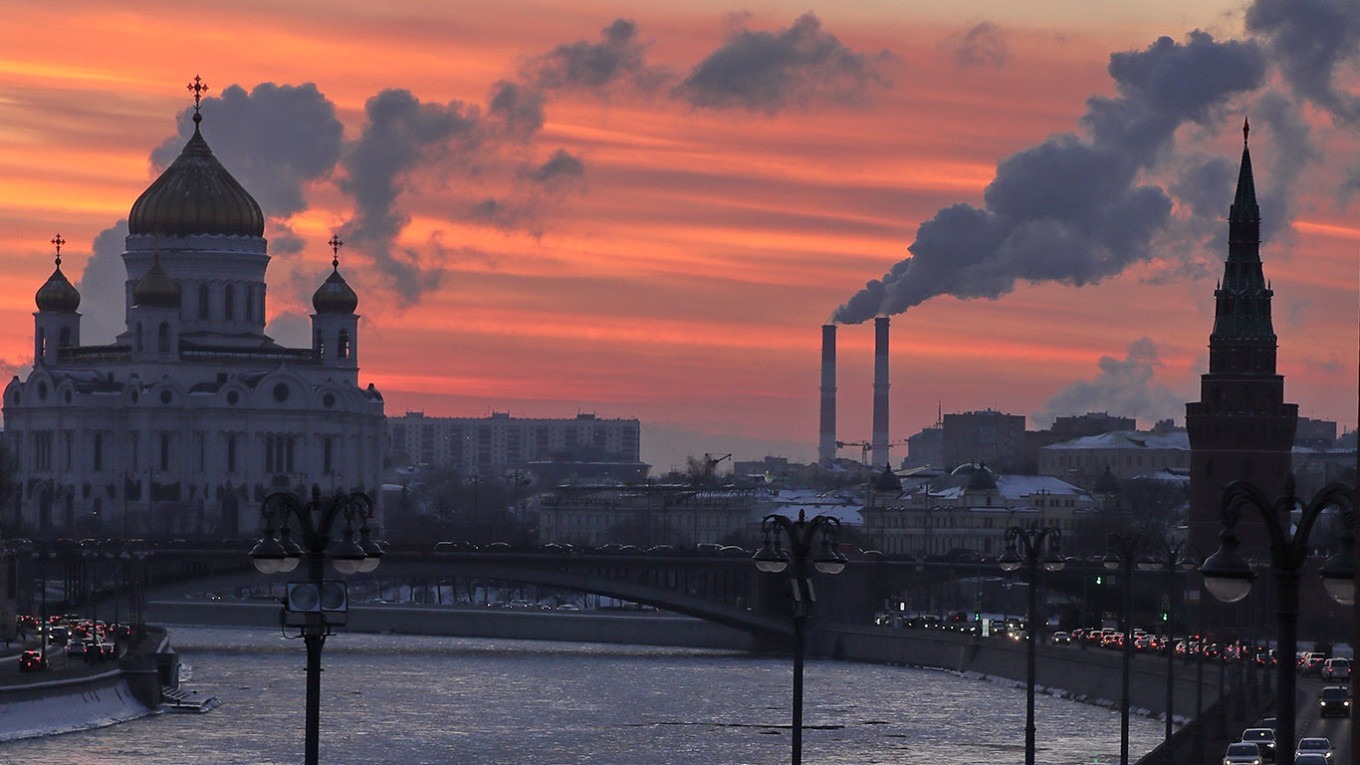
Russia’s federal budget deficit narrowed to 5.7 trillion rubles, or 2.5% of gross domestic product (GDP), during the January–June period of 2026, according to preliminary budget execution data released by the Ministry of Finance on July 9. This contraction marks the first decline in the fiscal deficit since the beginning of the year. In June, the gap between expenditures and revenues decreased by approximately 5% month-on-month, shrinking by about 279 billion rubles. Despite this marginal improvement, the deficit remains 2.3 trillion rubles higher than the level recorded during the same period last year and stands roughly 50% above the 3.78 trillion ruble target projected for the full year of 2026.
Emil Ablayev, an expert at the Center for Macroeconomic Analysis and Short-Term Forecasting (TsMAKP), told the Vedomosti newspaper that the narrowing of the deficit was driven by the gradual fading of the front-loaded advance spending outlays made at the start of the year.
Budget expenditures rose to 3.56 trillion rubles in June, representing a 17.13% increase. Total spending in the first six months of the year reached 24.35 trillion rubles, up 16.1% compared to the same period last year.
The Ministry of Finance reiterated that the accelerated pace of spending was attributable to the early signing of contracts and advance payments made under specific budget items.
In contrast, budget revenues experienced a more subdued increase compared to expenditures. Total revenues in the first half of the year rose by 5.8% year-on-year to reach 18.6 trillion rubles. In June, however, revenues surged by 25.85% year-on-year to 3.82 trillion rubles.
Non-oil tax revenues accelerate
Ablayev noted that the acceleration of non-oil and gas revenues played a key role in narrowing the budget deficit. The year-on-year growth rate for these revenues rose from just over 12% in the January–May period to 16.3% in the January–June period. Non-oil and gas revenues reached 14.96 trillion rubles in the first half of the year. In June, these revenues increased by 26.75% year-on-year to 3.1 trillion rubles.
According to Natalya Milchakova, Chief Analyst at Freedom Global, this growth was driven by the increase in the VAT rate effective January 1, along with prior hikes in personal income tax for high-income brackets and corporate income taxes. VAT revenues rose by 22.6% to 8.58 trillion rubles in the first six months of the year.
Ablayev pointed out that VAT is the tax category most sensitive to domestic demand, consumption, and imports, indicating that the increase reflects sustained domestic demand.
Ablayev also stated that improvements in tax administration and a reduction in the shadow economy supported this positive trend. He added that due to the strong performance of the ruble in the second quarter of 2025, import-related VAT revenues had a more limited negative impact on a year-on-year basis.
According to experts, the trajectory of non-oil and gas revenues in the second half of the year will depend on a slowdown in consumer demand, import volumes, the ruble exchange rate, and the tax performance of non-oil exporters.
Sergey Klisenko, General Director of the NRA Rating Service, projected that the growth rate of non-oil and gas revenues could slow from the 16% level recorded in the first half to a range of 12% to 14%. However, he noted that this would still be sufficient to meet or even exceed the targets set for 2026.
Oil revenues recovered in June
According to Klisenko, the budget surplus in June stood at approximately 280 billion rubles, largely driven by the strong performance of oil and gas revenues.
These revenues rose roughly 65% above the January–February average. The analyst attributed this increase primarily to the elevated level of Russian oil prices in May.
Oil and gas revenues in June rose by 4.7 billion rubles compared to May, reaching 683.6 billion rubles. However, the cumulative total for the first half of the year remained at 3.66 trillion rubles, representing a 22.7% decline compared to the same period last year.
Ablayev stated that the primary reasons for the first-half decline were a strong ruble, delayed tax collection effects, and the structural composition of the revenues.
Klisenko calculated that while the budget projections assumed an average exchange rate of 92.2 rubles per US dollar, the actual average for the first half of the year remained at 77.2 rubles, depriving the budget of 1.5 trillion to 2 trillion rubles in oil and gas revenues.
Oil and gas prices, which had spiked in the spring due to the conflict between the US and Iran and the subsequent closure of the Strait of Hormuz, declined again during the summer months.
According to Ministry of Economic Development data, the average price of Urals crude was $44.59 per barrel in February, rose to $94.87 in April, fell to $86.52 in May, and dropped to $63.52 in June.
Ablayev noted that oil and gas revenues could show a noticeable improvement in July as additional income tax from the second quarter is reflected in the budget. Nonetheless, he cautioned that year-end performance would depend on oil discount levels, demand for Russian crude, the ruble exchange rate, and developments in the domestic fuel market, adding that rising refinery subsidies and damper payments could limit revenue growth. The expert expects year-end oil and gas revenues to exceed 2025 levels but remain below budget targets.
Experts expect year-end deficit to exceed targets
Ablayev stated that budget execution remains under pressure, with expenditures running significantly higher than last year and the deficit exceeding initial forecasts. He estimated that the year-end deficit could reach 3% to 3.5% of GDP, or approximately 6.5 trillion to 7.5 trillion rubles, which would require deviations from the fiscal rule and increased borrowing.
Rodion Latypov, Chief Economist at VTB Group, projected that the main reasons for exceeding the planned 3.8 trillion ruble deficit would be an estimated 1.5 trillion ruble shortfall in oil and gas revenues due to the strong ruble, alongside potential spending overruns. Excluding potential additional spending increases, Latypov expects the year-end deficit to be around 5 trillion rubles.
Milchakova stated that the budget deficit at the end of the year would most likely remain around 2.5% of GDP, driven primarily by weak oil and gas revenues and anticipated increases in public spending—particularly due to the fuel crisis, refinery subsidies, and damper payments.
Klisenko, meanwhile, estimated that the deficit would reach 2.5% to 3% of GDP, amounting to approximately 6 trillion to 7 trillion rubles.
Ablayev noted that a high budget deficit supports domestic demand, making a rapid slowdown in inflation more difficult, though certain mechanisms, such as damper payments, limit price pressures specifically within the fuel market.
Klisenko remarked that the rise in the budget deficit from 1.6% to 2.5% of GDP is not critical and that its impact on inflation does not exceed 1 percentage point.
Latypov argued that the budget’s impact on the money supply and total nominal demand is more accurately measured by the change in net claims on public administration, rather than the federal budget deficit itself.
He highlighted that this indicator has increased by approximately 3 trillion rubles since the beginning of the year, remaining significantly lower than the accumulated budget deficit.

Likud weighs rotation premiership between Netanyahu and Eisenkot

Russia and China narrow space race gap with US, reports indicate

German bill grants intelligence services sweeping operational powers

China-Nepal border flood leaves at least 160 dead, over 1,000 missing

Putin circle weighs tactical nuclear risk as Ukraine talks stall
-
 Interview1 week ago
Daniel Davis warns US strategy fails against Iranian defense grid
-
 Diplomacy1 week ago
Erdogan blocked CIA-Mossad plan for armed Kurdish uprising in Iran, report says
-

 America1 week ago
AIPAC super PAC pours millions into key Democratic primary races
-
 Middle East1 week ago
US considers land blockade on Iran involving Türkiye and neighbours
-

 Diplomacy1 week ago
The two terrorists: Britain jails tweets while the West crowns al-Qaeda’s man in Damascus
-

 Europe1 week ago
Marine Le Pen plans French constitutional referendum on immigration
-
 Europe1 week ago
Ukraine uses British drones for long-range strikes deep inside Russia
-

 America1 week ago
US-Brazil rift widens over proposed sanctions and trade tariffs
