
America
Rubio outlines Venezuela election plan, says US will not wait two years

In the United States, the Trump administration has unveiled its plan to support electoral reforms in Venezuela and lead the country toward presidential elections.
US Secretary of State Marco Rubio told international journalists during a press conference on Monday that Venezuela’s current electoral infrastructure was “designed to rig elections”.
As the chief architect of the administration’s Venezuela policy, Rubio argued that this system must be overhauled quickly to enable a valid vote.
According to Rubio, talks between the government of Interim President Delcy Rodríguez and opposition factions led by Dinorah Figuera are moving toward a concrete timetable.
The sides are preparing to appoint a new Supreme Tribunal of Justice (TSJ) before the end of the year, followed immediately by the renewal of the National Electoral Council (CNE).
“We obviously need to use our leverage over the interim Venezuelan authorities to ensure that the process moves forward responsibly. Our goal is to hold elections,” Rubio said, welcoming what he described as “serious progress” in that direction.
The US secretary issued a warning, saying, “Whoever tries to derail the process will do serious damage to Venezuela.”
Speaking at a separate press briefing, an unnamed senior US Department of State official outlined the step to follow institutional renewal, according to a report by the Venezuelanalysis portal.
According to the official, once both the TSJ and the CNE are reconstituted, the Venezuelan presidency will be declared permanently vacant, triggering a constitutional six-month window to conduct elections under “competitive conditions”.
The same official stressed that political guarantees must be provided and media access rules regulated during this phase.
Advocating the inclusion of pro-government factions in the “transitional period”, the official said peaceful democratic transitions often require the cooperation of outgoing groups, citing Spain and Portugal as precedents.
Electoral timetable and judicial work accelerate
Asked about a definite election date, Rubio said the Rodríguez administration had complied with US timelines so far.
Emphasising that they would not wait two years for an election, Rubio said: “That is not going to happen. In the best-case scenario, I have two years and two months left in this job.”
Rubio’s remarks coincided with statements by Dinorah Figuera, who heads the opposition delegation in the negotiations with government representatives.
Figuera had predicted that presidential elections would take place in late 2027 or early 2028.
Meanwhile, during the third round of political dialogue in Venezuela, the parties agreed to review four pieces of legislation governing political participation, pluralism, and the autonomy of political organisations, including the Law on Political Parties, Public Meetings, and Demonstrations.
The discussions also addressed disqualifications from public office and the examination of legal frameworks governing political rights.
In parallel, Venezuela’s National Assembly officially initiated the process to renew all 32 justices of the Supreme Tribunal of Justice.
Applications from legal professionals seeking seats on the court will be accepted from Wednesday, 28 October until Wednesday, 11 November. The fourth round of dialogue is scheduled for 11 to 15 November.
Rodríguez and other senior Venezuelan officials have not yet commented on the US Department of State’s statements.
Machado’s return and convoy controversy
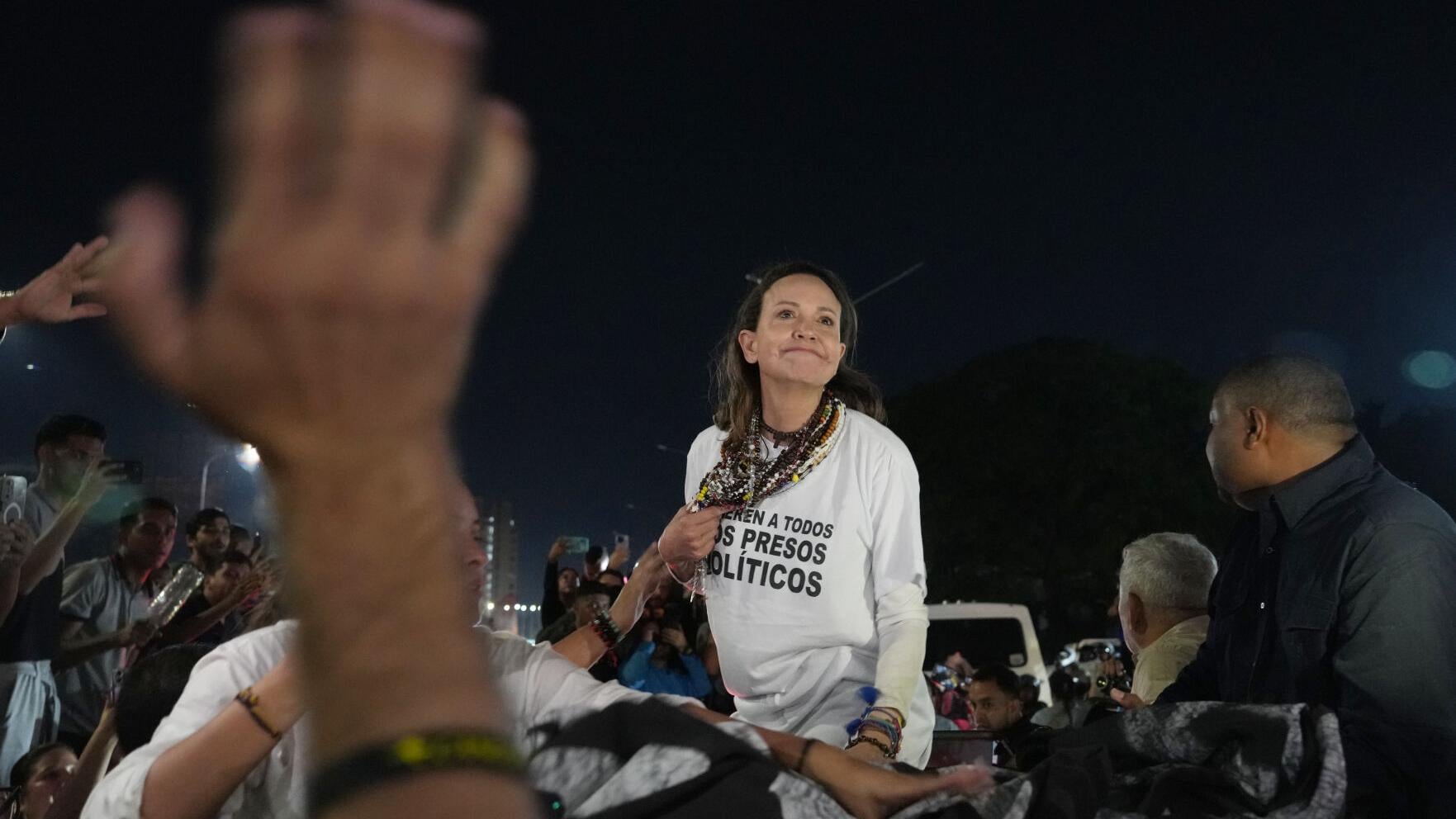
The White House’s assertions regarding Venezuelan reforms and elections coincided with the return of far-right opposition leader María Corina Machado to the country on Sunday.
Supporters of Machado, who had lived abroad for more than a year, called for their leader to be included in the ongoing negotiations.
Responding to questions about Machado’s return, Rubio said he had told the Rodríguez government “weeks ago” that she should be allowed to return to the country unhindered.
Denying claims that Washington obstructed Machado’s return, the Secretary of State said the opposition leader had merely been advised not to travel immediately following the twin earthquakes on 24 June.
Interim President Rodríguez, however, criticised the manner of the opposition politician’s return.
Characterising it as a “show” that could have been avoided, Rodríguez addressed Machado’s journey to Caracas at the head of a vehicular convoy covering 400 kilometres, following her appearance at a church in Lara state amid chants of “freedom” and calls for immediate presidential elections.
“The airports are right there. Let us stop putting on a show. Many people who benefited from this process aimed at peaceful coexistence and from the amnesty law were able to enter the country through the airport’s new transit structures,” Rodríguez said.
The interim president declined to reveal which route Machado had used to re-enter Venezuela.
Machado, who in recent years backed economic sanctions against Venezuela as well as foreign military intervention, left the country in December 2024 to travel to Oslo to receive the Nobel Peace Prize, which she subsequently dedicated as a gift to Trump.
While Machado and her party maintain that the government had previously barred her from returning seven times, Venezuelan authorities deny the allegation.
Asked whether the judiciary would act against Machado, Rodríguez said she hoped to see “remorse and a change of direction” from the opposition figure, adding that the opposition leader could make “some contribution to the country”.









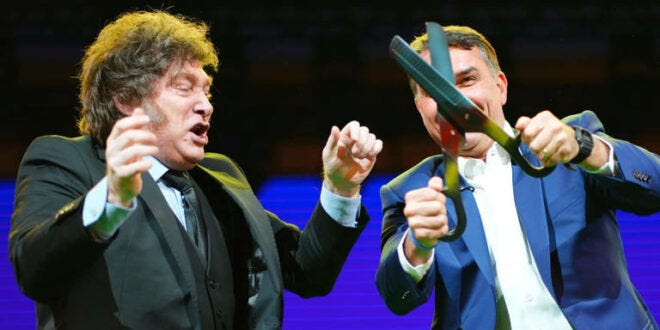
Flávio Bolsonaro fled Brazil on a plane belonging to the fleet of Argentine company Baires Fly, a firm linked to a businessman associated with a convicted drug trafficking conspirator, according to allegations.
The company, tied to an entrepreneur with business links to Federico “Fred” Machado, who faced drug trafficking charges in the US, is also named in a corruption investigation involving disability agency funds under the administration of Javier Milei.
Fórum Investiga, the investigative unit of Revista Fórum, uncovered these connections through court documents and public records in Argentina and the United States.
Sergio Daniel Mastropietro, a commercial broker for Baires Fly, was a business partner of Machado and currently faces money laundering and illicit association charges in connection with the scandal at Argentina’s National Disability Agency (ANDIS).
The company’s role drew scrutiny after the Argentine government confirmed early Wednesday that Bolsonaro entered the country with his wife and two daughters and boarded a private Baires Fly aircraft bound for Guayaquil, Ecuador.
According to Argentina’s National Directorate of Migration, the family crossed the border via the Tancredo Neves International Bridge between Foz do Iguaçu and Puerto Iguazú on Tuesday at 22:50.
The family boarded the plane at 23:30, and the Gulfstream G400, registered as LV-JQW, took off at 00:22 on Wednesday.
The journey followed an order by Federal Supreme Court Justice Alexandre de Moraes seizing Bolsonaro’s passports and barring him from leaving Brazil.
The drug trafficking link traces back to Argentine aviation businessman Federico Andrés Machado, known as Fred Machado, who was accused in the US of participating in an international ring tied to cocaine trafficking and money laundering.
Machado was a partner with Sergio Mastropietro in SO VAIN S.A., a company formed in 2010 for aviation-related ventures. Argentine investigations also documented shared travels, commercial ties, and common Buenos Aires addresses between the two men.
In February 2021, the US Department of Justice unsealed indictments against eight individuals for their roles in an international conspiracy involving narcotics trafficking, money laundering, and financial fraud.
Machado was among those indicted and was identified as an operator engaged in the purchase and sale of aircraft through his firm, South Aviation.
The investigation encompassed a network utilizing US-registered aircraft, several of which were seized in other nations while carrying large shipments of cocaine.
Machado was extradited from Argentina in November 2025 and subsequently reached a plea agreement with US prosecutors.
In August 2026, a federal court in Texas convicted him of conspiracy to commit money laundering and wire fraud.
The initial drug trafficking charge was dismissed as part of that plea agreement.
Machado’s commercial connection is with Mastropietro rather than directly with Baires Fly. The official owner of the company is Luis Grande, who has operated in Argentina’s private aviation sector for decades.
The other scandal involving Baires Fly centres on ANDIS, the agency responsible for providing assistance to people with disabilities in Argentina.
That inquiry examines allegations of contract steering, overbilling, kickbacks, and money laundering in questionable tenders during the Milei administration.
According to documents from the investigation led by federal prosecutor Franco Picardi, two ANDIS providers, Prolite Orthopedics and Probock, transferred 95.06 million Argentine pesos into a Baires Fly bank account on 10 September 2025. That sum represents approximately $62,000 based on exchange rates from 28 October 2026.
The payments occurred after Mastropietro sent the firm’s banking details to Miguel Ángel Calvete, who was identified as one of the figures behind the fraudulent scheme under investigation.
Following those transfers, invoices were issued for the advance purchase of flight hours on company aircraft.
Investigators suspect these commercial transactions were used to lend an appearance of legality to funds derived from irregular public contracts.
Financial tracking uncovered even larger sums. Documents reviewed by Argentine courts show Baires Fly billed five companies tied to the investigated contracts approximately 1.097 billion pesos, or around $720,000, between 2023 and 2025.
This figure reflects registered commercial transactions; it represents a fully confirmed amount of embezzled funds.
On 16 October, federal judge Ariel Lijo ordered formal charges against Mastropietro on suspicion of aggravated money laundering and illicit association.
The ruling also expanded charges against former ANDIS director and former Milei ally Diego Spagnuolo, alongside others allegedly involved in the conspiracy.
Argentina’s Federal Prosecutor’s Office stated that the probe revealed suspected fraud in contracts for medication, prosthetics, and equipment intended for assistance programme beneficiaries.
The airline maintains business relationships with figures across Argentine politics. In November 2023, days after winning the presidential election, Javier Milei used a Baires Fly plane to travel to the US. Luis Grande, the company’s owner, piloted the flight.
In the ANDIS investigation, Mastropietro denied managing Baires Fly or being formally part of the company, saying he acted only as an intermediary arranging aviation services.
The company maintains that it has no connection to the money laundering allegations.
The documents do not show that Bolsonaro was involved in the ANDIS scheme or in any drug trafficking activity.
There is also no evidence that Fred Machado played any role in arranging the flight.
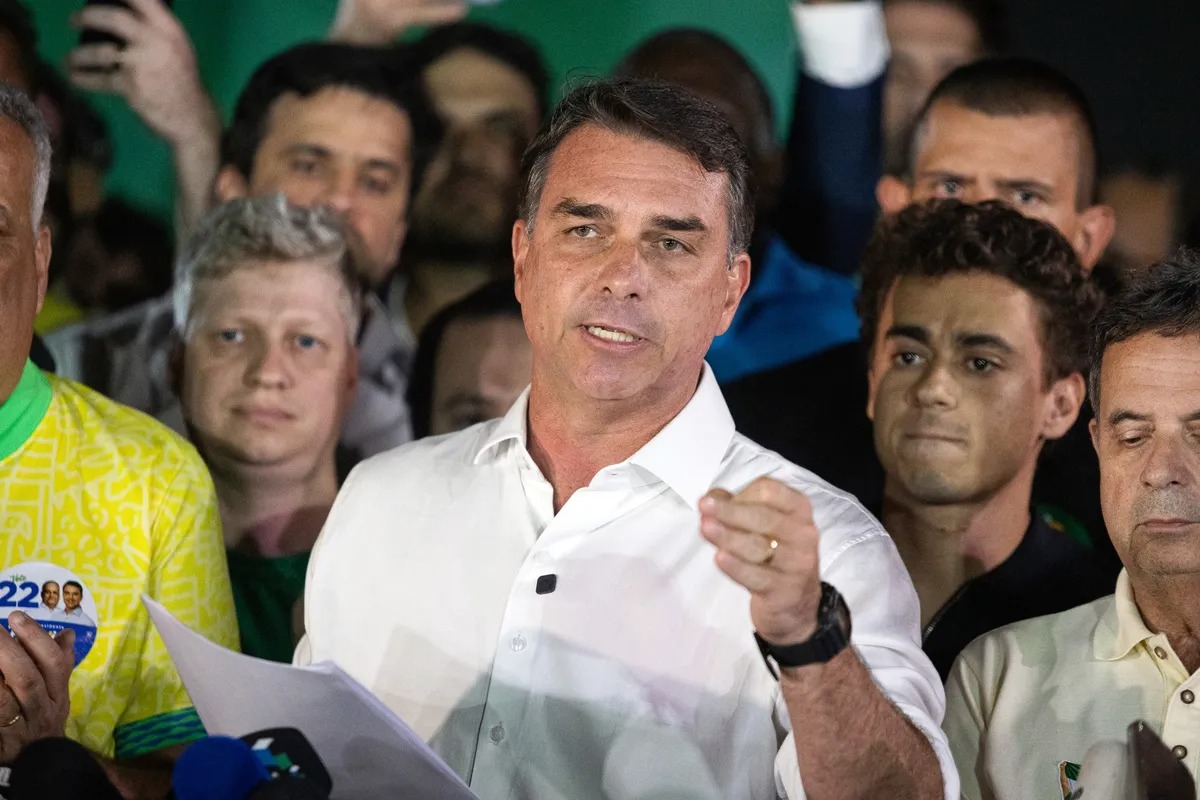
Brazilian Senator Flávio Bolsonaro fled his country following his defeat in the presidential election and arrived in Miami on Tuesday.
According to a report by the O Globo newspaper, Bolsonaro was met upon his arrival in the US by his brother Eduardo.
Eduardo had moved to the US last year to lobby President Donald Trump to assist their father, former President Jair Bolsonaro, who was convicted of plotting a coup, and had lived there ever since.
A senior State Department official said early Tuesday that the US would grant visas to Flávio and his family.
Facing multiple criminal investigations in Brazil, Flávio Bolsonaro had been ordered to surrender his passports to the Federal Police by Tuesday, but failed to do so, according to a police official familiar with the matter.
Supreme Court Justice Alexandre de Moraes, whom the Bolsonaro family has long accused of political persecution, had demanded the surrender of the documents out of concern that the senator was a flight risk.
Bolsonaro’s loss to Luiz Inácio Lula da Silva in Sunday’s runoff election dealt a heavy blow to the family, which had sought to establish a political dynasty in Brazil.
The senator had made the release of his father Jair Bolsonaro, who was sentenced to 27 years in prison for plotting a coup after his 2022 election defeat, the central theme of his campaign.
Speaking to reporters early Wednesday after returning from a campaign trip in Texas, Trump said he would approve Bolsonaro’s entry into the US, though he added that he thought Bolsonaro was in Argentina.
Speaking in Texas on Tuesday afternoon, Trump avoided mentioning Bolsonaro, but repeated his unsubstantiated claims that the Brazilian election was rigged.
After criticizing Democrats as “the biggest election riggers”, Trump added, “Brazil is pretty good at that too.”
The US leader has long been an ally of the Bolsonaro family and had imposed tariffs on Brazilian goods last year in an unsuccessful attempt to help Jair Bolsonaro avoid prosecution in his coup case.
The Trump administration did not officially endorse Bolsonaro’s presidential bid. However, according to The New York Times, the State Department under Secretary of State Marco Rubio had worked behind the scenes ahead of the vote to strengthen Bolsonaro’s standing in Brazil.
On Tuesday morning, neither the police nor allies had any information regarding Flávio Bolsonaro’s whereabouts, after Infobae reported that he had crossed into Argentina and planned to travel to the US from there.
Brazilian police have no official record of Bolsonaro leaving Brazil, and the spokesperson for Argentine President Javier Milei denied that Flávio Bolsonaro had entered the country.
Several Bolsonaro allies told Bloomberg that they had tried to contact him but received no response.
“Fleeing Brazil is a disgraceful act,” Lula said at an event celebrating his 81st birthday.
Bolsonaro faces at least two federal investigations into money laundering allegations, one of which stems from his ties to the former owner of Banco Master SA, who was implicated in the largest bank fraud case in Brazil’s history.
The elder Jair Bolsonaro had also left for the US following his election defeat. He returned months later and was barred from holding public office for eight years for spreading false claims about Brazil’s electronic voting system ahead of the election, before later being convicted of plotting a coup.
On Monday, Flávio Bolsonaro abandoned plans to challenge the election results and posted a social media video stating that the Supreme Court had barred him from leaving Brazil.
Meanwhile, according to sources familiar with the matter who spoke on condition of anonymity to discuss private conversations, Moraes’s decision caused unease among members of the Supreme Court as well as officials in Lula’s government.
According to those sources, the Lula administration had wanted to focus on calming the country and moving past the polarization that flared during back-to-back electoral battles between the leftist leader and a member of the Bolsonaro family.
The administration viewed the move by Moraes, a polarizing justice who presided over Jair Bolsonaro’s case and has long faced censorship accusations from the Brazilian right, as counter to those aims.
Early Tuesday, Supreme Court Justice Flávio Dino ordered federal authorities to investigate possible illegal foreign funding for Bolsonaro’s presidential campaign, including through a group linked to US Vice President JD Vance.
The justice emphasized that the order did not prove illegal foreign funding had taken place, but noted that allegations raised during Brazil’s presidential campaign warranted an investigation.
Speaking at a press conference on Tuesday, Argentine government spokesperson Adrian Ravier said Bolsonaro had not requested asylum in Argentina.
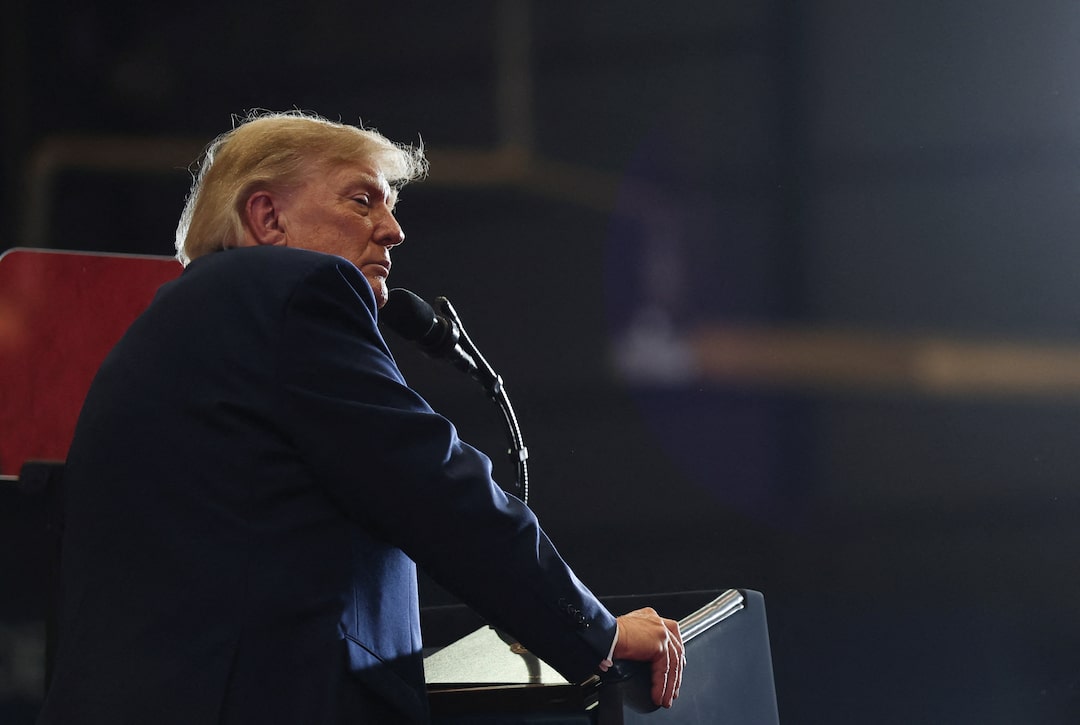
Independent US presidential candidate and Schiller Institute associate Diane Sare has delivered a wide-ranging critique of contemporary American governance, warning that US foreign policy has been captured by an elite billionaire donor class, subservient to foreign lobbies, and dangerously disconnected from the economic realities facing ordinary citizens. Speaking in an in-depth interview with international relations specialist Professor Dr Hasan Ünal on his Strategic Compass programme, broadcast on the Harici digital platform, Sare argued that the United States is accelerating towards catastrophic regional conflicts and structural domestic decline due to a bipartisan consensus that has betrayed the electorate.
Opening the discussion, Professor Dr Ünal highlighted the glaring contradictions surrounding the administration of Donald Trump, who campaigned aggressively on a mandate to terminate endless foreign wars that have severely drained American economic resources. Ünal questioned how an administration that promised swift diplomatic resolutions to conflicts such as the Ukraine war and disengagement from Middle Eastern entanglements could instead find itself drawn into deeper confrontation, particularly with Iran. Ünal noted that Trump had assured voters he would bring public funds back home to rebuild domestic infrastructure, yet the reality on the ground has sharply diverged from those campaign commitments.
“Trump has betrayed the trust that people placed in him”
In response, Sare affirmed that a substantial contradiction defines Trump’s governance and that political support for the president is deteriorating rapidly across the country. Sare, “Well, no, obviously there is a contradiction and Trump is losing support very, very rapidly,” observed, pointing directly to grassroots electoral shifts in key swing states. “I saw a study in Michigan that six out of 10 Trump voters would vote for Abdul Sayed in the US Senate race, not the Trump-endorsed Republican candidate,” she stated, adding: “So, he has betrayed the trust that people placed in him, and I would not say it was profound trust. I think that Americans feel they have been burned repeatedly, actually. And therefore, Trump frankly faced the vulnerability that I think he was not really aware of and not the people around him, which is that the trust in him would evaporate very quickly. And that is what has happened.”
To explain how this disconnect arose, Sare cited the analytical framework of the late political figure Lyndon LaRouche, recalling conversations during Trump’s first presidential term. When supporters questioned why a candidate who campaigned on reinstating the Glass-Steagall Act would immediately appoint former Goldman Sachs partner Steven Mnuchin to head the Department of the Treasury, LaRouche provided a blunt explanation. Sare, “LaRouche said he thinks like a businessman or real wheeler-dealer,” noted. “So, the guy raised a lot of money for his campaign, so he gives him a post. And then someone who raises a lot of money says, ‘Well, you got to bring on John Bolton.’ All right, well, John Bolton was a horrible saboteur neocon who sabotaged what might have been the end of the Korean War in Trump’s first term. It looked like things were moving that way.”
According to Sare, this transactional approach has subordinated national strategy to an insular, ultra-wealthy elite that operates above traditional democratic structures. Sare, “So, I think what you have is the class of billionaires who are calling the shots,” emphasized, identifying prominent venture capitalists and financiers as key gatekeepers. “It has come to my attention that Peter Thiel, one of the notorious members of this class, was literally doing the vetting of Trump appointees for Trump to his administration,” she stated. “So, I think this is how the policy has gone so far awry. And unfortunately, when people are born into this class, they never had to work; they do not understand how things work, like how does the food get from the farm to your table, and how does the farmer get the fertilizer to grow the food? These things mean nothing to them, so their policy, frankly, has been reckless even to the point of detonating perhaps the entire transatlantic economy. That is going to be the result of the policies that Trump himself has become the purveyor of.”
“Both parties have betrayed the people”
When Professor Dr Ünal pressed further into the mechanics of the US political architecture, asking how massive campaign contributions and foreign influence groups can dictate terms under the guise of democratic elections, Sare asserted that the systemic decay has created an unprecedented political awakening. “We have seen it with the Israeli lobby, too,” she remarked, indicating that public frustration is reaching a boiling point. “I do think we are in a bit of a revolutionary period because of what I said earlier: the American voters feel very much betrayed.”
Sare pointed out that institutional complacency is blinding established political machines to this voter revolt. Recounting her recent participation in a national convention of independent candidates, she expressed astonishment that as many as seven independent candidates for the US House of Representatives and the US Senate are currently polling ahead of their major-party rivals, creating real possibilities of unseating entrenched Democrats or Republicans. Sare, “This is unheard of,” noted, rebuking the Democratic Party leadership for misjudging the popular mood. “The Democrats made a big mistake because they are very arrogant. And we remember Hillary Clinton could not imagine that she would lose the election in 2016. She thought she was so great, but voters rejected that. So, the Democrats have not learned anything. They think they can just sit there, complain about Trump, and they will be the beneficiaries of the people leaving Trump. But Americans are getting wiser.”
Sare identified current Middle East policy as a primary catalyst for this bipartisan disillusionment. “For example, over the Iran war, 70% or so of the American people are against this war,” she stated. “We do not know why we are in it. It serves no purpose. Iran never attacked us, and it is costing us a lot of money. And then others who know the kind of crimes that are being committed, like the attack on the girls’ school in Minab, know we do not want it.”
Crucially, Sare insisted that primary culpability cannot be pinned entirely on the executive branch or foreign leaders alone. Sare, “Of course, you can blame the war on Trump and Benjamin Netanyahu, but the US Congress has the power of the purse,” stressed, recalling the legislative actions that concluded past American interventions. “The Vietnam War was ended when the Congress stopped funding it. So, we know that the Democrats could have stopped the funding of this war. There was a War Powers Resolution maybe a month and a half ago, and the Democrats, Gregory Meeks and Hakeem Jeffries, would not allow the vote to go to the floor. It could have been a winning vote. So, it means that both parties have betrayed the people.”
Addressing the broader dynamics of oligarchic influence over the two-party system, Sare explained how big money hedges its bets: “Of course, if I were a billionaire and I wanted to control the outcome, I would give money to both parties. You do not put all your eggs in one basket. You want everyone who is elected to feel that they are beholden to you.” Nevertheless, she argued that the traditional monopoly is cracking: “I think Americans are wising up to this. I think what we are going to see is that candidates who are not with either party or who are considered mavericks, who in the past would not have even gotten 1% or 2% of the vote, are going to suddenly be very close to winning seats or even winning. It is a very, very different situation where everything is in flux.”
“I don’t see a third party; what I see is the same class money trying to capture the independent movement”
Responding to Ünal’s question about whether the collapse of public trust among voters, particularly disillusioned working-class Make America Great Again supporters, could coalesce into a viable third political party, Sare expressed deep scepticism towards conventional party structures. Sare, “I do not see a third party,” stated directly. “What I see is the same class money trying to capture the independent movement. Like there is Joe Manchin, this former US senator who was a Democrat that often voted with the Republicans. He is pretending to create an independent movement, but he is up in Maine campaigning for Susan Collins, a Republican senator. So, it is kind of a fraud. And I think a lot of people who are truly independent like myself, who are peace candidates, do not want to be part of this.”
Instead of adding another partisan entity to the ballot, Sare advocated transcending the party framework altogether, invoking the constitutional warnings of America’s first president. Sare, “I would much prefer really that we get rid of the party system,” asserted. “Our first president, George Washington, warned about it very much in his Farewell Address. He said when you get parties, then you are going to have tribalism: ‘my team, your team’. And suddenly everyone is more interested in the team than the principle or the good of the nation or the people. So, I do not know that a third party would actually solve anything. I think we have to really have a new system that does not rely on parties in that way.”
Addressing systemic impediments to open political discourse, including monopolistic control over communication channels, Sare highlighted corporate media and technological censorship. “It is so hard to know because we are suffering so much under censorship also here,” she remarked. “Is there anything Larry Ellison does not own? Or maybe his ownership stops where Jeff Bezos’ ownership begins?” Despite these hurdles, Sare noted that institutional reforms such as ranked-choice voting and open non-partisan primaries could allow genuine non-affiliated representatives to emerge: “Were there to be allowed to be a natural process, people are moving toward things like ranked-choice voting or open primaries where people do not vote by party and it is the top two or top three vote-getters. So, I do find it conceivable that we could get away from a party system.”
“They want to destroy sovereignty; they want to make countries ungovernable”
Examining domestic stability, Professor Dr Ünal drew parallels with widespread civil unrest and street demonstrations across Europe, notably in France, asking if comparable mass upheaval could erupt across the United States. Sare expressed doubt that unrest would manifest through identical patterns, citing American political traditions that channel dissent primarily into electoral cycles.
However, Sare expressed serious concern regarding heightened state vulnerability, political manipulation, and potential provocations designed to derail the democratic process. Citing concerns raised by international Schiller Institute leader Helga Zepp-LaRouche, Sare questioned whether an engineered domestic or foreign crisis might emerge as an October surprise. Sare, “People in this country are asking whether there would be something to create a pretext to disrupt the elections or postpone them or cancel them,” warned. “I do not think that that will occur, but I think we are in a period of great instability.”
To illustrate how deep-state institutions manage public unrest, Sare referenced admissions made by former Italian Prime Minister and interior minister Francesco Cossiga regarding the deliberate deployment of provocateurs to justify draconian police action. Sare, “We were reminded of the interview given by Cossiga in 2008, where he gave a description of what seems to be happening in France and other places,” noted. “He said what you want to do to get control of mass unrest is send in the provocateurs, let people burn everything down for about 10 days, and then you do not want to jail people, you want to beat them, basically. He said you want the ambulances to drown out the police. So, let everything get crazy, and then the population will support harsh, violent suppression of the protest, and that is how you get control, which is pretty sick.”
Sare linked these domestic tactics to broader intelligence operations aimed at eroding national independence. “We know that in France the police have been extremely brutal; young people have lost eyes and hands, and I am sure there are provocateurs as well,” she argued. “I do not doubt that the conglomerate, the blob of the CIA, MI6, and Mossad, as I call it, has a hand, because they are run by these billionaires. They want to destroy sovereignty. They want to make countries ungovernable. And I think we are seeing that unfold, and we really need a higher principle.”
“We are not supposed to be the club whereby some colonial legacy bludgeons the world into submission”
Turning to specific foreign policy trajectories, Professor Dr Ünal pressed Sare on Trump’s actions in West Asia, notably the aggression directed against Iran and total alignment with Israeli strategic objectives. Ünal pointed out that this belligerent posture stood in stark contrast to Trump’s promises of peace, questioning why Washington consistently succumbed to provocative maneuvers designed to trap the US military in catastrophic regional conflicts.
Sare did not mince words regarding Washington’s failure to exercise its diplomatic leverage over Israel. Sare, “I think that the United States is powerful enough that we could insist that Bibi Netanyahu stop the genocide in Gaza,” declared. “And we could have insisted that he not do his assassination spree against Iran and the occupation of Lebanon and all of his other adventures. But the United States chose not to do that, probably because of the influence of these networks.”
Addressing persistent public speculation regarding compromising material that may influence top officials, Sare expressed revulsion at the institutional refusal to prosecute high-level actors implicated in legal scandals. Sare, “People hypothesize that there may be something in the Epstein files about President Trump; that is definitely a possibility,” remarked. “I have to say I am a little disgusted by the idea that we have released three million of these files and nobody has been indicted. We have people like Howard Lutnick, who is a real problem, and he has not been thrown out of the administration.”
For Sare, this moral paralysis exposes a fundamental betrayal of American constitutional identity. “The United States really has to reflect on what is the mission of our republic,” she stated. “We are not fulfilling it. We are not supposed to be the tool, the club whereby some colonial legacy bludgeons the world into submission. And I think perhaps even more than this pro-Zionist element was the fatal decision when the Berlin Wall came down, where some of these neocons decided that the United States was the global hegemon. That is so opposed to the whole principle of our founding against colonialism. Once you decide that, then everything after that will be a wrong policy.”
“All 18 of the US intelligence agencies told him Iran would close the Strait of Hormuz”
As the dialogue shifted to the acute perils of direct military confrontation with Iran, Professor Dr Ünal noted that seasoned military experts had warned that Iran represented an adversary far more formidable than any the US had faced since the Second World War. Ünal queried how Washington decision-makers planned to extricate themselves from a strategic impasse of their own making.
Sare warned that rather than seeking a responsible diplomatic off-ramp, figures inside the US national security establishment are contemplating catastrophic escalation. Sare, “A friend of mine, Colonel Douglas Macgregor, just wrote a piece saying he is afraid there is a discussion of using a tactical nuclear weapon,” revealed. “We know Elbridge Colby had brought that up some months ago. And what Macgregor said is that Trump is now so boxed in. The Middle East war is not going the way he wanted; the Ukraine-Russia situation is not; the midterm elections do not look so good. Would he, in desperation, do this thing? And we hear them talking about the MOAB, the mother of all bombs, or whatever it stands for, massive ordnance.”
Dismissing delusions of easy military dominance, Sare pointed to recent American operational setbacks: “Iran has been preparing. Look, we did not win in Afghanistan. We were defeated by the Houthis not so long ago, a year ago, in Bab al-Mandab. So, the idea of defeating Iran is really sick.”
Furthermore, Sare voiced alarm over Trump’s personal capacity and susceptibility to foreign manipulation. Sare, “I also think there is a factor that Trump is aging; I think he is not sharp,” observed. “He has been making some peculiar kinds of comments lately that indicate perhaps some kind of dementia setting in. And apparently, they do not want people around him who disagree with him. He will not hear anyone who tells him, ‘No, that is not true.'”
Sare underlined that this belligerent trajectory was pursued in direct defiance of professional intelligence assessments. “Just as Joe Kent said, all 18 of the US intelligence agencies told him Iran would close the Strait of Hormuz,” she stated. “They were not building a nuclear bomb. Our intelligence agencies did not mislead President Trump, at least that is what Kent says. But some other factor, the Israelis most likely, somehow persuaded him to launch this illegal war of aggression, which is not going the way that he was told it was going to go.”
When Ünal asked how the American Israel Public Affairs Committee and associated lobby groups would navigate mounting public outrage over foreign wars, Sare indicated that their historic grip on Capitol Hill is eroding. “Now even many pro-Israel candidates do not want to accept money from AIPAC because they know it will make them look bad,” she noted. “They are losing their power. I had said that instead of the Congress being 99% controlled by AIPAC, it may go down to 82% controlled by AIPAC. They are going to take a hit. Ultimately, they are not going to be dictating the policy in the US anymore at all.”
Sare cautioned that an escalation against Iran prior to the midterm elections would be politically disastrous for the administration, explaining why reports suggest any high-risk military actions might be postponed until after voting concludes. Citing observations from former Trump attorney Robert Barnes, Sare noted that outside of hard-core bases like Florida, Trump’s personal campaign appearances are actively depressing polling numbers for his endorsed candidates: “Every time he shows up to speak, the ratings of his endorsed candidates go down. So, his travels are causing a net loss.”
“It’s worse than insider trading because you’re putting the fate of billions of people on your ability to make money”
Looking ahead to the post-midterm political landscape, Professor Dr Ünal raised the prospect of congressional investigations, impeachment proceedings, and allegations of personal financial corruption tied to military crises. Ünal noted pervasive public speculation that members of Trump’s inner circle, including family members, have profited from market volatility sparked by late-night presidential statements on military action, moving global stock indices and oil benchmarks in places like Rotterdam.
Sare confirmed that such practices constitute egregious abuses of executive authority that fully meet the constitutional standard for removal from office. Sare, “I know that some people were actually looking at the trading, because various anonymous sources seemed to be placing bets on certain political outcomes which then happened, and they would make a lot of money,” stated. “Obviously, that is an impeachable offense. It is worse than insider trading, because you are putting the fate of billions of people on your ability to make money. I think Jared Kushner is a big one to look at in this. He is a huge vulnerability to the Trump administration, and of course, Trump himself. He posts one thing on Friday night, and quickly before the markets open Monday morning, then he says something else. And absolutely, this is certainly one of the many impeachable offenses.”
However, Sare cautioned that partisan impeachment battles led by establishment Democrats often distract from deeper structural imperatives. While acknowledging that Trump has committed impeachable offenses, Sare argued that fixation on personalities obscures institutional continuity. “What concerns me again is that the thinking of people is at such a low level, because I see these Democrats who are just rabidly anti-Trump,” she said. “We have had actually a continuity of policy no matter which party was president since September 11th, 2001. We have been marching closer and closer and closer to nuclear war. It was Barack Obama who presided over the overthrow of the Ukrainian government in 2013-2014, and then Joe Biden. When people obsess about a particular individual, at this point they are avoiding their own responsibility. I am not interested in punishment or being right; I am interested in the United States dramatically changing course to make sure that the world does not plunge over an abyss from which there is no return.”
“This war really has nothing to do with principle; it’s this defense contracting Wall Street bubble making money”
Turning to the conflict in Ukraine, Professor Dr Ünal noted that while Trump frequently expressed a desire to halt hostilities, contradictory reports persist indicating that behind-the-scenes arrangements involving corporate investments in Russian energy assets are motivating executive actions. Ünal also criticized European leaders, such as Estonian Prime Minister Kaja Kallas, for adopting aggressive stances toward Moscow despite possessing negligible independent military capacity.
Sare agreed that financial motives permeate the conflict, emphasizing that rhetoric surrounding territorial integrity masks predatory economic interests. “I suspect there is a great deal of truth to what you are saying, that there are deals behind the scenes,” Sare remarked. “If Trump felt so strongly that this war would not have happened under his watch, he should have done more to end it sooner, and of course he has not. I think that perhaps the motivation for wanting it to come to an end now is that we are a bit overextended. There is a great deal of economic damage being done by the closure of the Strait of Hormuz, and frankly, getting diesel from the Russian markets does not really make a dent in that, but you can use it to build confidence, get the markets to go up, and make some money.”
Sare condemned politicians who obstruct diplomatic realism, criticizing House figures such as Gregory Meeks for attacking the relaxation of sanctions. Sare, “We really need an even-handed policy which is rooted in principles of natural law, of respect for sovereignty of other nations,” maintained. “I know President Vladimir Putin has said on multiple occasions we need an entirely new security architecture, and of course that has been Helga Zepp-LaRouche’s position and mine. At this point, there is no crisis on the planet that we are going to solve pairwise. Russia and Ukraine is not about Russia and Ukraine. Israel and Palestine is not about Israel and Palestine. Unless you come up with regional agreements where there is a mutual benefit for every nation involved, we are not going to be able to end these conflicts.”
Sare expressed deep scepticism that European officials hold any meaningful sway over the conflict’s outcome, predicting instead that Moscow will continue to determine realities on the battlefield unless Western leaders genuinely embrace negotiated settlements: “I do not think the European leaders are that relevant. I do not think the American administration has really earned the trust of anyone, because they keep flip-flopping. So, it may be the case that the war just grinds on and that Russia solves it on the battlefield, as they have been saying. Russia, if anything, has been completely consistent from prior to the beginning of the special military operation regarding what their concerns were and what their interests were.”
The commodification of the conflict, Sare noted, was epitomized by long-term procurement announcements. Sare, “When I heard that Ukraine, now several months ago, announced they were going to be buying some airplanes from Sweden that were not even going to be manufactured until 2029, then you realize this war really has nothing to do with principle,” stressed. “It is this defense contracting Wall Street bubble making money over the misery and suffering of millions of people.” Professor Dr Ünal concurred, observing that American arms manufacturers book immense backlogs of contracts from foreign states without possessing the industrial capacity to fulfill production schedules in a timely manner.
“The fact that every time it rains you have floods and power outages, it’s almost like we are the third-world country”
In the concluding segment of the broadcast, Professor Dr Ünal and Diane Sare evaluated the precipitous collapse of the United States’ international moral standing and the visible deterioration of its domestic infrastructure. Ünal noted that global respect for Washington has been on a sustained downward trajectory for decades, a decline that has visibly accelerated in recent years.
Sare observed that the moral capital accumulated by earlier visionary American leaders has been squandered. Sare, “We had a reservoir of goodwill from some of our better presidents, from Franklin Roosevelt, from John F. Kennedy, even going back to Abraham Lincoln or John Quincy Adams: ‘seek not abroad for monsters to destroy,'” reflected. “There was a principle that people admired and loved us. Sukarno at the Bandung Conference said that the whole movement against colonialism was inspired by the American War of Independence.”
That historical legacy, Sare argued, has been supplanted by complicity in atrocities broadcast worldwide: “And now everyone watches our country aiding and abetting a genocide, which is on everybody’s screen in Gaza.”
Simultaneously, Sare described a severe internal decay that disillusions visitors and citizens alike. Sare, “People have traveled here and they see the condition of our cities,” stated. “The fact that you can lose half of your car in a pothole in New York City; the fact that every time it rains you have floods and power outages, it is almost like we are the third-world country, the banana republic, in a sense.”
Sare expressed sorrow that domestic propaganda shields large sections of the American electorate from recognizing how far national conditions have fallen relative to global peers. “Too many Americans, particularly those who still support President Trump, do not know anything about the rest of the world,” she said. “They will actually tell you that our nation is the best, the standard of living here is the best, that we have freedom. Anyone who has traveled in the world is blown away by the infrastructure, the cleanliness of cities in Russia, in China, and other places, the fact that you have high-speed rail in different places.”
This blindness, Sare concluded, is reinforced by an arrogant imperial doctrine in Washington that mirrors despotic history. Sare, “If you believe that might makes right, you do not really care about how you look to people,” warned. “It does not matter to you if they think you are corrupt and rotten as long as they are scared of you. That was Caligula: ‘Let them hate me, but let them fear me.’ And I am afraid that that is more the dynamic among some in our policy-making areas.”
Closing the dialogue, Sare issued an appeal for international collaboration based on shared humanity rather than geopolitical domination. “Given the rate of the crisis, my chances are only going to increase,” Sare said of her independent presidential campaign. “I really want to extend a hand to the people of the world, because I think as human beings we have universal principles and a universal identity that really makes it much more natural for us to find areas of common interest and collaborate. I am looking forward to the day that mankind grows up, and we do a better job of that.”
Professor Dr Ünal concluded the program by wishing Sare success in her campaign, expressing hope that American voters weary of continuous domestic crises, crumbling infrastructure, and compromised two-party politics will seek principled alternatives capable of restoring foundational national ideals.

Global dockers strike against war and arms transit to Palestine

Putin proposes Arctic energy cooperation to US to ease gas sanctions

Vučić scrapped plan to hold power after phone warnings, report says

EU scrambles for takers for remaining €21B in SAFE defence loans

Bolsonaro reportedly leaves Brazil on jet linked to scandal-hit firm
-
 America2 weeks ago
How Elon Musk fuses private empire with state power, Ben Tarnoff explains
-

 Middle East2 weeks ago
Egypt delays parliamentary vote on deploying troops to Saudi Arabia
-
 Europe2 weeks ago
AfD leader Weidel calls funding lost Ukraine war a grave mistake
-

 America1 week ago
US wealthy demolish multimillion-dollar mansions for land
-

 Europe1 week ago
EU rejects US proposal to resume Russian gas flows through Ukraine
-

 America1 week ago
At least 47 major US data centre projects halted or cancelled
-
 Middle East1 week ago
Netanyahu unveils security doctrine and regional alliance map
-
 Middle East1 week ago
Netanyahu trails Eisenkot in Israeli polls despite Trump backing
