
Diplomacy
Russia and US conduct prisoner swap in Abu Dhabi


The Wall Street Journal (WSJ) reported that Russia and the US conducted a prisoner exchange in Abu Dhabi on April 10, citing an unnamed CIA official.
According to the report, Moscow released Ksenia Karelina, a US and Russian citizen sentenced to 12 years in prison for treason.
The US, in turn, released Artur Petrov, who holds both Russian and German citizenship.
Petrov was accused of circumventing sanctions by supplying US-made microelectronic products to Russia.
Karelina’s lawyer, Mikhail Mushailov, confirmed to RBC that his client had been released and had contacted her family.
The decision regarding Karelina was made last August. The young woman was detained last February in Yekaterinburg, where she had come from Los Angeles to visit relatives.
The Federal Security Service (FSB) stated that Karelina was accused of providing financial assistance to the Ukrainian army.
According to the FSB, Karelina “on her own initiative carried out activities to collect funds for the benefit of one of the Ukrainian organizations” from February 2022, and these funds were later used for the needs of the Ukrainian army. The donation in question was stated to be $51.8.
Meanwhile, Artur Petrov was detained in Southern Cyprus in August 2023 at the request of the US.
According to the US Department of Justice, Petrov purchased microelectronic products from the US through shell companies and sent them to Russia.
Petrov faced 11 charges, including smuggling, export control violations, and money laundering.
According to WSJ, CIA Director John Ratcliffe and an unnamed senior intelligence official from the Russian side participated in the negotiations.
Ratcliffe was present at the Abu Dhabi Airport where the exchange took place.
Ratcliffe stated, “Today, President Trump brought home another US citizen who was illegally detained in Russia. I am proud of the CIA personnel who worked tirelessly, and we are grateful to the UAE government.”
According to WSJ, Ratcliffe had several phone conversations with FSB Director Alexander Bortnikov and Foreign Intelligence Service (SVR) Director Sergey Naryshkin after being appointed as CIA Director.
The report stated that Bortnikov was involved in the negotiations between Russia and the West last summer, which resulted in a comprehensive prisoner exchange that also led to the release of WSJ reporter Evan Gershkovich.
This was the second prisoner exchange between Moscow and Washington since Donald Trump returned to the White House.
In mid-February, Alexander Vinnik, who was detained in the US for allegedly laundering between $4 billion and $9 billion through the BTC-e exchange, was extradited to Russia.
Vinnik had admitted to some of the charges and made a deal with the prosecution; his sentence was expected to be handed down in the summer of 2025, but the case was later closed.
In Russia, Vinnik was charged in absentia in 2018 with cyber fraud involving 750 million rubles. Moscow was seeking Vinnik’s extradition.
In return, Russia released Marc Fogel, an American teacher and former US Embassy employee, who was charged with drug trafficking and possession.
Fogel argued that the marijuana he brought with him was for medical purposes (to relieve pain after spinal surgery) and that he had a doctor’s prescription.
Fogel was sentenced to 14 years in prison in 2022.







Diplomacy
The West is preparing for war not with Russia, but with its own people, French analyst Georges Kuzmanovic insists
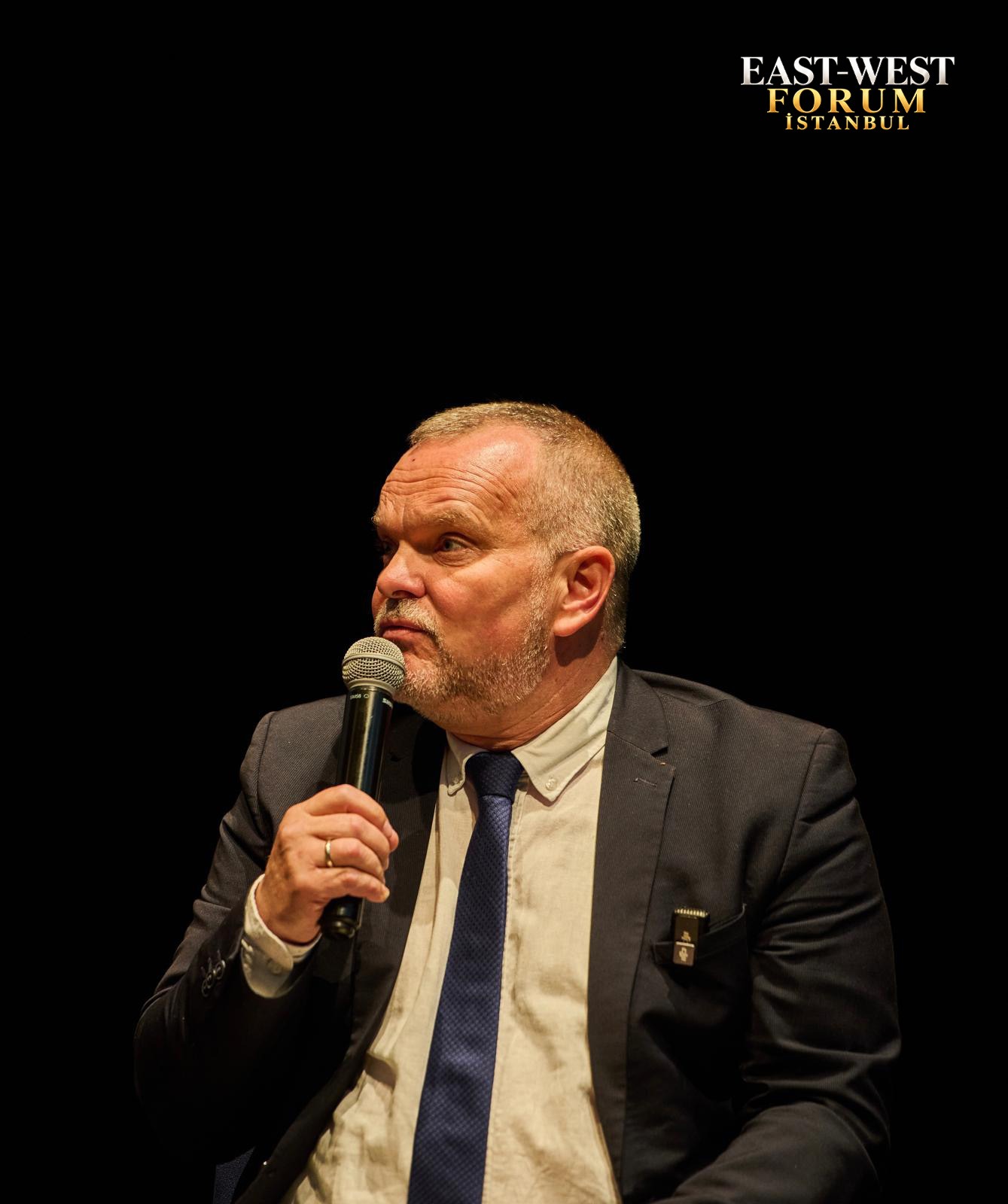
Editor’s note: French geopolitical analyst Georges Kuzmanovic, in his speech at the East-West Forum held in Istanbul on September 26, emphasized that the West, particularly the European Union, is in a profound political and moral collapse. Stating that Western leaders are completely detached from reality and constantly fuel war out of resentment born from failed globalization, Kuzmanovic pointed out that Europe has lost its sovereignty to neoliberal oligarchies and US tutelage. Expressing that the sabotaging of the 2022 Istanbul Accord by NATO and the relentless sanctions ended in failure, he conveyed that the West cannot come to terms with the independent rise of the Global South.
Well, thank you first for organizing this gathering. This is a great idea, this East West Forum. And I am here also to say to everybody hello from Emmanuel Todd, who was not able to come. He was invited, but he had family issues. And yeah, I would like to see the comeback of the European Enlightenment. But I think that we are first to hit the wall and this is what we are doing. As Thomas expressed, we are in a rapid decline. And in order to have a new Europe, we need to have a change of our leaders. And as Mikael von der Schulenburg said, our leaders, most of them are completely disconnected from reality in a point that is really Orwellian.
And that’s why EU right now is really a pole of instability. It’s always about war talks, war talks, war talks. Firstly against Russia, of course, but not only, of course, Iran. And somewhere somehow with China and in the future with India, it’s already started to build up the mindset again against India because it is rising. And the reason, the profound reason, is because all these leaders, especially the politics and mediatic leaders, a little bit less the industrial businessmen, but they are pissed off. They are pissed off because the globalization went completely wrong. They organized it in order to get all the benefits and all the rest of the planet to work and to be thankful to be working for the Western elite. Well, that doesn’t go well.
And also they’re speaking about European values, democratic values, respect of human beings. But the problem is that you cannot have these values if 10% of the population is consuming 50% of world resources. So that’s the basic problem. And the rest of the world is saying it’s enough and they are not accepting it. So that’s why they’re in complete panic, I think. And that’s why they are more and more vassalized to the United States in the hope that somehow the next strike, the next bomb, the next attack will change something. Because of course all these people who are running Russia, Iran, China, India, Modi is a bad guy, everything. Well, if there is a one strike, the people will rise and change the government because we are the good. And these people of course understand the good. And all their leaders are bad. So there is no space for negotiation. And when you don’t have space for negotiation, well, you cannot find any solution.
And there is a saying from a French humorist, it’s very funny, translate in French is the enemy is stupid because it doesn’t understand that he is the enemy. That’s exactly the mindset. And that’s why all the enemies are somehow Hitler. So Milosevic was Hitler and Saddam Hussein was Hitler and Gaddafi was Hitler and of course Putin, he’s Hitler. And it’s absurd. First Hitler loses hands. If everybody is a Nazi, then nobody’s a Nazi, which is a problem. And of course you cannot discuss with a great evil, so you cannot find solutions.
And I feel the same. I come from the left. I’ve been a long time political leader in the left parties and I have the same feeling with left parties. Until five, six years ago, they were very much about anti globalization protest and gatherings. But if you have noticed, there is no more anti globalization gatherings because it was all about left people from left, European left parties or American explaining to the south, global, global south people how to, how to become something, how to make the revolution, how to grow. But now that these global south countries are organizing by themselves, it’s less interesting.
Yeah, of course we, we need to, if we, if we want Europe to come back on international stage, we need to get back our sovereignty. This has been already told. So of course we lose it. We lost it for united Europe, for sorry, for the European Union, for NATO, but also and eventually for our own oligarchs. And that’s maybe the main problem is that this neoliberalism dogma created an oligarchy in western countries that has taken power. If I take, if I take the example of France, it’s nine billionaire controls like 95% of the medias and six among them are producing weapons. So here we are.
And they are also pissed off because as it was said in 2022 with the memorandum of Istanbul, which was a good solution. A few weeks after the start of this terrible war in Ukraine, which is kind of a third European suicide. Well, as you know, the story will not repeat. NATO countries, especially Boris Johnson went to Kyiv and said, guys, you have to continue the war. And they were convinced the deal was hold the line six months against Russian soldiers. We will defeat them economically and this doesn’t happen. And since they are in complete disarray, so we are on the 21st, 22nd, I don’t know, bunch of sanctions. It didn’t work.
And at the same time, Americans have lost a war in five weeks in Iran. So it’s terrible for people who consider themselves as the leader of the world. And as NATO even said, they have unconscious belief that they are the tops of the world and the rest are the barbarian. Well, if you don’t quit that mindset, then you cannot advance. You can do nothing. It’s so crazy that they are not even interested in what’s going on in Global South. I know because with my friend we created this media fragrance, popular Pedro, who is here. We are traveling around the world to cover the BRICS summits. Well, we are about the only European journalist to be there. It’s crazy. This is not covered even recently in New Delhi.
Well, to summarize with leaders that are, as Colonel Davis said and the others are blocked in 92 and in the Fukuyama concept of the end of history, with people that cannot see the world, that only see the world as war and they have to win the wars, even if it’s absurd, they have not the means to defeat the opponent. I think we have a bigger role. That’s why it’s here. What you’re doing is fantastic. It’s that we have to push for peace. As Professor Zhang Weiwei said, as the first of the six pillars is peace. And what we are all doing as we can is to push for peace. And because it went very wrong.
I think I wouldn’t agree with your interpretation of socialism, because it’s of course based on the Marx work. And if you read Marx, it’s not against violence. It’s not about peacefully achieved upgrade of the human society. On the contrary, it’s a violence blood, even more blood would uprise the majority. It’s like injustice of the humanity that found itself embodied like Haitian way into a working class. And that is why all these injustice allegedly embedded in a working class. Given that working class right to forcefully by war, by killing, overtaken the society and impose violently that imaginary society of communism. So it’s not socialism is like. It’s not democrat socialism of the post second World War Europe. No, it’s something else.
I wanted to add something else, but now I forgot. Yes. In the Second World War, in Croatia, nowadays, Croatia, there was Ustaše state with of course, fascist ideology. Puppet state, they say. But not puppet state, but ally state of Nazi Germany, where Catholic Church was hand in hand with this Ustaše movement. And not a single priest would say no to killing of around 1 million Serbs, Jews, Roma in a system of concentration camps. So even there were priests involved in killing and baptizing these Serbs, like rebaptizing into Catholicism. So we. Well, it’s a very complex phenomenon.
Yeah. It’s about the rapid decline and schizophrenia of our countries. As Colonel Davis is often saying on Deep Dive. It’s bizarre because our leaders are preparing us for war against Russia since already four and a half years. Last year, in the gathering of the mayors of France, which is not the place, the chief of staff took the microphone and it was a speaker and he said that we have to prepare for war in 2030 against Russia. Okay, why not? But there is no conscription, no off conscription, no more tanks built, no more ammunitions. And it’s strange, but there is one thing that is that the boat, a lot of tanks for civil arrest, for the gendarmerie and for the police, and both units are armed to the teeth.
And I think that, okay, they cannot make peace with Russia right now. And all these talks, war are, if I take the example of France, in which we have a presidential election, it is to avoid the main discussions which are why our debt is so crazy, why and is rising very fast, why interest rate is rising very fast, almost eating 5% for the 10 years or 80. Why, why the young people cannot have employment, why the wages are so, so, so, so small, why the diesel price will hit €3 per liter, which is completely insane, and nobody will be able to work on that price. So in order to avoid that and to prepare for the civil unrest will come. They’re speaking about war in Russia, but I’m saying that they’re preparing more to fight their own people.
Diplomacy
Europe has been under US occupation since World War II, Italian journalist and author Thomas Fazi says
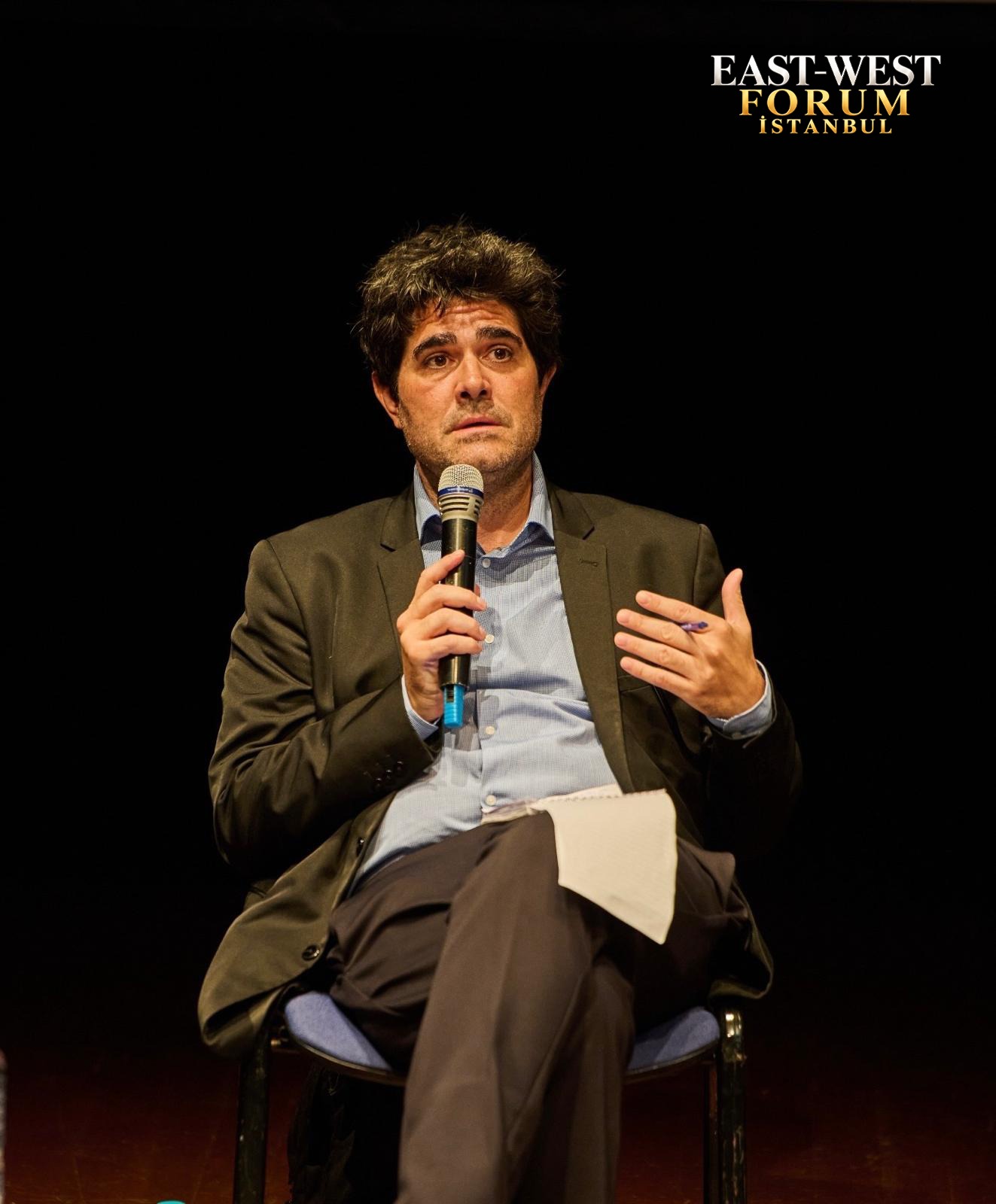
Editor’s note: Italian journalist and author Thomas Fazi, in his speech at the East-West Forum held in Istanbul on September 26, stated that European countries disregard their own fundamental economic and security interests, particularly in the context of the Ukraine war. Pointing out that this irrational policy cannot be explained by mere lack of foresight, Fazi expressed that the European continent has been turned into a “vassal” subordinate to transatlantic interests as a result of an ongoing process since the Second World War. Emphasizing that NATO operates as an apparatus to keep the continent under control rather than functioning as a defense organization, the author noted that the EU serves as the political wing of this imperialist order.
Thank you, Isabelle. And obviously a big thanks to the European Transcontinental Initiative and to Ulrike for setting up this amazing conference, which is a much needed breath of sanity. Amid the insanity that we’re experiencing in Europe at the moment.
Yeah, I’d like to start with something that Professor Panda said this morning when he spoke of the return of the national interest. And I think that got me thinking because I think that’s true for most countries. But there is one big exception, I think, to that rule. That big exception is Europe.
I think if we look at the actions of European countries in recent years in economic policy, security policy, geopolitics, most notably when it comes to the war in Ukraine, I think it’s really impossible to make the case that European countries have been pursuing their national interests, no matter how loosely you want to define it. European countries have systematically undermined their core economic interests, security interests and geopolitical interests. And so the question, the obvious question is why? And I think there are two explanations.
So one is that European leaders were simply misguided, foolish, that they were and still are pursuing what they believe to be their country’s national interest, even if even in the face of overwhelming evidence to the contrary. I think this may be conceivable if the consequences of these actions had been impossible to predict. But this clearly was not the case. It was self evident, for example, that decoupling from cheap Russian gas would have disastrous consequences for Europe, as has been.
And I, and many of us wrote about this in February and March of 2022, not because we were profits, but because it was obvious, just as it was obvious to everyone Ukraine had no chance of militarily defeating Russia, even with NATO support, support, and that therefore to push for a maximalist, military only solution to the conflict would have devastating consequences, first and foremost for Ukraine, obviously, but also for Europe, as has been not only in economic terms, but in security terms as well.
Of course, and again, many of us have said this right from day one. So unless we assume that European leaders didn’t understand this, that they would, that they’re just dumb, and as much as some of them clearly are, unless we assume that the entire EU establishment was simply too dumb to see what was clear to many observers, that is that these policies clearly ran counter to Europe’s interests and then doubled down on these policies when it became evident how contrary they were to those interests, I think then we have to consider an alternative explanation, and that is that Europe’s elites have not for a long time had the national interest in mind or even the collective interest of Europe as a whole, no matter how you want to define it.
In other words, I think the classic rule realist framework that contends that all states tend to defend and maximize their interests economically, militarily, et cetera. Really doesn’t apply to Europe because based on that framework, Euro’s policies are totally irrational. So I think in order to understand European policy, we need a different framework. And I think the framework that is most useful in Europe’s case is vassalization. Simply put, Europe, and by that I mean virtually every EU country, plus the entire Brussels establishment, has been hijacked by a transnational transatlantic elite that couldn’t care less about the objective interests of their countries, but is beholden to a completely different set of interests.
These are private oligarchic interests. Nowadays mostly transnational financial interests and military industrial interests, and of course foreign interests, namely the interests of Washington’s imperial establishment and by definition of Israel as well. So how did we get here? And this was clearly a very long process in the making, and one that started in the immediate aftermath of World War II, when the US identified Europe as a key pillar in their strategy of global dominance. Projecting US power globally required control in Europe economically, militarily, but also culturally. And Europe has effectively been under US military occupation since World War II, 80 years since the end of that war. We still have almost 100,000 US soldiers stationed in Europe. Europe still has about 30 key military bases across the continent. Officially, these are here to protect us. Protect us from whom? From Russia, which doesn’t represent a real threat to Europe.
In fact, I would argue never really represented a threat, not even during the Cold War. That threat was largely created and inflated by NATO itself. So NATO was never about defending Europe, of course. So it was always about controlling Europe and ensuring Europe’s strategic subordination to US strategic interests and about projecting US power globally. And this is still true, I would say even truer today. Not only is NATO obviously still used to ensure Europe’s alignment to US interests, and the Russia Ukraine war is the most obvious example of that, but also to project US power globally. Just the other day, NATO’s Secretary General, Mark Rutte, who tends to say the quiet part out loud, very often said that 5,000 sorties were launched from U.S. bases in Europe in support of the U.S. israeli aggression of Iran.
So Europe, despite the condemnation of some leaders, is actually fully complicit in the attack against Iran. In fact, Europe represents a key part of American military logistical infrastructure for military projection eastward towards Russia, but also southward towards the Middle east and, you know, NATO. And again, all the talk about NATO 3.0 and the supposed decoupling of Europe and America, this is just theater. In fact, NATO 3.0 will simply entrench Europe’s subordination to NATO further.
But of course, NATO was just one tool. America obviously had very, you know, America’s national security state developed very strong ties with the national security states of European countries. And America’s always exercised massive economic, technological and financial control over Europe. And of course it’s exercised massive cultural and ideological influence over the continent, not only through pop culture, clearly, but in the political domain through the English language media and the sprawling ecosystem of transatlantic think tanks and fake NGOs. And then you have a final pillar and I move you towards the conclusion which is often overlooked, but is crucial, I would say, and that’s the EU itself.
The EU has always been presented as a counterweight, potential counterweight to American power, but it’s never really been that. It’s always been a key tool for keeping Europe anchored to the transatlantic US led NATO system. It’s always been the political arm of NATO. And I think that is particularly obvious today under the rule of Ursula von der Leyen, who has gone out of her way to ensure the alignment of European countries to US interests, often against the will of individual governments themselves.
So now we’re in a very dangerous situation because through the eu, which is a structurally anti democratic institution, the transatlantic NATO establishment has achieved effectively full control, economic and political control over European countries. European countries are not sovereign and by definition they’re not democratic. And this makes the challenge of achieving systemic change through the electoral process all the more difficult.
And so to conclude, I would say that Europe is in many respects a continent under occupation. And so the question of how the people of Europe can achieve decolonization from the transatlantic system is maybe the key question facing Europe today. And hopefully a question that we will be analyzing throughout this panel.
So obviously political activism and political change necessarily occurred through violent struggles. That’s just the history of pre democratic Europe. So he wasn’t advocating, I mean, he was just like acknowledging the reality of the working class. And, and so I think this really points to, you know, a deeper problem, which of course, you know, I focused on my talk on the US’s role. But Europe’s problems predate America.
You know, America’s, America’s rise, the global empire by, By. By a very long time. And the problem has to do with, I mean, the visceral opposition of European economic political elites to democracy and to the working class for centuries. Today we speak of liberal democracy and we imply that somehow democracy is an outgrowth of liberalism. This is a total lie. All the great Liberal thinkers were viscerally opposed to democracy, mass democracy, democracy for everyone, a vote for everyone.
They the idea of democracy was democracy for the property owning classes, for the capital owning classes. Mass democracy was achieved through often violent struggles by the working, by the working classes and often the socialist movement. So that’s a problem. And we’ve had to, you know, the people of Europe have had to fight tooth and nail against their elites forever. It’s been a constant struggle.
We have the worst elites in the world and that’s, you know, who not only have no interest in the well being of other people in the global south, but have no interest in the well being of their own people, of the European people. Which is why Europe has always been mired in violence, political violence, class conflict. Even during the, you know, so called heyday of post war, you know, democracy, mass democracy was incredibly violent. And we had political, I come from Italy, my country had insane levels of political violence through the, you know, 60s, 70s and 80s. And it was the same in Germany and France and all major European countries. And this was the heyday of mass democracy. But that those were the years, the decades in which we achieved the greatest social and economic progress for the masses in Europe.
But it was also achieved through often violent struggle, not simply through voting. So this I think points to a deeper problem. I mean the gains that we achieved in the sort of the post war period were not just given to the people. They were the result of, of for a brief period the exist sort of the collective organized strength of the working classes, of the masses. And they were able to wrestle away some power from the organized power of the elites.
That’s basically, and it was always very relative victories. But they were able to wrestle away some power and control from the organized power of capital throughout the sort of, you know, first 30, 40 years after World War II and of course even preceding World War II. But the conditions that allowed that and that allowed mass to mass democracy no longer exist in many respects.
You know, the mass sites of production, big factories where workers could meet and unionize, none of that exists. And so the, the conditions that allowed for mass democracy no longer exist. Structural, material conditions. And so the real question is, you know, how do you rebuild democracy and wrestle away some power at least from, from, from, you know, from these political economic elites when the conditions that allowed us to do, to do that in the past no longer, no longer exist. Which is why you have our elites who are completely unleashed because they have, there is no real counter power anymore. I think that’s a big part of the problem.
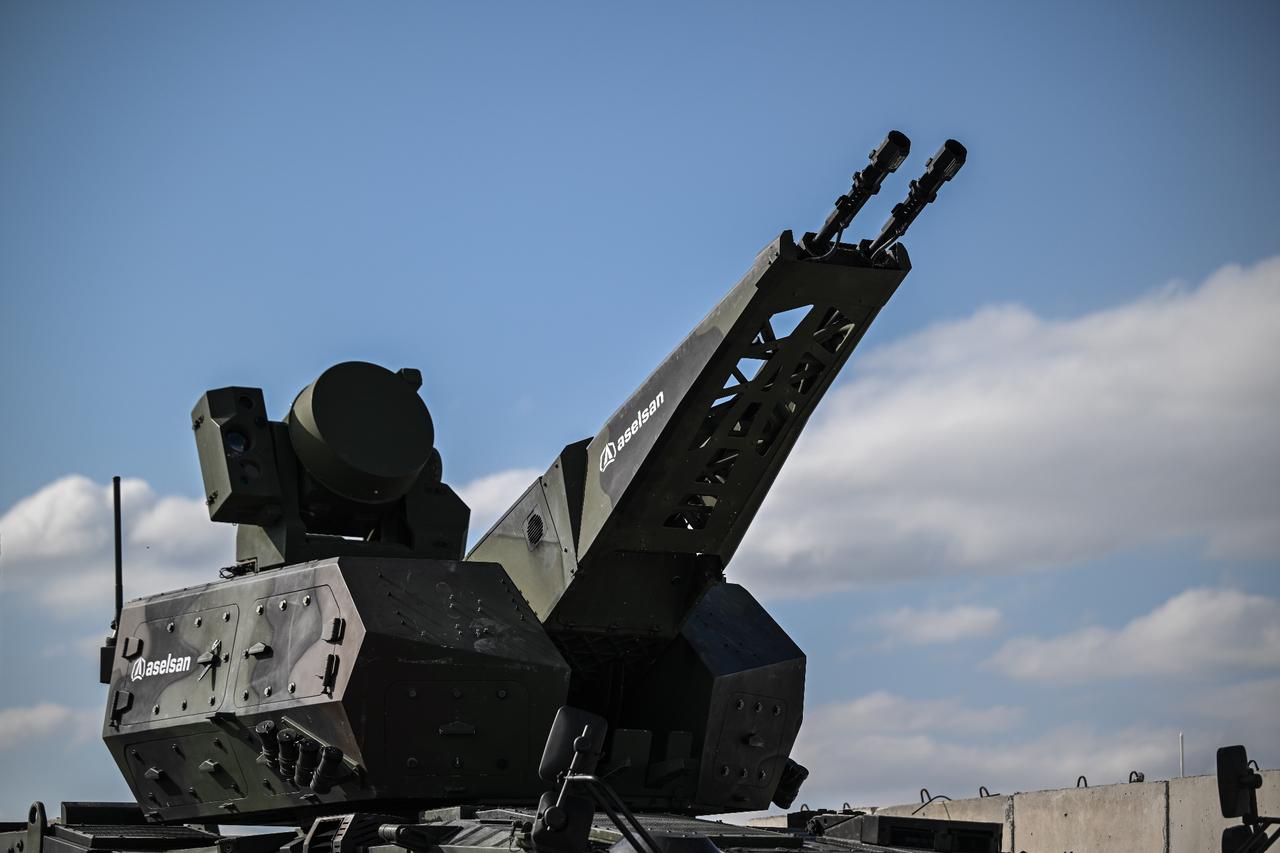
Türkiye has reportedly delivered a small number of Korkut air defence systems to Ukraine at the beginning of the year to bolster its air defence capabilities and test them in the field.
A report by the Middle East Eye (MEE) portal, citing sources familiar with the matter, stated that the delivered systems were placed under operational evaluation by the Ukrainian military.
Manufactured by Aselsan, a standard set of the Korkut system consists of three weapon system vehicles and one command-and-control vehicle.
The sources did not share information regarding how many sets or vehicles were deployed to the field in Ukraine.
Developed to destroy a range of aerial targets, including cruise missiles and unmanned aerial vehicles, the system also possesses the capability to counter FPV drones and wire-guided drones using 25 mm ammunition.
Ukraine interested in additional purchases
Evaluating the system’s performance in the field to MEE, a Ukrainian official stated that Korkut passed the combat test.
Regarding the operational process, the Ukrainian official said: “There were some problems, but they are not the kind that cannot be overcome with minor adjustments.” The same official expressed that the Kyiv administration is interested in purchasing additional Korkut systems if the terms and price are favourable.
Ukrainian sources speaking to MEE reported that many Turkish defence industry companies are collaborating with the Ukrainian military to test and refine their systems.
The report recalled that since the start of the war, Türkiye has supplied Ukraine with various defence equipment, such as Bayraktar TB2s, laser-guided missiles, artillery ammunition, and machine guns.
Meanwhile, the US State Department notified Congress in August of its intention to approve the transfer of 70 M39 ATACMS tactical ballistic missiles from Türkiye’s inventory to Ukraine.
Following this potential shipment valued at approximately $280 million, the Russian Foreign Ministry demanded an explanation from Washington and Ankara regarding the matter.
Russian Foreign Ministry spokeswoman Maria Zakharova maintained that new arms shipments to Kyiv could not seriously alter the course of the military operation on the ground, but would adversely affect Russia’s relations with the US and Türkiye.
Zakharova said that providing weapons to Kyiv while using peace rhetoric undermined mutual trust. Ivan Timofeev, Director General of the Russian International Affairs Council (RIAC), noted that the possible transfer of US weapons to Ukraine via Türkiye could complicate prospects for a settlement.

European industry urges EU action against China trade practices

Israel opposition seeks Netanyahu probe over 7 October call logs

German exports pivot to Eastern Europe amid drops in US and China

Thiel targets Pope and Obama over AI in new ‘Antichrist’ lectures

Energy firms enlist ex-US officials to tap Venezuelan oil
-
 Diplomacy2 weeks ago
East-West Forum in Istanbul highlights irreversible shift to multipolarity
-

 Europe2 weeks ago
European unions urge governments to scrap all Palantir deals
-

 Europe2 weeks ago
Emmanuel Todd says West faces collapse amid Ukraine and Iran crises
-
 Europe2 weeks ago
Rome protests AfD poster depicting South Tyrol as independent state
-

 Europe1 week ago
German interior ministers drop unanimity rule to counter AfD veto
-
 Europe2 weeks ago
German industry stockpiles critical minerals before EU-China talks
-
 Europe1 week ago
Key European allies excluded from US-led NATO meeting in Poland
-
 Europe2 weeks ago
Hamburg drill tests Baltic deployment prior to formal defense alert
