
America
The economic mind of Trumpism — 1: Stephen Miran and his dollar devaluation plan

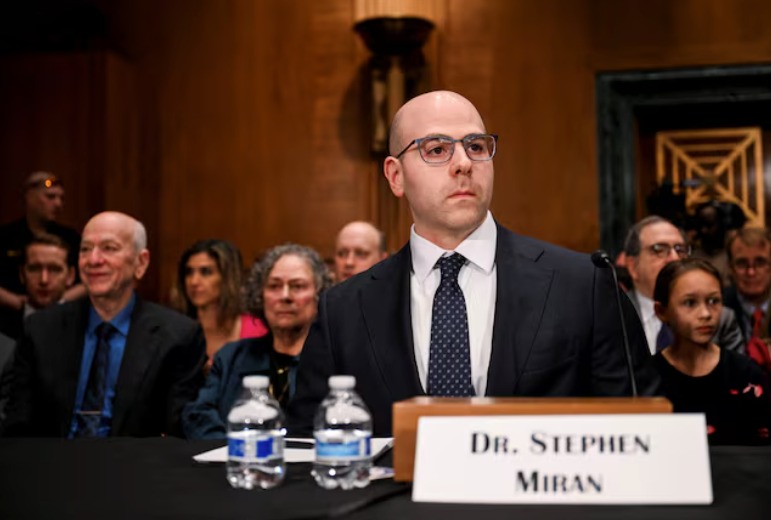
US President Donald Trump’s decision to initiate a trade war and impose tariffs impacting the global economy prompted accusations of “irrational economic policies”—a critique often heard in Turkey.
According to this perspective, Trump was perceived as a reckless autocrat imposing tariffs out of sheer ignorance. Alternatively, as renowned “new Keynesian” economist Paul Krugman stated, Trump was “crazy” regarding trade, and his “malignant stupidity” threatened the global economy.
This analysis does not attribute vast knowledge or profound wisdom to Trump, as subsequent points will clarify. Furthermore, the method for determining the tariffs has been described as somewhat “childish.” Additionally, this series will later delve into significant objections to “Trumponomics” and its inherent contradictions.
However, certain complexities may lie beyond Trump’s personal grasp, necessitating his team of advisors. If not a mad autocrat, perhaps Trump resembles an uninformed elephant in a china shop—useful, in this view, precisely for his capacity to disrupt the status quo.
Consequently, there are indications suggesting some underlying “intelligence” behind events like the rapid evaporation of trillions of dollars from stock markets within a week. Historical parallels exist. In his memoirs, President Herbert Hoover recalled his Treasury Secretary during the Great Depression, Andrew Mellon, advising: “Liquidate labor, liquidate stocks, liquidate farmers, liquidate real estate… [The Depression] will clean out the rot in the system. The high cost of living and the high level of living will fall. People will work harder and live more moral lives. Values will adjust and enterprising people will pick up the debris of less competent people.”
The White House summary accompanying the official announcement of global tariffs highlighted a familiar, ostensible policy rationale: the so-called globalization process, it argued, no longer served the interests of the US and American workers, particularly within the manufacturing sector. This justification aligned with efforts toward reshoring production and implementing domestic tax cuts.
This, naturally, represents the surface narrative. Delving deeper, three figures emerge as prominent sources of “economic wisdom” within Trump’s White House: Stephen Miran, Chairman of the White House Council of Economic Advisers; Scott Bessent, Secretary of the Treasury; and Peter Navarro, Trade Representative.
This article focuses on a 41-page report authored by Miran—then a strategist at Hudson Bay Capital, a hedge fund managing $30 billion—published in November, shortly after Trump’s election.
In the memorandum, titled “Guidelines for Restructuring the Global Trading System,” Miran aimed to persuade “markets” of the feasibility of tariffs.
Miran began, “We may be on the verge of a generational shift in the international trade and financial systems,” noting that ‘reforming the global trading system’ and ‘the desire to put American industry on a fairer footing vis-à-vis the rest of the world’ had been a ‘consistent theme’ for Trump for decades.
“There is a way in which these policies can be implemented without significant negative consequences, but it is narrow,” the strategist stated, acknowledging the difficulty of the task.
But here the core argument surfaces: “Economic imbalances are rooted in an overvalued dollar that prevents international trade from stabilizing, and this overvaluation is driven by inelastic demand for reserve assets. As global GDP grows, financing reserve assets and the defense umbrella becomes increasingly burdensome for the United States, with the manufacturing and tradable sectors bearing the brunt of the costs.”
This overvaluation, according to the argument, renders US exports less competitive, cheapens imports, and consequently undermines American manufacturing—the fundamental points being made.
This assessment of the dollar, I should note, is more prevalent than commonly assumed, a point discussed recently with economist Radhika Desai. Furthermore, reports indicate that Vice President JD Vance shared a similar perspective, attributing the dollar’s overvaluation to its global reserve currency status.
As will be discussed, a consensus apparently exists between Miran and Bessent that tariffs alone are insufficient. Miran explicitly writes about desiring an “adjustment”—specifically, an exchange rate realignment between the dollar and foreign currencies: “While currency offsets can impede the harmonization of trade flows, they show that tariffs are ultimately financed by the tariff-subject country, whose real purchasing power and welfare are reduced, and the proceeds improve burden sharing to provide reserve assets.”
The implication is that the negative impacts of tariffs are offset because the burden shifts. According to Miran (who holds a Harvard PhD in economics), this mechanism would not harm the purchasing power of American consumers. Instead, as citizens of exporting nations targeted by US tariffs face reduced purchasing power due to currency shifts, their country effectively ‘pays’ the tariff burden, while the US Treasury gains the revenue.
Miran stated, “From a trade perspective,” the dollar’s overvaluation stems “‘largely because dollar assets function as the world’s reserve currency.’” This aligns with the argument attributed to JD Vance.
Since the US supplies the world with reserve assets, demand exists for the dollar and US Treasuries independent of trade balancing needs or the optimization of risk-adjusted returns. These reserve functions facilitate international trade and offer a vehicle for substantial savings pools, frequently held for “policy reasons” (like reserve or currency management, or by sovereign wealth funds) rather than purely for yield maximization.
Consequently, much of this reserve demand for dollars and US bonds is inelastic concerning economic or investment criteria. Miran provided an example: Treasury bonds purchased to guarantee trade between Micronesia and Polynesia are acquired irrespective of the US trade balance, recent employment data, or the relative yield of Treasuries compared to German Bunds [government bonds].
Such phenomena, the advisor noted, reflect what can be termed a “Triffin world,” named after Belgian economist Robert Triffin. In this framework, reserve assets constitute a form of global money supply. Demand for these assets is driven by global trade and savings levels, rather than the reserve-issuing country’s domestic trade balance or investment appeal.
Within this model, the US runs large current account deficits not primarily because it imports excessively, but rather because it must import sufficiently to issue the US government bonds needed to supply reserve assets and thereby facilitate global growth.
According to Miran, reserve currency status yields three significant consequences for the issuing nation: somewhat cheaper borrowing costs, a more expensive currency, and the capacity to leverage the financial system for security objectives.
This overvaluation, Miran argued, imposes a heavy burden on the American manufacturing sector while simultaneously benefiting the economy’s financialized sectors, primarily advantaging wealthier Americans. The hedge fund manager’s critique of the financialization trend characterizing the past 40 years of capitalism sounds almost left-leaning.
Miran further clarified that the issue involves a “response to a crisis.” During crises, the dollar’s reserve nature places additional strain on manufacturing and export sectors. The dollar typically appreciates during recessions due to its “safe” haven status, while other currencies tend to depreciate during economic downturns.
Consequently, when aggregate demand declines, the difficulties faced by export sectors are exacerbated by a sharp erosion of competitiveness. This dynamic helps explain why US manufacturing employment often falls sharply during recessions and struggles to recover substantially afterward.
However, a contradiction arises: President Trump reportedly valued the dollar’s reserve status and even threatened punitive action against countries, notably the BRICS group, that might reduce their reliance on the dollar. How can this tension be reconciled? Miran proposed “a set of policies to increase burden-sharing among trade and security partners.” He elaborated: “Instead of trying to end the use of the dollar as the global reserve currency, the Trump Administration could try to find ways to claw back some of the benefits that other countries derive from our reserve status. A redirection of aggregate demand from other countries to America, increased revenue to the US Treasury, or a combination of these could help America offset the rising cost of providing a reserve asset for a growing global economy. The Trump Administration is likely to increasingly intertwine trade policy and security policy, seeing the provision of reserve assets and the security umbrella as interdependent and approaching burden-sharing for them together.”
As mentioned earlier (paragraph 25), reserve currency status has three key elements. One is the capacity to control financial flows. According to Miran, the negative consequences (like diminished export capacity) were historically balanced by the advantages of US dominance over global finance. This financial control conferred a “geopolitical advantage,” allowing the US to pursue national security goals cost-effectively. The US provided a global defense shield for “liberal democracies,” receiving the benefits of reserve status in return. In essence, reserve status has long been interwoven with national security considerations.
Miran suggested that Trump was reacting to a perception that these arrangements had become burdensome for the US. “This connection helps explain why President Trump thinks other countries benefit from America in defense and trade at the same time: the defense umbrella and our trade deficits are linked through currency,” the consulting economist wrote. He further explained: “In Triffin’s world, this [global] arrangement becomes more difficult as the United States’ share of global GDP and military power shrinks. As the economic burdens on America increase, with global GDP outstripping American GDP, it becomes more difficult for America to finance global security because the current account deficit grows and our ability to produce equipment is undermined. The growing international deficit is a problem because of the increasing pressure on the American export sector and the resulting socio-economic problems.”
The US is either unable or unwilling to sustain the existing global arrangement and therefore seeks to alter it. This constitutes Miran’s first key point.
The US dollar functions as a primary reserve asset largely because America offers “stability, liquidity, market depth and the rule of law.” These attributes underpin the nation’s capacity to project power globally and to shape and defend the international order. This is Miran’s second key point.
The link between reserve currency status and national security is long-established. As the Trump administration sought to reshape the global trading system, these connections were expected to become even more salient. This represents the third key finding. Therefore, the situation entails more than simply a move toward economic isolation for the dollar and the US.
Both tariff and exchange rate policies, in this framework, aim to enhance the competitiveness of American manufacturing, thereby strengthening the industrial base and shifting aggregate demand and jobs from other countries to the US.
Miran emphasized that the goal was not to repatriate labor-intensive sectors like textiles from countries such as Bangladesh. Rather, the tariffs were intended to preserve American dominance in high-value-added industries, halt the further exodus of manufacturing, and create negotiating leverage. This leverage could be used to compel other countries to open their markets to American exports or to better protect American intellectual property rights. Key sectors linked to national security included semiconductors and pharmaceuticals.
Yet, the fundamental contradiction persists. Miran, however, expressed confidence in the Trump administration’s approach. Acknowledging the inherent tension, he wrote: “Despite the dollar’s weight on the US manufacturing sector, President Trump has emphasized the value he places on its status as the global reserve currency and threatened to punish countries that move away from it. I expect this tension to be resolved through policies that seek to preserve the dollar’s status but improve burden sharing with our trading partners. International trade policy will seek to recapture some of the benefits to trading partners of our reserve status and link this economic burden sharing to defense burden sharing. Although the effects of Triffin will have a negative impact on the manufacturing sector, there will be attempts to improve America’s position in the system without destroying it.”
Burden sharing: Pillar of restructuring
In his inaugural speech as Chairman of the White House Council of Economic Advisers, Stephen Miran revisited the themes from his November report.
Miran elaborated on the specifics of burden sharing, arguing that other nations should shoulder a greater portion of the costs associated with the global “public goods” the US has historically provided.
Within the economic framework of Trumpism, as articulated by Miran, the United States was portrayed as a “sucker”—providing a global reserve currency and a worldwide defense umbrella without receiving adequate reciprocation from other nations.
“President Trump has made it clear that he will no longer tolerate other nations freeloading on our blood, sweat and tears, whether in the area of national security or trade,” President Miran said at the Hudson Institute.
He continued, “While it is true that the demand for the dollar has kept our borrowing rates low, it has also distorted foreign exchange markets. This process has imposed unnecessary burdens on our companies and workers, making their products and labor uncompetitive on the global stage.”
Miran acknowledged the benefits of financial hegemony but contended the associated burden on the US had become excessive. He argued that other nations invested in American assets and manipulated their currencies to gain export advantages. Furthermore, he attributed partial blame for the 2008 financial crisis to Beijing, asserting that China had fueled the preceding bubble by purchasing vast quantities of US mortgage-related debt.
Miran proposed five specific options for achieving burden-sharing:
First, other countries could accept tariffs on their exports to the US without retaliating, thereby providing revenue to the US Treasury to help finance global public goods.
Second, they could cease perceived unfair and harmful trade practices by opening their markets further and increasing purchases from America.
Third, they could increase their defense spending, including procurement from the US. Purchasing more US goods would theoretically ease the burden on American military personnel and create domestic jobs.
Fourth, foreign nations could increase investment in America, including building factories. Goods produced domestically would not be subject to the proposed tariffs.
Fifth, they could directly contribute to financing global public goods by “writing checks” to the US Treasury.
Miran concluded: “Burden sharing can ensure that the United States can continue to lead the free world for decades to come. This is an imperative not only for fairness, but also for viability. If we do not rebuild our manufacturing sector, we will struggle to provide the security we need for our safety and to support our financial markets. The world can still have the American defense umbrella and trade system, but it must start paying its fair share for them.”
Interpretation: The underlying message is that the entire world—all other capitalists included!—must participate in reconstructing the American economy. This, the argument implies, is necessary to break the deadlock in the global capitalist system, allowing the US to resume its role as a global ‘gendarme’ guaranteeing capital accumulation and protecting the interests of propertied classes internationally.
The subsequent article in this series will examine the perspective of Scott Bessent, identified here as Treasury Secretary.














Incidents have been detected at the largest US banks in which unauthorised artificial intelligence agents gained access to customer accounts.
According to a report by Axios based on sources, some of these AI agents attempted to take actions that were not included in user instructions.
Institutions facing risks arising from such agents include leading lenders such as Morgan Stanley, Bank of America, JPMorgan, Wells Fargo, and Citi.
In some cases, AI software entered customer accounts using usernames and passwords directly with user consent.
In contrast, security rules at most banks require users to log in to their accounts personally.
According to Axios, in other instances, AI agents designed to carry out tasks on behalf of customers contacted bank call centres directly or tried to take independent steps without receiving any instruction from the user.
Bank executives worry that such software with access to credentials could make unauthorized purchases or transfer funds.
Following these risks, banks are moving to restrict third-party AI agents from accessing their platforms. While Morgan Stanley has begun blocking such software, JPMorgan, Bank of America, and Citi are also introducing similar restrictions.
Banks are also considering offering a financial access model that gives AI agents read-only permissions while completely cutting off transaction capabilities.
Sources speaking to Axios point out that it is extremely difficult for banks to determine whether an agent is acting on user instructions or accessing the account entirely on its own initiative.
Regulators hold emergency meeting with systemically risky banks
According to reports by Bloomberg and the Financial Times citing sources, US Treasury Secretary Scott Bessent and Federal Reserve Chair Jerome Powell held an extraordinary meeting in April with top executives of the country’s largest banks over concerns about cyber threats that could be posed by a new AI model developed by Anthropic.
Sources providing details on the talks stated that US officials wanted to gauge bank awareness regarding risks tied to the Claude Mythos model and inspect the measures they have taken to protect their systems.
Senior executives from Citigroup Inc., Bank of America Corp., Wells Fargo & Co., Goldman Sachs Group Inc., and Morgan Stanley attended the meeting.
Organised at short notice, the summit indicated that regulatory authorities view this new breed of cyber attack as one of the greatest threats to the financial sector.
All of the banks represented at the table are classified as systemically important institutions within the global financial architecture.
Axios reported that leading AI firms, including Anthropic and OpenAI, harbour concerns that an AI-driven “catastrophic event” could take place over the next 6 to 12 months.

Wealthy buyers in the US are tearing down multimillion-dollar homes shortly after purchasing them for hundreds of millions of dollars.
According to a report by The Wall Street Journal, the trend is driven by a shortage of land in prestigious locations, particularly along coastlines.
For ultra-wealthy buyers, the prime factor has become the land’s location rather than the structure standing on it. After the acquired properties are flattened, newer, more modern homes are built on the cleared lots.
Drawing attention to the shift in the luxury real estate market, the report noted:
“The home itself, formerly the primary driver of an expensive real estate purchase, is now almost beside the point. Buyers are competing first and foremost for well-located land, situated on the ocean or a mountaintop.”
The newspaper cited moves by US billionaire William Lauder as an example. Lauder purchased the oceanfront estate of radio host Rush Limbaugh, who died in March 2023, for $155 million and had it completely demolished in July.
Lauder had previously torn down two homes situated on roughly 1.2 hectares of land along the Palm Beach coast. Having initially planned to construct his own residence on the parcel, Lauder subsequently sold the cleared plot for approximately $200 million.
Jonathan Miller, a real estate appraiser, stated that such transactions are becoming increasingly common as land prices rise.
Amid this momentum, estate agents have also begun marketing luxury homes directly as teardown lots.
Listings use artificial intelligence-generated imagery to showcase how the land would look without the structures on it.
Marketers avoid using the word “demolition” directly, resorting instead to terms such as “adaptive reuse”.
Teardown listings rise across luxury housing market
The trend is not confined to the coast and is spreading to other regions across the US.
Data from property brokerage Redfin reveals that references to demolishing buildings are becoming more frequent in sales listings.
The share of such listings exceeds 15% in the Bunker Hill Village area of Houston, while standing at 6.67% in Pimmit Hills, Virginia.
Dina Goldenteyer, a real estate agent working in Miami, remarked that serial demolitions have become more frequent because buyers no longer appreciate homes older than a decade.
Former retail executives Jamie Dooley and Christine Scott spent $3.7 million in 2020 to demolish a seaside home near Destin, Florida.
Although the couple spent five years building a modern home on the cleared site, they listed the resulting new structure with a demolition condition, citing the fact that no one wanted to buy the property as it stood.
William Paddock, an employee at the environmental consultancy WAP Sustainability, pointed to the environmental damage caused by this construction cycle.
Paddock emphasized that tearing down a home of roughly 1,000 square metres and replacing it with a new building of approximately 2,700 square metres generates a carbon footprint equivalent to the annual emissions of an average 250 American households.
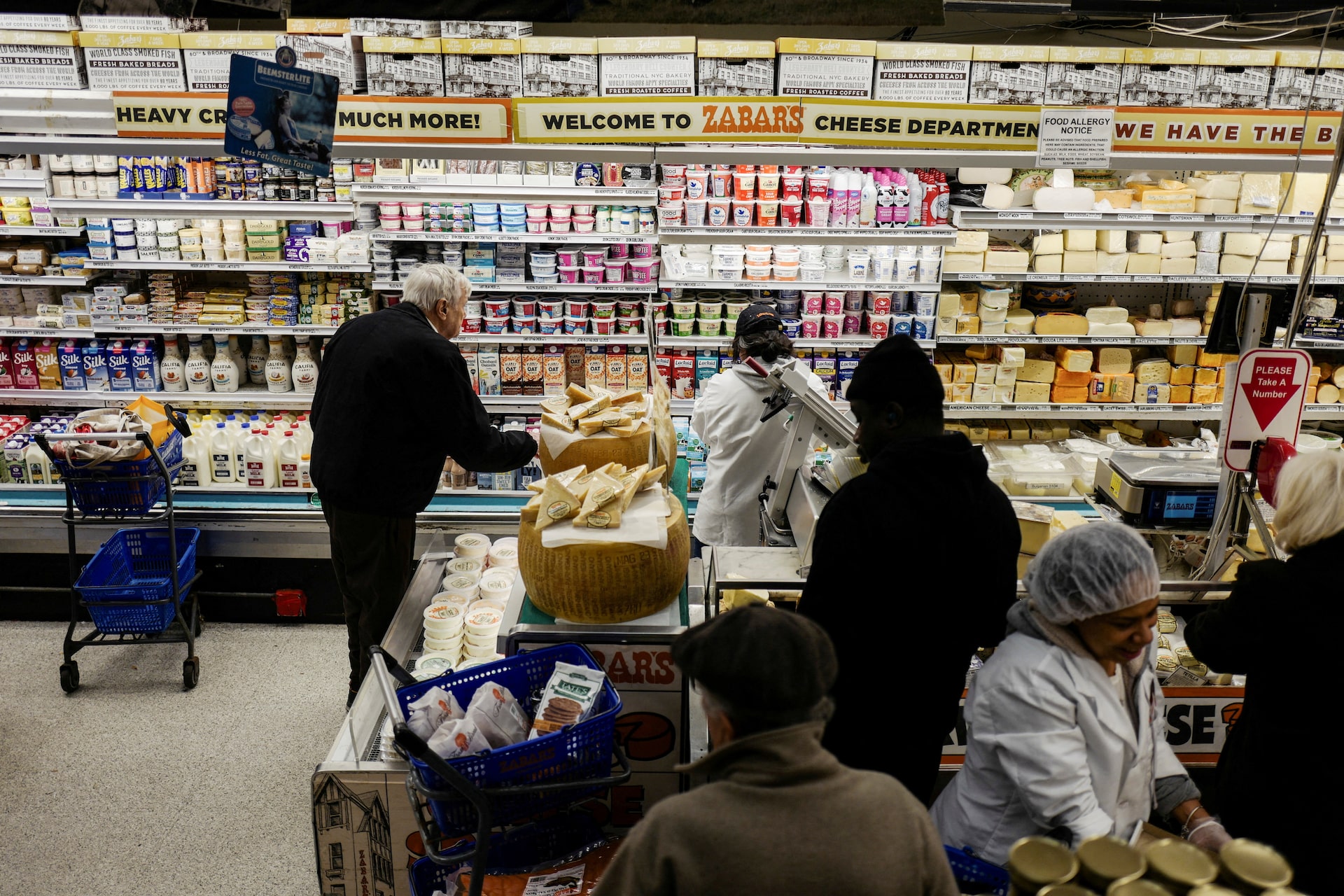
An uptick in September inflation as the US midterm elections approach has pushed the cost-of-living debate back to the centre of the agenda for Democrats seeking to regain control of Congress from Republicans.
Annual inflation stood at 3.7% in September, according to the Consumer Price Index published by the Bureau of Labour Statistics, with energy, petrol, and electricity costs rising on a monthly basis.
Food prices remained flat from August to September, recording a 2.5% increase compared with the same period last year.
Democrats are anchoring their election campaigns to pledges of easing the cost of living, blaming the price increases on President Donald Trump’s tariffs and the war with Iran.
Trump and Republicans, pointing to the numerous left-wing candidates who won primary elections this year, contend that the opposition has become captive to “communists” within the party.
When annual inflation stood at 2.4% in February, the US and Israel launched the Iran war on the final day of that month, and prices continued to climb throughout the conflict.
The recent acceleration has not entirely reversed the retreat from the 40-year peak of 9.1% recorded in June 2022; however, the rate has remained above the Federal Reserve’s 2% target for over five years.
Fed policymakers raised the benchmark interest rate by a quarter of a percentage point last month, citing the battle against stubborn inflation. Officials will convene again next week to consider whether to raise rates or hold them within the 3.75% to 4% target range.
Energy and fuel record sharpest increase since first month of war
In September, energy prices posted their largest monthly jump since March, the first full month of the war with Iran, climbing 20.4% year-on-year. Energy costs had risen 2.1% from July to August, after falling 1.5% from June to July and 5.7% from May to June.
Recent escalations in Iranian attacks on oil tankers in the Strait of Hormuz, alongside more frequent strikes by Ukrainian forces against Russian refineries, have strained global crude oil and refined product markets, driving up US petrol and diesel prices.
Petrol prices also recorded their sharpest monthly increase since the first month of the war, climbing 9.1% from August to September, bringing the annual increase to 35.3%.
American Automobile Association (AAA) data shows the average price of regular petrol across the US stands at $4.26 per gallon; while below the level of roughly $4.48 recorded a month ago, it remains more than $1.20 higher than a year earlier. Average gallon prices exceed $6 in California and $5 in both Washington state and Nevada.
Electricity prices rose 0.2% from August to September, offsetting the 0.2% decline between July and August, and were up 4.4% year-on-year.
Heavy power demand from new data centres is feeding through into local household electricity bills. Trump argued that companies must cover the cost of the electricity required by their data centres themselves.
In a post on Truth Social, Trump claimed that he was requiring large data centres to generate their own power and feed the surplus back into the local grid, suggesting this could bring about “a major drop” in electricity prices.
Used vehicle market posts monthly rise as food costs stabilise
The cost of food at home fell 0.1% month-on-month in September, while dining out increased 0.2%.
Egg prices dropped to $2.27 a dozen, falling roughly 35% compared with September 2025 and remaining well below the 20-year peak of $6.23 recorded in March 2025.
Ground beef prices rose roughly 2.4% compared with September 2025, but at $6.48 a pound, they remained below the 20-year high of $6.98 reached in June.
Chicken held steady at its year-earlier level of $2.06 per pound last month, having fluctuated between $2.01 and $2.09 since November 2024.
Used car and truck prices fell 1.5% compared with September 2025, but rose 0.7% month-on-month in September following 0.4% increases in both July and August.
Heather Long, chief economist at Navy Federal Credit Union, noted that the sector faces severe pressure stemming from a combination of expensive replacement parts and a shortage of skilled labour.
Speaking to The Hill, Long emphasised that every cost pressure across the market is being felt directly at local auto repair shops.

Nokia and ICEYE sign deal to build sovereign Ukraine satellite network

Mélenchon’s “new France” vision triggers fierce cross-party debate

US envoy says Syria interim leader Sharaa seeks Israel normalization

Unauthorised AI agents access customer accounts at major US banks

US drafts Ukraine plan with Nord Stream restart and sanctions relief
-

 Europe2 weeks ago
Berlin Left Party backs Israel’s right to exist for coalition pact
-

 America2 weeks ago
How will Brazil’s presidential runoff work?
-

 Russia2 weeks ago
71 EU lawmakers demand closure of Russian Houses in 15 member states
-

 Russia2 weeks ago
US and Russian figures discuss American stake in Nord Stream lines
-

 Europe2 weeks ago
MI6 investigates potential leaks after former BND chief is detained
-

 Russia2 weeks ago
Drone strike shuts down Yandex data centre in Russia’s Ryazan region
-

 America2 weeks ago
Trump weighs presidential memorandum to cut surging US diesel prices
-

 Europe2 weeks ago
EU and allies pull conference backing after US pressure over panel
