
Opinion
A voice rising from New Delhi: BRICS’s manifesto for a new world order

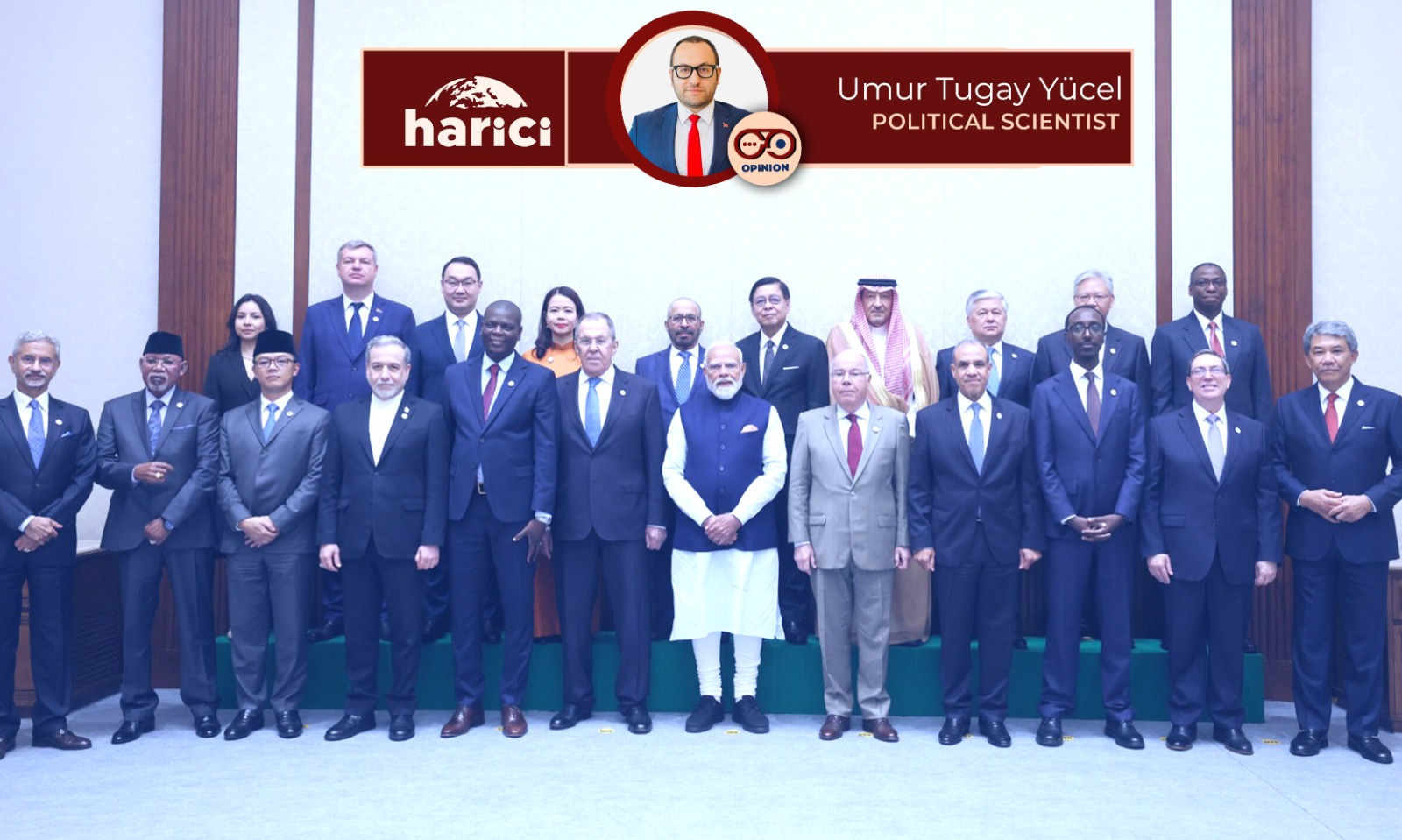
The BRICS Foreign Ministers’ Meeting, held in the Indian capital of New Delhi on May 15, 2026, carries a significance that extends far beyond the confines of routine diplomacy. This gathering culminated in the signing of one of the most comprehensive political documents to date, outlining the vision of the world order that BRICS envisions for 2026. Reading between the lines, the document reveals not merely the proceedings of a ministerial summit, but the contours of a comprehensive alternative vision challenging the Western-centric international system. Indeed, this text must be read as a political manifesto of the shifting balances of power, the accelerating global struggle for influence, and the emerging new world order of recent years.
The overarching theme dominating the entire document is “The Rise of the Global South.” BRICS members contend that the current international order is unjust, insufficiently representative, and fails to reflect the interests of developing nations. Consequently, they emphasize the urgent need to restructure foundational institutions such as the UN, IMF, World Bank, and the World Trade Organization (WTO). In doing so, BRICS now positions itself as the voice of the non-Western world. Today, the global arena is traversing an era in which the post-World War II international system has plunged into a profound crisis of legitimacy and representation. Developments such as the wars in Ukraine, Iran, and Lebanon, the Gaza crisis, global trade wars, the weaponization of sanctions, energy security challenges, and technological competition demonstrate that the current system struggles to mirror contemporary global realities. It is precisely from this premise that the BRICS nations operate, sending a clear message to the world through the New Delhi Outcome Document: “The status quo is no longer sustainable.”
One of the most striking aspects of the document is how clearly it demonstrates that BRICS no longer views itself as a mere platform for economic cooperation. Having long focused primarily on economic development, trade, and finance since its inception, BRICS has now reached a far more ambitious posture. In the New Delhi Outcome Document, issues of security, geopolitical crises, artificial intelligence, cybersecurity, climate policies, energy transition, and international governance reforms occupy a place as central as economics. This indicates that BRICS’s ambition to become a foundational actor in global politics is steadily gaining traction. Reading between the lines, the strongest emphasis emerges on the concept of a “multipolar world.” The core approach of BRICS is animated by the premise that the Western-centric, largely US-led international order, which took shape over the decades following the end of the Cold War, is no longer the sole alternative. Throughout the declaration, the repeated use of phrases like “more just,” “more representative,” “more democratic,” and “more inclusive” international system constitutes a direct critique of the current distribution of global power.
The sections concerning the reform of the United Nations Security Council are particularly critical. Indeed, the call for UN reform stands out as one of the most pivotal political segments of the document. BRICS nations explicitly state that the current structure fails to reflect contemporary realities. They contend that Africa, Latin America, and emerging Asian powers are underrepresented in decision-making mechanisms. What is even more remarkable is that China and Russia have reaffirmed their support for India and Brazil to assume greater roles within the Security Council. This state of affairs reveals, first and foremost, the elevation of India and Brazil to global-power status. Secondly, it demonstrates an increasing political cohesion within BRICS. Finally, it illustrates a fundamental questioning of the post-WWII international order.
Another prominent element in the document is the sharp critique of the sanctions policies pursued by the United States and the West. The intensive use of economic sanctions as a foreign policy tool in recent years has engendered collective discomfort among BRICS nations. The text emphasizes that unilateral sanctions violate international law and severely hamper the economic development of developing nations. Although no countries are named directly, this formulation can be read as a potent critique targeted at measures such as US sanctions on Iran, Russia, and Venezuela, as well as the embargo on Cuba. This approach is a continuation of BRICS’s long-standing critique regarding the “weaponization of economics.” Indeed, one of the most strategic segments of the declaration emerges here. For BRICS is no longer merely criticizing the existing financial architecture; it is actively endeavoring to construct alternative mechanisms. Initiatives such as cross-border payment systems, trade in local currencies, financial integration, and the strengthening of the New Development Bank can be read as harbingers of a long-term quest to forge an alternative to the dollar-centric global economic structure. While it is premature to speak of a system capable of fully displacing the dollar, the steps taken by BRICS are beginning to demonstrate that the current financial order is not the only option.
Another major political segment of the New Delhi Document concerns the Gaza and Palestine issue. Here, we witness one of the strongest stances BRICS has ever taken on the matter. The document employs highly resolute language regarding Gaza and Palestine, with a notable emphasis on an independent Palestinian state based on the 1967 borders. Furthermore, South Africa’s legal action against Israel and the rulings of the International Court of Justice are directly recalled in the text. In the face of recent offensives and the unfolding humanitarian crisis, BRICS nations have displayed one of their clearest collective stances to date. The call for an immediate ceasefire, the demand for unhindered humanitarian aid delivery, support for Palestinian statehood, and the emphasis on international law stand among the declaration’s most potent political messages. This can be interpreted as an indication of BRICS’s desire to become a more visible and effective political actor in global crises.
On the other hand, the text does not entirely gloss over the internal divergences within BRICS. It openly acknowledges that members hold differing views, particularly on Middle Eastern issues. This is significant because today’s BRICS is no longer a bloc comprised solely of Brazil, Russia, India, China, and South Africa. With the integration of new members such as Iran, the United Arab Emirates, Egypt, Ethiopia, and Indonesia, it has evolved into a far more complex geopolitical entity. Interestingly, the document explicitly notes that rather than a unified stance, differing perspectives exist on certain issues. Specifically, it is conceded that members hold divergent positions on matters concerning Iran, the Gulf states, and Yemen. Despite these differences, the bloc’s ability to establish common ground demonstrates an expansion of BRICS’s diplomatic capacity. Viewed from this perspective, the New Delhi process also represents a significant diplomatic triumph for India. While the recent wave of expansion—bringing in Iran, the UAE, Egypt, Ethiopia, and Indonesia—has enriched the platform’s geopolitical diversity, it has also rendered collective decision-making processes more intricate. Particularly at a juncture where the war in Iran continues, the deep-seated divergences between Iran and the Gulf states led many experts to predict that BRICS would struggle to find common political ground and that the summit would be fraught with severe diplomatic friction. However, despite all these differences, India succeeded in rallying members with diverging interests and priorities around the same platform, proving that BRICS retains its capacity to generate dialogue rather than fracture. In this context, the outcome in New Delhi is not limited merely to the content of the published joint text. The true, striking success lies in the preservation of a diplomatic arena that enabled members—who find themselves directly opposed on certain issues in an extremely sensitive and polarized crisis environment—to compromise on other matters and continue negotiating under the BRICS umbrella.
Furthermore, one of the document’s most critical messages emerges in the realm of technology. The extensive coverage of topics such as artificial intelligence, digital infrastructure, data security, and cybersecurity is no coincidence. Indeed, the global power struggle of the future will be shaped heavily through technological supremacy. BRICS nations clearly demonstrate their awareness of this reality and their intent to act in unison in the technological race. Particularly noteworthy is their quest to develop alternatives to Western-centric norms in artificial intelligence governance. A distinct approach is also observed in energy and climate policies. Instead of the rapid energy transition frequently championed by Western nations, the concept of a “just energy transition” is prioritized. At the heart of this approach lies the conviction that the economic growth needs of developing nations must not be disregarded. BRICS countries advocate for a balance between environmental responsibility and the right to development. This points to a major fault line that will become increasingly pronounced in global climate debates in the coming years.
When all these headings are evaluated together, the resulting picture is remarkably clear: BRICS is no longer merely a platform for safeguarding economic interests. It is a center of power beginning to articulate its own vision of how the international system ought to operate. At the core of this vision lies the objective of greater representation, sovereign equality, deeper multipolarity, and a stronger voice for developing nations in global decision-making processes.
The New Delhi Document, brought to the table at the BRICS Foreign Ministers’ Meeting, is far more than a mere communique; it is one of the landmark texts of the historic transformation unfolding in global politics. As the world rapidly moves away from a unipolar structure, BRICS is emerging as one of the most powerful political and economic vehicles of this transition. Today, many rules of the international system may still be written by the West. Yet, the message rising from New Delhi is clear: far more actors now demand a seat at the table to rewrite those very rules. BRICS is transitioning from an economic club into a political, diplomatic, financial, and technological powerhouse. Its claim to serve as the collective voice and compass of the Global South is strengthening. It pursues a dual strategy: offering an alternative to Western-centric institutions while simultaneously working to transform them. BRICS is not yet establishing institutions to directly replace the UN, IMF, World Bank, or WTO; rather, it is striving to change the rules and the distribution of power within them.
The 2026 New Delhi Document of the Foreign Ministers’ Meeting, hosted by India under its presidency, can be regarded as one of the most comprehensive strategic documents in the twenty-year history of BRICS. The text serves as a political manifesto for an era marked by the sunset of the US- and Western-led unipolar epoch, the demands of rising powers for greater agency, and the accelerating quest of the Global South to establish a permanent weight in the international system.
The essence of the document can be distilled into a single sentence: while BRICS remains a platform that adapts to the rules of the existing international order, it is simultaneously transforming into a global actor that seeks to rewrite them.
Umur Tugay Yücel – Political Scientist & Author of the book “The Decline of American Power and the Rising Powers” (China-Russia-India-Brazil).
X: @umur_tugay






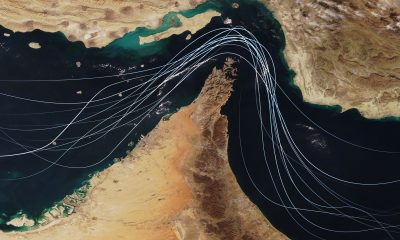



By its very nature, foreign policy feeds into and draws nourishment from numerous, disparate, and varied fields. It is a domain with manifold and diverse inputs. For foreign policy is examined alongside a broad array of subjects, ranging from geography to history, economics to intelligence, and military might to public diplomacy, commonly termed soft power elements.
The capacity of the state, that is, the scale of the state, or in other words the aggregate of its elements of power (namely political, economic, military, and soft power components), is decisive in foreign policy. Geography is decisive in foreign policy. Commercial relations are decisive in foreign policy. Energy dependence on another country or countries, if present, is decisive in foreign policy. Foreign policy cannot be conducted in spite of these four factors.
There is more. A country’s capacity, its scale, does not increase overnight, from one day to the next. It requires planning. It requires national consensus. It requires time. It requires preparation. Nor are these enough. The regional and global environment, the conjuncture, and the international plane must also allow for it. The stance of allies and adversaries is, of course, also important.
For the international environment is, by its nature, complex. It is an environment rife with contradiction, turmoil, conflict, and tension. To draw an analogy, the person in the driver’s seat of foreign policy is not a motorist speeding along the road as they please. There are things they must not forget, rules they must obey, red lights, vehicles speeding up from behind, a truck moving ahead, and a heavy vehicle hurtling toward them from the opposite direction.
Success in foreign policy does not arrive simply because a politician we like has become foreign minister. For a foreign minister is only as effective as the power, capacity, and weight of their country. One must accept this plain truth.
Moreover, there are simple, straightforward questions that reveal whether foreign policy, which some find deeply complex and inscrutable, is successful or not.
There are undoubtedly ways to measure the effectiveness, prestige, influence, and success of foreign policy.
For instance, the number of countries that respect a passport, how many countries can be visited visa-free, and how many countries impose visa requirements and grant those visas only with great difficulty are important indicators of a country’s standing.
Let us take ourselves as an example. Which countries require a visa for the Turkish passport? Which ones do not? Is it easy for our citizens to obtain visas for the countries they primarily wish to visit?
Let us give another example from the Turkic world.
On the Cyprus issue, which we regard as a national cause across government and opposition, right and left, Kemalist and Milli Görüş adherents alike, how many countries have we succeeded in having recognize the TRNC? Why do the Turkic states (Azerbaijan, Kazakhstan, Kyrgyzstan, Turkmenistan, Uzbekistan) not recognize the TRNC? Far from recognizing the TRNC, how do the Turkic states in Central Asia (Turkistan) explain to Ankara their developing relations with the Greek Cypriot Administration of Southern Cyprus, which Türkiye does not recognize, their appointment of ambassadors, and their recognition of Southern Cyprus as the island’s sole legitimate government?
We must also ask this question, of course: What is the state of Türkiye’s bilateral trade with the Turkic states?
Let us give an example of the relationship between foreign policy and big capital.
In which countries are big capital circles, among the greatest supporters of the ruling bloc, winning major tenders?
In our country, across both ruling and opposition ranks, there is a political party order that supports Türkiye’s EU membership. Yet how much progress has been made on EU membership?
Why is US President Trump not keeping the promises he made to Türkiye at the NATO summit held in Ankara a few months ago?
How many contracts has the new regime in Syria, the al-Sharaa administration, awarded to Turkish companies for the reconstruction of its country?
Has the government in Libya that Türkiye supports paid the money owed to Turkish construction firms, outstanding for years?
How does Qatar, with whom our relations are very good, explain its developing ties, energy agreements, and joint military drills with Greece and the Greek Cypriot Administration, disregarding our sensitivities?
Who is the addressee of the harsh statements used in recent weeks by Azerbaijan, which we view as “two states, one nation”? To what extent does Azerbaijan share Türkiye’s policy on Israel? What does Türkiye think about the scale, depth, and intimacy of Azerbaijan-Israel relations?
These questions can certainly be multiplied.
Yet without taking into account the scale of the state and observing the criteria for measuring foreign policy, no sound assessment can be made.

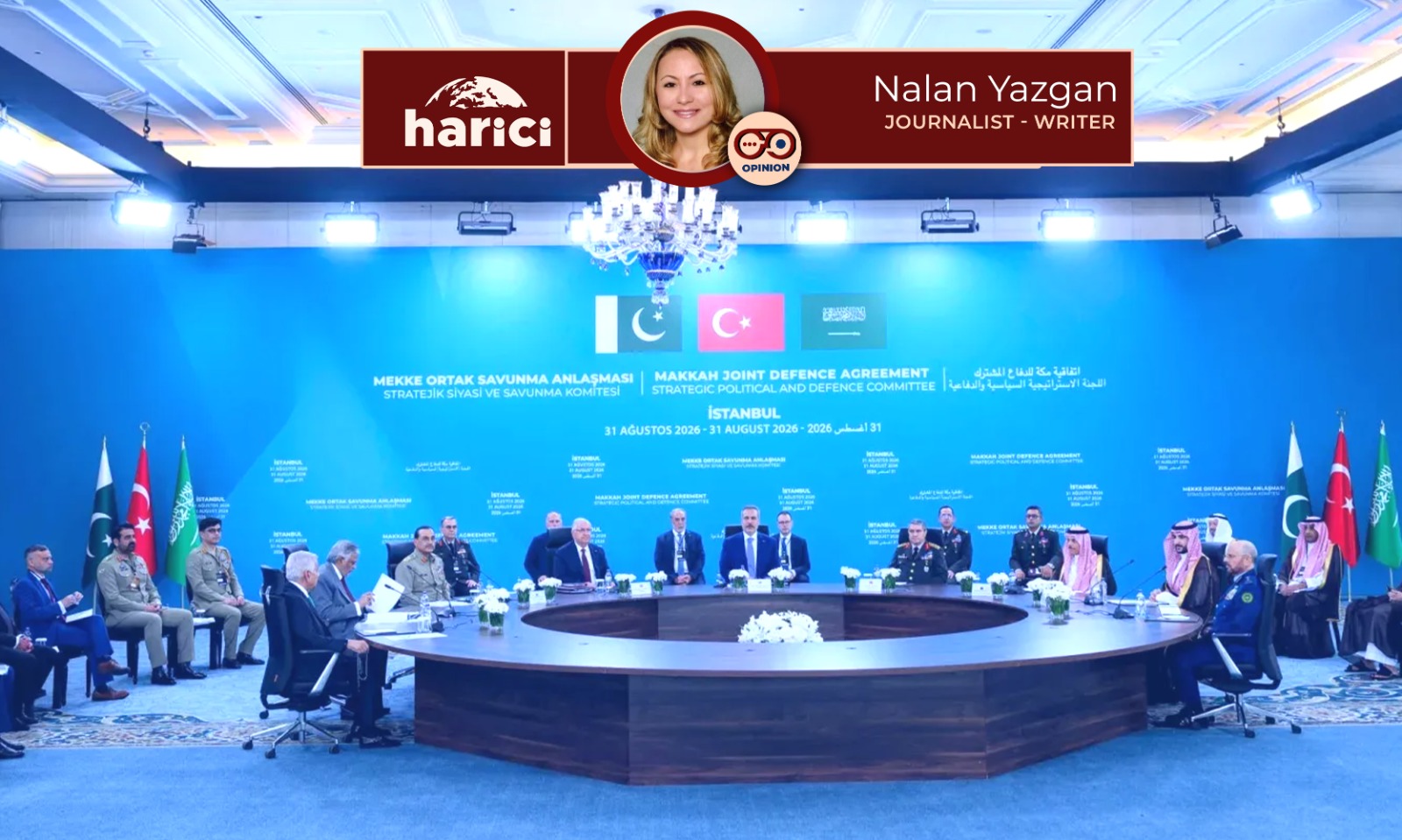
In the Middle East, war is no longer waged merely to seize territory. The true contest turns on who will control the energy pipelines, trade routes, ports, and railways of tomorrow. Missiles may strike cities today, but the maps of the future are being drawn through transport and energy corridors.
In this context, interpreting Türkiye’s presence in the Mecca Alliance solely as military support for Saudi Arabian security remains incomplete; it fails to explain why two states that viewed each other with mutual suspicion until recently would take steps toward a cooperation close enough to constitute a shared destiny.
Alongside Saudi Arabia’s existential motives, Ankara’s participation in this alliance is anchored in a profound geopolitical foundation: to position itself within, and if possible at the very centre of, the Middle East’s reconfigured energy and transport corridors.
Today, it cannot be said that Riyadh and Ankara see eye to eye on every regional issue. The threat perceptions and priorities of the two countries do not, quite naturally, entirely coincide. On the geopolitical chessboard, partnerships do not always arise from identical agendas. When reasons are sufficiently compelling, particularly existential ones, they can override political differences and enable common ground along the same strategic path.
A new war of corridors unfolds in the Middle East
On one side lies IMEC (India-Middle East-Europe Economic Corridor), planned to extend from India through the United Arab Emirates, Saudi Arabia, Jordan, and Israel to Europe. On the other stands the Development Road, which aims to link the Persian Gulf across Iraq to Türkiye, and onward to Europe.
These two undertakings are, of course, far more than mere transport projects. They represent two divergent geopolitical answers to where the future flow of trade and energy between Asia and Europe will traverse; for Türkiye, this issue is of vital importance.
If a corridor system taking shape to Türkiye’s south, beyond Ankara’s orbit, becomes permanent, Türkiye could forfeit not only an economic opportunity but also a substantial portion of its strategic centrality in the Middle East. It is through this prism that the Mecca Alliance must be evaluated.
Türkiye’s seat at the same table with Saudi Arabia signifies more than military solidarity. Riyadh and Ankara must sit together to avoid exclusion from the region’s emergent security and economic architecture, for the security of a corridor and the corridor itself are no longer separate matters.
The Strait of Hormuz, the Red Sea, the Bab al-Mandab, and the Suez Canal are links in the very same chain. A security crisis in one directly impacts the others. While the vulnerability of Hormuz makes alternative export routes for Gulf oil indispensable, instability across the Red Sea heightens the strategic cost of Suez.
Saudi Arabia’s alternative pipelines connecting its eastern oil fields to Red Sea terminals are therefore not merely energy infrastructure; they are strategic bypasses mitigating dependence on Hormuz.
For Türkiye, the Development Road fulfills the same function across a broader geography. Stretching from the Persian Gulf through Iraq to Türkiye, and from Türkiye into Europe, this artery possesses the potential to forge a new overland backbone connecting the Gulf to the Mediterranean and Europe. As security concerns in the Red Sea mount and the vulnerability of Suez deepens, the value of this route rises accordingly.
The Hejaz Railway: Revived once again
The return of the Hejaz Railway to the regional agenda signifies far more than mere nostalgia. Once linking Istanbul to Damascus, Amman, and the Hejaz, the railway served as one of the primary transport and logistical arteries of the Ottoman geography.
Reviving the idea of the Hejaz Railway could become the emblem of Türkiye’s drive to reimagine its historical transport connections between the Gulf, the Hejaz, and the Levant through modern rail, energy, and logistics networks.
The objective here is not to restore the past, but to transpose the strategic logic of that historical geographical linkage into the twenty-first century. For this reason, Türkiye’s role in the Mecca Alliance and the resurgence of the Hejaz Railway project must be viewed as components of the same overarching picture.
Corridors do not consist solely of energy pipelines. Railways, ports, highways, electrical interconnectors, logistical hubs, and security architectures are all facets of the same geopolitical grid, and safeguarding these networks requires political alliances.
Herein lies the strategic significance of Saudi Arabia and Türkiye sitting at the same table in Mecca, even at a juncture when their views on Syria diverge.
Ankara and Riyadh do not need to agree on every subject. Yet neither wishes to see the new map of the Middle East drawn to its detriment. Türkiye’s aim is not to build an anti-bloc against any specific country alongside Saudi Arabia; rather, the goal is to avoid exclusion from the future energy and trade systems of the Middle East, while securing a decisive voice in establishing their security architecture.
Hence, for Türkiye, the Mecca Alliance is far more than a simple defence pact. Securing the Development Road, shielding Gulf energy corridors, stabilising the Red Sea, rethinking connections across the Hejaz and the Levant, and bolstering trade corridors reaching Europe all intersect within this single strategic equation.
In this equation, Türkiye’s foremost advantage remains its geography. Ankara sits at the northern terminus of the overland routes linking the Gulf to Europe; within NATO; and at the crossroads connecting the Black Sea, the Caucasus, the Eastern Mediterranean, and the Middle East.
Will Türkiye become one of the powers shaping the Middle East’s energy and trade architecture over the coming decades, or will it be reduced to a mere transit state traversed by routes designed by others? That question defines the true strategic significance of the Mecca Alliance for Ankara.
In the Middle East of tomorrow, it will be impossible to separate the corridor carrying energy, the security framework protecting that corridor, and the alliance constructing that security framework.
Whoever controls the corridor shapes commerce. Whoever guarantees the routes through which trade flows holds sway over the regional balance of power. This is the true dimension of the contest currently underway in the Middle East.
A succession of distinct and largely mutually exclusive ambitions are competing for dominance in the current climate: India’s linkage to Europe, the Gulf’s new economic horizons, Saudi Arabia’s alternative energy routes, the security crisis in the Red Sea, the strategic weight of Hormuz, and Türkiye’s aspiration to open outward to Europe via the Development Road. Ironically, perhaps, the conflict that will decide which corridor underpins global stability has already begun, and it will likely continue spreading to new fronts. Regrettably, the fires in our region appear poised to intensify long before they abate.

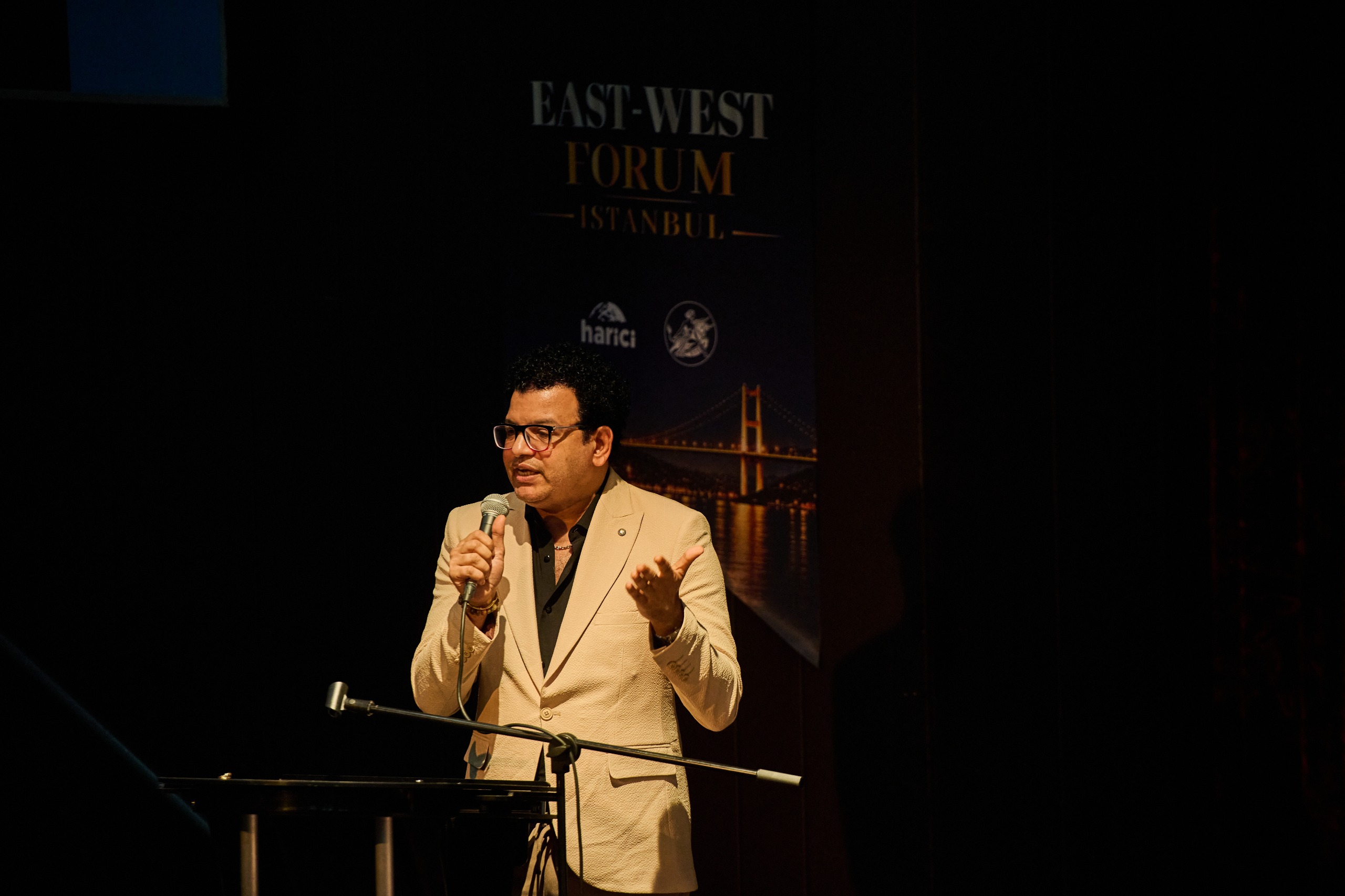
Dr. Ahmed Moustafa, Director & Founder, Asia Center for Studies & Translation, Egypt
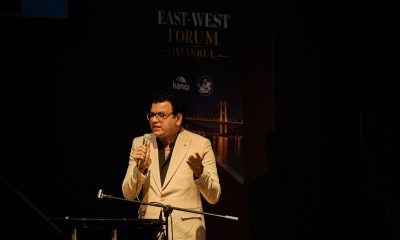
In a city that has spent centuries translating the language of one civilization to another, the first East-West Forum arrived at a moment when the world itself seemed to have lost the vocabulary for talking across its divisions.
Held in Istanbul on Sept. 26–27 and preceded by meetings around the event, the forum brought together diplomats, academics, journalists, strategists and political thinkers from a wide range of countries. Hosted by Harici Media in partnership with the Berlin-based European Transcontinental Initiative, the gathering was conceived as an attempt to examine a world increasingly defined by competing power centers, regional wars, economic fragmentation, artificial intelligence and the erosion of confidence in institutions created after the Second World War. Harici reported that participants came from roughly 30 countries.
For us, the significance of Istanbul was not simply a matter of the speakers on the panel or the structure of the programme. Its deeper importance lay in the willingness to put difficult — and sometimes uncomfortable — questions on the table.
We would like to extend our sincere thanks and appreciation to my friend and brother, Mr. Tunç Akkoç, Founder and Editor-in-Chief of Harici Media, for his gracious invitation to a representative of the Asia Center for Studies & Translation, Egypt, to participate in the Forum as a speaker and commentator. His initiative in creating a platform where competing geopolitical narratives could meet directly deserves recognition.
In his opening remarks, Akkos stressed that the initiative was intended to establish a permanent platform where people representing different political and intellectual traditions and perspectives could meet and engage in direct dialogue.
This vision is particularly significant because the traditional language used in international relations has increasingly struggled to explain the realities of a rapidly changing world.
The Problem of Proxy Wars
During the session that discussed proxy wars in the region and ways to reach solutions to their crises, the Center put forward the view that the Middle East cannot simply be understood through the traditional map that divides the parties into “good” and “evil,” or into “responsible states” and “rogue states.”
Such terms, in our assessment, often reflect the perspective of powers that possess extensive influence over international media and financial and security institutions.
The Center particularly criticised what we see as political bias within important sectors of the Western media and some non-governmental organisations that receive Western funding. From our perspective, these institutions can, in some cases, move from being mere observers of geopolitical conflicts to becoming influential parties in the battle over the narrative and the story.
However, this view should remain open to debate and should not automatically be accepted as an absolute truth.
The more important question is not whether every Western journalist, every NGO, or every Western institution works to serve a single geopolitical agenda clearly, this is not the case, but whether the information environment itself has become so highly polarised that the public is now receiving radically different interpretations of the very same war.
In our assessment, the answer is increasingly approaching “yes.”
The problem becomes particularly clear when searching for the term “proxy wars” in the Middle East. Some of the first results focus on groups associated with Iran, including Hezbollah and the Houthis, as well as Hamas, whereas the history of regional conflicts is far more complex.
Al-Qaeda and ISIS emerged through different historical trajectories, with Anglo-Saxon support that was “created by Britain and the United States.” In environments dominated by the United States and Britain, Al-Qaeda emerged from the environment associated with Osama bin Laden and the Afghan jihad, while ISIS developed largely from Al-Qaeda in Iraq, under American sponsorship, to pursue a certain agenda in the region and advance the scenario of “creative chaos” promoted by Condoleezza Rice, the radical US Secretary of State.
At the same time, US policy toward Afghanistan during the Cold War contributed to shaping the broader environment from which some militant jihadist movements later emerged.
These distinctions matter.
Because propaganda often begins where complex historical details end.
Who Has the Right to Define a “Rogue State”?
The same problem appears in the vocabulary used to describe states.
Countries such as China, Russia, Iran and North Korea are frequently portrayed in Western strategic discourse as states challenging the existing international order.
Egypt, despite the different nature of its relationship with Washington, can also become the subject of criticism when its foreign policy does not conform to certain Western expectations.
The question is not whether these governments should be exempt from criticism. Of course not.
The deeper question is this: can the international system remain sustainable when one geopolitical camp increasingly assumes the authority to define which governments are legitimate, which movements are terrorist, which wars are defensive and which forms of resistance are acceptable?
That was one of the central questions behind our intervention in Istanbul.
The Middle East has repeatedly been presented through the lens of the “Iranian threat” as the principal strategic danger.
There is no question that Iran possesses significant military and regional capabilities, and that its policies are deeply contested by many neighbouring states. At the same time, reducing virtually every regional security problem to Tehran can obscure the interests and roles of other actors, including Israel, the United States, Gulf states, armed groups and local political forces.
The region has repeatedly paid a heavy price for simplistic interpretations of complex conflicts.
The Economics of Fear
The discussions in Istanbul also led us to a broader American question: to what extent can fear itself become a source of political and economic power?
Historically, the United States has experienced intense political campaigns shaped by perceived racial, ideological and security threats.
One does not need to accept every interpretation of this history to recognise that fear can become a factor with tangible economic consequences.
A 2020 study by Citi estimated that racial discrimination against Black Americans had cost the US economy approximately $16 trillion in lost economic output since 2000, based on an analysis of disparities in wages, education, housing and investment.
This figure demonstrates the extent of the economic losses associated with racial discrimination and exclusion. It also raises questions about the relationship between fear-based narratives concerning Black Americans, media influence, the political power of the gun lobby and the broader economic consequences of insecurity.
More importantly, however, the study highlights a fundamental point: bias and insecurity carry substantial and measurable economic costs.
The broader lesson has direct relevance to foreign policy.
When societies are continually presented with existential enemies, military spending and the expansion of security institutions become politically easier to justify.
America After Iran
In Istanbul, we also advanced the view that the United States after its confrontation with Iran in 2026 should not simply be understood through the traditional image of unlimited American power.
The conflict exposed economic and strategic vulnerabilities.
The Strait of Hormuz emerged as a major strategic pressure point for global energy markets, amid disruptions to international trade that forced governments and companies to search for alternative routes and supplies.
The consequences were reflected in oil prices and energy costs in Europe and elsewhere.
This does not mean that American power has disappeared. Rather, it suggests that military power is no longer synonymous with strategic control.
The rise of China, Russia, ASEAN, Iran and other centres of economic and diplomatic influence has made the international order increasingly complex and dispersed.
The East-West Forum itself reflected this reality, bringing together voices from Europe, Asia, the Middle East and North America while explicitly addressing multipolarity and the ongoing transformation of the global order.
America Is Changing From Within
The domestic dimension of American politics also deserves attention.
The emergence of figures such as Zohran Mamdani in New York and Abdul El-Sayed in Michigan reflects changes in the American political debate over inequality, foreign policy, healthcare, identity and the influence of established political and economic interests.
Their political trajectories should not be treated as evidence of a predetermined future for the United States.
They do, however, illustrate how issues that were once treated as peripheral including the costs of war, US policy toward Israel, economic inequality and the political influence of younger and more diverse generations have moved closer to the centre of American political debate.
This is another reason why East-West dialogue cannot remain confined to foreign ministries and military institutions.
A Dinner for Dialogue
One of the most memorable moments on the margins of the Forum was the private dinner held on the evening of Friday, September 25, hosted by H.E. Mr. Hasan Capan, Chairman of the Turkish-Chinese Friendship Foundation, and H.E. Ambassador Ersin Erçin, Vice Chairman of the Foundation, in honour of the speakers and participants.
We extend our sincere thanks and appreciation to both of them for their generosity, friendship and support.
The gathering was more than simply a dinner. It provided an opportunity for personal interaction, an exchange of ideas and the building of relationships among participants — precisely the kind of human diplomacy that formal conferences sometimes lack.
Real dialogue does not always begin behind conference podiums.
Very often, it begins around a single table.
Istanbul’s Larger Message
The first East-West Forum should be regarded as the beginning of a dialogue, not the end of a debate.
The organisers have already articulated a vision of transforming the initiative into an annual gathering in Istanbul, developing expert working groups, establishing an East-West Forum network and potentially creating a business council capable of connecting intellectual dialogue with economic cooperation.
This may ultimately prove to be one of its most important contributions.
The world that emerges from the current conflicts including the crisis surrounding the Strait of Hormuz will require more than ceasefire agreements.
It will require a new conversation about security, energy, sovereignty, development, technology and coexistence.
Istanbul is an exceptional setting for such a dialogue. One participant even proposed moving the headquarters of international organisations, including the United Nations, to Istanbul.
For centuries, the city has stood between two continents without belonging exclusively to either.
The East-West Forum can follow the same principle: not choosing one civilisation against another, but creating a space in which East and West can confront their differences without turning disagreement into permanent conflict.
For this reason, we see the Istanbul gathering as an announcement of intent.
It was not an attempt to erase differences.
It was an attempt to make dialogue possible despite them.
At a time when proxy conflicts increasingly risk evolving into direct confrontations, this may be among the most important political conversations the world can undertake today.

Ex-BND head Hanning tied to former Mossad chief amid spy inquiry

Iran war costs US economy $265 billion as household burden mounts

Trump dismisses US envoy to Greece Kimberly Guilfoyle

Most EU citizens reject fast-track Ukraine accession, poll finds

Ex-US official says air defences fail against Yemeni airport strike
-

 Europe2 weeks ago
German interior ministers drop unanimity rule to counter AfD veto
-
 Europe2 weeks ago
Key European allies excluded from US-led NATO meeting in Poland
-
 Diplomacy2 weeks ago
While the West breeds crises, Eurasia weaves peace and development, says Prof. Zhang Weiwei
-

 Diplomacy2 weeks ago
The European Union’s peace project has collapsed, MEP von der Schulenburg says
-
 Opinion2 weeks ago
A new world in the East, old dogmas in the West
-
 America2 weeks ago
Musk appointed co-director of Pentagon future warfare initiative
-
 Asia2 weeks ago
South Korea plans $120B spend on eight US nuclear power plants
-
 Opinion2 weeks ago
Istanbul’s East-West Forum: A conversation the world can no longer avoid
