
Opinion
The strait changes hands: How the Red Sea design collapsed into Iran’s favour

Thomas Karat, behavior analyst
Abu Dhabi and Tel Aviv spent years building to control the Bab el-Mandeb and the Horn. The chokepoint has now passed to the one actor the plan was meant to exclude, and the states it pressed have drawn together against it.
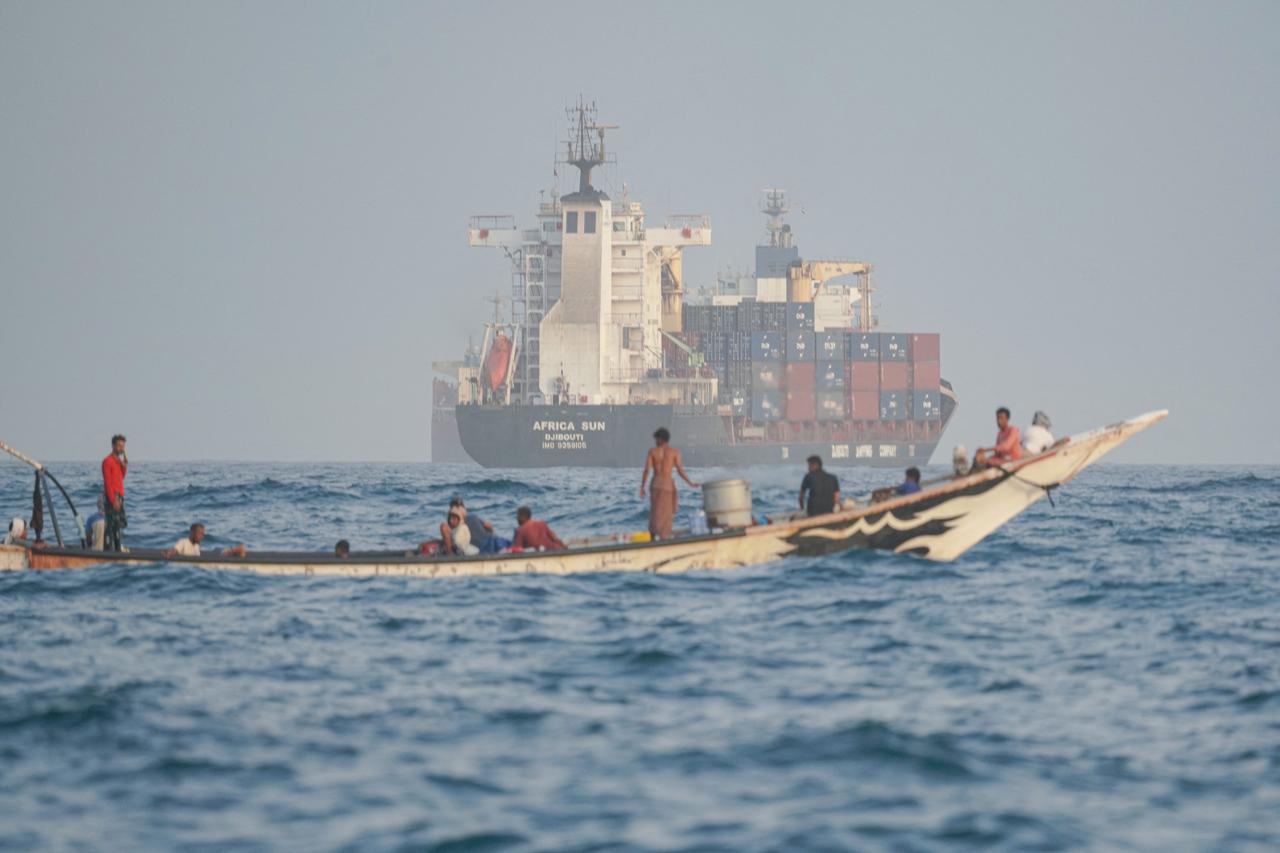
For a decade the southern approaches to the Red Sea were ordered around one assumption, that the states which counted on this water were those with the deepest treasuries and the closest ties to Washington. In September that assumption failed. Fighters of the Houthi movement, under Iranian direction, took the island of Mayun in the middle of the Bab el-Mandeb and with it working control of a strait through which roughly 12 percent of world trade passes. The power that had spent eight years assembling the architecture to hold this chokepoint, the United Arab Emirates, was no longer on the coast to contest it.
The Gulf press reads the episode as a new Iranian front against the United States. It is that. It is also the clearest sign to date that the design Abu Dhabi and Tel Aviv pursued across the Red Sea and the Horn of Africa has yielded the reverse of what it promised, and that the actors now setting terms in the region are those who plan around national interest rather than around the guarantees of a fading order.
The Emirati doctrine
To read the collapse only as a Gulf quarrel is to miss the method behind it. Since the counter-revolutionary turn that followed the Arab uprisings, Abu Dhabi has pursued a consistent strategy across three theatres. In Libya it backed Khalifa Haftar against the internationally recognised government in Tripoli, where Türkiye emerged as the principal external patron of the other side, the sharpest earlier collision between the two projects. In Yemen it built and armed the Southern Transitional Council against the government it had nominally joined the war to restore, and it worked to root out the Islah party, the Yemeni movement linked to the Muslim Brotherhood, whose leaders had found refuge in Türkiye. On the Horn it cultivated Somaliland and other regional administrations rather than the federal centre in Mogadishu. The through-line, as one Italian analysis put it, is that the UAE prefers sub-national clients because they let it weaken rivals and carve out platforms for maritime power at the same time. The two aims reinforced one another. Every client that undercut a central government also delivered a port, a runway or an island, so the map of Emirati proxies became, over time, a map of Emirati bases.
Those rivals are named plainly in the record. The Saudi-Emirati axis that formed after 2011 defined itself against Iran, Qatar, the Muslim Brotherhood and Türkiye, and for years Riyadh and Abu Dhabi moved together against all four. Türkiye read the doctrine from the receiving end. Ankara accused the UAE of financing the 2016 coup attempt against President Erdoğan, and only later, when it set about repairing Gulf ties, did it curtail the activities of Islah figures on its own soil. What separates Ankara and Riyadh from Abu Dhabi is not tactics alone. Both Türkiye and Saudi Arabia, whatever their other differences, treat strong central states as the basis of a stable order, while the Emirati approach has repeatedly favoured the actors that hollow those states out. The Red Sea is where that difference became a fault line.
The design on the water
The maritime side of the project was never hidden. From 2018 Abu Dhabi built what one analysis called a circle of bases around the Gulf of Aden: Socotra, administered by some accounts as something close to an overseas territory; runways on the smaller islands of Abd al-Kuri and Samhah; a base on Mayun itself; and on the African shore, Berbera in Somaliland and Bosaso in Puntland. The stated aim was to watch the water and interdict Iranian weapons bound for the Houthis. Israeli strategy converged on the same map. According to reporting attributed to the Middle East Monitor, Israel had long been weighing a base in Somaliland to monitor Yemen and the Bab el-Mandeb, and on 26 December it became the first state to recognise the breakaway republic, in language its prime minister tied to the Abraham Accords.
The Horn divides
For Ankara the recognition was a direct challenge. Türkiye has treated Somalia as a pillar of its Africa policy since 2011. It operates its largest overseas base, Camp TURKSOM, in Mogadishu, trains Somali forces, and casts itself as the guarantor of Somalia’s unity against the secession of Somaliland. Israel’s move placed it, in the reading of regional analysts, on a collision course with Türkiye. President Erdoğan called the recognition illegitimate and unacceptable and set out to rally Arab and Muslim governments against it, issuing a joint declaration with the Saudi crown prince in early February.
Egypt arrived at the same position by a different road. Cairo regards the Bab el-Mandeb as a strategic extension of the Suez Canal, and a senior Egyptian strategist has called securing the strait a national security priority, because canal revenue depends on the traffic that passes through it. When Ethiopia signed a memorandum with Somaliland in January 2024 to lease coastline for a naval base, Egypt read it as an attempt to redraw the Horn against its interests, and in August 2024 it signed a defence pact with Mogadishu and began sending troops and materiel, with plans that envisaged as many as ten thousand personnel for Somalia. Cairo’s interest runs past the canal. Its long confrontation with Ethiopia over the Grand Ethiopian Renaissance Dam has taught it to treat the Horn as an extension of its own water security, and the Somaliland question folded neatly into that older anxiety.
The pattern was consistent across the capitals. The UAE cultivated Somaliland and the sub-state administrations, while Egypt, Türkiye and Saudi Arabia placed their weight behind Somalia’s federal government. Warning that Israel intended a base on its soil, Mogadishu signed defence pacts with Qatar and with Saudi Arabia, and its president said an Israeli base would never be allowed. More than fifty states condemned the recognition, and the African Union and the European Union restated Somalia’s territorial integrity. What had been sold as a low-cost foothold hardened a counter-alignment, running from Cairo through Riyadh and Doha to Ankara, that stood behind the very central state the design was meant to erode.
The collapse in Yemen
On the Yemeni shore the design came apart faster still. In December the Emirati-backed Southern Transitional Council pushed into Hadramaut and al-Mahra, the provinces that run along Saudi Arabia’s southern border. Riyadh read the advance as an attempt to complete a separatist state on its frontier, and on 30 December it bombed the port of Mukalla, striking what the coalition described as an Emirati weapons shipment landed from Fujairah. The internationally recognised government gave the UAE 24 hours to withdraw, and Abu Dhabi complied. Within about eight days it lost Socotra, Mayun and the coastal outposts it had taken eight years to build, dismantling its own island infrastructure as it left. The coalition’s spokesman later accused Abu Dhabi of running a covert operation to move the STC leader by sea to Berbera and onward to the Emirates, a charge the UAE did not answer. By 9 January the council had dissolved itself.
The rupture between the two Gulf capitals was strategic before it was personal, and it left the anti-Houthi front without its principal paymaster and without the coastal positions that front had relied on. The consequences of that vacuum arrived within months.
The strait changes hands
The timing was decisive. Iran had been at war with the United States and Israel since late February, and traffic through the Strait of Hormuz was already disrupted. Saudi Arabia, the largest oil exporter, had rerouted much of its crude through the Red Sea, which raised the value of the far end of the same route at the very moment its Yemeni shore stood undefended. The Houthis advanced through the summer and took the coast in September. They seized Mokha on the tenth, Perim the following day, the strait by the twelfth, and the Hanish islands within the week, ground the UAE had abandoned months earlier. The coastal forces that gave way were those of the National Resistance Front, part of the fractured camp the Gulf rupture had left without a patron.
That the operation served Iran as much as the Houthis is not seriously disputed. The Institute for the Study of War assessed that the advance advanced Iranian aims, with United States officials describing IRGC personnel on the ground. The Abu Dhabi-owned National reported that the Quds Force commander Abdul Reza Shahlai was directing operations in person and that fighters had arrived on a flight from Tehran. Iran’s object, on the Institute’s reading, is to establish the Houthis as the guarantor of passage through the Bab el-Mandeb, the posture Tehran has adopted at Hormuz. The provenance of that reporting warrants a note of its own, since the Emirati press has an evident interest in foregrounding Iran’s hand and passing over the vacuum Abu Dhabi’s own withdrawal created.
The geography compounds the point. The Houthi advance has carried the movement to within twenty miles of Djibouti, the state across the water that hosts American, French, Chinese and other bases, the densest concentration of foreign force on the Red Sea. None of it moved to hold the island in the middle of the strait. For Riyadh the effect is measurable. The Houthis have declared an embargo on Saudi shipping while letting other vessels pass, and Saudi crude loadings through the strait fell by more than a third in two weeks. Analysts reckon that a full closure of a waterway carrying close to a quarter of the world’s container traffic would place a comparable share of global oil and gas at risk. Iran’s allies now hold the Yemeni bank of the Bab el-Mandeb; the UAE and its partners retain the African bank at Berbera and Bosaso. The chokepoint has, in practice, been partitioned between two rival camps.
What Ankara reads in it
The lesson taken in the region is not obscure. A strategy built on the fragmentation of states and the purchase of coastlines, underwritten by an order that assumed American guarantees would hold, has left its chief author without the prize it sought and has driven the states it pressed into a common front. The clearest statement of how this looks from Ankara came in Harici’s own pages, where the former Israeli negotiator Daniel Levy described an Israeli vision of regional primacy that depends on weakening and collapsing surrounding states, and named Türkiye as the country Israeli officials now discuss in the terms they once reserved for Iran. Levy was careful to add that Israel was neither the sole nor always the primary agent of state collapse, and that qualifier is worth keeping. The claim that Türkiye is a designated target is a characterisation, advanced by an interested party and serving Ankara’s own purposes, and it should be weighed as such.
What does not depend on characterisation is the record of the past year. The doctrine of backing sub-state clients against central authorities reached its furthest extent, in Yemen and on the Horn, and then it broke. The states that were meant to be fragmented drew closer together, from Cairo to Ankara. The power that built the ring of bases lost half of it in a week. And the chokepoint at the centre of the whole enterprise passed to the actor the enterprise had been built to exclude. For a region long instructed that security flowed from alignment with Washington and its partners, the year offered a different instruction, that presence without the will to hold ground decides nothing, and that the order which promised to keep the strait open no longer commands the coast. The powers that gained were those that never staked their security on that promise, and the map they are now redrawing runs from the Suez Canal to the Gulf of Aden without waiting on a guarantee from abroad.










By its very nature, foreign policy feeds into and draws nourishment from numerous, disparate, and varied fields. It is a domain with manifold and diverse inputs. For foreign policy is examined alongside a broad array of subjects, ranging from geography to history, economics to intelligence, and military might to public diplomacy, commonly termed soft power elements.
The capacity of the state, that is, the scale of the state, or in other words the aggregate of its elements of power (namely political, economic, military, and soft power components), is decisive in foreign policy. Geography is decisive in foreign policy. Commercial relations are decisive in foreign policy. Energy dependence on another country or countries, if present, is decisive in foreign policy. Foreign policy cannot be conducted in spite of these four factors.
There is more. A country’s capacity, its scale, does not increase overnight, from one day to the next. It requires planning. It requires national consensus. It requires time. It requires preparation. Nor are these enough. The regional and global environment, the conjuncture, and the international plane must also allow for it. The stance of allies and adversaries is, of course, also important.
For the international environment is, by its nature, complex. It is an environment rife with contradiction, turmoil, conflict, and tension. To draw an analogy, the person in the driver’s seat of foreign policy is not a motorist speeding along the road as they please. There are things they must not forget, rules they must obey, red lights, vehicles speeding up from behind, a truck moving ahead, and a heavy vehicle hurtling toward them from the opposite direction.
Success in foreign policy does not arrive simply because a politician we like has become foreign minister. For a foreign minister is only as effective as the power, capacity, and weight of their country. One must accept this plain truth.
Moreover, there are simple, straightforward questions that reveal whether foreign policy, which some find deeply complex and inscrutable, is successful or not.
There are undoubtedly ways to measure the effectiveness, prestige, influence, and success of foreign policy.
For instance, the number of countries that respect a passport, how many countries can be visited visa-free, and how many countries impose visa requirements and grant those visas only with great difficulty are important indicators of a country’s standing.
Let us take ourselves as an example. Which countries require a visa for the Turkish passport? Which ones do not? Is it easy for our citizens to obtain visas for the countries they primarily wish to visit?
Let us give another example from the Turkic world.
On the Cyprus issue, which we regard as a national cause across government and opposition, right and left, Kemalist and Milli Görüş adherents alike, how many countries have we succeeded in having recognize the TRNC? Why do the Turkic states (Azerbaijan, Kazakhstan, Kyrgyzstan, Turkmenistan, Uzbekistan) not recognize the TRNC? Far from recognizing the TRNC, how do the Turkic states in Central Asia (Turkistan) explain to Ankara their developing relations with the Greek Cypriot Administration of Southern Cyprus, which Türkiye does not recognize, their appointment of ambassadors, and their recognition of Southern Cyprus as the island’s sole legitimate government?
We must also ask this question, of course: What is the state of Türkiye’s bilateral trade with the Turkic states?
Let us give an example of the relationship between foreign policy and big capital.
In which countries are big capital circles, among the greatest supporters of the ruling bloc, winning major tenders?
In our country, across both ruling and opposition ranks, there is a political party order that supports Türkiye’s EU membership. Yet how much progress has been made on EU membership?
Why is US President Trump not keeping the promises he made to Türkiye at the NATO summit held in Ankara a few months ago?
How many contracts has the new regime in Syria, the al-Sharaa administration, awarded to Turkish companies for the reconstruction of its country?
Has the government in Libya that Türkiye supports paid the money owed to Turkish construction firms, outstanding for years?
How does Qatar, with whom our relations are very good, explain its developing ties, energy agreements, and joint military drills with Greece and the Greek Cypriot Administration, disregarding our sensitivities?
Who is the addressee of the harsh statements used in recent weeks by Azerbaijan, which we view as “two states, one nation”? To what extent does Azerbaijan share Türkiye’s policy on Israel? What does Türkiye think about the scale, depth, and intimacy of Azerbaijan-Israel relations?
These questions can certainly be multiplied.
Yet without taking into account the scale of the state and observing the criteria for measuring foreign policy, no sound assessment can be made.

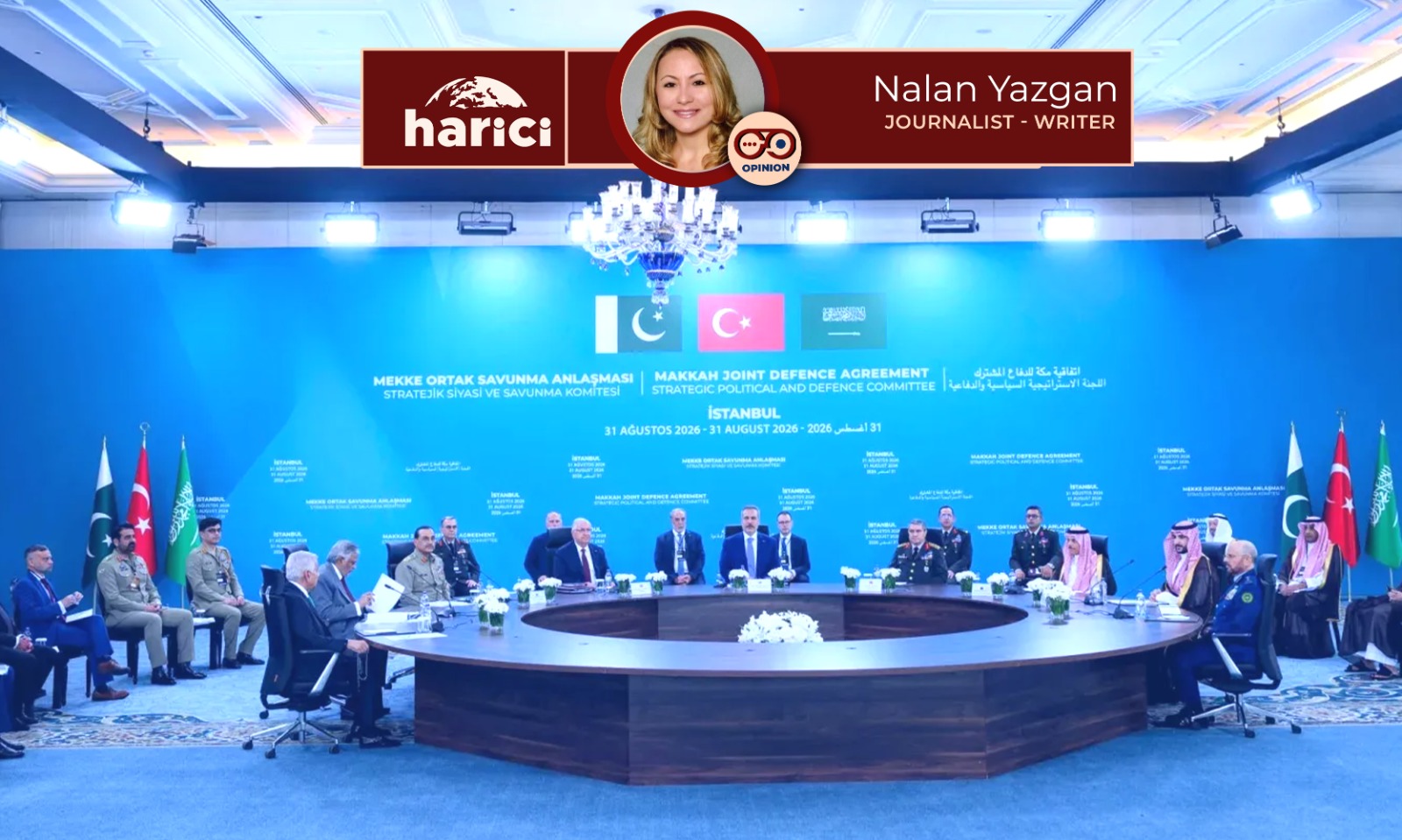
In the Middle East, war is no longer waged merely to seize territory. The true contest turns on who will control the energy pipelines, trade routes, ports, and railways of tomorrow. Missiles may strike cities today, but the maps of the future are being drawn through transport and energy corridors.
In this context, interpreting Türkiye’s presence in the Mecca Alliance solely as military support for Saudi Arabian security remains incomplete; it fails to explain why two states that viewed each other with mutual suspicion until recently would take steps toward a cooperation close enough to constitute a shared destiny.
Alongside Saudi Arabia’s existential motives, Ankara’s participation in this alliance is anchored in a profound geopolitical foundation: to position itself within, and if possible at the very centre of, the Middle East’s reconfigured energy and transport corridors.
Today, it cannot be said that Riyadh and Ankara see eye to eye on every regional issue. The threat perceptions and priorities of the two countries do not, quite naturally, entirely coincide. On the geopolitical chessboard, partnerships do not always arise from identical agendas. When reasons are sufficiently compelling, particularly existential ones, they can override political differences and enable common ground along the same strategic path.
A new war of corridors unfolds in the Middle East
On one side lies IMEC (India-Middle East-Europe Economic Corridor), planned to extend from India through the United Arab Emirates, Saudi Arabia, Jordan, and Israel to Europe. On the other stands the Development Road, which aims to link the Persian Gulf across Iraq to Türkiye, and onward to Europe.
These two undertakings are, of course, far more than mere transport projects. They represent two divergent geopolitical answers to where the future flow of trade and energy between Asia and Europe will traverse; for Türkiye, this issue is of vital importance.
If a corridor system taking shape to Türkiye’s south, beyond Ankara’s orbit, becomes permanent, Türkiye could forfeit not only an economic opportunity but also a substantial portion of its strategic centrality in the Middle East. It is through this prism that the Mecca Alliance must be evaluated.
Türkiye’s seat at the same table with Saudi Arabia signifies more than military solidarity. Riyadh and Ankara must sit together to avoid exclusion from the region’s emergent security and economic architecture, for the security of a corridor and the corridor itself are no longer separate matters.
The Strait of Hormuz, the Red Sea, the Bab al-Mandab, and the Suez Canal are links in the very same chain. A security crisis in one directly impacts the others. While the vulnerability of Hormuz makes alternative export routes for Gulf oil indispensable, instability across the Red Sea heightens the strategic cost of Suez.
Saudi Arabia’s alternative pipelines connecting its eastern oil fields to Red Sea terminals are therefore not merely energy infrastructure; they are strategic bypasses mitigating dependence on Hormuz.
For Türkiye, the Development Road fulfills the same function across a broader geography. Stretching from the Persian Gulf through Iraq to Türkiye, and from Türkiye into Europe, this artery possesses the potential to forge a new overland backbone connecting the Gulf to the Mediterranean and Europe. As security concerns in the Red Sea mount and the vulnerability of Suez deepens, the value of this route rises accordingly.
The Hejaz Railway: Revived once again
The return of the Hejaz Railway to the regional agenda signifies far more than mere nostalgia. Once linking Istanbul to Damascus, Amman, and the Hejaz, the railway served as one of the primary transport and logistical arteries of the Ottoman geography.
Reviving the idea of the Hejaz Railway could become the emblem of Türkiye’s drive to reimagine its historical transport connections between the Gulf, the Hejaz, and the Levant through modern rail, energy, and logistics networks.
The objective here is not to restore the past, but to transpose the strategic logic of that historical geographical linkage into the twenty-first century. For this reason, Türkiye’s role in the Mecca Alliance and the resurgence of the Hejaz Railway project must be viewed as components of the same overarching picture.
Corridors do not consist solely of energy pipelines. Railways, ports, highways, electrical interconnectors, logistical hubs, and security architectures are all facets of the same geopolitical grid, and safeguarding these networks requires political alliances.
Herein lies the strategic significance of Saudi Arabia and Türkiye sitting at the same table in Mecca, even at a juncture when their views on Syria diverge.
Ankara and Riyadh do not need to agree on every subject. Yet neither wishes to see the new map of the Middle East drawn to its detriment. Türkiye’s aim is not to build an anti-bloc against any specific country alongside Saudi Arabia; rather, the goal is to avoid exclusion from the future energy and trade systems of the Middle East, while securing a decisive voice in establishing their security architecture.
Hence, for Türkiye, the Mecca Alliance is far more than a simple defence pact. Securing the Development Road, shielding Gulf energy corridors, stabilising the Red Sea, rethinking connections across the Hejaz and the Levant, and bolstering trade corridors reaching Europe all intersect within this single strategic equation.
In this equation, Türkiye’s foremost advantage remains its geography. Ankara sits at the northern terminus of the overland routes linking the Gulf to Europe; within NATO; and at the crossroads connecting the Black Sea, the Caucasus, the Eastern Mediterranean, and the Middle East.
Will Türkiye become one of the powers shaping the Middle East’s energy and trade architecture over the coming decades, or will it be reduced to a mere transit state traversed by routes designed by others? That question defines the true strategic significance of the Mecca Alliance for Ankara.
In the Middle East of tomorrow, it will be impossible to separate the corridor carrying energy, the security framework protecting that corridor, and the alliance constructing that security framework.
Whoever controls the corridor shapes commerce. Whoever guarantees the routes through which trade flows holds sway over the regional balance of power. This is the true dimension of the contest currently underway in the Middle East.
A succession of distinct and largely mutually exclusive ambitions are competing for dominance in the current climate: India’s linkage to Europe, the Gulf’s new economic horizons, Saudi Arabia’s alternative energy routes, the security crisis in the Red Sea, the strategic weight of Hormuz, and Türkiye’s aspiration to open outward to Europe via the Development Road. Ironically, perhaps, the conflict that will decide which corridor underpins global stability has already begun, and it will likely continue spreading to new fronts. Regrettably, the fires in our region appear poised to intensify long before they abate.

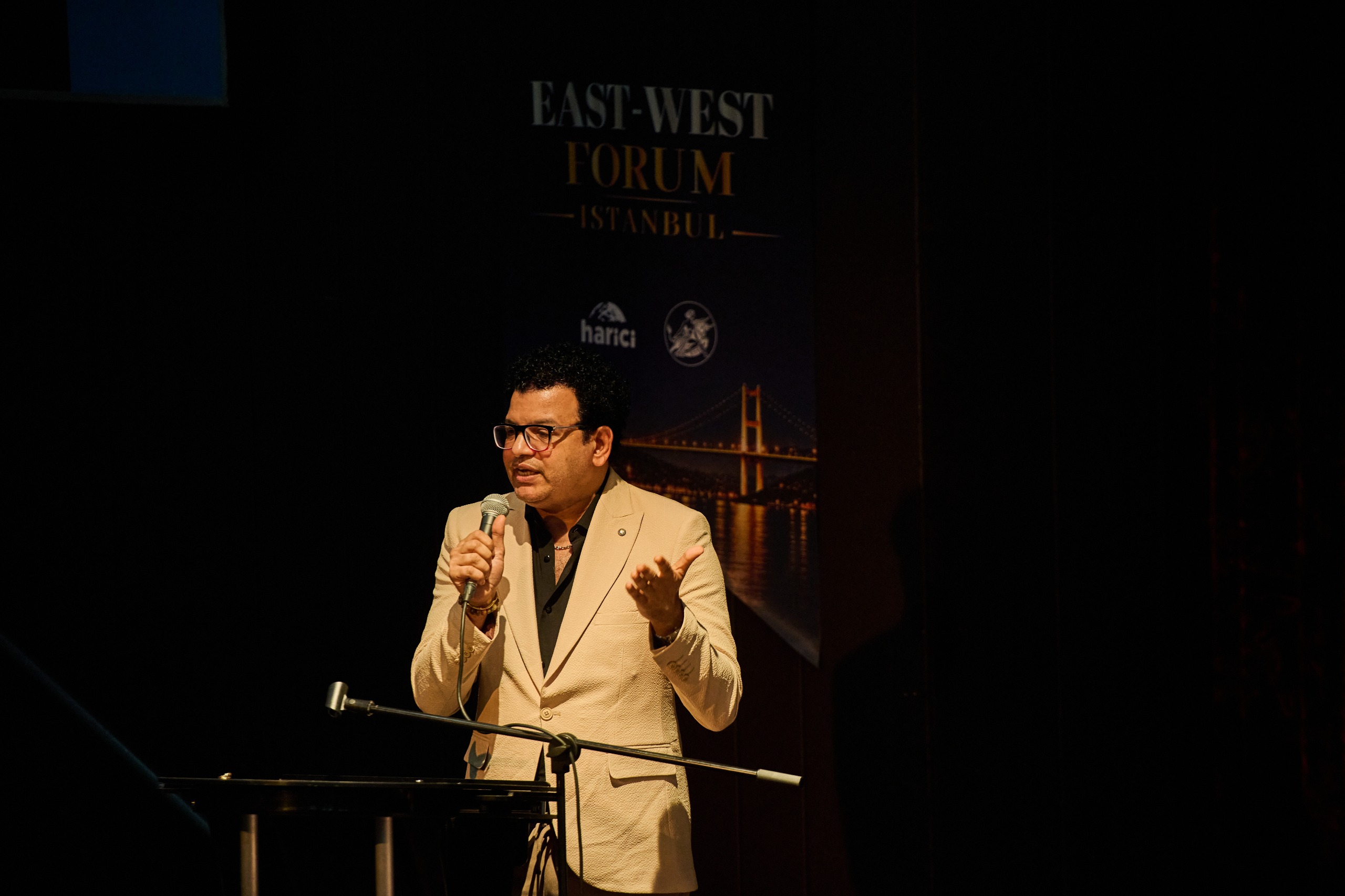
Dr. Ahmed Moustafa, Director & Founder, Asia Center for Studies & Translation, Egypt
In a city that has spent centuries translating the language of one civilization to another, the first East-West Forum arrived at a moment when the world itself seemed to have lost the vocabulary for talking across its divisions.
Held in Istanbul on Sept. 26–27 and preceded by meetings around the event, the forum brought together diplomats, academics, journalists, strategists and political thinkers from a wide range of countries. Hosted by Harici Media in partnership with the Berlin-based European Transcontinental Initiative, the gathering was conceived as an attempt to examine a world increasingly defined by competing power centers, regional wars, economic fragmentation, artificial intelligence and the erosion of confidence in institutions created after the Second World War. Harici reported that participants came from roughly 30 countries.
For us, the significance of Istanbul was not simply a matter of the speakers on the panel or the structure of the programme. Its deeper importance lay in the willingness to put difficult — and sometimes uncomfortable — questions on the table.
We would like to extend our sincere thanks and appreciation to my friend and brother, Mr. Tunç Akkoç, Founder and Editor-in-Chief of Harici Media, for his gracious invitation to a representative of the Asia Center for Studies & Translation, Egypt, to participate in the Forum as a speaker and commentator. His initiative in creating a platform where competing geopolitical narratives could meet directly deserves recognition.
In his opening remarks, Akkos stressed that the initiative was intended to establish a permanent platform where people representing different political and intellectual traditions and perspectives could meet and engage in direct dialogue.
This vision is particularly significant because the traditional language used in international relations has increasingly struggled to explain the realities of a rapidly changing world.
The Problem of Proxy Wars
During the session that discussed proxy wars in the region and ways to reach solutions to their crises, the Center put forward the view that the Middle East cannot simply be understood through the traditional map that divides the parties into “good” and “evil,” or into “responsible states” and “rogue states.”
Such terms, in our assessment, often reflect the perspective of powers that possess extensive influence over international media and financial and security institutions.
The Center particularly criticised what we see as political bias within important sectors of the Western media and some non-governmental organisations that receive Western funding. From our perspective, these institutions can, in some cases, move from being mere observers of geopolitical conflicts to becoming influential parties in the battle over the narrative and the story.
However, this view should remain open to debate and should not automatically be accepted as an absolute truth.
The more important question is not whether every Western journalist, every NGO, or every Western institution works to serve a single geopolitical agenda clearly, this is not the case, but whether the information environment itself has become so highly polarised that the public is now receiving radically different interpretations of the very same war.
In our assessment, the answer is increasingly approaching “yes.”
The problem becomes particularly clear when searching for the term “proxy wars” in the Middle East. Some of the first results focus on groups associated with Iran, including Hezbollah and the Houthis, as well as Hamas, whereas the history of regional conflicts is far more complex.
Al-Qaeda and ISIS emerged through different historical trajectories, with Anglo-Saxon support that was “created by Britain and the United States.” In environments dominated by the United States and Britain, Al-Qaeda emerged from the environment associated with Osama bin Laden and the Afghan jihad, while ISIS developed largely from Al-Qaeda in Iraq, under American sponsorship, to pursue a certain agenda in the region and advance the scenario of “creative chaos” promoted by Condoleezza Rice, the radical US Secretary of State.
At the same time, US policy toward Afghanistan during the Cold War contributed to shaping the broader environment from which some militant jihadist movements later emerged.
These distinctions matter.
Because propaganda often begins where complex historical details end.
Who Has the Right to Define a “Rogue State”?
The same problem appears in the vocabulary used to describe states.
Countries such as China, Russia, Iran and North Korea are frequently portrayed in Western strategic discourse as states challenging the existing international order.
Egypt, despite the different nature of its relationship with Washington, can also become the subject of criticism when its foreign policy does not conform to certain Western expectations.
The question is not whether these governments should be exempt from criticism. Of course not.
The deeper question is this: can the international system remain sustainable when one geopolitical camp increasingly assumes the authority to define which governments are legitimate, which movements are terrorist, which wars are defensive and which forms of resistance are acceptable?
That was one of the central questions behind our intervention in Istanbul.
The Middle East has repeatedly been presented through the lens of the “Iranian threat” as the principal strategic danger.
There is no question that Iran possesses significant military and regional capabilities, and that its policies are deeply contested by many neighbouring states. At the same time, reducing virtually every regional security problem to Tehran can obscure the interests and roles of other actors, including Israel, the United States, Gulf states, armed groups and local political forces.
The region has repeatedly paid a heavy price for simplistic interpretations of complex conflicts.
The Economics of Fear
The discussions in Istanbul also led us to a broader American question: to what extent can fear itself become a source of political and economic power?
Historically, the United States has experienced intense political campaigns shaped by perceived racial, ideological and security threats.
One does not need to accept every interpretation of this history to recognise that fear can become a factor with tangible economic consequences.
A 2020 study by Citi estimated that racial discrimination against Black Americans had cost the US economy approximately $16 trillion in lost economic output since 2000, based on an analysis of disparities in wages, education, housing and investment.
This figure demonstrates the extent of the economic losses associated with racial discrimination and exclusion. It also raises questions about the relationship between fear-based narratives concerning Black Americans, media influence, the political power of the gun lobby and the broader economic consequences of insecurity.
More importantly, however, the study highlights a fundamental point: bias and insecurity carry substantial and measurable economic costs.
The broader lesson has direct relevance to foreign policy.
When societies are continually presented with existential enemies, military spending and the expansion of security institutions become politically easier to justify.
America After Iran
In Istanbul, we also advanced the view that the United States after its confrontation with Iran in 2026 should not simply be understood through the traditional image of unlimited American power.
The conflict exposed economic and strategic vulnerabilities.
The Strait of Hormuz emerged as a major strategic pressure point for global energy markets, amid disruptions to international trade that forced governments and companies to search for alternative routes and supplies.
The consequences were reflected in oil prices and energy costs in Europe and elsewhere.
This does not mean that American power has disappeared. Rather, it suggests that military power is no longer synonymous with strategic control.
The rise of China, Russia, ASEAN, Iran and other centres of economic and diplomatic influence has made the international order increasingly complex and dispersed.
The East-West Forum itself reflected this reality, bringing together voices from Europe, Asia, the Middle East and North America while explicitly addressing multipolarity and the ongoing transformation of the global order.
America Is Changing From Within
The domestic dimension of American politics also deserves attention.
The emergence of figures such as Zohran Mamdani in New York and Abdul El-Sayed in Michigan reflects changes in the American political debate over inequality, foreign policy, healthcare, identity and the influence of established political and economic interests.
Their political trajectories should not be treated as evidence of a predetermined future for the United States.
They do, however, illustrate how issues that were once treated as peripheral including the costs of war, US policy toward Israel, economic inequality and the political influence of younger and more diverse generations have moved closer to the centre of American political debate.
This is another reason why East-West dialogue cannot remain confined to foreign ministries and military institutions.
A Dinner for Dialogue
One of the most memorable moments on the margins of the Forum was the private dinner held on the evening of Friday, September 25, hosted by H.E. Mr. Hasan Capan, Chairman of the Turkish-Chinese Friendship Foundation, and H.E. Ambassador Ersin Erçin, Vice Chairman of the Foundation, in honour of the speakers and participants.
We extend our sincere thanks and appreciation to both of them for their generosity, friendship and support.
The gathering was more than simply a dinner. It provided an opportunity for personal interaction, an exchange of ideas and the building of relationships among participants — precisely the kind of human diplomacy that formal conferences sometimes lack.
Real dialogue does not always begin behind conference podiums.
Very often, it begins around a single table.
Istanbul’s Larger Message
The first East-West Forum should be regarded as the beginning of a dialogue, not the end of a debate.
The organisers have already articulated a vision of transforming the initiative into an annual gathering in Istanbul, developing expert working groups, establishing an East-West Forum network and potentially creating a business council capable of connecting intellectual dialogue with economic cooperation.
This may ultimately prove to be one of its most important contributions.
The world that emerges from the current conflicts including the crisis surrounding the Strait of Hormuz will require more than ceasefire agreements.
It will require a new conversation about security, energy, sovereignty, development, technology and coexistence.
Istanbul is an exceptional setting for such a dialogue. One participant even proposed moving the headquarters of international organisations, including the United Nations, to Istanbul.
For centuries, the city has stood between two continents without belonging exclusively to either.
The East-West Forum can follow the same principle: not choosing one civilisation against another, but creating a space in which East and West can confront their differences without turning disagreement into permanent conflict.
For this reason, we see the Istanbul gathering as an announcement of intent.
It was not an attempt to erase differences.
It was an attempt to make dialogue possible despite them.
At a time when proxy conflicts increasingly risk evolving into direct confrontations, this may be among the most important political conversations the world can undertake today.

Ex-BND head Hanning tied to former Mossad chief amid spy inquiry

Iran war costs US economy $265 billion as household burden mounts

Trump dismisses US envoy to Greece Kimberly Guilfoyle

Most EU citizens reject fast-track Ukraine accession, poll finds

Ex-US official says air defences fail against Yemeni airport strike
-

 Europe2 weeks ago
German interior ministers drop unanimity rule to counter AfD veto
-
 Europe2 weeks ago
Key European allies excluded from US-led NATO meeting in Poland
-
 Diplomacy2 weeks ago
While the West breeds crises, Eurasia weaves peace and development, says Prof. Zhang Weiwei
-
 Middle East2 weeks ago
Netanyahu holds secret UAE talks with Saudi Arabia and Arab officials
-

 Diplomacy2 weeks ago
The European Union’s peace project has collapsed, MEP von der Schulenburg says
-
 Opinion2 weeks ago
A new world in the East, old dogmas in the West
-
 Asia2 weeks ago
South Korea plans $120B spend on eight US nuclear power plants
-
 America2 weeks ago
Musk appointed co-director of Pentagon future warfare initiative
