
Middle East
Trump warns Hamas of “hell to pay” as Gaza peace plan stalls

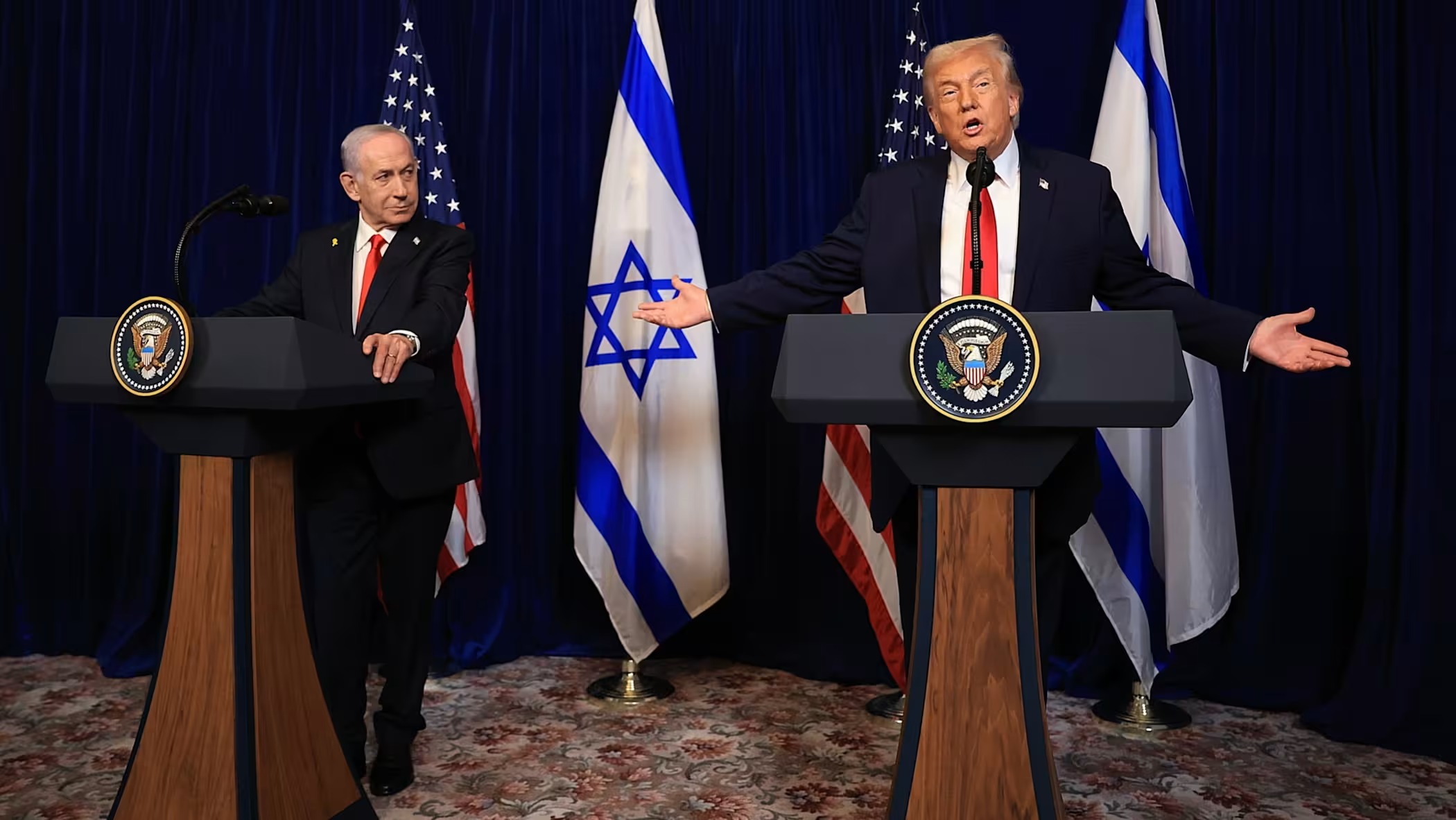
US President Donald Trump met with Israeli Prime Minister Benjamin Netanyahu at Mar-a-Lago in Florida on Monday, delivering key messages regarding the Middle East.
During the press conference, Trump threatened to launch new strikes against Iran if it is determined that the country is rebuilding its nuclear program.
The President also addressed the situation in Gaza, where a US-brokered ceasefire has largely been in effect since October. He stated that Hamas has a “very short period of time to disarm,” warning that they will otherwise face “hell to pay.”
Implementation of the US peace plan for Gaza has stalled, and tensions with Iran appear to be escalating.
Trump claimed that after the US briefly joined Israel’s 12-day war with Iran in June, Iran’s nuclear enrichment program was “destroyed,” after which he declared the conflict over.
“Now I hear that Iran is trying to regain strength, and if that is the case, we must knock them down… We will level them. Iran may be behaving badly. This has not been confirmed yet. But if it is confirmed… the consequences will be very severe,” Trump said.
Israel alleges that Iran is rapidly rebuilding its ballistic missile arsenal.
Netanyahu also suggested that the Trump administration’s efforts to implement the next phase of the Gaza plan are unrealistic, given Hamas’s refusal to disarm.
Trump’s plan has faced setbacks regarding issues such as the disarmament of Hamas, the deployment of an international security force, and the future governance of Gaza.
US yet officials insist that “Phase 2” of Trump’s 20-point plan will begin in January. This phase is expected to include the announcement of an international “Board of Peace,” an executive committee to oversee the Gaza Strip, a committee of Palestinian technocrats for daily administration, and the deployment of a multinational peacekeeping force.
Under the plan, Israeli troops, who currently hold approximately half of Gaza, would gradually withdraw as the multinational force enters the Gaza Strip to monitor the disarmament of Hamas and the transition to post-war reconstruction.
Prior to the meeting, Israeli officials were concerned that Trump might pressure Netanyahu to agree to further troop withdrawals. However, after the two leaders emerged from the meeting, Trump declined to discuss an Israeli withdrawal and stated that Hamas was not complying with the agreement.
When asked about the pace of implementation, Trump said, “I’m not concerned about anything Israel is doing. They are fulfilling the plan.”
Israeli officials have rejected the possibility of international or Palestinian security forces taking over the disarmament of Hamas. On Monday, Trump stated that other countries would “come and do it” and emphasized that dozens of governments support the 20-point peace plan; however, no country has yet committed to sending troops to Gaza.
Trump said that he and the Israeli leader spoke at length about the occupied West Bank, where the US opposes the rapid expansion of Jewish settlements.
“I wouldn’t say we agree 100% on the West Bank, but we will come to a conclusion on the West Bank,” Trump said, adding that Netanyahu would “do the right thing.”
Trump also asked Netanyahu to “get along” with Syria and its new President, Ahmed Shara, who Trump said is “working very hard to do a good job.”
“I respect Syria’s new President; he is a strong person. That is what Syria needs right now. I hope Israel gets along with him,” Trump said.
Noting that Shara has done a very good job in Syria so far and has taken significant steps in the fight against ISIS, the US leader expressed his trust in Shara during this process.
Trump noted that he would do his best to ensure Israel gets along with Syria, stating, “Bibi and I have a common understanding regarding Syria.”
When asked about a potential conflict between Israel and Türkiye, Trump spoke of President Erdoğan: “I know President Erdoğan very well and, as you all know, he is a very good friend. I respect him and Bibi respects him, and they won’t have a problem. You’ve seen me do things with Erdoğan and Türkiye that nobody else could do. We won’t have a problem.”
Reiterating the claim that Erdoğan deserves the lion’s share of credit for the fall of the Bashar al-Assad administration, Trump suggested that Netanyahu shares this view. “You know, they’ve wanted to do this in Syria for a thousand years—even if the names change, for a thousand years. President Erdoğan did it. We give him great credit; I personally give him very great credit. But I think things will work out between Syria and Israel,” he claimed.
The US President stated he was “with Erdoğan all the way and with Bibi all the way,” adding, “Nothing is going to happen.”
Trump further stated, “You know, Erdoğan is a good friend of mine. I respect him. Bibi also respects him, and there won’t be a problem between them. There won’t be a problem.”
Regarding the sale of F-35 fighter jets to Türkiye, Trump said, “We are thinking about that very seriously,” and added that Ankara had “promised” not to use the aircraft against Tel Aviv.










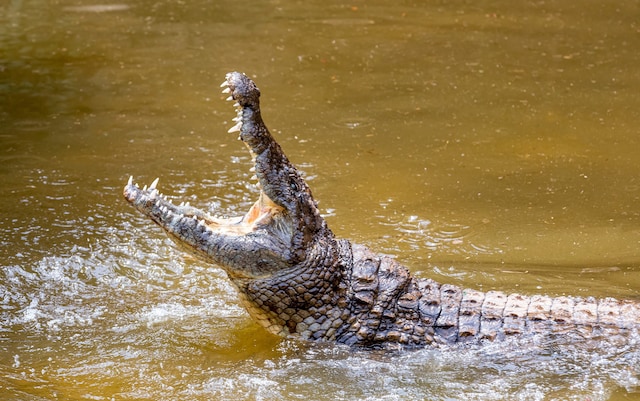
The Jerusalem District Court has temporarily halted a plan spearheaded by Israeli National Security Minister Itamar Ben-Gvir to construct crocodile-filled moats around prisons housing thousands of Palestinian detainees.
According to Israeli public broadcaster KAN, the ruling follows a petition filed by the animal rights organization Let the Animals Live against Environmental Protection Minister Idit Silman, Ben-Gvir, and the Israeli Prison Service (IPS). The group argued that the project would lead to the mistreatment of the crocodiles and place prison staff in danger.
In a decision announced Sunday, Judge Avraham Rubin stated: “The claims regarding potential harm to the crocodiles warrant examination and justify issuing an order prohibiting the transfer of the animals or the execution of any actions related to locating and preparing them for transfer.”
Neither the petition submitted by the animal rights organization nor the text of Judge Rubin’s ruling made reference to the condition or life-threatening conditions faced by Palestinian prisoners subjected to torture and sexual assault in facilities under Ben-Gvir’s authority.
Noting that the temporary injunction will remain in effect until further notice, the judge granted Silman, Ben-Gvir, and the Israeli Prison Service until Wednesday to submit their defense arguments.
Status of Nile crocodiles was altered
The Israeli government laid the legal groundwork for the project in July when Environmental Protection Minister Silman altered the conservation status of Nile crocodiles. Reclassified out of the protected wild animal category, the reptiles were reassigned to the classification of wild animals “raised in a controlled environment” or “held under management.”
This regulatory shift granted the Israeli Prison Service authority to keep crocodiles around prison perimeters, provided they comply with rules established by the Nature and Parks Authority. Prior to the modification, Nile crocodiles could only be housed in zoos. In its petition, Let the Animals Live also requested the revocation of this status change.
Ben-Gvir had proposed placing crocodiles in water channels encircling prisons under the pretext of preventing Palestinian detainees from escaping. The Israeli minister stated that in formulating his plan, he drew inspiration from an immigrant detention center in the US state of Florida known as “Alligator Alcatraz.”
In December, Minister Ben-Gvir published an AI-generated image on his social media account depicting himself holding a crocodile on a leash, accompanied by the caption: “Cursed terrorist, thinking of escaping? Think again.”
Israeli officials defended the proposal, contending that the crocodiles would enhance security measures and lower prison operational costs by reducing the requirement for patrolling personnel. The project was slated for implementation at the Ketziot Prison in the Negev Desert, where authorities had already initiated excavation work on a section of the moat.
9,600 Palestinians held in prisons
Since taking office in December 2022 as part of Prime Minister Benjamin Netanyahu’s coalition, Ben-Gvir has signed off on measures that significantly harshened the detention conditions of Palestinian prisoners. Ben-Gvir has also visited prisons and engaged in humiliating conduct toward detainees.
According to data from the Palestinian Commission of Detainees and Ex-Detainees Affairs, approximately 9,600 Palestinians, including women and children, are currently held in Israeli prisons. Thousands of these individuals are detained under “administrative detention” without formal charges or trial.
The commission recorded that 89 Palestinian prisoners have died in Israeli custody since the onset of attacks on Gaza in 2023. The fate of dozens of individuals detained from Gaza remains unknown.
In 2024, a Palestinian prisoner was gang-raped by five soldiers at the Sde Teiman detention center, one of the facilities where Palestinians are held. After footage of the incident surfaced, Jewish settlers attempting to support the detained soldiers stormed the facility. Earlier this year, a court dropped the charges against the soldiers.
Israeli human rights organization B’Tselem has documented that prison guards, soldiers, and Shin Bet officers have subjected Palestinian detainees to rape, forced insertion of objects into the anus, beatings to the genitals, starvation, electric shocks, and the withholding of medical treatment.
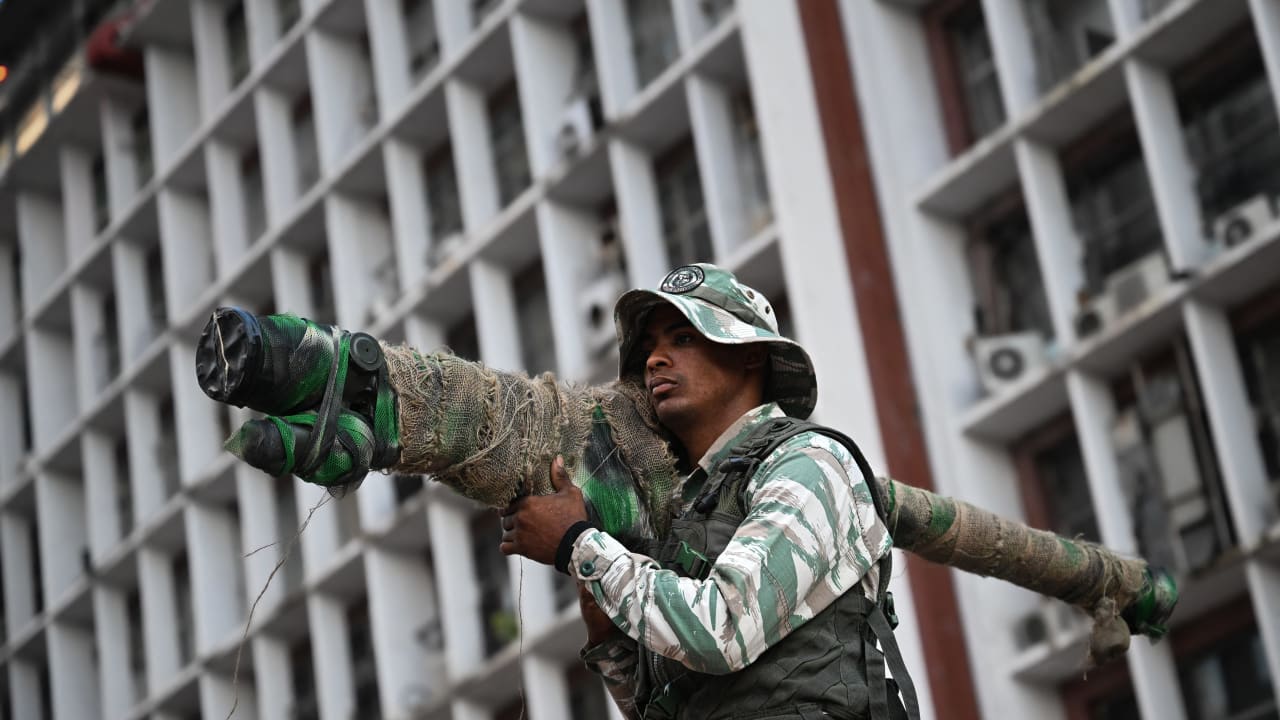
Iran is expected to receive its first shipment of 400 Chinese-made shoulder-fired air defense missile systems within weeks as it seeks to rebuild its air defenses amid an ongoing war with the US.
Three sources with knowledge of the agreement disclosed the information to Reuters.
Valued at between $60 million and $70 million, the purchase represents one of Tehran’s largest known efforts to bolster its short-range air defense capabilities since the outbreak of hostilities with the US and Israel.
According to the sources, the contract covers between 300 and 400 man-portable air defense systems, or MANPADS, including Chinese-made QW-12 and FN-16 missiles.
The deal was signed with Hong Kong-based Zhongqing Baoshang International Investment, which reportedly acted as an intermediary between the Iranian side and the Chinese supplier.
Iran’s Ministry of Foreign Affairs has not yet responded to a request for comment from Reuters regarding the information provided by the sources, who spoke on condition of anonymity due to the sensitivity of the matter.
China’s Ministry of Foreign Affairs issued the following statement:
“The relevant reports are completely baseless. China has consistently played a role in promoting peace and bringing an end to the conflict.”
Beijing-based Zhong Qing Bao Shang Group, the parent company of Zhongqing Baoshang International Investment, did not immediately respond to a request for comment sent on Tuesday.
Iran needs to rearm following months of conflict during which the US and Israel struck facilities tied to its missile, drone, and air defense programs. Tehran responded to those attacks with salvos of ballistic missiles and drones.
The fighting demonstrated the difficulty of defending static military and strategic installations against advanced fighter jets and precision-guided munitions.
Washington abruptly halted its two-week bombing campaign on Saturday. However, US President Donald Trump said attacks would resume if negotiations aimed at ending the five-month war—which has theoretically been under a ceasefire since April—fail.
The delivery of hundreds of MANPADS systems would significantly expand Iran’s inventory of short-range air defense weapons.
However, the sources cautioned that while the agreement has been signed, the delivery schedule, quantities, and other operational details remain subject to change.
Under the plan agreed upon by the parties, initial deliveries will be transported by air from the western Chinese city of Urumqi before being routed through Pakistan to Iran. The sources did not clarify whether transport following the transit through Pakistan would occur by air or land.
The Pakistani military’s public relations wing, ISPR, said in a statement:
“Allegations that Pakistan is playing a role in the supply of air defense weapons from China to Iran are completely fabricated and contrary to fact.”
Two Western intelligence sources and an Iranian official said Tehran is also exploring the option of using overland routes to transport Chinese-made military equipment and dual-use components more covertly, reducing the risk of shipments being intercepted.
The procurement process underscores how the Islamic Republic of Iran continues to rely on a combination of domestic arms production and foreign suppliers, despite years of sanctions and defense import restrictions.
Reuters previously reported, citing individuals familiar with the discussions, that Iran was close to concluding a separate deal to purchase anti-ship cruise missiles from China. Reuters was unable to confirm whether that agreement was finalized.
Middle East
Saudi crude exports from Yanbu plunge 40% as Yemeni strikes force reliance on costlier routes
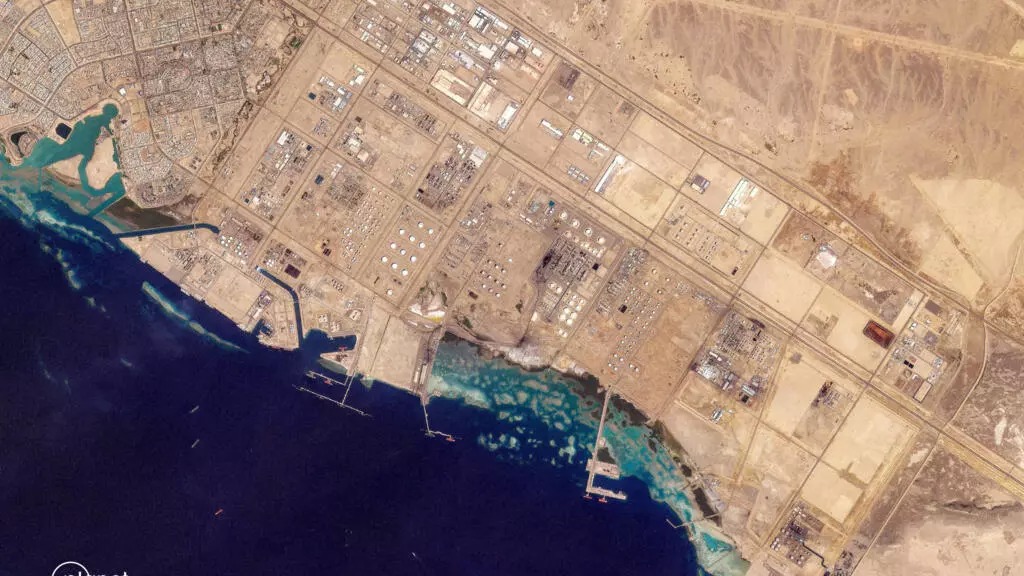
Crude oil shipments from Saudi Arabia’s Yanbu Port on the Red Sea coast have dropped by 40% over the past few days.
According to data published on July 26 by maritime intelligence firm Vortexa, the Riyadh administration has begun utilizing the SUMED pipeline in Egypt and alternative transit routes in an effort to bypass the naval blockade declared by forces aligned with Sanaa.
The sharp decline in shipment volumes follows retaliatory operations and the enforcement of a maritime blockade against Saudi Arabia by the Yemeni Armed Forces, operating under the Ansarallah movement.
Riyadh has maintained military strikes and blockade measures against Yemen for nearly 12 years.
A Sunday report by maritime intelligence firm Windward, drawing on Vortexa data, noted that Saudi Arabia has established a new logistical framework to maintain its export flows. “Saudi Arabia has created an alternative export route functioning via the SUMED pipeline and the Cape of Good Hope,” the report stated. The agency reported that this shift has driven up transportation costs by approximately $9 per barrel.
The market analysis report provided the following assessment regarding the operational mechanics of the transition:
“Saudi crude shipments have not stopped; they have been split into two distinct routes. Tankers berthing at Yanbu Port are now operating with their AIS signals completely turned off. Vessels are concealing their locations to avoid inclusion on Ansarallah’s target list. Saudi Arabia has established an alternative export route operating via the SUMED pipeline and the Cape of Good Hope. Although this route increases costs and transit times, it demonstrates that the market is capable of adapting to changing conditions.”
Saudi Arabia previously activated a similar alternative route via Yanbu during the initial phase of the US-Israel war, following Iran’s first blockade measures directed at the Strait of Hormuz.
At the time of the Windward report’s release, satellite imagery published by SoarAtlas revealed the ongoing situation at Saudi Aramco’s Jizan Oil Refinery. Massive fires triggered by attacks carried out by the Yemeni Armed Forces were shown to be persisting at the $12 billion facility. Images captured on Saturday documented dense black smoke continuing to billow from a giant oil storage tank at the site.
The Yemeni Armed Forces publicly announced their latest military operations against Saudi Arabia on July 25. They stated that the strikes were executed in response to the Saudi-led coalition resuming aerial bombardments against the Yemeni port city of Hodeidah.
An official statement issued by the Yemeni military under the Ansarallah-led administration provided the following details:
“In response to this overt and criminal aggression, the Yemeni Armed Forces carried out two specialized military operations. In the first operation, sensitive Saudi Aramco facilities in Jizan were targeted with dozens of ballistic missiles and drones. In the second operation, sensitive Saudi Aramco facilities in Yanbu were struck using ballistic and cruise missiles alongside unmanned aerial vehicles.”
Spokespersons for the Yemeni military emphasized that the strikes were “precise” and “direct,” while residents in the city of Yanbu were reported to have heard explosions over the weekend. In the early hours of Saturday, Saudi airstrikes had targeted fuel storage facilities and telecommunications infrastructure in Hodeidah.
Mahdi al-Mashat, President of the Ansarallah Supreme Political Council, issued a warning to the Saudi Arabian leadership in a statement on July 27. “We say to the Saudi enemy that those offering you false hopes will be of no avail. Anything short of an end to the aggression and the complete lifting of the blockade is mere fantasy,” al-Mashat said.
In line with their naval blockade decision, the Yemeni Armed Forces have also targeted two Saudi oil tankers with missiles in recent days. The Sanaa administration officially initiated its maritime restrictions on July 20 under the stated principle of “a blockade for a blockade.”
This latest phase of heightened tension began in early July when Saudi Arabia launched an airstrike targeting Sanaa International Airport for the first time after a prolonged hiatus. Yemeni forces responded by striking Abha Airport in Saudi Arabia with missiles and drones. The attack marked the Yemeni military’s first direct retaliatory strike inside Saudi territory since 2021.
The Saudi-led coalition initially intervened in Yemen in 2015 after Ansarallah took control of the capital, Sanaa, and ousted the Riyadh-backed government. The United Arab Emirates joined as a principal coalition partner, while the UK, the US, and Israel provided logistical support.
During peace negotiations conducted between Saudi Arabia and Yemen in 2023, the parties came close to a final agreement before talks stalled. Nevertheless, those contacts effectively served to freeze large-scale combat operations for an extended period.
The air and sea blockade enforced by Saudi Arabia for over a decade has deepened the humanitarian crisis, particularly due to commercial flight restrictions imposed on Sanaa International Airport. These measures have prevented critically ill and injured civilians from traveling abroad for medical treatment, while the coalition’s military intervention has driven widespread famine and resulted in the deaths of hundreds of thousands of people. Prior to Riyadh’s latest airstrikes, Yemeni forces had been conducting a general mobilization aimed at expelling coalition elements from the country.

European nations seek alternatives to Palantir amid growing digital sovereignty concerns

Israeli court blocks Ben-Gvir plan to place crocodiles in prison moats

Japan links defense buildup to economic growth in annual white paper amid regional threats

EU governments push to narrow “Made in Europe” preference rules in industrial draft bill

Denmark to deploy conscripts to Greenland for first time amid Arctic security risks
-
 America2 weeks ago
US controls $13 billion in Venezuelan oil revenues with little transparency, raising congressional concerns
-

 America2 weeks ago
US agricultural superpower status at risk as trade wars shift global markets to Brazil
-
 Diplomacy2 weeks ago
World Bank warns US-Iran conflict could slash global growth to 1.3% as inflation looms
-
 Middle East2 weeks ago
Pentagon faces severe budget crunch as Middle East operational costs drain key military funds
-
 Middle East2 weeks ago
Yemen’s Houthis declare naval blockade on Saudi Arabia, escalating global energy risks
-
 Europe2 weeks ago
Germany accelerates African energy diplomatic push to secure natural gas and green hydrogen
-

 Europe2 weeks ago
European Commission rejects anti-immigration citizens’ initiative on legal grounds
-
 Europe2 weeks ago
Germany approves Rosatom-linked nuclear fuel production at Lingen plant
