
Diplomacy
US midterm losses will turn Trump into a lame duck, Prof. Doster says

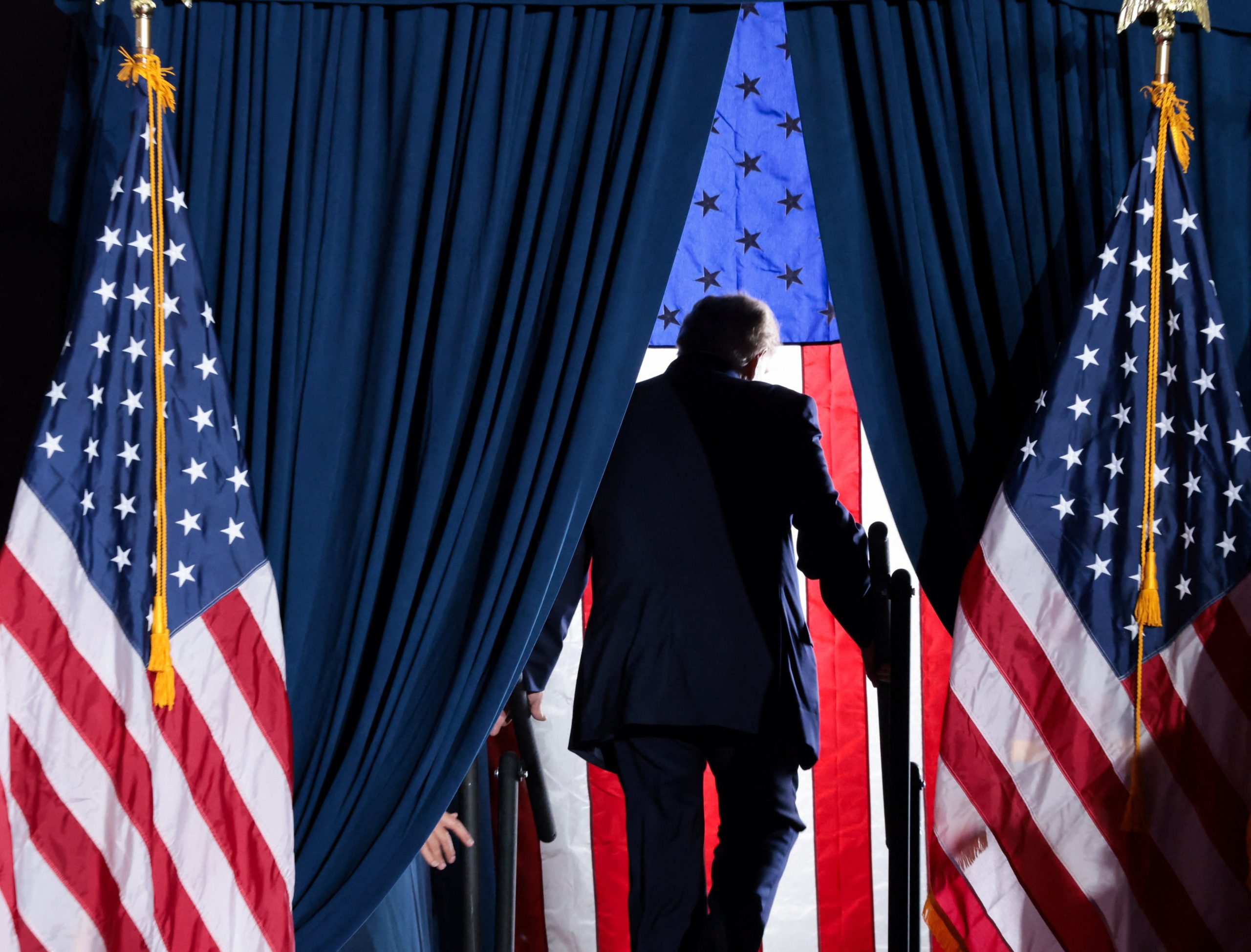
In an in-depth geopolitical evaluation broadcast, Turkish academic and international relations specialist Professor Dr Barış Doster, a faculty member at Marmara University, joined Harici YouTube channel to analyze the domestic dynamics and sweeping foreign policy consequences of the US congressional midterm elections.
The comprehensive discussion examined the prospect of a fractured mandate for the administration of US President Donald Trump, assessing the direct ramifications for Washington’s strategic posture across the Middle East, the grinding war in Ukraine, and great-power competition with Beijing and Moscow ahead of the Asia-Pacific Economic Cooperation (APEC) Leaders’ Summit in Shenzhen.
Setting the framework of the broadcast, journalist Elif İlhamoğlu Akkoç noted that voters across the US were heading to the ballot box for the pivotal midterms to determine the composition of the entire 435-seat House of Representatives and 35 seats of the 100-seat Senate. She observed that nationwide survey averages pointed to prospective Democratic leads in both chambers, even as battleground states such as Michigan, Texas, Kansas, Alaska, and Ohio remained decisive in establishing the legislative arithmetic that will govern the remaining two years of Trump’s presidential term.
“A Trump who has fallen into the minority in both wings of Congress”
Addressing the electoral dynamics, Doster pointed out that the volume of early and advance voting across the US had surpassed previous cycles, signaling an elevated level of voter turnout. Doster highlighted that polling and public opinion research organizations indicated a very high likelihood of a Democratic majority in the House of Representatives, alongside the distinct possibility of Democrats securing the Senate leg of Congress as well.
“If these polls, these surveys are correct, and you know I am not someone who has good relations with pollsters, this is highly probable,” Doster said. Evaluating the immediate domestic institutional impact, he explained: “A Trump who has fallen into the minority in both wings of Congress, a Trump who has fallen into a ‘lame duck’ status in US political science terminology, considering the social, cultural, class, political, and ideological divisions, fault lines, separations, and polarizations in the US, will be a Trump whose hand is very weakened.”
Doster maintained that an opposition-controlled legislature would actively seek to constrain executive authority, forcing the administration into constitutional confrontations and unilateral maneuvers. “The Democratic majority in both wings of Congress, if that is the case, we do not know yet because we do not have the election results, will try to restrain and check Trump as much as possible,” Doster said. “And in return, what will Trump do? He will try to get things done with executive orders to the extent that the US system allows. He will use his veto card, and so on and so forth. So, in the coming days, if Trump loses the majority, whether in one wing or both wings, it means bigger tensions and bigger debates await us in US politics. Will this inevitably reflect on US foreign policy as well? Yes, it will reflect.”
“The US voter cares more about their car’s fuel than where their soldiers are occupying”
Responding to questions from İlhamoğlu Akkoç regarding Trump’s campaign pledges to suppress inflation, improve everyday living conditions, and terminate overseas military interventions, Doster stressed that fundamental economic determinants consistently outweigh foreign policy considerations in voter psychology worldwide.
“My dear colleague Elif, you and I, in all the books written about voter behavior in the world, all research conducted, and all articles penned, what always emerges most clearly? This emerges. What is the most important, primary factor influencing voter behavior? It is the economic trend,” Doster said. “It is the cost of living, inflation, unemployment figures, and so on and so forth. This is as valid for our voters as it is for US voters.”
Weighing the political durability of security developments against domestic material welfare, Doster continued: “Does your success in foreign policy affect the voter? It does. But if there is inflation, high cost of living, poverty, and unemployment, that effect remains limited. Does a success in foreign policy or, say, the fight against terrorism affect the voter? Undoubtedly, it does. But is its impact on the voter, its lasting effect in the eyes of the voter, longer, or is the government’s success in the economy longer-lasting? Of course, economic success is longer-lasting.”
Doster observed that empirical voting patterns affirm this persistent reality: “What have we been saying together in our programs from the beginning? The US voter cares more about their car’s fuel, their fuel, their gallons, their gasoline, than where their country or soldiers are occupying. And these polls and other articles written regarding the US elections have confirmed both you and me. It has reaffirmed it once again. So, the voter here is not looking at whether Trump pulls out troops or not, or his success regarding the Russia issue. The voter will cast their vote at the ballot box by considering the money entering or leaving their pocket.”
“Every country has its own unique conditions, realities, and political climate”
The dialogue subsequently reviewed broader international electoral contests, with İlhamoğlu Akkoç noting political reverses for Trump-aligned figures globally, including Viktor Orban in Hungary, Jair Bolsonaro’s political camp in Brazil following Luiz Inacio Lula da Silva’s presidential triumph, and Prime Minister Benjamin Netanyahu’s inability to capture a governing majority in Israel’s Knesset.
Doster cautioned against conflating disparate national electoral results into a single international verdict on Trump, arguing that every sovereign state operates within its own localized socio-political parameters. “Now, every country’s own social, historical, political, cultural, class-based, and economic reality is different,” Doster stated. “Undoubtedly, voters with very high political consciousness or those who look at life from an anti-imperialist perspective like you and me might be happy that the candidates Trump supported lost. But what is the percentage of these voters? That is what needs to be asked.”
Analyzing the Brazilian presidential election, Doster recalled the structural strengths of Latin America’s largest nation, highlighting its independent defense and civil aviation industries. He underscored the turnaround achieved by Lula da Silva after trailing in the first round: “In the first round of the presidential elections, Lula da Silva was behind. It even caused a bit of pessimism. What happened? He had a very successful term. He operated very powerfully on social media. His fans and supporters ran a very strong campaign, and in the second round of the election, Lula da Silva, who was behind in the first round, caught up, smashed through, and took it.” Referring to former Brazilian President Jair Bolsonaro, whom Doster recalled labeling the “Tropical Trump,” he remarked on his post-election departure to the US: “As soon as he saw the results, he fled to the US. This should not surprise us.”
Nevertheless, Doster dismissed broad-brush interpretations: “Can one draw the conclusion that voters and citizens in different parts of the world are sending a message to Trump, based on Lula da Silva’s success, Orban’s failure in Hungary, or the fact that the genocidal murderer Netanyahu, despite being the largest party, could not secure enough seats in the Knesset to form a government alone? I do not think that conclusion follows. Because every country has its own, in legal terminology they call it sui generis, right? Its own unique conditions, realities, political climate, priorities, social and political demands, and expectations.”
“I do not see a nuclear option on the table”
Turning to tensions in the Middle East and assertions voiced by figures such as US commentator Tucker Carlson, alongside reporting in publications like The New York Times and The Washington Post suggesting prospective post-election US military strikes against Iran, Doster offered a skeptical assessment regarding the likelihood of an all-out military confrontation.
“As you will remember from our previous programs, I said that there would be some tensions around the Strait of Hormuz, some armed skirmishes, and some airstrikes by US imperialism,” Doster noted. “But, like that 40-day continuous, intense, uninterrupted bombardment we witnessed in recent months; a ruthless, barbaric massacre or a genocidal attack targeting all of Iran’s military targets, civilian targets, infrastructure, energy facilities, and even hospitals and schools in Iran, no, I said I do not expect that.”
Doster argued that domestic legislative gridlock and social polarization within the US would curtail executive militarism abroad. “Especially after the elections, I think a Trump who has lost both wings, both the Senate and the House of Representatives, will not have the same audacity he had before the election and will be more cautious,” Doster said. “Also, this polarization in US politics exists within US society as well; whether in terms of wealth and poverty, between whites, Hispanics, Latinos, and African Americans, or between Republicans and Democrats. As long as this polarization, this division, and this tension, in the sense of states bordering the ocean, more liberal states, and the more interior states, continues, and to the extent that it becomes cemented by these election results, I think Trump’s hand is weaker, will be weaker, and this will inevitably be reflected in Iran policy as well. Especially no matter how much the murderous, genocidal Netanyahu encourages or provokes it, I do not see a nuclear option on the table.”
“Iran has shown it possesses the military capacity, courage, and will to strike”
Weighing domestic political instability in Israel, where Netanyahu’s Likud emerged as the largest party but fell short of the 61-seat threshold in the 120-seat Knesset, İlhamoğlu Akkoç raised whether Netanyahu might initiate an aggressive foreign diversion against Iran to consolidate domestic power ahead of potential early elections, especially against rivals such as former Chief of General Staff Gadi Eizenkot.
Doster acknowledged the risk of political provocations while maintaining that structural strategic factors prohibit an unconstrained assault. Addressing Netanyahu’s domestic maneuvering, Doster remarked: “By pushing security-oriented rhetoric, by pushing the external threat, the Iran threat, to the forefront just as he consolidates his own voters, could he engage in every kind of provocation in the event of a possible election renewal or repetition, just to complete those missing seats? Yes. This genocidal, this murderer can do it. As he has done in the past.”
However, Doster outlined three critical barriers preventing such escalation: “One, a nuclear option means that Iran would also retaliate on the same scale with all its means and capabilities. Two, putting such a madness, such an option into play means further increasing the anti-Israel sentiment that has already risen and damaging the support for Israel, which has already hit rock bottom in global public opinion, including in the West. And a third point is this: Iran has shown repeatedly so far that it possesses the military technological capacity, the courage, and the will to strike Israel, and that it has an inventory and stock of weapons beyond what was estimated.”
Doster observed that Washington’s operational limits restrain Israeli action: “That is why I believe that Israel, while receiving all kinds of support from the US but not receiving it on the field, without receiving support on the field, in the combat zone, in the theater of war, and receiving all other kinds of US support outside of that, I do not think Israel could attempt such a thing from here on out, just as it has not dared to until now. In that case, I foresee that the Iran war will perhaps not flare up but rather dampen, in parallel with the election results.”
“Russia will not withdraw from the field without getting what it wants”
Shifting the discussion to the conflict in Ukraine, İlhamoğlu Akkoç pointed out that Trump’s stated ambition to settle the fighting within a week had stalled amid protracted positional warfare, even as prospective tripartite negotiations involving delegations from the US, Russia, and Ukraine were scheduled for 10-11 November in Abu Dhabi.
Reviewing Moscow’s operational characterization of the conflict, Doster said: “The Russians, in the Ukraine War, stated that they were primarily fighting against NATO, the Atlantic, and the West, and that they understood the military operation towards Ukraine as a special military operation. And they stated it repeatedly. When there was an armed Russian intervention into Ukrainian territory, there was an act of aggression. They said, ‘No friend, this is not like that.’ What did they say in their own terminology? They said this is a special military operation. They said, ‘We are fighting the real war against the West.'”
Assessing the trajectory of the campaign as it passes roughly its fifth year, Doster acknowledged that operational timelines had expanded: “Is there the desired speed from Russia’s perspective? Has the desired military and political result been achieved so far? No, it has not. It is Ukraine’s resilience and resistance, but not Ukraine’s own dynamics alone. You might say factors outside of Ukraine. Call it US support. Call it private military companies. Call it Europe’s support. Call it foreign intelligence. Call it whatever you want.”
Nevertheless, Doster argued that strategic realities ultimately favor Moscow: “At the end of the day, Russia is Russia. Russia will get what it wants. It will not withdraw from the field without getting what it wants. Russia will not walk away from the table. And at the end of the day, no matter how much Ukraine resists, it is the losing side. Well, whether this period will be 5 years, 6 years, 8 years, or 10 years, we cannot estimate that right now. But at the end of the day, Russia is the winner, a winner even if the cost is heavy. Ukraine will be the losing side in the end, even if it resists.”
“Ukraine will appear as a state with shrunk territory and battered industry”
Detailing the structural fallout for Ukraine, Doster outlined four enduring territorial and socioeconomic consequences: “One, Ukraine emerges somewhat smaller. It loses territory. Two, it also loses a portion of the Ukrainian cities and Ukrainian territories that border the Black Sea, that have a coast on the Black Sea. Three, with its industrial infrastructure heavily battered, it will rise from the war table. It will sit at the negotiation table like that. It will sign the peace like that. Four, it is a side that has lost its people very seriously. There is a serious loss of life in both Ukraine and Russia. Plus, in Ukraine, beyond those who died on the front, there is also an intense migration to the West. There is a qualified brain drain taking place.”
Summarizing the future configuration of the Ukrainian state, Doster said: “So, at the end of the day, Ukraine will appear before us as a state with a very weakened industry, its qualified people having left the country, its territory shrunk, and as a mediocre agricultural producer and grain producer. But whether it is 5 years, 7 years, or 8 years from today, I cannot know that right now.”
Regarding the outcome for Moscow, Doster concluded: “Although Russia is also battered, has lost many people, and is economically tired and worn out, at the end of the day, it achieves a great gain even if the cost is high. Ukraine’s NATO membership will be out of the question. Other neighboring countries considering NATO membership will also have to reconsider their decisions.”
“Foreign policy is a continuation of domestic policy”
Concluding the interview, İlhamoğlu Akkoç drew attention to the forthcoming APEC Leaders’ Summit scheduled for 18-19 November in Shenzhen, China, where Trump is expected to convene alongside Chinese President Xi Jinping and Russian President Vladimir Putin amid ongoing diplomatic talks over Ukraine and Iran.
Asked whether tangible accords could emerge from the tripartite gathering, Doster expressed deep skepticism, tying diplomatic bargaining power directly to electoral legitimacy: “There will not be any concrete outcome. If Trump emerges defeated in today’s elections, Trump will arrive at that table as a, to use the term from US literature, a lame duck. What do we always talk about? We talk about this in our lectures. That foreign policy is a continuation of domestic policy. Since there will be a weak Trump at the table, nothing will come out of it.”
Contrasting Trump’s political vulnerability with the institutional positioning of his counterparts, Doster underscored Beijing and Moscow’s consolidation: “Plus, there are two other strong leaders at that table alongside Trump. Okay, Trump is the US president, but who are the leaders beside him? The Chinese leader and the Russian leader. China is currently a great power that knows time is on its side. A strong economy. Russia, yes, it did not get what it wanted in Ukraine in the first year or the first two years. Things dragged on a bit. Things got a bit complicated, as you would put it, but in the end, Russia is still Russia.”
Doster observed that Western forecasts regarding Russia had failed to materialize: “Russia did not take a step back as a result of the expectations and wishes of Western commentators and analysts. It did not collapse either. It did not give up either. What were they saying? They were saying, domestically, the people will revolt. The Putin regime will be toppled. Russia will collapse and fall apart. None of these happened. Russia showed that its military resistance, its political resilience, and even its economic endurance were far stronger than what the Westerners had estimated, expected, or desired.”
“A US president whose hegemony capability is declining has the weakest hand”
Doster summarized the balance of power at the upcoming summit table, emphasizing that structural domestic decline directly diminishes external projection: “So, Putin also has a strong hand at that table. Xi Jinping already has a strong hand. But if the election results today go against Trump, who is the person who will sit at that table with a weak hand? It is the US president.”
Broadening his assessment to Washington’s standing on the global stage, Doster observed: “Let us move from domestic politics to foreign policy. The candidates he supported have lost the election. A US president whose economy is not doing well, whose imperialist capacity, hegemony capability, and global dominance are weakening and declining, is the leader with the weakest hand among the three sitting at that table, not just due to domestic politics, but due to foreign policy as well.”







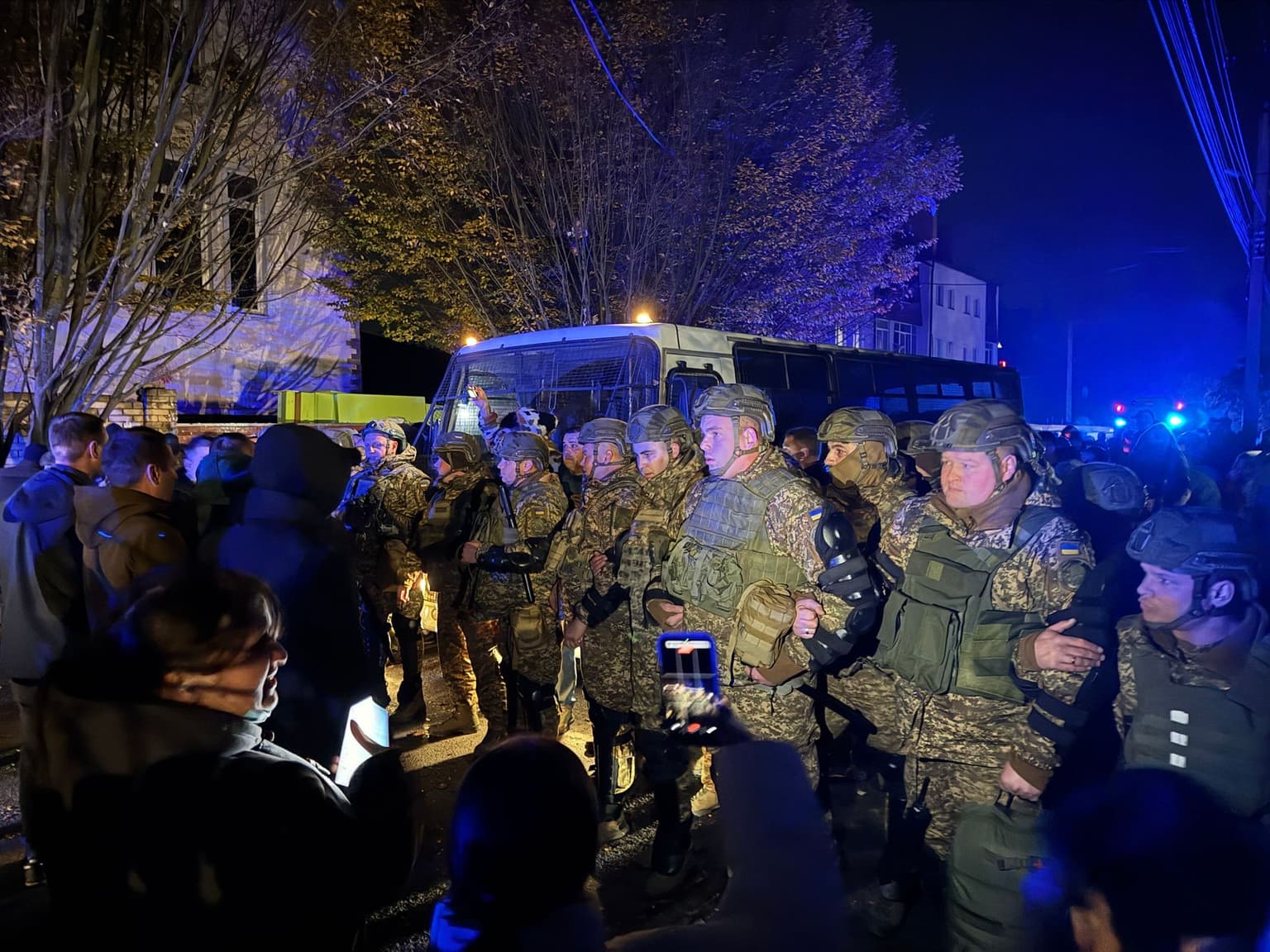
In the suburb of Petropavlovskaya Borshchagovka near the Ukrainian capital, Kyiv, protesters attempted to storm a building where mobilized conscripts and suspected deserters were allegedly being held.
The incident escalated into scuffles following allegations that soldiers were subjected to torture and denied medical assistance.
Following the developments, senior officials, including Kyrylo Budanov, Head of the Office of Ukrainian President Volodymyr Zelenskyy, went to the scene.
Footage circulated on social media and featured in Ukrainian media showed demonstrators forcing the doors of a detached house, brawling with unidentified individuals, and wounded soldiers being brought out of the premises after paramedics gained entry.
The unrest erupted when allegations spread that armed individuals were detaining around 40 people in the building basement, beating them, and barring them from contacting their families.
Initial reports claimed that at least one person had died inside, but police later denied any fatalities.
Dozens of people, including relatives of those detained, gathered outside the premises, alleging that bribes were being demanded in exchange for visitation rights.
The arrival of a private ambulance for medical intervention escalated tensions when medical personnel were initially barred from entering; police also acknowledged that the personnel were not admitted at first.
According to eyewitnesses, individuals inside sprayed gas at the crowd when demonstrators forced the doors. A female paramedic who entered alongside a police officer stated that between 25 and 30 people were inside and that four soldiers in serious condition required hospital treatment.
The four individuals, displaying bruises and wounds on their bodies, were taken for medical treatment. While one of the wounded was reported to have a severe spinal condition, the cause and extent of the injuries remained unclear.
According to on-site videos, a 14-year-old child was also allegedly among those removed from the building, though the child condition and whether they were in detention could not be confirmed.
“We do not torture, we build units”
Kyiv regional police stated that allegations of illegal detention and fatalities did not reflect the truth, urging the public to follow official statements.
Addressing the crowd, Ukrainian National Guard Commander Oleksandr Pivnenko, who arrived at the scene, argued that the facility was a temporary accommodation and reception point for mobilized personnel awaiting transfer to training centres.
Speaking to the UNIAN news agency, Pivnenko said, “We do not torture, we build units.”
Pivnenko noted that the four individuals transferred to hospital had been captured after deserting their units.
The neo-Nazi Azov Battalion within the National Guard confirmed that the facility belonged to one of its units.
Acknowledging that four soldiers had been injured, Azov officials rejected claims of systematic mistreatment and announced that necessary action would be taken should unlawful violence be detected.
Existence of similar facilities acknowledged
Kyrylo Budanov, Zelenskyy’s Head of Office and former Military Intelligence Chief, also arrived in the area and conducted inspections.
Noting that some relatives of patients were permitted inside to meet with detainees, Budanov announced that inspectors were examining the conditions.
Budanov acknowledged that “many similar facilities” exist in Ukraine, stating that an investigation into their operations would be launched.
Tensions persisted despite Budanov’s intervention. Clashes broke out when unidentified individuals in plain clothes attacked demonstrators.
A UNIAN correspondent was reportedly kicked in the stomach, and footage captured an individual with a head injury approaching Budanov, who told the injured man to report to the police. Gunfire was allegedly heard around the premises during the confrontations.
Correspondents from Hromadske reported that fights broke out around a bus brought in to evacuate soldiers.
Scuffles intensified again as authorities sought to transport the remaining soldiers. Budanov stated that 14 soldiers needed transfer to hospital, accusing demonstrators of obstructing the bus and attempting to overturn it.
Describing the demonstration as an illegal street action, Budanov called on the crowd to disperse.
The Ukrainian Ministry of Internal Affairs announced that a formal investigation into the incident had been launched, with the State Bureau of Investigation and the Military Ombudsman’s Office involved in the process.
Military Ombudsman Olha Reshetylova announced that they were conducting a joint inquiry with the National Guard Command and that the soldiers were receiving medical care.
International human rights organizations have documented secret detention centres in Ukraine since the 2014 Maidan events and the outbreak of conflict in Donbass.
A 2016 joint report by Amnesty International and Human Rights Watch highlighted cases of extrajudicial detention and torture in secret facilities run by the Security Service of Ukraine (SBU) and nationalist volunteer battalions. Authorities had denied the existence of unauthorized centres.
The latest developments took place amid intensifying debates over compulsory conscription practices and front-line desertion.
Ukrainian lawmaker Oleksandr Fedienko estimated in October that, while the exact figure of soldiers abandoning their units was unknown, it could reach up to 500,000.
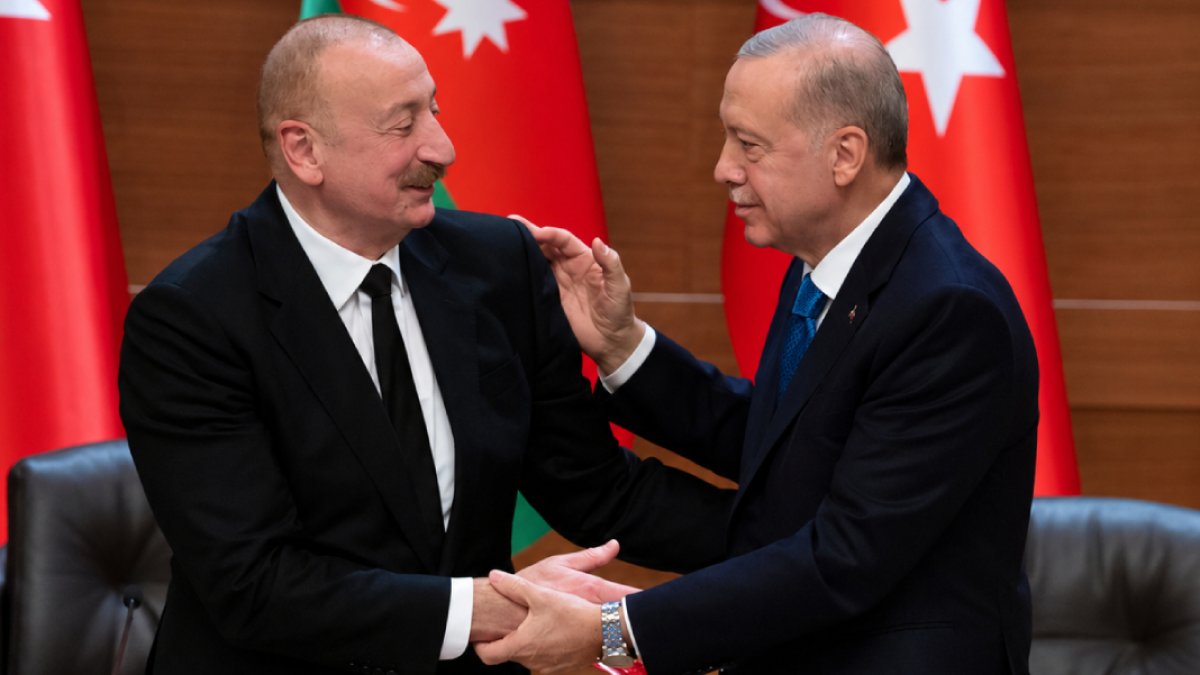
A sudden diplomatic spat between Ankara and Baku has brought latent structural contradictions to the surface, challenging the traditional motto of “two nations, one state” that has long defined relations between Türkiye and Azerbaijan. The friction, which was sparked publicly by domestic disputes over secular school dress codes in Azerbaijan and inflamed by divergent foreign policies towards Israel and Iran, represents an engineered divergence that could carry far-reaching consequences for the South Caucasus.
In an in-depth interview with the digital news channel Harici, foreign policy analyst Oğul Tuna examined the structural, domestic, and geopolitical currents driving this recent friction. Tuna argued that while the flashpoint seemed to erupt spontaneously over religious dress codes, it was rooted in institutional discrepancies, historical misunderstandings, and external geopolitical intrigues, particularly involving Israel, Iran, and the United States.
“The crisis did not actually start with the headscarf issue”
Evaluating the ostensible cause of the dispute, Tuna clarified that the row over religious garments in Azerbaijan merely triggered pre-existing structural friction.
“It is not 15 years, maybe even 40 years. Over 40 years,” Tuna said regarding the resonance of the headscarf debate within Turkish public memory. “It is an issue in Türkiye that goes back to the 1980 coup, or even before that. Of course, the other side, Azerbaijan, probably did not think this would provoke such a reaction in Türkiye, or perhaps the reactions in Türkiye were actually about Azerbaijan being a different state. Even though it is a propaganda campaign of ‘two nations, one state’, even though we speak almost the same language and share the same feelings, we are talking about a different state. Many people in Türkiye forgot this, both in politics and on social media among the public.”
Tuna noted that the current diplomatic strain can be traced directly back to events on the international stage preceding the school circular: “I think the crisis did not actually start with the headscarf issue. It is a crisis between Türkiye and Azerbaijan. It is possible to take this to the United Nations Summit in the near future, in the short term. If we recall, at the end of September, when Benjamin Netanyahu took the stage to speak at the United Nations General Assembly, many countries, including Türkiye, left the podium. The Azerbaijani delegate did not leave, and in Türkiye, especially among the Islamist community, many anonymous accounts started reacting on social media, targeting Azerbaijan-Israel relations with comments like, ‘How can this be brotherhood?'”
“And then this headscarf issue came on top of that,” Tuna stated. “A circular was issued banning girls wearing headscarves from attending certain schools, and this sparked a reaction from many religious figures, politicians, and especially ordinary Turkish citizens, both anonymously and publicly. Firstly, there is the collective memory of the headscarf issue in Türkiye, a debate that has been going on for 40 to 50 years. Secondly, Azerbaijan, a secular state, even a state that completely ignores religion, is acting as a Soviet legacy, not tolerating it, but eliminating it. And thirdly, the relationship between Azerbaijan and Israel fueled a huge fire among the public. As a result, many messages were shared regarding the Aliyev regime, the relationship between religion and politics in Azerbaijan, and of course, the war in our region.”
Tuna underlined that the backlash astonished officials in Baku. “Well, regarding the strong reactions from top political figures, well, the Azerbaijani side did not expect this either, and we ended up with a crisis that we will discuss as something that should not have happened for no reason,” he said.
“Türkiye has two Ministries of Foreign Affairs; one in Ankara and one in Baku”
The conversation turned to historical precedents of bilateral tension, particularly the 2009 “football diplomacy” era under former Turkish President Abdullah Gul, during which Ankara pursued normalization protocols with Armenia while Nagorno-Karabakh remained under Armenian military control. Tuna explained that whereas the estrangement in 2009 possessed legitimate structural foundations, the modern diplomatic discord occurs under fundamentally transformed geopolitical realities.
“Well, of course, in 2009, during Abdullah Gul’s presidency, there was a match diplomacy, where the then Armenian Prime Minister watched a match together,” Tuna recounted. “Azerbaijani flags were not allowed into the stadium. The reactions of Turkish citizens, especially Turkish nationalists, were decisive here. But of course, during this process, the gap between Ankara and Azerbaijan widened considerably. Actually, such a gap at that time is quite understandable, even legitimate. Because the Karabakh territories belong to Azerbaijan, and according to United Nations resolutions, the Karabakh territories, which are registered as belonging to Azerbaijan, were still under occupation. For this reason, Türkiye had already closed its border crossing with Armenia since the 1990s, and later, as far as we have read and learned, Armenia entered into such a process without Baku’s consent or consultation.”
“Today, however, we are going through a very different process,” Tuna pointed out. “That is, today Azerbaijan has liberated its occupied territories. Armenia has initiated and is supporting the peace process itself. And Türkiye, as we have discussed in our previous broadcasts, is conducting a normalization process with Armenia in a cooperative manner. In fact, in one of the previous episodes, I mentioned Ilber Ortayli. I quoted a saying of his that I really liked: Türkiye has two Ministries of Foreign Affairs; one in Ankara and one in Baku.”
Despite this historic institutional alignment, private grievances have surfaced regarding Ankara’s ongoing diplomacy with Yerevan. “However, in this recent period, after the headscarf crisis and the subsequent discussions in Azerbaijan and the crisis with Türkiye, we learned from various sources, journalists, and behind-the-scenes reports that Türkiye’s recent rapprochement with Armenia, the rumors of the border crossing being opened, the participation of Turkish Foreign Ministry representatives in Armenia’s founding anniversary reception, and the fact that it was held in Istanbul, has greatly disturbed Baku,” Tuna explained. “This is understandable from another perspective, because there is no peace agreement yet. The issue has not been resolved amicably.”
“The process is ongoing,” Tuna observed, adding that Baku’s discontent overlooks parallel developments. “On the other hand, let us not forget that Azerbaijan’s president, Nikol Pashinyan, posed for very nice photos at the White House last year. So, the process is actually continuing there as well. Therefore, there are things here that do not quite add up, diplomatically or logically. Because we are not in 2009 anymore. The winning side has changed this time. And there is a peace and normalization process going on in coordination with the winning side. So, it seems we need more information here. The Armenian aspect of the current crisis, because, as I said, it is a bit based on gossip.”
“Nobody in Türkiye knows Azerbaijan”
Tuna analyzed the persistent cultural and psychological barriers that hinder deeper diplomatic understanding between the two nations. In particular, he criticized the paternalistic attitudes long held by certain sectors of the Turkish political establishment and public.
“I think I discussed this in our previous Central Asia broadcast,” Tuna said. “Unfortunately, in Türkiye, for many years, what slowed down the development of relations with other Turkic states and Central Asian states was the perception, both in our political arena and among the public, that we are the big brother. We are first among equals. Yes. We are all Turks, brothers, etc., but we, the Republic of Türkiye, were independent before, etc. We are a much larger state with greater capacity. This understanding seems to have continued in certain areas after the Karabakh War. That is, a view that you could not have taken Karabakh without us.”
Tuna noted that this posture did not originate from the highest level of state governance: “Well, we have never actually heard anything like this from the President of Türkiye. The President of Türkiye, Recep Tayyip Erdogan, has always been on the moderate side regarding Azerbaijan. But it seems that, both at the state level and especially among the Turkish people, one of our biggest shortcomings, and I have observed this for many years as someone who has worked in the South Caucasus, is that nobody in Türkiye knows Azerbaijan. Unfortunately, very few people visit, and interestingly, nobody knows Azerbaijani history or language. Furthermore, the Azerbaijani language is unfortunately seen as a culture that is often ridiculed, used in comedies and jokes. But we have also seen that in this recent period, Azerbaijan does not know Türkiye very well either.”
Moving beyond social perceptions to hard commercial realities, Tuna examined the contradictory positions taken regarding Israel, pointing out the quiet cooperation that persists alongside public grandstanding.
“Secondly, it must be said openly that Azerbaijan, especially in the last few years, seems to have advanced its relations with Israel excessively,” Tuna remarked. “Well, of course, with the outbreak of this crisis, Azerbaijan’s state media directly reported that they were saying things like, ‘You are saying we are advancing relations with Israel, but actually everything is going well with Türkiye.’ This is absolutely true. After all, despite all the rhetoric, Türkiye also has a tremendous energy traffic with Israel that continues behind the scenes. This is also due to Azerbaijan transferring its natural resources to Iran and Israel. Ships are constantly operating. Most recently, the Israeli President was allowed to use Turkish airspace. Of course, this was made possible by Azerbaijan establishing its own aircraft. So, someone needs to come out and say, ‘You are brothers.’ Both Türkiye and Azerbaijan are already conducting very good relations with Israel. One side is doing it secretly. The other side is doing it openly, without any hesitation.”
“Both at the state level and especially this time in the eyes of the Turkish people, this has started to become disturbing, and reactions against Azerbaijan have increased significantly, especially after the Iran-Iraq conflict,” he added.
“I see Israeli propaganda in both”
Addressing broader regional volatility, Tuna highlighted intelligence circulating in journalistic and diplomatic circles suggesting an imminent conflict involving Iran, potentially positioning Ankara and Baku on opposing diplomatic fronts.
“And thirdly, from our sources, from different journalists, I heard this from Erdem Atay, and from various experts, it seems we are all following the situation regarding Iran,” Tuna stated. “A renewed war with Iran is expected, especially with the completion of the midterm elections in Israel and the US, within a week or two. According to rumors, Türkiye has been neutral since the beginning of the conflict, and while it is actually leaning somewhat towards Iran, there are reports that Azerbaijan will become more involved in favor of Israel this time. The Turkish Foreign Ministry is reportedly very concerned about this.”
Reflecting on whether these developments represent tactical information operations or strategic realignments, Tuna asserted: “At least, let me say this. We have not actually discussed this yet, even in the headscarf issue. I think the biggest reason for this tension between Türkiye and Azerbaijan, for this latest crisis, is the names that Israel has assigned to both sides. I think the propaganda on both sides is anti-Turkish in Azerbaijan. Here, it is anti-Azerbaijan propaganda. No matter how much it is done with an Islamic identity on one side, and a Turkish identity on the other, with the propaganda that ‘we are the real Turks in Azerbaijan, we are the secular ones, we are the ones protecting Turkish culture’, I see Israeli propaganda in both.”
“This latest issue, the idea that Azerbaijan will diverge, could of course be a kind of propaganda,” Tuna cautioned. “Ultimately, the friendship between Türkiye and Azerbaijan is an extremely important factor for both Turkish and Azerbaijani foreign policy, and for peace and tranquility in the region. This, beyond sentimentality and rhetoric, must always continue. Ultimately, these two countries are extremely important for regional cooperation and integration from the Aegean to the Caspian Sea. But, as I said, there is propaganda going on here.”
Nevertheless, concrete diplomatic alignments point to genuine shifts in regional blocs. “On the other hand, we should not forget this: in the coming weeks, delegates from Israel, the United Arab Emirates, and India will meet in Azerbaijan to form a kind of bloc that they are actually trying to build and establish,” Tuna reported. “And let us note that what brings these countries together is anti-Iran: India, the United Arab Emirates, and Israel. It is also said that Afghanistan, or the Taliban, will support this, but of course, these are rumors or, as you said, propaganda. To cut a long story short, Azerbaijan seems to be slowly moving towards such an axis. So, of course, there is propaganda, but there is also realpolitik involved.”
Tuna highlighted the friction sparked by military strikes near Azerbaijani territories, such as Nakhchivan, noting that while Iranian rhetoric subsequently softened, fundamental geopolitical risks remain. “It seems that, if the war with Iran breaks out again, this time, Türkiye and Azerbaijan might find themselves on opposing sides, and I think they are considering that possibility, and that could really be a sad and painful scenario. Of course, we are not directly referring to war here, but ultimately, even a diplomatic divergence will force us to reconsider, perhaps for the first time in history, the issue of the two Foreign Ministries, as Ilber Ortayli put it.”
“This weather forecast also has a geopolitical aspect”
Turning to Tehran’s calculations, Tuna evaluated Iran’s strategic anxiety regarding border changes and the planned Zangezur corridor, an initiative that Iranian officials have warned could sever their direct terrestrial link to Armenia.
“And Zangezur, as you said, is actually the biggest geopolitical concern for Iran, even before this war,” Tuna analyzed. “Because, traditionally, in the last 30 years, Armenia has been Iran’s only ally in the region, and the severing of this connection with Armenia, and by ‘severing this connection’, I mean, this time, in a way that strengthens Türkiye, a regional rival of Iran, is of course a very big concern. And what does the connection with Armenia mean? It means the southern, northern corridor, the connection with Russia. Of course, there is the Caspian Sea nearby, but that is the point. Even the centuries-old balance between the three regional powers, Russia, Iran, and Türkiye, has been completely disrupted in Türkiye’s favor, which, of course, has disturbed Iran in terms of its own interests.”
Beyond infrastructure and transit corridors, demographic and cultural factors deepen the competition between Tehran and Baku. “Secondly, there is actually a growing rivalry between Iran and Azerbaijan in recent years,” Tuna said. “This is especially true in terms of cultural ties and cultural identities. We all know that millions of Azerbaijani Turks live in Iran. Millions of Turks, some even say 30 million. Of course, there is no ethnic census conducted by Iran, but we see that Aliyev and the Azerbaijani side have strengthened and increased their propaganda apparatus targeting Iranian Turks in recent years.”
Illustrating how soft power manifests in daily state media, Tuna observed: “For example, while the Aliyevs, neither Aliyev’s father nor Heydar Aliyev ever dealt with such an issue before, especially after the Karabakh War, for instance, in meteorological programs, only Yerevan, the cities in Armenia, and the northern Azerbaijani territories, not officially, are mentioned. At the same time, we started to see that cities like Tabriz and Urmia, which belong to Iran but where Turks predominantly live, were also included in this meteorological data, very simple examples from daily life.”
“This weather forecast also has a geopolitical aspect,” he added, noting similar cartographic projections seen across the region. “Why, during the long years of Baba Aliyev’s and then Ilham Aliyev’s rule, was there no focus on the south, on Southern Azerbaijan, on the northern Iranian territories? Because, let us not forget, the identity of the Iranian Turks is predominantly Shiite. Since the founding of Azerbaijan, since its independence, what has it been fighting against? It has been fighting against religious identities and the dominance of religious identity in the political arena. That is why the secular state concept is very strong. That is why we are talking about the headscarf issue. So, naturally, these identities always come up in the struggle or competition between Azerbaijan and Iran.”
Tuna noted that Tehran handled the recent dress-code crisis far more circumspectly than groups in Ankara did. “For example, the headscarf issue did not provoke a huge reaction from the Iranian side. Türkiye actually gave a much stronger reaction. The reaction came from Türkiye. Iran, on the other hand, made a very diplomatic statement, saying it was an Azerbaijani affair.”
“Iran will certainly profit from this,” Tuna concluded regarding the diplomatic wedge. “In the long term, in the short term, but in this atmosphere of war, the party that will probably benefit the most is Israel. It is possible that Israel, or Israeli intelligence, was a factor in raising this headscarf issue within Azerbaijan, or in its spread, in the decisions made, and in the subsequent increase in actions. Why? Because in such a war atmosphere, they would bring out, in quotation marks, radical Islamists, Muslims within Azerbaijan. First, they would create a reaction, and then they would take note of it. Who reacted to this?”
“But of course, the Turkish side also got involved in this in a very disproportionate way,” Tuna stressed. “And I would like to call on our own institutions here. Who in our country reacted so excessively to Azerbaijan, and who caused these harsh statements between Azerbaijan and Türkiye? Perhaps these could also be looked into by foreign intelligence agencies. Because we are really talking about something very artificial, especially in the media and public opinion.”
“Returning to the foreign policy and diplomacy aspect, I think this is a completely artificial headscarf issue, an artificial crisis between Türkiye and Azerbaijan. Secondly, I think this is probably instigated by Israel, and as I said, it is a way to divide the two sides. Thirdly, of course, there is the Armenia issue, which you also raised in your question. The cup might have already reached its breaking point, but this move might have served as a good excuse.”
“There is no alternative to Ilham Aliyev”
Addressing speculation that internal political or religious factions within Azerbaijan might be organizing against the government, Tuna dismissed the notion of an organized alternative to President Ilham Aliyev.
“As far as we know, there isn’t. There is no alternative to Ilham Aliyev or his successor in Azerbaijani politics,” Tuna stated categorically. “However, this certainly does not mean there are not alternative ideas and movements within the Azerbaijani population. Well, this issue of political Islam is actually one of the active problems there, that is, one of the problems at the state level, and since the 90s, since independence, for example, in 1995, during the Heydar Aliyev era, the Azerbaijan Islamic Party… Of course, when we say Islam here, we are talking about Shia Islam, especially Iran, the Twelve Imam Shia in Iran, a kind of interpretation of Islam that goes hand in hand with that. We know that this party was shut down because of this.”
Tuna reviewed historical episodes of domestic unrest, including the 2002 demonstrations in Nardaran, roughly 25 to 30 kilometres outside Baku, which were influenced by economic dislocation following the Soviet collapse, as well as the 2015 state crackdown on the Muslim Unity Movement.
“So, there is something like this, especially within the Islamic sphere,” Tuna observed. “When we talk about Shiism, geographically it is incredibly close to Iran, and historically, the scholars here have ties to Iran. In Azerbaijan, when you talk about political Islam in general, the first thing that comes to mind is Iran. Just like in our case, political Islam, the Muslim Brotherhood movement, or at one time during Ugur Mumcu’s era, Saudi Arabia, then various sources, Qatar, etc., came to mind. So, of course, Iran is the first actor in its political system.”
Regarding rumors of institutional instability, Tuna noted: “Beyond that, of course, there is currently no open source information we can use to comment on anything. I mean, a coup attempt, something within the army, right? Of course, these things have been talked about a lot, but as far as we can see, as I said, there is nothing like that in open intelligence sources.”
“What I mean is, these things have happened in the South Caucasus, and they can happen again,” Tuna cautioned. “Especially now, Azerbaijan, due to its proximity to Iran, its geographical location, its ties with Türkiye, its fluctuating relations with Russia, its ties with Israel, and its recent close relationship with the US; it is a very intense and volatile region, so such things might be to be expected. But it is important to remember that Aliyev has truly established a system that controls everything in the country. If this exists, even if it escapes his notice, then perhaps the analysts are missing nothing.”
Tuna reflected on the institutional durability of the Azerbaijani leadership: “We have produced many great politicians in the Republic of Türkiye, shrewd, good at analyzing the people, foreign powers, and foreign states. But Heydar Aliyev and Ilham Aliyev are from very different political schools. One is Heydar Aliyev, and Ilham Aliyev comes from a similar background to Mikhail Gorbachev, who took over the leadership of the Soviet Union. Again, Azerbaijan may be a small country; its land area and population may not be large, but as we have discussed, it is a tremendous hotspot. It is directly targeted and monitored by the three major regional powers, as well as the US, and it is certainly important in terms of energy resources. So, staying afloat here is truly difficult, and if they manage to do so, a coup attempt, etc., it is quite possible. At least for now, it does not seem to be stopping.”
“Three flags on every street: Pakistan, Israel, and Türkiye”
Tuna evaluated public sentiment within Azerbaijan concerning external powers, noting the complex juxtaposition of international alignments visible on the streets of Baku since the 2020 Karabakh War.
“Since 2020, since the end of the Karabakh War, in Baku and other major cities in Azerbaijan, you could see three flags on every street and every main avenue: Pakistan, Israel, and Türkiye,” Tuna said. “These are three flags that do not usually come together, but in Azerbaijan you see them side by side. While there is a certain visibility of Israel at the state level and in the media, a significant portion of the population does not have much sympathy for Israel, especially after the 2023 genocide in Gaza. Even though relations might be close, Israel is not really well-regarded by the Azerbaijani people. Of course, there might be a group there, like in our country, that says, ‘What good have the Arabs done for us? Israel is more secular,’ and so on. We have that too.”
Concurrently, Tehran’s military posture has impacted local perceptions. “Iran has shown tremendous resistance, and considering its own capacity, at least for now, it is the leading side in the war,” Tuna stated. “This, of course, combined with Israel’s crimes in the region, may have created some sympathy among some Azerbaijanis. However, as we discussed, historically, Shiism exists there, even if not as a strong political alternative. And of course, Shiism is a kind of protest sect, religion, and we see the same thing in Bahrain, Iraq, and Lebanon. This has not happened in Azerbaijan during the Soviet era or the Alawite period, but perhaps it could happen in the future, perhaps many years from now.”
Tuna suggested that administrative measures around the headscarf ban might have served an internal vetting purpose: “At this stage, perhaps the state, as you said, wanted to take the lead. Let us see who will react to this. Let us take note. In a way, in the diaspora abroad, Azerbaijanis working abroad wrote open letters starting with ‘His Excellency the President’, saying things like, ‘Let us not suppress this; Azerbaijan is a place where religious tolerance should exist.’ Now, let us see how these people’s careers will go. We will understand based on their careers. Was this a test or not?”
“To mobilize the Turks in Iran”
Examining Israeli strategic objectives in the South Caucasus, Tuna discounted the probability that Israel could orchestrate an ethnic uprising among Iran’s Turkic population, though he warned of increased operational reliance on Azerbaijani infrastructure.
“I think their biggest intention is to influence public opinion, especially in Azerbaijan and other Caucasus countries, and create a positive image in public opinion,” Tuna said of Israel’s communication strategy. “But what Israel still has not seen is this: let alone the Caucasus, their image in the whole world is perhaps in such a bad state that it may never recover.”
“Their second goal, which they tried before the war, and which we discussed in another program, is to incite the Turks in Iran, along with other minorities in Iran, to revolt,” Tuna stated. “But this, I think, is not something that is possible in the near or distant future. Because the Turks in Iran are even more significant than other minorities, and Turks are not a minority, after all, they constitute a significant part of the country. We are talking about a people who have fully embraced their Iranian identity. When we say ‘Iranianness’, we can perhaps call it a kind of nationalism tied to the land, similar to the concept of ‘Turkishness’ that is being attempted to be established in Türkiye. We are talking about something different from being Persian. Because in the eyes of the Iranian Turks there, they are already the owners of the state; the religious leader, the president, the generals, the ulema come from them. The dynasties that ruled Iran for 1000 years also came from among these Iranian Turks. Therefore, they do not have the concern of, ‘I want to secede and establish my own independent state.’ Because the state is already us, it is already ours.”
Tuna highlighted operational access as Israel’s primary strategic asset in the area. “Thirdly, rather than mobilizing the Azerbaijani people and army, it is probably to use Azerbaijani territory openly and easily for intelligence activities and for launching, landing, and bombing aircraft,” Tuna noted. “So, of course, what was the biggest shortcoming of Israel and the US? It was about sending troops to Iran via the Kurds or Balochs, initiating armed operations. This was not possible. As I said, the Aliyevs, after all, received Soviet training; we are talking about people who are quite capable of these things. They are not the kind of people who would send their own people to the front. But Israel’s likely aim here is to further increase its intelligence and military activities in Azerbaijani territory, targeting Iran. What are these three points we mentioned? 1. To improve their public image. 2. To mobilize the Turks in Iran. 3. To be able to use Azerbaijani territory more freely or more openly.”
“This crisis has passed us by for now”
Concluding his assessment, Tuna maintained that while the acute phase of the friction has abated, the potential for future escalation remains tied to regional conflicts.
“This crisis has passed us by for now,” Tuna observed. “As I said, President Erdogan acted very moderately. The Turkic states… I guess Aliyev will attend the summit now that Erdogan has directly invited him. But Aliyev probably has some demands there. He wants some heads to roll. Names like Oktay Saral, etc., directly. Of course, he wants the Vice President, who is in the government, to be removed from his post. Will these demands be met or not? Will Aliyev come or not? Probably the Turkish side will make moves to de-escalate this crisis. But as you said, it is a close call for now. If the war with Iran flares up again, what will happen this time? Honestly, we hope we do not see such bad and artificial crises. And we hope we see that the regional states are actually on Iran’s side.”
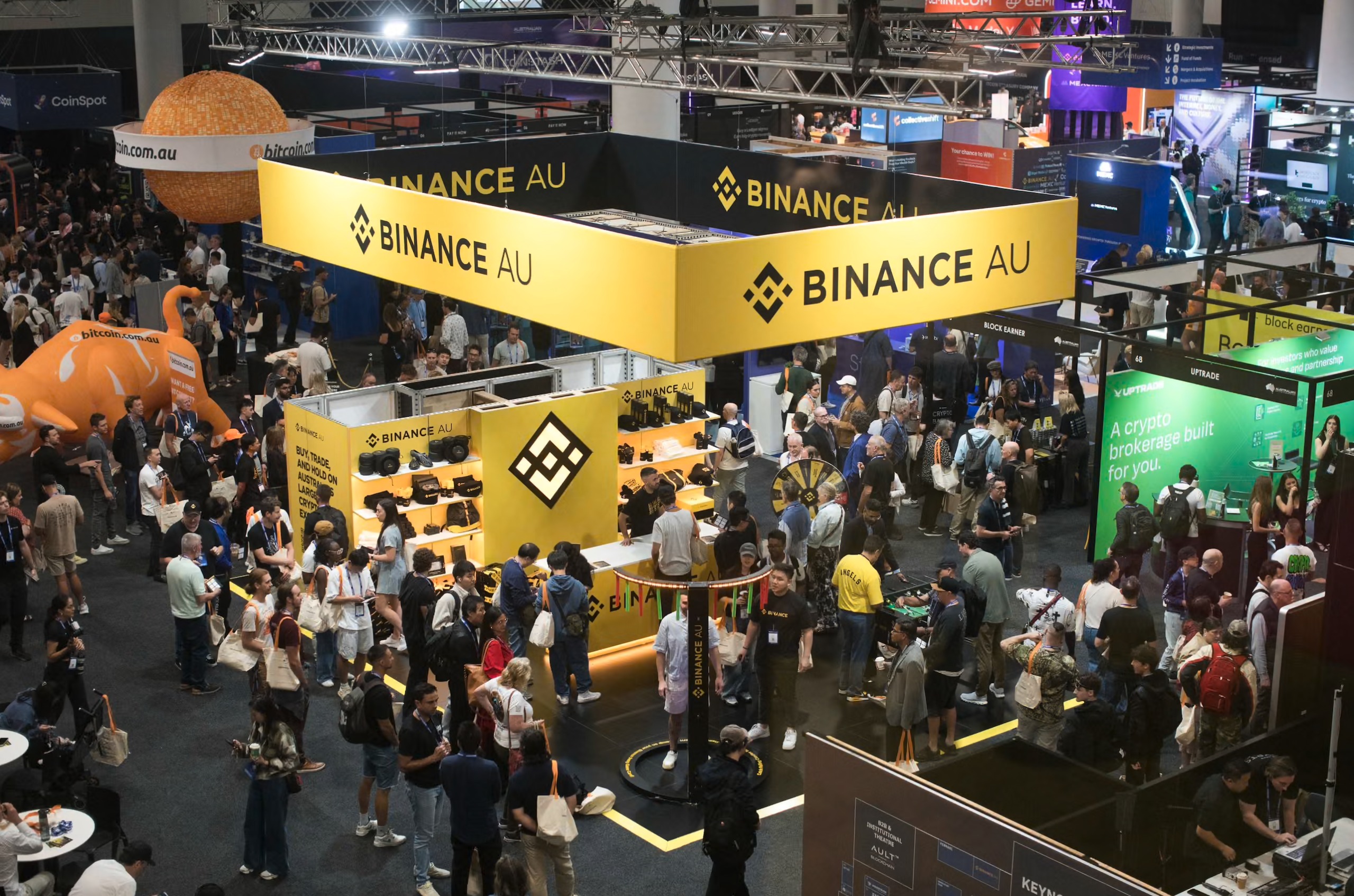
The world’s largest cryptocurrency exchange, Binance, has suffered an industry-record cyberattack amounting to $6.3 billion.
According to The Guardian, experts say the likely perpetrator is the Democratic People’s Republic of Korea (DPRK).
Binance moved urgently to freeze the affected assets, and approximately $3 billion has been identified so far.
The company has not provided any update regarding the remaining $3.3 billion.
Binance co-founder Yi He said the company would cover “all cyberattack losses.”
Analysts attributed the assault to state-sponsored hackers from the DPRK. According to The Guardian, the DPRK has a history of cryptocurrency theft and, according to the FBI, was behind the theft of approximately $1.5 billion in virtual assets from a Tokyo-based cryptocurrency exchange last year.
That incident had set the record as the largest cryptocurrency theft recorded up to that point.
Crypto analytics firm TRM attributed the attack “with high confidence” to TraderTraitor, North Korea’s elite hacking unit.
Another analytics entity, Chainalysis, also linked the heist to TraderTraitor.
Binance has not explicitly confirmed that funds were stolen. However, TRM and Chainalysis claimed that more than $6 billion had been taken. The company stated that its teams were “working around the clock” to resolve the issue.
According to Binance’s statement, initial investigation findings revealed that the security breach may have begun with a hacked laptop belonging to one of Binance’s engineers, enabling an attacker to gain access to one of the company’s systems and execute unauthorised withdrawals.
Binance, which allows users to buy, sell, and trade digital assets, has 335 million registered users worldwide, and the total value of assets under its custody was approximately $162.8 billion, according to the exchange’s 2025 annual report.
“The bottom line is that your funds are safe and we are covering all losses,” said Richard Teng, one of Binance’s co-chief executives.
In a statement, the company said:
“As a precautionary measure, all deposits and withdrawals have been temporarily suspended while our security teams, with close support from law enforcement and industry partners, conduct checks, secure wallet infrastructure, and track affected assets.”
Markets reacted immediately early in the Asian trading session on Friday, with bitcoin, by far the most popular crypto asset, dropping by more than 3% to a six-week low of $76,368.
Shares of crypto exchange Coinbase Global lost 4.8%, while shares of bitcoin buyer Strategy fell by about 6% in extended trading on US markets.
Binance was founded in 2017 by Changpeng Zhao. Zhao pleaded guilty in the US in 2023 over failures to prevent money laundering on the platform. Donald Trump pardoned him in 2025.
In a post shared on X on Thursday, Zhao said, “User funds are safe!” but added that the incident “looks like a hack on Binance.”
Stating that he no longer manages Binance, Zhao said, “As a shareholder, I expect all user funds to be fully covered.”
According to Chainalysis and other industry experts, if confirmed, this could become the world’s largest cryptocurrency theft.
“This is the biggest hack in history,” said Aravind Srinivasan, head of the systematic OTC business at major crypto market maker GSR.
Analysts noted that beyond the potential loss of assets, the security breach could have broader repercussions across the cryptocurrency market.
Indeed, the cryptocurrency market had already been under pressure recently due to interest rate increases in the US and weakening demand from exchange-traded fund buyers.
Binance operates a secure asset fund for users; as stated on the company’s website, this fund is an emergency reserve held entirely in bitcoin, intended to protect user assets in the event of security breaches.
Stablecoin issuer Tether announced that it had frozen approximately $1.57 billion in assets linked to the incident, while Circle froze more than $800 million.
World Liberty Financial, a crypto firm linked to Trump and his family, said in a statement on Thursday that it was collaborating with cryptocurrency custody provider BitGo to freeze funds stolen in what it described as the Binance attack.
Yi from Binance said $27 million in stablecoins and roughly $2 million worth of World Liberty tokens had been frozen.
This development adds to a successive series of cryptocurrency thefts. According to researchers at TRM Labs, attackers stole $2.9 billion worth of cryptocurrency across roughly 150 attacks last year.
In September, cryptocurrency exchange Bitget announced that about $350 million worth of cryptocurrency had been stolen from its platform, highlighting the industry’s vulnerability to hackers.

US midterm losses will turn Trump into a lame duck, Prof. Doster says

AfD commits to NATO expansion and eyes trilateral summit with US, Russia

Moderate Republicans urge break from Trump and MAGA after midterms

El-Sayed defeats Rogers to win Michigan US Senate race

Venezuela military hits Colombian ELN camp in Apure border raid
-

 America2 weeks ago
US wealthy demolish multimillion-dollar mansions for land
-

 Diplomacy2 days ago
Secular dress code dispute exposes deeper Türkiye-Azerbaijan strains
-
 Middle East2 weeks ago
Netanyahu trails Eisenkot in Israeli polls despite Trump backing
-

 Europe1 week ago
Merz visits Asia to seek new markets for German defence firms
-
 Russia1 week ago
US and Russia weigh energy deals and corporate return in peace talks
-
 Europe1 week ago
AfD drops Dexit to back single market in new Europe strategy
-

 Interview2 weeks ago
“The AfD is an expression of internal contradictions within German big capital”
-
 Europe1 week ago
Serbia opposition wins snap vote as Vucic concedes defeat
