
America
Palantir, endless war, and the global Zionist surveillance state

In the previous article in this series, we stated that the Palantir company was a product of the “counter-terrorism” concept that followed September 11th.
The Dissident blog points out that Palantir’s system is based on the “Total Information Awareness” idea of John Poindexter, a former Reagan-era official who proposed the creation of a massive database containing all information on American citizens after the 9/11 attacks.
Poindexter and Richard Perle, one of the neocon architects of the Iraq War, met with Palantir’s founders, Alex Karp and Peter Thiel, because their new company, Palantir, “had a similar purpose to what Poindexter was trying to create at the Pentagon.”
Palantir soon incorporated and received millions of dollars in funding from In-Q-Tel, the venture capital investment arm of the CIA.
Palantir’s software allowed intelligence agencies to create a massive database on Americans. Bloomberg wrote, “Using Palantir technology, the FBI can now create comprehensive files on U.S. citizens in an instant, combining security camera footage from outside a pharmacy with credit card transactions, cell phone records, emails, flight records, and internet search histories.”
Within the framework of Palantir’s mission to “save Western civilization,” its bond with Israel, which operates as the spearhead [a translation of uç beyi, a historical term for a frontier lord or vanguard] of this civilization, deserves special attention.
The New York Times wrote, “Mr. Karp is unwavering in his support for Israel. The company took out a full-page ad in The New York Times last year declaring, ‘Palantir stands with Israel.'”
The company’s official social media accounts openly supported Israel’s attacks in Gaza, which have amounted to genocide. On October 11, 2023, the company tweeted, “Certain kinds of evil can only be fought with force. Palantir stands with Israel.”
On October 7, 2024, exactly one year after the Al-Aqsa Flood operation, the company’s official X account once again reiterated its support for the genocide in Gaza, tweeting, “Palantir remembers October 7th. We stand with Israel.”
Alex Karp openly expressed his pro-war and pro-Israel views. The CEO told The New York Times that Israel should “turn [Gaza] into a parking lot.”
In the same New York Times article, Karp described protests against providing weapons to Israel as “an infection within society,” stating that he supported stopping these protests.
Karp also boasted to the newspaper that he uses his technology to sustain the war in Ukraine and the occupation in Gaza, saying, “I am not going to apologize for giving our product to Ukraine, to Israel or to many other places.”(1)
In an interview to Time, Karp said he saw an opportunity in Ukraine for Palantir to fulfill its mission to “defend the West” and “make our enemies tremble with fear.”
Government officials were trained to use Palantir’s tool called MetaConstellation, which provides a near-real-time picture of a specific battlefield using commercial data, including satellite imagery.
Palantir’s software integrates this information with commercial and classified government data, including from allies, allowing military officials to relay enemy positions to commanders on the ground or to decide to strike a target. This is part of what Karp calls the digital “kill chain.”
At a Palantir earnings call in 2024, Karp boasted, “I am exceedingly proud that after October 7th, within a couple of weeks, we were on the ground in Israel and involved in operationally crucial operations.”
When Karp was protested by a Palestinian activist at a conference for Palantir’s role in aiding the genocide in Gaza, he said, “I believe he [the protester] is a product of an evil force of Hamas that he is not aware of. He is part of their strategy, their product, without being aware of it.”
In a 2024 interview with CNBC, Karp said that supporting Israel was the most important issue for him, asking, “The most important issue of our day is war and peace, and the most important metaphor for that is: What do you think about what’s happening in Israel?”
Karp also called for an end to pro-Palestinian protests. At a conference, Karp said, “What’s happening on university campuses [referring to pro-Palestinian protests] is some sort of sideshow—no, they are the main show, because if we lose the intellectual debate, you can’t deploy any army in the West.”
Palantir’s mastermind, Peter Thiel, shares similar views. When asked about Israel’s use of artificial intelligence in Gaza, Thiel said, “I don’t know all the details of what’s going on in Israel, because my bias is to defer to Israel.”
Thiel continued, saying he believed that “in general” the Israeli army has the right to decide what it wants to do and that “in general” it is in the right.
This commitment to Israel does not end there.
The company is so intertwined with Israel that it boasted on social media about holding its first board meeting of 2024 in Tel Aviv.
Before the board meeting, Karp and Thiel met with Israeli President Isaac Herzog and shared the meeting on social media, writing, “We are proud to stand with Israel, supporting its culture of innovation, technology, and democracy.”
Following the board meeting, CTECH reported that Palantir announced it had signed a strategic partnership agreement with the Israeli Ministry of Defense to “provide Palantir technology to aid the country’s war efforts.”
The agreement was signed after a meeting between Israeli defense officials and Thiel and Karp.
After signing the deal, Karp told Israeli entrepreneur Yossi Vardi:
“There are many people in the (tech) industry who are not as pro-Israel as I am, but they too see Israel as a very special place and generally understand Israel’s position better and appreciate the success of building a country out of the desert.”
Globes, an Israeli business news site, reported that during this trip, Karp “participated in a public event at Tel Aviv University” and “showered praise on Israel.”
Globes wrote that Israel was preparing to purchase from Palantir “an AI-based system called AIP, designed to assist in intelligence-based decision-making and to analyze enemy targets and recommend combat moves.”
The same report also included the claim that Palantir expected to generate tens of millions of dollars in revenue from the deal with Israel.
Journalist Antony Loewenstein writes, “Israel’s military-industrial complex sees its occupation as a vital testing ground for trying out the latest methods of killing and surveillance.”
Loewenstein points out that Palestinians are seen as “guinea pigs,” but this activity is not limited to Palestine (Karp told Time, “There are things we can do on the battlefield that we can’t do at home”). According to him, “Silicon Valley has taken notice,” and the new Trump era “heralds an even tighter alliance between big tech, Israel, and the defense sector.”
William Hartung, evaluating Palantir and American foreign policy for Responsible Statecraft, states that Palantir’s goal is “to shape overall U.S. national security policy, which in turn can determine what military technologies the U.S. will invest in for the next generation.”
After starting his new role as Palantir’s head of defense, former Republican Representative Mike Gallagher promised to use his connections within the government to facilitate the growth of emerging military technology companies, largely by securing a larger share of tax revenues.
Another characteristic of Gallagher is that he stood out as a leading “China hawk” during his time in Congress. Gallagher is the co-author of a recent article in Foreign Affairs titled “No Substitute for Victory: America’s Competition With China Must Be Won, Not Managed.”
In the article, Gallagher and his co-author Matthew Pottinger argue that the U.S. “must implement a better policy” and call for action to rearm the U.S. military, reduce China’s economic influence, and build a broader coalition against China.
Judging by his stance as chairman of the House Select Committee on the Strategic Competition Between the United States and the Chinese Communist Party, Gallagher’s views are quite close to those of Palantir’s executives.
Close, because Palantir CEO Alex Karp has said that the U.S. will “probably” go to war with China and that the best policy is to “scare the shit out of your enemy.”
In a moment of striking candor, Karp admitted, “Our product is sometimes used to kill people”: “If I were younger in college, would I be protesting myself?”
Palantir’s advisor, Jacob Helberg, described the company as “the AI arms dealer of the 21st century.”
Karp has long rejected the widespread criticism that Palantir’s products enable governments to conduct warrantless surveillance of their citizens.
When I say he rejects them, don’t think he denies the reality. It’s more of a, “Yes, I do it, but you should ask why I do it.”
The CEO says he sees a “moral imperative” to provide Western governments with the best new technologies, calling for “closer collaboration between the state and the tech sector,” which he believes will allow the West to maintain its superiority over its global rivals.
For years, the U.S. has imposed strict regulations on the export of weapons systems to foreign countries due to the lack of accountability once they are in the hands of users and the possibility of serious war crimes being committed. At least, that’s how it is on paper.
But Karp legitimizes his own products by saying, “The power of advanced algorithmic warfare systems is now so great that it is equivalent to having tactical nuclear weapons against an enemy that only has conventional weapons.”
If the West didn’t have “real enemies,” Karp told Bloomberg, he would be one of those trying to limit the use of artificial intelligence in the military: “But the reality we live in now, as Israel knows, is that our enemies are real and dangerous and operate far beyond the norms of behavior.”
Karp stated in 2023 that Palantir was in talks with “hundreds” of potential partners about its AIP platform, but details like pricing and terms were still being determined.
Karp told analysts that Palantir was refocusing its engineering teams and other resources on artificial intelligence to meet demand, stating that it was “aggressively pursuing” this opportunity.
“How Big Tech Captured the Army”
This was the headline of a June 17 report in The Bulwark.
The recent entry of officials from high-tech companies like Meta, OpenAI, and Palantir into the military has raised concerns that Silicon Valley is taking control.
But is it just the American military? NATO announced it will use Palantir’s artificial intelligence platform for “faster military decision-making.” The MSS NATO system aims to automate data analysis that previously required large teams.
Berliner Zeitung reported that in the CDU/CSU and SPD coalition negotiations, it was agreed that the CSU would take over the Federal Ministry of the Interior in the future. This means Palantir will have more opportunities at the federal level, as in Bavaria, where the CSU is in power, the state police have been using the company’s software since August of last year.
According to the Bavarian Ministry of the Interior, the cross-procedural research and analysis platform VeRA makes it possible to “quickly and reliably analyze and process large amounts of data from a wide variety of sources and to generate important findings at high speed.”
Hesse and North Rhine-Westphalia are also currently using Palantir. According to information from Bayerischer Rundfunk, Berlin and Baden-Württemberg are also currently considering collaborating with the company.(2)
In the United Kingdom, Palantir already has a £330 million National Health Service (NHS) data contract. In May, to encourage hospitals to adopt this technology, the government signed an £8 million deal with consulting giant KPMG to “promote the adoption” of Palantir’s technology in the NHS. London also used Palantir systems to monitor its military.
Until now, the Pentagon’s known “Gang of Five” consisted of the following companies: Lockheed Martin, RTX, Boeing, General Dynamics, and Northrop Grumman.
A recent report from the Quincy Institute for Responsible Statecraft reveals that the share of private companies in the Pentagon’s defense spending is steadily increasing.
Over the last 35 years, the Pentagon has allocated a growing portion of its budget to private sector contracts. In the fiscal years 1990-1999, the Pentagon’s average annual spending on contracts amounted to 41% of its total spending. This ratio has increased every decade: in the first five years of this decade, the share of private companies in the Pentagon budget reached a record high of 54%.
For the 2020-2024 period, $2.4 trillion of the total $4.4 trillion in defense spending was awarded to private companies.
However, the overwhelming majority of this share went to five large companies. Between 2020 and 2024, the Pentagon’s top five arms suppliers received contracts totaling $771 billion. This amount committed to the top five companies constitutes one-third of the total $2.4 trillion in contracts awarded by the Pentagon between 2020 and 2024.
Lockheed Martin was the clear leader with $313 billion in contracts between 2020 and 2024, while its closest competitor, Raytheon (now RTX), received $145 billion in contracts.
However, the report’s findings point to something else: this dominance is increasingly under threat from a new generation of military technology companies.
While the big five companies continue to hold a large portion of the Pentagon’s defense spending budget, there has been an increase in new contracts with tech firms specializing in artificial intelligence for military applications such as drones, unmanned ships, and armored vehicles.
The rise of these new military technology firms marks the biggest shift in the arms industry in the last five years.
The report states, “Companies like SpaceX, Palantir, and Anduril have received billions of dollars in contracts from the Pentagon for communications, targeting, unmanned vehicles, drone defense systems, and hypersonic weapons. The funds from these contracts will be transferred to the companies over time, which will place them among the Pentagon’s largest contractors in terms of contract value in the next few years.”
According to the report, Palantir signed a $618 million contract with the army for a data platform using artificial intelligence, a $480 million contract to continue work on the Project Maven targeting system, and a five-year, $463 million contract with the U.S. Special Operations Command to integrate advanced commercial software into its operations.
The report notes, “As the Pentagon moves toward AI-powered weapons systems, including swarms of drones, ships, and combat vehicles, the dominance of the Big Five companies may diminish.”
In the first quarter of 2025, Palantir’s revenue grew by 39% year-over-year, while its U.S. sales increased by 55%. The commercial division now generates $1 billion in annual revenue, indicating long-term demand in sectors such as energy, finance, and logistics.
“This diversity is vital,” writes AInvest. Palantir’s AI platforms are being adopted by critical infrastructure operators to mitigate risks such as cyberattacks, a significant security vulnerability due to “Iran’s asymmetric warfare tactics.” Partnerships with cybersecurity firms like Palo Alto Networks and CrowdStrike further strengthen defense capabilities against state-sponsored threats.(3)
“AI self-confidence” is coming to the fore. In a brochure/article titled “Rebooting the Arsenal of Democracy” published on Anduril’s blog, the Gang of Five are described as “relics of the Cold War” that must be eliminated if America wants to take the lead in developing and producing the weapons of the future:
“Why can’t the existing defense companies do better? The largest defense companies are staffed by patriots, but they lack the software expertise or business model to build the technology we need. Tomorrow’s weapons—autonomous systems, cyber weapons and defenses, networked systems, and more—run on software, while these companies specialize in hardware. These companies work slowly, while the best engineers enjoy working fast… These companies built the tools that kept us safe in the past, but they are not the future of our defense.”
Palantir’s stock price more than quadrupled last year, making it more valuable than RTX and Lockheed Martin at the beginning of this year. Behind these shadowy companies is a new breed of predators known as “venture capital” (VC). Leading VC firms like Thiel’s Founders Fund, Andreessen Horowitz (a16z), and Lux Capital are among the rising stars of the defense sector, such as Anduril, Hadrian, and Rebellion Defense.
Furthermore, new defense monopolies are forming. A consortium led by Anduril and Palantir plans to join with other defense technology companies like SpaceX, OpenAI, Saronic, and Scale AI to bid jointly on military contracts.
In this process, venture capitalists are not only achieving high returns on investment but also gaining increasing influence over U.S. foreign policy. Michael Kratsios, Thiel’s former chief advisor, and other Thiel-connected individuals, including Jacob Helberg, a senior advisor at Palantir, are being appointed to positions such as Director of the White House Office of Science and Technology Policy and Deputy Under Secretary for Economic Growth, Energy, and the Environment, respectively.
“Working for the Pentagon doesn’t seem like a bad thing anymore,” says William Hartung, a research fellow at the Quincy Institute for Responsible Statecraft. “Many of these new companies seem to want it very much, and venture capital firms are facilitating it.”
Palmer Luckey of Anduril describes venture capitalists who want to protect their current investments as “hawkish,” saying, “Anyone who cares about Ukraine is also watching Taiwan, because… a slide south for Taiwan poses a real existential threat to many of their investments [there]. For this reason, we see a hawkish stance in most venture capitalists.”(4)
A representative of the VC group America’s Frontier Fund (AFF) is more blunt, not hesitating to say, referring to Taiwan: “If there is a kinetic event in the Pacific, some of our investments will increase 10-fold overnight.”
Under the heading “geopolitical impact risks,” AInvest implies that Palantir is comfortable: “Rising tensions in the Middle East, the South China Sea, and Eastern Europe ensure that the demand for analytical services in this area remains stable.”
The most carrion-like version of capitalism wants endless war, a global Zionist surveillance empire.
(1) Time magazine writes that Palantir CEO Alex Karp was “the first major Western corporate leader to meet with Ukrainian President Volodymyr Zelensky since Russia’s invasion.” The article admits that in the year and a half since Karp’s first meeting with Zelensky, Palantir has become “unprecedentedly involved” in the daily affairs of a foreign government at war: “More than half a dozen Ukrainian institutions, including the Ministries of Defense, Economy, and Education, use the company’s products. According to Karp, Palantir’s software, which analyzes satellite imagery, open-source data, drone footage, and reports from the ground using artificial intelligence to present military options to commanders, is ‘responsible for most of the targeting in Ukraine.’ Ukrainian officials said they use the company’s data analysis for projects that go far beyond battlefield intelligence, including collecting evidence of war crimes, clearing landmines, resettling displaced refugees, and rooting out corruption.” More interestingly, Time notes that Palantir offered its services to Ukraine for free to use the bloody war as a testing ground, claiming, “Palantir was so eager to showcase its capabilities that it provided them to Ukraine for free.”
(2) The Germany-Palantir relationship requires separate examination. Mathias Döpfner, CEO and co-owner of the German media giant Axel Springer, which owns POLITICO, has very close ties with Palantir founder Peter Thiel. His son, Moritz Döpfner, previously served as managing director at the billionaire’s family office, Thiel Capital. According to the German press, the younger Döpfner had established a new venture capital fund with a $50 million investment from Thiel. From a podcast Mathias Döpfner did with Karp in 2019, we also learn that the Palantir executive was on Axel Springer’s supervisory board at the time. It was leaked to the media that Axel Springer requires its employees to sign a contract demanding commitment to the free market, support for the US-Europe alliance, and “support for Israel’s right to exist.” From a 2019 report in Business Insider, which is majority-owned by Axel Springer, we learn that Palantir had passed data to police forces in the country about Anis Amri, who carried out an attack on a Christmas market in Berlin in 2016.
(3) One of the secrets to Palantir’s commercial success is its creation of an “ecosystem.” The Pentagon’s Maven user base has doubled since the beginning of 2024, reaching 20,000 users across 35 vehicles. AInvest writes: “The global defense AI market is projected to reach $40 billion by 2030, with governments prioritizing ‘information dominance’ over traditional hardware. Palantir’s AI infrastructure is not just a tool, but an ecosystem platform. Its ability to integrate data from different domains (e.g., the all-domain command and control system of CJADC2) creates high switching costs and recurring revenue streams.”
(4) Let’s not forget the Middle East: The Pentagon, which uses Palantir’s Maven Smart System (MSS), increased the MSS contract by $795 million in 2024, bringing the total amount to $1.3 billion by 2029. This system, managed by Aberdeen Proving Ground, currently serves five major combatant commands, including Central Command (CENTCOM), the center of operations in the Middle East. MSS uses artificial intelligence to analyze surveillance data (satellite images, video streams) in real-time, enabling intelligence fusion, target identification, and battlefield decision-making. This capability is vital in scenarios such as tracking the movements of the Iranian military near the Strait of Hormuz or monitoring nuclear facilities. NATO’s adoption of the MSS-NATO variant in 2025 further underscores Palantir’s global role: the alliance is using generative AI and machine learning tools to enhance allied command operations, with integration completed in just six months.












The economic toll of the conflict on the US has reached $265 billion in the roughly eight months since the start of joint US and Israeli strikes against Iran.
According to calculations by Moody’s Analytics Chief Economist Mark Zandi, this amount imposes an additional burden of approximately $2,000 on the budget of an average American family.
Sharing data on his X account on Tuesday, Zandi noted that the cost per household since the war began stands at about $2,000, with nationwide economic losses reaching $265 billion.
This estimate is seven times higher than the direct military spending figure reported to Congress by Secretary of War Pete Hegseth, which covers the period between the start of the strikes on 28 February and the end of July.
While Hegseth’s official figures cover only direct military operations, the conflict’s impact on global markets and oil prices is driving up inflation and day-to-day living costs, deepening the real burden on household budgets.
Fuel and heating costs strain budgets
Energy items account for the largest share of the additional expenses facing American households. The surge in fuel, home heating, and transport costs has generated an extra bill of about $1,100 per family.
Zandi noted that the price of regular petrol, which hovered just below $3 per gallon before the war, has risen to $4.37, while diesel has exceeded $6 and jet fuel has nearly doubled.
Pointing out that a marked rise in residential heating fuel costs is driving up spending as winter approaches, Zandi said current price levels continue to add roughly $50 a week to family budgets.
Researchers at Brown University’s Watson Institute for International and Public Affairs are also tracking the impact of rising fuel prices on consumers.
According to data from the institute, US consumers have paid an extra $133.3 billion for fuel products since 28 February.
During this period, petrol prices rose by more than 46% and diesel climbed by over 70%. Of this additional burden borne by consumers, $73.5 billion stemmed from petrol and $59.8 billion from diesel. This calculation translates into an extra cost of $1,017.76 per household nationwide.
Loan interest rates and operational outlays inflate the bill
Another decisive factor in the economic picture has been the rise in interest rates.
Zandi reported that climbing interest rates have created a cost of approximately $540 per household.
Fixed-rate home mortgage rates, which stood below 6% before the war, have climbed to roughly 7.5%, Zandi said, adding that long-term rates have also increased substantially.
Direct military operations, meanwhile, represent a cost of $360 per household based on Pentagon data.
However, experts point out that repair, maintenance, and equipment replenishment expenses are excluded from the published figures, meaning actual military spending on the ground could exceed Pentagon estimates.
Linda Bilmes, a war budget specialist who teaches public policy at Harvard Kennedy School, said she is certain the conflict’s bill will reach $1 trillion, adding, “Maybe we’re already there.”
Trump defends spending as public support drops
The mounting economic strain is fuelling backlash against the military campaign and US President Donald Trump’s handling of the process.
A Pew Research Centre survey conducted on 28 September-4 October among 5,062 adults revealed that 65% of Americans disapprove of the way Trump is handling the Iran strikes.
The proportion of those who consider the use of military force justified dropped four percentage points compared with March, falling to 34%.
Emphasizing that the total cost has wiped out roughly half of the average American household’s income gains over the past eight months, Zandi said it is natural for public support for the war to remain so low.
According to figures shared by pollster Nate Silver, Trump’s net approval rating has tumbled to an all-time low of minus 23.5 points.
Defending the military intervention against Iran, Trump described the costs as “a small price to pay to keep our country and the world safe.”
With the surging cost of living piling pressure on Republicans ahead of the November midterm elections, Trump announced last month that he would provide a $5,000 cash payment to every adult in the country if his party maintains its majorities in both chambers of Congress.

The US Department of the Treasury has imposed a total of $1.21 billion in financial penalties on Bank of America, one of the country’s largest financial institutions, for violating anti-money laundering legislation and sanctions regimes.
According to a statement published by the department, the bank was accused of failing to report suspicious transactions in a timely manner, failing to monitor financial movements that posed national security risks, and providing services to clients on sanctions lists.
Decisions by units operating under the Treasury Department accounted for the largest components of the penalty package.
The Financial Crimes Enforcement Network (FinCEN) penalised the bank for failing to report more than $5 billion in suspicious transactions in a timely manner.
More than $1 billion of that amount was noted to be directly linked to national security risks, including the operations of China-based money laundering networks.
Under the settlement reached with FinCEN, Bank of America admitted to willfully violating the Bank Secrecy Act. The bank was required to conduct an additional review covering suspicious transactions and to assess the effectiveness of its financial monitoring system.
The Office of the Comptroller of the Currency (OCC) separately fined the bank $750 million over structural deficiencies in its financial monitoring system.
The OCC stated that the bank failed to maintain adequate oversight over trillions of dollars in fund transfers and did not remedy the violations despite a formal notice served in December 2024.
The Office of Foreign Assets Control (OFAC) also stepped in over millions of dollars in transactions carried out in breach of sanctions regulations. OFAC reached an $11.6 million settlement agreement with Bank of America concerning 475 distinct potential sanctions violations.
Assessing the matter, US Treasury Secretary Scott Bessent said, “The actions taken today send a clear message that even the largest financial institutions are not above the law.”
UK fines banks over breaches of Russia sanctions
Alongside the penalty decision in the US, similar sanctions scrutiny is being carried out across European financial centres.
In September, the Office of Financial Sanctions Implementation (OFSI), an agency of the UK Treasury, fined Citibank’s London branch (CBNA London) £4.7 million for violating sanctions targeting Russia.
According to findings by the British regulator, between February and November 2022 following the outbreak of armed conflict between Russia and Ukraine, the bank processed 970 payments worth a combined £19.7 million, circumventing asset freezes and other restrictions. The government stated that the majority of the violations were linked to corporate accounts owned or controlled by sanctioned individuals. Russia, meanwhile, describes sanctions imposed by Western nations as illegal.
During the spring, OFSI also fined the London branch of Germany’s Deutsche Bank £165,000 ($221,000) for transferring funds to the Russian online streaming platform Okko.
Over the same period, the watchdog imposed a £390,000 fine on Apple’s European entity, Apple Distribution International (ADI), for a similar violation.
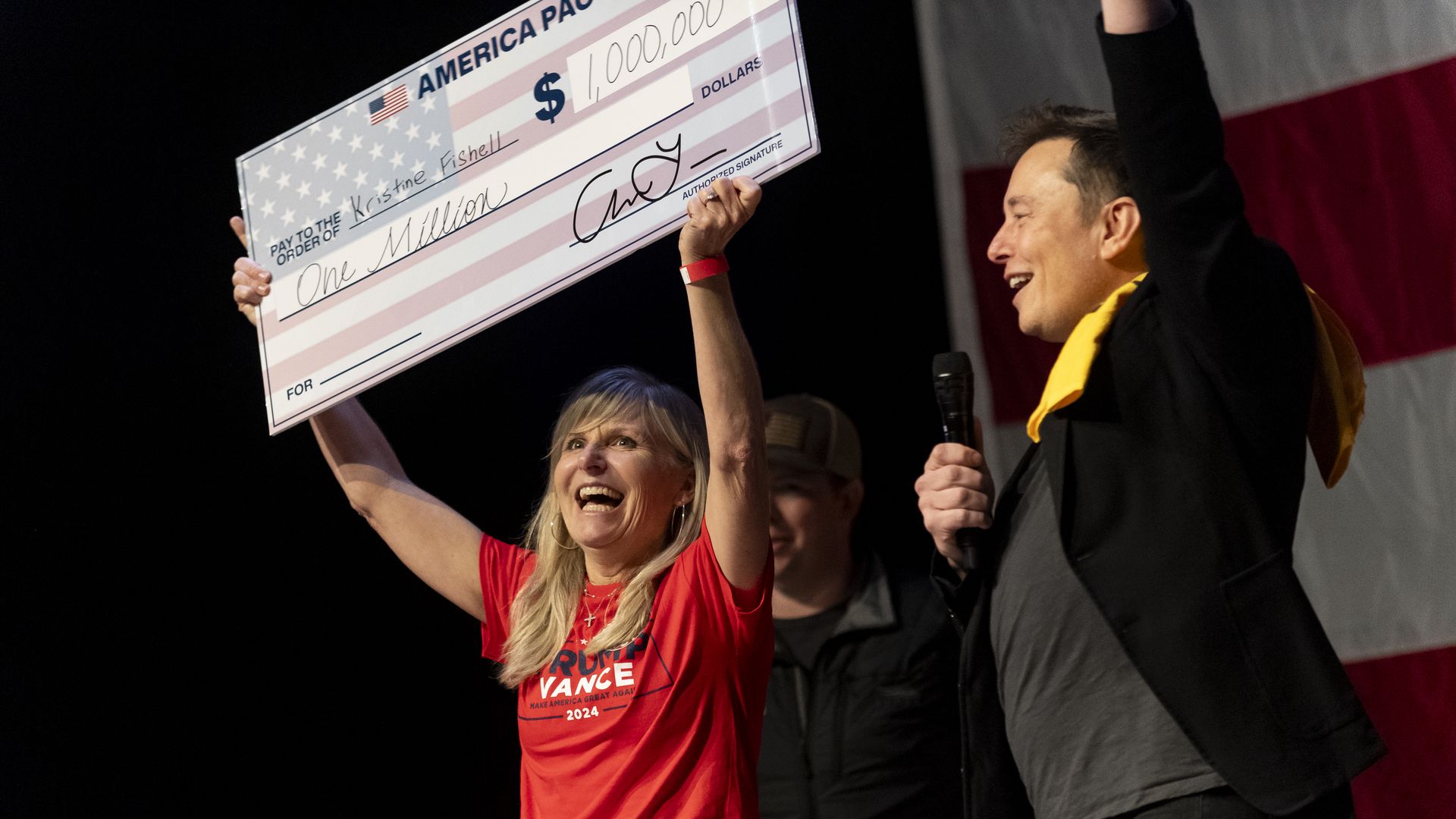
The world’s richest person, Elon Musk, has donated $276 million over the past three months to political action committees and conservative organizations supporting Republicans ahead of the upcoming US midterm elections.
The latest transfer brings the total midterm donations from Musk, the chief executive of Tesla and SpaceX, to $366 million.
First reported by The New York Times, the figures were confirmed to The Hill by a spokesperson for America PAC, which Musk founded. These latest expenditures establish Musk as the largest known donor of the 2026 midterms.
The bulk of Musk’s financial backing between July and September was directed towards congressional races.
The US billionaire transferred $158 million to the Senate Leadership Fund, a super PAC supporting Republican Senate candidates, and $20 million to the Congressional Leadership Fund, which finances House Republicans.
Millions divided among various committees
Musk, who provided more than $76 million during the period to America PAC, an entity he founded during the 2024 election cycle, also funded state-level contests.
The businessman transferred $10 million to the Lone Star Liberty PAC, which supports Texas Republican Senate candidate Ken Paxton, while donating $10 million to the Republican Governors Association and $2 million to the Republican Attorneys General Association.
In statements given to The New York Times and confirmed by The Hill, America PAC spokesperson Andrew Romeo argued that if Democrats take control in Washington and win critical state races, the country faces the risk of becoming one with indefensible borders.
Romeo said the investments enable the Republican apparatus to deliver its messages to voters.
Field spending continues despite talk of retreat
Musk, who kept his distance from politics for many years, entered the arena by spending hundreds of millions of dollars for Donald Trump during the 2024 election.
Accompanying Trump on campaign trails, Musk subsequently took charge of the Department of Government Efficiency (DOGE), which sparked controversy through federal employment and budget cuts.
Musk stepped down from his White House role in late May 2025 and remained politically quiet for months following a public rift with Trump.
After announcing last May that he would sharply scale back his political spending, Musk told The Economist in a July interview that he had become overly involved in politics and had gone too far.
Despite those remarks, Musk pressed ahead with political activity in July by authorizing America PAC to spend between $100 million and $120 million on a fresh field operation aimed at driving conservative voter turnout in the 2026 midterms.
Having repaired ties with Trump following their public spat, Musk joined the US president on an official visit to China in May and was also present during Chinese President Xi Jinping’s visit to Washington last month.

Ex-BND head Hanning tied to former Mossad chief amid spy inquiry

Iran war costs US economy $265 billion as household burden mounts

Trump dismisses US envoy to Greece Kimberly Guilfoyle

Most EU citizens reject fast-track Ukraine accession, poll finds

Ex-US official says air defences fail against Yemeni airport strike
-

 Europe2 weeks ago
German interior ministers drop unanimity rule to counter AfD veto
-

 Europe2 weeks ago
Key European allies excluded from US-led NATO meeting in Poland
-

 Diplomacy2 weeks ago
While the West breeds crises, Eurasia weaves peace and development, says Prof. Zhang Weiwei
-

 Middle East2 weeks ago
Netanyahu holds secret UAE talks with Saudi Arabia and Arab officials
-

 Diplomacy2 weeks ago
The European Union’s peace project has collapsed, MEP von der Schulenburg says
-

 America2 weeks ago
Musk appointed co-director of Pentagon future warfare initiative
-

 Opinion2 weeks ago
A new world in the East, old dogmas in the West
-

 Asia2 weeks ago
South Korea plans $120B spend on eight US nuclear power plants
