
America
Bill to annex Greenland and grant statehood introduced to US House

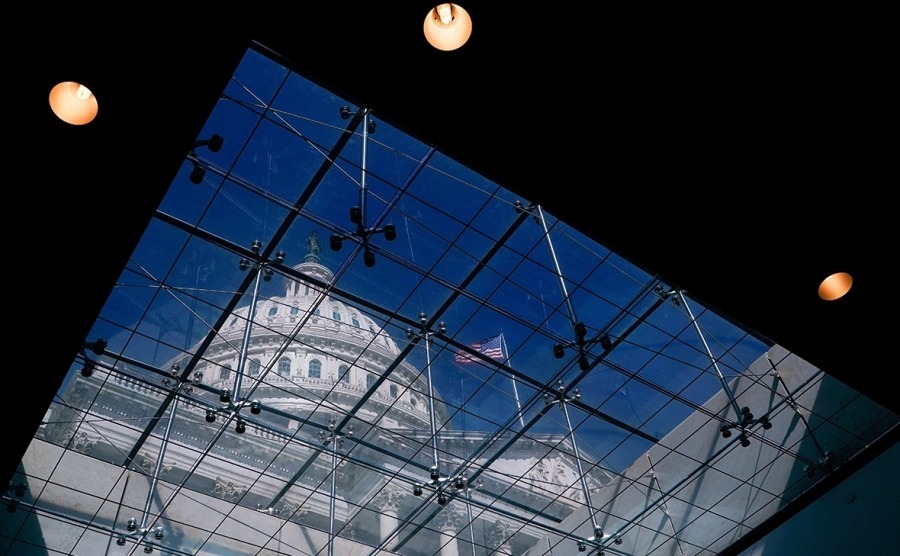
A bill proposing the annexation of Greenland and its designation as a US state has been introduced to the House of Representatives, citing the protection of “national security interests.” The legislation, drafted by Republican lawmakers, asserts that control of the island must not be lost to China or Russia.
Republican Congressman Randy Fine formally submitted the “Greenland Annexation and Statehood Act” to the US House of Representatives.
The bill, published on the House’s official website and described in the text as a “turning point,” aims to fortify America’s national security interests in the Arctic region.
The justification for the bill highlights the objective of countering threats from Beijing and Moscow, emphasizing that in an environment of global competition, the US cannot allow “adversarial powers” to increase their influence in this strategically vital region.
“We cannot leave it to regimes that despise our values”
In statements regarding the move, Fine described Greenland as a “vital national security asset that cannot be ignored.”
Highlighting the region’s strategic importance, the Congressman stated, “Whoever controls Greenland also controls the critical Arctic sea lanes and the security architecture protecting the US. America cannot leave this future in the hands of regimes that despise our values and seek to undermine our security.”
Trump: We must take it before Russia or China occupies it
On January 9, US President Donald Trump argued that Washington must act before Russia or China to establish control over Greenland.
“If we don’t take it, Russia or China will occupy Greenland, and we don’t want them as our neighbors,” Trump said.
Following this statement, White House Press Secretary Karoline Leavitt noted on January 12 that Trump is considering purchasing the island as one of the options on the table.
Financial Times: No Russian or Chinese threat detected in the region
Washington’s hardening rhetoric has met with backlash from diplomatic representatives of Nordic countries.
According to two senior officials familiar with NATO intelligence data who spoke to the Financial Times, no traces of Russian or Chinese ships or submarines have been detected near Greenland in recent years.
Sources told the newspaper they view Washington-sourced claims regarding increased military activity by Moscow and Beijing in the region with skepticism.
Europe prepares for NATO move
Meanwhile, the United Kingdom has begun discussing the possibility of deploying a NATO unit to Greenland alongside European allies.
As reported by The Telegraph, European nations calculate that increasing their military presence in the Arctic might dissuade Trump from the idea of annexing the island.
However, The Mail on Sunday suggested that Trump’s intentions may go beyond diplomatic pressure.
According to the newspaper’s sources, Trump ordered the US Joint Special Operations Command (JSOC) to prepare a potential invasion plan for Greenland.
The report noted that this initiative faced resistance from high-ranking military officials, who reportedly believe such an operation would be illegal and would fail to garner support from Congress.









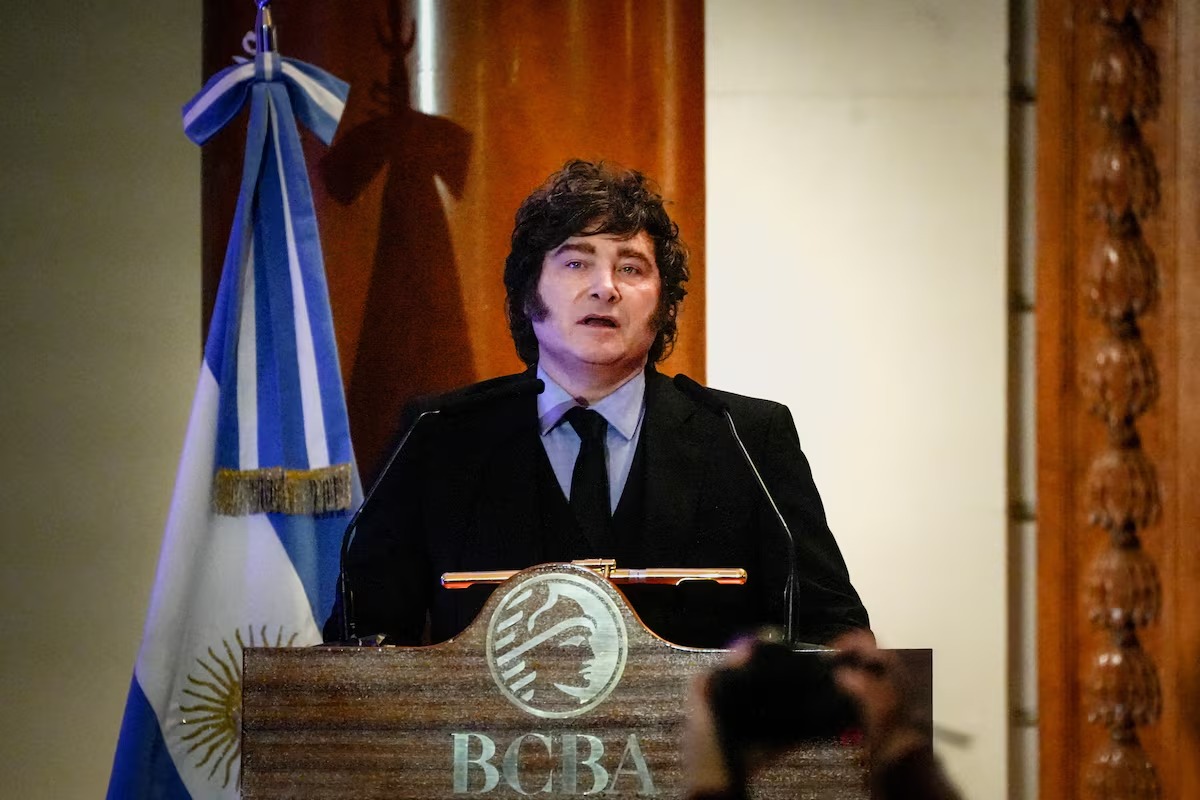
Argentine President Javier Milei has said he will tighten sanctions on companies involved in oil projects around the Falkland/Malvinas Islands.
Milei also said he would increase defence resources in the south of the country and submit a bill to Congress aimed at strengthening Argentina’s response to what he described as violations of sovereignty.
In a televised address, Milei said he would sign a decree to accelerate sanctions under Argentine law against companies participating in oil and gas extraction activities in the territory, which Argentina considers its own but which remains under British control.
Speaking in an address to the nation early on Friday morning, Milei said the United Kingdom was facing a migration and economic crisis, adding that this meant Argentina would prevail in its claim over the Falkland Islands:
“If we look at the structural crisis in the United Kingdom, it is clear that the country is facing multiple crises on many fronts, including migration, demographics, and a difficult economic situation. It is clear that Argentina’s future is extremely promising and that Argentina will prevail.”
Milei said Argentina would intensify efforts to sanction not only the companies involved, but also their shareholders, executives, and suppliers.
“We will continue to prevent companies that are directly or indirectly involved in projects (on the islands) without Argentina’s permission from operating on Argentine territory,” the Argentine leader said.
He also stated that the government would issue an emergency decree to expand defence resources, under which a naval base would be built in the nearby province of Tierra del Fuego and telecommunications capabilities would be strengthened.
Milei added that he would submit an urgent “national defence of sovereignty” bill to Congress in order to stiffen penalties for unauthorised activities around the islands, extend sanctions to suppliers, and broaden the legal framework to cover other activities affecting Argentina’s natural resources.
Milei noted that Argentina had determined that the Sea Lion offshore project, operated by Navitas Petroleum and Rockhopper Exploration, could begin oil exploration work in the coming months, presenting an imminent threat to Argentine interests.
The remarks mark a harder line from Milei, who had previously called for the Falkland Islands dispute to be resolved through diplomacy even while seeking warmer ties with Britain.
A British overseas territory located roughly 500 km east of the Argentine mainland, the Falkland Islands have long been claimed by Argentina.
Britain has controlled the islands since 1833, and the two countries fought a brief war over them in 1982.
London maintains that residents of the Falkland Islands voted on their political status and right to self-determination in a referendum held in March 2013. An overwhelming majority of 99.8% voted to remain an overseas territory of the United Kingdom.
In his speech, Milei stated that residents of the Falkland Islands do not possess the right to self-determination and called on the country to unite around its claim to the islands.
Arguing that the global wind is currently “blowing in favour of Argentina’s demands”, Milei said: “A short time ago, President [Donald] Trump announced that the US is reconsidering its historic stance on the Malvinas islands.”
The British conservative newspaper The Telegraph wrote that the move would appease the US president, who intervened in the dispute and implied he would not assist the United Kingdom in fighting off an invasion of the Falkland Islands.
Asked whether the US would “come to the aid” of Britain, Trump referred to his confrontation with Iran, saying: “Your country was not there to help me.”
Trump then questioned whether Britain would have the capacity to defend the islands, telling GB News:
“Look, I was there when the first war broke out. That was a very long time ago, and I watched it very closely. You handled yourselves very well. You took the islands back quite decisively, but it is very far away.”
Speculation is mounting that Buenos Aires and Washington are discussing an agreement granting the US access to oil extracted off the Malvinas.
On the eve of Milei’s speech, Argentine Minister of Energy and Mining Daniel Gonzalez Casartelli was in Washington to discuss energy investments with American oil companies and members of the Trump administration.
Meanwhile, Benjamin Netanyahu’s son Yair clashed with the British right by demanding that the Falkland Islands be placed under Argentine sovereignty.
According to Bloomberg, Argentina is currently in the midst of an oil boom. Drilling activity is accelerating in the Vaca Muerta shale formation in Patagonia, which already produces more than 1 million barrels of oil and gas per day.
The country also has some offshore production operations, and exploration activities have been carried out in South Atlantic waters in recent years.
Meanwhile, Milei met Sarah Rogers, a senior US State Department official, at a conservative political forum held in Chile.
Reiterating Argentina’s claim to the islands, Milei said: “We must take back these islands, which are negligible in national terms. There is no other way forward. This is the best way to pay tribute to those who sacrificed their lives for this cause.”
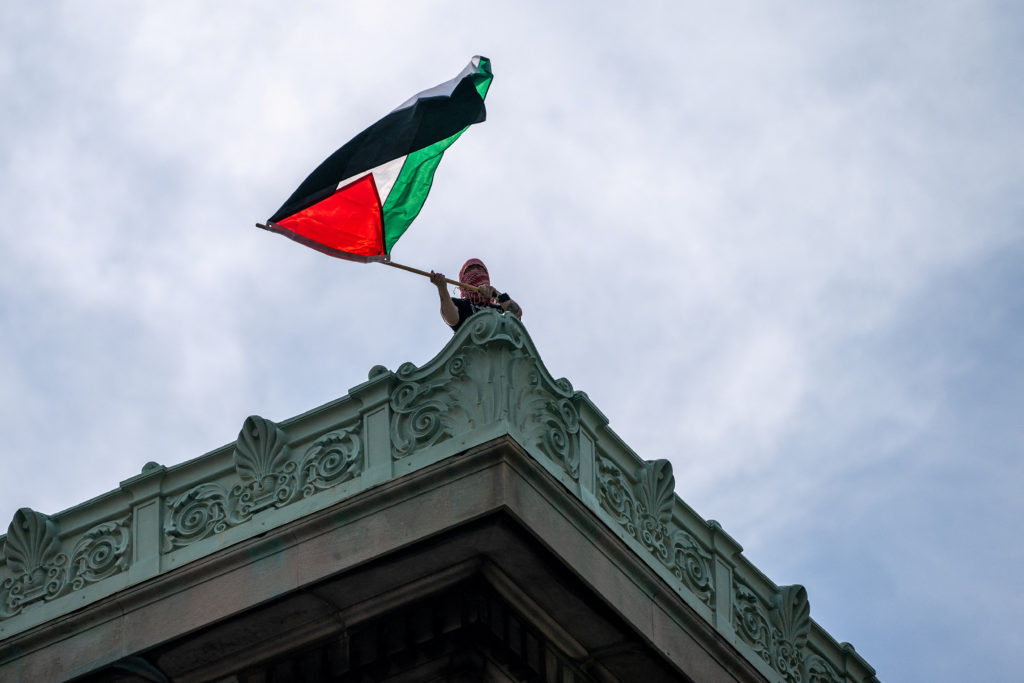
The US House of Representatives has passed a controversial bill to strip federal financial aid from colleges and universities that participate in boycotts against Israel.
The Republican-led measure targets calls for accountability directed at the Tel Aviv government over its military campaign in the Gaza Strip, as well as expressions of solidarity with Palestine on university campuses.
Entitled the “Protecting Economic and Academic Freedom Act of 2026”, the legislation was approved on Thursday in a 237–169 vote.
Only two Republican lawmakers voted against the measure, while 33 Democrats broke party lines to vote in favour. The bill will now proceed to the Senate.
Designated as H.R. 4795, the proposal bars colleges and universities that benefit from federal student aid programmes from engaging in commercial boycotts against Israel.
Institutions receiving Title VI funding for international studies and foreign language programmes are also required to certify that they do not prevent students or faculty from participating in academic programmes in the occupied territories, nor restrict Israeli students and academics from accessing their campuses.
The bill was co-sponsored by Representative Virginia Foxx, a North Carolina Republican, and Representative Josh Gottheimer, a New Jersey Democrat.
Representative Tim Walberg, chairman of the House Education Committee, argued that taxpayer money should under no circumstances flow to institutions that “discriminate against Israel”.
Gottheimer, a staunch supporter of the Israeli government, stated that the BDS (Boycott, Divestment and Sanctions) movement is a campaign “targeting a single country and a single religion”.
Opponents of the bill emphasised that the measure seeks to solve a non-existent problem and constitutes an attack on constitutionally protected free speech.
The ranking Democrat on the committee, Representative Bobby Scott, pointed out that not a single US college or university has actually joined the global BDS movement. Scott recalled that while student and faculty bodies have announced support for BDS, university administrations have refused to implement those demands.
During the floor debate, Scott said: “We must fight antisemitism wherever it appears, but we should not do so by penalising protected free speech or conflating a student’s view with university policy.”
Representative Jerrold Nadler, a New York Democrat who opposes the BDS movement, also voted against the bill. Nadler noted that the only way to protect opinions one agrees with is to defend the right to express opinions one does not agree with.
The liberal Jewish organisation J Street was also among the actors opposing the bill. The group warned that the measure conflates boycotts of the Israeli government with those directed at companies linked to illegal settlements in the occupied West Bank.
J Street stated that the bill places Israel in an exceptional position, does nothing to protect Jewish students, and risks inflaming antisemitism rather than countering it. By contrast, the American Israel Public Affairs Committee (AIPAC) openly backed the legislation.
The vote follows nearly three years of sustained protests by students and faculty against Israel’s war in Gaza.
According to data from the Ministry of Health in Gaza, attacks carried out following the 7 October 2023 operation and the subsequent military campaign launched by Israel have killed more than 73,000 Palestinians, while flattening the vast majority of the region’s universities, schools, and civilian infrastructure.
Encampments erected on university campuses demanded an end to the carnage and called on universities to divest financial holdings from companies profiting from the occupation and the war.
The Washington administration and its allies frequently characterised these protests as antisemitic. The Trump administration, meanwhile, targeted universities with various investigations and threats to freeze federal funds.
Aiming to protect their congressional majority in the November midterm elections and during the final two years of Trump’s term, House Republicans are keeping the issue on the agenda to deepen divisions among Democrats, who have grown increasingly critical of Israel as mass casualties in Gaza mount.
In July, amid accusations that the campaign in Gaza had reached genocidal proportions, more than 100 House Democrats supported an initiative to cut certain military aid to Israel, a US ally.
Critics argue that the latest bill is an extension of anti-BDS legislation previously enacted across more than 30 US states, which compels public contractors and public institutions to pledge not to boycott Israel.
Free speech advocates have long maintained that these state laws conflict with the First Amendment of the Constitution.
The measure passed by the House of Representatives aims to expand this pressure to the entire federal student financial aid system.
Although no US university has formally adopted a BDS decision, the bill makes even limited commercial or academic distancing from the Israeli government—including entities operating in the occupied Palestinian territories—grounds for terminating federal funding.
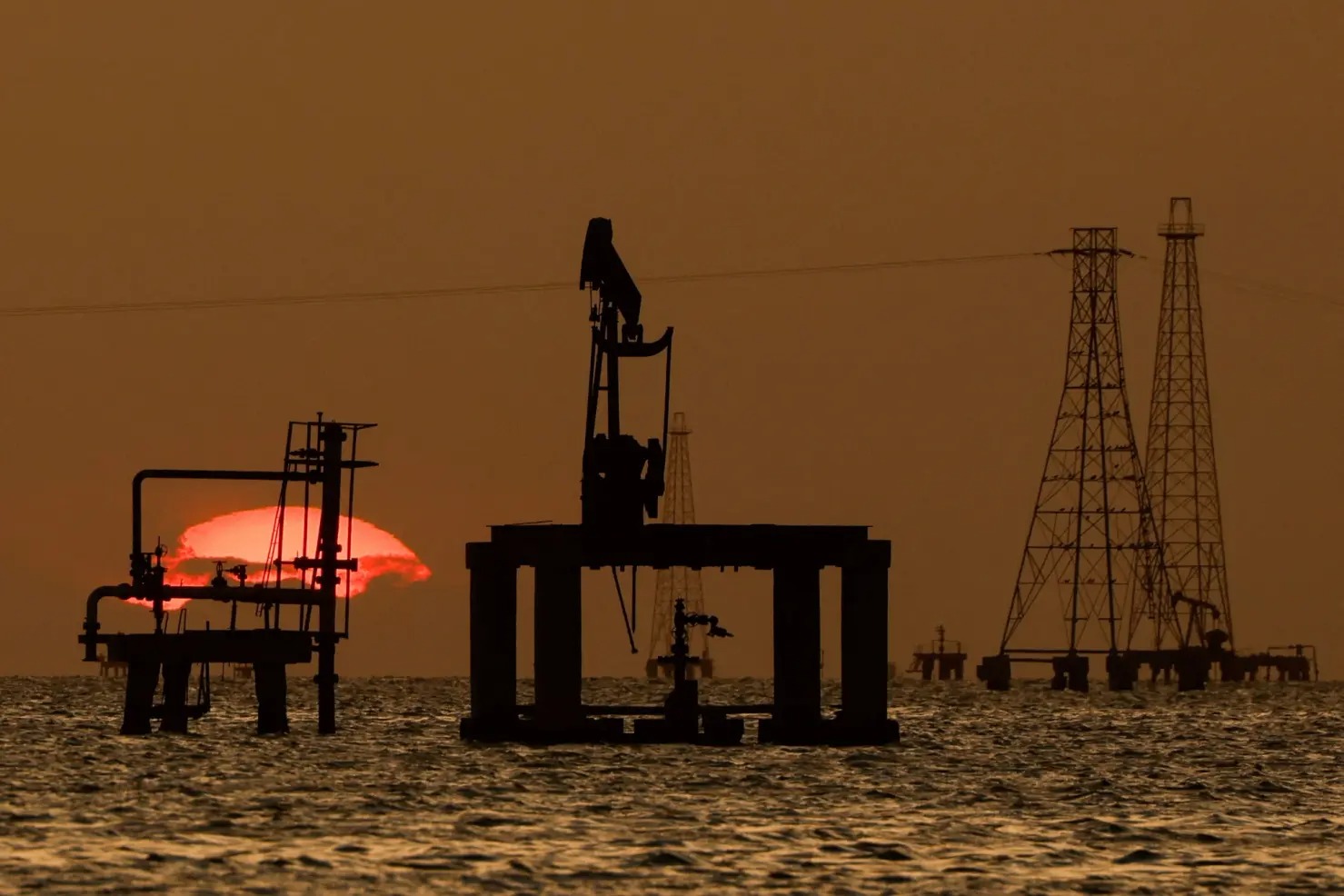
The Trump administration’s oil agreement with Venezuela represents the riskiest venture to date for a Pentagon unit originally established for an entirely different purpose.
The White House announced this week that the Office of Strategic Capital (OSC), an entity operating under the Department of Defence, will acquire a 35% stake “at no cost to American taxpayers” in North American Blue Energy Partners, a firm headed by politically connected Venezuelan investor Alejandro Betancourt.
The objective is to make Venezuelan oilfields more attractive to US investors, thereby increasing revenue for Caracas whilst simultaneously squeezing out Chinese and Russian firms.
According to the Council on Foreign Relations (CFR), the OSC has already facilitated equity acquisitions in at least five other companies during President Donald Trump’s second term. The OSC was created to provide loans for the development of critical technologies.
However, because the Venezuelan agreement involves petroleum rather than conventional critical technology, it stretches the agency’s statutory boundaries even further and has already prompted Democrats to pledge congressional investigations.
Should Democrats regain power in Washington this November, any oversight drive could place the office’s efforts to secure state equity positions in private corporations under intense scrutiny.
In an interview with Semafor, a former OSC official stated:
“Acquiring equity was never intended when the OSC was founded; that circumstance alone does not necessarily constitute a problem. Nevertheless, it raises some legitimate legal and ethical questions.”
Jon Hillman, who directs the council’s tracking system, noted in an interview that the Venezuelan oil deal “appears to be uncharted territory”, adding that the office’s “mission is to catalyze private investment into specific, critical supply chain technologies necessary for national security.”
The statute that established the OSC defines its authority to provide “capital support” as extending and guaranteeing loans and offering technical assistance.
A Pentagon spokesperson initially told Reuters that the office was “not acquiring equity” in private enterprises due to this constrained remit.
On Tuesday, however, a US official offered a contrasting account to journalists, stating that the authority to acquire a stake in Betancourt’s company via “penny warrants” was “granted to the OSC when it was enacted into law under the Biden administration.”
A “penny warrant” is a financial contract that confers upon its holder the right to purchase corporate shares at a negligible, nominal price.
The US official added:
“This is an entirely standard arrangement in terms of the OSC’s capacity to maintain the financial position it holds under this agreement, and all financial positions granted to the OSC comply fully with the law.”
Peter Harrell, a visiting scholar at Georgetown University Law Center, said in an interview that it was “impossible to render a definitive legal opinion” because officials had “not advanced a precise legal theory.”
Harrell added that the Trump administration may be banking on no party possessing either the legal standing or the inclination to bring a lawsuit over the transaction.
That calculation encompasses oil corporations hoping to profit from the newly reopened Venezuelan petroleum sector.
Cari Stinebower, an attorney at the law firm Steptoe who advises petroleum firms seeking to conduct business in Venezuela, said: “I suspect everyone may be quietly perplexed. Yet I do not believe anyone will speak out, because virtually everyone wants to participate in the investment opportunities in Venezuela.”
Jack Reed, the senior Democrat on the Senate Armed Services Committee, is among those already demanding further particulars regarding the agency’s statutory authority to conclude the agreement.
Certain Republicans are likewise keen to obtain additional information concerning the Venezuelan deal.
The Biden administration formed the OSC in 2022 to provide loans to businesses developing technologies deemed “vital” to national security.
Recent legislative initiatives aimed at formally expanding its authority to encompass equity investments have so far foundered.
Yet under the direction of Deputy Secretary of Defence Steve Feinberg, the administration pressed forward regardless, enlisting bankers to help deploy a lending authority that surged from $1 billion to $200 billion courtesy of recent party-line Republican tax legislation.
The current director of the OSC, David Lorch, previously served as a managing director at Cerberus Capital Management, the private equity firm founded by Feinberg.

The caption and the guest list: What the West’s SCO coverage cannot explain about Türkiye

US expands military footprint in Somalia with new Bosaso base

Milei hardens Falklands stance with oil sanctions and defence push

Pope Francis accused Opus Dei of mafia tactics over Spanish shrine

US House passes bill to strip federal aid over Israel boycotts
-
 Diplomacy2 weeks ago
US strikes fail to break Iran as regional anchors rise, Dr. Moeini says
-
 Diplomacy2 weeks ago
Blackwater founder Erik Prince creates air defence venture with Kyiv
-

 Europe2 weeks ago
UK and Russia edge closer to conflict over long-range drone supply
-

 Europe2 weeks ago
Europe builds drone defence walls along eastern flank against UAVs
-

 Diplomacy2 weeks ago
South Korea begins first commercial voyage via Northern Sea Route
-

 Opinion2 weeks ago
What did the Israeli attack in Syria reveal?
-

 Asia2 weeks ago
China and Arab states launch 5-year anti-desertification plan
-

 America1 week ago
Pentagon to fully purge Anthropic AI from systems by end of September
