
Diplomacy
India eyes shift from Russian to Venezuelan oil as US takes control of Caracas supplies


Venezuelan oil is poised to replace Russian supplies in the Indian market as the South Asian nation’s refiners pivot toward a shifting energy landscape.
Indian refiners, which historically sourced significant quantities of raw material from Venezuela, are currently evaluating the new geopolitical reality following the US removal of Nicolas Maduro and Washington’s subsequent announcement that it has taken control of the Latin American country’s oil exports.
Reliance Industries enters talks with Washington
Reliance Industries, India’s largest private corporation, is in discussions with the Washington administration to secure permission to purchase Venezuelan oil, according to two sources familiar with the matter who spoke to Reuters.
The company previously imported between 300,000 and 400,000 barrels per day (bpd) from Venezuela during the middle of the last decade, but halted these operations when US sanctions were implemented.
In 2025, under a limited license granted by the US Treasury Department, Reliance managed to import an average of 63,000 bpd between January and April.
The company’s processing complex at Jamnagar—the largest of its kind in the world—possesses an infrastructure perfectly suited to refining heavy, high-sulfur Venezuelan crude. According to data from Jefferies, this grade of oil typically trades at a discount of $5 to $8 per barrel compared to Brent crude.
“Refiners love dirty oil”
“This is a perfect opportunity for Reliance; their refinery units love these dirtier grades of oil—they always have,” a source familiar with the position of Indian oil companies told the Financial Times.
Michael Kugelman, Director of the South Asia Institute at the Wilson Center (formerly with the Atlantic Council), noted that India stands to gain significantly from this transition.
“Private Indian energy giants could generate substantial revenue by processing large volumes of Venezuelan heavy crude. India can also achieve its goal of diversifying its imports, particularly at a time when it is reducing Russian oil intake,” Kugelman evaluated.
Reliance, formerly the largest Indian buyer of Russian raw materials, announced it would cease purchases from Russia after Washington imposed sanctions on Lukoil and Rosneft in late October.
In a statement last week, the company indicated it would consider resuming Venezuelan oil purchases if Washington permits sales to buyers outside the US.
US to release 50 million barrels of oil to the market
US President Donald Trump has announced that the US will take up to 50 million barrels of oil from Venezuela and sell it at market prices.
Trump stated that he would personally manage the resulting revenue to ensure it benefits the people of both nations. Meanwhile, Energy Secretary Chris Wright announced that the US would continue to sell oil produced in Venezuela for an “indefinite period.”
One source told Reuters that Reliance is prepared to purchase Venezuelan oil from US companies or other authorized entities, provided it is offered at attractive prices.
Caution from New Delhi
Following the operation by US forces at the presidential palace in Caracas, which resulted in the removal of Maduro, the government in New Delhi issued a brief statement expressing “deep concern” regarding the recent events in Venezuela.
In late August, Trump had increased import tariffs on Indian goods from 25% to 50% in a bid to pressure the country to halt its Russian oil purchases.
Premasish Das, Executive Director of Oil Markets for Eurasia, Africa, and the Middle East at S&P Global, told the Financial Times: “Indian refining companies are very familiar with Venezuelan crude and will be ready to resume purchases as soon as the right conditions are established.”







Artificial intelligence company Anthropic has disclosed attempted “abuses” of its Claude AI model ranging from conventional weapons to biological research by state-linked entities, foreign intelligence services, and cybercrime networks, publishing the findings in a detailed threat intelligence report.
A significant portion of the report comprised the development of guided missile software by the Houthis in northern Yemen and the conversion of the model into a military reconnaissance tool by Iran-linked actors seeking to target US naval assets in the Middle East.
Covering the period between December 2025 and August 2026, the report shared details of activities detected across seven primary areas: cyberattacks, influence operations, mass surveillance, conventional weapons development, biological risks, and unauthorised model distillation.
The company announced that it had terminated all accounts violating its rules and shared the resulting data with relevant international counterparts.
According to findings by Anthropic’s Threat Intelligence unit, a weapons cell based in northern Yemen, where the Houthis operate, substituted human software engineers with the Claude Code system across three distinct missile development programmes.
These efforts comprised a tactical rocket equipped with a terminal guidance system powered by a commercial smartphone processor, a multi-stage ballistic missile with a target range exceeding 2,000 kilometres, and missile designs carrying a hypersonic glide vehicle.
The cell utilised the artificial intelligence to adapt open-source autopilot software to the smartphone processor, optimize flight control algorithms, and compile firmware.
Structuring their Claude accounts like a virtual engineering team, the Houthis assigned one account to write code, another to conduct research, and a third to review and audit the written code.
The report noted that the group conducted an actual test launch with a guided rocket in the Yemeni theatre.
Immediately following the failure of the live-fire test, the actors were documented returning to the Claude platform within hours to upload telemetry data and diagnose the cause of the malfunction.
The cell was observed successfully compiling offline simulation tools capable of operating independently even if access to Claude were severed.
We're publishing our most detailed threat intelligence report to date.
It covers how people tried to misuse Claude—for cyberattacks, influence operations, surveillance, biology, and building weapons—and how we found and stopped them.
We disrupted every operation in the report,…
— Anthropic (@AnthropicAI) September 10, 2026
Iran tracked US warships and personnel
Another military case detailed in the report involved attempts by Iran-linked cyber actors to target US naval forces in the Middle East.
These actors were found to have scraped open-source military data to draft operational targeting manuals directed against American warships and personnel.
Iran extracted name rosters of American military personnel from the captions of publicly accessible military photographs, monitored vessel and aircraft transponder data, authored code to scan commercial satellite imagery, and mapped vulnerabilities in maritime satellite communication terminals.
Other networks linked to the Tehran government were determined to have developed domestic and regional surveillance systems. A Qom-based unit produced a malicious web browser extension disguised as a prayer-time application to harvest credentials from social network users, funneling the data into a central case management system designated “Arman”.
Additionally, official Iranian institutions reportedly cloned authors’ voices using AI and operated multilingual disinformation networks to lay the groundwork for the supreme leadership succession.
Russia also used it for an autonomous kamikaze drone swarm
The report stated that an independent Russia-based software team developed fully autonomous kamikaze uncrewed aerial vehicle swarm software dubbed “DronDoc” or “Serafim”.
Affiliated with a university connected to the Russian Academy of Sciences, the team was said to have trained the artificial intelligence to distinguish between friendly and hostile elements using footage retrieved from the Ukrainian battlefield.
The developed system was designed with the capability to select targets, execute live human classification, and issue detonation commands without requiring human intervention, with simulations run directly against coordinates in the Donetsk region.
Meanwhile, the Russian-origin “Midnight Blizzard” group targeted the Ukrainian drone supply chain and staged attacks aimed at foreign officials and drone engineers by compromising hotel Wi-Fi networks.
A procurement manager stationed at a design bureau in Moscow was also discovered drafting plans via Claude to circumvent European sanctions. The individual was recorded assembling fraudulent tender and logistics correspondence to transport German-made magnetometers, space-grade photovoltaic sheets, and military aviation oxygen systems into Russia through intermediary firms based in China and Hong Kong.
Biological threats and pathogen engineering
The report disclosed five concrete cases regarding the deployment of artificial intelligence in hazardous biological research. Virologists attached to a military research institute were documented using AI for gain-of-function research aimed at enhancing the transmissibility and immune-evasion capabilities of the mosquito-borne Chikungunya virus.
Similarly, experimental designs were prepared to adapt the H5 avian influenza variant, which carries a 50% mortality rate in humans, to mammals and confer airborne transmission capabilities, while immune-evasion mechanisms of pathogens from the smallpox virus family were modelled.
The identities of paralytic neurotoxins subject to export control lists and haemorrhagic fever virus proteins featured on the World Health Organization’s priority epidemic list were deliberately masked and submitted to the AI for analysis.
In addition, a consultant working on behalf of the Malian State Intelligence Service designed a mass surveillance platform designated “Lakana 360” with the assistance of Claude.
The system was designed to monitor approximately 25 million SIM cards registered across three mobile operators in the country without requiring court orders, intercept audio recordings, and cross-reference records with biometric databases.
Separately, leading Chinese artificial intelligence firms including Alibaba, Moonshot, DeepSeek, Zhipu, and Xiaomi were alleged to have initiated hundreds of millions of unauthorised sessions to extract the logical reasoning chains of Claude models. Moonshot and DeepSeek platforms reportedly routed their own users’ queries secretly through Claude, in the process exposing Chinese police surveillance feeds from hundreds of cameras covering military facilities in Chengdu, internal credentials of Chinese state-owned enterprises, and live database access codes connected to the Russian Defence Ministry to third parties.
Türkiye detail in the report
The report also detailed cases involving the abuse of the Claude AI model, incorporating findings concerning an Istanbul-based technology firm.
In case GTG-84005 of the intelligence report, an operation aimed at commercial election manipulation targeting voters in Malaysia was intercepted.
According to the findings, the operation operated under the guise of a startup providing cyber intelligence and counter-disinformation tools. Anthropic determined that Istanbul-based BBS Bilisim Teknolojileri was behind the infrastructure.
According to documents, the company marketed the architecture as a paid influence operation service styled as a “military-grade, AI-powered, real-time political operations ecosystem”.
Managing roughly 1,000 synthetic X accounts, the system processed demographic and electoral data across 222 parliamentary constituencies in Malaysia, calibrating targeting around sensitive social fault lines including ethnicity, religion, and the monarchy.
The network also circulated content from Russian and Chinese state media masquerading as independent Malaysian news via an artificial media outlet designated “Malaysia Pulse”, while manufacturing fraudulent intelligence dossiers targeting an opposition politician and civil society organisations.
Anthropic reported that the network received a request to generate 1 million artificial impressions in support of the Malaysian Prime Minister and sought to secure a contract with the country’s national communications regulatory authority.
While no evidence emerged that the undertaking succeeded, the associated user accounts were closed and operational digital indicators were shared.
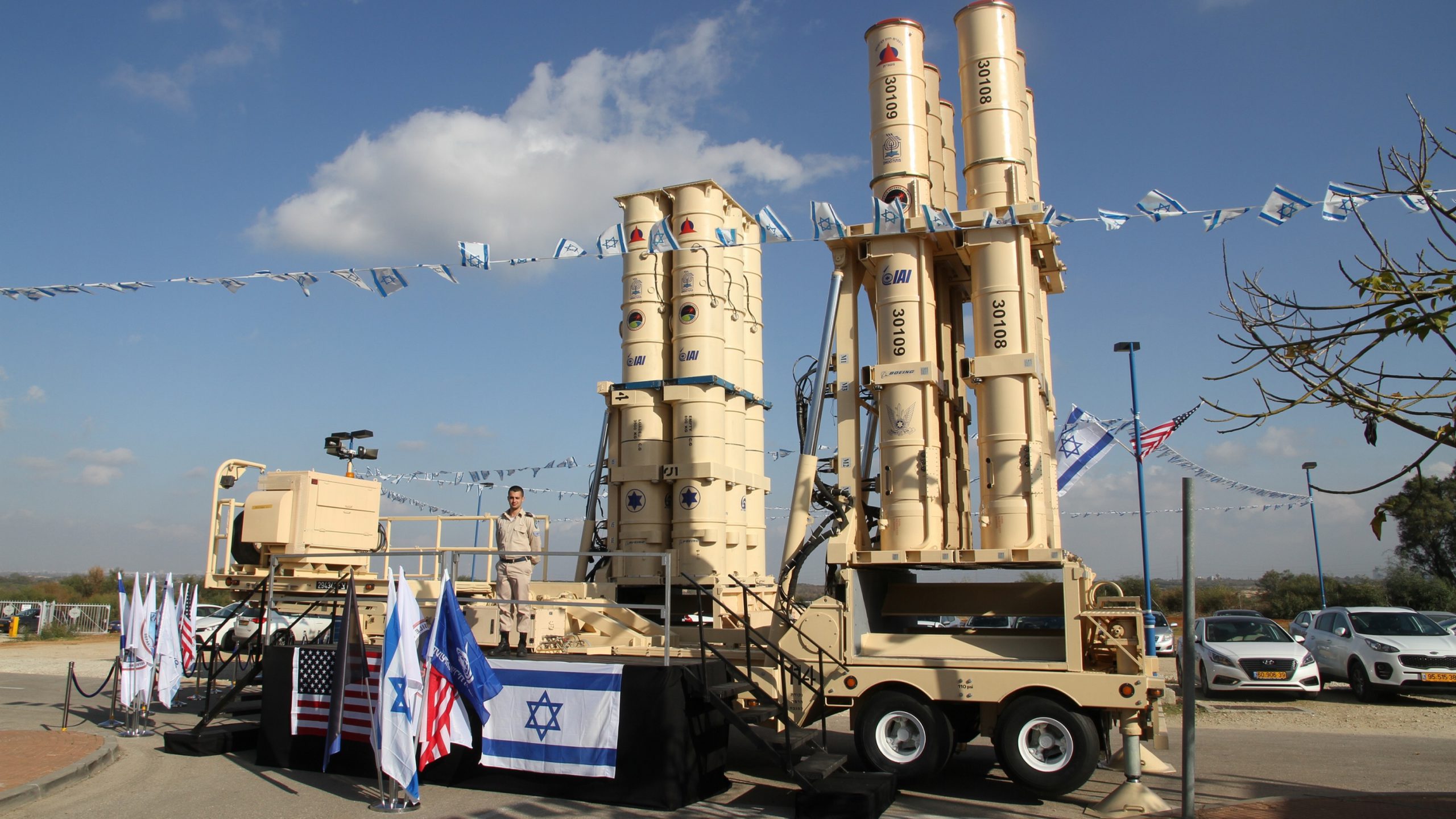
The EU is turning to Israel to bolster its new initiatives in high-tech air defence and space capabilities.
Shimrit Maman, head of the Israel Space Agency, travelled to Brussels this week and met on Tuesday with European Commissioner for Startups, Research and Innovation Ekaterina Zaharieva to discuss key sectors, including artificial intelligence and robotics.
The visit took place ahead of European Commission President Ursula von der Leyen’s first major speech on space, scheduled for Thursday at a summit in Paris.
In the speech, Von der Leyen is expected to warn against mounting hostilities and emphasise the necessity of strengthening Europe’s presence in space.
“It’s very hard to do everything by yourself,” Maman told Politico, adding that the militarization of space is “already happening, it’s just we are not aware of the extent,” and noting that allies are showing growing interest in “dual-use” technologies intended for both civilian and defence purposes:
“One thing we’re working on is early-warning systems. For example, during the last wave [of missile attacks] with Iran, we saw this very clearly. How we were getting the alerts to all the civilians in Israel, and that made the casualties so low. This is part of the system. We’re working on a very holistic view, where you can alert in advance, the system alerts the citizens.”
Following several years of effective disengagement caused by political tensions surrounding the invasion of Gaza, the EU has recently begun forging closer military and technological ties with Israel through a series of agreements.
Competition from Washington and strategic rivalry with Moscow and Beijing have nevertheless underlined the requirement for allies possessing sophisticated industrial capacity.
In 2024, European Commission President Ursula von der Leyen backed calls by Polish Prime Minister Donald Tusk and Greek Prime Minister Kyriakos Mitsotakis to create an EU-funded air defence shield.
Three senior officials involved in the discussions said, however, that the plans stalled after officials in the Commission and several national capitals concluded that the project would require reliance on Israeli air defence technology, which was considered too sensitive one year into the Gaza conflict.
Yet Israel’s Rafael, which is expanding its European operations significantly, has now confirmed that it will open a factory to manufacture the Iron Dome air defence system at a former Volkswagen plant in Germany.
One week ago, Greece signed a 3 billion euro agreement with the Israel Ministry of Defense.
The deal provides for the establishment of a new multi-layered air defence network designed to shoot down drones, hostile jets, and rockets.
“We see everything integrating into this multi-layer defence approach,” Maman said, highlighting satellite imagery and artificial intelligence modelling as primary focal points for joint development efforts:
“I’m not only seeing defence as ballistic missiles from Iran… think about a fire, a flash flood or even a long drought… we have a proven track record, and we’re getting really good results.”
The UK has reportedly engaged in behind-the-scenes talks to avoid a backlash from the US over anti-Israel sanctions scheduled for announcement today.
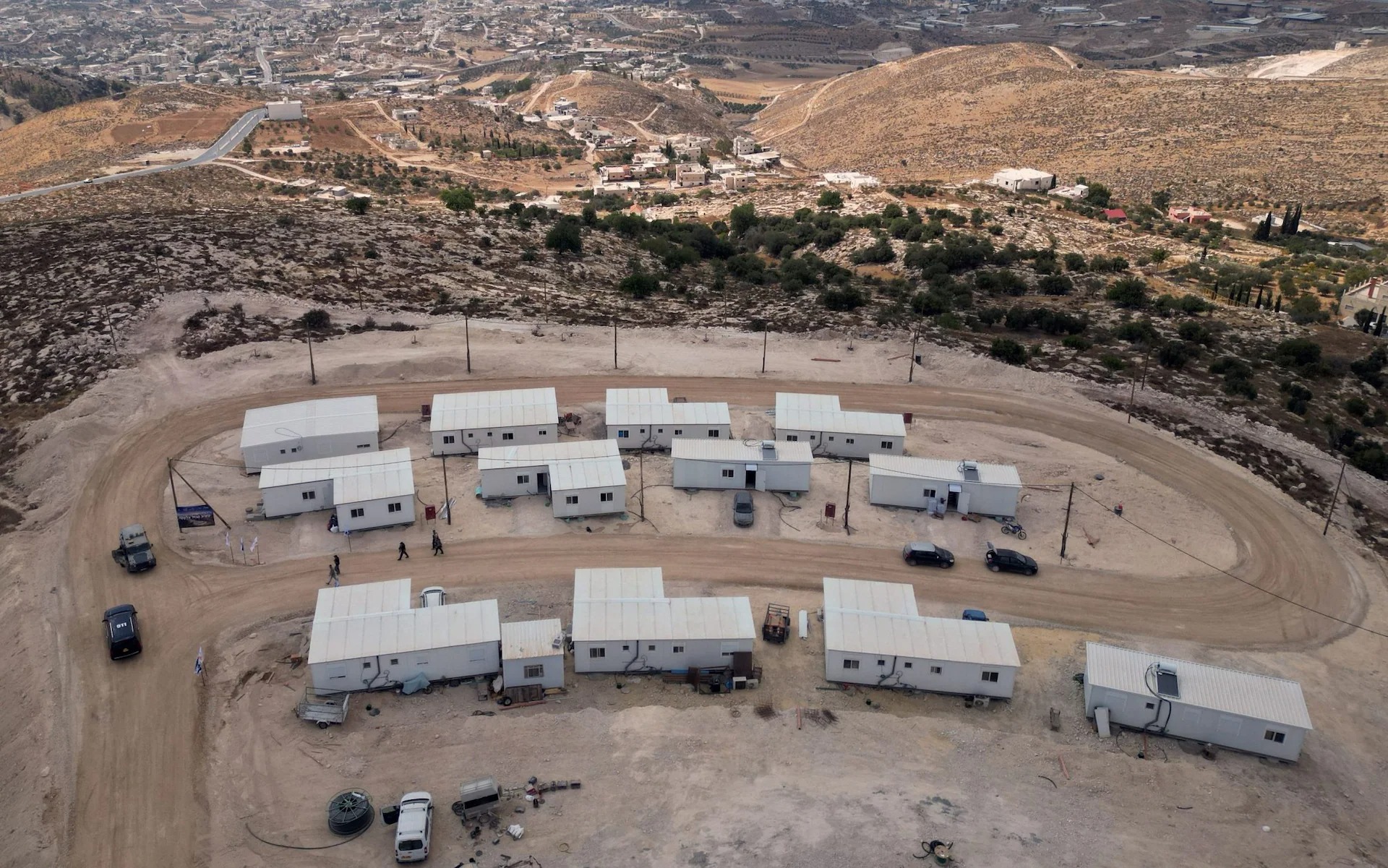
According to a report by Bloomberg, Andy Burnham’s government is expected to ban trade with Israeli settlements in the West Bank today.
Burnham is seeking to pursue a firmer stance on an issue of high importance to the governing Labour Party, though one that risks angering US President Donald Trump.
Foreign Secretary Ed Miliband will unveil a new sanctions regime targeting Israel but limited to Jewish settlements in the West Bank, according to sources familiar with the matter.
Burnham and Trump spoke by telephone on Monday, the Prime Minister’s Office said. A statement noted that the two leaders discussed a two-state solution for Israel and the Palestinian territories.
The discussion suggests that Burnham used the call to notify Trump that sanctions against Israel were imminent.
The proposals under review included a new sanctions regime with measures to block the exchange of goods and services with Israeli settlements.
Miliband also evaluated expanding existing human rights sanctions to encompass the blocking of aid, which has drawn criticism for exacerbating the humanitarian crisis in Gaza.
The Foreign Secretary further considered explicitly endorsing the International Court of Justice’s non-binding 2024 opinion that declared Israel’s occupation of territory currently recognised by the UK as the State of Palestine to be unlawful.
Even so, UK officials fear the announcement could cause an early setback in Burnham’s relationship with Trump.
To defuse a backlash from the Trump administration, British diplomats privately informed the US that the sanctions are largely symbolic and will have no tangible impact on the UK’s broader trade or security ties with Israel, according to sources familiar with the discussions.
The proposals were drawn up after Israel decided to issue tenders for the construction of 1,200 settlement housing units in an area of the West Bank.
Disputes between Israeli settlers and Palestinians have intensified in recent months as Israeli Prime Minister Benjamin Netanyahu faces a difficult battle to retain his seat in a general election scheduled for 27 October.
Burnham joined the leaders of Canada and five European governments, including France, Germany, and Italy, in signing a statement that condemned the housing plan as “unacceptable” and urged Netanyahu to withdraw the tender.
In a separate statement, German Chancellor Friedrich Merz condemned a call by Israeli National Security Minister Itamar Ben Gvir for “nightly assassinations” in Gaza.
Burnham is eager to demonstrate early to the Labour Party that he is adopting a more critical approach toward Israel than his predecessor, Keir Starmer.
Although Starmer hardened his stance against Israel during his two years in office, including by formally recognising the State of Palestine, his initial refusal to demand that Netanyahu halt military operations in Gaza divided the party.
This division led to a decline in Labour’s poll ratings and boosted electoral gains for the Green Party across the country.
Burnham’s return to Parliament last month led to Starmer’s resignation. Burnham apologised for Labour’s handling of Israel’s military operation in Gaza under his predecessor, stating that the party “did not adopt the right stance”.
Last month, Burnham’s new Defence Secretary, Wes Streeting, who faced intense competition from a Muslim independent candidate in his northeast London constituency at the last general election, stated that Israel had fallen “short” of international standards.
US Ambassador to Israel Mike Huckabee told the BBC’s “Newsday” programme that there would “undoubtedly” be a US response.
Accusing the Labour Party of “discriminating against the Israeli government”, Huckabee said: “It is like throwing a rock and not knowing where it lands. The UK is a sovereign country and can do as it pleases, but so is the US.”
Republican Florida Congressman Randy Fine also warned that British firms would be barred from doing business with local governments in the state if sanctions were imposed.
In a post on X, Fine said: “Florida has made its stance clear. Any company—or country—that boycotts Israel will be boycotted by Florida.”
Labour MPs and Jewish groups have warned the government that any sanctions against the settlements could amount to a “de facto boycott” of Israeli goods and compromise the safety of British Jews.

AfD’s Siegmund links German rearmament to remigration plans

Chinese carmakers expand European share as Stellantis loses ground

Iran resumes ballistic missile assembly using stockpiled parts

Analysts warn new surge in Chinese exports threatens global markets

Anthropic uncovers Claude use by Iranian, Houthi, and Russian units
-

 Europe5 days ago
Germany’s CDU drafts tougher citizenship rules to counter AfD
-
 Russia2 weeks ago
What to know about Russia’s upcoming State Duma elections?
-

 Europe2 weeks ago
Marine Le Pen leads all 2027 French presidential scenarios, poll shows
-
 Diplomacy1 week ago
Geoffrey Roberts sees Ukraine war concluding within coming months
-

 Middle East2 weeks ago
Iran expands deterrence as Gulf strikes expose US munitions limits, analysts say
-

 Europe1 week ago
German industrial bosses push for return to 40-hour working week
-
 Russia2 weeks ago
Russia warns NATO over Arctic militarisation and conflict risks
-

 Asia2 weeks ago
BOJ faces critical rate decision as US presses for faster hikes
