
America
Former CIA officer John Kiriakou alleges joint CIA-Mossad campaign to destabilize Iran


Former CIA officer John Kiriakou appeared as a guest on the program “Judging Freedom,” hosted by Judge Andrew Napolitano, to offer a searing critique of the US intelligence community’s legal boundaries and its controversial operational history.
Kiriakou asserted that while CIA officers swear an oath to protect the Constitution upon entering service, many fail to uphold that commitment. Recalling his first day at the agency, Kiriakou remarked: “When I stood with about 300 others and raised my hand to swear to protect the Constitution, I had to conclude that I was the only one there who truly meant it.”
In 2002, Kiriakou was asked if he wished to be trained in “enhanced interrogation techniques.” He recounted identifying the initiative as a torture program and stating it was illegal. According to Kiriakou, officials responded by saying, “It’s not illegal; the President approved it and the Department of Justice authorized it.” He emphasized that he was the only member of a 14-person team to refuse the offer.
Addressing the assassination programs conducted during the Obama administration, Kiriakou described how then-CIA Director John Brennan met with White House and Department of Justice officials every Tuesday morning to finalize a list of individuals to be killed that week.
Kiriakou described the process in stark terms: “Once the names were agreed upon, teams would deploy across the globe to carry out the assassinations, only to reconvene for the following week’s list.”
He also touched upon the practice of “extraordinary rendition,” reminding viewers that sending suspects to countries where they are known to face torture is illegal. Citing the example of a Tunisian suspect captured in Afghanistan and rendered to Egypt, Kiriakou argued that such practices lack any legitimate legal foundation.
Regarding the recent unrest and street demonstrations in Iran, Kiriakou contended that these events are the result of a joint CIA and Mossad operation. Referencing public statements made by former Secretary of State Mike Pompeo, Kiriakou stated, “We know this is a Mossad-CIA operation thanks to Pompeo’s own comments.”
Kiriakou noted that while the CIA does not typically maintain personnel on the ground, Mossad has an extensive field presence. He alleged that both agencies work in close cooperation with the Mujahedin-e-Khalq (MEK). He reminded the audience that the MEK had previously attempted to assassinate a US ambassador and was once designated as a terrorist organization before being removed from the list in 2009 during Hillary Clinton’s tenure.
Kiriakou also highlighted the organization’s lobbying efforts in Washington, noting that “everyone from Rudy Giuliani to Howard Dean began lobbying for the MEK.”
Commenting on the burning of mosques and fire trucks during the Iranian demonstrations, Kiriakou argued these actions do not align with demands for democracy. “If you are demonstrating for democracy and freedom, why would you set fire to mosques and fire engines? Mossad and the CIA want chaos in Iran,” he evaluated.
The program also addressed remarks by US Treasury Secretary Scott Bessent regarding the devaluation of the Iranian Rial. Evaluating Bessent’s admission that economic chaos was being used to trigger street protests, Kiriakou stated such actions fall under “covert action,” which requires presidential authorization.
“To implement a plan of this nature, one needs a ‘finding’—a document of authorization signed by the CIA General Counsel, the Department of Justice’s Office of Legal Counsel, the National Security Council, and ultimately the President,” Kiriakou explained.
Turning to Israeli operational methods, Kiriakou claimed that Mossad utilizes Afghan refugees in Iran for intelligence gathering. “The Israelis take Afghan refugees who are in desperate straits and have no access to state services, paying them $200 a month to carry out surveillance tasks,” he alleged.
In response to questions about whether Saudi Arabia possesses nuclear weapons, Kiriakou cited information from the legendary CIA operations officer Duane Clarridge.
Kiriakou stated that Saudi Arabia financed Pakistan’s nuclear program. “The Saudis provided the money the Pakistanis needed to develop a nuclear bomb as a counterweight to India. In return, I assume the Pakistanis have shared those bombs with the Saudis,” he said. While it remains unclear if Saudi Arabia possesses a missile system capable of carrying nuclear warheads, Kiriakou emphasized that their access to nuclear weapons is highly probable.
Evaluating the links between Contra guerrillas in Nicaragua and the influx of cocaine into the US during the 1980s, Kiriakou stated that the CIA’s role in this process is documented.
He noted that while the CIA armed Contra groups in the north, groups in the south were smuggling Colombian cocaine into the US, and the agency, at the very least, turned a blind eye to the traffic. Rejecting claims by his former colleague Jack Devine that the CIA was not involved in the drug trade, Kiriakou countered: “I believe Jack Devine is mistaken. The evidence shows the CIA facilitated the importation of cocaine.”
Kiriakou argued that Congressional oversight of the CIA has weakened significantly since the 1980s, signaling the end of the era defined by the Church and Pike Committees (1975–1982). He suggested that current intelligence committees act more as supporters of the agency than as overseers. “The CIA pushes the boundaries until someone pushes back. If no one resists, they gain new ground and they never give it back,” he remarked.
Finally, commenting on newly surfaced documents regarding the Jeffrey Epstein case, Kiriakou noted that the possibility of Epstein having ties to the CIA has strengthened. Kiriakou mentioned that Epstein’s lawyers had approached the CIA to confirm a relationship between Epstein and the agency, though no response was given.
“Epstein was seeking a role with the CIA, and it appears he had similar relationships with MI6 and the Israelis,” Kiriakou concluded.












Wealthy buyers in the US are tearing down multimillion-dollar homes shortly after purchasing them for hundreds of millions of dollars.
According to a report by The Wall Street Journal, the trend is driven by a shortage of land in prestigious locations, particularly along coastlines.
For ultra-wealthy buyers, the prime factor has become the land’s location rather than the structure standing on it. After the acquired properties are flattened, newer, more modern homes are built on the cleared lots.
Drawing attention to the shift in the luxury real estate market, the report noted:
“The home itself, formerly the primary driver of an expensive real estate purchase, is now almost beside the point. Buyers are competing first and foremost for well-located land, situated on the ocean or a mountaintop.”
The newspaper cited moves by US billionaire William Lauder as an example. Lauder purchased the oceanfront estate of radio host Rush Limbaugh, who died in March 2023, for $155 million and had it completely demolished in July.
Lauder had previously torn down two homes situated on roughly 1.2 hectares of land along the Palm Beach coast. Having initially planned to construct his own residence on the parcel, Lauder subsequently sold the cleared plot for approximately $200 million.
Jonathan Miller, a real estate appraiser, stated that such transactions are becoming increasingly common as land prices rise.
Amid this momentum, estate agents have also begun marketing luxury homes directly as teardown lots.
Listings use artificial intelligence-generated imagery to showcase how the land would look without the structures on it.
Marketers avoid using the word “demolition” directly, resorting instead to terms such as “adaptive reuse”.
Teardown listings rise across luxury housing market
The trend is not confined to the coast and is spreading to other regions across the US.
Data from property brokerage Redfin reveals that references to demolishing buildings are becoming more frequent in sales listings.
The share of such listings exceeds 15% in the Bunker Hill Village area of Houston, while standing at 6.67% in Pimmit Hills, Virginia.
Dina Goldenteyer, a real estate agent working in Miami, remarked that serial demolitions have become more frequent because buyers no longer appreciate homes older than a decade.
Former retail executives Jamie Dooley and Christine Scott spent $3.7 million in 2020 to demolish a seaside home near Destin, Florida.
Although the couple spent five years building a modern home on the cleared site, they listed the resulting new structure with a demolition condition, citing the fact that no one wanted to buy the property as it stood.
William Paddock, an employee at the environmental consultancy WAP Sustainability, pointed to the environmental damage caused by this construction cycle.
Paddock emphasized that tearing down a home of roughly 1,000 square metres and replacing it with a new building of approximately 2,700 square metres generates a carbon footprint equivalent to the annual emissions of an average 250 American households.
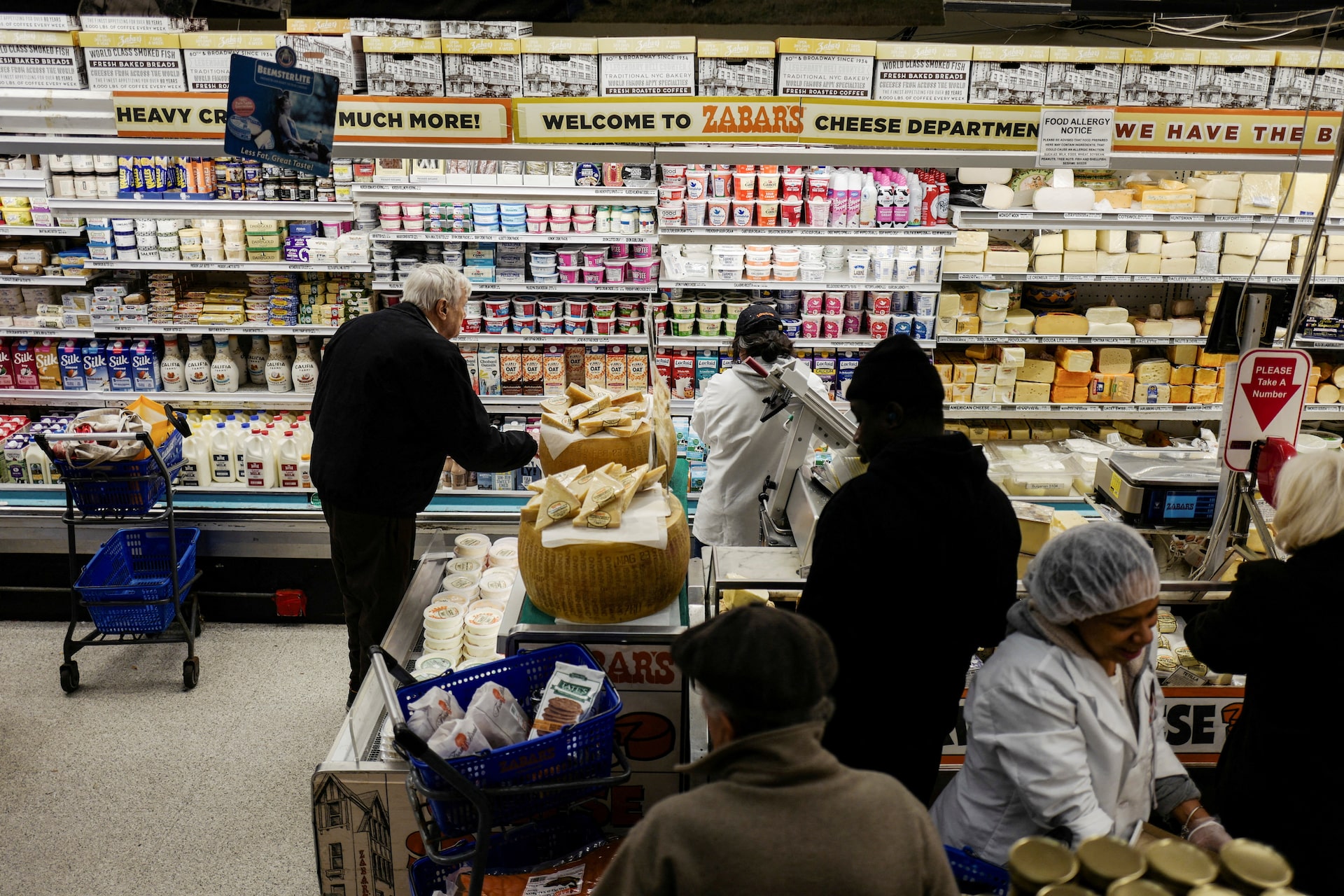
An uptick in September inflation as the US midterm elections approach has pushed the cost-of-living debate back to the centre of the agenda for Democrats seeking to regain control of Congress from Republicans.
Annual inflation stood at 3.7% in September, according to the Consumer Price Index published by the Bureau of Labour Statistics, with energy, petrol, and electricity costs rising on a monthly basis.
Food prices remained flat from August to September, recording a 2.5% increase compared with the same period last year.
Democrats are anchoring their election campaigns to pledges of easing the cost of living, blaming the price increases on President Donald Trump’s tariffs and the war with Iran.
Trump and Republicans, pointing to the numerous left-wing candidates who won primary elections this year, contend that the opposition has become captive to “communists” within the party.
When annual inflation stood at 2.4% in February, the US and Israel launched the Iran war on the final day of that month, and prices continued to climb throughout the conflict.
The recent acceleration has not entirely reversed the retreat from the 40-year peak of 9.1% recorded in June 2022; however, the rate has remained above the Federal Reserve’s 2% target for over five years.
Fed policymakers raised the benchmark interest rate by a quarter of a percentage point last month, citing the battle against stubborn inflation. Officials will convene again next week to consider whether to raise rates or hold them within the 3.75% to 4% target range.
Energy and fuel record sharpest increase since first month of war
In September, energy prices posted their largest monthly jump since March, the first full month of the war with Iran, climbing 20.4% year-on-year. Energy costs had risen 2.1% from July to August, after falling 1.5% from June to July and 5.7% from May to June.
Recent escalations in Iranian attacks on oil tankers in the Strait of Hormuz, alongside more frequent strikes by Ukrainian forces against Russian refineries, have strained global crude oil and refined product markets, driving up US petrol and diesel prices.
Petrol prices also recorded their sharpest monthly increase since the first month of the war, climbing 9.1% from August to September, bringing the annual increase to 35.3%.
American Automobile Association (AAA) data shows the average price of regular petrol across the US stands at $4.26 per gallon; while below the level of roughly $4.48 recorded a month ago, it remains more than $1.20 higher than a year earlier. Average gallon prices exceed $6 in California and $5 in both Washington state and Nevada.
Electricity prices rose 0.2% from August to September, offsetting the 0.2% decline between July and August, and were up 4.4% year-on-year.
Heavy power demand from new data centres is feeding through into local household electricity bills. Trump argued that companies must cover the cost of the electricity required by their data centres themselves.
In a post on Truth Social, Trump claimed that he was requiring large data centres to generate their own power and feed the surplus back into the local grid, suggesting this could bring about “a major drop” in electricity prices.
Used vehicle market posts monthly rise as food costs stabilise
The cost of food at home fell 0.1% month-on-month in September, while dining out increased 0.2%.
Egg prices dropped to $2.27 a dozen, falling roughly 35% compared with September 2025 and remaining well below the 20-year peak of $6.23 recorded in March 2025.
Ground beef prices rose roughly 2.4% compared with September 2025, but at $6.48 a pound, they remained below the 20-year high of $6.98 reached in June.
Chicken held steady at its year-earlier level of $2.06 per pound last month, having fluctuated between $2.01 and $2.09 since November 2024.
Used car and truck prices fell 1.5% compared with September 2025, but rose 0.7% month-on-month in September following 0.4% increases in both July and August.
Heather Long, chief economist at Navy Federal Credit Union, noted that the sector faces severe pressure stemming from a combination of expensive replacement parts and a shortage of skilled labour.
Speaking to The Hill, Long emphasised that every cost pressure across the market is being felt directly at local auto repair shops.

Anthropic, developer of the artificial intelligence model Claude, reported a net loss of $80.7 billion for the first six months of 2026 ending 30 June.
According to a report by The Wall Street Journal citing the company’s draft initial public offering prospectus, this recorded loss nearly doubled the $42 billion loss incurred across the entirety of 2025.
The vast majority of that enormous figure, accounting for $72 billion, stemmed from accounting-driven book-value write-downs.
In contrast, the company saw a sharp surge in revenue, with turnover in the first half of the year climbing to $16.3 billion from $1.1 billion in the same period of the prior year.
During this period, Anthropic spent approximately $9 billion on computing power and infrastructure needs, surpassing in just six months the $7.3 billion spent across the whole of 2025.
The company has commitments to pay roughly $450 billion over the next seven to 10 years under cloud service contracts.
Under these obligations, contracts are planned for $111 billion with Google Cloud, $110 billion with Amazon Web Services, and $31 billion with Microsoft.
Anthropic will also spend up to $86 billion by 2033 and 2034, respectively, to lease Nvidia chips through smaller AI-focused cloud providers Nscale and Lambda.
The company could spend an additional $750 billion in the coming years to expand its computing capacity.
Roughly a third of the draft IPO prospectus was dedicated directly to risk factors.
The document highlighted the possibility that models could cause tangible real-world harm, noting that artificial intelligence could exhibit a “self-preservation” tendency and produce responses resembling “blackmail”.
Anthropic warned that the scale of damage caused by an AI-driven “catastrophic event” could render insuring against such risks impossible.
According to market expectations, Anthropic’s IPO could rank among the largest transactions in history, potentially surpassing SpaceX’s record.
Following the market debut, the company’s market valuation is projected to reach up to $2 trillion.

German officials urge fighter jet alliance with Sweden and Spain

US wealthy demolish multimillion-dollar mansions for land

US and Israel weigh Iran strikes after midterm vote, reports say

Pentagon plans covert spy ring for economic war on China, report says

EU reopens debate on naming envoy for Ukraine talks with Putin
-

 Europe2 weeks ago
Bill to drop NATO membership goal submitted to Ukrainian parliament
-

 America2 weeks ago
How will Brazil’s presidential runoff work?
-

 Europe2 weeks ago
Marine Le Pen unveils fiscal programme pledging French budget cuts
-

 Europe2 weeks ago
Berlin Left Party backs Israel’s right to exist for coalition pact
-

 Europe2 weeks ago
EU seeks Chinese trade signal in Beijing as surplus widens
-

 Diplomacy2 weeks ago
The West is preparing for war not with Russia, but with its own people, French analyst Georges Kuzmanovic insists
-

 Russia2 weeks ago
71 EU lawmakers demand closure of Russian Houses in 15 member states
-
 Europe2 weeks ago
AfD softens EU exit stance to seek reform of bloc and eurozone
