
Middle East
Israel warns US its ballistic missile interceptors are running critically low amid Iranian attacks

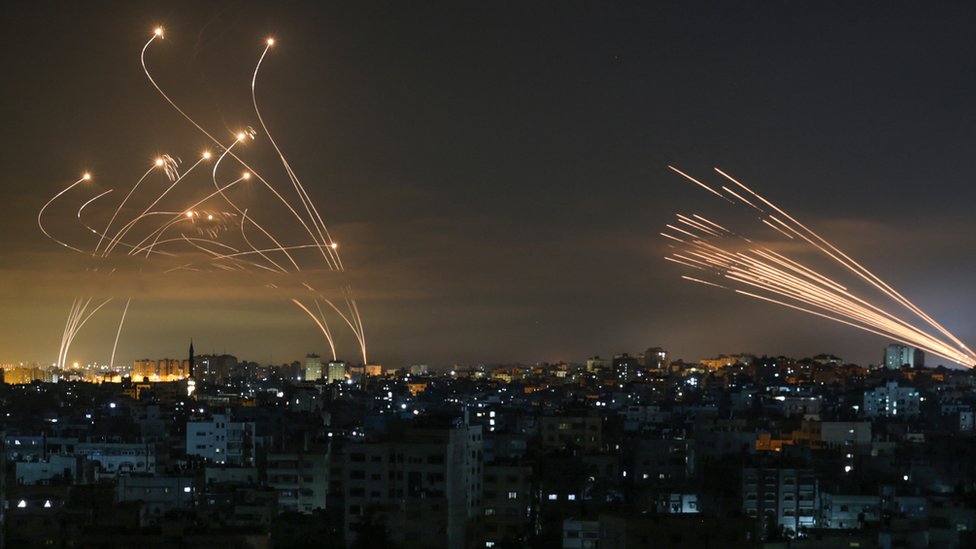
According to a Semafor report citing US officials, Israel informed Washington this week that its stock of ballistic missile interceptors has fallen to critically low levels. Israel’s long range air defense system is under heavy pressure as a result of ongoing Iranian attacks.
The report said the US has been aware of Israel’s interceptor shortage for months. “This was something we expected and anticipated,” a US official said. The same official added that the United States itself is not facing a similar shortage of interceptor missiles.
Israeli Foreign Minister Gideon Saar, however, rejected claims on Sunday that the country’s interceptor stockpile is dwindling.
Defense analysts speaking to Military Times on March 5 warned that if the war lasts longer than US President Donald Trump initially predicted, the US military’s limited interceptor missile stockpile could come under strain and potentially be depleted.
US struggling to protect bases
Although the war has been underway for only two weeks, reports indicate that the US military is already struggling to defend its network of bases across the region, including in Gulf countries and Iraq.
Trump initially said the war would last only a few days but later acknowledged it could stretch on for months. On Friday he said the conflict would end “when the time comes according to my instincts.”
Semafor reported that it remains unclear whether the US will sell or provide its own interceptor missiles to Israel, noting that such a move could place additional pressure on American stockpiles.
A US official said: “We have everything we need to protect our bases in the region, our personnel and our interests,” adding that Israel is also working on solutions to address its interceptor missile gap.
Pentagon chief spokesperson Sean Parnell told Semafor that the military has all the capabilities required to carry out any mission at any time and place determined by Trump.
Cluster munition factor
Semafor also cited a CNN report indicating that Iran’s addition of cluster munitions to its missiles could accelerate the depletion of Israel’s interceptor missile stocks.
Successfully intercepting a ballistic missile usually requires firing two to four interceptor missiles. If the missile fragments or releases decoys, additional interceptors are used. Some reports indicate that intercepting an advanced Iranian missile may require between 12 and 15 interceptor missiles.
The challenge grows further as Iran equips some ballistic missiles with cluster munitions that disperse over a wide area.
According to CNN, most Iranian ballistic missiles carry roughly 24 small bomblets. The Khorramshahr missile can carry up to 80.
CNN reported that Israel’s air defenses have successfully intercepted most Iranian ballistic missiles but noted that stopping these numerous, small munitions before they reach the ground is more difficult.
In such cases Israel may have to launch dozens of interceptor missiles to neutralize the threat posed by a single incoming missile.
Missile expert Tal Inbar, who advises Israeli defense companies, said: “This is a challenge. It is a question of balance between the number of missiles in Iran and the number of interceptors. Whether in Israel, Abu Dhabi or Qatar, the principle is the same.”
The Times of Israel responded to the Semafor report by questioning claims of an interceptor missile shortage.
The outlet wrote: “This report has not been verified and some details do not align with Israel’s known interception procedures and operations.”
The Times of Israel also said Iran is launching only a few missiles per day at Israel and argued that a “critical shortage” would imply that Israel has fewer than ten interceptor missiles remaining.
According to Semafor, selling or sharing US interceptor missiles with Israel could place strain on US stockpiles. However, the Times of Israel said Israel is not currently using a US operated air defense system.
The report also noted that, according to CNN, Iranian cluster munitions are intercepted not by Israel’s ballistic missile defense system but by a separate system known as Iron Dome.











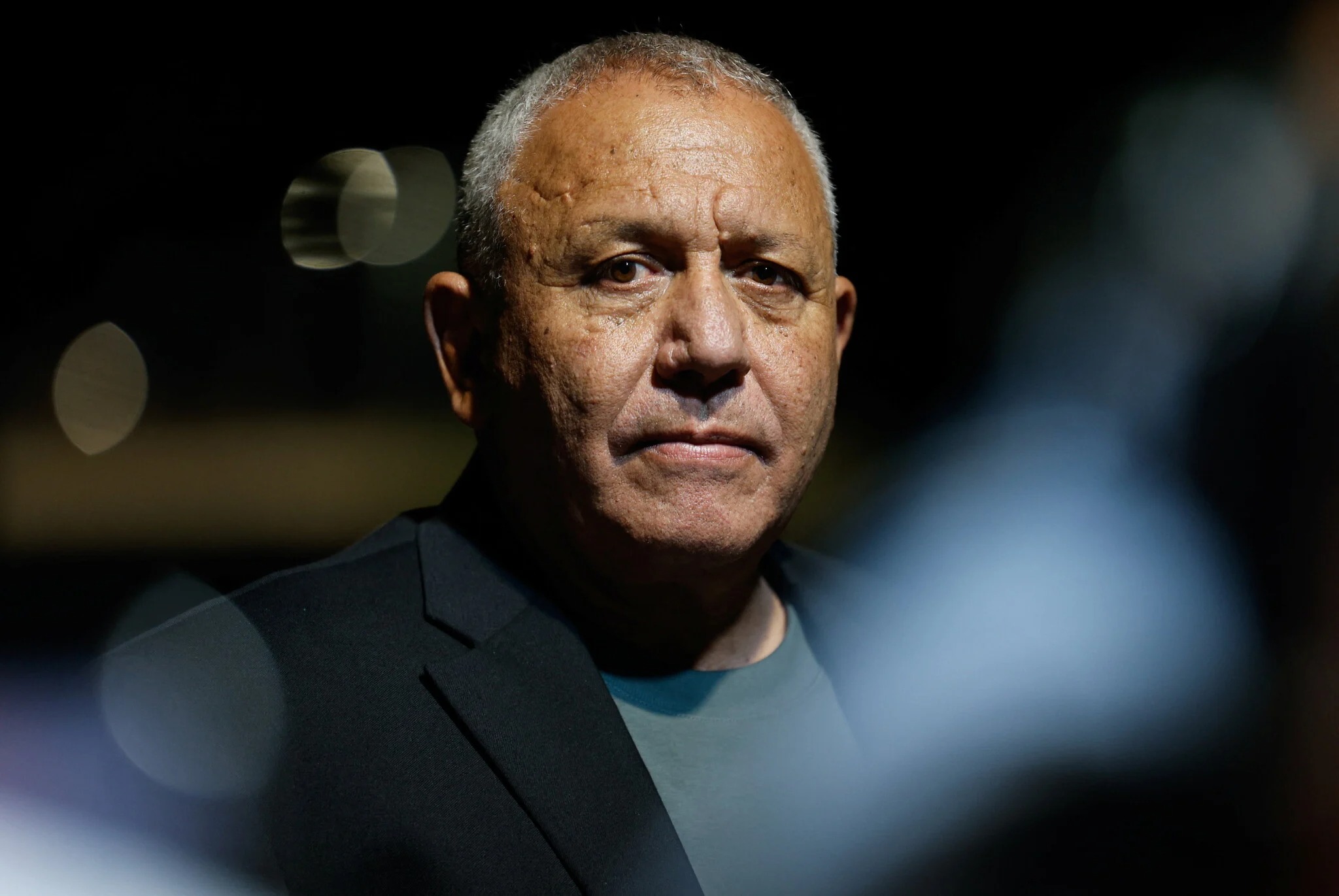
Gadi Eisenkot, Benjamin Netanyahu’s fiercest challenger in this month’s elections, has conditioned any agreement with Syria on the complete withdrawal of Turkish and Russian forces.
In an extensive interview with The Times of Israel (ToI), the leader of the Yashar Party and former chief of staff said it was necessary to take advantage of the “fluid situation” in Syria.
Contending that Syria’s transitional leader, Ahmed al-Sharaa, is “originally a very extreme person, an ISIS member,” Eisenkot remarked: “I have no illusions about him; together with the Americans operating in Syria, I killed many people from his organisation.”
Nevertheless, the opposition leader emphasised that a crucial question must be posed:
“Is there an opportunity to take the 1974 Kissinger interim agreements and significantly upgrade them, with tight security arrangements that will ultimately bring about the withdrawal of foreign forces from Syria?”
Asked by the reporter whether this included Israel withdrawing from Mount Hermon and key strategic positions in Syria, Eisenkot replied:
“The fundamental condition is the complete expulsion of the Turks and the Russians from the area. As for Mount Hermon and the relevant security arrangements, these must be negotiated.”
Arguing that Israel must speak from a “position of strength” backed by “unshakeable American guarantees,” Eisenkot added: “There must be an American protective umbrella, oversight, and commitment that will enable Israel to take calculated risks.”
Pointing to the “extremely problematic situation” created by Netanyahu over the past three years, the Yashar leader described it as an “ever-widening and dangerous gap between American interests in the Middle East and Israel’s interests.”
Noting that Israel shares “deep common interests” with the US, Eisenkot listed them as: “maintaining stability in the Middle East, strengthening the moderate Sunni camp, weakening the radical Shiite axis, weakening the fundamentalist Sunni axis, and subsequently achieving economic prosperity in the region.”
Stating that a “strong Israel as a strategic asset” for the Middle East is also an asset for the US, the Israeli politician emphasised his support for moving towards the establishment of a “NATO of Sunni states.” He stressed that Israel could make major contributions in early-warning intelligence and defence systems, adding:
“We have proven this capability. Today, there are Arab countries in the Gulf that quietly receive Israeli protection. I also connect this to the broader peace effort that Israeli leaders have unfortunately stopped talking about. We want peace.”
Within this framework, Eisenkot noted the necessity of strengthening already signed peace treaties: “These must never be taken for granted, as there is also deep concern that these agreements could slide backwards. Therefore, we must strengthen our relations with Egypt, Jordan, and the signatory countries of the Abraham Accords, and actively involve other countries in the process. I believe there may also be an opportunity regarding Lebanon.”
Contending that Netanyahu’s “blatant foolishness and dreadful political-strategic judgment” had dragged Israel to rock bottom, the opposition leader pointed out that 12 countries are currently waiting to impose sanctions on Israel.
“Even the Americans have begun considering the possibility of imposing sanctions on official Israeli actors in Judea and Samaria [the West Bank],” Eisenkot said.
Noting that the steps he would take in the West Bank would not be a political gesture aimed at bringing Saudi Arabia into the Abraham Accords, but would be done “entirely in Israel’s interests,” Eisenkot said he would improve security conditions in the region, prevent the burning of Palestinian homes and villages by extremist Jewish settlers, and intervene with an “iron fist” against anyone acting outside the law.
“That is exactly how I acted throughout my military service. [Those attacks] did not happen when I was Chief of Staff,” Eisenkot said, referring to assaults by illegal Jewish settlers on Palestinian villages in the West Bank.
The Yashar leader argued that anyone seeking to establish full sovereignty over the West Bank and incorporate another 2.8 million Palestinians into Israel is “endangering the Zionist project and the Jewish demographic majority.”
Addressing Netanyahu’s judicial overhaul, Eisenkot said: “Anyone who seeks to weaken the Supreme Court and crush the judiciary is endangering democracy.”
Accusing Netanyahu of desiring “endless wars,” the opposition leader said: “We will change this through a rational government. Netanyahu’s government is pursuing an entirely irrational policy: it incites conflict solely to consolidate its domestic political base. For this single purpose, it clashes with everyone.”
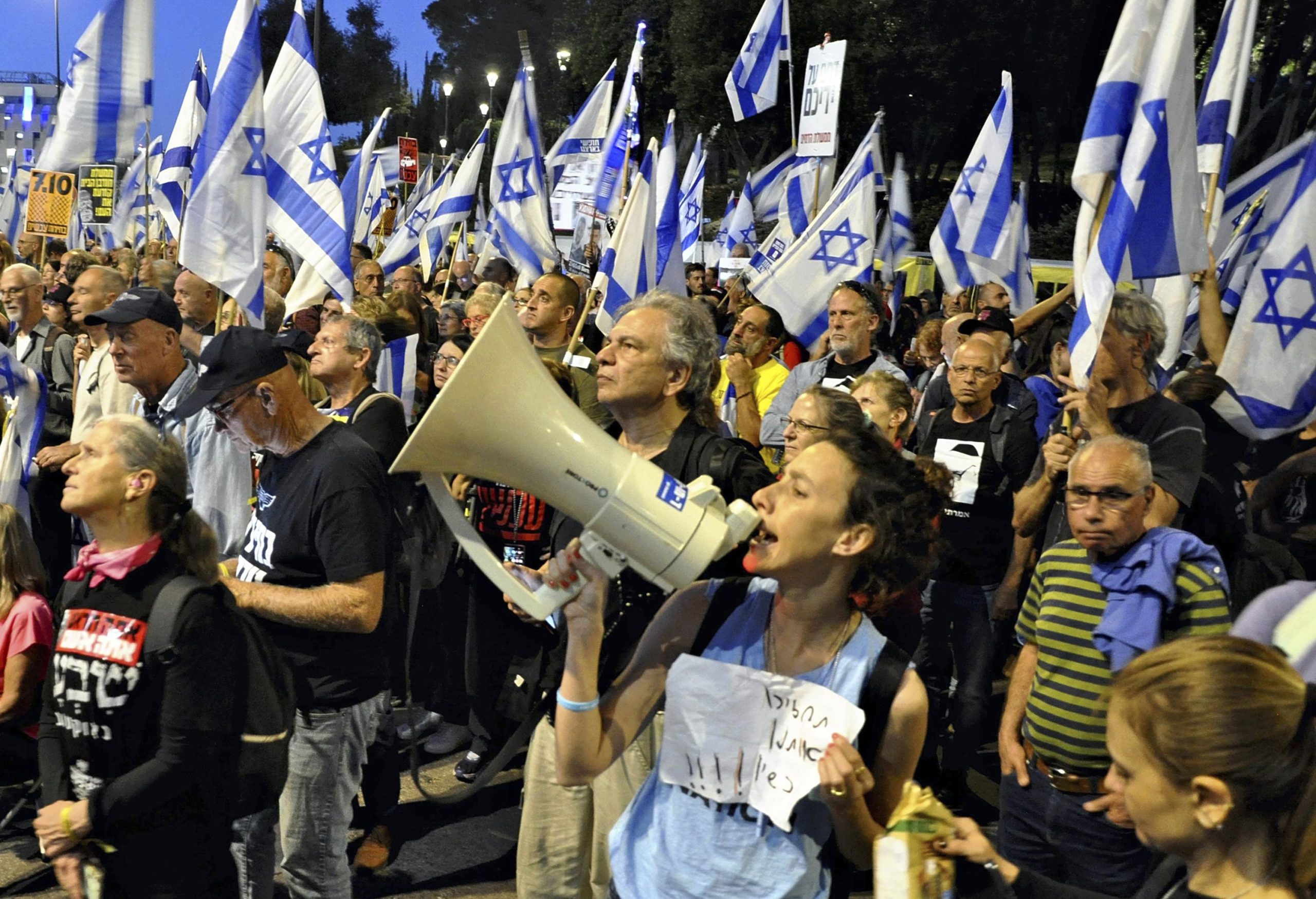
Deepening political fractures, economic strains, and societal fault lines in Israel are confronting the country with the potential for civil conflict and the breakdown of state mechanisms.
According to a report by Drop Site News citing two US sources, these findings are detailed in a classified Central Intelligence Agency (CIA) assessment drafted in August.
The report by Aída Chávez notes that the assessment, titled “Fracturing from Within”, was authored by experts within the CIA’s Red Cell unit, which is tasked with examining alternative and contrarian scenarios.
The CIA declined to answer questions regarding the assessment, which was compiled by combining open-source data with US intelligence holdings.
The report emphasises that the assessment focuses solely on Israel’s Jewish population, excluding from its analysis the country’s Palestinian citizens, who make up approximately 20% of the population.
It notes that Amnesty International and various human rights organisations characterise the practices endured by this segment of the population as part of a broad apartheid system.
The report outlines multilayered risks accumulating across the country ahead of the 27 October elections.
These factors include economic bottlenecks fuelled by surging military expenditures, heavily armed soldiers returning from protracted combat with severe psychological trauma, escalating settler violence in the occupied West Bank, and a constitutional crisis sparked by Prime Minister Benjamin Netanyahu’s efforts to retain power.
Speaking to Drop Site News, an intelligence source pointed out that the team responsible for the report comprises experts deeply familiar with the Israeli landscape, stating: “This is not an imaginary ‘what if’ scenario. Considering the upcoming elections and divisions in Israel, we must take seriously its findings that the country is only one spark away from real civil conflict.”
One of the sharpest points of tension in Israeli domestic politics involves mandatory military service exemptions granted to ultra-Orthodox men. The divide is widening between the ultra-Orthodox community, which continues to receive state subsidies while enjoying sweeping draft exemptions, and reservists being repeatedly mobilised to the front lines.
The rationale cited by religious leaders for rejecting military service is not opposition to war, but the argument that Torah study and religious life would be threatened.
A deteriorating economic landscape is also aggravating pressure on households. According to data, basic food prices, including fresh fruits and vegetables, have surged by 9.5% over the past two years, reaching record highs.
The report states that the majority of domestic opposition to Netanyahu focuses not on violence directed against Palestinians, but on how these policies are executed and on the security failures of 7 October.
Major Zionist parties remain divided over coalition strategies, while opinion polls indicate that neither the governing nor the opposition blocs can attain the 61-seat majority required to form a government.
Recalling historical eras in which traumatised, armed veterans coincided with intense political division, one consulted source cited the Freikorps units in post-First World War Germany.
The source remarked that while modern Israel is not identical to interwar Germany, certain parallels can be observed.
The CIA assessment also considers Israel’s mounting international isolation and the erosion of US support as factors that could accelerate collapse dynamics.
Israeli officials are reported to be concerned that reliance on billions of dollars in direct US military aid may prove unsustainable amid weakening political consensus.
Spring data from the Pew Research Center indicates that 60% of Americans view Israel unfavourably, up from 53% a year earlier.
The report projects that foreign technology and artificial intelligence investments could be withdrawn if the domestic crisis deepens. It underscores that such an outcome would further destabilise under-pressure economic fundamentals.
Additionally, regional countries could question the strategic value of normalisation processes, while Hamas or Hezbollah might exploit internal vulnerabilities within the country.
Intelligence sources emphasise that the assessment deliberately adopted the term “civil conflict”, warning that the compounding array of domestic pressures may ultimately prove impossible to contain through military means.
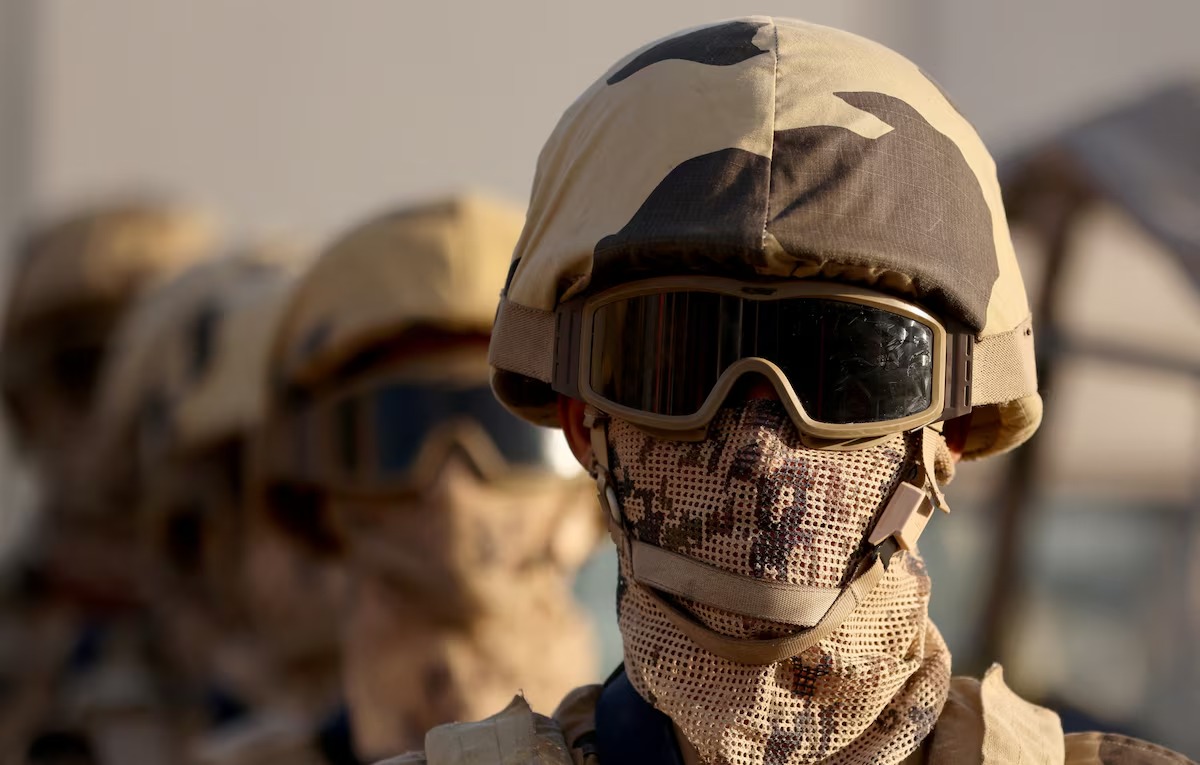
The US State Department stated that it has waived human rights conditions on more than $300 million in military aid to Egypt.
The statement emphasised that this decision was taken in consideration of Cairo’s “helpful role” since the outbreak of the war against Iran.
Egypt began receiving substantial support from the US after signing a peace treaty with Israel in 1979.
Since the late 1980s, the country has received approximately $1.3 billion annually in US military assistance.
A portion of this aid is subject to conditions related to human rights and democracy, which can be waived on national security grounds.
Withholding funds, including during the administration of former US President Joe Biden, has caused tension between Cairo and Washington in the past.
A letter dated 21 September and addressed to various congressional committees, obtained by Reuters, stated that Secretary of State Marco Rubio “decided to waive the certification requirement under the fiscal year 2025 Foreign Military Financing programme for Egypt of $320 million.”
This waiver was subsequently confirmed by the State Department.
An accompanying memorandum justifying the decision stated that this portion of military aid was “essential for counterterrorism, border security, or non-proliferation programmes, or otherwise important to the national security interests of the United States.”
The memorandum, dated 4 September and bearing Rubio’s signature, stated: “Exercising this waiver authority is critical to the US-Egypt relationship and to US national security priorities, particularly given the helpful role Egypt has played in the aftermath of Operation Epic Fury.”
“Operation Epic Fury” is the designation used by the US military for the campaign launched jointly with Israel against Iran in late February.
The State Department memorandum, whose authenticity was confirmed by two sources in Washington familiar with the letter, did not provide detailed information regarding what was termed Egypt’s “helpful role”.
The State Department’s annual decision on military aid to Egypt typically covers funds allocated for the preceding fiscal year, which ends on 30 September.
A State Department spokesperson stated that Rubio waived the certification in the interest of US national security and that the US continues to cooperate with the Egyptian government across a range of issues.
In an emailed statement, the spokesperson said: “This waiver recognizes the importance of maintaining security cooperation with Egypt at a time of significant security challenges in the region.”
The Egyptian Ministry of Foreign Affairs did not immediately comment on the matter.
The spillover effects of the Iran war have imposed a heavy toll on US security partners, including Egypt.
Owing to rising fuel prices and other disruptions, the Egyptian economy is passing through a difficult period.
Under the Biden administration, the US withheld portions of the annual military allocation on multiple occasions over Egypt’s human rights record.
In 2024, following the Hamas-led 7 October attack on Israel and the subsequent war in Gaza, the Biden administration set aside human rights conditions, disbursing the entire $1.3 billion allocation to Egypt for the first time in its tenure.
Human rights organisations have long accused Egypt, under the administration of President Abdel Fattah al-Sisi, of widespread human rights abuses, including torture and enforced disappearances.
This week, Egyptian police detained six journalists from a fact-checking and investigative media outlet, accusing them of spreading false information on behalf of the banned Muslim Brotherhood.
Egyptian authorities state that they have taken steps to address human rights issues. Sisi said stability is paramount and that the government supports human rights by working to provide for basic needs.

The era of corridor alliances in the Middle East

Bill to drop NATO membership goal submitted to Ukrainian parliament

AfD softens EU exit stance to seek reform of bloc and eurozone

Marine Le Pen unveils fiscal programme pledging French budget cuts

EU seeks Chinese trade signal in Beijing as surplus widens
-

 Diplomacy1 week ago
East-West Forum in Istanbul highlights irreversible shift to multipolarity
-

 Europe1 week ago
European unions urge governments to scrap all Palantir deals
-

 Europe2 weeks ago
Emmanuel Todd says West faces collapse amid Ukraine and Iran crises
-

 Diplomacy2 weeks ago
East-West Forum in Istanbul to debate multipolarity and global order
-
 Europe2 weeks ago
European intelligence chiefs divide over risk of Russian attack
-
 Middle East2 weeks ago
Sharaa says 7 October must not shape Israel policy on Syria
-
 America2 weeks ago
Republican support for Trump’s war with Iran drops sharply in polls
-

 Europe1 week ago
Rome protests AfD poster depicting South Tyrol as independent state
