
Europe
Berlin vote triggers backlash as The Left yields to pressure

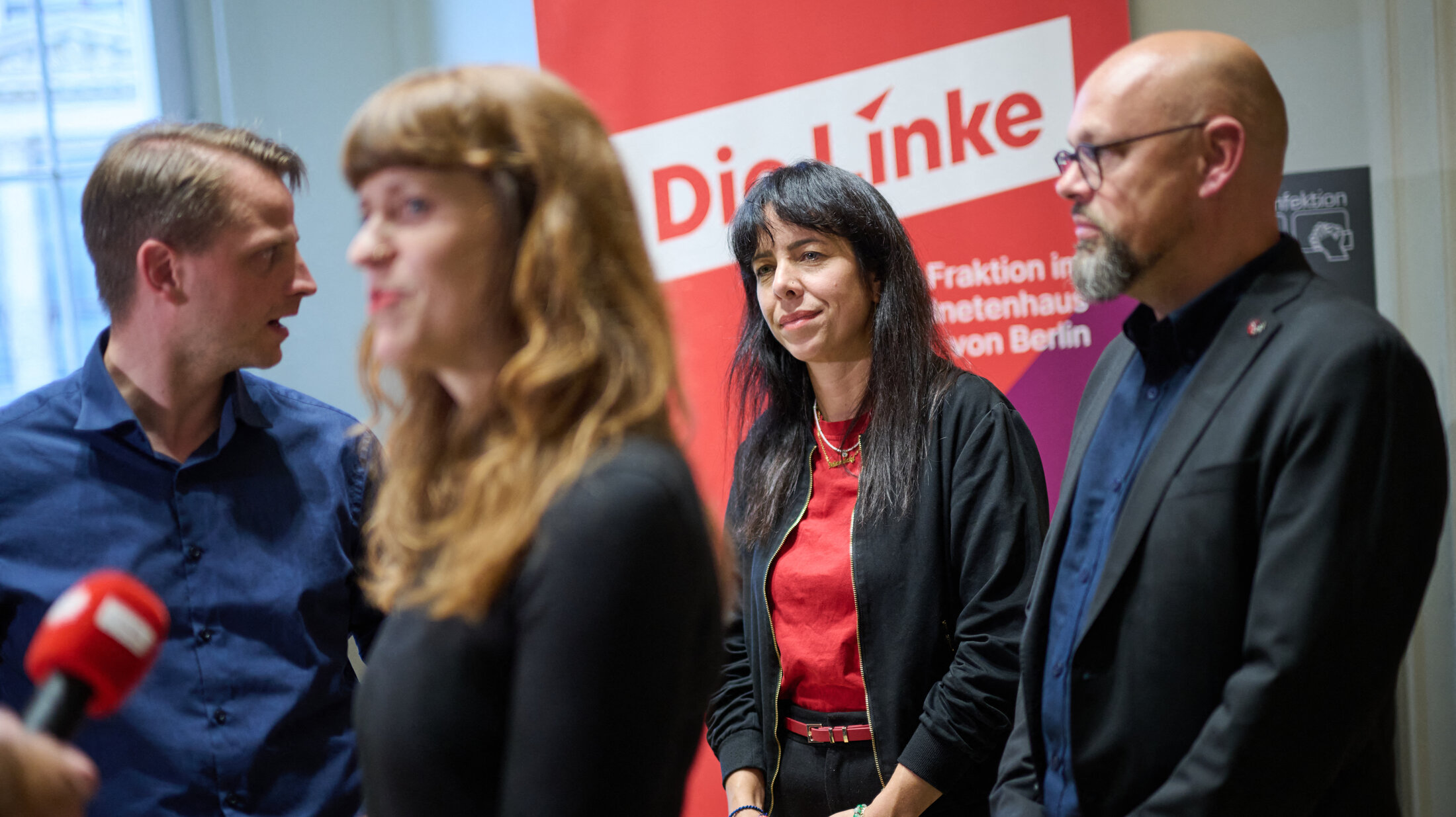
Having emerged victorious from the elections in Berlin, The Left party is attempting to pursue a compliant line in the face of volleys from “mainstream” parties and the right.
At least, this is the view of Max Grigutsch, writing for junge Welt (jW). Addressing the anti-Left campaign mounted by almost the entire political spectrum following the Berlin elections, Grigutsch writes: “The Right Calls the Shots, the Left Follows.”
The author summarises the attacks that followed the elections: The Left is accused of harbouring “expropriation fantasies” (a “socialist suicide mission”, according to CSU Secretary General Martin Huber) and spreading a “systematic hatred against Israel and Jews” (according to Israel’s ambassador in Berlin), whilst also being linked closely to “clan crime”.
On election night, footage of Lebanese-born Issa Remmo, who is associated with organised crime, filmed at The Left’s election party, was broadcast across all media channels as if on cue.
“It was a public event; the man had not been invited and was probably thrown out immediately; the allegations were completely absurd anyway, but who cares: opinion-makers had no intention of missing such an opportunity,” writes the jW author.
When chat logs between one of Remmo’s sons, Firas, and Bundestag Member Ferat Kocak were made public and the entire media and political sphere “went crazy”, even “normally more level-headed members of The Left” attempted to take cover, according to Grigutsch.
Although Kocak claimed he did not know who that person was during the correspondence, he nevertheless spoke of a “mistake”. Kocak has stepped aside from his duties in the Bundestag until further notice.
According to Soren Pellmann, the parliamentary group leader of The Left, Kocak will also not attend meetings of the Committee on Internal Affairs until further notice.
“We must not fall for the false hysteria of agitators,” the author says, noting that the right “knows very well what The Left will do when tossed a bone”, and continues:
“Expropriation as a coalition condition? Elif Eralp says the issue will be ‘put on the table’ during talks. A rapper shouts ‘Yalla, Yalla Intifada’? Eralp ‘condemns this performance in the strongest terms.’ Does the Israeli ambassador see an ‘imminent existential threat’ to Jews following The Left’s success? State party leader Kerstin Wolter rejects this, but makes it clear once again that she stands behind ‘Israel’s right to exist’ and opposes ‘any glorification of terror and calls for violence’; in other words, she accepts half the accusation.”
Grigutsch, who expects a party leadership aiming for government responsibility to realise that “not constantly capitulating is in its own interest”, points out that The Left is seeking a role within a “new SPD-Greens” axis, stating: “The magic word is ‘backbone’. But here is the thing: a Left party that managed to peel away a total of 112,000 votes from the Greens, the SPD, and the CDU, and perhaps already wants to become the new social democratic party of major cities, could arrive at the exact opposite conclusion.”







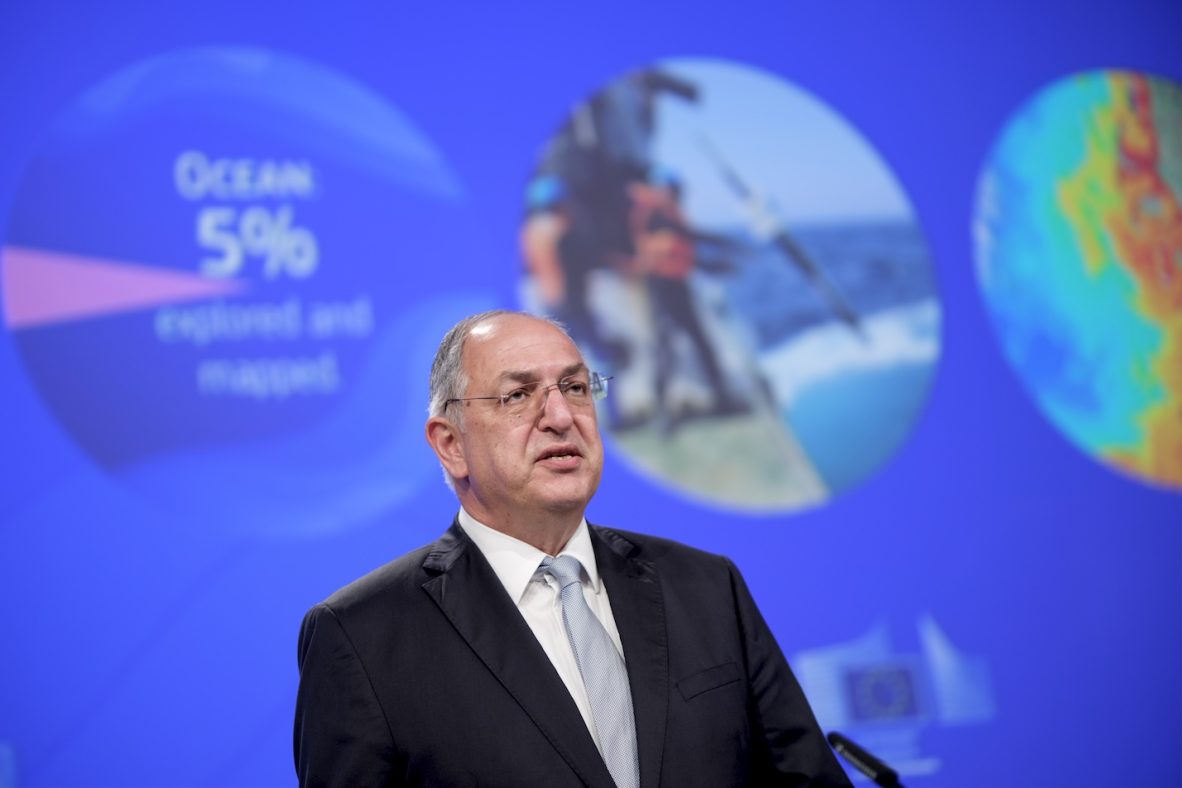
The European Commission aims to step into the role of the world’s leading ocean monitoring body by bringing together international partners.
Shaken in June by the US administration’s announcement of a $368 million (€322 million) cut to ocean monitoring funds, Brussels has been working intensively to raise funds and recruit allies to fill the void.
At the UN General Assembly in New York, EU Commissioner for Fisheries and Oceans Costas Kadis said, “Today, more than 30 countries from across the world joined the global OceanEye Alliance.”
European Commission President Ursula von der Leyen urged the bloc to “expand our network of supporters even further.”
Willem de Moore, deputy director of the marine research network JPI Oceans, explained: “For decades, global ocean observation has relied largely on US funding and infrastructure.”
What NATO represents for defence, the US ocean data tracking effort represents for research.
With Washington pulling back, researchers fear that crucial data series could be lost.
“Long-term records, such as ocean temperature and ocean carbon absorption, are invaluable for understanding how our climate is changing,” De Moore said.
Von der Leyen said the bloc’s new “moonshot” OceanEye plan, devised in response to the US withdrawal, could “make us the leading ocean data provider within a few years.”
The president added that Brussels would provide an additional €100 million. Alongside other contributors, with Canada providing the largest share at €51 million over five years, the first formal funding round raised approximately €211 million.
Combined with the initial €92 million in funding provided by Europe, this sum comes very close to closing the gap left by the US.
Canadian Prime Minister Mark Carney said, “The ocean we share cannot be understood or protected by one country alone.”
These funds will be used to finance the Global Ocean Observing System (GOOS), an ongoing programme that coordinates the long-term monitoring of the state of the world’s oceans. Brussels aims to supply 35% of the UN’s ocean monitoring systems by 2035.
The initiative is also supported by practical considerations, as Europe, the world’s fastest-warming continent, needs pristine oceans more than others do.
“The ocean is so important; it is the main regulator of the climate,” Kadis said.
While Von der Leyen pointed to the ability of ocean monitoring buoys to forecast hurricanes and storms hitting European coastlines, researchers say networks like the Argo array, comprising thousands of buoys, can achieve far more.
“El Nino develops as a result of interactions between the tropical Pacific Ocean and the atmosphere. Ocean observations are vital to track the development of this phenomenon and to help predict its effects on weather patterns worldwide,” De Moore said.
This climate phenomenon appears poised to strike Europe with an intensity unseen in a thousand years.
Specifically, as Canada ratified the UN high seas treaty, Carney pledged that the country would double its contribution to the Argo programme.
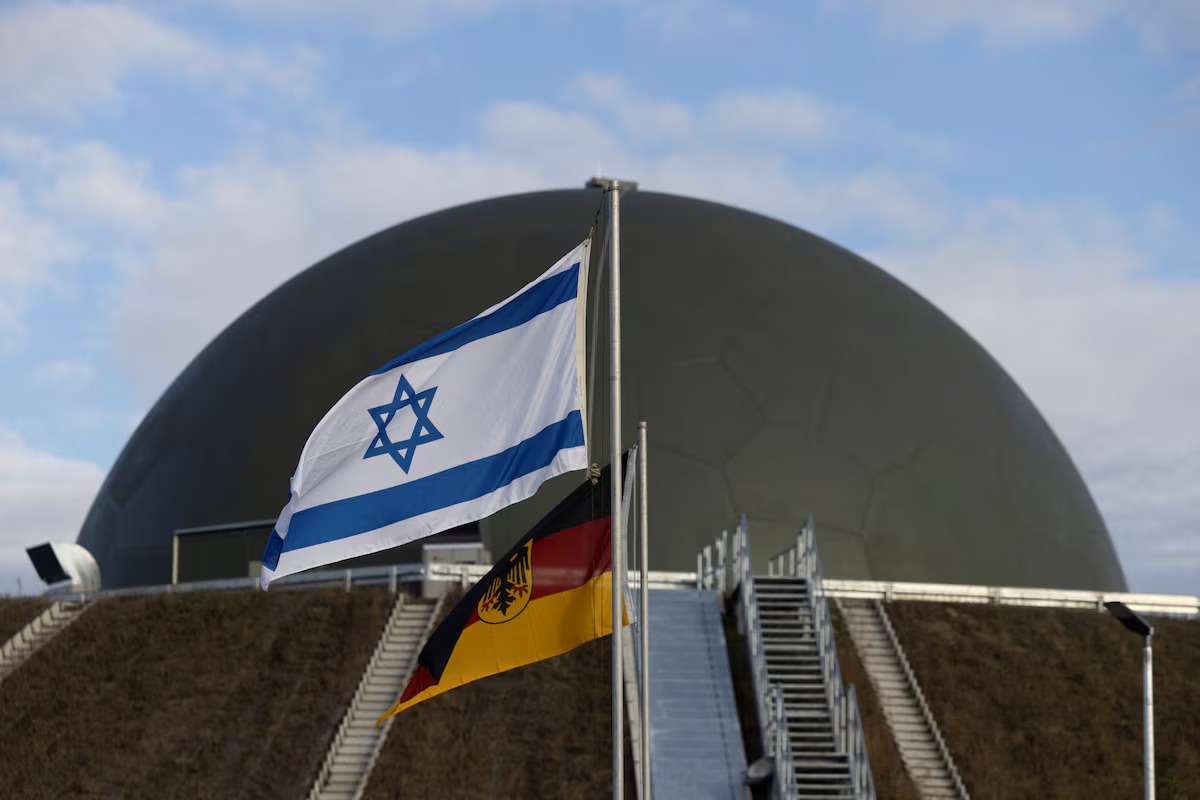
Defence industry companies linked to Israel are steadily expanding their operations in Germany and plan to establish a rapidly growing number of arms factories across the country.
According to an analysis published by German Foreign Policy, these new arms factories contribute, on the one hand, to the swift rearmament of the German Armed Forces (Bundeswehr). On the other hand, should the war in the Near and Middle East escalate further, they allow Israeli companies to manufacture the weapons required by the Israeli armed forces from a safe distance.
This provides a safety net, for instance, in the event of another war of aggression against Iran.
This new form of defence cooperation between Germany and Israel builds on a partnership between arms manufacturers in both countries that has evolved since the mid-1950s.
For Germany, this cooperation offers access, at the very least, to the high-tech capabilities of Israel’s formidable and battle-tested military-industrial complex.
Export dependence of the Israeli defence industry
In the early 2020s, experts estimated the number of companies in Israel producing defence equipment wholly or at least partially at between 600 and 700.
At that time, these companies employed a total of around 100,000 workers; this figure accounted for slightly less than a quarter of all employees in Israeli manufacturing.
The three largest among them were the private firm Elbit, with an annual turnover of approximately $8 billion, alongside the state-owned companies Israel Aerospace Industries (IAI), with a turnover of $7.4 billion, and Rafael, with $6.8 billion (2025 figures).
By way of comparison, Germany’s largest defence industry company, Rheinmetall, recorded revenue of approximately €10 billion in 2025.
In order to generate attractive profits, the Israeli defence industry as a whole remains heavily reliant on exports, despite the sustained attrition suffered by the Israeli armed forces as a result of war.
Indeed, in recent years, exports have consistently accounted for 75% of its revenue; in total, approximately 7.5% of all Israeli exports originate from the defence sector.
According to experts, this state of affairs has expanded Israel’s sector to eight times the global average.
The “allure” of Israeli weapons systems
Industry insiders attribute the success of the Israeli defence sector and its allure for arms purchasers worldwide to several factors.
Israel’s drive to remain continuously better equipped and technologically superior to the region’s Arab states, Iran, and Türkiye is frequently cited.
Moreover, it is widely argued that the intimate ties between defence contractors and the Israeli armed forces contribute directly to the optimisation of Israeli weapons systems.
Reference is frequently made to a highly sophisticated culture of technological innovation. The foremost example of this is “Unit 8200,” which is attached to the military intelligence service and specialises in all forms of electronic reconnaissance and cyber operations.
Soldiers who leave the unit after three to five years of service are regarded as exceptionally qualified; these veterans enter the world of Israeli technology start-ups, which some have even likened to Silicon Valley.
Furthermore, Israeli weapons systems are routinely combat-tested. For instance, in late 2025, government officials from various countries, including Germany, were shown videos at a conference sponsored by the Israeli Ministry of Defence depicting drones striking a building in the Gaza Strip.
The objective was to encourage those nations to procure the drones.
The Bundeswehr’s quest for high-tech weaponry
German defence companies have collaborated with Israeli arms manufacturers for decades.
In addition to the regular bilateral arms trade that gathered momentum from the mid-1950s onwards, dedicated cooperation on high-tech weapons systems has been under way since at least the 1970s.
During that period, the Federal Republic of Germany commissioned Israel to develop a radar jammer for the Tornado fighter jet.
This equipment was tested by the Israeli Air Force during the 1982 invasion of Lebanon and proved exceptionally successful.
According to a study on German-Israeli defence cooperation, “electronic warfare” remained “a sector characterized by exceptionally close ties between Germany and Israel.”
Even in subsequent years, the Bundeswehr repeatedly procured high-tech weaponry from Israeli enterprises.
For example, the Heron 1 systems, the Bundeswehr’s first large unmanned aerial vehicles deployed to Afghanistan, were sourced from IAI. The Israeli enterprise worked in close cooperation with Rheinmetall on both delivery and operations.
The advanced Arrow 3 air defence system, which Germany is currently in the process of procuring, is likewise of Israeli origin.
This system is manufactured by IAI in collaboration with the US company Boeing.
German-Israeli joint defence ventures
Since the 1990s in particular, German and Israeli companies have also collaborated directly in the manufacture of military hardware.
In 1996, for instance, Rheinmetall and Israel Military Industries (a company subsequently acquired by Elbit) established a joint venture to develop ammunition.
Other joint ventures served primarily to market Israeli weapons systems across Europe.
In 1998, for example, EuroSpike, established in Germany by Rheinmetall (40%), Diehl Defence (40%), and Rafael (20%), facilitated the sale of anti-tank weapons produced by Rafael within Europe.
EL/M-2084 radar systems produced by IAI are marketed jointly by the Israeli holding company and Rheinmetall Canada. Sales were concluded with the Canadian armed forces in 2015 and with the Hungarian armed forces in 2020.
Rheinmetall Italia, meanwhile, manufactures Hero loitering munitions in partnership with the Israeli firm UVision.
At the end of 2025, both companies signed a contract worth hundreds of millions of euros to produce a substantial number of Hero drones for a NATO member state.
Eight new Israeli facilities in Germany
Israeli defence companies are currently taking the next step: beyond exporting weapons systems to Germany and conducting joint production with German arms manufacturers, they are expanding their own manufacturing footprints inside Germany.
The background to this development lies in the surging demand for military hardware not only in Israel, but particularly across European nations.
To meet this demand despite limited domestic manufacturing capacity, Israeli defence contractors are now establishing factories, primarily in Germany.
At the former Volkswagen plant in Osnabrück, for instance, Rafael will produce components and assemblies for air defence systems.
To this end, Volkswagen will sell the facility to the investor Aurelius Capital and the federal state of Lower Saxony.
Rafael is renowned for Israel’s Iron Dome air defence system, which it developed and produces in collaboration with IAI.
Elbit, meanwhile, plans to establish “up to eight new facilities” in Germany over the next few years to accommodate “well over 1,000” employees, as confirmed by Marian Rachow, the head of Elbit Germany and a former Airbus executive.
Protests have already begun mounting against one of these planned sites, situated in Sangerhausen, west of Halle.
Bilateral cooperation deepens
When asked why Israeli defence companies are presently prioritising investments in Germany, a former chief financial officer of the Israel Defense Forces was recently quoted as saying:
“Germany is the most important industrial hub in Europe and maintains close ties with Israel. That makes it a partner with whom we can formulate long-term plans.”
Furthermore, the German government is allocating colossal sums to military expansion.
CDU lawmaker Bastian Ernst, a member of the Bundestag Defence Committee who worked first at Rheinmetall and subsequently at Dynamit Nobel Defence, which is now owned by Rafael, before entering parliament in 2025, describes the establishment of factories in Germany by Israeli defence conglomerates as a “two-way safety net”:
“For Israel, this offers the security of having a production site capable of supplying them should they become embroiled in a conflict.”
He believes the Bundeswehr would benefit “if this technology is located in Germany and can be harnessed.”
Consequently, this appears to represent close collaboration designed to enhance the combat capabilities of both parties.
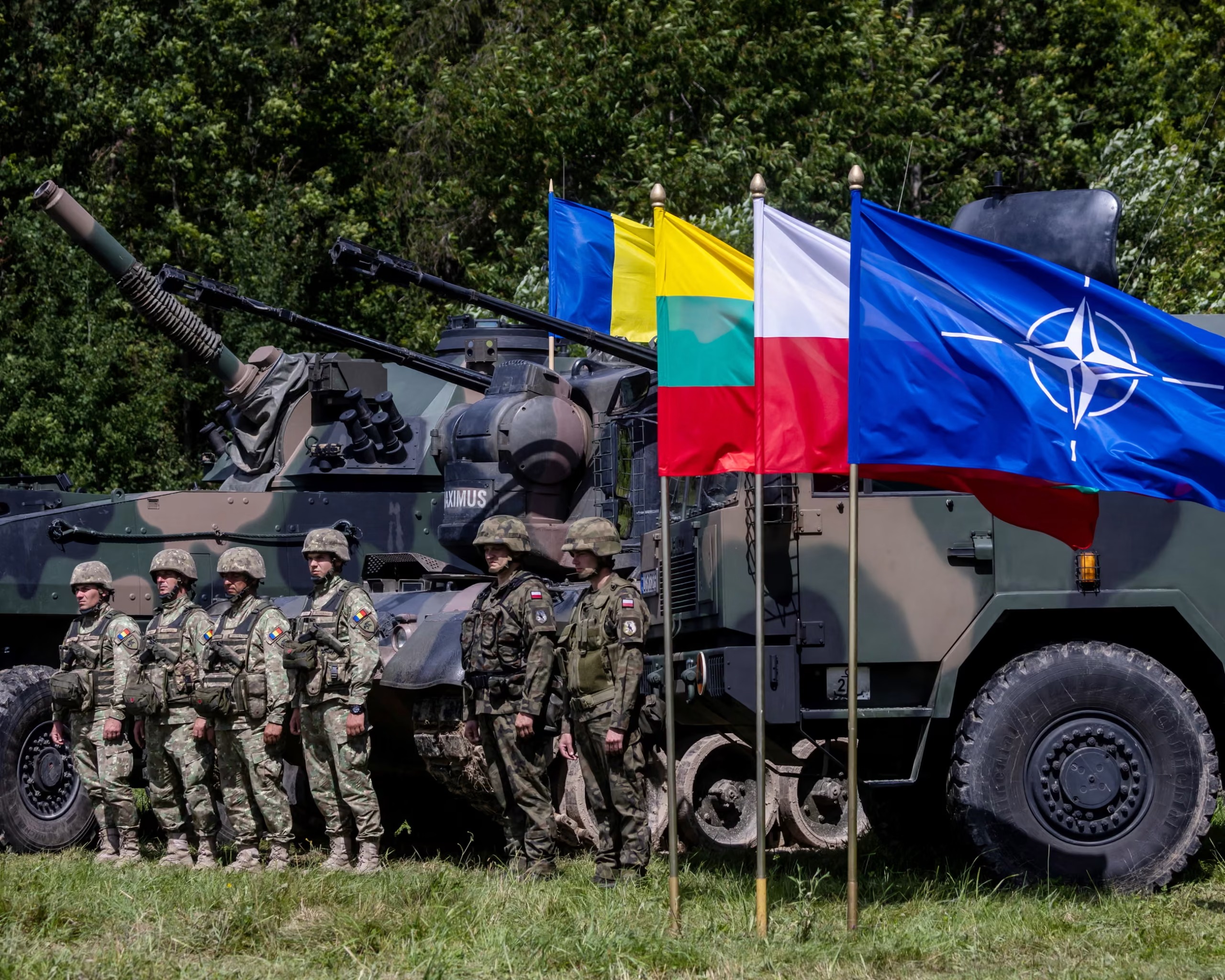
The intelligence services of the three Baltic states, Sweden, and the Czech Republic hold differing assessments regarding a potential Russian attack.
These warnings followed statements to parliament by Polish Prime Minister Donald Tusk, who said intelligence assessments indicated that Russia could mount an attack against NATO territory with drones or missiles in the coming months as part of efforts to prove that “Article 5 is theoretical rather than practical.”
French President Emmanuel Macron also described Tusk’s warnings as “logical and well documented,” and summoned party leaders and 2027 presidential candidates to an urgent meeting in Paris on Friday.
Among other topics, the meeting addressed intelligence information concerning the growing threat from Russia.
In separate interviews with The Guardian newspaper, three European intelligence officials shared their views on the potential threat that could emanate from Moscow.
Michal Koudelka, head of the Czech Republic’s BIS security service, suggested that alongside increased drone activity, a small-scale incursion into NATO territory bordering Russia could also form part of the Kremlin’s plans.
“This is possible. It could involve a limited attack, false-flag provocations, or a large-scale influence campaign,” Koudelka said in a rare interview at the agency’s headquarters in Prague.
Stating that this scenario could unfold in “months, not years,” Koudelka added that “many people are doing their utmost to ensure it does not happen.”
Officials in the three Baltic countries bordering Russian territory, however, are acting more cautiously regarding the prospect of an invasion or another serious escalation.
They cite the strain on Moscow’s resources in Ukraine and warn that exaggerating the likelihood of an attack could play into the Kremlin’s hands.
Normunds Mežviets, director general of the Latvian State Security Service (VDD), said in an interview at the agency’s headquarters in Riga: “We see no indications that an attack is imminent.”
While Mežviets acknowledged signs that Moscow is preparing to take more decisive steps in Europe, he stated that it remains unclear whether these plans are merely part of a destabilisation strategy:
“Whether they have direct and concrete plans, or whether this is simply part of their general efforts to spread fear and uncertainty in Western society, remains an open question.”
Having criticised Western Europe for years for being soft on Russia, Baltic politicians now find themselves in a curious position: fearing that talk of an imminent invasion could harm their societies and economies, they are telling certain Western leaders to remain calm in their public messaging.
On Saturday, Jonatan Vseviov, secretary general of the Estonian Ministry of Foreign Affairs, condemned the recent “social media panic” regarding a potential attack, writing on X:
“If there is reason to fear an attack, rest assured: we will state it clearly. Until then, stay calm, carry on with your lives, and support Ukraine.”
Mežviets said that, overall, Western Europe waking up to the threat from Russia is a positive development:
“Before 2022, we constantly warned our Western European partners about the threat from Russia, but our voices were largely ignored. In 2022, our partners’ approach changed. They said the Baltics and the Poles had been proven right.”
Neither Mežviets nor Koudelka wished to discuss what concrete intelligence might have been obtained regarding Russia’s alleged plans for the coming months.
Nor did they comment on whether a surprise visit to Moscow last month by CIA Director John Ratcliffe: during which he also stopped in Riga: was undertaken partly to warn the Kremlin about the dangers of attacking NATO.
Following that visit, Kremlin spokesman Dmitry Peskov denied rumours that Russia would attack NATO, saying: “This has nothing to do with reality, and it has nothing to do with the intentions of the Russian Federation.”
Koudelka argued that Russia’s current tactic is to “escalate to de-escalate,” stating that the Kremlin is probing vulnerabilities in Western societies to diminish their support for Ukraine’s war effort.
“They believe that if they escalate enough, European countries will decide not to support Ukraine,” Koudelka said.
Thomas Nilsson, head of the Swedish Military Intelligence and Security Service, said in an interview on the margins of a conference held in Riga: “I have seen no signs of serious consideration in Moscow regarding genuine negotiations. In my assessment, they still believe they can achieve their strategic objectives; therefore, they are merely engaging in negotiation theatre.”
All three intelligence chiefs stated that, whatever else happens, Russia’s sabotage campaign in Europe is likely to intensify in the coming months.
Nilsson described the recent armed drone incident at Leipzig airport, which German authorities attributed to Russian intelligence, as a “game-changer”:
“Sending an armed drone into a busy airport in the heart of Europe… If attacks involve the potential loss of life or the disruption of critical infrastructure with immense consequences for society, I believe that is a game-changer.”
Mežviets noted that Russia has shifted from random acts of sabotage and arson aimed at inducing panic toward specific targets connected to Western support for Ukraine. “We see them trying to target railway infrastructure and infrastructure providing support to Ukraine. We currently observe a shift toward defence industry targets,” he said. “If you do that, the psychological operations effect is already achieved; thus you accomplish both at once,” he added.
Nilsson stated that several objectives lie behind the recent intensification of Russian sabotage activities: reducing support for Ukraine, creating divisions within NATO, and unsettling European populations.
“In my view, Moscow would like nothing more than for NATO to engage in endless discussions about Article 4 consultations while taking no concrete steps,” the Swedish official said.
Koudelka noted that another effect of the sabotage campaign is that it strains the resources of intelligence services, as suspicions frequently linger even when incidents stem from other causes.
“Now, every fire or every malfunction must be investigated by intelligence services as a potential terrorist attack, and that is a good outcome for them,” the intelligence chief said.

Pezeshkian condemns Western nuclear double standards at UN

EU launches OceanEye alliance to challenge US dominance in ocean data

US economic growth outpaces G7 peers amid artificial intelligence boom

Berlin vote triggers backlash as The Left yields to pressure

Israeli defence firms expand German manufacturing footprint
-
 America1 week ago
Milanovic declares global neoliberalism dead, warns of plutocracy
-

 Asia2 weeks ago
Iran and China run secret barter network to bypass oil sanctions
-

 America2 weeks ago
Trump energy shares rose by up to $4.4m during Iran war, CNBC reports
-

 America2 weeks ago
Five minutes to doomsday – 4: American capitalism at the frontiers
-

 Asia1 week ago
DeepSeek engineer warns AI will lead to communism or Cyberpunk
-

 America1 week ago
Big Tech profits from AI extinction hype, Ken Klippenstein says
-

 Diplomacy2 weeks ago
Anthropic uncovers Claude use by Iranian, Houthi, and Russian units
-

 Europe2 weeks ago
BSW opposes Israeli arms hub in Saxony-Anhalt, opens AfD talks
