
Europe
EU seeks Chinese trade signal in Beijing as surplus widens

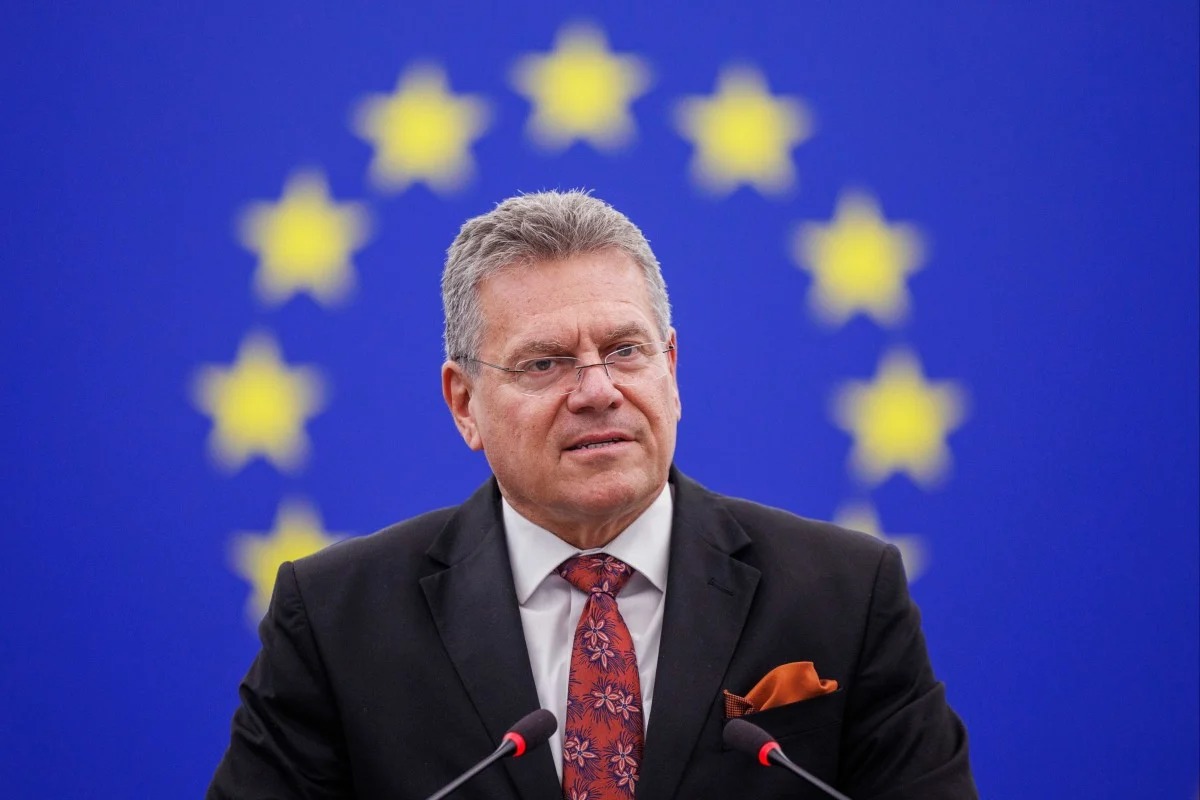
Senior EU trade officials depart for Beijing today (7 October) for two days of intensive negotiations.
Expectations in Brussels regarding the outcome of the discussions remain tempered, however.
EU Trade Commissioner Maroš Šefčovič will meet his Chinese counterpart, Wang Wentao, on Thursday and Friday.
The meeting comes three months after their last engagement in Brussels, where the Europeans set an end-of-October deadline to see signs of rebalancing in trade relations.
Continuous working-level talks have proved difficult, with virtually no sign of contraction in the lopsided trade balance.
Indeed, Beijing’s colossal trade surplus with the 27-member bloc widened further in the previous quarter.
Beijing is nevertheless understood to no longer outright dismiss the suggestion that problems exist in its trade relationship with Europe.
Sources close to the talks told the South China Morning Post (SCMP) that Brussels hopes the Chinese Ministry of Commerce will agree, by the end of Friday, to reduce exports in a single sector.
This would serve as a “proof of concept” arrangement that could subsequently be extended to other sectors.
Even such a narrow outcome would allow both sides to declare the initial rounds of the process, termed the “Trade and Investment Consultations”, a success.
Andrew Small, director of the Asia programme at the European Council on Foreign Relations (ECFR), said: “The Šefčovič talks in Beijing will determine whether China is willing to put sufficiently serious offers on the table, and whether those offers are significant enough to change the underlying dynamics.”
Beijing may hope to preserve broader access to the lucrative European market at a time when its own reliance on exports is growing.
Even so, a modest breakthrough is unlikely to deter the EU from taking rebalancing into its own hands later this year.
The EU is convinced that China’s model of “state capitalism and subsidised competition” is imperilling its own manufacturing sector.
Surges of cheap Chinese imports in key sectors have been blamed for the loss of thousands of factory jobs across Europe’s industrial heartlands, particularly in Germany.
Chinese firms, once valued customers and suppliers for German manufacturers, have moved rapidly up the value chain to become fierce competitors.
German officials believe that undeclared state subsidies, an undervalued currency, and other forms of support lie behind this aggressive competition.
This dynamic has forged an unprecedented Franco-German alignment on China policy that appears set to propel the EU in a much harder direction.
“Although Germany’s cautious stance long prevented the EU from adopting a tougher line, a consensus has finally formed on Europe-wide action regarding China,” Small said.
On Monday, Paris and Berlin jointly signed a document calling for a new trade weapon that would, among other provisions, allow the EU to exclude China from its market immediately.
This represents a dramatic shift for the German government, which had for years shied away from holding Beijing to account on trade out of fear of retaliation.
A letter signed by German Chancellor Friedrich Merz and French President Emmanuel Macron, addressed to European Commission President Ursula von der Leyen, set out the rationale behind the move.
“We need a credible instrument at the Commission’s disposal that enables a decisive and systematic response: namely, acting via reverse qualified majority voting and taking robust measures that extend, if necessary, to immediate exclusion from the internal market,” the letter stated.
The letter signals an unlikely alliance: while Paris has for years been the foremost champion of greater protectionism and industrial policy, Berlin was generally the principal obstacle.
According to Bernd Lange, the European Parliament’s top trade lawmaker, “the European Council has finally woken up.”
Two heavyweights in Germany and France have acknowledged that a course correction on trade defence instruments is necessary.
“These tools must be deployed faster and more easily to protect against unfair market distortions,” Lange said.
The new mechanism would operate alongside an instrument intended to compel EU firms in key sectors to broaden their supplier bases, preventing deeper dependence on imports that could be weaponised.
The diversification instrument is likely to be unveiled in early December, together with a solidarity fund established to compensate businesses affected by trade retaliation.
China’s Ministry of Commerce said in a statement on Tuesday that it hoped “France and Germany will… refrain from encouraging the EU to resort frequently to protectionist instruments, and strictly avoid politicising or over-securitising economic and trade matters, thereby preventing missteps on the wrong path that ultimately harm their own interests.”
Leaders of the 27 EU member states will convene in Brussels next week and will receive a briefing on the Beijing talks.
At their last gathering in June, only Spanish Prime Minister Pedro Sanchez opposed a tougher trade policy.
With the socialist leader having called a snap election for November and trailing in the polls, China may soon find it has very few defenders remaining at Europe’s top table.
Speaking to the newspaper Le Monde on Tuesday, former World Trade Organization director-general Pascal Lamy said:
“Everyone is on high alert today. We need a Plan A to deal with China: that is what Šefčovič is doing. He is trying to negotiate measures with the Chinese that they would take themselves to curb their exports or dumping practices in specific sectors. But it is doubtful that this will be enough. We therefore also need a Plan B.”






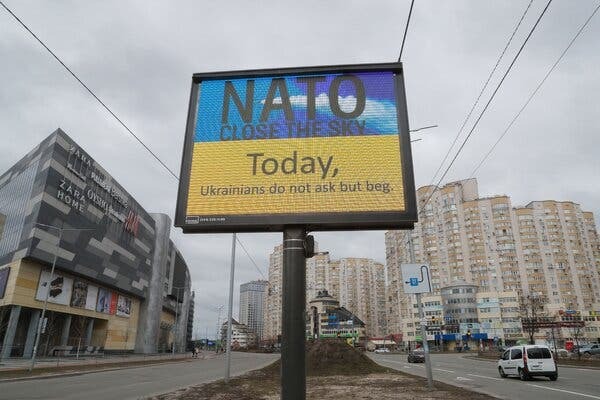
A bill proposing to enshrine neutral status in the constitution and abandon the goal of joining the North Atlantic Treaty Organisation (NATO) has been submitted to the Ukrainian parliament.
According to a report by the Strana portal, the proposal was introduced to the parliamentary agenda by lawmaker Anna Skorokhod.
The drafted constitutional amendment stipulates that Ukraine must not participate in military alliances and must confirm that it harbours no aggressive intentions against any state.
The text notes that neutrality status should be registered through “guaranteeing non-participation in any military alliance and confirming the absence of intent to attack any country.”
While the bill submitted by Skorokhod aims to remove the NATO goal from the constitution, it envisages maintaining constitutional guarantees for the country’s course towards full European Union (EU) membership.
NATO goal in constitution took effect in 2019
The strategic goal of EU and NATO membership enshrined in Ukraine’s constitution was adopted in February 2019, during the tenure of then-president Petro Poroshenko.
The constitutional amendments in question obliged the government to implement this course and designated the president as the guarantor of the process.
Poroshenko, who assumed the leadership of the European Solidarity party in May of that year, has led the party ever since.
Advocating Euro-Atlantic integration, Poroshenko described EU and NATO membership in a 2026 assessment as one of the country’s long-term security guarantees.
Moscow insists on neutrality condition
The Moscow administration links a potential resolution to the war in Ukraine to a series of conditions that Kyiv must fulfil.
These conditions include the withdrawal of Ukrainian troops from the Donetsk, Luhansk, Zaporizhzhia, and Kherson regions, as well as the international legal recognition of these territories, alongside Crimea and Sevastopol, as Russian soil.
Ukraine’s formal renunciation of NATO membership maintains its weight among Moscow’s primary demands.
Russian officials state that Ukraine’s neutral status must be explicitly included in future agreements.
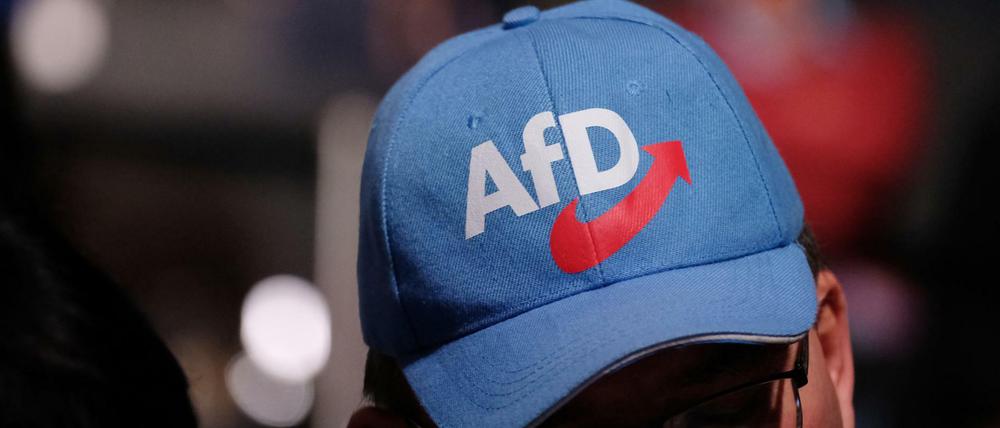
Alternative for Germany (AfD) is reportedly debating a reform of the European Union’s structure, backing away from its longstanding demand for Germany to exit the EU and the eurozone.
An internal party strategy paper obtained by the daily newspaper Die Welt and the news agency Reuters signals a new phase in the organisation’s European policy.
The document in question was drawn up by the party’s lawmakers in the European Parliament, the Bundestag, and state parliaments, and was discussed at a meeting held last month.
The drafted proposal envisages transforming the eurozone into a looser alliance of sovereign states.
Under the plan, member states would be held more accountable for their own national debts, while the intervention powers of the European Central Bank (ECB) would be curtailed.
According to Die Welt, the initiative aims to place the euro single currency on a permanent footing anchored in individual responsibility and liability.
AfD seeks structure focused on internal market and security
According to the strategy paper, AfD advocates restricting the remit of the EU primarily to the internal market, the protection of external borders, security matters, and selected technology projects.
The party also demands that member states be granted national-level opt-outs in policy areas such as migration, social services, and fiscal policy.
Rene Aust, head of AfD’s European Parliament delegation, asserted that the document demonstrates the party’s “pro-European orientation”.
Aust noted that they wish to improve cooperation with neighbouring states, protect trade and freedom of movement, and jointly defend external borders.
In contrast, AfD lawmaker Peter Boehringer stated that the paper should not be viewed as a change of course, describing it instead as an implementation plan designed to put existing principles into practice.
The text proposes that, should the envisaged reforms fail to materialise, Germany’s future European and monetary policy should be determined by the public through a referendum.
The draft further calls for abandoning the direct popular election of members of the European Parliament, proposing instead that representatives be appointed via national parliaments.
Separatist line remains in party platform
AfD had long demanded Germany’s departure from the EU (“Dexit”) in an explicit nod to Britain’s Brexit process, advocating its replacement with a newly established European community composed of independent sovereign nations.
The party’s current official platform retains the objective of quitting the bloc and establishing a new European Economic Community if fundamental reforms cannot be realised.
A draft election manifesto had similarly argued that Germany must withdraw from EU membership to liberate the country from foreign domination.
Party co-leader Alice Weidel said in late August that the euro was an unstable currency and argued that a campaign should be mounted for Germany to exit the eurozone.
Weidel claimed that Germany was in a distinctly better economic position prior to adopting the single currency, asserting that working-class populations are currently being impoverished.
Weidel also claimed that, should they come to power, they would close national borders and withdraw from the Schengen Agreement, arguing that open borders threaten domestic security.
According to a polling average compiled by Politico, AfD ranks first across Germany with a 28% share of voter support.
The Christian Democratic Union (CDU), led by Chancellor Friedrich Merz, sits in second place at 19%, while the Greens place third at 15%.
At the beginning of October, national support for the party was recorded as reaching the 30% mark for the first time, while backing for the governing CDU/CSU bloc slipped to 18%.
AfD placed first in two state parliamentary elections in September. On 7 September, the party secured first place in the state of Saxony-Anhalt with 43.8% of the vote, whereas the governing CDU recorded 17.2%, its lowest result since 1998.
AfD also finished ahead in the state election in Mecklenburg-Western Pomerania on 20 September with 38.2%.
The Social Democratic Party (SPD) took 35.5% in the state, while the CDU, which fell to 4.9%, was shut out of a state parliament for the first time in modern German history.
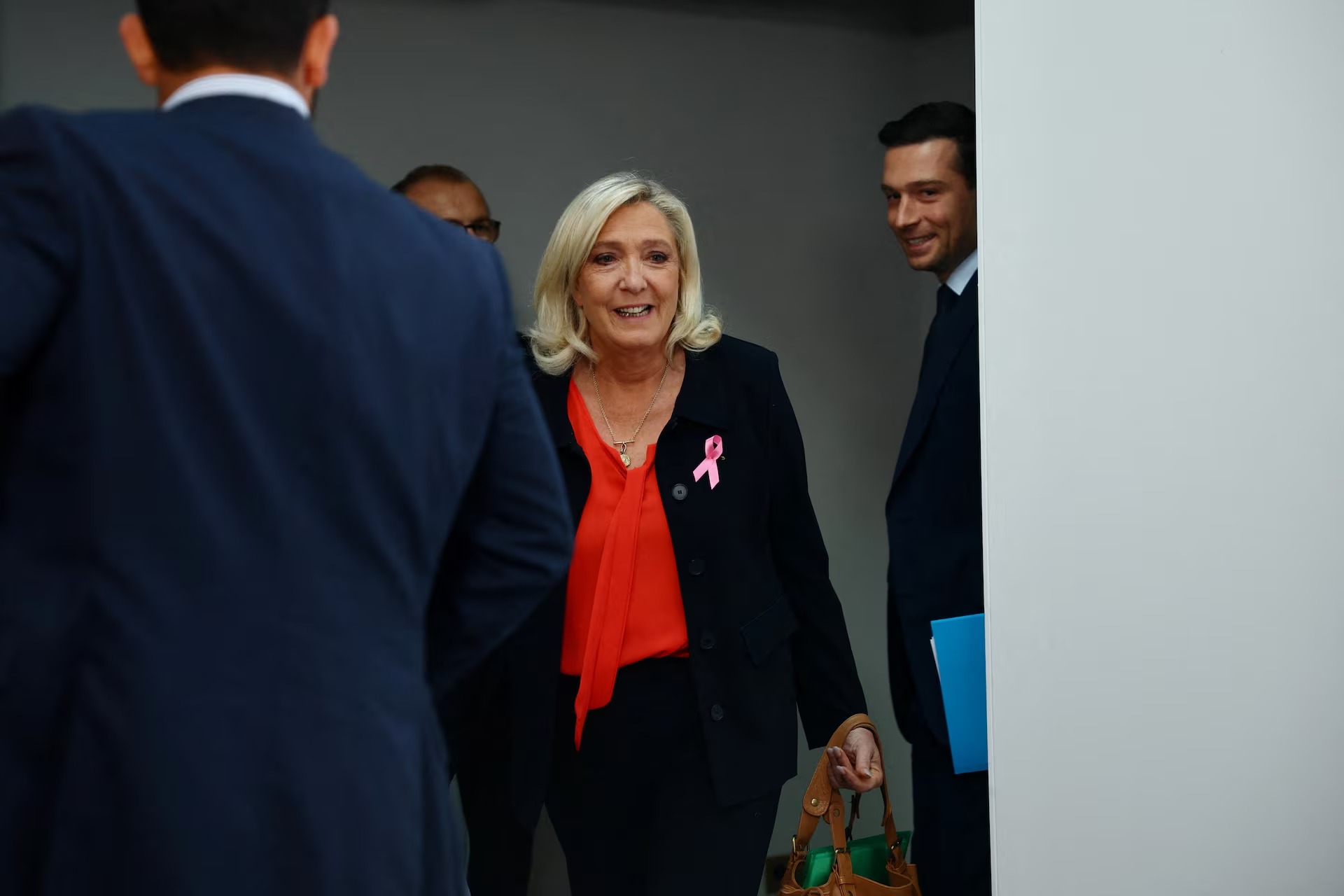
Marine Le Pen, the National Rally (RN) candidate for the French presidency, has presented her principal budget proposals ahead of next year’s elections.
Under Le Pen’s plan, a “golden rule” to be enshrined in the constitution would be approved by referendum, capping future budget deficits at levels consistent with a gradual reduction of France’s debt burden.
The French leader pledges to restore the primary budget balance within 18 months of taking office.
The proposals project reducing the public deficit to below 3% of GDP by 2030 and to below 2.5% by 2032, the final year of the next presidential term.
Public debt would be lowered from approximately 121% in 2027 to 112% of GDP by 2032.
A spending reduction programme totalling 140 billion euros would be implemented by 2032, offset by tax cuts of at least 30 billion euros.
By the end of the presidential term, public spending would be brought down to below 50% of GDP.
Le Pen said that once France regains control of its public finances, discussions should be held with the European Central Bank (ECB) to intervene in order to ease borrowing costs.
Support was proposed from the ECB to finance energy transition investments and decarbonisation projects.
The plan sets a target to achieve “carbon neutrality” before 2050 and to publish a new national low-carbon strategy.
The programme also includes a proposal for EU economies with high carbon emissions to contribute more to the EU budget through a new carbon-based contribution formula.
In addition, she called for a global initiative to tackle mounting public and private sector debt, including stronger international cooperation against tax evasion and tax fraud.
On immigration, the proposals call for tightening controls and implementing a “national preference” policy, which she stated would generate savings of 15 billion euros in the first year and 29 billion euros in a full year.
Regarding the EU, France’s annual net contribution would be reduced to 5 billion euros. There is also a proposal to finance part of the EU budget through EU-wide harmonised taxes on tobacco and alcohol.
Le Pen noted that this would also help combat cross-border fraud and smuggling.
A pension reform aimed at achieving savings of 15 billion to 20 billion euros over the long term is planned, with details of the reform to be announced in the coming weeks.
A new funded private pension scheme based on individual and collective pension savings is also under consideration, with details likewise to be announced in the coming weeks.
Multinational corporations deemed to underpay French taxes would be taxed on the revenue they generate in France, using an average profit margin to calculate taxable profit.
Corporate production taxes would also be reduced by 20 billion euros.
The Dutreil tax regime, which provides inheritance tax exemptions for family-owned businesses, will be reinforced.
A corporate tax reform for small and medium-sized enterprises will be announced later.
A 150% super tax deduction will be introduced for automation, digitalisation, and productivity-enhancing investments carried out by small businesses and farmers.
To regain investor confidence, Le Pen said she would replace the tax on substantial real estate wealth with a financial wealth tax, setting the rate at 30%.
Business owners’ shareholdings in their companies would be excluded from the scope of the new financial wealth tax.
Energy taxes would be cut, including significant value-added tax reductions on energy and essential consumer goods.
Subsidies for wind and solar power, which Le Pen described as “harmful”, would be ended.
Pledging to regain national control over electricity generation and lower electricity bills, consideration is being given to a proposal to provide zero-interest loans for “cleaner” vehicles.
The plan targets an increase in public research spending equivalent to 0.3 percentage points of GDP by 2032.
Le Pen also aims to raise France’s total research and development spending to above 3% of GDP.
A system of “VAT collection at source” will be introduced, which Le Pen said would help combat an estimated 26 billion euros in VAT fraud.
Pledging to reform public procurement rules to curb monopolies and overpricing, plans also call for setting minimum fines for economic offences above the financial damage caused.
Le Pen also proposes state reform in her programme. These pledges include:
The abolition of “almost all” state agencies and related public bodies.
A significant simplification of local government structures and France’s overlapping administrative tiers.
The abolition of more than 120 taxes.
A reduction in public sector headcount by not replacing certain retiring staff.

The era of corridor alliances in the Middle East

Bill to drop NATO membership goal submitted to Ukrainian parliament

AfD softens EU exit stance to seek reform of bloc and eurozone

Marine Le Pen unveils fiscal programme pledging French budget cuts

EU seeks Chinese trade signal in Beijing as surplus widens
-

 Diplomacy1 week ago
East-West Forum in Istanbul highlights irreversible shift to multipolarity
-

 Europe1 week ago
European unions urge governments to scrap all Palantir deals
-

 Europe2 weeks ago
Emmanuel Todd says West faces collapse amid Ukraine and Iran crises
-

 Diplomacy2 weeks ago
East-West Forum in Istanbul to debate multipolarity and global order
-

 Europe2 weeks ago
European intelligence chiefs divide over risk of Russian attack
-
 Middle East2 weeks ago
Sharaa says 7 October must not shape Israel policy on Syria
-
 America2 weeks ago
Republican support for Trump’s war with Iran drops sharply in polls
-
 Europe1 week ago
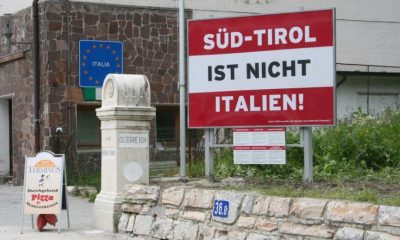
Rome protests AfD poster depicting South Tyrol as independent state
