
Opinion
In the first year of the intervention in Ukraine; the West and the Rest


The first year of the Russian Federation’s intervention, justified by Article 51 of Chapter 7 of the UN Charter, has come to an end following the military tensions that started at the Ukrainian border, accompanied by the rejection of the Minsk agreement approved by the UN Security Council and the rejection of the two treaty proposals to the U.S. and NATO. The outlook for the international relations system is blurry. Having established a monopoly to unilaterally violate international law arbitrarily and in line with its interests through its military power, the U.S. is now facing a challenge from Russia, after touching their sore point both historically and politically this time.
It is clear that the U.S. has consolidated its hegemony in Europe within a year, thanks to the crisis it started in Kiev in 2014 by triggering a civil war with a coup d’etat, which was interrupted under Donald Trump and then reignited with the return of the Democrats to power. But as the conflict has steadily escalated by mobilizing NATO, a front of ‘disobedience’ or ‘reluctance’ emerged in the rest of the world. While the ‘collective West’ is engaged in what it calls a ‘life-and-death war’ for its neoliberal economic and political model, the rest of the world does not seem to ‘embrace’ this perspective.
At the UN General Assembly, countries that have seen violations of international law in the last 30 years by the West, especially the United States, have condemned the Russian Federation for its military actions in Ukraine. There are analyses that draw attention to the size of the population represented by the countries that voted against or abstained in the symbolic votes at the General Assembly. It is debatable how meaningful this is. Whether they agree with the condemnation or abstain, countries that disagree with the unilateral economic sanctions of the United States and the EU, which do not have UN approval, present a more striking picture. In an environment of continued U.S. dollar-based fiscal hegemony, this is forcing the ‘collective West’ to threaten to ‘put pressure on those who try to remain in the two camps, maintaining trade ties with both Russia and the West.’ This situation is so reminiscent of the ‘you are either one of us or one of them’ approach adopted after 9/11 attacks by the Bush administration while carrying out its military actions in the invasion of Iraq, based on false intelligence.
In the Western media, there is an ongoing view that is formulated as ‘The West and the Rest.’ In particular, the concept of ‘multipolarity’, which the U.S. has been pursuing with reckless disregard in recent years, seems to have accelerated.
‘THE WORLD IS EITHER NEUTRAL OR LEAN TOWARDS RUSSIA’
‘The West and the Rest’ formula has been the subject of a lot of research in the past year.
Cambridge University researchers ‘matched’ data from surveys conducted in 137 countries in the eight months following the start of Russia’s military intervention on February 24, 2022, they came up with an interesting result. According to the study published in late October 2022, 66 percent of the 6.3 billion people living outside the West think positively about Russia and 70 percent think positively about China. 75 percent of participants in South Asia, 68 percent in Francophone Africa, and 62 percent in Southeast Asia express a ‘positive sentiment’ towards Russia.
The research yielded similar results in Saudi Arabia, Malaysia, India, Pakistan and Vietnam.
Of course, Cambridge researchers analyzed the results from the perspective of the division between the ‘liberal and democratic world’ and the ‘illiberal and anti-democratic world’. In Germany, it does not seem that people question how this conflict that leads to criminal laws that prosecute people for their opinions can be put into a ‘liberal’ framework.
In late January, The Economist published a graphic map of the world’s stance on the conflict in Ukraine. According to the newspaper, two-thirds of the world’s population tends towards either neutrality or Russia’s position. The reasons for this are, of course, controversial. The newspaper was based on GDP and population ratios. According to GDP, those who condemn Russia form 61 percent. The West-leaning camp accounts for 9.3 percent. The neutral form 10.1 percent. 16.8 percent represent Russia-leaning camp. 2.6 percent support Russia. On the population chart, those who condemn Russia form 16.1 percent. The West-leaning camp accounts for 20.3 percent. The neutral form 32.1 percent. 27.6 percent represent Russia-leaning camp. 3.9 percent support Russia.
The headline of the report illustrates that ‘the small number of Russian supporters’ is not a consolation. At this point, commentators appear to be sniffling at the Rest which ‘may represent more than half of the world’s population, but they make up the underdeveloped and poor half.’ And, of course, ‘the combined GDP, economic power and geopolitical weight of the West’ is highlighted, which ‘far outweighs the influence of countries that refuse to condemn intervention and impose sanctions on Russia.’
The latest report, released on the occasion of the Munich Security Conference held on February 17-20, found that countries, which make up half of the world’s population based on their positioning, oppose the isolation of Russia. Many governments in Africa, Asia and Latin America are reluctant to take action against Russia and isolate it both economically and diplomatically, the report said.
Clearly, this shows that the aforementioned states are prioritizing their own economic interests and conditions, which have become more challenging after the pandemic. Developing countries face many challenges, ranging from high debt costs and the climate crisis that has created environmental devastation, to poverty, food shortages, drought and high energy prices. For example, while the geography called ‘Global South’ has repeatedly asked for the sharing of the intellectual property rights of vaccines to save lives during the pandemic, none of the Western states seemed interested. On the other hand, Russia, China, and India rushed to the aid of many from Algeria to Egypt and from African countries to Argentina. It should also be considered that the West’s ‘colonial past’ still linger in memories. The West may try to wash it away, but today we are looking at a picture in which former colonial powers have reunited as members of the Western alliance on the front against Russia.
CLAMPING DOWN
The unilateral embargoes imposed by the U.S. and the EU on Russian oil and gas have affected not only Russia, but also some countries and companies that trade with Russia and supply energy and food products from Russia. For some, it yielded lucrative results. Hazal Yalın, author and researcher focusing on Russia, points to the capital outflow from Russia over the course of a year, while highlighting the huge decline in natural gas and oil revenues. However, he says, the West has not succeeded in destroying Russia’s economy. Indeed, the Central Bank of Russian Federation has managed to support the value of the ruble and keep the financial markets stable. In this sense, Yalın believes that the European economy is more deeply affected.
Two examples can be given from Continental Europe: Germany and the United Kingdom that has left the union with Brexit.
At the end of January, the IMF estimated that the UK economy would shrink and be worse than other advanced economies, including Russia, as the cost of living continued to hit households. The UK is projected to shrink by 0.6 percent, making it the only country in the G7 to shrink. Of course, the IMF thinks Britain is ‘on the right track.’
In Germany, Marcel Fratzscher, head of the Institute for Economic Research (DIW), said about 100 billion euros had been lost in 2022 due to the conflict in Ukraine. Surely, the recession debates take place but the industrialized vanguard of Europe and the world, Germany, will not ‘sink.’ But there are costs to losing cheap energy. According to Allianz Trade, German industry will pay 40 percent more for energy than before the crisis. Although the crisis was prevented and the electricity bills were controlled, the outlook of the German economy is described as ‘bleak.’ Allianz Trade says that rising labor costs and tighter financing conditions are putting more companies under pressure, especially in sectors exposed to energy and input prices, in response to improved expectations with increased government support. He finds the fear that the crisis will create ‘deindustrialization’ exaggerated.
The outcome will ‘not be the deindustrialization of Europe, but the militarization of European industry and its political consequences,’ Hazal Yalın anticipates. In fact, all evaluations fail to mention the ‘acceleration in the war industry.’ The West is not worried about this trajectory, but the fact that, as the New York Times put it, ‘Moscow is able to escape Western punishment with the help of its friends.’
All countries that impose an embargo on Russia are either members of the EU and NATO or close allies of the United States in the Asia-Pacific region. In contrast, most countries in Asia (excluding Japan, South Korea and Singapore) and all countries in the Middle East, Africa and Latin America (excluding the Bahamas) have good relations with both sides.
French historian Emmanuel Todd told Le Figaro, “If the Russian economy shows long-term resistance to Western sanctions, the European economy will perish. The ability of the United States to finance monetary control over the world and the massive trade deficit will collapse.”
This extravagant assessment aside, if the neocon administration in the U.S. tends to ‘clash on two fronts’ and insists on a tough stance against China, it is of course difficult to predict the results soon.
DEMOCRACY-AUTOCRACY DUALITY
The ideological and psychological repercussions of economic and political upheavals are inevitable. At the beginning of the Russian intervention, U.S. President Joe Biden said that the West would turn Russian President Vladimir Putin into “a pariah” in the international plan. However, this does not seem to have happened for the better part of the world. Russia has developed diplomatic ties with countries in Asia, the Middle East, Africa and Latin America over the past year. In his latest interview with the newspaper Liberation, EU Council President Charles Michel said that these countries have not forgotten Soviet Russia’s support in the fight against colonialism, and also still remember Western interventions in Iraq and Libya. Just Iraq and Libya? What about Syria and, even earlier, the breakup of Yugoslavia, which redrew the map of Europe, and its last link, Kosovo? As you know, Kosovo is still part of Serbia, based on the rules of UN law referenced in the Ukraine conflict today.
While the Western bloc presents the Ukraine conflict through the dichotomy of ‘democracy vs. autocracy’, masking geopolitical and socio-economic objectives, the principled inconsistencies, coupled with economic conditions, present a striking picture. Let’s take a look at regions.
ASIA’S ‘DISOBEDIENT STATES’
The People’s Republic of China, which refrained from condemning Russia at the UN Security Council, has accelerated economic relations with Russia in the last year. Bilateral trade volume exceeded 170 billion dollars. The ‘Power of Siberia’ natural gas pipeline agreement is signed. Beijing imports oil from Russia and also sells Siberian liquefied natural gas (LNG) to Europe. China, the U.S. administration’s ‘next target’, is openly promoting the slogan of ‘multipolar globalization,’ while rejecting accusations that it has/will ‘supply arms’ to Russia.
Over the course of a year, China’s political discourse has also gradually sharpened. Beijing, which initially emphasized that it “understands the complex and historical causes” of the Ukrainian crisis, is now openly telling the world that “the United States is the biggest factor that started and fueled the Ukrainian crisis.” In calling for peaceful negotiations on the first anniversary of the conflict, the Chinese government unveiled a vision that emphasizes “the protection of the sovereign rights of all countries,” “the indivisibility of security,” and “the suspension of unilateral sanctions.” The tension in the rhetoric challenging the U.S. narrative never lets up.
Chinese Foreign Ministry spokesman Wang Wenbin said: “The US is the biggest saboteur of the international order. The rules-based international order claimed by the US is, in essence, a hegemonic order in which the US dominates the world.” Wang Yi, Member of the Political Bureau of the CPC Central Committee and Director of the Office of the Central Commission for Foreign Affairs, who attended the Munich Security Conference and gave clear messages to the U.S. and Europe, described Russia-China relations as “rock solid” in Moscow. In his meeting with Putin, he emphasized their support for “multipolar world and greater democracy in international relations,” adding that “China is ready to work with Russia to maintain strategic resolve, deepen political mutual trust, strengthen strategic coordination, expand practical cooperation and defend the legitimate interests of both countries, to play a constructive role in promoting world peace and development.”
China’s support for Moscow in the Security Council for the investigation of the September 26, 2022 terrorist attack on the Nord Stream-2 pipeline, details of which were revealed by Pulitzer Prize-winning investigative journalist Seymour Hersh, is also particularly noteworthy. China’s Permanent Representative to the UN, Chiang Tyun, who has repeatedly reiterated China’s commitment to take the lead in building strategically important infrastructure facilities globally and to ‘spread development around the world,’ called for an objective, impartial and professional investigation to ‘find those responsible.’ Referring to the environmental impact of the attack as well as its repercussions on global energy markets, he reminded the UN of its ‘responsibility.’ “If we fail to identify all the circumstances and those responsible for the destruction of Nord Stream-2, it will provide even more opportunities for the conspirators,” Chinese Foreign Ministry spokesperson Wang said, all the more remarkable given U.S. President Biden’s threat at the beginning of the crisis that “if Russia invades, we will finish Nord Stream-2.” Indeed, when Nord Stream-2 was exploded, U.S. Secretary of State Antony Blinken called it a ‘tremendous opportunity’ to get rid of Russian resources, while Victoria Nuland, the architect of the 2014 coup in Kiev, expressed satisfaction that the pipeline was ‘a pile of metal at the bottom of the sea.’ Radoslav Sikorsiy, Poland’s former defense and foreign minister and current member of the European Parliament, wrote on Twitter, “Thank you, USA,” accompanied by a photo of the explosion reflected on the surface of the sea after the September 26 attack.
In Asia, not only China, which the U.S. sees as a rival, but India, which it sees as an ally against China, is of course more important. India is the country where the U.S. has formulated its Asia-Pacific strategy as ‘Indo-Pacific’ based on its name. New Delhi abstained from the UN General Assembly vote against Russia. One of the most important buyers of discounted Russian oil. India’s Minister for Petroleum, Hardeep Singh Puri, said they had no disagreements with Moscow and it was their ‘moral duty’ to buy Russian oil to lower energy prices in the country. But it’s not just that. New Delhi buys a significant amount of weapons and ammunition from Russia. And it can remain ‘free’ from U.S. sanctions. India is also opposed to discussing new sanctions against Russia at the G20 summit in New Delhi in September 2023.
India is balancing its relations with China through Russia, while continuing its Cold War tradition of ‘non-alignment-neutrality’ policy. Finally, it is noteworthy that it has recently started discussing border issues with Beijing, including mutual troop withdrawals.
India’s foreign minister, Subrahmanyam Jaishankar, recently said that “I think it would not be fair today to reduce a very complex issue, the Ukraine conflict to a binary of are you on this side or that side. Are you for peace or for war?”
“Europe has to grow out of the mindset that Europe’s problems are the world’s problems, but the world’s problems are not Europe’s problems,” he added.
The other countries of Southeast Asia do not seem to be convinced of the anti-Russian sentiment either, despite the intense campaign at the ASEAN summit and the G20 summit sessions last November.
RETURN TO THE MIDDLE EAST
The situation in the Middle East seems to be in Russia’s ‘favor’ at the end of the year. Moscow is in contact with Sunni countries such as Saudi Arabia, the United Arab Emirates (UAE), their rivals such as Iran and Syria, and all countries in the region, including Israel.
Although most Arab countries condemned Russia’s military intervention in the first UN vote, the Arab League with 22 member states did not do so later. Russian Foreign Minister Sergey Lavrov addressed the Arab League during a visit to the region at the end of July 2022. Many Arab countries abstained from removing Russia from the Human Rights Council. Saudi Arabia, UAE, and Egypt did not impose sanctions on Russia. “The Gulf states continue to conduct an open dialogue with Russia and consider it necessary to maintain contacts,” the Saudi Foreign Minister stressed.
Riyadh embodied this attitude on the economic front through OPEC+. They rejected the U.S. president’s request to increase oil production. Instead, they imported Russian oil for domestic use and/or for ‘blending oil in refineries’ to export more of their own production. They said their assessment was entirely based on ‘market conditions’. Saudi Crown Prince Mohammed bin Salman did not answer Biden’s calls. The U.S. President paid a visit to the prince ‘personally,’ whom he had previously vowed to ‘make a pariah’. The case of Jamal Khashoggi, the man who ‘symbolized’ the liberal ideological principles of the U.S. Democrats in recent years, had to be buried.
The UAE adopted a similar attitude to the Saudis. In fact, trade volume with Russia increased by 68 percent to $9 billion in 2022.
ISRAELI LEADER REVEALS THAT THE WEST IS UNDERMINING PEACE
Israel, which is the backbone of U.S. Middle East policy, did not join the sanctions even though it condemned Russia’s intervention. There is a large Russian immigrant population in Israel. While liberal public opinion leaned toward the Banderist regime in Kiev, which openly embraced a historical legacy that ironically played a role in the Jewish genocide, the government refrained from supplying weapons.
It is not yet clear what kind of policy Israel’s new Prime Minister Benjamin Netanyahu will pursue, who has struck a balance of “non-conflict” with Russia in the face of the imminent threat they have seen in the region in previous years. However, Naftali Bennett, who had been prime minister until recently, revealed that although Kiev and Russia were ready for the mediation trial in March 2022, the solution was completely ruled out by British leader Boris Johnson and blocked by the leaders of the U.S., Germany and France.
BORRELL’S ‘AFRICAN JUNGLE UNABLE TO THINK INDEPENDENTLY’
Britain’s Financial Times reported that at the last Munich Security Conference, the West tried but failed to align African countries against Russia. For many African countries, Russia is seen as the successor to the Soviet Union, which supported them during their anti-colonial struggles.
South Africa, a member of the BRICS Group and the continent’s leading country, has not joined the condemnation of Russia at the UN and is currently holding joint exercises with China and Russia. Russia is favored in the country of legendary leader Nelson Mandela, who said that the Soviet Union’s material and moral support inspired him to overthrow the apartheid regime.
Countries such as Ghana, Mali, Sudan, Angola, Benin, Ethiopia, Uganda and Mozambique have seen the political and economic support of the former Soviets. The Russian Federation is somehow considered to be an ‘ideological successor.’ For example, in 2022 and at the end of January, Russian Foreign Minister Lavrov organized quite colorful African tours. He was greeted with national songs and dances at the Pushkin monument in Asmara, Eritrea. In African countries, banners read: “Putin, come and save us.” The EU’s foreign policy chief Josep Borrell, who last October compared ‘Europe to a garden and the rest of the world to a jungle’ and was criticized for ‘racism,’ this time claimed that ‘the African mind is not thinking straight because of manipulation’ following the attention Lavrov received during his visit to Mali. Speaking on February 18 at the African Union summit in the Ethiopian capital Addis Ababa, Uganda’s Foreign Minister Jeje Odongo responded to this view: “We were colonized and we forgave those who colonized us. Now, the colonizers are asking us to be enemies of Russia, who never colonized us, is that fair? Not for us: their enemies are their enemies, our friends are our friends.”
Last year, Macky Sall, President of Senegal and the African Union, blamed Western embargoes for the food crisis, while today Russia is negotiating with many African countries to switch to trade in national currencies. The results of the U.S. administration’s December summit on Africa are yet to be seen. The State Department has even produced a video that could be seen as interference in the Nigerian elections, ‘starring’ Secretary Blinken, USAID head Samantha Fox and the ‘black’ Linda Thomas-Greenfield, the US permanent representative to the UN.
THE VEIN OF LATIN AMERICA
Nicaragua, Venezuela and Cuba, where leftist governments are on the target of the United States, have been on the side of Russia, their traditional allies, from the very beginning. However, the region’s two strongest countries, Brazil and Mexico, as well as Argentina, which wants to join the BRICS, and Colombia, did not take a stand against Russia beyond a symbolic condemnation at the UN General Assembly and criticism of general principles.
Instead of the United States, Germany mobilized to convince the Latin front. However, Prime Minister Olaf Scholz returned empty-handed from visits to Brazil, Argentina and Chile, unable to persuade these countries to provide military aid to Kiev. Brazil, Colombia, Mexico, Peru, Argentina and Ecuador had received Russian-made MiG transport helicopters and in some cases Russian surface-to-air missiles or anti-tank missiles, which are compatible with those of the Ukrainian army. But Latin leaders see the conflict differently from the West.
Brazil’s neofascist Jair Bolsonaro administration, which the United States paved the way for by intervening directly in its democracy during the 2016-2018 period, was on the side of those who condemned Russia in two UN resolutions last year, but did not participate in sanctions against the most important fertilizer supplier. Lula da Silva, the leftist leader who succeeded Bolsonaro after being exonerated and re-elected after being wrongfully imprisoned with the overt intervention of the U.S. Justice Department, was outspoken in his criticism of Scholz and then French President Macron: “Brazil has no interest in handing over ammunition that can be used in the war between Ukraine and Russia. Brazil is a country of peace. Our last disagreement was in the Paraguayan war, and that’s why Brazil doesn’t want any participation in this war, even indirectly. Because I think right now we need to find someone in the world who will seek peace between Russia and Ukraine. So far, peace has hardly been on the agenda. In other words, Brazil has decided not to provide this ammunition. Because we don’t want this ammunition to be used in the war against Russia.”
Lula then reiterated his stance of ‘neutrality’ during his visit to Washington on February 10. According to Brazilian sources, his message to Biden was, “No one wants this war to continue. The parties should form a negotiation team. I don’t want to join the war, I want to end it.” Of course, Lula, who survived the coup attempt on the 8th day of his new term in power, which began on January 1, 2023, has to establish the balance within his country. He has already been accused of playing the ‘Robin Hood’ role by US-linked financial power groups. He is also facing criticism from The Economist over its plans with Argentine President Alberto Fernandez for a ‘bizarre common currency’ for the continent.
Argentina’s leader Fernández also refused to send arms to Kiev in return for his country’s poor financial situation.
But in fact, the attitude of the Social Democratic President, who took office in August 2022 of Colombia, which has been the right-wing stronghold of the United States in Latin America for years, is more interesting. “Even if they end up as scrap in Colombia, we will not hand over Russian weapons to be taken to Ukraine to prolong a war,” Colombia’s leftwing president Gustavo Petro responded “We are for peace.”
Chile’s left-liberal President Gabriel Boric, reflecting his country’s sentiment, said he condemned Russia’s invasion, even though ‘some media and opinion leaders believe that interfering in the politics of other countries is a bad decision.’ But he only offered Kyiv help with clearing mines.
Mexico’s leader, Andres Manuel Lopez Obrador, took the lead. In March 2022, a meeting of the Russia Friendship Group was held in the lower house of the Mexican Congress, while Obrador called for ‘neutrality’ and a ‘peaceful solution’ throughout the year. He condemned the intervention at the UN, but in his meeting with Biden in July 2022, he stated that Mexico would adhere to the foreign policy set out in its constitution, which includes ‘the principles of self-determination.’ He rejected the embargo on Russia. Without mentioning NATO and the United States, he described the policy of ‘I will supply the weapons, you will supply the dead’ as ‘immoral.’ And finally, commenting on Berlin’s decision to send Leopard battle tanks to Ukraine under U.S. pressure, “Media power is used by the oligarchies in the world to subjugate governments. Germany, for example, did not want to get too involved in the war with Ukraine. They finally gave in” he said.
The neutral stance of Latin America, which has been hit by the increase in global energy and fertilizer prices, is clear. Celso Amorim, who served as foreign minister in the past Lula governments and is still an effective advisor, says Brazil’s reasons are not related to the need for fertilizer. According to Maria Angela Holguín, Colombia’s former foreign minister, the Ukrainian conflict has brought back unwanted memories of the struggle between the United States and the Soviet Union in Latin America. In fact, Holguin said, these countries think that Russia and China could be useful to them in the near future.
THE NEW NON-ALIGNED ERA?
Inflationary pressures and fears of recession are affecting much of the world. The rich West may be able to afford the cost of the embargo on Russia but the rest is struggling. These concerns affect their attitudes.
Of course, the dollar’s reserve currency status is still the pillar of the global economic order. However, the embargoes, the ‘arming’ of the international banking and insurance sectors, including the SWIFT system, the confiscation of assets, and the commodity agreements that had to be canceled are ‘watched with concern.’ Again, many countries are facing currency depreciation, while ways to trade with local currencies are being discussed. The ‘rest of the world‘ facing the West is already weighing the risks of a conflict in which they have no say.
The West’s long-standing ‘war on terror’ rhetoric, the controversial occupation of Iraq, the collapse and fragmentation of Libya and Syria, and the chaotic retreat of the U.S. and NATO and leaving the country to the Taliban after 20 years of fighting the Taliban in Afghanistan are all remembered.
It is noteworthy that the West, which has been marketing liberal interventions around the world for 30 years on the themes of ‘minority rights’, ‘mother tongue rights’, ‘autonomy’, ‘freedom of thought and expression’, has returned to ‘state sovereignty’, which they themselves have violated many times, by referring to the Russians and the Russian-speaking population of Donbass, bombed for eight years for refusing to accept the coup, as ‘Ukrainians’ in the Ukrainian crisis. The poor record of the alleged ‘principles’ is unlikely to go unnoticed. Global propaganda supremacy, accompanied by a heavy ‘iron curtain’ of censorship justified by ‘protecting’ their own communities, is not enough to erase Banderism, which stands out as Kiev’s official ideology. The narrative of ‘Russia woke up one day and suddenly invaded its neighbor’ turns into a tasteless ‘fast food.’ While the Zelensky regime is destroying millions of Russian-language books in the country in a manner reminiscent of the Nazi era, the rest of the world is baffled by the justification in the West for attacks on Russians and Russian culture, from vodka to cats, Tchaikovsky to Dostoevsky. In these circumstances, in light of economic realities and historical experiences, it is only natural that ‘the rest of the world’ sees multipolarity as a ground where its voice will be heard more.







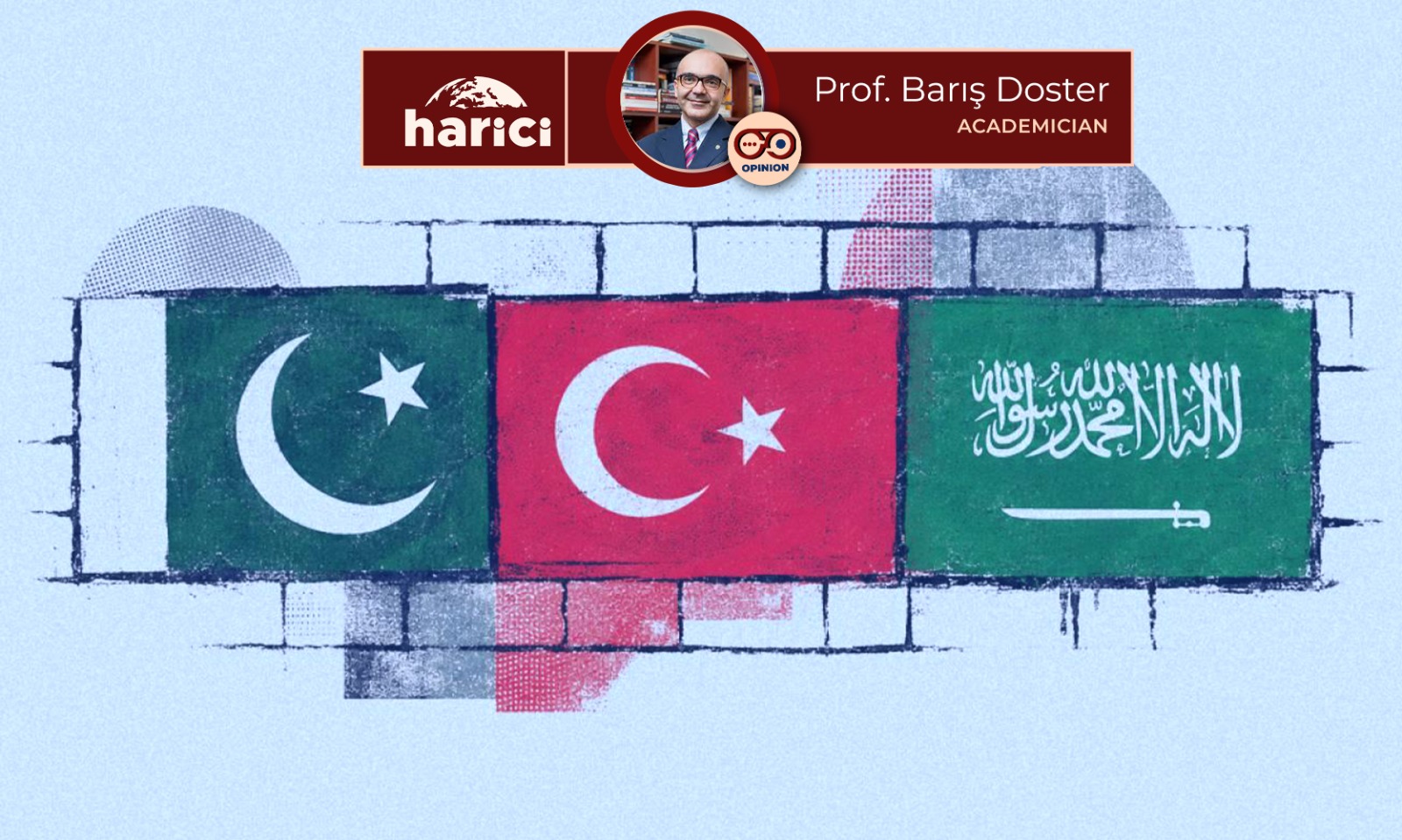
Some who are thoroughly excited by the Mecca Defence Agreement, and certain people who believe Türkiye should take sides in the clashes between the Iranian-backed Houthis and Saudi Arabia, are once again dreaming dreams of conquest with reference to our Ottoman past. Whenever history is discussed, especially Turkish and Ottoman history, they invoke this widely repeated saying: “After the collapse of the Ottoman Empire, the Middle East and the Balkans never knew peace again.”
We know that there are always those who, proceeding from this premise, seek to re-establish the Ottoman Empire. And we do not forget that eminent historians immediately respond to these ignorant figures: “Whoever does not grieve over the collapse of the Ottoman Empire has no heart, and whoever wishes to re-establish it has no mind.”
For the world we live in is neither the world in which the Ottoman Empire rose, nor the world in which it fell. Both times and conditions have changed. More than 40 states now exist across the lands once ruled by the Sublime Porte; when taking into account the countries it temporarily ruled, seized, or held sway over, that number exceeds 50 according to some historians, and 60 or even 70 according to others.
It must be asked dispassionately:
Which of these states, and how many of their citizens, actually want the Ottoman Empire to rise again, or wish for the Turks who would lead this revived, re-established Ottoman Empire to come and govern them as well? For this purpose, how many of these states have come together and said to Türkiye, “Take the lead, revive the Ottoman Empire”?
Is it objectively possible in today’s world to establish such a multilingual, multireligious, multiconfessional, multinational, and multi-identity empire? As the former prime minister Ahmet Davutoğlu once suggested, is it objectively plausible for Türkiye to establish and lead an Ottoman Commonwealth of Nations, just as the British established and led the Commonwealth of Nations? Does Türkiye possess such political and economic power, state capacity, and scale?
Do the states that emerged from the dissolution of the Ottoman Empire have any such goal, desire, or expectation? Are regional and global conditions, or the balance of power, conducive to such an initiative? Long after the age of empires has drawn to a close, is it a realistic objective to bring the countries born of the Ottoman Empire’s collapse together under the umbrella of a federation or confederation?
How do those who claim such a desire exists in the Islamic world, the Arab world, and the Turkic world explain the rapprochement between the Central Asian Turkic states and the Greek Cypriot Administration of Southern Cyprus; the Sunni-Shia and Arab-Persian tensions across the Islamic world; the Abraham Accords; the indifference of Arab states to the Palestinian issue; and the fact that the TRNC is not recognized by a single Muslim country or a single Turkic state other than Türkiye?
Were Türkiye to put forward such an ambition, let alone Greece, Bulgaria, or Serbia, how would Egypt, Saudi Arabia, and Iran react?
These questions could certainly be multiplied.
Yet history books contain ample evidence of how dreams conceived, and commentary made, in ignorance of history, geography, and economics ultimately turn out.
What matters in foreign policy is not indulging in fantasies, but remaining realistic.

Thomas Karat, behavioral analyst
The Mavi Marmara had sailed from Istanbul’s Sarayburnu port on 22 May 2010, bound for Gaza with aid. On 31 May, after Israeli commandos had taken the ship in international waters and nine of the people aboard lay dead, a Turkish reporter named Kürşat Bayhan tried to save his work by hiding his camera’s memory card under his tongue. It was found during a medical examination and taken from him. Around sixty journalists came off the flotilla at Ashdod that week, and all of their recorded media was confiscated, never to be returned. In the days that followed, the Israeli military released short, edited clips drawn in part from the material it had seized, and its account of the raid dominated coverage while the survivors were held without contact. For about forty-eight hours, while survivors were held incommunicado, the clips released by Israel, edited from the ship’s security cameras and from equipment taken off journalists, were most of what the world saw. On 3 June the Committee to Protect Journalists accused Israel of confiscating journalistic material and then manipulating it to serve its own interests. A United Nations fact-finding mission later recorded that a large quantity of video and photographs from the vessels, including much of the assault on the Mavi Marmara itself, had been taken by the Israeli authorities and not returned. The seized material stayed useful to its holders long after the raid. Months later, while the Israeli chief of staff was giving testimony about the operation, army radio released a further short clip from the confiscated videos, a timing one Israeli outlet read as a domestic political move. The Turkish photojournalist Cevdet Kılıçlar was among those killed on the ship, and a Canadian aid worker, Kevin Neish, who hid the memory card from his own camera and later smuggled it out, published photographs of the dead that the official clips had left out. What survived reached the public because individuals beat the search, among them two Turkish journalists, Adem Özköse and Şefik Dinç, who smuggled their work home or recovered it from damaged cards.
Readers in Türkiye know that method from their own history. The state seizes the cameras, holds the witnesses until the story has set and then releases whatever selection supports the official version. It is the maritime equivalent of the colonial bonfires described in the first part of this series, where Britain burned or sank the files that might embarrass it and later locked away the rest. Both methods rest on one condition. The state has to hold the only copies. In Gaza since October 2023 that condition has failed, because a large part of the evidence was recorded by Israeli soldiers on their own phones and published by them, under their own names, before anyone in authority could decide what the public would be allowed to see.
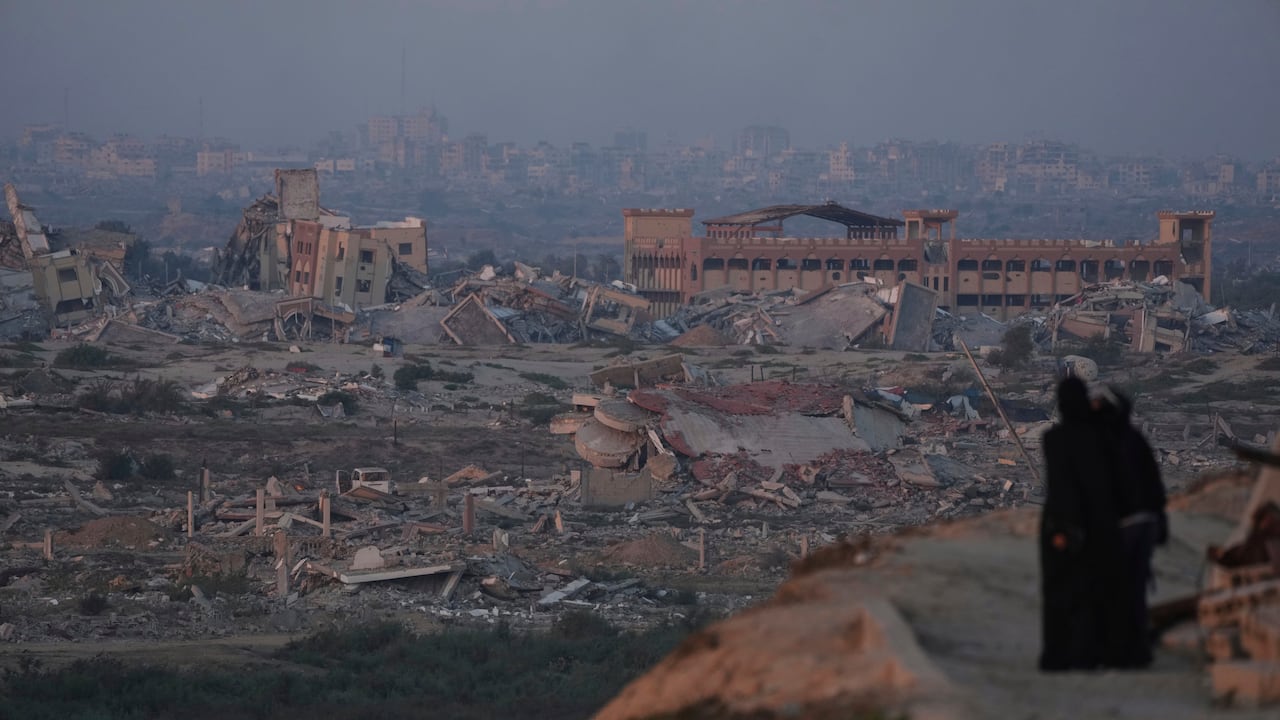
The most common scene in that material is a demolition. Engineers thread explosives through the houses of an entire street, a countdown runs, and a block of homes drops at once into a single rolling cloud, while the men who set the charges cheer and the man holding the phone keeps it steady on the collapse. The same footage recurs across Gaza in thousands of clips filmed by unit after unit, some dedicating a detonation to a fallen comrade or to a holiday at home. One soldier captioned the levelling of houses in Rafah “renovations in Gaza.” The Fourth Geneva Convention bars an occupying power from destroying civilian property unless military operations make it absolutely necessary, and it lists extensive destruction of property, carried out unlawfully and wantonly and without military necessity, among the grave breaches that constitute war crimes. Footage of soldiers celebrating the collapse of a residential block is poor evidence of necessity. Demolition compelled by an operational requirement gives no occasion for a victory song, and the soundtrack records the attitude in which the decision was carried out.
The second recurring scene shows detainees. Across the Strip soldiers filmed men they had rounded up, who had been stripped to their underwear and blindfolded before being made to kneel in long rows, and they filmed themselves standing over them. In December 2023 a soldier named Yossi Gamzoo posted footage of a Palestinian stripped and bound, bleeding, under interrogation at Gaza College and then marched barefoot through the street, along with a second clip from Yarmouk stadium in which hundreds of men kneel in rows, many in their underwear and some blindfolded, with three women on their knees behind a goal. Another soldier, later identified as Ilya Blank, set a montage of blindfolded detainees packed into a pickup truck, with a comrade grinning and raising his thumb beside them, to an Israeli rap track. The Geneva Conventions require that people in custody be treated humanely and protected against insults and public curiosity. Legal scholars who examined this footage for the BBC concluded that it breached those protections. Two named soldiers stand here for a practice that was widespread and openly displayed, posted by men who expected their audience to approve.
The same practice reached the occupied West Bank. In December 2023, during a three-day military operation in the Jenin refugee camp, reservists filmed themselves inside a mosque reciting the Shema Yisrael and singing Hanukkah songs over the loudspeaker normally used for the call to prayer, one of them standing on the minbar. Graffiti left in the building read, among other things, greetings from the Gaza envelope. The army said the conduct contradicted its values and removed the soldiers from operational duty. Israel’s national security minister, Itamar Ben Gvir, meanwhile posted the video on his own Telegram channel, presenting it as a prayer performed by heroic soldiers. Türkiye’s Foreign Ministry condemned the incident as a provocation. The episode compressed the whole problem into a single week. The military moved to discipline the men who had filmed the act, while a cabinet minister circulated the same footage to his followers as something to admire, which left the state disowning and promoting one recording at the same moment.
Some of the gravest material emerged by a different route, through a leak rather than a boast. On 6 August 2024 Israel’s Channel 12 broadcast surveillance footage from Sde Teiman, a military detention camp in southern Israel holding Palestinians taken from Gaza. It showed soldiers leading a detainee aside and surrounding him with riot shields, so that what was done to him took place just outside the camera’s view. The military’s own indictment later described what the shields concealed. Soldiers had attacked the man with severe violence and inserted a sharp object that penetrated near his rectum and tore the rectal wall, leaving him with fractured ribs and a punctured lung. The broadcast characterised the attack as a rape, while the charges filed stopped at aggravated assault. What followed belongs at the centre of this account. Israel arrested a senior military lawyer on suspicion of having leaked the video, and the military advocate general’s office later withdrew the indictments against the reservists. The legal jeopardy moved from the men in the footage to the official accused of letting the public see it.
Once the soldiers’ own posts were public, others began to organise them into evidence. The Palestinian journalist Younis Tirawi spent months identifying soldiers and units from what they had published, including a sniper team he traced after one of its members uploaded a video recounting the unit’s operations in Gaza City that showed unarmed people being shot. He collected post after post of soldiers posing with the lingerie and the mannequins of women whose homes they had occupied, and Al Jazeera’s investigative unit compiled a database of more than two and a half thousand accounts belonging to serving soldiers. A Belgian organisation, the Hind Rajab Foundation, began converting that material into criminal complaints, identifying individual soldiers from their own publications and filing cases in the countries they visited. Within a year it had lodged around fifty complaints and submitted the names of a thousand soldiers to the International Criminal Court, supported by thousands of items of footage and posts. A judge in Brazil issued an arrest warrant against one soldier, who avoided it by crossing into Argentina. A complaint in Portugal relied on a sniper’s own online boast of four bullets fired without a miss. In Belgium the foundation filed a further complaint against a dual national from the same sniper team, built around the siege of a Gaza hospital. The Israeli military responded by warning its personnel to stop publishing details of their service and by advising some of them to leave the countries they were visiting before they could be detained.
The footage reached the highest court available to states. When South Africa brought its case under the Genocide Convention to the International Court of Justice, its counsel played the soldiers’ videos in the courtroom and read out statements soldiers had made on camera as evidence of intent. The court found that the Palestinians’ claimed right to protection from genocide was plausible and issued binding provisional measures, among them an order that Israel prevent the destruction and ensure the preservation of evidence related to the allegations. A later order required Israel to admit United Nations investigators to Gaza. Türkiye, a party to the Genocide Convention, submitted its own declaration of intervention in the case on 7 August 2024 under Article 63 of the Court’s Statute, and the Court invited South Africa and Israel to submit written observations on the request, months after Ankara had suspended trade with Israel over the war. In November 2025 the Istanbul chief prosecutor’s office announced arrest warrants on charges of genocide and crimes against humanity against 37 Israeli officials, among them the prime minister, the defence minister and the chief of the general staff. Israel’s foreign minister rejected the warrants with contempt and called them a PR stunt, arguing that the Turkish judiciary had become a political instrument and citing the arrest of Istanbul’s mayor earlier that year. The warrants have no force outside Türkiye, and their weight lies in the record they help assemble. The International Criminal Court had already issued warrants for the prime minister and his former defence minister a year earlier. Across these proceedings the soldiers’ own recordings form part of the evidentiary base, which means the state now faces courts in The Hague and prosecutors abroad with material its own personnel produced and published.
From that point the work of erasure ran in reverse. A government that in 2010 had held the cameras now had to recover material already copied onto other people’s devices. In February 2024 the chief of the general staff, Herzi Halevi, wrote to commanders instructing soldiers not to loot and not to film revenge videos, and soldiers who had posted demolition footage were told to remove it. The concern, as described by the military’s own people, was that the clips could feed the cases building at the International Criminal Court and the International Court of Justice. By mid-2025 the chief military censor had issued an order restricting what could be posted about strikes altogether, an order Haaretz described as legally invalid. By 2026 the army’s chief of staff had asked military lawyers to examine legal action against the makers of a prize-winning documentary in which soldiers described the deliberate killing of civilians in Gaza. The effort that had begun with deleting a conscript’s post extended, within two years, to pursuing those who assembled such material into a public account.
The removal of evidence also operated on the platforms, and it fell unevenly. In October and November 2023 Human Rights Watch documented more than a thousand takedowns and suppressions of Palestinian content on Instagram and Facebook. Of the 1,050 cases it reviewed, 1,049 involved peaceful content in support of Palestinians, and a single case involved content supporting Israel. The organisation identified six recurring patterns of suppression, ranging from removal and account suspension to shadow-banning and restrictions on live video, affecting posts of evident news value, including footage of Palestinian dead. It attributed the pattern to automated moderation and to government pressure over what the company removed, including referrals from Israel’s state cyber unit. Users responded by misspelling the word Gaza or substituting a watermelon for the Palestinian flag to evade the filters. A human-rights review commissioned by Meta itself had already found, before the war, that its moderation harmed Palestinian rights. The two bodies of material differ in kind. The soldiers’ footage documents alleged crimes, while most of the suppressed Palestinian content documented what was being done to civilians. In both cases the record most damaging to the stronger party proved the harder one to keep in view.
Older forms of erasure continued alongside the new. Early in the war an airstrike destroyed the Central Archives of Gaza City, which held some 150 years of the territory’s history in roughly 110,000 documents and photographs. The library of the Islamic University of Gaza had been levelled in the second week of fighting, and the Gaza City public library, holding about ten thousand volumes, followed. United Nations experts used the term scholasticide for the systematic destruction of the territory’s education system, reporting that more than eighty per cent of Gaza’s schools had been damaged or destroyed. One count put the dead at 5,479 students, 261 teachers and 95 university professors. The last functioning university was demolished in January 2024, after the army had used it for seventy days as a base and detention site. The Committee to Protect Journalists recorded 2024 as the deadliest year for the press since it began keeping records in 1992, with 124 journalists killed worldwide and around sixty per cent of the toll attributed to Israel. The dead included the journalist Hamza Dahdouh, son of the Al Jazeera correspondent Wael Dahdouh, killed in a strike on his car, and Ismail al-Ghoul with his cameraman Rami al-Rifi, killed in a vehicle with press markings while both wore press vests. Many of those killed were freelancers working after their newsrooms had been destroyed, filling a gap left by Israel’s refusal to admit foreign reporters except on escorted military visits, a restriction that more than fifty foreign correspondents protested in an open letter.
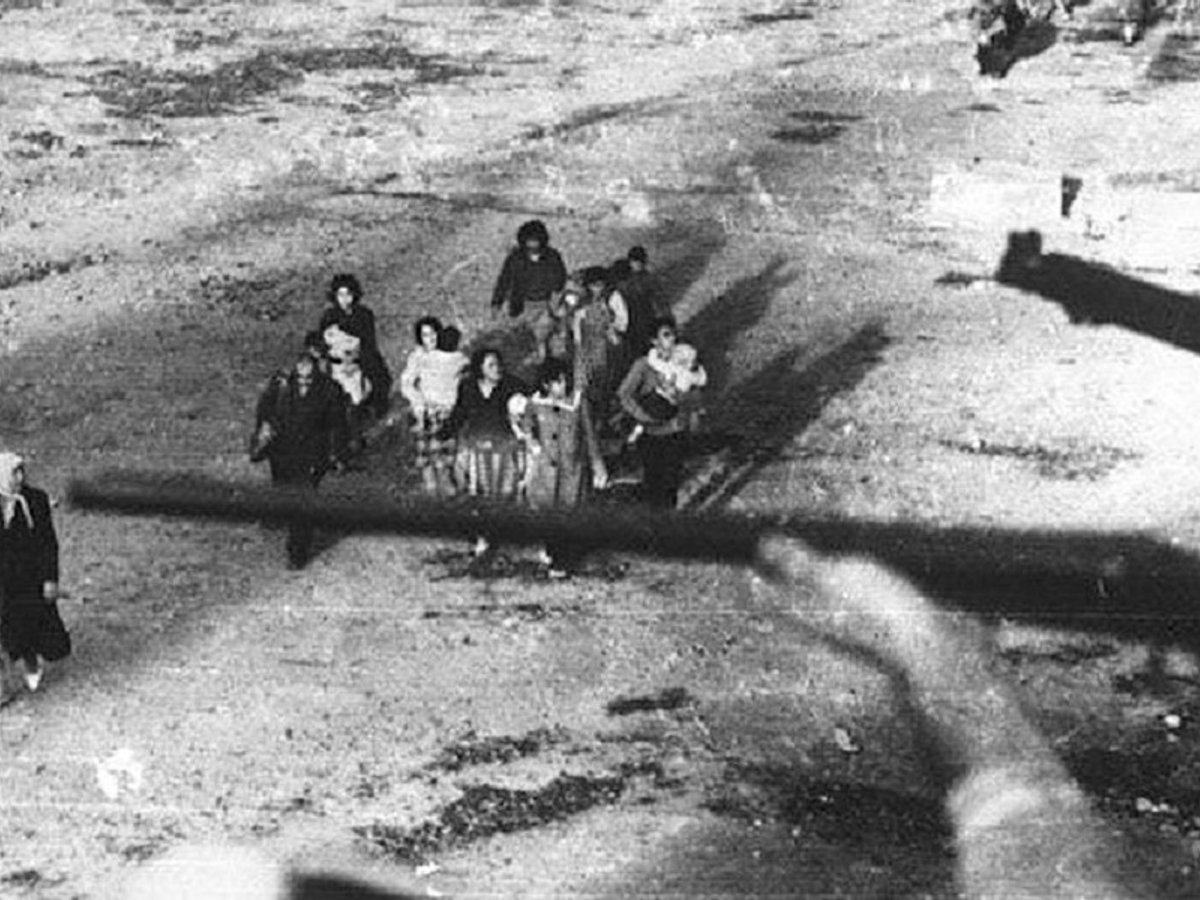
The oldest layer of the practice reaches back to the state’s founding. For two decades a security department of the Israeli defence ministry known by its Hebrew acronym, Malmab, has removed documents from Israeli archives, often without legal authority and in some cases resealing papers the military censor had already cleared, including material on the expulsions of 1948 that historians had published and cited. The largest archive in the country, that of the military itself, remains almost entirely sealed. One historian discovered that files he had quoted fifteen years earlier were no longer available to him. Among the documents withdrawn was an internal report on how Palestinian villages were emptied in the first months of the 1948 war, a record that complicates the official account of a population that left of its own accord. That is the British method in its Israeli form, the quiet withdrawal of evidence that had once been open.
The motive is consistent across both parts of this series. A state that claims to conduct its wars within the law draws standing from that claim both at home and in the international forums where it seeks support. Documented abuse, examined by courts it does not control, undermines the claim and attaches it to named individuals. Britain protected that standing with fire, with retention orders and with closed courts, and the effort succeeded for half a century because the state held the only copies of the evidence. Israel controlled the record of the Mavi Marmara in 2010 by the same means, through possession of the cameras. In Gaza it has held neither the cameras nor the copies. The decisive evidence was produced by its own soldiers, distributed before any censor intervened, archived by investigators within hours and entered into proceedings at The Hague before any deletion order took effect. The first part of this series ended at Akrotiri, where Britain still withholds its surveillance footage of Gaza on grounds of national security. The contrast with the footage Israel’s own soldiers chose to publish defines the present moment. A state can seal what it alone possesses. It has far fewer means to recall a confession its personnel have already made to the world, and the scale of the effort it devotes to trying remains the clearest indication of what that confession contains.
Settle, deny, seal: Britain’s formula for colonial torture, from Kenya to Cyprus — 1
Thomas Karat, behavioral analyst
In January 2019 the British government announced that it would pay one million pounds to thirty-three Cypriots who said they had been tortured in British custody during the uprising of 1955 to 1959. The statement that accompanied the money contained a sentence that readers in Nairobi would have recognised. The settlement, London said, did not constitute any admission of liability and set no precedent for any future claim against the government. Five and a half years earlier, announcing compensation for Kenyans tortured during the Mau Mau Emergency, the same government had kept its denial of liability intact and declared that the payment set no precedent for any other former colony. Two territories, two populations of torture survivors, and one formula, carried from one continent to another with its wording barely altered. A sentence that travels like that belongs to a method. The method has a history that runs from colonial bonfires in the 1950s through statutes still in force today, and it ends, for the moment, at a British air base on Cyprus that is still in operation.
The Cyprus Emergency began in 1955, when EOKA, a Greek Cypriot organisation seeking union with Greece, opened an armed campaign against British rule, a campaign London classified as terrorism. The violence ran in more than one direction. According to figures published by a Turkish Cypriot outlet, EOKA killed 371 British servicemen between 1955 and 1959, and its victims included Turkish Cypriots, the first of them a police sergeant, Abdullah Alparslan, killed in Paphos in 1956. None of this alters the legal position of a prisoner. The prohibition on torturing people in custody protects every detainee regardless of the cause he served, and it was the treatment of detainees that the British administration worked hardest to keep from view. Allegations of abuse circulated widely at the time, and the colonial authorities dismissed them as EOKA propaganda. No British soldier or policeman was prosecuted for torture during the uprising, although two officers of the Gordon Highlanders were court-martialled and convicted of causing actual bodily harm. The EOKA veterans’ association says that fourteen Greek Cypriots died under British interrogation, two of them aged seventeen. In 2022 new evidence on those deaths was published, drawing on testimony from British veterans and Cypriot fighters, post-mortem and morgue records, and photographs from the Cyprus State Archives that appear to show mutilation of the genitals; it was the first time British forces, intelligence services included, had been accused of a campaign of extrajudicial killing during the uprising. Among the thirty-three claimants who settled in 2019 was a woman who said that, at sixteen, she had been repeatedly raped by soldiers.
For half a century the documents that could have tested those accounts were officially said not to exist. They surfaced because of a lawsuit on another continent. In the course of the Kenyan litigation the Foreign Office conceded that it held thousands of files from former colonial administrations, around 9,000 from thirty-seven of them by one early count, long thought to have been destroyed. Among them were Cyprus papers in which British police and military officers themselves described the brutal treatment of suspected EOKA fighters and of civilians. Foreign Office documents released in July 2012 set out claims of torture and abuse from the Emergency years, and in July 2015 thirty-five Cypriots filed suit. Reporting on the newly available material, the Cyprus Mail found that the top-secret files showed suspected EOKA fighters and ordinary civilians alike had been brutally tortured in the course of the Emergency. Their lawyer had to persuade the government to let him see classified material, which meant repeated visits to Hanslope Park, the secretive Foreign Office site in Buckinghamshire where the colonial archive had been held. A Labour member of parliament of Cypriot descent observed that, in a matter where torture was certainly involved, the government would rather the case never saw the light of day. When the settlement came, the minister for Europe described the period before independence as a matter of regret, and pointed to the passage of time as a reason the claims could no longer be fairly tried. The passage of time in question included the fifty years during which the government had kept the relevant files out of reach. Even the settlement did not close the archive. During a later visit by the claimants’ lawyer to Cyprus it was announced that thousands of further classified documents bearing on torture allegations from the Emergency were due for release, which meant that, years after London had paid to end the case, part of the record it concerned had still not been opened. The pace at which that material reaches the public is still set by the department that withheld it in the first place.
The disappearance of those files had been planned with the same care as any other branch of colonial administration. From 1961 the colonial secretary, Iain Macleod, directed officers across the remaining territories to identify and remove any document that might embarrass the British government or its officials, together with anything open to reading as evidence of racial prejudice or religious bias. The criterion applied was reputational: a paper went to the fire according to the harm it could do to Britain’s name, whatever its military value. Files fit to pass to an incoming government were marked legacy. Files destined for destruction or for secret shipment to London were marked watch, and the instructions required that successor governments never learn such files had existed, so that where one was withdrawn from a series a dummy file took its place. The work was reserved for officers who were British subjects of European descent. Paper was burned and the ash broken up, or packed into weighted crates and sunk in deep water far from the coast. In Belize the files went up with help from the Royal Navy and several gallons of petrol. In British Guiana two secretaries fed papers into an oil drum on the grounds of Government House until the army lent a hand. In Aden a committee of three began burning in 1966, a full year before the British withdrew. In Malaya five lorry loads were driven to the naval base in a single purge, a destruction so conspicuous that officers in Kenya were later warned against repeating it. Each completed destruction produced a signed certificate for London. The programme was called Operation Legacy.
Kenya was where the concealment finally broke. Three elderly survivors of the detention camps of the Mau Mau Emergency, who had been beaten and sexually mutilated in British custody, sued the Foreign Office. One of them described in his witness statement a period before independence in which men were castrated and women raped. The department fought the claim for three years, arguing first that liability for colonial conduct had passed to the independent Kenyan state in 1963, a position the High Court rejected. It was during that litigation, more than a decade after the case began, that the hidden archive came to light. Historians who had argued for years that the records had been removed and concealed were vindicated, after a long period in which the government had been content to let them appear mistaken rather than acknowledge what it held. The files became catalogue series FCO 141 at the National Archives, some twenty thousand files from around forty former territories. On 6 June 2013 the foreign secretary told the House of Commons that the government would pay £19.9 million) to 5,228 claimants and that it sincerely regretted the abuses, in a statement that preserved the denial of liability and the refusal of precedent that Cyprus would hear in 2019.
The formula performs a precise legal function. A payment made without admission of liability produces no finding against the state, and no court ever pronounces on what the files show. A payment declared to set no precedent obliges every other group of victims, in every other former territory, to begin from nothing, against a defendant that holds the documents and controls the pace at which they emerge. The Cypriot claimants learned from the Kenyan case that settlement was possible, and their lawyer said publicly that the government’s resistance in Cyprus had been ill advised because the Mau Mau case had already shown where such litigation led. The government nonetheless repeated the full sequence, resisting the claims, contesting access to the files and finally settling without admission. Kenya also received a memorial in Nairobi, unveiled as a symbol of reconciliation, while no comparable memorial has been offered to Cyprus. Each case is handled as an exception, which is the outcome the formula is designed to secure.
An incomplete record does not leave a neutral space behind it. It leaves room for partisan shorthand, and the shorthand settles on whichever community has the least access to the documents. When the BBC reported the 2019 settlement, its story described Turkish Cypriots as thugs, wording the broadcaster later apologised for and removed. The Emergency years shaped relations between the island’s communities, and a full account of them, drawn from the files rather than from competing memories, serves Turkish Cypriots and Greek Cypriots alike. The party that has kept that account incomplete is the former colonial power, whose officers wrote the reports and whose ministries still decide which of them may be read.
The fire was the crude instrument. The durable one is statutory and still operates. The Public Records Act provides that records selected for permanent preservation pass into public view within twenty years, a period reduced from thirty in 2010. The same section allows a department to keep records back if they are required for administrative purposes or ought to be retained for any other special reason, and in its broadest application it permits a blanket retention covering an entire class of files, reviewed once every ten years. In 2013 the Foreign Office was found to be holding a further body of material it called its special collections, estimated at the time at 1.2 million files and occupying roughly fifteen miles of shelving, held for years in breach of the Act. The justice secretary responded by signing a blanket authorisation that converted the breach into lawful retention, and a group of historians considered a legal challenge under both the Public Records Act and the Freedom of Information Act. The colonial files of Hong Kong remain closed under an order set to run until 2047. In 2015 the power to approve retention moved from the Lord Chancellor to a Secretary of State, and the authorising document was renamed from a Lord Chancellor’s Instrument to a plain Retention Instrument. The Lord Chancellor’s role had carried a measure of independent oversight of the public records system, and the change moved the decision closer to the departments that hold the records and have reasons of their own to keep them closed. Between 2017 and 2019 the British army’s headquarters in Kenya destroyed most of its physical files created before 2015, years after ministers had expressed regret in Parliament for precisely this kind of loss.
Destruction and retention govern what reaches the record. A third instrument governs what reaches the courtroom. English law has held since Lord Hewart’s judgment of 1924 that justice must manifestly be seen to be done, and the principle has long been treated as part of the rule of law itself. The Justice and Security Act of 2013 introduced closed material procedures into ordinary civil litigation for the first time. Where the government is sued over the conduct of its own agencies, it may now rely on evidence that the claimant and the claimant’s own lawyer never see. A security-cleared special advocate reads the material in their place and is then barred from discussing it with the person whose interests he represents. Special advocates themselves told Parliament the procedures were inherently unfair and contrary to the common-law tradition. The Law Society warned that the Act damaged the equality of arms on which a fair trial depends. A recently retired Law Lord described the legislation as so radical a departure from open justice that every available safeguard should be built in against its use, and the government’s own equality and human-rights watchdog judged the Bill incompatible with European human-rights requirements. Parliament passed the Act regardless of these objections. In 2014 prosecutors applied to hold an entire terrorism trial in secret, with the defendants kept anonymous. The Court of Appeal refused a complete blackout, holding that criminal trials must be public and defendants named, and recorded its grave concern at what had been attempted. The core of the trial still proceeded in private, with a small group of journalists admitted on terms that kept almost everything they heard out of print and their notebooks in the court’s custody.
The two efforts were assembled side by side. The Justice and Security Act received royal assent on 25 April 2013. Six weeks later, on 6 June, the same government expressed in the Commons its regret for colonial torture whose evidence it had withheld for fifty years and surrendered only under compulsion of a court. An apology for an old concealment and the legal machinery for future concealment came from one administration within a single parliamentary season. Six years after that, the Cyprus settlement repeated the words of the apology while the machinery remained in place.
The motive is legible in the record itself. A state that presents itself abroad as a custodian of the rule of law, and that sits as one of the guarantors of an independent Cyprus, draws much of its standing from the claim that its own conduct can withstand scrutiny. Documented torture, examined in open court, falsifies that claim and attaches names to it. The instruments differ in where they intervene, and they protect the same asset. Destruction prevents evidence from ever reaching a court. Retention keeps surviving files from historians for decades at a time, and closed procedures keep evidence from the public even after it reaches a judge. The Court of Appeal named the stakes in its 2014 judgment, describing open justice as a hallmark of the rule of law, a guarantee that the conduct of the state in its own courts can be watched by the people in whose name it acts. Each instrument described here is a way of declining that watch. Sustained over half a century, the expense involved gives some measure of the value placed on that asset. A government does not maintain a secret archive for fifty years, legalise its retention when exposed and redesign its own civil procedure in order to protect material it regards as harmless.
On Cyprus the British state retains more than archives. Under the 1960 Treaty of Establishment the island became independent with the exception of two areas at Akrotiri and at Dhekelia, which remained under British sovereignty, and under the accompanying Treaty of Guarantee, Türkiye and Greece, together with the United Kingdom, undertook to guarantee the independence of the Republic together with its territorial integrity and its security. From Akrotiri, beginning in December 2023, Royal Air Force Shadow R1 surveillance aircraft flew hundreds of missions over and around Gaza, at least 518 according to an investigation by Action on Armed Violence for Declassified UK, a figure the charity later put at 606. The Ministry of Defence has said the flights served only to help locate hostages, and has refused to say whether it shared live surveillance footage with Israel. It has confirmed, in answer to a freedom-of-information request, that it holds video of Gaza from a flight on 1 April 2024, the day Israeli strikes killed seven international aid workers, three of them British military veterans, and it has declined to release that footage on national-security grounds.
The island on which British officers once kept colonial files out of reach now hosts a British base whose record of a present war is withheld on familiar grounds. The reflex traced here through Kenya and Cyprus belongs to no single state. The second part of this series follows it to Israel, whose conduct in Gaza and the West Bank has been recorded on a scale no archive was built to contain, much of it by Israeli soldiers themselves, and whose authorities have since worked to remove that record from the platforms where it first appeared. Britain’s method assumed that evidence could be held in one place and managed over decades. What becomes of that method when the evidence exists everywhere at once is the question the second part examines.

IRAM expert Oral Toğa assesses Middle East shifts after US vote

Netanyahu Arab party attack triggers crisis over coalition

Fico accuses Merz of blackmail over threat to veto EU budget

US Senate panel seeks records in Trump-linked crypto investigation

Europe ready for arms and missile control talks with Russia, FT says
-
 Diplomacy1 week ago
Secular dress code dispute exposes deeper Türkiye-Azerbaijan strains
-
 Russia2 weeks ago
US and Russia weigh energy deals and corporate return in peace talks
-

 Europe2 weeks ago
Merz visits Asia to seek new markets for German defence firms
-
 Middle East2 weeks ago
US warns Gulf allies of possible Iran strikes after midterms
-
 Opinion2 weeks ago
Gaza exposes the myth of the “most moral army in the world”
-
 Europe5 days ago
EU urges citizens to prepare 72-hour survival kits for crises
-

 America2 weeks ago
Bolsonaro reportedly leaves Brazil on jet linked to scandal-hit firm
-
 Asia1 week ago
China expands Africa arms sales, displacing France and Western rivals
