
Diplomacy
Canada hits US with retaliatory tariffs on over 700 products

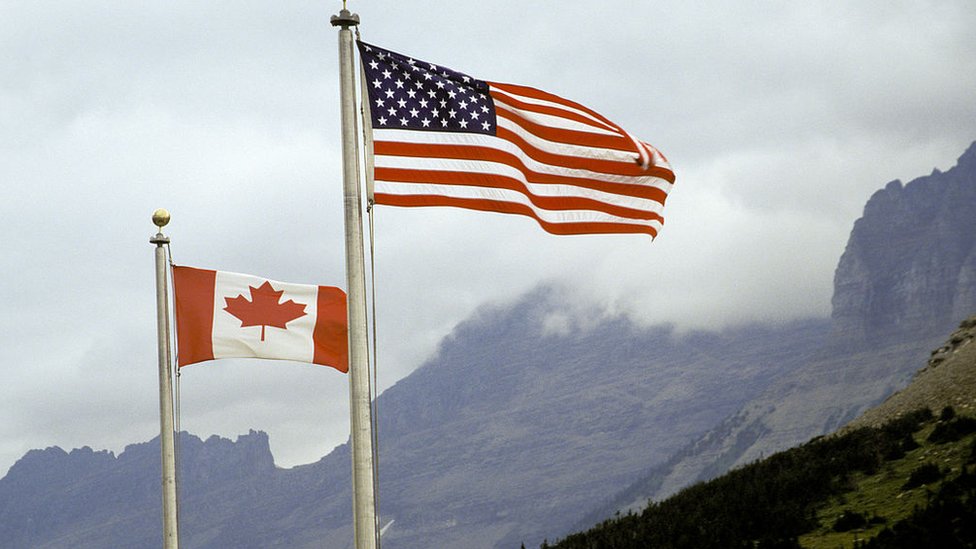
Canada has responded to the Trump administration with retaliatory tariffs targeting more than 700 products.
Through these measures, Ottawa dealt the heaviest blow in particular to the American steel and aluminium sectors.
Announced on Tuesday, these retaliatory measures come in response to new 50% tariffs imposed by the US on Canadian imports after negotiations between the two nations collapsed last week.
According to statements made to reporters by a senior government official, the objective of the Canadian government is not to generate revenue from the tariffed goods.
Speaking to discuss the new retaliatory measures, the official noted that the primary purpose is to protect the domestic market share of Canadian companies affected by the new US tariffs.
The tariffs stand at rates of 15%, 25%, and 50%, targeting a range of US exports to Canada that primarily include steel and aluminium products, fishing rods, gym equipment, seafood, household appliances, and apparel. These tariffs will take effect on 8 September.
Ottawa is responding to a new 50% tariff imposed by the US last week on approximately $20 billion in imports from Canada after negotiators failed to reach an agreement to avert the new levies.
Both American and Canadian officials blamed each other for making last-minute demands that ultimately scuppered the deal.
US officials alleged that Canada covertly introduced demands for lower tariffs on heavy trucks.
Prime Minister Mark Carney, however, pointed to a power struggle between US Trade Representative Jamieson Greer and Commerce Secretary Howard Lutnick as responsible for altering the terms of an agreement that went from acceptable to unrecognisable within 72 hours.
Implemented for the first time under Section 338 of the Smoot-Hawley Tariff Act, the US tariffs were intended to punish Canada over its dairy retail policies, retaliatory car tariffs directed against Section 232 duties, and provincial bans on the sale of American liquor, as well as to force a breakthrough in the impasse surrounding bilateral negotiations on reviewing the United States-Mexico-Canada Agreement.
Canada is also allocating 7.5 billion Canadian dollars in new funding for domestic support programmes to cushion the blow of the new tariffs for small and medium-sized Canadian enterprises, in addition to approximately 25 billion Canadian dollars Ottawa has set aside over the past 18 months for affected workers.
Sharp reaction from Ontario Premier Ford
Doug Ford, Premier of Canada’s largest province, Ontario, used harsh words regarding US President Donald Trump.
Stating, “I don’t answer to a dictator like Trump,” Ford characterised the President as a “loser” and the “king of bankruptcies,” adding that he “can kiss my ass” and asserting that Trump was in fact imposing tariffs on his own people.
Ford had remarked: “I don’t answer to a dictator like President Trump, a bully like President Trump. I’m not taking any advice from a guy who’s the king of bankruptcies.”
Ford concluded his remarks by stating: “Let’s be blunt, I don’t like the guy; it’s that simple.”
Embarking on a subsequent media tour across American networks, Ford adopted a more conciliatory tone. Speaking first to CNN, the premier acknowledged that “the temperature got a little high and it got personal,” and said:
“I want to make a deal. A good deal for the American people, a good deal for Canadians. We are the two greatest countries in the world, we are each other’s number one customers, and it is time to get back to the negotiating table.”
Trump, in a post on Truth Social, had described Ford as “the less charismatic, less intelligent, and overall unimpressive brother of the late, great Rob Ford.”
Discussing Trump’s trade strategy regarding the US’s northern neighbour with CBS Chief Washington Correspondent Major Garrett, Ford later said: “He treats us as if we were Communist China. We are the closest friends and allies the US has in the entire world, and I want to keep it that way.”
Commenting on Trump’s proposal to rename Lake Ontario as “Lake America”, Ford said: “When he comes up with ideas like that, I can’t help but laugh. Here in Canada, it will always remain Lake Ontario. … Whether he wants to call it Lake America or Lake Trump, whatever name he wants to give it, that is his right.”
In his statement to CNN, he had said:
“I think it’s complete rhetoric. When President Trump wants to attack our sovereignty, our businesses in Ontario, and our people, I cannot remain silent. My job is to protect Ontario and protect Canada.”
‘US constantly changes the rules’
Asserting that Washington “constantly changes the rules,” Ford said: “We thought we were going to reach a deal, but they changed it repeatedly.”
Asked whether the US had introduced any last-minute demands, Trump told CNN: “that sounds like me.”
Should the trade agreement fail to enter into force, Ford argued that both nations would face hardship, particularly in sectors with heavy cross-border commerce such as automobile manufacturing.
In the past, he had also raised the prospect of imposing a surcharge on electricity sent from Ontario to the US.
“If you attack your largest customer… the outcome won’t be very good,” the premier said.
Ford acknowledged that Canadians would also bear the cost of the trade war. Pointing to the $40 trillion US national debt, however, he argued that Canada, which has pledged assistance to affected businesses and workers, possesses the strength to weather the storm.
Ford said: “There will be pain on both sides of the border. This will affect Americans just as much as it affects Canadians. The only difference is that we have the fiscal stability to support our businesses, and we are diversifying trade around the world.”
A French-language intervention by Trump in Quebec?
Meanwhile, another point of friction amidst the trade war appears to have been the French language.
On Saturday, Canadian Prime Minister Mark Carney lamented what he described as “threats to the French language” and “Quebec culture,” telling reporters in French that these were “unacceptable” and had contributed to “bringing an end to this phase of negotiations.”
On Tuesday morning, amid ongoing mutual recriminations over responsibility for the trade war between the two nations, Donald Trump denied allegations that the White House had attempted to interfere with the French spoken in Quebec.
Trump wrote: “I would never interfere with Canadians speaking French! In fact, I never even thought of doing such a stupid thing,” and continued:
“This lie was concocted by a weak and ineffective prime minister in an effort to regain political support he has completely lost among the people of Quebec. I love French Canadians!”
Ahead of the elections to be held in Quebec in October, White House officials argue that Carney has exaggerated the French-language issue.
In an interview aired on CNBC on Monday, Trump’s Trade Representative Jamieson Greer described the accusations as a “ludicrous and fabricated story.”
Greer said the dispute arose from a rule that “forces American tech companies to hand over a percentage of their earnings to their competitors in Canada.”
Canada’s call on other US allies to ‘wake up’
Canadians believe that Carney’s remarks calling on “middle powers” to unite during his speech at this year’s World Economic Forum were not made in vain.
A Canadian official with knowledge of the trade talks, speaking to Politico, said the 50% tariffs imposed by the US president last week on $20 billion in Canadian goods ought to serve as a warning to Ottawa’s allies.
Noting that other nations were attempting to appease Trump, the official said that even Canada, which stands to lose the most given how tightly intertwined it is with the US economically and geographically, had stepped forward and “shown some pride.”
In a statement on Monday, Carney said: “This autumn, we will begin intensive negotiations to establish a much stronger and deeper economic and security partnership with the European Union, the world’s second-largest economy. We can provide such unique access because we can be trusted.”
British Columbia Premier David Eby said: “Frankly, I think other countries are watching the measures Canada has taken, and hopefully, I hope, they will follow this example. At some point, the rest of the world will say ‘enough is enough.’”
EU and UK cautious
European Parliament Committee on International Trade Chair Bernd Lange immediately voiced solidarity with Canada.
However, the European Commission, EU leaders, and the United Kingdom have refrained from publicly taking sides.
Behind the scenes, German Chancellor Friedrich Merz met with Carney on Monday.
Asked whether the EU would stand with Canada following Trump’s tariff threats, deputy chief spokesperson Arianna Podesta stated on Tuesday: “The US and Canada are important trading partners for the European Union, and of course, we continue to work in close cooperation with both, aiming to preserve stability and predictability in both transatlantic and global trade.”
The UK also appears unlikely to join a collective resistance against Trump. Head of Trade Policy at the British Chambers of Commerce William Bain said, “Both the US and Canada rank among the UK’s most important trade and investment partners,” adding that “no one stands to gain from an escalation of this trade dispute.”
Trump’s threats to levy new tariffs on the UK over its Digital Services Tax have also prompted Prime Minister Andy Burnham’s government to announce that it remains “open to discussing US concerns” regarding the revenue collected from US tech companies.








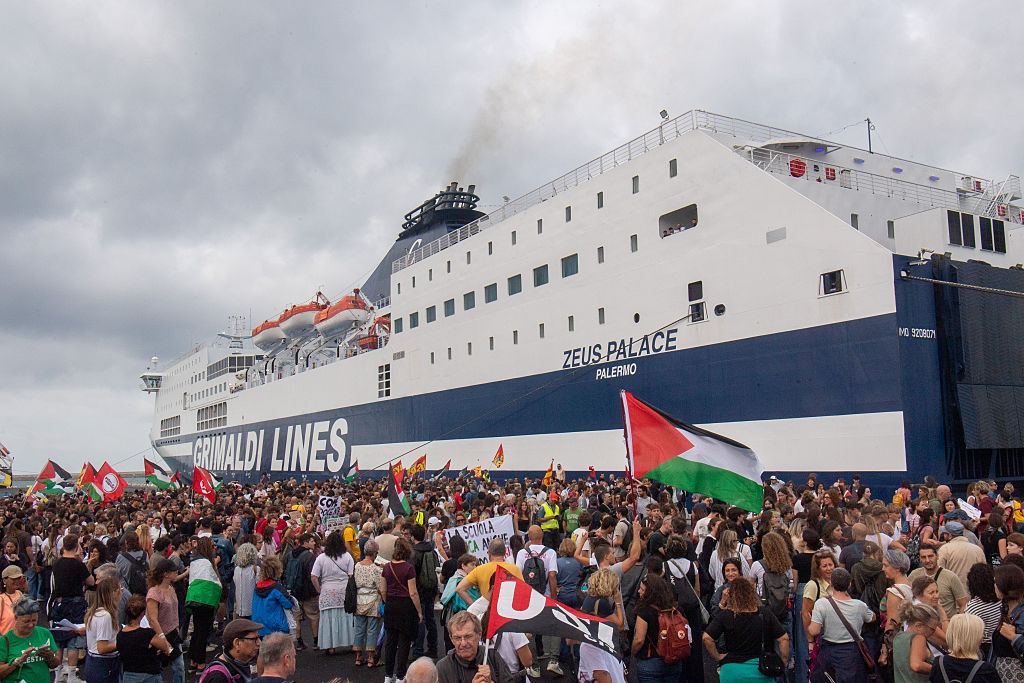
Dockers at 111 ports across 22 countries and territories will down tools on Friday as part of a coordinated anti-war strike.
So far, more than 25 dockers’ unions, spanning from Marseille to Mumbai, Hamburg to Montevideo, and Melbourne to Oakland, have announced their participation in the walkout.
Just days ago, the figure stood at approximately 100 ports in 17 countries, a tally that excluded dozens of unions from other sectors that had pledged their support.
The striking workers’ primary demand is that no weapons or military cargo pass through their ports.
In France, the main dockers’ union states that 95% of the country’s ports will be shut down.
Twenty-four-hour strikes will take place in Italy, India, Greece, and Türkiye, while work stoppages of up to two hours are scheduled in Morocco and Cyprus, alongside rallies planned in port cities across the globe.
In Greece, metalworkers, ship repair workers, and youth are joining the dockers, while in the US, International Longshore and Warehouse Union (ILWU) Local 10 is striking in Oakland and San Francisco.
The unions are taking the Istanbul Declaration, signed in May, as their basis, with each determining its own form of participation.
They are also fighting for their own jobs, resisting layoffs driven by automation, and campaigning for contracts, pay increases, shorter working hours, and job security.
The unions draw attention to escalating wars in Ukraine and the Middle East, pointing to the risk of a wider, general war.
They also condemn new crimes committed by Israel in Hebron, carried out with the support of the US, NATO, and the EU. According to the UN, Israel’s blockade of the city has entered its sixth day, and more than 3,000 Palestinians have been displaced. Palestinian trade unions are backing Friday’s action.
In Italy, the struggle has spilled beyond the docks. The USB union has called a nationwide general strike.
Last night, the Italian government ordered transport workers to return to work. The USB declared that it will not comply with the order, choosing to risk heavy penalties instead.
Calling on workers and young people everywhere to show solidarity with dockers, the unions declared: “Ports should be for peace and for peoples, not launch pads for war.”
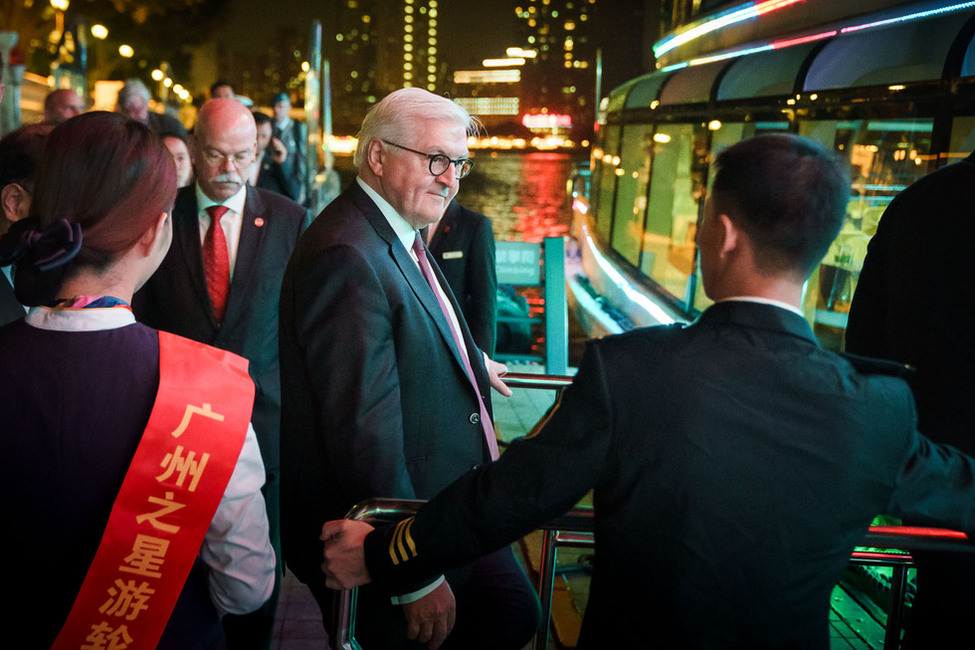
German President Frank-Walter Steinmeier is seeking to prevent further escalation in tensions during his latest official visit to China.
China remains exceptionally important for key sectors of the German economy. The Asian giant is the second most critical foreign location for German companies.
As reported by German Foreign Policy, investments by these companies in China total over 110 billion euros. By comparison, German investment volumes are higher only in the US and Luxembourg, with investments in Luxembourg largely driven by tax advantages.
German companies also continue to invest in China. In the first half of 2026, they carried out investments of around 5.6 billion euros, surpassing even the 4.3 billion euros invested in the US.
In addition, automotive groups, among others, are increasingly conducting research and development activities in the People’s Republic of China.
According to a recent assessment by an expert from the Cologne Institute for Economic Research (IW), some companies are using this fast-developing country as a “fitness centre”.
At the same time, however, China’s importance as a sales market is declining sharply: German exports to China fell from 107 billion euros in 2022 to just 81 billion euros in 2025.
Above all, China’s exports to Europe and particularly to Germany are surging, threatening to erode the market share of the flagship sectors of German industry on their domestic market, especially automotive, mechanical engineering, and the chemical industry.
EU prepares moves against China
The EU is responding with defensive measures, but this remains a sensitive issue.
Should China retaliate, it could cause severe damage, particularly to German industry, given its substantial presence in the country.
In October 2024, Brussels imposed high tariffs on electric car imports. As Chinese manufacturers subsequently began exporting hybrid models to Europe on a large scale, debate quickly emerged over introducing high tariffs on these vehicles as well.
Meanwhile, measures targeting machinery and chemical imports are also being prepared, as European Commission President Ursula von der Leyen announced at the latest EU summit held in Brussels in mid-October.
The EU is additionally working on a package known as the “second-strike instrument”. German Chancellor Friedrich Merz and French President Emmanuel Macron recently called for the deployment of this mechanism in a joint letter to the Commission.
The objective of this tool is to enable robust measures in situations of intense economic power struggles, including the partial or even total exclusion of third-country companies from the EU single market within just a few days.
Under the proposal, the European Commission would be able to decide on such measures on its own initiative. In that scenario, member states insisting on the adoption of the measures would reportedly be less easily identifiable, allowing them to hope to avoid Chinese retaliation.
Hybrid vehicle compromise
According to German Foreign Policy, doubts about whether the EU could survive an open economic war against China rest on solid ground.
In mid-June, the Financial Times reported that experts from think tanks and academia had simulated escalating economic clashes between the two sides in a tabletop exercise.
In that simulation, Brussels failed to bring Beijing to its knees; on the contrary, it would probably have lost an open economic war.
Against this backdrop, the EU agreed to settle the dispute over Chinese hybrid car imports through negotiations.
A few days before the mid-October EU summit, EU Trade Commissioner Maroš Šefčovič managed to outline such a resolution during talks in Beijing with Commerce Minister Wang Wentao.
Under the agreement, the volume of hybrid cars exported from China to the EU, which stood at around 302,000 units in 2025, will be capped from December at an annual 350,000 units; more precisely, 350,000 units plus 6% per year.
This arrangement is envisaged to remain in effect for four years, granting EU carmakers some breathing space to catch up with their Chinese rivals.
Similar arrangements are being discussed in mechanical engineering and the chemical industry, as well as potentially in pharmaceuticals.
China counter-moves: Export controls
While the EU pursues this track and prepares its economic “second-strike instrument”, the People’s Republic of China is taking steps to secure leverage in current economic power struggles.
These measures are directed primarily at a potential escalation of the economic war with the US, which is currently more or less frozen, but in a worst-case scenario they could also be deployed against the EU.
Specifically, Beijing is preparing new export controls that go beyond the restrictions on rare earth elements with which China succeeded in blunting an unprecedented US tariff and sanctions offensive.
As reported early last week, the People’s Republic of China plans to subject exports of roughly 40 technologies, spanning artificial intelligence (AI), biotechnology, and photovoltaics, to strict licensing conditions, or even prohibit them outright.
The stated rationale is that the country merely wishes to take steps to “safeguard national security”, in an overt mirror of the primary justification invoked by the US for a wide array of embargo measures.
With critical technologies subject to restricted export or barred entirely, relocating the production of certain goods such as photovoltaic cells away from China to foreign locations will become harder, a shift that could also affect European firms.
Steinmeier visits China: Can he defuse tensions?
Against this background, German President Frank-Walter Steinmeier arrived in China on Monday for his latest official visit.
On the first day of his trip, Steinmeier visited the Volkswagen Group facility in the metropolis of Hefei.
Volkswagen operates a research centre there employing around 3,000 engineers, designed to keep pace with the rapid development of electric mobility in the People’s Republic of China.
Innovations developed in Hefei are transferred at times to facilities in Germany, helping prevent them from falling further behind internationally.
Hefei has transformed into a high-tech hub on the back of heavy investment in emerging sectors such as artificial intelligence, semiconductors, and new energy vehicles.
VW plans to supply Central Asian and particularly South-East Asian markets from its Chinese facilities to preserve competitiveness across these regions.
Marking the Federal President’s trip, the Office of the Federal President stated that the goal was not “decoupling from China”, but rather sustaining “close and resilient economic relations”.
According to reports, Steinmeier coordinated not only with Federal Chancellor Friedrich Merz, who is currently visiting Japan, but also with EU Trade Commissioner Maroš Šefčovič, who is pursuing robust trade policy alignment with the People’s Republic of China in line with German industrial interests.
Steinmeier is eager to support this effort and is accompanied notably by Peter Leibinger, president of the Federation of German Industries (BDI).
The president will then travel to Beijing to hold talks with top leaders, including his Chinese counterpart Xi Jinping and Premier Li Qiang, before concluding his visit.
His office noted that the visit seeks to “address Germany’s multifaceted and complex relations with China and the challenges confronting them”, while his time in Anhui will highlight “China at the turn of the century around 1900 and the significance of this era in the history of German-Chinese relations”.
According to the South China Morning Post, the selection of Anhui underscores Berlin’s emphasis on dialogue despite deteriorating bilateral ties amid rising trade tensions, driven by German concerns that fierce Chinese competition could erode Germany’s manufacturing core.
German leader’s packed China itinerary
Before heading to Beijing, Steinmeier will also visit the historic village of Hongcun and Mount Huangshan, sites that the German presidency noted bring together “nature, architecture, and philosophy”.
In the capital, Steinmeier will tour the Institute of Atmospheric Physics under the Chinese Academy of Sciences to evaluate climate cooperation, followed by an address at Peking University. Xi is subsequently expected to receive him with full military honours.
Visiting leaders’ regional engagements extend well beyond Anhui, with China’s financial capital, Shanghai, remaining one of the most sought-after stops.
In January alone, the city hosted South Korean President Lee Jae Myung and British Prime Minister Keir Starmer, while a visit in August by King Abdullah II of Jordan further cemented Shanghai’s standing as a gateway to Chinese technology and consumer markets.
Just south of Shanghai, Hangzhou has emerged as a similarly vital diplomatic destination. Once renowned primarily for the classical scenery of West Lake, the capital of Zhejiang province has evolved into an innovation hub drawing foreign heads of state with itineraries centred on robotics, e-commerce, and advanced manufacturing.
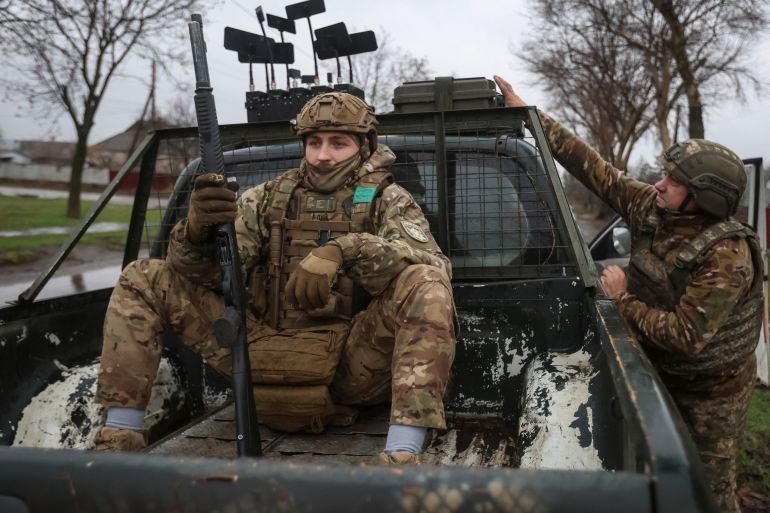
The Ukrainian government is preparing a new mobilization model that fundamentally alters military deferrals, requiring businesses to systematically supply personnel to the armed forces in exchange for shielding other employees from service.
Prime Minister Serhiy Koretskiy announced that under the draft framework, which is scheduled for completion by 1 December, enterprises will pledge to send a designated quota of staff into the ranks of the Armed Forces of Ukraine to secure exemptions for remaining workers.
Speaking at the Kyiv International Economic Forum, as reported by the Interfax-Ukraine news agency, Prime Minister Koretskiy said the objective is to end the practice of drafting men off the streets.
Describing the projected structure as an idealistic social contract, Koretskiy said: “Let us establish a social model where employees are safeguarded, but businesses also commit to providing a predictable flow of mobilization for the military. If we can devise such a formula, the necessity of searching for people on the streets will also be eliminated.”
Koretskiy noted that deferrals will be renewed for over 90% to 95% of staff in critical sectors such as fuel, energy, and the defence industry. He emphasized that the criteria defining an enterprise as critical will be decoupled from economic exemption standards.
The prime minister stated that this regulatory change will curb unjustified deferrals, prevent an economic collapse, and bring certainty to the rotation expectations of soldiers serving on the front lines.
In separate remarks delivered the previous week, Koretskiy noted that the government intends to preserve exemption rights for companies that sustain national defence capacity and vital everyday services, while simultaneously increasing criminal penalties for unauthorized absence from military units and draft evasion.
Immediately following these statements, the official resolution overhauling the mobilization deferral system was published on the Ukrainian government website.
According to details reported by the UNIAN news agency, state institutions and regional administrations will review existing criteria and audit every business previously granted “critical” status within 10 days of the regulation entering into force.
Enterprises that no longer satisfy exemption conditions or whose justifications have lapsed may have the status rescinded prematurely.
A new coordination centre is being established to administer the process. This body will issue advisory decisions regarding the granting or revoking of critical enterprise status, as well as requests to raise exemption quotas.
The bureaucratic procedure limits the initial review to a maximum of 7 working days, after which the coordination centre will have up to one month to assess the file. A final decision must then be rendered within 3 working days of the recommendation reaching the commission.
For select enterprises operating in the energy and defence sectors, the ceiling for staff exemptions has been capped at 95%. However, this entitlement will apply strictly to personnel directly engaged in production processes.
Authority to raise the exemption quota above the 95% threshold will depend entirely on special approval issued by either the Ukrainian Defence Ministry or the Energy Ministry.
The compliance history of company leadership will directly influence the procedure; quota increase requests may be rejected outright if executives have violated military registration requirements two or more times in the preceding 12 months, or if they have received administrative fines on those grounds.
Companies granted quota increases will have 10 working days to conclude the required formalities.
If an enterprise fails to formalize worker deferrals through Diia, Ukraine’s digital public services portal, within this timeframe, the supplemental quota allocation will be revoked entirely. All approved exemption quotas will remain valid for a maximum duration of one year.
Martial law and general mobilization, which were declared in Ukraine on 24 February 2022, have been extended at regular intervals ever since.
On 26 October, the Ukrainian parliament renewed these measures for the 21st time, approving a 90-day extension that runs until 29 January 2027.
Under current legislation, men aged between 25 and 60 who are deemed fit for military service are directly subject to mobilization.
Men under the age of 25 are classified under conscription call-up status and are not dispatched to the front line through general mobilization.
Individuals in this age bracket retain the right to travel abroad between the ages of 18 and 22 via an age-based exception, but they lose this entitlement upon turning 23.
Front-line manpower deficits have long prompted authorities in Kyiv to pursue reforms to the military recruitment framework and to tighten deferral requirements.
The Defence Ministry announced in February that extensive measures were planned, including the automation of deferral procedures and adjustments to the operations of Territorial Recruitment and Social Support Centres (TZK), which function as enlistment offices.
In April, Member of Parliament Roman Kostenko stated that the ministry planned to separate the recruitment duties of draft centres from their social assistance responsibilities, while the possibility of transferring certain mobilization enforcement checks to the police was also raised.
By August, Kostenko reported that the Defence Ministry was examining radical measures, including potential alterations to the mobilization age.
Shortly before that, Minister of Digital Transformation Oksana Ferchuk announced that oversight over exemptions, particularly in the information technology sector, would be significantly restricted.
Meanwhile, the Ukrainian military’s requirement for front-line reinforcements grows on a daily basis.
In an assessment delivered on 31 August, Head of the Office of the President of Ukraine Kyrylo Budanov stressed that the military must enlist at least 30,000 individuals each month to sustain its combat effectiveness.
As forced mobilization for the front lines accelerates, objections to heavy-handed practices by recruitment centre personnel have multiplied.
Official complaints concerning draft office personnel stood at just 18 in 2022, before surging to 514 in 2023 and 3,312 in 2024. The influx of grievances continued unabated, peaking at 6,127 official complaints according to 2025 figures.

Global dockers strike against war and arms transit to Palestine

Putin proposes Arctic energy cooperation to US to ease gas sanctions

Vučić scrapped plan to hold power after phone warnings, report says

EU scrambles for takers for remaining €21B in SAFE defence loans

Bolsonaro reportedly leaves Brazil on jet linked to scandal-hit firm
-
 America2 weeks ago
How Elon Musk fuses private empire with state power, Ben Tarnoff explains
-
 Europe2 weeks ago
AfD leader Weidel calls funding lost Ukraine war a grave mistake
-
 Middle East2 weeks ago
Egypt delays parliamentary vote on deploying troops to Saudi Arabia
-

 America1 week ago
US wealthy demolish multimillion-dollar mansions for land
-
 Europe1 week ago
EU rejects US proposal to resume Russian gas flows through Ukraine
-
 America1 week ago
At least 47 major US data centre projects halted or cancelled
-

 Middle East1 week ago
Netanyahu unveils security doctrine and regional alliance map
-
 Middle East1 week ago
Netanyahu trails Eisenkot in Israeli polls despite Trump backing
