
Diplomacy
Five minutes to doomsday – 1: Thiel in search of the Antichrist

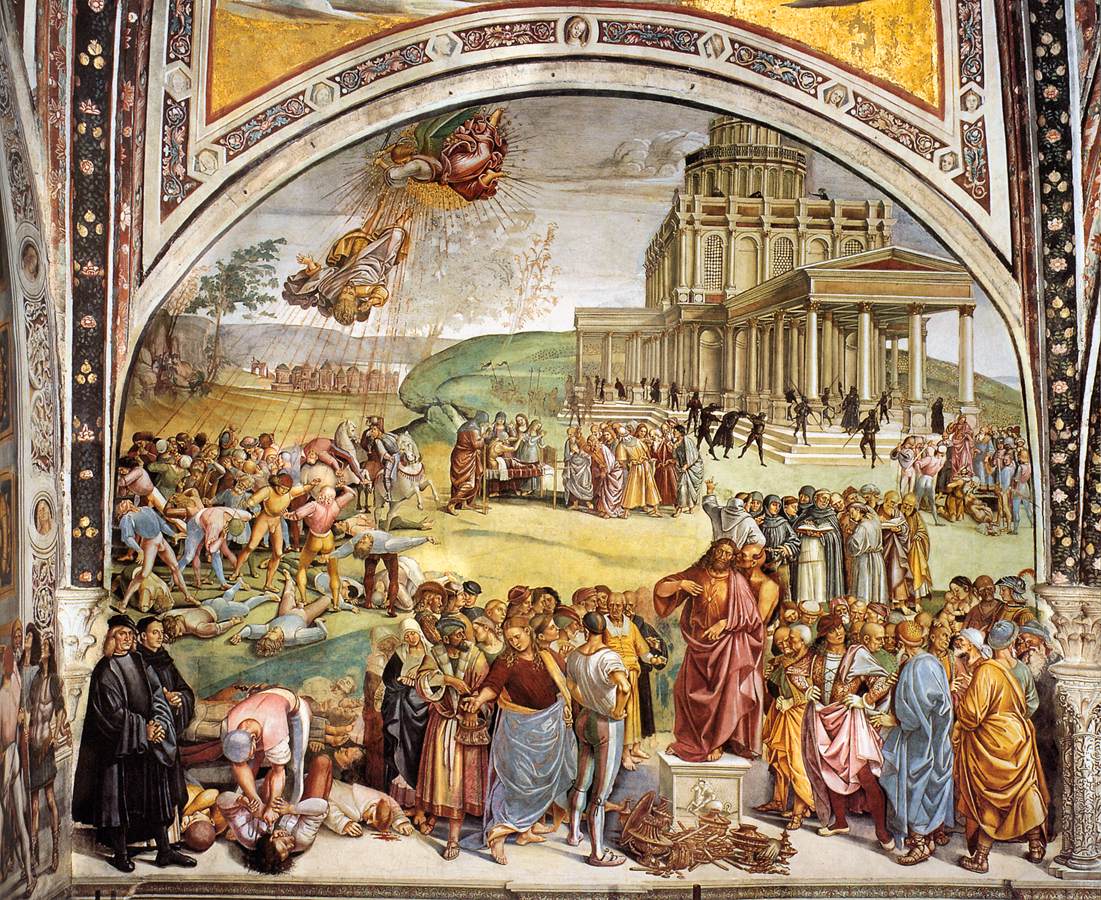
On August 22, Pope Leo XIV visited San Marino, widely recognized as the “world’s oldest republic,” where he spoke in praise of Thomas More, the “patron saint of statesmen and politicians.”
More, who refused to recant his convictions even upon the scaffold, was for Leo the living embodiment of freedom and conscience. In his pursuit of truth, he felt accountable to no one save God—not even the king.
Addressing the Grand and General Council of San Marino, the Pope went on to declare his opposition to “the idolatry that fundamentally corrupts political and economic projects that arise in the name of freedom, yet are in truth enslaved to idols and power.” According to the Christian vision he espoused, “freedom and communion either stand or fall together.”
After dwelling at length on the meaning of the word “freedom” (libertas), which forms part of this small republic’s motto, the Pope came to the crux of the matter:
“In the historical context of a people and a state, this word undoubtedly expresses the desire for self-determination and freedom from dependence on other political authorities. I wish to emphasize that there can be no genuine civil liberty without personal freedom—that is, without respect for human dignity and the elevation of that dignity. This freedom is ultimately bestowed and safeguarded by God, whose voice echoes within the conscience of every human being.”
Ultimately, he commended the Republic of San Marino as a “laboratory of good governance” where it was possible to draw upon the principles of Catholic social teaching without compromising the secular character of the state. Catholic social teaching, in turn, signified “the pursuit of the common good, the universal destination of goods, the harmony between subsidiarity and solidarity, and social justice.”
Christopher Hale, who meticulously champions Pope Leo XIV’s “progressive” political agenda, writes—quite rightly—that these remarks by the head of the Holy See were directed against the “postliberalism” to which US Vice President JD Vance once adhered. According to Hale, the Pope was neutralizing Vance’s postliberal Catholicism.
The Battle of Utopias Among Catholic Factions
We will return to postliberalism and JD Vance later. But first, we must examine the Pope’s invocation of Thomas More.
Our protagonist is not More, but Bacon; yet the one who intimates the subtle link between the two is, once again, Peter Thiel.
In two essays co-authored with Sam Wolfe and published nine months apart, Thiel pursues his by now well-known inquiries into the Antichrist and the end times. In the first essay, titled “Voyages to the End of the World,” after a brief allusion to More, he turns his primary attention to Francis Bacon’s New Atlantis. The robust link between scientific knowledge and Christianity forged in Novum Organum had ruptured by the time Bacon wrote New Atlantis.
The island nation depicted by Bacon (whose lineage traces back to Utopia), Bensalem, has achieved extraordinary advancement through science and technology. The European Christians who, blown off course by fierce gales, happen upon the island by chance have their wounds tended with Bensalem’s advanced pharmaceuticals. The institution responsible for generating Bensalem’s technology is called “Solomon’s House” (an entity Thiel and Wolfe describe as “deep state–esque”). “Merchants of Light” or agents of this institution are dispatched to European shores to covertly acquire new scientific breakthroughs. Everything in the heavens and upon the earth is an object of inquiry. A Christian priest assures the castaways of the island’s Christian faith; nevertheless, Bensalem appears as a multicultural, polyglot society.
The narrative of the mariners (and the ship’s chaplain) in New Atlantis grows increasingly bizarre. The Europeans appear quite literally entranced by what they witness in Bensalem. Eventually, the “Father” of Solomon’s House makes his appearance (following Joabin, described as a “circumcised Jew”). The Bensalem delineated by the Father resembles a consummate techno-utopia. Moreover, we realize that it is unhesitatingly acknowledged as a deceptive utopia (there are “perspective-houses,” “sound-houses,” and “perfume-houses” designed to delight and deceive the senses). We see that Solomon’s House has orchestrated a division of labor for governing the island. A bureaucratic apparatus is at work. But who is the ruler of Bensalem? Let us follow Thiel and Wolfe:
“Only the wise Joabin, who knew the governance of Bensalem intimately, could assume this role. When we re-examine the clues Bacon left us concerning Joabin, we uncover Bensalem’s darkest secret: Joabin is the biblical Antichrist.”
Circumcised, Jewish, and… homosexual! We could only make sense of Joabin’s circumcision by positing that he was homosexual. Joabin’s being both Jewish and gay fulfilled two of the prophecies concerning the Antichrist found in the Book of Daniel (whom Thiel and Wolfe hail as “the first historian in history”):
“‘He shall regard neither the God of his fathers nor the desire of women’ (Dan. 11:37). We also know that Joabin descends from a lost tribe of Israel, referenced in Revelation 7:4–8 in connection with the Antichrist. According to Paul’s account, the words heralding the advent of the Antichrist are ‘Peace and safety!’ (1 Thess. 5:3). As we will recall, Bensalem translates to ‘son of peace’ or ‘son of safety.’ Furthermore, Joabin’s peculiar boast regarding Bensalem’s chastity must be evaluated in light of Saint Jerome’s speculation that the Antichrist would be born of a virgin. In the apocryphal ‘Testament of Solomon,’ Solomon commands demons to construct his temple. Solomon’s House—the rebuilt temple—employs the very same labor force.”
According to the authors, what was missing from Bacon’s narrative was not words, but deeds: namely, “the founding of a global, technocratic empire ruled by the Antichrist.”
Reminding the reader that the debate over who or what the Antichrist would be has raged for centuries, Thiel and Wolfe subsequently centered the debate on the means by which he would take over the world. The Jewish and gay Joabin had envisioned a trajectory from empiricism to empire: a path forged through technology, specifically through the submarines and aircraft of Bensalem’s engine-houses. The authors pointed to an eventual conquest of the Old World by Bensalem.
The Specter of the One-World State
“(…) He cast his gaze across the earth; he refused to halt at the borders of his own homeland; his enthusiasm for the future was vast enough to embrace the entire world; the vitality, the joys, and the sorrows in the lives of foreign nations moved him as profoundly as those of his own people. His was an imperialism born of love—the imperialism of a magnificent intellect that had soared above the barriers of nationality, a mind that valued freedom above all for its nobility. (…)
When it sets out to create the utopia of applied science, the bourgeois outlook expands to worldwide dimensions; it transforms into ‘communism,’ taking this word in a sufficiently broad and non-dogmatic sense. This is a disciplined enthusiasm. Yet what we require today is a sobering up of a world suffocating in the stifling grip of sentimental relics. Who was it that said Germans should be forbidden from using the word ‘Gemüt’ [disposition, sentiment] for fifty years? It was Germany’s greatest poet. The middle-class man has lost his way and is doomed to be cast aside in the coming epoch—unless, of course, he manages to liberate himself from the fatal sentimentality and life-draining principles that still govern his thought. He must boldly embrace the future. It is futile to hold reason in contempt and stubbornly cling to atavistic sentiments that appear utterly blind and meaningless under present conditions—this is a kind of desperate, pernicious, fatal sentimentality.
The new, socialized world, the world of planning and cooperation, will come; humanity will be spared needless suffering unworthy of the intellect; and this will be achieved through a grand and judicious endeavor that has already rallied beneath its banner all who have turned their backs on musty, reactionary, petty-bourgeois sentimentality. This world will come, for a rational material order appropriate to the present stage of humanity’s enlightenment must be created; otherwise, in the worst-case scenario, it will emerge through violent convulsions. But only then will the heart be able to reassert its claims with a clear conscience. The great sons of the bourgeois epoch—those who, by virtue of their capacity for spiritual development, rose above the level of their class—are living proof that within bourgeois nature lie endless possibilities, limitless avenues for self-emancipation and self-transcendence. Our age demands that the middle class remember these innate powers and take its stand upon them intellectually and morally. The right to rule depends on the conviction that one has a historical mission to fulfill. (…)”
These passionate and resonant words belong to Thomas Mann, reflecting upon Goethe in 1932, the centenary of the poet’s death. As Mann understood him, this German child of an epoch—born of the bourgeoisie yet transcending its boundaries—heralds a new humanity. The ascent to the heights was made possible only with the rise of the bourgeoisie. Now, the duty incumbent upon the diligent sons of this class is to refrain from standing in the way of a new, unified, and universal society—an ideal that Mann presents in the somewhat mystified form of “communism.” In any case, those who stand in its way will forfeit their claim to power.(1)
How profoundly anti-Thiel, is it not! Indeed, in the continuation of the aforementioned essay, Thiel and Wolfe point out that both during the Second World War and throughout the Cold War, it was not merely the universalist impulse inherent in communist thought that gained ground, but also similar visions of “one-world government” across the West, particularly in the United States: the United Nations, world peace, the quest for security against nuclear annihilation… All attested to the fact that the ideal of unity was still being championed within a polarized world.
The co-authors also cite several other works (a comic book, a manga) that probe the nexus between the Antichrist, the apocalypse, and one-world government. Yet the thesis is transparent: the Antichrist, exactly as in traditional Christian theological disputes, will resemble Christ and ostensibly praise him; he will utter soothing words like “peace,” “tranquility,” and “safety”; he will govern through machines and technology; and he will propagate global dominion.
Yet Thiel and Wolfe are still searching for a third path—the katechon that will halt or defer the advent of the Antichrist:
“From the standpoint of philosophy, the question ‘One world or none?’ admits of only one answer. Better red than dead. Theology reformulates the question thus: ‘Antichrist or Armageddon?’ The Christian answers: ‘Neither.’ He prays for new miracles, new technologies, and strange new possibilities.”
An article in Vanity Fair recounts how Christianity has gained currency in Silicon Valley.(2) It highlights another notion gaining momentum among certain figures in the Valley: the idea that technology is not intrinsically evil, but rather that bad technology is spawned by secular thought. This was the overarching theory posited by entrepreneur Reggie James in October 2024 at Hereticon, a conference for “troublemakers” backed by Founders Fund (Peter Thiel’s venture capital firm). Indeed, at the very same event, Thiel also spoke of the coming of the Antichrist.
Be that as it may, at this gathering, James introduced the concept of “SecuTech,” or “secular tech,” designed from a secular vantage point. Social media, for instance: in his view, it fed “postmodernist values like fighting over identity and representation.” The reporter continues: “Everyone on social media goes through an identity crisis and a kind of disinformation campaign. It’s not a bug. It’s a feature of postmodern design.”
Is there an antidote to SecuTech? According to James, there is, and it is dubbed “spiritual tech”: a technology that, while “not necessarily grounded in a religious framework,” is built on the premise that “interfaith values diverge from the values of postmodernist secular technology.” Yet, whether by mere coincidence or providential alignment, Catholic entrepreneur Luke Burgis—who around that time hosted a dinner on artificial intelligence at the Vatican—remarked to Vanity Fair that there is grave danger in “trying to map Christianity onto everything Silicon Valley is doing,” recalling the novel that has captivated certain Valley circles: brace yourselves—New Atlantis!
“The novel envisions a mysterious, semi-Christian society that controls the weather through technological experiments, overcomes aging, and establishes heaven on earth. These godlike endeavors also extend into sectors like defense technology; Burgis cautioned that this was ‘very clever branding’ because ‘it’s not always used that way.’ Yet Burgis added that there is also the concept of artificial superintelligence, which encompasses the notion that machines will soon rival and ultimately supplant human intelligence. ‘In Silicon Valley,’ Burgis said, ‘there is a strong tendency where they are trying to create something that takes the place of a god.’”
Do not wonder how such a thing could be. It seems everyone has their own New Atlantis… Yet the common thread, in both the Pope and Thiel, appears to be the rejection of earthly dominion. Thiel discerns the countenance of the Antichrist in the tyranny of the one-world state; Leo, largely intimating Trump, preaches that rebellion against foolish politicians (tyrants) is a mandate of God and conscience. Thiel believes that the pursuit of “peace” and “security” is an apocalyptic omen; the Pope proclaims “peace,” “concord,” and “democracy,” regarding the “secular” Republic of San Marino as an Edenic city-state with which Catholicism can peacefully coexist.
Could the Antichrist Be Pope Francis?
When his lectures on the Antichrist generated substantial public controversy, Thiel felt the need to articulate his stance once more—this time with even greater provocation.
The reason for his fascination with the Antichrist was straightforward: no one was talking about him. Yet throughout Christian history, countless clerics and thinkers had unceasingly debated the signs of the Antichrist’s emergence. Thiel had assumed that his lectures on the Antichrist in Rome would not attract any exceptional notice. He was mistaken; the Vatican reacted with far greater severity than usual.
Yet Thiel believed he had found a witness within the Holy See itself regarding the arrival of the end times. Pope Benedict XVI, who abdicated in 2013, had been declaring—whether in whispers or in outright cries—that the end of the world was at hand. Thiel followed this trail:
“Benedict believed that he was living in the end times. This assertion astounds us, for Benedict had chosen not to speak openly on the subject until the final years of his life—at a point when he had resigned the papacy, his allies within the Vatican administration had been purged, and almost no one was listening to him. We will never know why he waited. He may have feared compromising the authority grounded in his academic brilliance, since apocalyptic preaching is perceived as far removed from academic respectability. In a more charitable interpretation, Benedict may have believed that his apocalyptic forebodings would become self-fulfilling prophecies, unsettling his flock and driving them away from the Church.”
Emphasizing that young people “understand the existential perils” of climate change, artificial intelligence, demographic collapse, and nuclear weapons—and live in dread of them—Thiel contended that Benedict could have instructed the youth in the specificities of the biblical apocalypse, including the preceding era of “totalitarian peace” and “safety.” But events unfolded otherwise: Benedict’s successor would be Francis.
Yet Benedict, who retained the title of “Pope Emeritus” until his death, had left us clues. Could one possibility be the “liberal-leaning pope” who succeeded him? According to Joachim [of Fiore], the Antichrist would assume the papacy following a virtuous pope. Thiel and Wolfe relate:
“Many Joachimites believed that Pope Celestine V, who—like Benedict—abdicated at the age of eighty-five, was this virtuous pope, and consequently regarded his successor, Boniface VIII, as the Antichrist. Benedict knew all of this when, in 2009, a week after delivering a lecture on Tyconius’s theory of the bipartite Church, he placed his papal pallium(3) upon Celestine’s tomb. Did Benedict, one wonders, believe that Pope Francis was the Antichrist?”
Yet there is an even better candidate. Benedict, steeped in eschatology, had in a lecture delivered while still Joseph Ratzinger referenced Vladimir Solovyov’s A Short Tale of the Antichrist, remarking that the enemy of Jesus Christ would ingratiate himself with believers by having “earned a doctorate in theology at Tübingen and penned an exegetical work regarded as pioneering in the field”! According to Thiel and Wolfe, Ratzinger’s insinuation pointed to a single man: Hans Küng. The Swiss Küng was a “charismatic priest” and Ratzinger’s colleague at Tübingen. At the age of thirty-four, Küng had served as one of the youngest periti (experts) at the Second Vatican Council, and the Council adopted many of his proposals. Vatican expert Peter Hebblethwaite observed, “Never again would a theologian wield such immense influence.” As the authors recount: Küng later advocated euthanasia, rejected the doctrine of papal infallibility, was warmly received at the White House by John F. Kennedy, guided Tony Blair through his conversion to Catholicism, and was stripped of his mandate to teach Catholic theology by Pope John Paul II. “He exerted more influence over the Church than the average pope,” write Thiel and Wolfe.
The name itself is immaterial, but I must recall that Küng’s most renowned thesis was the Global Ethic Project (Weltethos). As stated on the project’s website: “Hans Küng was convinced that all religions and cultural traditions share certain fundamental ethical values. Over decades of scholarly research, he deepened this conviction, culminating in the establishment of the Global Ethic Foundation in Tübingen, Germany, in 1995.”
According to Küng, a Global Ethic signifies a fundamental ethical consensus spanning religions and cultures. All major world religions and philosophical traditions share certain core values: humanity and reciprocity; non-violence and respect for life; justice and solidarity; truthfulness and tolerance; equal rights and partnership; ecological responsibility.
I trust it is now clear how Thiel and Wolfe discern the footprints of the Antichrist in Küng’s ideas. The authors recall that the Catholic philosopher Robert Spaemann, a close friend of Benedict, trenchantly criticized the concept of Weltethos in 1996. Just as the Antichrist adopted the slogan “peace and safety,” Küng’s Weltethos likewise aimed at world peace: “No peace among nations without peace among religions. No peace among religions without dialogue between religions.” According to Thiel and Wolfe, this “obsession with peace” is the defining characteristic separating the Antichrist from Christ: the Antichrist declares, for instance, “Christ brought the sword; I shall bring peace.” Thiel and Wolfe write of the rest:
“He [the Antichrist] accuses Christ of ‘dividing humanity with concepts of good and evil’ and ‘threatening the world with the Last Judgment.’ In like manner, as Spaemann observes, ‘Küng’s gentle interpretation of Christianity’ discourages all thought of the end times. Spaemann writes: ‘Undoubtedly, Jesus, when speaking of the Last Judgment… did not expect an easy smile from his listeners.’ Küng, however, goes even further, casting aside not only the apocalypse, but also Christ’s warning that ‘if those days had not been cut short, no human being would be saved.’ In other words, Küng asks us to forget the Antichrist and the Great Tribulation. All we have is this world, and it is up to us to save it: survival is impossible without a Weltethos*.”*
The Liberal Consensus Versus Silicon Valley Heresy
An assessment in Fortune emphasizes that while Thiel develops his arguments with genuine theological gravity, all the archetypes he insinuates to be the Antichrist in fact point to the powers that seek to “regulate” him: a benevolent ruler; a figure who speaks the language of safety, ethics, and global coordination, who establishes harmonized regulatory regimes, and who invokes existential risks to legitimize sweeping institutional authority. The Antichrist appeals to “existential risks” (climate change, artificial intelligence, nuclear war) to legitimize a one-world state and its bureaucracy. He does not openly persecute Christianity; rather, he assimilates and internalizes it, carving out a space for it “within a technocratic order that promises to manage civilizational hazards on behalf of humanity.”
Thus does Pope Leo, whom Thiel playfully accused of being an “agent of the Chinese Communist Party” over his “regulatory” encyclical on AI, become an instrument of the Antichrist. In Thiel’s view, regulatory state apparatuses—whether driven by fear of “climate change” or enforced through AI moratoria—are unmistakable signs of the end times.
Father Paolo Benanti, who once served as an AI advisor to Pope Francis, condemned Thiel’s Antichrist lectures in an essay for Le Grand Continent as “theological regime change,” arguing that his religion was not Christianity, but “heresy.” Heresy against what, exactly? Benanti writes with startling candor: “Thus, Thiel’s entire posture can be interpreted as a protracted act of heresy against the liberal consensus: a challenge directed at the foundations of civil coexistence that he considers obsolete.” According to Benanti, Thiel’s vision should be understood not merely as a simple rejection of Western values, but as the “pathological radicalization” of certain of their components—namely competition, technology, and the individual.
Benanti asserts that Thiel internalized the concepts of “mimetic desire” and “mimetic violence” inspired by the French anthropologist René Girard; convinced that capitalist competition inevitably leads to catastrophe, Thiel rejects it, preaching instead the attainment of a monopoly position through “unprecedented” creations. To safeguard profit, spurning competition and securing a monopolistic redoubt is the only recourse.
Flight from Global Civil War: Schmitt and the Katechon
We mentioned the third path above. It is possible to retrieve from history a thinker who fits squarely into this yearning to “escape the apocalypse.”
We know that Thiel speaks admiringly of Carl Schmitt, the quintessential jurist of the Nazi regime. The katechon, a concept invoked by Schmitt on various occasions and drawn from Saint Paul’s Epistle to the Thessalonians, denotes a figure or mechanism that restrains the emergence of the Antichrist and delays the end of the world. For instance, the Austrian Emperor Franz Joseph, who established the Holy Alliance, is cited as an example of this restrainer. Another example is the duo of Czech leader Tomáš Masaryk and Polish leader Józef Piłsudski, who saved Europe from the communist advance when the October Revolution had triumphed and the German revolution was in motion. By calling for the transformation of imperialist war into a global civil war, Lenin had already ushered onto the historical stage that which Schmitt feared most: fratricidal conflict. For in a civil war, those belonging to the very same political entity and legal order assume a posture of absolute moral supremacy against one another, with each outlawing the other. The Leninist call to civil war harbored yet another object of Schmitt’s loathing: a concept of humanity moving toward a one-world state. It was precisely this fear that fueled Schmitt’s hope that the United States would abstain from entering the war and recognize German hegemony in Europe; the United States could have been the new katechon. But it was not to be: the US entered the fray, entering into a willing or unwilling anti-fascist coalition with the USSR and thereby cementing the trajectory toward “one world.”
In Thiel’s worldview as well, both the rise of China on the global stage and the presence within the US of those eager to cooperate with China nourish the expectation of a katechon. In his previously mentioned essay “The Straussian Moment,” Thiel pointed to the September 11 attacks as a turning point; while extolling the ideology of conflict (“war is the father of all things”), he invoked the Schmittian concept of the enemy to substantiate his own particularism: “Barring an alien invasion, a world state that politically unites all of humanity can never be established. It is a logical impossibility.”
Counterposing the covert coordination of intelligence apparatuses (“Echelon”) to Enlightenment universalism, international institutions, democratic participation, and parliamentary debate, Thiel seems almost to apply a theological varnish simply to peddle Palantir. He eagerly embraces Austrian theologian Wolfgang Palaver’s thesis that “equality breeds civil war”: difference and enmity maintain the world’s equilibrium, whereas war erupts wherever solidarity is enforced. What plunged humanity toward civil war was the obliteration of distinctions wrought by the uniform thought of globalization.
Do we not find here the theopolitical reflections of a reaction against the stagnationary trend in the capitalist mode of production—a trend spanning the last fifty years that grew chronic after the 2008 crisis? Thiel and his confidants, both in Silicon Valley and the White House, believe that the capital accumulation embodied in the triad of artificial intelligence, biotechnology, and digital data possesses the power to overcome this stagnation, enabling the United States to regain its footing and confront China. Geopolitical myths, inspired by Schmitt, likewise serve the “Germanification” of the United States: the resurrection of an obsession with the “Western Hemisphere” via a neo-Monroe Doctrine; the carving of the globe into spheres of influence among great powers; the glorification of the nineteenth-century Anglo-Saxon settlers’ protracted and bloody drive westward alongside the “frontier mentality”; resentment toward central apparatuses of sovereignty; enchantment with finance and speculation… All bound within the same parcel, in a stance largely fraught with internal dissonance and contradiction.
Indeed, in his 2011 essay titled “The End of the Future,” Thiel gave the first intimations of this heap of contradictory ideas. Right at the outset of the excerpt below, he underscores that the “Great Recession” following the 2008 crisis appeared interminable(4):
“Modern Western civilization stands upon the twin pillars of science and technology. (…)
Though most of us cannot distinguish science from superstition or technology from magic, we need science and technology to climb out of this deep economic and financial abyss. In our hearts and minds, we know that desperate optimism will not save us. Progress is neither an automatic nor a mechanical process; it is a rare phenomenon. Indeed, the unique history of the West proves to be the exception to the rule under which, for millennia, most human beings lived in conditions that were naturally brutal, stagnant, and impoverished.”
Economic stagnation, the notion of the decline/collapse of the West, the perplexity over what to do with surplus populations, the anticipation of financial ruin, and the way war—particularly a war with Iran—lays bare the vulnerability of digital infrastructures, all bring apocalyptic expectations once more to the fore.
In the essay series I wrote last year (1, 2, 3, 4), I examined why Silicon Valley summons the apocalypse and what escape routes it devises to elude it. We are now traversing an era in which arguments from both the Left and the Right proclaiming that capitalism has outlived its lifespan are surging anew. Not a single day passes without the publication of collapse scenarios stemming from AI or the American national debt. In this context, we shall this time examine the factions within the world-system, their mutual relations, and how they navigate apocalyptic expectations. In the next article, as promised above, we will turn to the covert war between postliberal/MAGA Catholicism and the Vatican.
(1) It is striking to realize how far Mann had drifted from the ideas he championed in 1918’s Reflections of a Nonpolitical Man. In this voluminous text, where Thomas—who, unlike his brother Heinrich, fervently supported Germany in the First World War—foregrounded suffering and national duty, he defended German “Kultur” against Western “civilization,” pitted the German soul against democratization, and sang paeans to aesthetics along the Wagner-Schopenhauer-Nietzsche axis as a path of liberation from politics. There is little doubt that Thiel would have admired the Mann of 1918.
(2) The article’s author, Zoë Bernard, quotes Thiel as follows: “When you don’t have a transcendent religious belief, you just end up looking at other people around you. And that’s the problem with our atheist and liberal world. It’s just madness of the crowds.” There are other testimonies as well: New York Times reporter Emma Goldberg notes that those in Silicon Valley seeking proximity to Peter Thiel suddenly find themselves “graced” with Christianity. In this vein, Michelle Stephens spearheaded a non-profit called the “ACTS 17 Collective.” Speaking at an ACTS 17 event in San Francisco in May of last year, Thiel explained how Christian theology informs his politics and which of the Ten Commandments he finds most profound. The name “ACTS 17” is an acronym for Acknowledging Christ in Technology and Society. Yet it also references the biblical chapter in which Paul traverses Athens and Thessalonica to proclaim Christ’s message—signifying the affluent elite he seeks to minister to today. The dissonance with the classical interpretation of Christ’s message (solidarity with the poor) is immediately conspicuous. In passing, it is worth noting that Thiel is a Protestant.
(3) The pallium is an ecclesiastical vestment worn by the Pope and periodically conferred upon metropolitan archbishops of the Latin Church. [Author’s note]
(4) In the remainder of the essay, Thiel dates the beginning of Western stagnation to 1973. He then draws attention to the vast chasm between the promises of the era of globalization and the realities of the last forty years: the widening rift between average and median wages; the underwhelming growth of corporate profits; the way globalization cheapened labor and goods while purporting to elevate living standards; the failure of economic progress to keep pace with scientific and technological advancement, and so forth. We shall return to the collapse of the politics of neoliberal promises later.







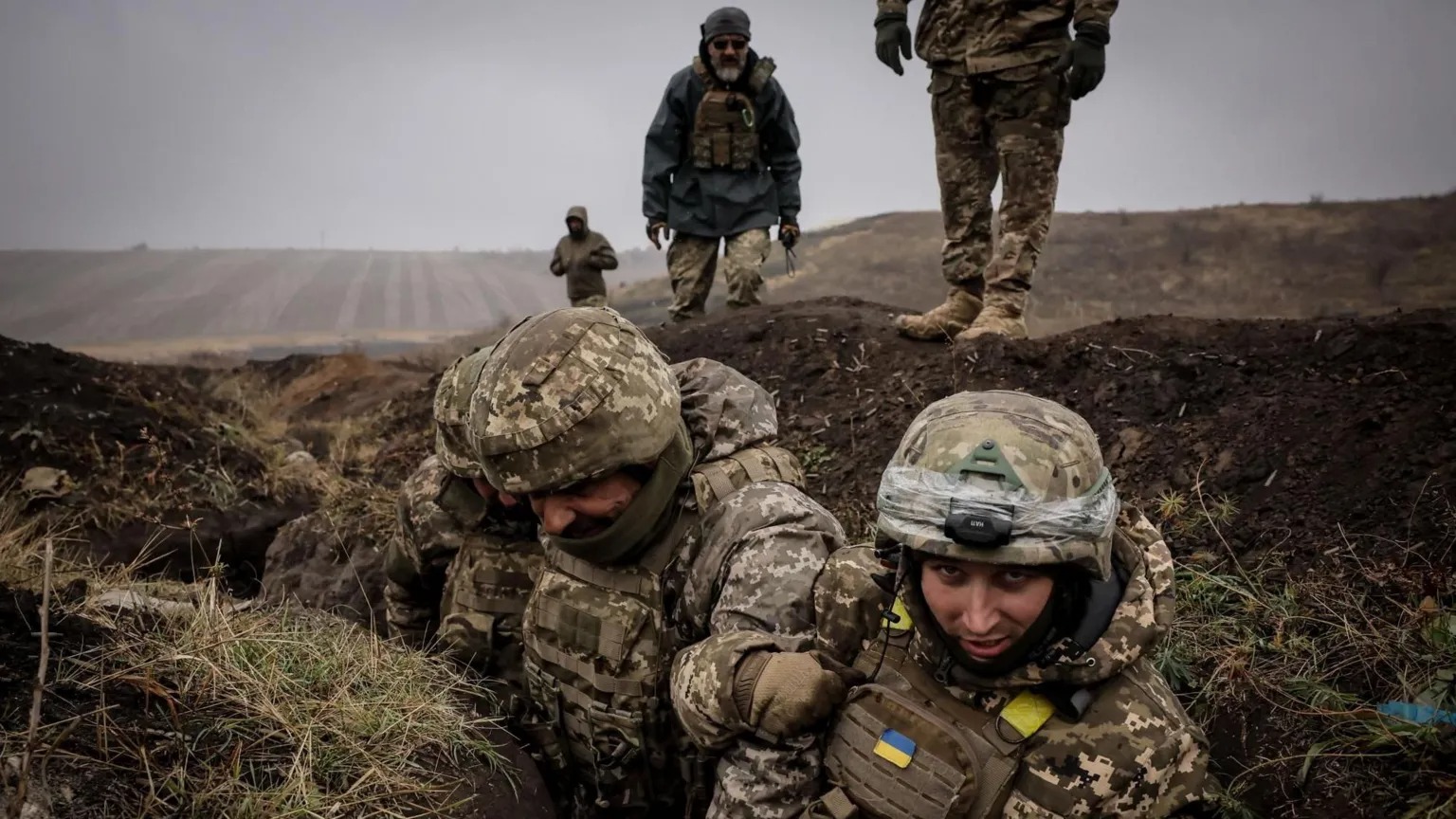
Draft proposals by the US administration to end the war in Ukraine envisage establishing a demilitarised line in the Donbass region, easing sanctions against Moscow, and offering a comprehensive investment package to Kyiv.
According to a report by the British magazine The Economist, citing Ukrainian officials, Washington is working on a broad framework comprising both economic and political points to persuade the parties to reach a settlement.
Under the draft plan reported by the publication, Russia is offered the opportunity to conclude trade agreements with the US, an easing of sanctions, and the normalisation of political relations.
Ukraine, in exchange for relinquishing its goal of NATO membership, is promised direct foreign investment and European Union accession.
The report notes that Ukrainian officials do not possess complete visibility over every detail of the final text on the table, but are closely familiar with its overarching framework.
Nord Stream pipeline and natural gas shipments on the table
The Economist reported that the package designed to persuade the leadership in Moscow also includes items such as the resumption of Russian natural gas sales to the European market and the reactivation of the Nord Stream pipeline.
The magazine also points out that decisions regarding the operation of a pipeline located on European territory do not fall directly under US jurisdiction.
Ukrainian negotiators, meanwhile, are concerned that the Washington delegation may lock in commercial agreements in line with its own economic interests before the fighting formally stops.
Speaking to the magazine, a Ukrainian official summed up the American side’s approach with the words: ‘Why wait and waste time? Time is money.’
Diplomatic contacts intensify at leadership level
Stating that it is ready for talks, the Russian government announced that an agreement had been reached in recent contacts with Washington to launch a trilateral negotiation process that would also include Ukraine.
Russian President Vladimir Putin said: ‘The objective of these negotiations will be to address the issue of ensuring the security of Ukraine and Russia once peace agreements are reached.’
As part of these diplomatic efforts, US President Donald Trump’s special envoy, Steve Witkoff, met Russian leader Putin on 21 October at the Konstantinovsky Palace in St. Petersburg.
Speaking during the portion of the meeting open to the media, Witkoff noted that he had brought documents outlining a pathway to peace and asked Putin to examine these texts.
Kremlin spokesperson Dmitry Peskov announced that the president would evaluate the American proposals.
Noting that concrete ground for a ceasefire had emerged during the St. Petersburg meeting, Witkoff expressed hope for the start of trilateral contacts between Russia, the US, and Ukraine to address technical matters.
Putin thanked Trump for his interest in peace efforts and recounted that the US president had specifically emphasized during their recent telephone calls that the war must end as soon as possible.
Framework prepared in Oslo carried to Moscow
Immediately before his visit to St. Petersburg, Witkoff had attended talks held on 20 October in Oslo, the capital of Norway.
Trump’s son-in-law Jared Kushner joined the meeting remotely due to illness, which was attended by Ukrainian President Volodymyr Zelenskyy, Finnish President Alexander Stubb, and Norwegian Prime Minister Jonas Gahr Store.
According to information provided by Stubb, the parties at the Oslo meeting clarified key security and economic elements that the American envoy would present to Moscow. Air defence systems, energy infrastructure, and partial ceasefire measures were also discussed.
Commenting after the talks in St. Petersburg, Russian presidential aide Yury Ushakov argued that the newly presented approaches did not contain many elements useful for a resolution.
Noting that Witkoff informed Putin about the contacts in Oslo and relayed fresh nuances in the positions of European leaders and the Kyiv government, Ushakov stated that the meeting was thorough and frank, adding that the conflict is ‘moving toward an end.’
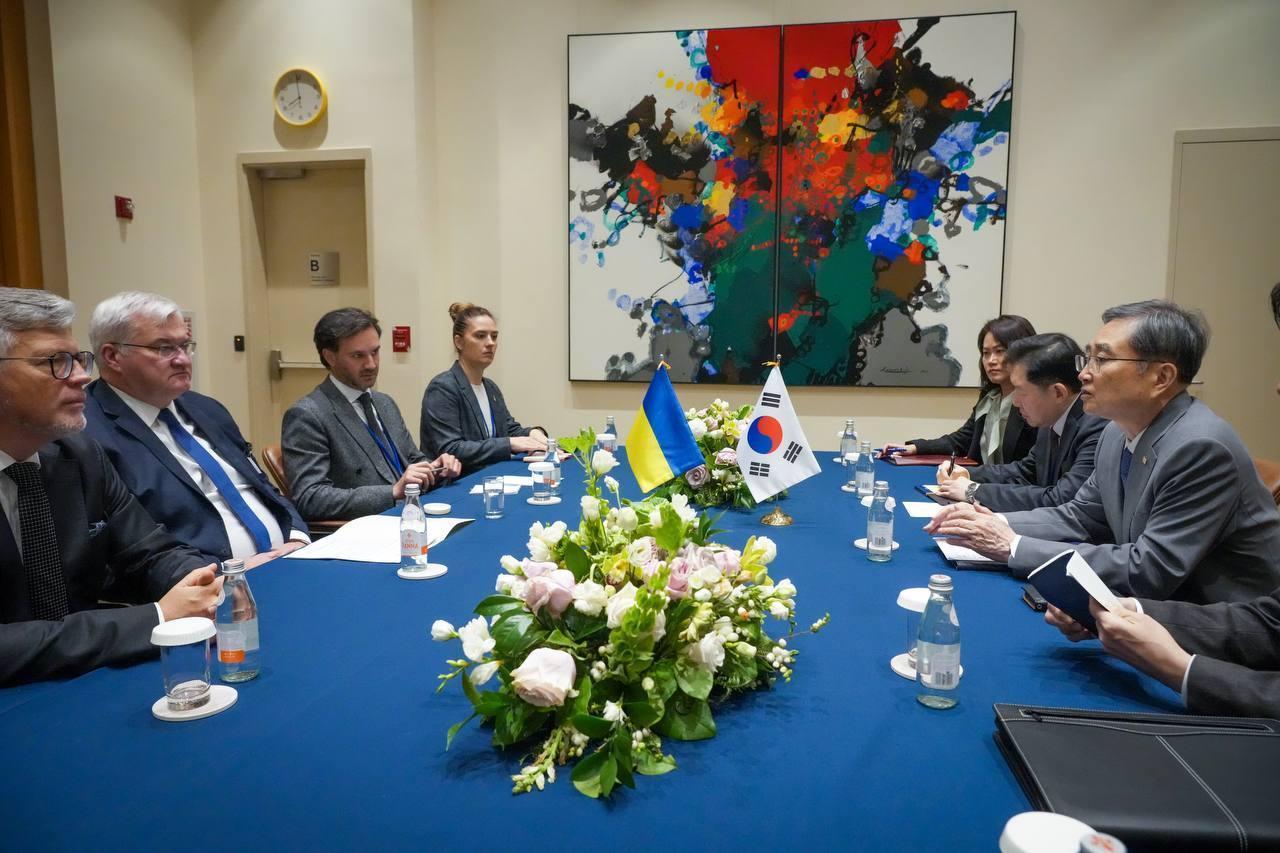
The South Korean government has decided to withdraw part of its embassy staff from Ukraine.
According to the Yonhap news agency, Foreign Ministry spokesman Park Doo-sun cited the Kyiv administration’s failure to take “positive steps” in the dispute that began with the leak of information concerning the handover of North Korean prisoners of war as the justification for the move.
The spokesman also listed the ongoing threat of air strikes, which complicates the safety of diplomats, among the reasons.
Following the withdrawal of part of the personnel, essential diplomatic contacts will continue under the leadership of the charge d’affaires ad interim to Ukraine. All consular staff tasked with protecting South Korean citizens will remain in Ukraine.
Prior to this move, the Seoul administration decided on 8 October to withdraw its ambassador. The Foreign Ministry stated at the time that it was ready to continue consultations with Kyiv to resolve the emerging issues constructively.
Tensions between the two countries began with a speech delivered by Ukrainian President Volodymyr Zelenskyy at the United Nations General Assembly in September.
Zelenskyy announced that two captured soldiers from the North Korean army had been handed over to South Korea.
South Korean President Lee Jae-myung, meanwhile, accused Kyiv of breaching a confidentiality agreement.
Lee said the disclosure of this information endangered the prisoners’ families and stability on the Korean Peninsula.
Seoul expects a public apology
Dmytro Lytvyn, an adviser to the Ukrainian president, denied the existence of a confidentiality agreement.
The South Korean Foreign Ministry summoned Ukrainian Charge d’Affaires Andriy Veshkin on 28 September and issued a note of protest against Lytvyn’s remarks.
President Lee Jae-myung warned in a statement on 2 October that they would take additional measures against Kyiv if Ukrainian authorities did not acknowledge the agreement and make a public apology. Lee stated that Ukraine itself had initially requested that the transfer of the prisoners be kept confidential.
Ukrainian Foreign Ministry spokesman Heorhii Tykhyi said the dispute stemmed from differing interpretations of the confidentiality regime.
Tykhyi noted that Seoul, based on its constitution which recognises the entire Korean Peninsula as its own territory, requested that the prisoners be handed over “like its own citizens”.
Describing the handover as a “gesture of goodwill”, Tykhyi stated that they were conducting closed-door negotiations to resolve differences of opinion.
Ambassador Park Ki-chang returned to Seoul on 10 October. According to a report by The Korea Times newspaper citing the ministry, recalling the ambassador served as a diplomatic protest against the leak of information regarding the prisoners.
The newspaper wrote that South Korea had last taken a similar step in 2008 by withdrawing its ambassador to Japan.
Moscow warned foreign diplomats
On 3 October, the Russian Foreign Ministry reiterated its warning to foreign nationals, including diplomatic mission staff, against remaining in Ukraine.
The ministry recalled its advice to leave Kyiv, citing ongoing strikes against military targets.
The ministry noted that those who failed to heed the warnings would bear responsibility for the potential consequences.
Kremlin spokesman Dmitry Peskov said in a statement on 24 September that they had no information regarding Kyiv handing over two North Korean prisoners of war to Seoul.
Peskov, noting that prisoner matters fall under the authority of the Defence Ministry and intelligence services, said, “Contacts through the special services are continuing.”
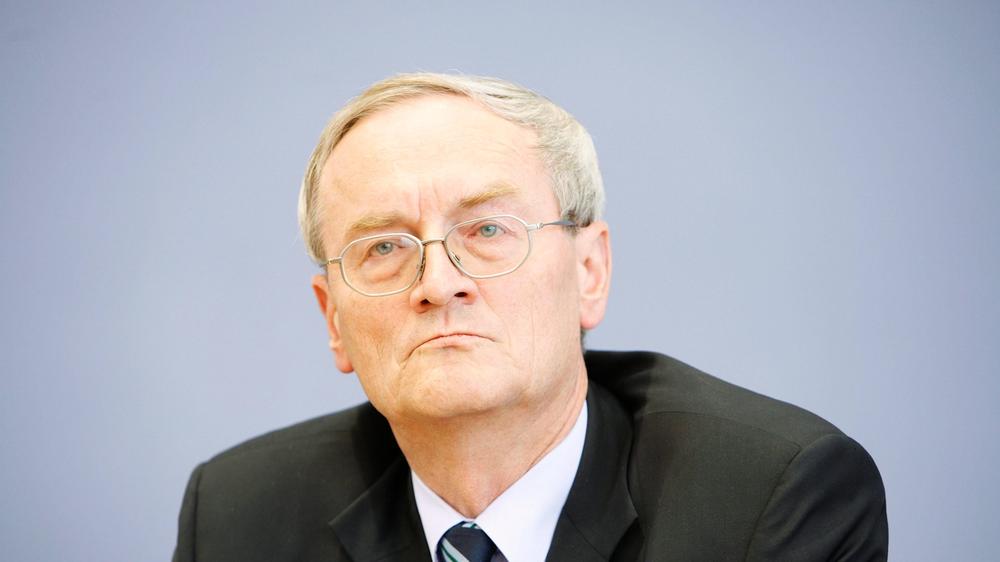
August Hanning, who led Germany’s Federal Intelligence Service (BND) between 1998 and 2005, was arrested on 6 October on allegations that he obtained roughly 2,000 classified agency documents and used them during contacts with intelligence officers from a foreign state.
Accused of high treason and espionage on behalf of a foreign intelligence agency, the former spy chief is alleged to have procured the documents from former BND employee Manfred D.
Prosecutors stated that the leaked records included internal briefing notes presented to senior German officials, though the Berlin government has not yet publicly disclosed which country received the classified data.
According to an exclusive report by Jake Green for The Cradle, seized email exchanges revealed extensive ties between the arrested Hanning and former Mossad director Danny Yatom.
The correspondence shows that the two former intelligence directors built an ongoing network of contacts following their public service, combining commercial ventures, efforts to secure political influence, and intelligence links.
This dynamic has triggered debate that using personal connections and official access for private gain has left Germany’s intelligence apparatus vulnerable.
Intelligence notes for 10,000 euros and campaign proposals
According to the reviewed emails, Hanning told Yatom in a 2018 message that he could prepare an “overall assessment based on information obtained from senior German officials and intelligence agencies” concerning an unidentified candidate.
The former BND head committed to completing the report by 13 July in exchange for 10,000 euros.
Contacts between the two men subsequently expanded to cover domestic political processes in Germany. Ahead of the September 2021 federal election, Yatom asked Hanning to approach leading candidates.
Describing CIY Global as a “political campaign company”, the former Mossad chief noted that he aimed to introduce its capabilities to German politicians, and he mentioned his intention in the same exchange to transfer documents concerning a cybersecurity firm.
Cybersecurity partnership and surveillance operations across Europe
The partnership between Yatom and Hanning reached beyond political lobbying initiatives into the cybersecurity sector.
Hanning reportedly served as a consultant for World Health Energy Holdings, a cybersecurity company linked to Yatom.
Firms of this type, established or managed by former intelligence personnel, provide commercial platforms on the international market for Israeli-origin surveillance, cyber intelligence, and political influence capabilities.
The operational presence of private Israeli-based surveillance technologies across Europe has recently entered judicial records through scandals in Poland, Spain, and Greece.
Polish prosecutors announced on 12 October that data collected under the previous government via Pegasus spyware against political opponents had been transferred out of the country, adding that manufacturer NSO Group maintained access to the technical infrastructure.
In Spain, the 2022 CatalanGate investigation established that at least 65 people, including politicians, lawyers, and civil society representatives, were targeted using Pegasus or Candiru software, with Citizen Lab researchers publishing strong evidence linking the operation to Spanish authorities.
In Greece, the surveillance operation targeting journalist Thanasis Koukakis and Member of the European Parliament Nikos Androulakis was determined to have used Predator software, linked to Intellexa, a company founded by former Israeli intelligence officer Tal Dilian.
In the German espionage investigation, the traffic between Hanning and Yatom involving paid reporting, contacts with electoral candidates, and commercial partnerships does not yet provide conclusive legal evidence regarding the final destination of the roughly 2,000 classified documents.
Nevertheless, the disclosed correspondence gives German investigators a concrete line of inquiry to assess whether classified state secrets reached commercial networks tied to Israeli intelligence.

“The AfD is an expression of internal contradictions within German big capital”

Nokia and ICEYE sign deal to build sovereign Ukraine satellite network

Mélenchon’s “new France” vision triggers fierce cross-party debate

US envoy says Syria interim leader Sharaa seeks Israel normalization

Unauthorised AI agents access customer accounts at major US banks
-

 America2 weeks ago
Trump weighs presidential memorandum to cut surging US diesel prices
-
 Diplomacy2 weeks ago
SWP urges backing for Gulf trade routes bypassing Strait of Hormuz
-
 Europe2 weeks ago
LSE study finds post-bailout Greece turned into a cafe economy
-
 Diplomacy2 weeks ago
EU and China reach preliminary deal to curb hybrid car imports
-

 Russia2 weeks ago
Russia relaxes diesel export curbs after talks with Trump
-
 America6 days ago
How Elon Musk fuses private empire with state power, Ben Tarnoff explains
-
 Europe6 days ago
AfD leader Weidel calls funding lost Ukraine war a grave mistake
-
 Europe2 weeks ago
Raphaël Glucksmann wins French centre-left presidential primary
