Diplomacy
EU and Mexico finalize trade deal ahead of Trump’s return
The EU and Mexico have agreed on a long-delayed trade deal as they seek to reduce their dependence on the US, hours before Donald Trump returns to the White House.
After nine years of negotiations, the two sides announced on Friday that they would modernize their existing agreement. The announcement came just weeks after Trump threatened tariffs and follows a similar trade deal signed in December between the EU and the South American trade bloc Mercosur.
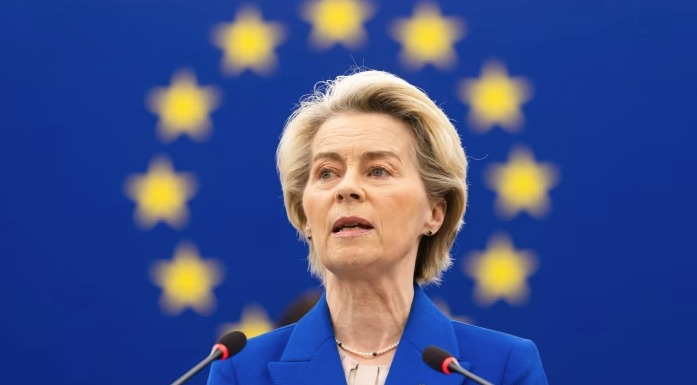
“This landmark agreement proves that open, rules-based trade can ensure our prosperity and economic security, as well as climate action and sustainable development,” said European Commission President Ursula von der Leyen.
EU-Mexico trade in goods reached €82 billion in 2023, while two-way trade in services amounted to €22 billion in 2022.
Under the agreement, Mexico will eliminate tariffs of up to 100% on EU exports, including cheese, poultry, pork, pasta, jams, marmalades, chocolate, and wine.
Mexican producers will no longer be able to use the protected names of more than 500 products, such as champagne, Parma ham, and Rioja wine.
The agreement will allow Mexico to export duty-free electric vehicles to the EU if they contain at least 60% Mexican or EU-made components by value. This will make it more difficult for China to use Mexico as a production base for electric vehicles exported to the EU, as they will pay a standard 10% tariff if they use Chinese batteries.
“Companies will prefer to source from Europe rather than China,” an EU official told the Financial Times (FT).
The EU will also increase low-tariff quotas on Mexican exports such as beef, poultry, and ethanol.
The two sides had reached a preliminary agreement to extend the 20-year agreement in 2020, but the decision was delayed in part because of Mexico’s reluctance to open its energy market to EU companies.
EU companies will be treated the same as Mexico’s other preferential trading partners, including the US and South Korea, the official added.
Mexico, which exports more than 80% of its goods to the US, is one of the most vulnerable countries in the world to Trump’s tariff threats. The agreement with the EU could help provide exporters with alternatives if the new president implements his promised 25% tariffs.
Carlos Serrano, chief economist at BBVA Mexico, said: “This is very positive because it will give certainty to investors, as it will include protection mechanisms. It’s a vote of confidence in Mexico, and it also shows that Mexico wants to be aligned with the US and Europe.”
Dmitry Grozoubinski of the consultancy ExplainTrade said “turbulent times” had pushed the two sides to resolve the last remaining issues.
The EU stated that the deal, which also includes investment provisions, would help boost the bloc’s exports of services in key areas such as financial services, transport, e-commerce, and telecommunications, while also protecting intellectual property rights more effectively.
The agreement also includes legally binding commitments on labor rights, environmental protection, climate change, and responsible business conduct, overseen by a dispute settlement procedure.
The agreement still needs to be signed and then ratified by EU and Mexican lawmakers.
European farmers have protested against the Mercosur agreement and are likely to pressure their governments not to ratify the agreement with Mexico.
Diplomacy
The two terrorists: Britain jails tweets while the West crowns al-Qaeda’s man in Damascus
Thomas Karat, behavioral analyst
Two men, one word. Next Monday, at Kingston Crown Court in London, a 72-year-old grandfather goes on trial for terrorism; the evidence is a tweet of seven words, and the maximum sentence is 14 years. Nine months ago, a man who founded al-Qaeda’s Syrian branch and carried a $10 million American bounty on his head became the first Syrian head of state ever received at the White House. Tony Greenstein and Ahmed al-Sharaa have never met. Between them they define what the word “terrorist” now means — and for American readers there is a further twist: the seven words that may cost the pensioner his freedom are fully protected speech in the United States, which is why Washington has developed other methods for its own dissidents.
Take the pensioner first, and take his record in full, because the prosecution will. Greenstein was expelled from the Labour Party in 2018; he lost a libel action against the Campaign Against Antisemitism, which had called him a “notorious antisemite,” the court finding the phrase protected as honest opinion; he accepted a suspended sentence over a Palestine Action attack on an Elbit arms factory. He is abrasive, litigious and unrepentant — a Jewish socialist from Brighton, a carer, the son of an Orthodox rabbi who marched against Mosley’s Blackshirts. None of that is the charge. The charge is that in November 2023, goaded by an anonymous account demanding he declare himself, he posted: “I support Hamas against the Israeli army.” Five weeks later, at 6:30 in the morning, counter-terrorism officers took his computers and phones, held him for nine hours, and released him under conditions that banned him from posting about the war at all. “This is Orwellian,” he told the arresting officers. He undersold it.
Now the other man, whose record requires no libel lawyer to establish, because the United States government wrote it down. Ahmed al-Sharaa — then Abu Mohammad al-Jolani — joined al-Qaeda in Iraq in 2003, was captured by American forces and imprisoned for five years, then crossed into Syria to found al-Nusra Front, al-Qaeda’s Syrian branch, pledging allegiance on video to Ayman al-Zawahiri. The State Department’s own wanted notice recorded that under his leadership the group “carried out multiple terrorist attacks throughout Syria, often targeting civilians” — and itemized them: roughly 300 Kurdish civilians abducted from a checkpoint; 20 residents of the Druze village of Qalb Lawzeh massacred in Idlib; suicide bombings claimed in Damascus, Homs and Quneitra. In 2014 he called for retaliatory attacks on the American-led coalition itself. For this the UN froze his assets and banned his travel, and the $10 million bounty placed him among the five most wanted jihadist leaders on earth, on the same short list as Baghdadi and Zawahiri. That is the conduct the word “terrorist” was coined for: emptied villages, detonated city centers, a decade of American soldiers and Syrian civilians in the ground.
While the state prepared its case against the tweeter, it laid siege to the man. Eleven months to charge him; a trial date pushed back the better part of a year; thirty-two months, in the end, between the dawn raid and the jury. And one by one, his banks left him. In a statement published two weeks before trial, Greenstein described being cut off by five institutions since his arrest: Nationwide after a quarter-century, HSBC and First Direct — closing, among others, the account kept for the care of his autistic son — then Santander, which froze his personal accounts and those of a registered charity he serves as treasurer, then a savings bank that shut out his family entirely. None gave a reason; none has to, since banks warned about a customer are forbidden by law to tip him off. Nor is his suspicion of state involvement far-fetched: the government’s own Independent Reviewer of Terrorism Legislation warned in 2023 that proscription enforcement would push banks toward jettisoning clients — “de-risking,” the trade calls it. When Coutts closed one account belonging to Nigel Farage, the affair drew condemnation from the prime minister and toppled a chief executive. A pensioner debanked six times en route to a terror trial has drawn silence. A defendant is presumed innocent; his accounts are not.
And while the pensioner’s accounts froze, the warlord’s thawed. Damascus fell on December 8, 2024; twelve days later an American delegation sat with al-Sharaa and announced the $10 million bounty was being dropped — the file unchanged, the graves at Qalb Lawzeh exactly where they had been. Britain’s prime minister said deproscription was “far too early” to consider; his government then spent 2025 considering it at speed. In March 2025, as government-aligned militias swept the Alawite coast, Amnesty documented the deliberate sectarian killing of civilians and demanded a war-crimes investigation; al-Sharaa’s own fact-finding committee would eventually confirm 1,426 dead, most of them civilians. Two months after those massacres, Trump received him in Riyadh and reviewed him for the cameras: “Young, attractive guy, tough guy, strong past.” In June came an executive order lifting sanctions to “give Syrians a chance at greatness”; in July, Washington revoked the terrorist designation of the organization he built. Britain’s Foreign Secretary flew to Damascus that same July to shake his hand — while HTS was still proscribed under the Terrorism Act as an alias of al-Qaeda, the identical legal status Hamas holds in Greenstein’s indictment. Only in October did Parliament tidy up, erasing the proscription on the stated ground that it “serves the national interest.” By November al-Sharaa was in the Oval Office, enrolling Syria in the anti-ISIS coalition while the Treasury halted most remaining sanctions. No jury weighed the graves. No dawn raid preceded the handshakes. The men who wrote the wanted poster simply took it down — and wrote into Hansard, in their own words, what proscription is: an instrument of the national interest, adjustable by ministerial order.
Hold the two files side by side and the statute confesses. Under Section 12 of the Terrorism Act, as amended in 2019, a person commits an offense by expressing an opinion supportive of a proscribed organization, reckless as to whether anyone is encouraged — an offense Parliament created precisely because the courts had ruled the old law could not touch opinions. By its literal terms, a Foreign Secretary renewing relations with the commander of a then-proscribed organization sits closer to the offense than anything Greenstein typed; nobody suggests prosecuting him, and that is the point. In the United States such a statute could not exist at all: even Holder v. Humanitarian Law Project, the Supreme Court’s furthest reach into “material support,” held that “any independent advocacy in which plaintiffs wish to engage is not prohibited.”
Britain criminalized exactly what America’s highest court fenced off, and then demonstrated, through Damascus, that the criminal category is edited by hand. The Terrorism Act carries a clause no draftsman wrote: it binds the powerless and dissolves on contact with the useful.
The state’s own ledgers show which of the two uses is the real one. Across fourteen years to mid-2025, the Ministry of Justice records 55 people prosecuted under the Act’s membership and support sections — four a year, through the entire era of ISIS. Then the subject changed from bombs to opinions. In the twelve months to September 2025 the Home Office counted 1,886 terrorism arrests — up 660 percent — and 86 percent of them were for supporting Palestine Action, a group proscribed for spray-painting warplanes weeks after HTS’s rehabilitation began. The share of arrests producing a charge collapsed from 47 percent to 17: five of six people seized under terror law are never meant to face trial, because the arrest is the product. The UN human rights chief called the ban “disproportionate and unnecessary”; more than 2,700 arrests followed anyway, 522 in a single day, pensioners and priests led off over cardboard signs. When the High Court ruled the ban unlawful in February, police paused, then resumed — “We must enforce the law as it is at the time,” a commissioner explained, arresting 18 more on the steps of Scotland Yard — and the Supreme Court will rule in November on whether any of it was ever legal. The government’s own reviewer confirms that terror prosecutions now run at record levels, “dominated by documentary offences and proscription related charges.” An apparatus built against the authors of Qalb Lawzeh is processing placards — while the author of Qalb Lawzeh signs coalition documents in the Oval Office.
The American half of the mirror completes itself. The administration that lifted the bounty cannot, thanks to the First Amendment, prosecute its own citizens’ words — so it deports the speakers instead. Mahmoud Khalil, a green-card holder, was seized by plainclothes ICE agents over his campus advocacy, held 104 days in Louisiana, made to miss the birth of his first child, never charged with a crime — detained on the Secretary of State’s certification that his presence compromised American foreign policy. Rümeysa Öztürk was taken off a street by masked agents and jailed 45 days over an op-ed; a judge found the whole policy unconstitutional, her case was thrown out, and she left for Türkiye anyway, while Khalil’s protections were stripped on appeal and his fate rides on the Supreme Court.
Hold that against Damascus: the same State Department that certified a student op-ed a threat to American foreign policy spent the year unwinding the terrorist status of a man it once ranked beside Baghdadi. The department’s terror lists and its visa lists are, it turns out, the same list, kept for the same purpose — sorting the useful from the inconvenient.
The inconvenient include the press. Richard Medhurst, an independent journalist covering Gaza, became the first reporter arrested under the statute now aimed at Greenstein — 14 months under investigation, no charge, his files handed to Austria so the ordeal could continue abroad. Ten officers raided the home of Asa Winstanley of The Electronic Intifada over his posts; a court found the warrants improperly obtained and ordered his devices returned. No conviction anywhere; months of seized equipment and fear everywhere — a fair description of the function. Even in Kingston, the instinct holds: by Greenstein’s account, prosecutors have fought to keep his published writings out of the jury bundle, the judge citing an old rule that “courts are not sounding boards for anybody’s political views” — in a trial where the defendant’s political views are the offense.
So the ledger closes where it opened, with two men and one word. One commanded an organization that committed atrocities at scale, and the two governments that hunted him have concluded, in Hansard’s own language, that his rehabilitation serves the national interest. The other posted seven words, and those same two governments — one with its Terrorism Act, one with its immigration code — have spent three years demonstrating what happens to the powerless who say the wrong thing about the wrong war. Greenstein has argued that his verdict will set the price for everyone arrested behind him: acquittal imperils the campaign, conviction licenses it. Perhaps. But the deeper verdict is already in, delivered in Riyadh and sealed in the Oval Office: terrorism, as governed practice, is a description of usefulness. Al-Sharaa became useful, and the word released him. Greenstein and 2,700 placard-carriers remain inconvenient, and the word descends on them with dawn raids and frozen accounts. The trial at Kingston is listed for five days. The word on trial has already been acquitted of meaning anything at all.
Diplomacy
Erdogan blocked CIA-Mossad plan for armed Kurdish uprising in Iran, report says
Officials speaking to the British newspaper The Telegraph said a plan for an armed Kurdish uprising against Iran, which had been discussed by the CIA and Mossad, was blocked by President Erdogan.
In February, during a visit to the White House, Israeli Prime Minister Benjamin Netanyahu proposed an attack on Iran’s western borders by an army consisting of thousands of Kurdish militiamen from the Kurdistan Regional Government (KRG) in Iraq under US air cover as a formula to overthrow the Iranian government.
Under the operation developed by Mossad and discussed with the CIA, they were to cross the Iraqi Kurdistan border into Iran to stoke an uprising that would overthrow the Iranian government “forever”.
According to information obtained by The Telegraph, Recep Tayyip Erdogan, who was displeased by the prospect of armed Kurdish forces in the region, intervened in the matter and ultimately forced Israel and the US to terminate this covert operation.
The official added: “A few of these conditions did not materialize, for reasons I will not go into detail here. This is due not to a lack of foresight, but either to an operational failure or to decisions taken.”
According to Israeli and Gulf sources, Erdogan, understood to be one of the world leaders Trump trusts most, told the US president that he would not tolerate Kurdish independence anywhere in the region.
Upon learning of this plan, Erdogan became concerned that arming Kurdish militiamen would lead to “broad segments of his political enemies becoming armed and dangerous” on Türkiye’s eastern border.
According to the newspaper, Erdogan’s intervention contributed to “the failure of one of the most ambitious attempts at regime change in this war, which turned into a quagmire and failed to achieve its objectives.”
Trump said that regime change had already been carried out twice and that the new government was much more “sensible” than the previous ones.
According to The New York Times, following the meeting at the White House, US officials assessed that elements of Netanyahu’s presentation, which included the possibility of a ground invasion of Iran by the Kurds, were “detached from reality”.
While receiving a briefing from CIA Director John Ratcliffe, Trump described the Israeli prime minister’s regime change scenarios in a single word: “ridiculous”.
Nevertheless, this situation did not prevent Mr. Trump from pursuing the idea. The president met with Kurdish leaders on March 1 and continued to exert pressure on local officials who could benefit from Tehran’s weakness.
In a move seen as an obvious preparation for an attack, Israel bombed positions in western Iran, including regime officials, military bases, missile systems, outposts, and Basij facilities.
This situation led to speculation that Israel was laying the groundwork for the advance of the Kurds.
It was reported that fighters from all six Iranian Kurdish factions joined the attack to be launched from Iraqi Kurdistan, and these fighters would also supply weapons to Kurds inside Iran.
The coalition was allegedly ready for the invasion on March 18. All they needed was a green light from Trump.
As preparations continued, Kurdish organizations also began expressing concerns about their situation regarding the Iranian leadership, demanding “political guarantees” beyond mere military support.
A senior Israeli official told The Telegraph: “Intelligence did not promise that [regime change] would happen. It said that you could increase the probability or likelihood of it happening.”
Shortly after the plan began to collapse, details of the operation were leaked to the American media.
Fox News reported that an attack was launched in March. This situation forced Karoline Leavitt, the White House press secretary at the time, to clarify that the US was not arming the Kurds for this purpose.
At the same time, it is understood that Erdogan was lobbying in Washington for the cancellation of the plan.
Gulf countries also reportedly warned that an ethnic division of Iran could destabilize the entire Middle East.
This failure was not well received in Tel Aviv. Mossad Director Roman Gofman decided to dismiss the agency’s top two officials who had helped prepare the regime change plan.
According to insider information, during a final meeting in the Oval Office on July 28, the topic of regime change was raised once again.
Netanyahu stated that regime change was still possible under certain conditions, but he did not appear to convince Trump.
Trump ultimately preferred a long-term economic blockade over air strikes to end the war.
Diplomacy
Türkiye, Pakistan, Saudi Arabia defense agreement: An attack on one will be considered an attack on all
Türkiye, Pakistan and Saudi Arabia signed a joint defense agreement that deepens security cooperation at a time of rising military tensions and conflicts in the Middle East. The agreement stipulates that an armed attack against any one of the three states will be considered an attack against all of them.
Türkiye, Saudi Arabia and Pakistan signed a joint defense agreement at a trilateral summit held in Mecca on Friday, pledging to strengthen collective security, deepen defense cooperation and support peace and stability in the region and beyond.
The “Mecca Joint Defense Agreement” was signed at a summit held at Al-Safa Palace by Turkish President Recep Tayyip Erdoğan, Saudi Crown Prince Mohammed bin Salman and Pakistani Prime Minister Shehbaz Sharif.
According to a statement issued by Türkiye’s Directorate of Communications, the agreement reflects the three countries’ shared determination to strengthen their collective security on the basis of their longstanding historical ties, Islamic solidarity, common strategic interests and close defense cooperation.
The agreement aims to strengthen collective deterrence against any act of aggression and provides that an armed attack against any one of the three countries will be considered an attack against all of them.
The agreement also provides for the development of defense cooperation among the three countries in all fields.
🔈 PR No. 2️⃣0️⃣4️⃣/2️⃣0️⃣2️⃣6️⃣
Makkah Al-Mukarramah Summit for Joint Defence
🔗⬇️ pic.twitter.com/mIzASADmau
— Ministry of Foreign Affairs – Pakistan (@ForeignOfficePk) August 7, 2026
Saudi King Salman bin Abdulaziz Al Saud hosted Erdoğan and Sharif in Saudi Arabia for the summit.
President Recep Tayyip Erdoğan traveled to Saudi Arabia on Friday and met with Saudi Crown Prince Mohammed bin Salman. Pakistani Prime Minister Shehbaz Sharif, meanwhile, arrived in Saudi Arabia a day earlier together with the country’s Chief of Army Staff Asim Munir and performed Umrah in Mecca.
Iran and its allies have been targeting Saudi Arabia and other Gulf countries and obstructing their energy shipments since the United States and Israel launched a war against Iran on February 28, escalating tensions in the region.
According to a joint statement by the three countries, the agreement aims to strengthen collective deterrence against any act of aggression and provides that an armed attack against any one of the three countries will be considered an attack against all of them.
The joint statement did not specify the details of the obligations undertaken by the parties under the “Mecca Joint Defense Agreement.” It noted, however, that the agreement aims to strengthen collective security and promote peace, security and stability in the region and beyond.
A Turkish official told Reuters, “The pact includes a collective defense clause. It is entirely defensive and commits the parties to mutual support solely for defensive purposes.”
The official also said the agreement was not directed against any specific actor, was open to the participation of other countries in the region, and did not invalidate or replace any existing bilateral or multilateral arrangement.
At the same time, the three countries are concerned both about Israel’s increasing aggression and Iran’s expanding influence at a time when their longstanding ally, the United States, is struggling to contain regional turmoil.
Strong political symbolism
Abdulaziz Sager, chairman of the Saudi-based Gulf Research Center, said, “The political symbolism of the summit is significant. Three of the most influential countries in the Muslim world are coming together at a time of growing uncertainty. This shows the increasing willingness of regional and middle powers to coordinate more closely on security issues.”
Sager added, “If the trilateral mechanism is institutionalized and translated into concrete cooperation, it could strengthen the combined diplomatic and defense weight of the three countries while also contributing to the emergence of a security architecture that is more strongly shaped by regional dynamics.”
Türkiye has NATO’s second-largest army. Saudi Arabia, the Gulf’s most powerful country, is one of the world’s largest oil exporters. Pakistan, meanwhile, is the only Muslim country with nuclear weapons.
The Iran factor
Since the war began on February 28, Saudi Arabia has been targeted by Iran as well as its Houthi allies in Yemen and Shiite militias in Iraq because it hosts U.S. military bases.
The conflict has also brought most shipping traffic through the Strait of Hormuz, which carried around one-fifth of global energy supplies before the war, to a halt.
For Saudi Arabia, the consequences of the conflicts in the Middle East over the past three years have been more severe. While the conflicts have endangered the country’s oil exports and ambitious development plans, they have also raised serious questions about the reliability of the U.S. security umbrella on which Riyadh has relied for many years.
A senior Saudi official told Reuters on Thursday that the country expects coordinated attacks in the near future from both Iraqi militias and the Houthis under Iranian direction. This raises questions about how the new alliance would respond to such attacks.
Iran-aligned Welayat News described the agreement as a Saudi request for assistance. The report included the following assessment: “Ansarullah’s Yemen-based equation of ‘blockade for blockade, escalation for escalation’ has put the Saudis under pressure. At Saudi Arabia’s initiative, a defense alliance between Türkiye, Saudi Arabia and Pakistan is expected to be signed today.”
Although Türkiye and Pakistan have avoided major direct attacks, both countries want the conflicts that threaten their own security and economic conditions to be de-escalated.
According to a Reuters report in May, Pakistan deployed around 8,000 troops, fighter aircraft, drones and an air defense system to Saudi Arabia and moved toward developing broader security ties across the Gulf.
Reuters reported in July that Pakistan had also begun negotiations with Kuwait on an expanded security agreement in exchange for energy cooperation and investment.
The AP news agency also noted that the agreement was announced at a time when Türkiye’s relations with Israel have become strained over the conflicts in Iran, Lebanon and Gaza.
Former Israeli official: Türkiye will not fight the Houthis simply because Saudi Arabia asks
Commenting on the defense agreement between Saudi Arabia, Türkiye and Pakistan, former head of Israel’s National Security Council Prof. Jacob Nagel said Saudi Arabia is not as powerful as it appears and described the country as a “paper tiger.”
Speaking to The Jerusalem Post, Nagel said, “You have to understand this: despite all its wealth and weapons, Saudi Arabia is to a large extent a paper tiger. It has a great deal of weaponry and a great deal of money, but militarily it cannot even manage to get through the day.”
On whether Türkiye would defend Saudi Arabia under the agreement, Nagel said, “I do not think the Turks will send their navy and attack the Houthis simply because the Houthis attacked the Saudis. That certainly does not align with my realistic view of the region.”
According to Nagel, Saudi Arabia is therefore looking for alternatives.
“Saudi Arabia understands that it is in serious trouble, both financially and in terms of security. Even before the recent wars, we saw them take the surprising step of signing an agreement with Iran. They did this because they were afraid and felt exposed to the concrete Iranian threat, as well as to Iran’s militias across the Middle East.”
Nagel continued:
“The Saudis’ problem is that despite having the most advanced equipment, aircraft and intelligence capabilities, they do not know how to use this power effectively on the ground. For that reason, all this talk of new alliances with Pakistan or Türkiye should be approached with considerable caution.”
Nagel also said, “This is more of a diplomatic maneuver aimed at putting pressure on the U.S. administration.”
“The Saudis are disappointed with the U.S. position. Particularly in light of the shortcomings they have identified in missile and interceptor ammunition stockpiles in the West, they are trying to send the message that they will not be left alone in the struggle against the Shiite axis.”
-
Asia2 weeks agoChina launches global tax audit on super-rich to recover billions
-
Europe2 weeks agoEuropean nations seek alternatives to Palantir amid growing digital sovereignty concerns
-
Diplomacy2 weeks agoDefense Priorities director warns US air strategy in Middle East faces tactical limits
-
Europe2 weeks agoEuropean carmakers turn to Chinese rivals to salvage struggling plants
-
Europe2 weeks agoEU governments push to narrow “Made in Europe” preference rules in industrial draft bill
-
Europe2 weeks agoDenmark to deploy conscripts to Greenland for first time amid Arctic security risks
-
Opinion2 weeks agoMacroeconomic consequences of asymmetric UAV attacks in Russia
-
America2 weeks agoOil industry lobbies White House to avert potential Trump export ban