
Middle East
Iranian NGO report records 50% drop in terrorist attacks for 2025

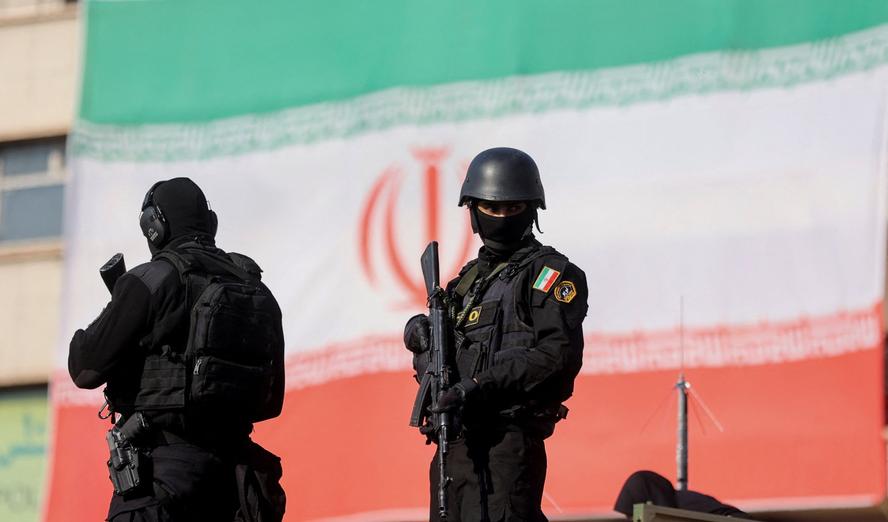
The Habilian Association (Families of Iranian Victims of Terrorism), an Iran-based non-governmental organization and think tank, has released its 2025 annual terrorism report documenting terrorist acts against the country and its citizens.
The findings of the report were shared during the Day of Commemoration and Respect for Victims of Terrorism ceremony, co-organized by the Habilian Association and hosted by the Institute for Political and International Studies of the Iranian Ministry of Foreign Affairs.
The ceremony was attended by Deputy Foreign Minister Dr Saeed Khatibzadeh, Deputy Head of the Judiciary Dr Seraj, and Habilian Secretary-General Seyed Mohammad Javad Hasheminejad, alongside the families of those who lost their lives in terrorist attacks.
First published in 2019 and now in its fifth edition, the report covers the year 2025 according to Iran’s official Solar Hijri calendar (spanning 21 March 2025 to 20 March 2026). Published in Persian and English, the document provides detailed data examining the activities of non-state terrorist organizations and state-sponsored actors.
“Attacks down by half, fatalities drop 43%”
The report highlighted a significant decline in nationwide terrorism indicators compared to the previous year. The number of recorded terrorist incidents fell by 50%, dropping from 52 in 2024 to 26 in 2025, while the death toll decreased by 43%, falling from 100 to 57.
Comparing three-year trends, the report noted that while terrorist incidents rose by 62.5% in 2024 compared to 2023, 2025 saw a decrease of 18.7% compared to 2023 and 50% compared to 2024. A steady decline in fatalities was also identified. Fatalities in 2025 fell by 64.6% compared to 2023, which included the victims of the Kerman Golzar attack. However, the average fatality rate per attack increased from 1.92 in 2024 to 2.20 in 2025.
The report stated that “Iran has been a victim of terrorist violence for nearly half a century, with 23,000 people killed by terrorism, while countries hostile to Tehran apply a clear double standard by providing terrorist organizations with offices, freedom of movement, and high-level contacts.”
“Terrorist threat almost entirely confined to southeast”
One of the most critical findings of the 2025 report was the narrowing geographic distribution of terrorist acts. While incidents in 2024 spanned six provinces and two countries, all 26 attacks in 2025 took place within Iranian borders and were concentrated in just four provinces.
Sistan and Baluchestan province remained the primary centre of terrorist incidents in the country. The report stated that 84.6% of terrorist attacks (22 operations) and 86% of casualties (49 victims) in 2025 were recorded in this province. Nevertheless, the number of attacks in Sistan and Baluchestan fell 39% year-on-year from 36 to 22, representing a 17% improvement in its share of total nationwide victims. Within the province, the highest number of attacks occurred in Iranshahr, followed by Zahedan.
Elsewhere in the country, three people were killed in two attacks in Kurdistan province, one person was killed in one attack in West Azerbaijan province, and four people died in one attack in Kerman province. Central and southern provinces targeted in previous years, including Tehran, Isfahan, Fars, and Hormozgan, recorded zero terrorist incidents in 2025.
“Security forces comprise over 75% of targets”
The report analyzed the occupational and demographic profile of the victims in detail. Of the 57 people killed, 56 were male and one was female; 49 were Iranian citizens and eight were Pakistani labourers.
Law enforcement personnel formed the largest group by occupation. In 2025, victims of terrorism included 19 police officers (33%), 11 Basij members, eight foreign Pakistani workers, six conscripted soldiers, six civilians, three border guards, three security personnel, and one member of the Islamic Revolutionary Guard Corps (IRGC). The report stated: “Security and law enforcement forces accounted for 75.4% of total casualties, a figure that reaches 88% when Pakistani workers are excluded.”
The drop in IRGC fatalities from 27 in 2024 to one in 2025 was attributed to the withdrawal of Iranian military advisers from Syria and Lebanon. The report emphasized that civilians were not selected as direct primary targets, though civilian casualties did occur, including seven-month-old Navid Baluch Shir Mohammadi and a 60-year-old Baluch woman killed in the Zahedan courthouse attack, as well as 16-year-old Mansour Layegh-Jami killed at the Fahraj checkpoint in Kerman.
“Jaish al-Adl persists under a new name”
In its group-based assessment, the report determined that Jaish al-Adl remained the most active and deadliest group in Iran in 2025. Announcing its name as the “People’s Combatants Front” in late 2025, the group carried out 14 attacks resulting in 28 deaths, accounting for 53.8% of attacks and 49.1% of fatalities nationwide. While the group’s operations declined by 48% compared to 2024, its fatality rate per incident increased. The report evaluated the group’s rebranding as “a formal maneuver aimed at evading legal restrictions, escaping terrorist watchlists, and projecting an image of organizational vitality.”
After two years of inactivity, the Kurdish separatist group PJAK carried out three attacks in Kurdistan and West Azerbaijan provinces in July and August 2025, leaving four people dead. The report noted that the group had previously been unable to operate due to the Iran-Iraq security agreement, Iranian strikes against its positions in the Iraqi Kurdistan Regional Government area, and its expulsion from border regions. The attacks were described either as potential retaliation for an Iranian drone strike in Penjwin or as an effort by the group to assert operational independence amid the disarmament process undertaken by the PKK in Türkiye.
Ansar al-Furqan caused five deaths across two attacks, while the Baluch Nationalist Army (BNA) killed eight Pakistani workers in a single attack in Mehrestan. Arab separatist groups in Khuzestan, numbering up to 15, carried out no armed terrorist attacks in 2025 and engaged solely in media propaganda. Unclaimed attacks totaled six incidents resulting in 12 deaths, all of which occurred in Sistan and Baluchestan.
Regarding the removal of Israel and the US from the list of direct terrorist perpetrators compared to the 2024 report, the document cited the withdrawal of military advisers from Syria and Lebanon, two conventional conflicts (the “12-Day War” and the “Ramadan War”), and the classification of assassinations of political, scientific, and military figures during the January events within the framework of conventional warfare.
“Targeted assassinations and armed assaults dominate”
The report also examined tactical shifts among terrorist organizations. In 2025, over 69% of incidents (18 cases) were direct firearm assaults, accounting for 87.7% of fatalities. Unlike 2024, no suicide bombings or “inghimasi”-style raid attacks were recorded in 2025.
Conversely, targeted assassinations of local figures resurged. The targeting of Basij commander Javad Karimkoshteh in front of a mosque in Zahedan, local IRGC member Iraj Shams Eskani in a barbershop in Rask, Shehr-e Deraz police station chief Mahmoud Haghighat in Iranshahr, and tribal leader Mohammadreza Shahouzehi’s convoy in Eshkelabad were characterized as a strategy to weaken local security personnel and community leaders in border districts. The report noted that intelligence operations, including the “Martyrs of Security” drills and the seizure of 25 kilograms of explosives in Chabahar, foiled multiple planned attacks.
Chronology of 2025-2026 terrorist incidents
The monthly breakdown of incidents and details in the report were listed as follows:
- 27 March 2025: Master Sergeant Hossein Teymourpour was killed and two police officers were injured in an attack on a Police Station 12 patrol vehicle in Iranshahr. Jaish al-Adl claimed responsibility.
- 12 April 2025: Eight Pakistani workers had their hands and feet bound and were shot dead at close range during a raid on an auto repair shop in the village of Hizabad-e Pain, Mehrestan county, Sistan and Baluchestan province. Five victims were identified as Delshad, Naeem, Jafar, Danish, and Nasser. The Baluch Nationalist Army (BNA) claimed responsibility.
- 18 April 2025: Jaish al-Adl team leader Vali Mohammad Shahbakhsh was killed during the “Martyrs of Security” operation in the Qurin district of Zahedan; Quds Base Basij member Eshagh Mokhtari was killed during the operation.
- 4 May 2025: Gunfire targeted Police Station 11 patrol vehicles in Iranshahr, wounding four police officers; three attackers were captured. Jaish al-Adl claimed responsibility.
- 17 May 2025: An explosive device planted along a police patrol route in Saravan was defused. Jaish al-Adl claimed responsibility.
- 11 July 2025: Police officers Hossein Jafarniya and Hamidreza Mirshahi, along with conscript Abbas Beyraghifard, were killed in an attack on a police patrol in Chabahar; one attacker was killed. Jaish al-Adl claimed responsibility.
- 21 July 2025: Border Guard Senior Master Sergeant Sina Sattarvand was killed in a clash in the Baneh border area of Kurdistan province. PJAK operatives reportedly carried out the attack.
- 22 July 2025: Captain Mahmoud Motahhari died after gunfire was opened on a patrol vehicle from another car in Saravan. Jaish al-Adl claimed responsibility.
- 25 July 2025: Basij member Meysam Kabiri was killed and one person was injured when PJAK members opened fire on a military outpost in Aglan village, Sardasht county, West Azerbaijan province.
- 26 July 2025: Armed assailants attempting to storm the Zahedan Courthouse using grenades and firearms killed six people: seven-month-old infant Navid Baluch Shir Mohammadi, a 60-year-old Baluch woman, courthouse protection unit Lieutenants Hossein Rafienasab and Hosseinali Nouri, and conscripts Nima Karami and Ahmad Abdollahi; 22 people were injured. Jaish al-Adl claimed responsibility.
- 27 July 2025: Basij commander Javad Karimkoshteh was shot dead while on guard duty at the entrance of a mosque in the Shirabad district of Zahedan. Ansar al-Furqan claimed the assassination.
- 15 August 2025: Sergeant Ramin Sadeghi was killed and one security officer was wounded in an attack on a patrol vehicle in Iranshahr. Jaish al-Adl claimed responsibility.
- 22 August 2025: Five police officers were killed when gunfire targeted two Daman Police Station vehicles on the Iranshahr-Khash road: Master Sergeants Mohammadreza Rahimi and Mohammad Nowrouzi, Sergeant Hasan Tavakkoli, conscript Hadi Rouyaei, and Captain Gholamreza Vahdani. Jaish al-Adl claimed responsibility.
- 6 September 2025: Local IRGC member Iraj Shams Eskani was shot dead in a barbershop in Pishin, Rask county. Jaish al-Adl claimed responsibility.
- 16 September 2025: Younes Sayyad Arbabi and Ebrahim Piri were killed in an attack on a Sib and Suran county police vehicle on the Khash-Zahedan road; critically injured Sib and Suran Police Chief Colonel Ebrahim Fazilati died on 18 September. Jaish al-Adl claimed responsibility.
- 18 September 2025: Local Basij member and community figure Reza Azerkish (Shahlibor) was shot dead in Iranshahr. The attack was unclaimed.
- 2 October 2025: Gunfire targeting a motorcycle police patrol in Qasr-e Qand county wounded one officer and killed a passing civilian. The perpetrators were not identified.
- 1 November 2025: In an ambush on Shahouzehi tribal leader Mohammadreza Shahouzehi’s vehicle at the Eskelabad area along the Khash-Zahedan road, local Sunni Basij members Esmail Shaverzi and Mokhtar Shahouzehi died the same day, while Yaghoub Fard Salarzehi died on 12 November. The attack was unclaimed.
- 1 November 2025: Security officer Mohammad (Javad) Siahani was killed by gunfire from an unplated vehicle on the Iranshahr Bampur-Delgan road.
- 30 November 2025: An attack on an IRGC Quds Base patrol vehicle in the Lar border area of Zahedan killed IRGC serviceman Sajjad Marashi and Basij members Mohammad Bezzi, Alireza Nasirabadi, and Alireza Piri. The attack was claimed by Jaish al-Adl’s new structure, the “People’s Combatants Front.”
- 16 December 2025: A night attack on the Fahraj checkpoint in Kerman province killed police officer Saeed Pourhadi, security personnel Morad Salehi and Isa Barsam, and 16-year-old civilian Mansour Layegh-Jami. Ansar al-Furqan claimed responsibility.
- 16 December 2025: Gunfire was directed at police from two vehicles in Iranshahr; the attackers fled without causing security casualties.
- 7 January 2026: Shehr-e Deraz police station chief Mahmoud Haghighat was shot dead in Iranshahr. The assassination was claimed by the People’s Combatants Front (Jaish al-Adl).
- 9 February 2026: Twenty-year-old Basij member Iman Shahnavazi was wounded in a shooting targeting a vehicle in front of the special forces building on Imam Khomeini Street in Khash county and died several days later. The People’s Combatants Front claimed responsibility.
- 3 March 2026: Conscript Amir Mohammad Karimi was killed and three people were wounded when gunfire struck a patrol vehicle in Zahedan. The People’s Combatants Front claimed responsibility.
- 16 March 2026: Six people were killed when a police patrol vehicle was attacked in Taftan county: police officers Sajjad Batakva, Mohammad Javad Ensaf, Hamidreza Shahraki, and Alireza Pourbagher, conscript Alireza Sergezi, and an unidentified civilian. No group claimed responsibility.



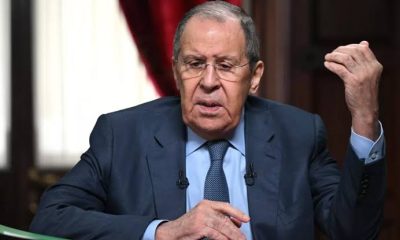




In an in-depth strategic assessment broadcast on the Harici digital channel’s programme “Strategic Compass”, prominent political scientist and international relations scholar Prof. Dr. Hasan Ünal and veteran journalist, author, and Middle East and Iran specialist Alptekin Dursunoğlu, who serves as the Editor-in-Chief of Yakın Doğu Haber, delivered an exhaustive analysis of recent military confrontations between the United States and the Islamic Republic of Iran, the fundamental doctrinal transformation governing Iranian military retaliation, regional air defence vulnerabilities, and shifting geopolitical balances spanning the Persian Gulf, Lebanon, and Syria.
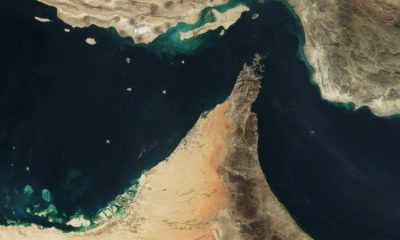
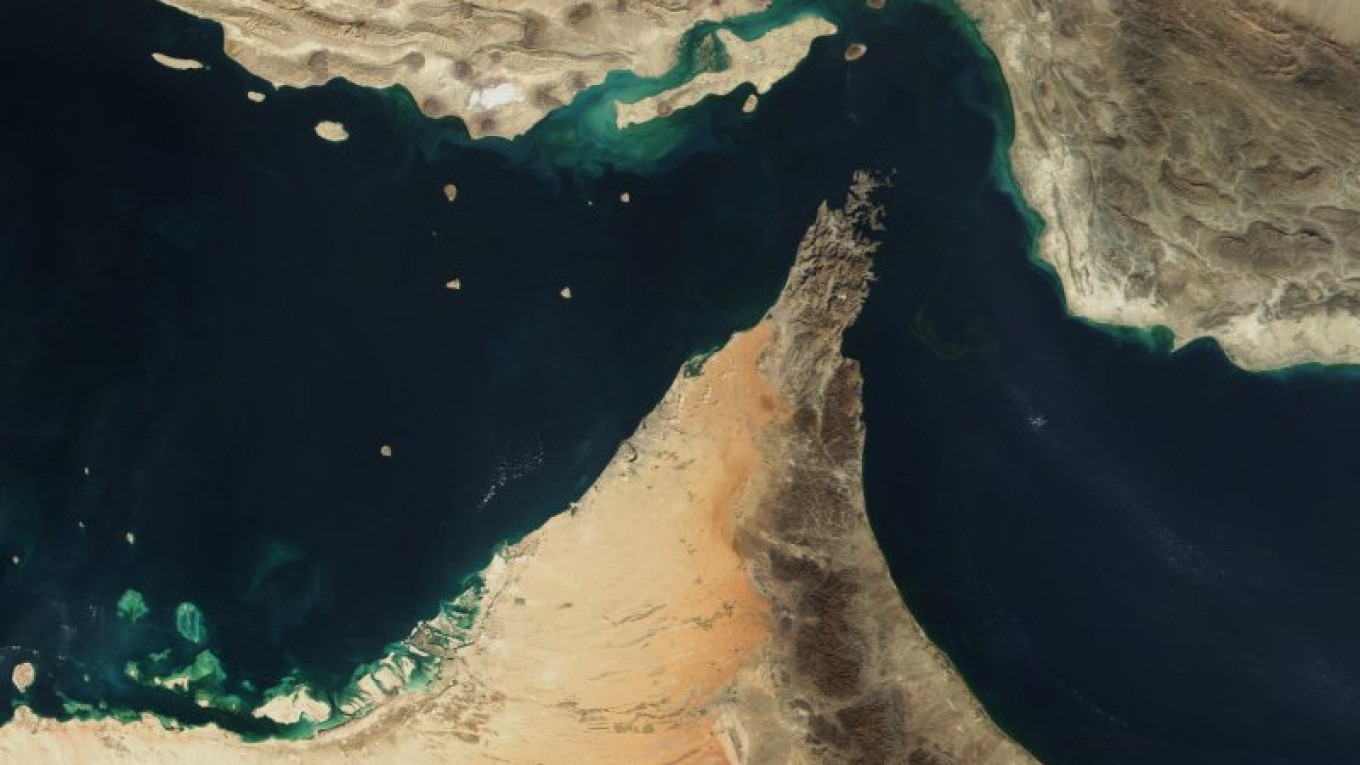
Opening the discussion, Prof. Dr. Hasan Ünal highlighted the recurring nature of US declarations of victory alongside paradoxical public statements by US President Donald Trump regarding Iranian obstinacy. Ünal outlined the immediate military flashpoint, noting that US forces opened fire on Islamic Revolutionary Guard Corps (IRGC) units stationed near Larak Island in the Strait of Hormuz under the premise that Iranian forces were deploying naval mines. Ünal observed that Iranian authorities have not denied mine-laying capabilities, as their primary objective remains total operational control over the Strait of Hormuz—reinforced by recent bilateral maritime arrangements with the Sultanate of Oman.
Ünal emphasised that, as previously analysed alongside retired Admiral Deniz Kutluk, Tehran’s strategic planning has undergone an irreversible structural change. Iran no longer passively absorbs incoming strikes, nor does it limit itself to symmetrical responses; instead, it delivers immediate, disproportionately severe counterstrikes while seeking to integrate the Gaza Strip and Yemen’s Ansar Allah (the Houthis) into an indivisible regional operational theatre.
“Iran has shifted its doctrine from equal response to escalation”
Detailing the tactical reality of the overnight strikes, Dursunoğlu confirmed that Tehran bypassed standard reciprocal proportionality to execute an escalated retaliatory strike. Following the US attack on Larak Island, Iranian forces launched salvos of precision missiles against two major military facilities in Jordan: the Muwaffaq al-Salti Air Base and the King Hussein Air Base, both identified by Tehran as staging grounds for the US operation.
Simultaneously, Iranian conventional military units and the IRGC coordinated retaliatory drone strikes against US installations in the United Arab Emirates, specifically targeting the al-Minhad Air Base, while abstaining from targeting Saudi Arabia, Qatar, Kuwait, or Bahrain.
Dursunoğlu explained that Washington and aligned media outlets, particularly Axios, had spent preceding weeks manufacturing a narrative that the Strait of Hormuz remained fully open under US dominion, with Trump going so far as to rhetorically claim the waterway as US territory following purported strikes against Iranian coastal surveillance radars at Sirik and Larak.
“Western media outlets launched a persistent information campaign claiming that commercial transit had reached 17 to 18 million barrels of crude oil per day through the southern corridor along the Omani coastline,” Dursunoğlu stated. “They claimed that commercial vessels were simply switching off their transponders, navigating under US naval escorts, and that Iran had been completely blinded after its coastal radars were hit.”
“If the strait is yours, why sneak ships at night?”
Challenging Washington’s official narrative, Dursunoğlu cited on-the-ground reporting from Iranian correspondents in the coastal zone, explaining that Iranian maritime surveillance does not depend on single, vulnerable radar stations.
“Iranian coastal monitoring relies on an integrated five-layer surveillance network,” Dursunoğlu said. “Even if an adversary strikes terrestrial radar installations, you cannot obscure the physical horizon. From Iranian territory on Larak Island, the Omani coast is plainly visible to the naked eye. Commercial oil tankers and cargo vessels are not high-speed patrol craft or evasive warships; they move slowly, and IRGC fast-attack craft continuously patrol the maritime corridors.”
Dursunoğlu pointed to Iranian television broadcasts demonstrating IRGC naval personnel issuing radio warnings to commercial vessels attempting unauthorised transit, resulting in the ships aborting their routes and reversing course.
“Washington’s claims contradict basic logic,” Dursunoğlu said. “On one hand, you claim the Strait of Hormuz is under complete US control, that Iran’s navy is destroyed, and that Iranian surveillance is blinded. On the other hand, you report that commercial vessels are conducting ship-to-ship transfers, turning off radars, and sneaking through Omani territorial waters at night under reduced capacity of 8 to 10 million barrels per day. If you truly control the waterway, why are commercial ships forced to sneak through in total secrecy? This entire narrative is designed solely to manipulate international energy markets and temporarily depress Brent crude prices.”
Addressing CENTCOM claims that US forces struck two Fajr-5 rocket launchers allegedly modified to deploy naval mines over 150-kilometre ranges, Dursunoğlu noted that Tehran acknowledged the engagement with factual transparency, reporting three military personnel killed and seven wounded. Conversely, when the IRGC reported that an oil tanker struck two naval mines and halted transit, CENTCOM and Western maritime reporting entities, including the UK Maritime Trade Operations (UKMTO), issued blanket denials to project artificial commercial safety.
“The fundamental question remains: if the Strait of Hormuz was entirely secure, why did US forces strike Larak Island in the first place?” Dursunoğlu asked. “And when the US strikes two launchers, Iran does not absorb the blow; it immediately strikes two strategic air bases in Jordan and deploys dozens of combat drones against US facilities in the United Arab Emirates.”
“The US military stock depletion prevents a wider war”
The precision strikes in Jordan once again exposed severe limitations in Western air defence architecture. Ünal observed that US-manufactured Patriot air defence batteries stationed in Jordan failed entirely to intercept incoming Iranian missiles, echoing previous operational shortcomings.
“Patriot batteries proved completely useless once again,” Ünal said. “This performance is particularly instructive at a time when certain domestic commentators in Türkiye absurdly discuss placing our S-400 systems—the undisputed premier air defence platform in the world—up for political bargaining. Iran’s latest missile iterations demonstrate superior guidance, penetration, and propulsion technologies, which the Pentagon is forced to scrutinise after every engagement. Iran has comprehensively prepared for a protracted war of attrition.”
Dursunoğlu concurred, noting that Tehran deliberately saturates regional air defence batteries by forcing the deployment of multiple Patriot interceptors against individual ballistic threats. Satellite imagery subsequently confirmed direct impacts inside the targeted Jordanian facilities, disproving claims that all incoming projectiles were neutralized.
The strategic impasse facing Washington is further compounded by acute industrial and logistical exhaustion. Ünal highlighted recent analysis published in The Wall Street Journal indicating that US military munitions stockpiles have fallen below critical thresholds, forcing the Pentagon to redeploy naval strike groups from the Far East to compensate for the USS Abraham Lincoln carrier strike group being rendered functionally combat-ineffective.
Dursunoğlu corroborated this assessment by citing statements from retired US military officials published by Military Times: “American military figures openly acknowledge that the structural damage sustained by US naval assets and support facilities in Bahrain is equivalent to losing an aircraft carrier—destroying what they long considered an unsinkable operational platform.”
Regarding regional escalation, Dursunoğlu stated: “The US administration cannot escalate this engagement into a broader conventional war. Washington lacks the ammunition, the logistical sustainment, and the operational resilience. Following strikes on Muwaffaq al-Salti, King Hussein Air Base, and al-Minhad, the US has absorbed the response and halted operations.”
Furthermore, Dursunoğlu noted that US forces have now lost approximately 25% of their total operational inventory of MQ-9 Reaper unmanned aerial vehicles along the Iranian front, representing an immense operational and financial loss of high-tier combat assets.
“Lebanon framework agreement bypassed the cabinet”
Turning to the Levant, the discussion examined the structural breakdown of Lebanese sovereignty following the November 2024 developments and the fall of Damascus. Ünal and Dursunoğlu analysed the controversial security framework signed between Beirut and Tel Aviv.
Dursunoğlu clarified that the diplomatic arrangement cannot be considered a legitimate act of state: “The so-called framework agreement was never submitted to the Lebanese Parliament, nor was it approved by the Council of Ministers. It could never pass the cabinet because ministers representing the Amal Movement and Hezbollah would exercise an immediate constitutional veto. The agreement was negotiated entirely through an ad-hoc commission established unilaterally by President Joseph Aoun and Prime Minister Nawaf Salam.”
Dursunoğlu outlined the military timeline: following the martyrdom of Hezbollah Secretary-General Sayyed Hassan Nasrallah on 27 September 2024 and the subsequent assassination of Hashem Safieddine, Israeli forces initiated a massive ground offensive on 1 October. Despite having lost its senior leadership tier, Hezbollah’s operational units held the border for 61 days until 27 November, restricting Israeli incursions to minor border fringes.
“The military equation in Lebanon was disrupted not by Israeli tactical success on the southern border, but by the collapse of Syria on 27 November,” Dursunoğlu explained. “With the fall of the Syrian state, Israeli forces occupied strategic territories in Syria equivalent in size to Gaza, seized Mount Hermon (Jabal al-Sheikh), outflanked the Bekaa Valley, and created entirely new assault corridors into Lebanon.”
Under the current framework, Dursunoğlu warned, the Lebanese government is enforcing concessions that Israel failed to achieve militarily: “The text does not demand that Israeli forces withdraw from occupied Lebanese territory; it employs the euphemism of Israeli ‘repositioning’ while demanding the unilateral disarmament of Hezbollah south of the Litani River. Meanwhile, Israeli forces systematically demolish southern border towns with explosive charges—entire communities like Naqoura have been wiped off the map under the pretext of destroying ‘Hezbollah infrastructure’, which in reality means bombing hospitals, civilian homes, and public schools.”
Dursunoğlu noted that while Israel continues to target the south and contentious zones such as the Ali Taher hills, it refrains from striking Beirut’s southern suburbs (Dahiyeh) due to direct Iranian deterrence and Washington’s intervention to avoid collapsing the fragile memorandum of understanding.
“Jolani received legitimacy in exchange for servitude”
Evaluating the ongoing negotiations and leaked diplomatic documents between Tel Aviv and the newly installed administration in Damascus headed by Abu Mohammad al-Jolani, Ünal detailed Israeli demands for a 30,000-man lightly armed Syrian internal policing force, the permanent denial of Syrian airspace to sovereign air defences, the total disarmament and extradition of Palestinian factions, the resettlement and compensation of Jewish populations alongside high-level parliamentary representation, and the total prohibition of any Turkish military presence on Syrian soil.
Dursunoğlu affirmed that the operational conduct of the new Damascus authorities fully aligns with Israeli strategic prerequisites: “The transaction is straightforward: political power in exchange for geopolitical servitude. An al-Qaeda figure who once had a $10 million US bounty on his head is suddenly received by Western capitals, delisted from international terrorism registries by Marco Rubio, and congratulated by Donald Trump. This legitimacy was granted because the new administration systematically abandoned the Golan front and permitted Israeli forces to operate unhindered across Quneitra, Daraa, and Beit Jinn—just 35 kilometres from central Damascus.”
Dursunoğlu recalled that as early as 2011, figures associated with the Syrian National Council in Istanbul, such as Burhan Ghalioun, openly pledged to Western media that any successor administration would immediately sever ties with Iran, Hezbollah, and Palestinian resistance groups.
“Syria was never targeted over democratic governance,” Dursunoğlu emphasised. “It was targeted because it stood as the sole Arab state uncompromisingly rejecting the Camp David architecture and serving as an insurmountable geopolitical barrier against Israeli expansionism.”
“Syria was targeted as the barrier against Israel”
Ünal strongly criticised the historical and ongoing failures of Ankara’s Middle East policy, noting the grave strategic consequences of dismantling the Syrian state: “For years we warned that attempting to overthrow the sovereign Syrian government while engaging in empty rhetorical disputes with Israel represented an unsustainable foreign policy contradiction. Damascus served as a vital buffer state capable of standing on its own feet, defending itself against Israeli aggression with Russian and Iranian backing. By facilitating its destruction, Ankara now finds itself directly bordering Israeli military influence.”
Ünal dismissed claims that integrating the YPG into the Damascus administration represented a diplomatic victory for Türkiye, warning instead that it institutionalised the fragmentation of Syria. He further condemned the lack of strategic urgency demonstrated by Turkish diplomatic representatives in Damascus, who focus on cultural and religious antiquities while Israeli forces advance within artillery range of the Syrian capital.
Addressing the Israeli strike on the Abu al-Zuhur Air Base, Ünal and Dursunoğlu pointed out that Tel Aviv explicitly justified the attack by asserting it would never permit Türkiye to establish radar infrastructure or forward air defence systems inside Syria.
Concluding the broadcast, both analysts concurred that while the regional conflict is unlikely to escalate into a general, open-ended war due to severe US military supply limitations and Iranian retaliatory posture, a comprehensive peace remains distant. Any future regional settlement involving Gulf mediation or UAE proposals—such as initiatives referenced by Anwar Gargash—will ultimately require addressing Tehran’s financial claims, including the restitution of more than $300 billion in damages and seized sovereign assets.
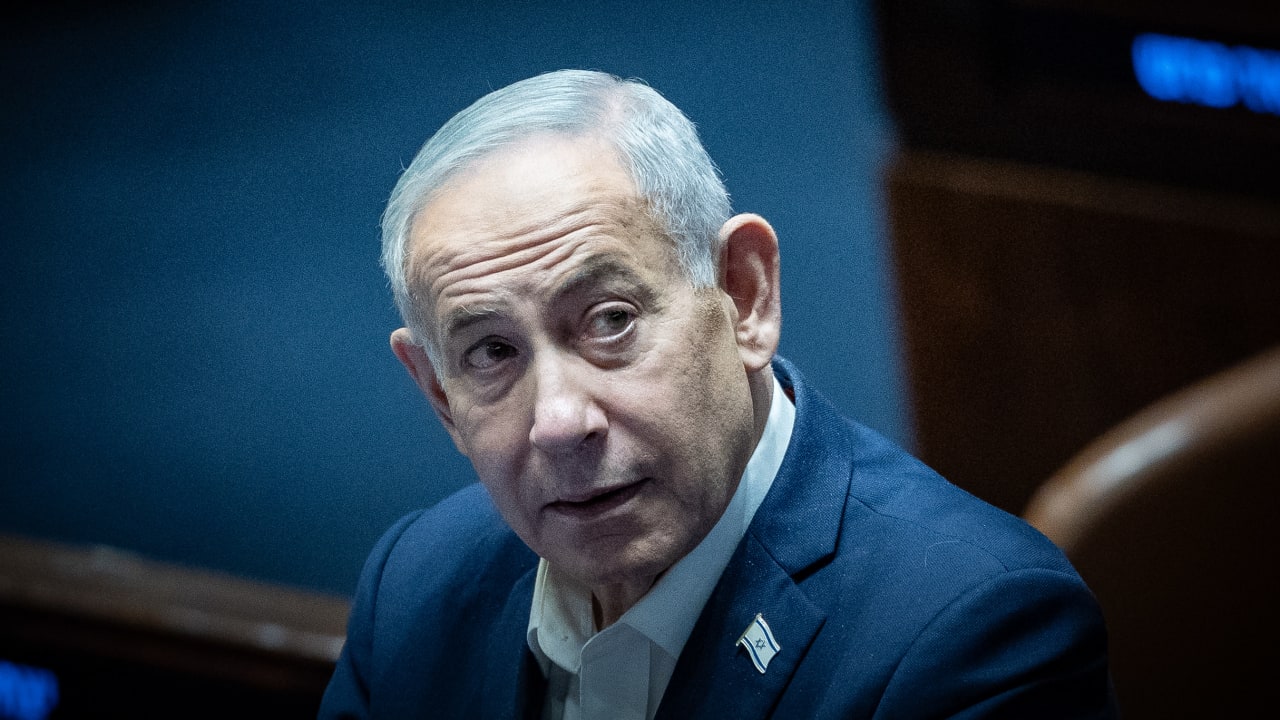
Officials within the Likud party and Benjamin Netanyahu’s inner circle are analysing a scenario in which the formation of a narrow coalition proves impossible and the political system enters a deadlock.
According to a report in The Jerusalem Post, one option being discussed by Likud officials in such a scenario is a broad coalition government featuring a rotation of the premiership between Netanyahu and Yashar party leader Gadi Eisenkot.
At this stage, the primary question occupying analysts is what Netanyahu could offer to persuade Eisenkot to establish a rotation government with him, and how he could convince him that the rotation agreement would be honoured this time, following the precedent set during the Netanyahu-Benny Gantz government.
Among the possibilities raised in Likud’s closed-door discussions is nominating Netanyahu for the presidency in the future.
This would create both an agreed political exit route for Netanyahu and a political guarantee that the premiership would ultimately pass to Eisenkot.
At this stage, these discussions represent strategic assessments and scenario analyses surrounding Netanyahu’s “broad coalition” campaign ahead of the elections.
Likud officials believe that Netanyahu could conclude the election without reaching 61 seats, but they also rely on the likelihood that the opposition bloc will lack sufficient seats to form a government.
If neither side can form a coalition, officials anticipate that pressure to avert a new election could bring the possibility of a unity government back to the agenda.
Eisenkot is viewed as one of the primary potential partners for such a move, provided he enters the election at the head of a major force within the anti-Netanyahu bloc.
According to the scenario discussed in Likud, one potential arrangement would involve Netanyahu assuming the premiership first under the rotation framework and subsequently handing the post over to Eisenkot.
However, the most obvious obstacle to such a step is the crisis of confidence caused by the rotation government established with Gantz in 2020.
Eisenkot would require a mechanism ensuring that he does not find himself in the identical position Gantz occupied at that time: namely, becoming a partner in a rotation government agreement that was never implemented.
In this context, the possibility of the presidency is also raised in the discussions. Under this scenario, the date of the leadership handover could be tied to Netanyahu moving to the President’s Residence following the conclusion of Isaac Herzog’s term in office.
Those raising this possibility believe such a step could offer Netanyahu an agreed political destination after the end of his term as prime minister, whilst simultaneously providing Eisenkot with greater confidence that the rotation will take place.
Even within Likud, officials emphasise that the presidency scenario remains far from a finalised plan, with some describing it as a remote possibility.
Nevertheless, the matter is already being discussed as part of efforts to find a mechanism capable of overcoming the trust deficit.
According to an assessment voiced within Likud, if the presidency scenario arises in the future, Netanyahu’s criminal trial would need to be concluded.
From a legal perspective, the argument in these discussions is that no automatic legal barrier prevents an individual standing trial from running for the presidency.
The real complexity would lie in the public and political dimensions.
Proponents of this scenario believe that it would also be possible to present such a step to the public as part of a broader arrangement that would end Netanyahu’s premiership and enable the formation of a stable government.
This discussion also explains the line Netanyahu has advocated in recent weeks regarding the necessity of establishing a “broad government”.
Likud officials assess that Netanyahu understands a 61-seat right-wing government is not a guaranteed outcome, and therefore believes it is important to prepare the public and political ground in advance for the possibility of incorporating figures from the opposition camp into the government after the elections.
If the results show that neither bloc holds a majority, Netanyahu could argue that voters did not deliver a decisive victory to either side, and that under these conditions there is no justification for excluding a large segment of the public from the government.
However, the Gantz precedent will remain at the heart of all future discussions. Likud officials are aware that Netanyahu’s political promise alone will not suffice.
For this reason, alongside the presidency concept, more practical mechanisms are being examined in political discussions: commitments regarding the budget and no-confidence votes, legal mechanisms designed to make breaching the agreement difficult, and even the possibility of depositing a letter of resignation with a trustee that would take effect should Netanyahu fail to fulfil his commitments.
Likud officials also point to a fundamental difference between such a scenario and the Netanyahu-Gantz government.
If election results do not provide Netanyahu with an independent majority and he must rely on Eisenkot to keep the government afloat, this dependency would itself become another component of the guarantee system.
Unlike a situation where the partnership could be dissolved and an alternative coalition formed, a breach of the agreement in this scenario could lead to the collapse of the entire government. The number of seats Likud secures will also prove decisive.
In light of current expectations, Likud officials estimate that winning more than 25 to 26 seats would be presented as a success, allowing Netanyahu to argue that he remains the leader of a major political camp that cannot be ignored when forming a government.
Conversely, a significantly weaker result would undermine his ability to demand the first turn in the rotation and shift the balance of power in future negotiations.
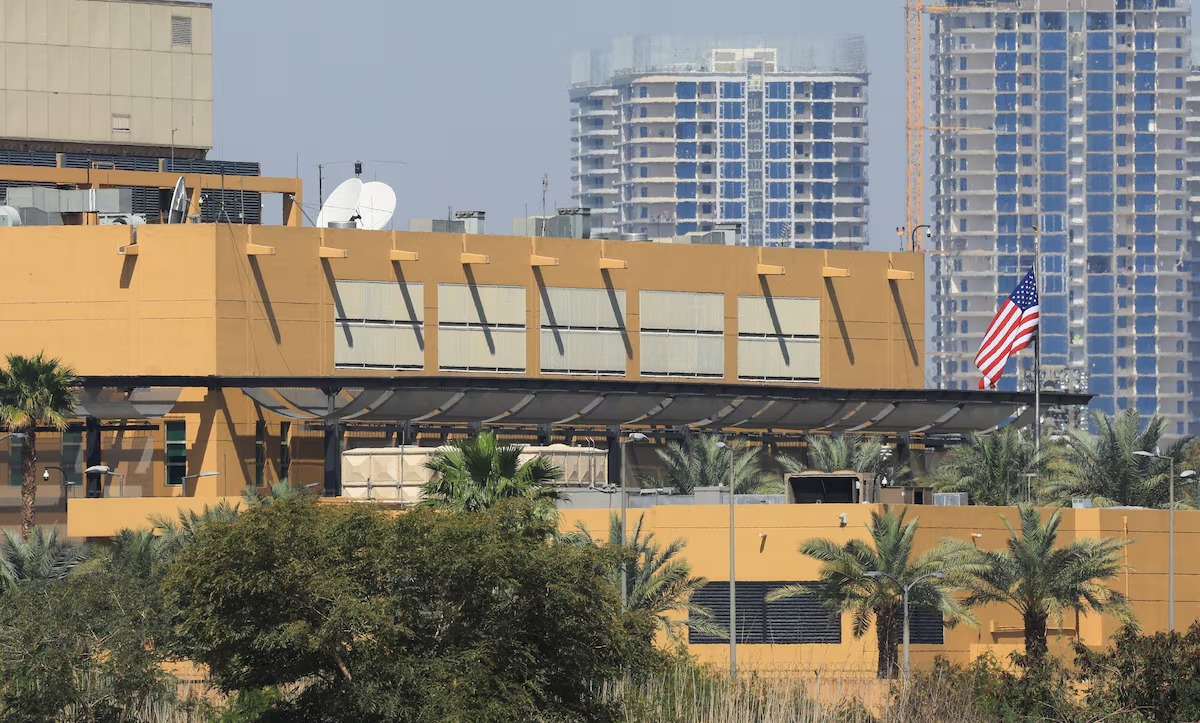
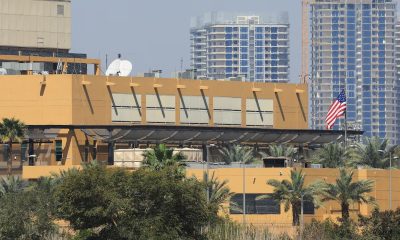
The US administration is beginning to send personnel back to several diplomatic missions in the Middle East that had been evacuated or downsized due to tensions with Iran.
Sources speaking to Reuters stated that posts in Lebanon, Israel, Saudi Arabia, and Baghdad in Iraq are among the locations where staff will return.
They added that family members will also be permitted to return to US missions in Riyadh.
The move indicates that Washington views the near-term risk of escalation in the conflict with Iran as lower.
However, some embassies will initially operate below full capacity.
Sources stated that certain embassies will initially operate without exceeding 85% of their authorised staffing levels.
One source said the return of some personnel is expected to begin this week.
Following the start of joint US-Israeli strikes against Iran on 28 February, the US had withdrawn personnel from its embassies across the Middle East.
Some embassies in Gulf Arab states, including Saudi Arabia and Kuwait, were targeted by Iranian retaliatory actions, leading to the temporary closure of those embassies.
Since then, although the US naval blockade on Iranian ports remains in place, the Strait of Hormuz—vital for oil and commodities shipping—remains closed, and diplomatic efforts to end the war have stalled, intense fighting has diminished.
A US State Department spokesperson stated in an emailed response to Reuters that the department continuously reviews the security posture of its diplomatic missions worldwide.
“Based on our latest assessment, we are adjusting our staffing posture at select posts in the Middle East to enable us to continue advancing US foreign policy objectives while maintaining the safety and security of our personnel,” the spokesperson said.
The New York Times previously reported, citing an internal document, that diplomats were returning and emergency measures were being eased, noting that embassies in Jordan, Oman, Kuwait, and Qatar were also expected to restore staffing levels.
The newspaper added that US embassies in Israel, Jordan, and Oman will ultimately return to full staffing levels, while missions in the United Arab Emirates, Saudi Arabia, Qatar, and Lebanon will initially be capped at 85% of their personnel levels.
Missions in Iraq, Kuwait, and Bahrain will have their staffing levels capped at 75%.

US economic agenda dominates G20 ministerial summit in Asheville

German industrial bosses push for return to 40-hour working week

Russia aids Iran in covert supersonic cruise missile project, FT says

Xi arrives in Cairo on official visit to deepen Egypt strategic ties

Prof. Doster outlines strategic limits of US and Israeli campaigns on Iran
-

 Europe2 weeks ago
Marine Le Pen plans French constitutional referendum on immigration
-
 Diplomacy1 week ago
US strikes fail to break Iran as regional anchors rise, Dr. Moeini says
-

 Diplomacy1 week ago
Blackwater founder Erik Prince creates air defence venture with Kyiv
-

 Asia2 weeks ago
Japan sharpens defense posture while strengthening Turkish ties
-

 Europe1 week ago
UK and Russia edge closer to conflict over long-range drone supply
-

 Asia2 weeks ago
China outpaces India in race for Russian crude oil supplies
-
 America2 weeks ago
Independent US oil firms set to sign output deals in Venezuela
-

 Europe2 weeks ago
Europe builds drone defence walls along eastern flank against UAVs
