
Asia
Japan sharpens defense posture while strengthening Turkish ties

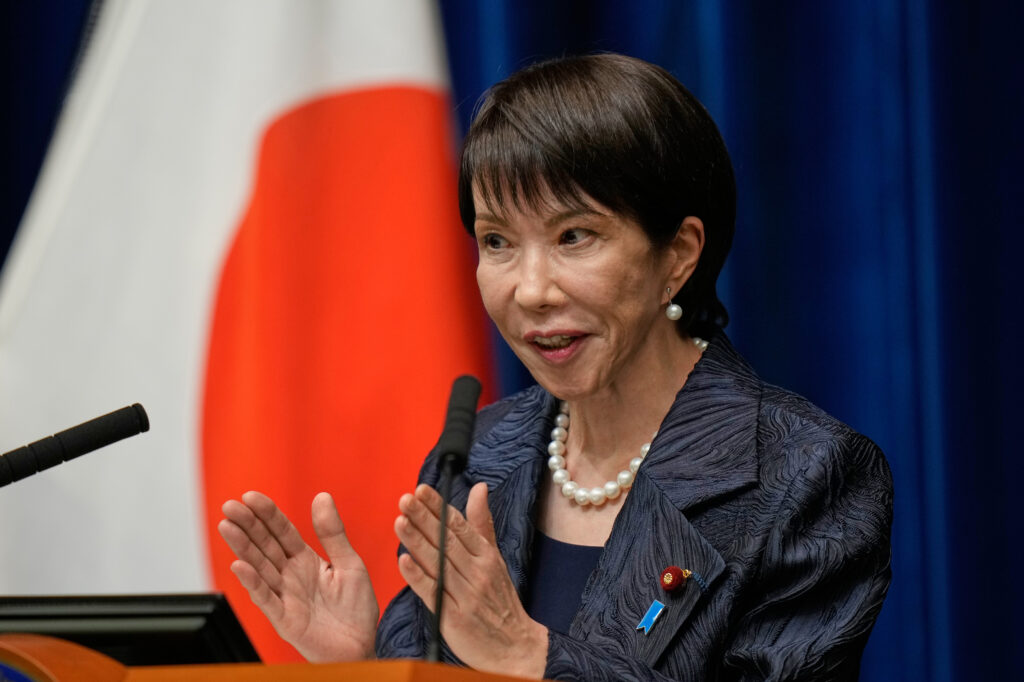
In an extensive interview on the Harici YouTube channel hosted by journalist Elif Ilhamoglu, Asia-Pacific research specialist and journalist Mehmet Asil Gonultas provided a comprehensive analysis of East Asia’s shifting geopolitical landscape.
Focusing on the newly released 2026 Japanese Defence White Paper, Tokyo’s military posture, foreign policy recalibrations under Prime Minister Sanae Takaichi, and expanding bilateral ties with Turkiye, Gonultas detailed how systemic anxieties regarding China, Russia, and North Korea are reshaping the region.
“China, Russia, and North Korea are explicitly named as threats”
Addressing the release of Japan’s updated national security strategy document, Gonultas noted that the nearly 600-page publication represents the longest and most assertive security outline produced by Tokyo to date. He underscored that the tone toward regional competitors has hardened markedly compared to previous editions.
“China, Russia, and North Korea are explicitly named as threats in this year’s document,” Gonultas said. “Regarding Russia, the text explicitly characterizes its military presence on the contested Kuril Islands as an occupation, particularly following the recent visit by Russian President Vladimir Putin to one of the islands. North Korea is evaluated through the operational lens of the Russia-Ukraine war, where Pyongyang is actively refining its military capabilities, deploying personnel, utilizing drones, and gaining battle-tested experience in an active combat zone.”
Gonultas explained that the characterization of Beijing as a deteriorating security risk reflects a trajectory that has intensified steadily over recent years. “While China has been identified as a primary security concern since at least 2022, the rhetorical severity increases with every iteration. This year’s assessment is the heaviest yet, directly mirroring the firm posture of the state,” he stated.
Contrasting the current administration with former leadership, Gonultas remarked, “Former Prime Minister Shigeru Ishiba advocated a relatively moderate approach, maintaining that Japan and China must find ways to coexist peacefully given their geographic reality. However, Prime Minister Takaichi adopted an uncompromising stance toward Beijing even prior to assuming office.”
He noted that Beijing’s actions have reinforced Tokyo’s apprehensions: “Beijing continuously provides justification for this stance. During recent missile testings, Beijing claimed to have informed Japan in advance, but Tokyo clarified that notice was provided merely 30 minutes prior to launch, emphasizing that no formal permission was granted. Furthermore, Chinese naval vessels regularly test boundaries in Japan’s exclusive economic zone, and a Chinese warship recently targeted a Japanese fighter jet with a guidance laser. The white paper explicitly argues that China’s actual military expenditures significantly exceed its publicly declared defense budget.”
Following the publication of the document, China’s Ministry of Foreign Affairs and Ministry of National Defense swiftly issued formal condemnations, accusing Tokyo of fanning regional tensions and reverting to historic militarism. “China reacted directly by asserting that this document reflects rising Japanese militarism,” Gonultas said. “In response, Tokyo points to China’s rapid rearmament, its inventory of ballistic missiles capable of striking Japanese territory, its maritime incursions, and its anti-aircraft capabilities targeting Japanese military aviation.”
“There is no question of acquiring nuclear weapons”
Turning to the structural and military capabilities outlined in the white paper, Gonultas clarified that Tokyo is prioritizing high-technology defense systems and diplomatic-economic integration rather than unconventional deterrence.
“There is no question of acquiring nuclear weapons,” Gonultas emphasized, addressing recent media speculation surrounding defense policy debates. “While domestic discussions on nuclear deterrence surfaced during the era of the late Prime Minister Shinzo Abe, implementing such a policy remains politically impossible. Regardless of a ruling party’s parliamentary majority, strong internal factions vehemently oppose the concept. When Abe tentatively raised the question of nuclear deterrence after leaving office, then-Prime Minister Fumio Kishida immediately rejected the notion. Kishida, who remains an influential parliamentary figure, reaffirmed only recently that Japan must unconditionally oppose nuclear armament.”
Clarifying recent remarks made by Japanese Defense Minister Shinjiro Koizumi regarding the public taboo surrounding nuclear debates, Gonultas observed, “The prohibition against discussing nuclear weapons is not a formal statutory ban, but rather a deeply ingrained societal consensus. The public remains firmly opposed to even raising the topic. Defense Minister Koizumi, whose personal popularity has risen significantly among right-wing factions since taking office, uses this rhetoric largely as a political signaling strategy to consolidate his base as he positions himself for a future prime ministerial run.”
Gonultas outlined Tokyo’s actual defense investments, highlighting unmanned systems and domestic defense manufacturing. “Japan’s primary technological focus centers on advanced drone infrastructure,” he stated. “Furthermore, Japan has revised its historical restrictions on arms exports. While the constitution was previously interpreted to ban the export of lethal weaponry—limiting sales strictly to search-and-rescue or non-lethal equipment—legislative shifts now permit defensive exports, provided they are directed toward allied nations that are not actively engaged in armed conflict.”
“Japan is acutely aware that it cannot stand alone against China”
Evaluating Tokyo’s strategic dependence on Washington, Gonultas emphasized that Japan’s defense planners view the US alliance as indispensable for national survival.
“Japan is acutely aware that it cannot stand alone against China’s sheer scale,” Gonultas stated. “This fundamental reality forces Japanese policymakers to maintain flawless relations with Washington at all costs. Recently, when a US serviceman was implicated in an assault incident on Okinawa Island, Defense Minister Koizumi explicitly declined to criticize the US military, drawing sharp domestic backlash. Yet, this reflects Tokyo’s overriding priority: retaining the US strategic presence in the Indo-Pacific.”
“Both the Japanese government and the general public harbour deep anxieties regarding Chinese intentions, particularly concerning a potential military move against Taiwan,” Gonultas continued. “Should China blockade or seize Taiwan, Japan’s vital maritime trade routes would be compromised at Beijing’s discretion. Aside from the United States, no regional power possesses the capacity to offer meaningful deterrence.”
Gonultas added that this strategic anxiety has intensified under the current US administration. “Japanese planners are operating under immense pressure to keep US President Donald Trump fully committed to regional security, even as Washington signals potential adjustments to its military posture, including reductions in joint exercises with South Korea,” he noted. “To build a broader network of deterrence, Tokyo is actively cultivating overlapping bilateral and trilateral security partnerships with Australia, the Philippines, India, and South Korea, aiming to anchor US power within the region.”
“Constitutional limits restrict Japanese forces to purely defensive operations”
Addressing whether growing regional friction could lead to direct military confrontations, Gonultas pointed to the legal constraints governing Japan’s Self-Defense Forces.
“The likelihood of Japan initiating or engaging in direct offensive conflict remains minimal,” Gonultas stated. “Article 9 of the Japanese Constitution explicitly renounces war and prohibits the maintenance of offensive war potential. All military assets held by Japan are structured strictly for self-defense, meaning operational force can only be applied after Japanese territory sustains an explicit attack.”
“When Prime Minister Takaichi previously stated that Japan would protect Taiwan in the event of an invasion, any operational support would realistically be limited to logistics, non-combatant evacuation operations, and naval resupply missions for US forces, rather than direct front-line engagement,” Gonultas explained. “Although Takaichi favors constitutional revision, the Japanese public remains overwhelmingly pacifist and deeply attached to Article 9, driven by demographic aging, historical memory, and a profound fear of military escalation.”
“Turkiye is viewed as a reliable and capable defense partner”
Highlighting expanding diplomatic and industrial engagement between Ankara and Tokyo, Gonultas noted that defense procurement and technological cooperation have gained significant momentum.
“Following high-level diplomatic engagements, including Turkish Foreign Minister Hakan Fidan’s official visit to Tokyo and subsequent defense agreements signed at the SAHA EXPO defense exhibition, bilateral security cooperation has entered a concrete phase,” Gonultas said. “Japan is actively seeking to acquire drone technology. Importantly, Tokyo does not merely wish to purchase off-the-shelf equipment; it seeks technology transfers and co-production frameworks to understand manufacturing methodologies. Ankara has demonstrated a positive reception to these discussions.”
“Turkiye is viewed in Tokyo as a reliable, highly capable defense actor and a non-aggressive diplomatic mediator,” Gonultas added. “With negative public perception toward Israel reaching 80% in Japan, Tokyo has deliberately diversified its defense partnerships away from Tel Aviv, placing increased value on its historical alliance with Turkiye.”
Gonultas further observed that diplomatic coordination extends into Central Asia. “Japanese Deputy Foreign Minister Eri Arfia, who is of Uyghur origin and fluent in Turkish, visited Istanbul and met with representatives of the Organization of Turkic States, expressing Japan’s interest in securing observer status,” Gonultas explained. “Tokyo views Turkiye as a vital bridge to Middle Eastern energy stability and Central Asian critical mineral supply chains.”
“Takaichi’s public approval ratings have dropped toward 50%”
Analysing domestic political dynamics, Gonultas reported that Prime Minister Takaichi faces mounting economic pressures that threaten her initial political momentum.
“While Prime Minister Takaichi entered office with approval ratings approaching 70%, recent surveys show public support dropping toward 50%, with some independent polls placing approval near 40%,” Gonultas stated. “The primary driver behind this decline is economic dissatisfaction. Despite state interventions to stabilize the yen around 170 per US dollar following energy price surges caused by the Iran conflict, living costs remain elevated.”
“Voters supported Takaichi expecting structural economic revitalization, but the administration has heavily prioritized ideological and administrative initiatives—such as designating Osaka as a secondary capital alongside its coalition partner, the Japan Innovation Party, enacting national flag protection laws, and tightening permanent residency requirements for foreign workers,” Gonultas explained. “Although the government plans to cut consumption taxes on food items from 8% to 1%, prominent figures within her own Liberal Democratic Party (LDP), including former Prime Minister Ishiba and veteran leader Taro Aso, have publicly questioned the fiscal viability of these plans.”
Concurrently, economic authorities face severe macroeconomic challenges following joint currency interventions by the US and Japan. “While joint interventions successfully halted the chaotic depreciation of the yen beyond the 170 threshold, Japanese government bond yields recently hit 30-year highs of approximately 3%,” Gonultas noted. “To offset inflationary pressures on households, the government has facilitated a 5% average wage increase—the highest in recent decades—while coordinating with Washington to maintain exchange rate stability.”
Concluding his evaluation of Tokyo’s regional policy, Gonultas noted that despite broader regional instability, Japan continues to maintain active diplomatic communication with Tehran to safeguard energy transit through the Strait of Hormuz. “Tokyo maintains functional diplomatic channels with both Washington and Tehran, leveraging its neutral diplomatic standing to support regional maritime stability and energy security,” Gonultas concluded.







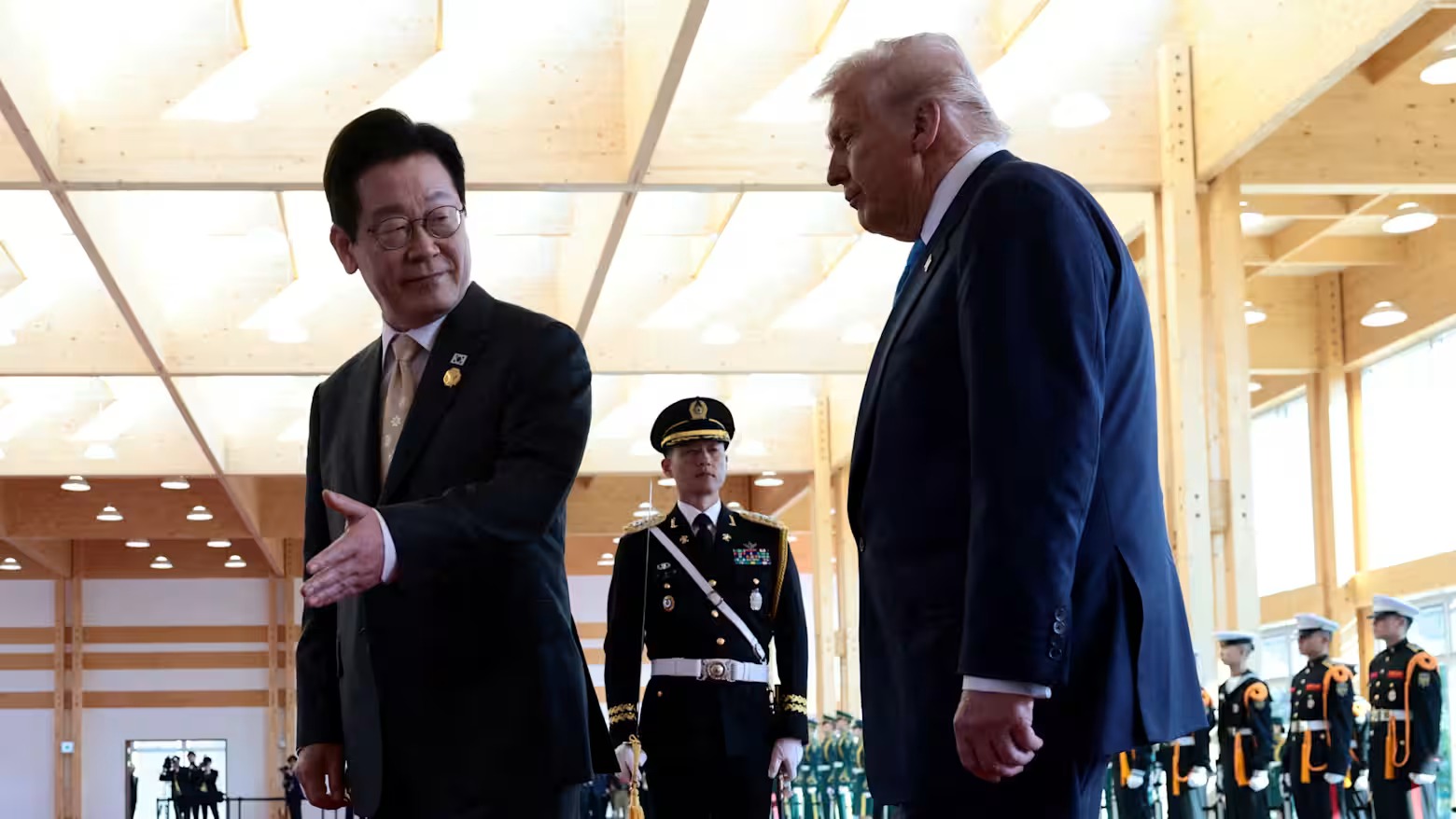
South Korea will spend $120 billion to construct eight nuclear power plants in the US under an agreement that provides for $350 billion in investments in exchange for lower tariffs.
The South Korean government also announced that Seoul and Washington will begin examining a liquefied natural gas (LNG) project in Alaska comprising a large-scale pipeline to transport natural gas from the north of the state to the south, alongside the construction of an LNG terminal for exports overseas.
Seoul stated that a decision regarding the LNG project will be made following a commercial feasibility study. However, US President Donald Trump said that South Korea would invest $54 billion in the project, pointing to an apparent lack of full coordination between the two sides on the matter.
Trade and Industry Minister Kim Jung-kwan said in a statement: “This announcement opens a new horizon of cooperation where the two countries join forces to develop joint commercial ventures in strategic areas directly linked to economic security and future sectors such as artificial intelligence, nuclear energy, and LNG.”
“We will adhere to the principle of prioritising national interests and investing solely in commercially viable projects,” Kim said.
Speaking at the White House, Trump characterised South Korea’s plans as “one of the largest energy infrastructure investments in American history”.
The announcement followed a meeting between Trump and South Korean President Lee Jae Myung roughly one year ago at the APEC Economic Leaders’ Meeting held in South Korea, where they agreed on the creation of a $350 billion investment fund.
Under that agreement, $150 billion was allocated to the shipbuilding sector and $200 billion to other sectors. In return, the US announced it would reduce tariffs imposed on goods imported from South Korea from 25% to 15%.
Under the nuclear power project, South Korea’s state-controlled utility will build two plants in the US, while Pennsylvania-based Westinghouse Electric will construct six plants.
According to the South Korean government, this will mark the first instance in which a foreign country builds its own nuclear power plants in the US.
South Korean firms are also evaluating the possibility of acquiring a stake in Westinghouse as part of negotiations over sharing profits generated by the project.
South Korea additionally announced that it will build a $22.3 billion natural gas-fired power plant in Texas with a capacity of 6,472 megawatts.
The facility will be designed to supply electricity directly to nearby data centres. The project’s first phase is targeted to begin commercial operations in 2029, with full-capacity operations slated for 2032.
Seoul also disclosed that it had agreed to allow the US to receive 50% of the profits generated by the projects until South Korea recoups all of its investments.
After South Korea fully recovers its total investment amount, 90% of the profits will go to the US.
Shengyu Liu, a low-level hardware architecture and processor kernel optimisation specialist at China-based artificial intelligence organisation DeepSeek, has published an assessment addressing the existential crisis facing software developers and humanity amid the pace of AI advancement.
A senior engineer who personally coded the core attention mechanism kernels for the DeepSeek v4.1 model, Liu stated that the technology he developed with his own hands will very soon render his professional expertise redundant and has initiated the phasing out of human labour.
Arguing that AI will steer future societies either towards a communism in which productive forces are entirely emancipated or towards a dark Cyberpunk dystopia where resources are concentrated within mega tech monopolies, Liu highlighted the vital importance of the open-source software struggle for humanity.
Noting that the DeepSeek v4.1 model released a few days ago raised the capability ceiling for small-scale systems, Liu stressed that transformation across the sector is advancing at an inconceivable pace.
Recalling that the transition from initial chatbots with context lengths of only a few thousand semantic tokens to reasoning-capable contemporary models took just two years, the senior engineer observed that the emergence of autonomous agents executing complex instructions within test and execution environments spanned a period of merely one and a half years.
Stating that AI will attain the capacity for self-improvement and full integration into physically embodied systems within the next few years, Liu described the transformation this development has generated in his own field:
“AI is taking incredible strides in processor kernel design and authoring, the field for which I am responsible. Within the span of merely a year, it transformed from a modest assistant that merely scanned technical documentation, read code, and identified bugs into a master that independently reads GPU machine-language instructions and hardware-level instruction sequences directly. Using professional profiling tools, it inspects instruction latency stalls and optimises processor kernels autonomously. In the not-so-distant future, it will also acquire the ability to independently design instruction scheduling, weigh the performance of different plans, implement them, and bring them to perfection.”
Expressing pride in the success achieved by the DeepSeek v4.1 model as a concrete fruit of his own labour, Liu noted that he personally coded the system’s most critical attention mechanism components, stating that the model’s success serves as an endorsement of his craft, yet the superhuman nature of technological progress remains unstoppable.
astonishing blogpost from Shengyu Liu (刘胜与, also known as interestingLSY/intlsy), kernel engineer at DeepSeek. The first part is his personal struggle with the fact that his work is about to render his beloved craft obsolete. The second is…
well. let's just say we agree. https://t.co/1mqyOqbl2Y pic.twitter.com/sw4t4bUE0k— Teortaxes▶️ (DeepSeek 推特🐋铁粉 2023 – ∞) (@teortaxesTex) September 14, 2026
“I want to lead my own revolution”
Liu considers it a certainty that within six months to a year, AI will generate processor kernels far superior to his own.
Pointing to the rapidly widening chasm between the human mind and machine capacity, the senior engineer said: “AI can think at 300 semantic tokens per second, write a line of code in half a second, and complete an entire block of code in 20 seconds. I cannot do this. AI can continually increase model depth, thinking intensity, external tool invocation frequency, and processing parallelism; I cannot achieve this.”
Emphasising that software engineers have been drawn into a race knowingly preparing their own demise, Liu explained why he works day and night on optimisation efforts that accelerate his own obsolescence:
“Throughout history, humanity has never hesitated when it comes to self-destruction. Knowing that the more flawless the kernels I write, the faster our new model’s training and inference speeds will be, the more its capabilities will multiply, and the earlier I will be sidelined, why do I continue to optimise with all my strength? On one level, this work is like a game to me; it brings me indescribable pleasure. When I discover a new method or see the performance curve of my code rise, the thrill I feel is no different from that of a record-breaking speed enthusiast. Moreover, I feel immense pride when I outperform the official code of hardware vendors.”
Pointing to the ruthless competition on the other side of the coin, Liu stated: “Yet the primary reason is this: even if I quit today or deliberately slowed the progress of our models, other companies would continue their work and eventually eliminate me anyway. Naturally, no one wishes to see their own profession overturned; however, if this revolution is inevitable, I want the force that unseats me to originate from my own hands. In a landscape where everyone is so focused on self-destruction, I, too, am forced to join this relentless arms race.”
“The din of machines crushes the joy of craft”
Preparing for the day when AI surpasses his level of expertise, Liu noted that he will not face unemployment, but will be forced to switch domains.
Stating that his judgement, cognitive capacity, and initiative will allow him to remain at the core table of the industry, the specialist engineer observed that this adaptation entails a heavy emotional toll.
Explaining that shifting fields means abandoning an area to which he is deeply devoted, Liu described his sense of dislocation:
“Switching domains means leaving behind the hardware kernel design, coding, and optimisation work to which I have dedicated years and an ardent passion, only to become a machine operator of AI agents. In the past, my personal curiosity, my area of expertise, and industry demand were in complete harmony. Now, AI has become far more adept than I am in the exact domain of my expertise. Industry demand has shifted away from the human writing high-performance kernel code toward an operator prompting AI to produce such code more rapidly. To bow to this industry demand, I must abandon the field I love and steer toward an unknown path.”
Illustrating the transformation through the metaphor of a traditional craft, Liu continued:
“Consider, for instance, being a master sweater knitter who achieves exquisite patterns and colour harmonies. The quality of the fabric you weave is so superior that wealthy patrons from surrounding villages seek you out, earning you a good living. What is more, sitting by the window sipping tea while looking out at mountains, streams, and animals brings you deep peace as you knit in silence. Then one day, a machine is invented; you feed it only wool and a pattern template, and it knits the sweater identically to your manual craft, only far faster. Realising your competitors will easily overtake you with this tool, you begin using it yourself. Thanks to your 20 years of accumulated experience, you remain faster than your competitors even while operating the machine. Yet the elegance of those hours spent listening to the rain and working stitch by stitch is crushed and extinguished under the mechanical din of the machine. That quiet by the window will be experienced for the final time this summer. I must leave my talent behind in yesterday and become an armoured-machine driver; my hands hold more gears now, but my heart has lost its rhythm.”
“AI in the hands of the unskilled spells disaster”
Looking beyond personal sorrow to societal and pedagogical risks, Liu focused on signs of decay within the education system.
Noting that the new generation of students tends to delegate coursework assignments to AI, the veteran engineer remarked that a student who spends a few cents to have AI produce top-grade code within minutes, rather than sweating for eight hours to obtain an imperfect result, will be stripped of foundational skills.
Emphasising that this shortcut will erode vital engineering abilities such as systems building, code architecture design, abstraction, and anticipating future requirements during development, Liu expressed deep concern:
“Will this foundational engineering mindset fade into history like the skill of writing machine language in past eras, or will it retain permanent value like the capacity to grasp entire computer architectures from software down to hardware? If this comprehension continues to hold value, the situation is dire indeed. Because when an individual with weak engineering fundamentals is equipped with AI, they will produce mountains of garbage code far faster than before. This will plant countless ticking time bombs deep within software systems, driving the world toward a far more precarious, ramshackle structure liable to collapse at any moment.”
Pointing out that raw authority and power will become decisive in the future world rather than technical expertise and intellect, the senior engineer stated that only time can answer these fundamental questions.
“A binary future: Communism or a dark corporate dystopia”
Observing that humanity has arrived at a crossroads with the advancement of AI, Shengyu Liu emphasised that future society will evolve toward one of two radical poles, which he termed communism and Cyberpunk:
“With the momentum of AI, future society will probably be cast toward one of two extremes: communism or Cyberpunk 2077. In the first option, productive forces are completely unshackled, domination over the means of production is broken, and human living standards make an unprecedented leap forward. In the second option, a small tech oligopoly consolidates all resources. While a privileged elite gains access to the most advanced AI and cutting-edge technologies, ascending almost to a state of mechanical divinity, the overwhelming majority of society is left with extremely weak and constrained AIs. Upward social mobility becomes impossible; to reach a higher class, one must possess the most powerful AI, yet access to that AI requires already having been born into that class. An unbreakable cycle of exploitation is thus established.”
Openly criticising the monopolistic and closed models adopted by Western tech companies, Liu posed a pointed question:
“In a scenario where the world’s most advanced AI remains permanently monopolised by a company like Anthropic, do you believe the future will evolve toward communism or a dark Cyberpunk dystopia? Go ahead and guess.”
Stating his conviction that top-tier AI must be delivered openly, transparently, and free of charge to all humanity, the DeepSeek engineer expressed a lack of trust that actors such as Anthropic or OpenAI would uphold this mission.
Likening the possibility of Anthropic alone controlling artificial general intelligence to the catastrophe of nuclear technology falling into the hands of fascist regimes during World War II, Liu concluded with his rationale for remaining at DeepSeek:
“That is precisely why I chose to remain at DeepSeek and why I am holding the line here. We build powerful, lightning-fast AIs offered for the common good of all humanity, and we release them as open source. This is the path to pulling the world back from the brink of that dark corporate dystopia and liberating productive forces for the benefit of the people.”

Financial Times writer Ryan Avent has written that a fresh, rapid surge in China’s trade surplus could signal a new wave of the “China shock”.
Economists define the “China shock” as a spike in Chinese exports to global markets that intensifies competition for manufacturers in advanced economies and curtails employment in certain sectors.
The term gained widespread currency after China joined the World Trade Organization in 2001, accelerating the inflow of inexpensive Chinese goods into the US and other nations.
The US was the country hit hardest by the initial shockwave. Between 1999 and 2011, more than 2 million jobs were lost because domestic producers were unable to withstand the competition.
Avent argued that the effects of the initial wave are still felt across the American economy because China failed to carry out the rebalancing that the world expected.
The share of net exports in China’s gross domestic product contracted during the 2007-2019 period, allowing Western nations to focus on national security and other matters.
Avent reported that the trade surplus is now escalating rapidly once again, posing a threat to the economies of wealthy nations.
The writer pointed to the stagnation of domestic demand following the collapse of the real estate market six years ago as one cause of this surplus. Another prominent factor is the Beijing government’s channelling of massive resources into manufacturing in pursuit of self-sufficiency.
Attention was also drawn to the role of the depreciating yuan. An appreciation of the currency could require China to alter its foreign exchange interventions, reduce purchases of foreign currency and assets, and sell those assets off. That scenario could trigger currency depreciation and rising interest rates in other countries.
The Wall Street Journal also reported in the spring of 2024 on economists’ concerns regarding a potential second wave.
Experts predicted that global markets would once again be flooded with inexpensive goods, stating that China was manufacturing far beyond domestic demand to overcome its economic troubles.
Moreover, it was stressed that China is now competing in high-technology fields such as automobiles, computer chips, and complex machinery manufacturing.
Meanwhile, Vasiliy Kashin, Director of the Centre for Comprehensive European and International Studies at the Higher School of Economics (HSE) University in Moscow, told the Russian media outlet RBC that the US has imposed sanctions on the Chinese economy since the first shock period, adding that these measures would very likely tighten in the event of a fresh export wave.
According to assessments reported by the Financial Times, this new process could also shake China’s own economy. Alongside rising output, entry-level manufacturing plants across the country are turning toward automation and reducing personnel.
This trend could trigger a painful departure from labour-intensive production, leaving millions unemployed. Manufacturing activities in China that previously capitalised on cheap labour are shifting to other Southeast Asian countries.
The Beijing administration rejected allegations that its industrialisation steps pose risks to other countries. As reported by the Xinhua news agency, China’s Ministry of Commerce stressed that claims of a “China shock 2.0” are groundless. The ministry stated:
“The US and other Western countries have circulated the so-called ‘China shock 2.0’ narrative, asserting that China’s industrial development has shaken Western monopolies and narrowed growth space for Global South countries. This claim is unsupported by concrete data and is entirely unfounded.”

South Korea pulls part of embassy staff from Ukraine amid POW dispute

Netanyahu unveils security doctrine and regional alliance map

At least 47 major US data centre projects halted or cancelled

EU rejects US proposal to resume Russian gas flows through Ukraine

Serbian prosecutor in Trump Tower inquiry targeted by Israeli spyware
-

 Europe2 weeks ago
France and Germany urge EU market kill switch against trade threats
-

 Europe2 weeks ago
Bill to drop NATO membership goal submitted to Ukrainian parliament
-

 Europe2 weeks ago
Marine Le Pen unveils fiscal programme pledging French budget cuts
-

 Europe2 weeks ago
Berlin Left Party backs Israel’s right to exist for coalition pact
-

 America2 weeks ago
How will Brazil’s presidential runoff work?
-

 Middle East2 weeks ago
CIA report warns Israel faces growing risk of civil conflict
-

 Diplomacy2 weeks ago
The West is preparing for war not with Russia, but with its own people, French analyst Georges Kuzmanovic insists
-
 Europe2 weeks ago
EU seeks Chinese trade signal in Beijing as surplus widens
