
America
New Epstein documents reveal expanded travel with Trump and allegations of institutional failures

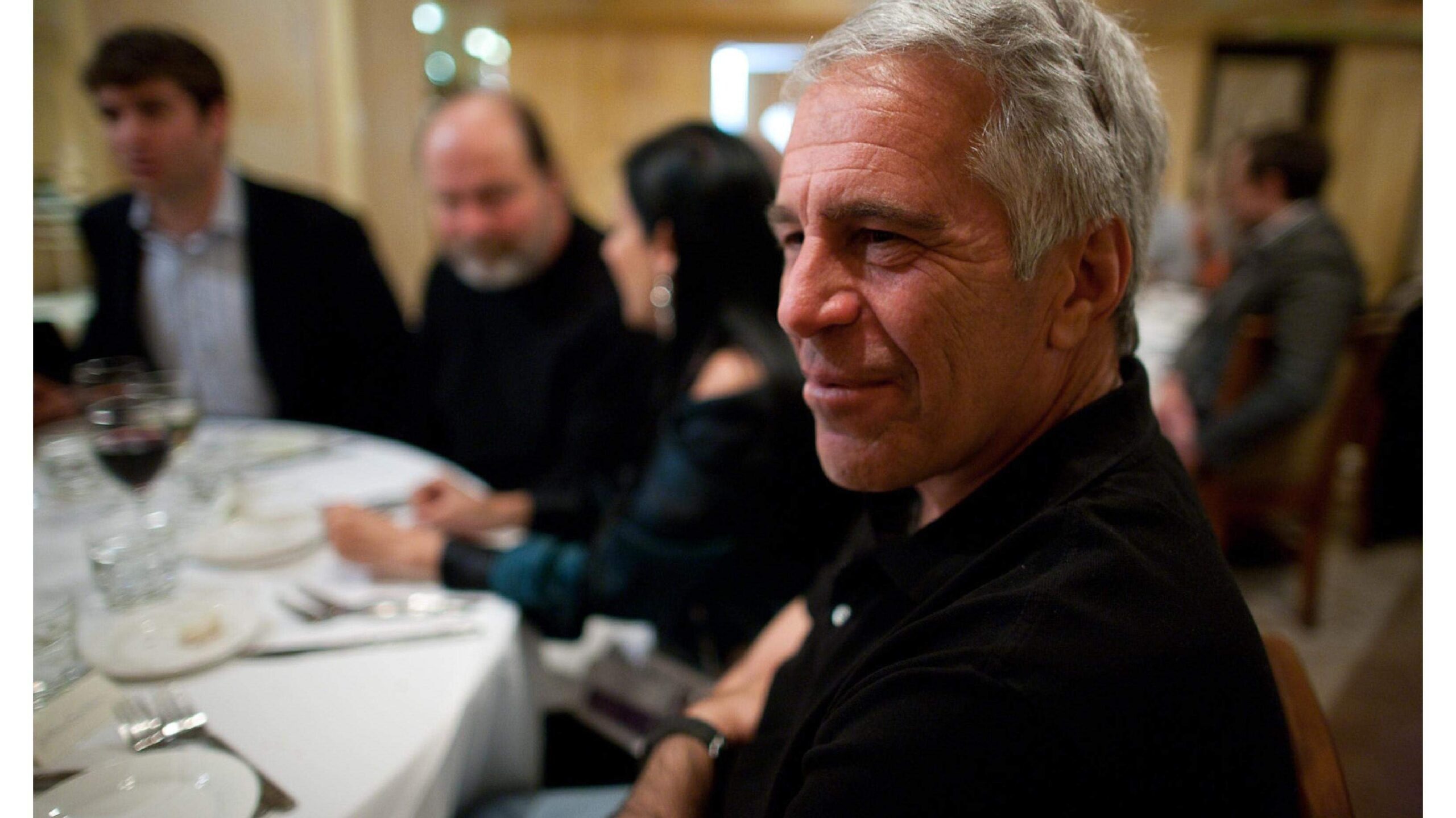
New documents released regarding Jeffrey Epstein include a report of a woman alleging she was raped by US President Benjamin Trump.
The latest release from the Department of Justice concerning the Epstein files sheds light on the FBI’s 2019 investigation into additional suspects who may have assisted Epstein or been involved in his sex trafficking crimes.
The new documents, released Tuesday, contain the names of 10 potential accomplices or suspects that New York prosecutors planned to question in 2019. Three of these suspects are Epstein’s former girlfriend Ghislaine Maxwell, French modeling scout Jean-Luc Brunel, and the billionaire former owner of Victoria’s Secret, Leslie Wexner, who was once a client of Epstein.
Other names were redacted without explanation. Files released under the Epstein Files Transparency Act state that only certain names can be redacted, specifically those of Epstein’s victims.
The Department of Justice has 15 days to explain the exceptions they used to justify the redactions.
Trump flew with Epstein more than previously known between 1993 and 1996
The approximately 10,000 newly released files contain many references to President Trump. Among these is a January 2020 note from an assistant US attorney, revealing that Trump was on many more flights between 1993 and 1996 than the Department of Justice previously knew.
On one flight, there were three passengers: Trump, Epstein, and a 20-year-old woman; on two other flights, the prosecutor noted that Trump was on the plane with two women who could have been potential witnesses in the criminal case they were building against Maxwell at the time.
Trump has repeatedly denied any involvement in Epstein’s crimes. In 2024, he stated on the social media platform Truth Social that he was “never on Epstein’s plane or ‘stupid’ island.”
In a statement on Tuesday, the Department of Justice noted that a series of documents concerning the president were “untrue and sensational claims” made against Trump ahead of the 2020 election.
Harsh criticism of the Department of Justice “redaction” system
Emails and correspondence regarding Epstein’s 2007 deal in South Florida were also heavily redacted. With few exceptions, the names of all prosecutors were blacked out, making it nearly impossible to understand how his non-prosecution agreement developed, why it was kept secret, and how Epstein obtained federal immunity.
At that time, Epstein was accused of sexually assaulting approximately 40 underage girls at his mansion in Palm Beach. Previously released documents show that the Department of Justice possessed not only victim statements but also supporting evidence such as phone records, text messages, witness testimony, and bank deposit records showing payments made to the girls.
Three documents released in the past were also heavily redacted, including some photographs of older men. However, the names of many of Epstein’s victims appear on the pages, sometimes dozens of times, which led victims to accuse the department of violating the law and attempting to intimidate them; some have demanded the resignations of US Attorney General Pam Bondi and FBI Director Kash Patel.
A series of tips also came into the FBI and the department’s tip line regarding this case. On Tuesday, the department was forced to admit that these tips were completely fake: a letter appearing to be written by Epstein to former US Olympic Gymnastics coach and convicted rapist Larry Nassar spread rapidly online. The Department of Justice eventually had to examine this letter and announced that handwriting analysis revealed Epstein did not write it.
Epstein’s younger brother: They killed my brother with Trump’s approval
Records also show that Epstein’s younger brother, Mark Epstein, submitted a report to the FBI in 2023 claiming his brother was killed in his prison cell because he was “going to name names.”
Reached by phone on Tuesday, Mark Epstein said the FBI never followed up on the matter. The 71-year-old Epstein has long believed his brother was murdered and claims in his report that Trump “approved” this murder.
When asked why he believes Trump was involved in the incident, he asked, “The question is: who would be in a position to organize this and ensure the Department of Justice covers it up?”
Epstein was found hanging in his Manhattan prison cell on August 10, 2019, one month after being arrested in New York on sex trafficking charges. The New York City medical examiner ruled his death a suicide, but investigations revealed that his prison cell was never properly examined as a potential crime scene.
All but one of the video cameras in Epstein’s cell were recording at the time of death, and some of those recordings went missing.
Many of Epstein’s victims do not believe he committed suicide. Many told the Miami Herald that they feared their lives would be in danger if they spoke publicly about their abusers.
Bannon and former Victoria’s Secret owner Wexner also in the documents
An FBI investigator in the Crimes Against Children and Human Trafficking Unit noted on July 9, 2019, that three accomplices in the Epstein case were in Florida, one was in Boston, one was in New York, and one was in Connecticut.
He also noted that one of them was a wealthy businessman living in Ohio, later identified in documents as Wexner. For many years, Epstein managed the financial affairs of Ohio billionaire Les Wexner. The 88-year-old Wexner has always denied any involvement in the sex trafficking leader’s crimes.
Epstein used his relationship with Victoria’s Secret to find victims, promising many of them that he could make them the next Victoria’s Secret model. The files contain an undated statement from a woman identified as “Jane Doe” describing an encounter with Epstein:
“At that moment, I ran back to the door and figured out how to get out of there. A girl outside asked me where I was going and told me to be careful. She said Mr. Epstein knew many powerful people, including Bill Clinton, and that if I didn’t do what he wanted, I would never find work in this industry. I was so scared I couldn’t wait to get out of there… I had spent all my savings to buy Victoria’s Secret underwear because I thought it was an audition, but instead, it felt like a casting for prostitution. I felt like I was in hell.”
One of the emails released by the Department of Justice mentions a photograph of Trump and Ghislaine Maxwell taken together, found on a mobile phone belonging to Republican political strategist and “MAGA” ideologue Steve Bannon. The photograph itself is blacked out, and it is unclear when it was taken.
Woman alleging rape spoke to police
Among the documents released overnight is a strange FBI report where names are redacted. The report describes a tip the agency received from a limousine driver. The driver claims he heard Trump talking about “Jeffrey” and also spoke with a woman who alleged she had been raped by Trump.
It is unknown whether the FBI investigated this tip or dismissed it as fake, but the person who reported it to the FBI followed the woman, and she told him she had reported the rape to the “police.”
So far, there is nothing in the documents showing that Trump committed any crime, and the files do not indicate that he is under investigation.
In 2007, Epstein made a deal with federal prosecutors in South Florida that allowed him to plead guilty to two state prostitution charges (one involving a minor) and serve 13 months in the Palm Beach County Jail.
Allowed to leave prison regularly, Epstein continued to work in a nearby office and continued to abuse girls.
Epstein’s victims, whose numbers the department estimates at around 1,000 women, have long demanded more accountability for his powerful friends and accomplices, as well as more transparency from the department that kept them in the dark about the 2007 deal that allowed Epstein to escape heavy punishment for sexually abusing girls in South Florida.
Clinton requested the release of all documents
The files the department initially released on Friday did not satisfy the victims or the members of Congress who ordered the release, especially after the Department of Justice removed some files, including a photograph of Trump, after publication. This photograph and several others were later reposted online.
The files released Friday included numerous photographs of former president Bill Clinton. Many of these photographs were taken from a 2002 trip Clinton and Epstein took to Africa on Epstein’s plane.
On Monday, a spokesperson for Clinton asked the Department of Justice to release all files mentioning Clinton’s name, stating that the files released so far suggest “someone or something is being protected.”
Prince Andrew may not have been interrogated despite US requests
According to another document in the latest batch of Epstein files, federal prosecutors—armed with evidence that Prince Andrew had “sexual relations” with one of Epstein’s victims—threatened to force the British royal to speak with investigators under oath.
Department of Justice officials asked British authorities in the spring of 2020 to conduct a “mandatory interview” with the Prince if he refused to answer questions voluntarily as part of the department’s investigation.
Prosecutors also revealed the existence of evidence that Andrew was “present” during “certain” interactions between the victim, Epstein, and Maxwell, and evidence that the prince knew Maxwell “recruited women to engage in sexual relations with Epstein and other men.”
Prosecutors also wrote that they had “evidence that Prince Andrew engaged in sexual relations with one of Epstein’s victims.”
Epstein’s UK flights under scrutiny
The BBC revealed that approximately 90 flights linked to Jeffrey Epstein landed at or took off from UK airports, with some flights carrying British women who claim they were abused by the billionaire.
Following this, the BBC contacted the Metropolitan Police in October to ask if they would launch a comprehensive investigation into potential human trafficking by Epstein and his accomplices within, around, and outside the UK.
A document released by the US Department of Justice includes an email from a senior Metropolitan Police officer asking the FBI attaché in London if there was “still an ongoing investigation” regarding the BBC’s questions about Epstein’s flights to the UK.
In a statement released earlier this month, the Metropolitan Police Service stated that it had “not received any additional evidence that would support the reopening of the investigation” into the human trafficking activities of Epstein and Maxwell in the UK.
“If new and relevant information is brought to our attention, including that obtained from materials released in the US, we will consider it,” the Metropolitan Police Service said.
Amazon was slow to assist in the investigation
Just days before Epstein’s suicide in prison in 2019, the Department of Justice threatened to ask a judge to charge Amazon with contempt of court after the company failed to provide documents related to the investigation into the scandal-plagued financier.
An unidentified investigator wrote in an August 1 email to the company, “Amazon’s response to the attached grand jury subpoena is several weeks late.”
“The FBI has emailed and left messages for your legal department several times in recent weeks but has received no response. Please respond immediately to address Amazon’s non-compliance. Otherwise, we will file a contempt of court motion for failure to comply with valid legal process.”
It is unclear exactly which records the Department of Justice requested from Amazon; the subpoena was not accessible in the latest group of documents. However, it appeared to be related to email correspondence of individuals linked to the Epstein investigation.
A day later, it appeared that Amazon had hastily prepared a response to the subpoena, but the Department of Justice found this response to be highly inadequate.
Summers appointed as an alternate executor in his will
According to another document, former Treasury Secretary Larry Summers was at one point appointed as a backup executor in Jeffrey Epstein’s will.
In the 2014 version of Epstein’s will, Summers was named as a “successor executor” to manage the convicted sex offender’s estate after his death if any of the other three appointed executors were “not qualified or unable to serve.”
According to the document, each executor was entitled to receive $250,000 upon completion of the will. Epstein died in 2019, and Summers was not named as an executor in the final version of his will.
Fake passport linked to Saudi Arabia
In the most recently released files, Epstein is seen to have an Austrian passport registered under the name “Marius Robert Fortelni.” The New York Post reported that this name belonged to a real estate developer who once lived in New York and later moved to Palm Beach, Florida.
The passport/document lists the individual’s date of birth as July 30, 1954, and place of birth as Vienna. Epstein was born in the US in 1953.
The passport, issued on May 21, 1984, lists the place of residence as Saudi Arabia and the nationality as Austrian.
The Saudi connection is particularly significant because Adnan Khashoggi, who was involved in organizing the Afghan jihad and the Iran-Contra scandal, and Ghislaine Maxwell’s father, Robert Maxwell, operated in the dark connections of international finance.
Epstein’s lawyers addressed the issue of the fake passport years ago. In a 2019 court filing cited by NBC, the offender’s legal team claimed the document was designed not for routine travel but as a “security measure.”
Arguing that the document was designed to be shown only in extreme cases while traveling in dangerous areas, Epstein’s lawyers wrote, “The passport was for personal protection in case of travel to dangerous areas,” adding that the passport would only be shown to “potential kidnappers, pirates, or terrorists in the event of violent incidents.”
Photographs released by the department show that the passport contained travel stamps from countries such as France, Spain, and the UK between 1982 and 1983. The document also includes a stamp from the Saudi Arabian consulate in Vienna granting a two-month entry permit.


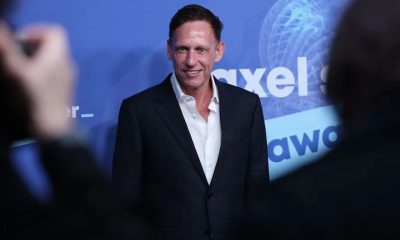





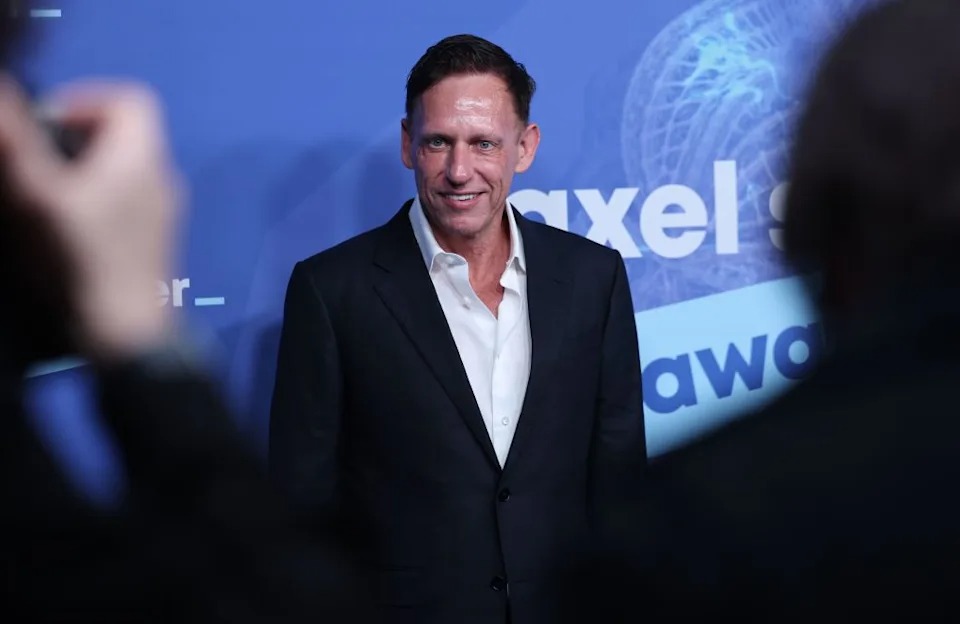
Peter Thiel has argued that former President Barack Obama and Pope Leo XIV are stoking public fears over artificial intelligence merely to enhance their own popularity.
In newly disclosed “Antichrist” lectures obtained by Politico, Thiel specifically targeted the two leaders while warning against the Antichrist, which he sees as halting technological progress and advocating a regulatory “one-world government”.
“A lot of people know that AI is politically unpopular, and they want to use that to boost their own popularity,” Thiel reportedly said during his address in Nashville.
Thiel continued:
“Both Obama and the pope fall into this category. Obama knows that Democrats have no ideas, but at least they can oppose AI.”
Obama recently called on Democrats to develop a comprehensive approach to the regulation of artificial intelligence.
Referring to Leo’s first encyclical on AI, “Magnifica Humanitas”, Thiel said: “The Church needed a politically popular issue to divert attention from child sexual abuse scandals, and it found it in AI.”
On the pontiff, he stated verbatim:
“AI is the greatest threat to late modernity. The pope realizes this. That is why he wrote his first encyclical… The Church needed a politically popular issue to divert attention from child sexual abuse scandals, and it found it in AI.”
In recent months, Pope Leo has gone on the offensive against artificial intelligence. The leader of the Catholic world recently said that this technology could create a “paradise of machines” that could endanger humanity.
Thiel’s relationship with the Catholic Church is fraught. This spring, largely in response to Thiel’s earlier lectures on the “Antichrist”, Vatican adviser Father Paolo Benanti penned an article entitled “The American Heresy: Should We Burn Peter Thiel?”
Throughout the lectures, Thiel framed familiar technology debates in religious terms.
Citing Matthew 24:24, for instance, the investor quoted:
“For false christs and false prophets will arise and perform great signs and wonders, so as to deceive, if possible, even the elect.”
Regarding this verse, he asked in Nashville: “And what about the psychology of the Antichrist? Could he see himself as the Christ?”
In his Nashville lectures, he also delved into the concept of the “Katechon”, drawn from the Second Epistle to the Thessalonians, which restrains the arrival and rise to power of the Antichrist.
Figures who may have briefly assumed the role of the Katechon throughout history included Charlemagne and Klemens von Metternich.
“If anti-communism is the Katechon holding back communists trying to create a communist one-world state, then neoliberalism is anti-communism in a world without communists,” Thiel said.
In both San Francisco and Nashville, Thiel devoted a significant portion of his opening lecture to addressing “effective altruism”.
This ideology rests on the premise that human beings should always act to minimise existential risk to the species and maximise positive long-term impact.
Many effective altruists and affiliated groups are based in San Francisco and work on artificial intelligence research.
In Nashville, Thiel criticised their ideas. This stance reflects the fact that they have dominated much of the recent AI safety debate, showing Thiel’s concern over the growing influence of this group.
Thiel stated:
“One reason [the effective altruists’] strategy works, of course, is that an apocalypse is impossible to undo. You only have one planet. Even Greta [Thunberg] was right about that. … So you can’t just ignore the risks. But we must also take seriously that when you establish a near-totalitarian one-world government empowered to stop all dangerous scientific work, undoing that will not be easy either… There is no historical example suggesting this global warden would willingly surrender power. Effective altruist ideology has brainwashed a significant portion of the people working on AI.”
The remarks delivered by Thiel in his lectures on 28 September and on Monday provide a rare glimpse into the conservative tech billionaire’s shifting political priorities over time.
Thiel’s opposition to regulation is not new. That perspective is widely shared among Silicon Valley venture capitalists.
What distinguishes Thiel from his peers in the conservative tech sector is his decision to frame political disputes in religious terms while simultaneously attacking the leader of the Catholic Church.
This shift could reverberate across the political arena. Thiel was an early backer of President Donald Trump and served as a major financial sponsor of Vice President JD Vance’s transition from venture capital into politics.
Politico noted that Thiel’s attacks on the church could complicate matters for Vance, a Catholic convert.
Democrats positioning themselves for the 2028 presidential election have already begun targeting Vance over his ties to the billionaire investor.
Service in the US administration has become one of the most valuable assets opening doors in the search for fresh profits across the Venezuelan energy sector.
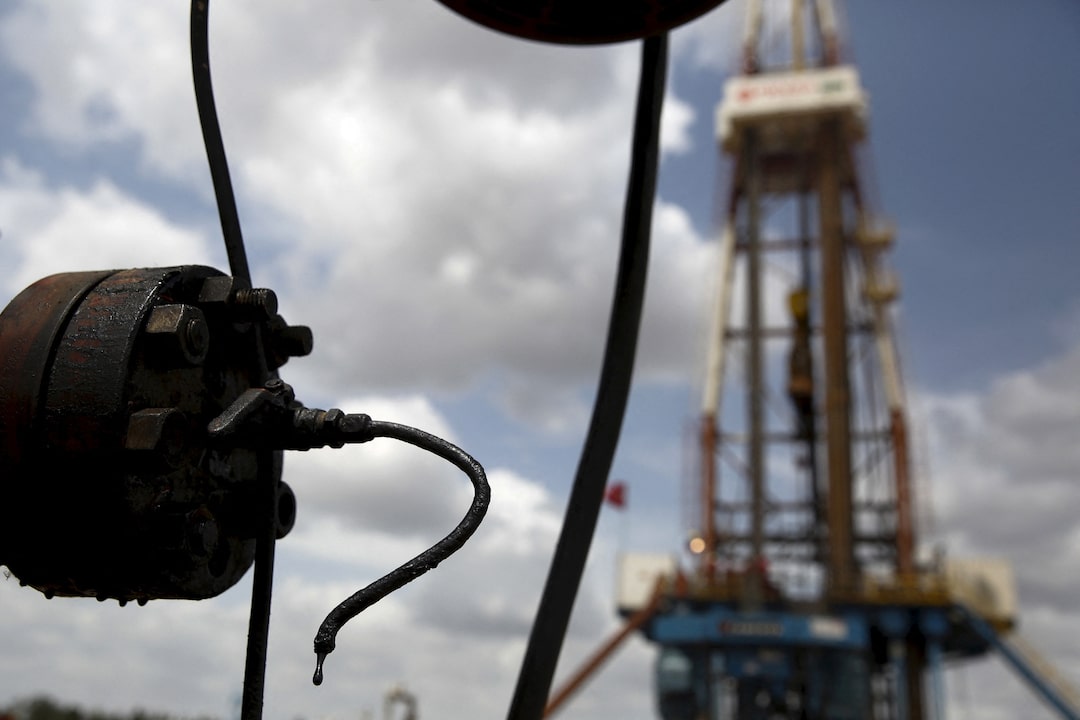
Following the protracted crisis that ultimately brought the Venezuelan oil sector under substantial supervision by Washington, investors are enlisting former government officials who possess an intimate understanding of policy toward the country and maintain official contacts.
According to a report by The Washington Post (WP), energy companies and investors have begun employing former bureaucrats who served in the administration of Donald Trump.
Former officials move to the private sector
Michael Jensen, the former senior director for the Western Hemisphere at the White House National Security Council, features prominently among these figures.
Just three days after stepping down from his administration post in May, Jensen travelled to Venezuela alongside cryptocurrency billionaire Fred Ehrsam.
As of 1 June, Jensen serves as chief operating officer at Primavera, an energy firm founded by Ehrsam.
Last month, Primavera signed production agreements with the Venezuelan state oil company, PDVSA.
Another former government official, Brittany Caelm, left her role on the White House National Energy Dominance Council in August to join Sable Offshore.
According to reporting by the WP and the Financial Times, the company is conducting negotiations with the Venezuelan government over the operation of oilfields.
Micah Thomas Ketchel, a former adviser at the State Department, also joined the lobbying firm Ballard Partners following his departure from the administration and began working on the Venezuela portfolio.
US law imposes various post-government employment restrictions on former officials.
Company representatives stated that Jensen, Caelm, and Ketchel consulted ethics lawyers and complied with applicable rules.
Richard Painter, a former chief White House ethics counsel, also noted that Jensen’s transition to the private sector did not violate the law, provided that the relevant restrictions were respected.
Trump announces massive deal for oilfields
In January, following the abduction and detention of elected President Nicolas Maduro, US President Donald Trump urged American oil companies to invest in Venezuela to increase heavy crude production and shipments to US refineries.
Prior to this call, companies had demanded security guarantees alongside changes to the country’s legal and commercial regulations.
Maduro and his wife were abducted in a US operation carried out in January and taken to the US. Venezuelan authorities characterised the episode as a military assault, reporting that approximately 100 people were killed.
In the US proceedings against Maduro, two hearings took place in January and March, during which Maduro maintained his innocence.
Amid the rapprochement between Caracas and Washington, American oil and natural gas companies accelerated preparations to expand their operations in Venezuela.
The Wall Street Journal (WSJ) reported on 28 August that companies were close to concluding investment deals worth billions of dollars.
Chevron, the only major American oil company that maintained operations in the country, weighed taking over two additional heavy oilfields, while Halliburton engaged in talks to supply equipment.
During this process, the Trump administration also addressed the issue of direct access to Venezuela’s most prolific oilfields.
According to the WSJ, these discussions encompassed 17 oilfields with estimated proven reserves totalling approximately 90 billion barrels.
On 29 August, Trump announced that an agreement had been reached with Venezuela.
Trump stated that the pact provides for more than 65 billion barrels of the country’s oil reserves to come under US control, declaring: “The US just signed the largest oil deal in world history with Venezuela.”

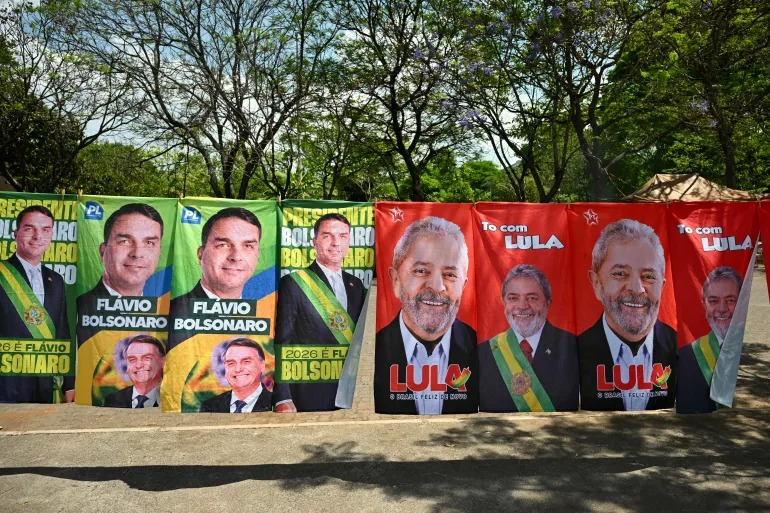
The second round will determine which candidate secures a majority of the valid votes.
By Micaela Ovelar, São Paulo
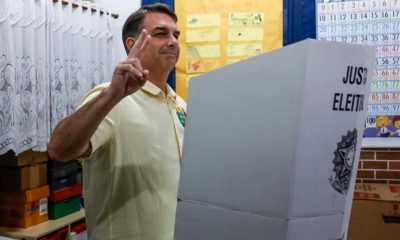
Brazil’s presidential election will be decided in a runoff between Senator Flávio Bolsonaro, of the Liberal Party (PL), and President Luiz Inácio Lula da Silva, of the Workers’ Party (PT). With all voting machines counted, Bolsonaro finished the October 4 first round with 47.03% of valid votes, ahead of Lula’s 45.16%. Neither secured the majority required for an outright victory, sending the two candidates to a second round on October 25.
Bolsonaro received 56,104,503 votes, while Lula obtained 53,879,538—a difference of 2,224,965 votes, or approximately 1.87 percentage points. Bolsonaro therefore enters the runoff as the first-round leader.
The election also settled legislative contests and most gubernatorial races. In São Paulo, Brazil’s largest electoral state, Governor Tarcísio de Freitas (Republicanos) secured reelection in the first round. Nationwide, 20 gubernatorial contests were decided without a runoff.
The presidential count
The two leading candidates together accounted for 92.19% of valid presidential votes. The remaining candidates shared 7.81%
|
Candidate |
Party |
Votes |
Share of valid votes |
Difference |
|---|---|---|---|---|
|
Flávio Bolsonaro |
Liberal Party (PL) |
56,104,503 |
47.03% |
2,224,965 |
|
Luiz Inácio Lula da Silva |
Workers’ Party (PT) |
53,879,538 |
45.16% |
1.87 % |
Source: Brazilian Superior Electoral Court (SEC).
Augusto Cury, of Avante, placed third with approximately 2.89% of valid votes (3,448,569), followed by Renan Santos, of Missão, with 2.24% (2,675,887), and Ronaldo Caiado, of the Social Democratic Party (PSD), with 2.18% (2,605,148). Romeu Zema, of Novo, received 0.27% (326,488). None advanced to the runoff.
Cury and Santos subsequently said they would not endorse either finalist. Their announcements do not determine how their supporters will vote on October 25: ballots cast for eliminated candidates cannot be automatically assigned to Bolsonaro or Lula.
The completed count also differed from the final polls, which had placed Lula ahead with 45%, against Bolsonaro’s 42%. The election result instead gave Bolsonaro a narrow lead.
The territorial distribution showed Lula ahead in the Northeast, while Bolsonaro prevailed in the three southern states: Paraná, Santa Catarina and Rio Grande do Sul. Across the country, Bolsonaro led in 14 states and the Federal District, while Lula finished ahead in 12 states. These results contribute to a single nationwide presidential count rather than awarding separate electoral mandates for individual state victories.
How the election works
Brazil elects its president and vice president on a joint ticket through a two-round system. A ticket wins in the first round only by obtaining more than half of valid votes. Blank and invalid ballots are excluded from that calculation. If no ticket crosses the threshold, the two highest-placed candidates advance to a runoff.
The October 4 election combined presidential voting with contests for governors, the Chamber of Deputies, the Senate and state or Federal District legislatures. All 513 Chamber seats and 54 of the Senate’s 81 seats were contested. The Senate election renewed two-thirds of the chamber, with voters choosing two different senatorial candidates in each state and the Federal District.
Voting in Brazilian territory ended at 5 p.m., Brasília time, after which electoral authorities published the count. The Superior Electoral Court (TSE in Portuguese) provides results through its official results website and mobile application.
The October 25 runoff will decide the presidency and gubernatorial contests requiring a second round. Legislative elections are determined through the first-round vote and do not proceed to a runoff.
Participation and abstention
Approximately 125.3 million people voted in the presidential election, representing a turnout of 78.92%. Around 33.5 million registered voters did not participate, producing an abstention rate of 21.08%.
The count also recorded approximately 2.3 million blank ballots and 3.67 million invalid ballots. Together, these represented roughly 4.77% of ballots cast, leaving approximately 119.3 million valid presidential votes. Bolsonaro’s 47.03% and Lula’s 45.16% refer to that valid-vote total, not to all ballots cast or the entire registered electorate.
Abstention is distinct from blank or invalid voting. An abstaining voter did not cast a ballot; someone who submitted a blank or invalid ballot participated without recording a valid candidate choice. Neither group should automatically be described as undecided voters.
Those who did not participate on October 4 will have another opportunity to vote in the second round. Of course, the first-round figures do not establish how many will return to the polls or which finalist they will choose.
São Paulo and state results
São Paulo entered the election with approximately 34.1 million registered voters, around 21.5% of Brazil’s electorate. It is the country’s largest electoral state and forms part of the Southeast alongside Rio de Janeiro, Minas Gerais and Espírito Santo. Its weight in the national electorate makes it particularly important when examining presidential results.
The state’s gubernatorial contest ended in the first round. Tarcísio de Freitas, of Republicanos, won reelection with almost 63% of valid votes (14,491,874), defeating PT candidate Fernando Haddad (8,423,656). This is a gap of approximately 26 percentage points between them.
Across Brazil, 20 gubernatorial races were settled on October 4, the highest first-round total of elections since 1994. That exceeded the 15 contests decided in the first round in 2022 and the previous high of 18 in 2010.
Other first-round winners included Cleitinho Azevedo in Minas Gerais, Sérgio Moro in Paraná and Luciano Zucco in Rio Grande do Sul. PT incumbents Jerônimo Rodrigues, Elmano de Freitas and Rafael Fonteles won reelection in Bahia, Ceará and Piauí, respectively. Six gubernatorial runoffs have been confirmed: Acre, Amazonas, Espírito Santo, Rio Grande do Norte, Tocantins, and the Federal District.
Rio de Janeiro Case
In Rio de Janeiro, Douglas Ruas had 49.27% and Eduardo Paes 42.76%. Anthony Garotinho’s withdrawal of an appeal concerning his rejected candidacy could change which votes enter the calculation, potentially lifting Ruas above the first-round threshold. Rio de Janeiro remains an unresolved case because a pending electoral decision could affect the total number of valid votes. Formal action by electoral authorities was still required, so the contest could not yet be presented as a settled first-round victory. However, the electoral justice system is highly likely to announce a first-round victory for Douglas Ruas, who is also a candidate from Bolsonaro’s political party, the PL.
Brazilian voters abroad
Brazilians registered abroad participated in the presidential contest, with approximately 341,800 casting ballots in 186 cities, according to TSE data. Around 916,500 voters were eligible to vote overseas. Unlike the nationwide result, the overseas count placed Lula ahead. He received 157,387 votes, or 47.57% of valid ballots cast abroad, against approximately 143,900 votes, or 43.49%, for Bolsonaro. Lula led in 64 countries and Bolsonaro in 37.
The distribution varied sharply by country. Bolsonaro obtained 61.10% in the United States and 71.76% in Japan. Lula led in Portugal with 52.45%, Argentina with 64.44%, Canada with 57.75% and Germany with 71.93%. Overseas ballots form part of the national presidential total rather than a separate electoral contest.
Brazil now heads to the October 25 runoff with Bolsonaro ahead in the first-round count, but the presidency is still undecided. The second round will determine which ticket secures a majority of valid votes.

European industry urges EU action against China trade practices

Israel opposition seeks Netanyahu probe over 7 October call logs

German exports pivot to Eastern Europe amid drops in US and China

Thiel targets Pope and Obama over AI in new ‘Antichrist’ lectures

Energy firms enlist ex-US officials to tap Venezuelan oil
-
 Diplomacy2 weeks ago
East-West Forum in Istanbul highlights irreversible shift to multipolarity
-

 Europe2 weeks ago
European unions urge governments to scrap all Palantir deals
-
 Europe2 weeks ago
Emmanuel Todd says West faces collapse amid Ukraine and Iran crises
-
 Europe2 weeks ago
Rome protests AfD poster depicting South Tyrol as independent state
-

 Europe1 week ago
German interior ministers drop unanimity rule to counter AfD veto
-

 Europe2 weeks ago
German industry stockpiles critical minerals before EU-China talks
-
 Europe1 week ago
Key European allies excluded from US-led NATO meeting in Poland
-

 Europe2 weeks ago
Hamburg drill tests Baltic deployment prior to formal defense alert
