
Europe
Pro-Ukraine Republicans in US Congress dwindle after departures

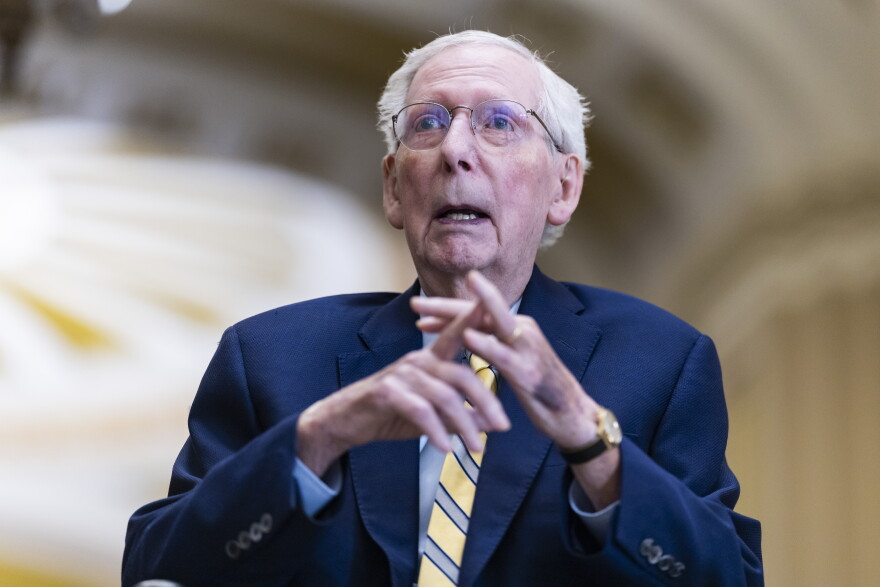
The number of influential Republicans advocating support for Ukraine in the US Congress is expected to decline following the midterm elections.
According to reporting by Politico, several senior figures, including former Senate Republican majority leader Mitch McConnell, are set to leave Congress.
Michael Sawkiw, head of the Congressional Ukrainian Caucus, described the departing lawmakers as “real heavyweights” among Ukraine’s supporters.
An unnamed adviser to a Republican member of the House of Representatives said these departures could reduce the number of comprehensive legislative bills drafted in Kyiv’s favour.
The adviser noted concerns that Congress may no longer retain a coalition capable of drafting legislation that could secure the approval of Donald Trump’s administration while simultaneously conducting back-channel contacts to persuade the White House.
New candidates keep military aid at arm’s length
Mitch McConnell had advocated providing military aid and sharing intelligence with Ukraine.
However, several candidates seeking the seats of departing Republicans remain distant toward Kyiv. Andy Barr, who launched a candidacy to replace McConnell, had voted against legislation supporting Ukraine.
Nevertheless, the report stated that Republicans could retain their roles as channels of communication with Trump and as providers of the majorities required to override a presidential veto.
The death of Senator Lindsey Graham, an architect of sanctions against Russia, was also reported to have caused grief among Ukraine supporters. The House member’s adviser pointed to Senator Katie Britt among Graham’s possible successors, noting that Britt had supported initiatives imposing restrictions on Russia.
According to the report, pro-Ukraine Republicans may attempt to block the White House’s agenda before the current congressional term concludes.
Concerns that Republican losses in the midterms could affect Ukraine aid and NATO had surfaced previously.
It is noted that if Congress curtails Trump’s domestic authority, he could turn his focus toward foreign policy. An unnamed NATO diplomat remarked that the US president’s posture could harden under such circumstances.
Other sources speaking to Politico suggested that Trump could respond to an electoral defeat by drawing down the American military presence in Europe, trimming contributions to the NATO budget, curbing the PURL programme involving weapons procurement for Ukraine, and pursuing closer ties with Russia.
Jennifer Kavanagh, an expert at the think tank Defense Priorities, pointed out that European nations would struggle to compensate for any reduction in US support across electronic warfare, air defence, intelligence, aerial refuelling, and logistics.
Race continues for House and Senate
In the US congressional midterm elections, voters will head to the polls to decide all 435 seats in the House of Representatives and 35 of the 100 seats in the Senate.
The outcome will determine which party holds the majority in both chambers of Congress for two years.
According to opinion polls cited by Reuters, Democrats appear to have a chance of winning a majority in the House of Representatives, whereas their odds of seizing control of the Senate are judged to be low.
It is noted that if Democrats secure a majority, they could open investigations into Trump, constrain spending priorities, and block various initiatives.
The US leader, however, will continue to retain broad powers over trade, foreign policy, and the federal bureaucracy.





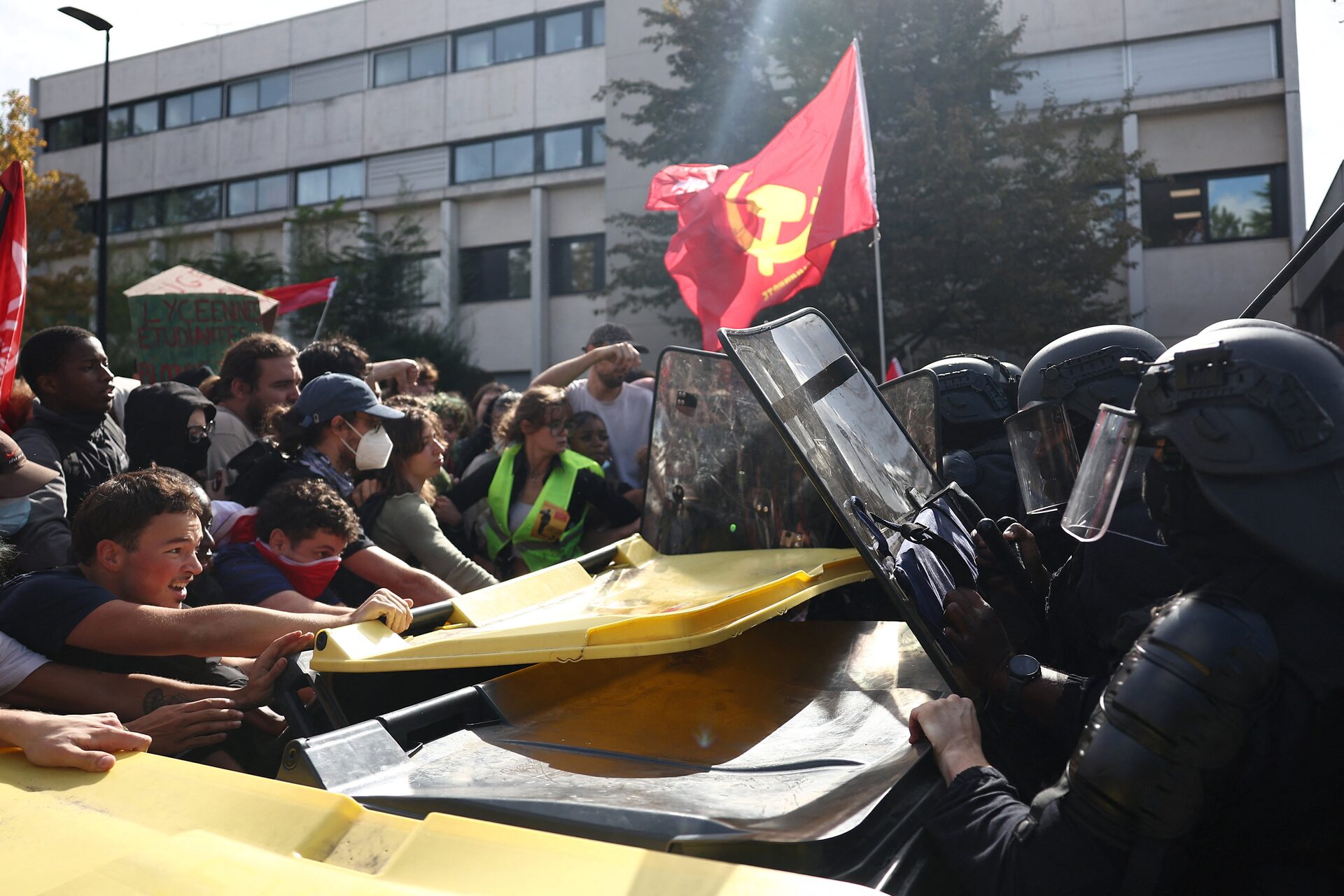
Youth protests spreading across European nations, particularly in France, are serving as an occasion for right-wing parties and governments to escalate demands for bans.
In France, for example, right-wing conservative politicians such as Senate President Gérard Larcher and presidential candidate Bruno Retailleau of The Republicans (LR) are now openly demanding that the party La France Insoumise (LFI) be banned.
Matthieu Valet, a Member of the European Parliament from Marine Le Pen’s National Rally (RN), said at the party congress held in Orléans on 24–25 October: “We will dissolve all anti-fascist organisations.”
Polls unanimously show that RN candidate Marine Le Pen leads the vote for the presidential election in April 2027.
In Spain, the rising right-wing party Vox submitted a draft bill to parliament in December 2025 aimed at dissolving organisations linked to the anti-fascist movement.
Vox is polling at 19% in recent surveys, and the party hopes to enter government by forming a coalition with the conservative Popular Party (PP) following the elections on 29 November.
In such a scenario, banning anti-fascist organisations in Spain could become possible.
Acts of violence linked to protests are currently being used increasingly to threaten left organisations with bans.
Belgium offers another example. Since last year, Interior Minister Bernard Quintin has been attempting to ban organisations that threaten “national security or the foundations of the rule of law”.
In this context, government officials cite “Antifa” as an example. Even in the autumn of 2025, Georges-Louis Bouchez, president of Quintin’s Reformist Movement (MR), openly called for the “dissolution of Antifa”.
When property damage occurred on the fringes of student protests in Liège in early October this year, Quintin once again pointed to “Antifa-type” organisations in light of plans to ban such groups.
In June, Defence Minister Theo Francken of the New Flemish Alliance (N-VA) also claimed, without providing evidence, that the opposition Workers’ Party of Belgium (PTB-PVDA) was responsible following property damage on the fringes of protests in Brussels.
PTB-PVDA supports the protests gaining momentum in Belgium against the government’s policies of militarisation and social spending cuts.
According to polls, the party is currently the second strongest in the country with 23% of the vote nationwide, and the strongest in the Brussels-Capital Region with 26%.
In Germany, the possibility of banning The Left (Die Linke) was raised by the influential mainstream newspaper Frankfurter Allgemeine Zeitung.
A recent editorial in the newspaper asked: “Why not ban Die Linke?”
Meanwhile, banning youth demonstrations is currently under discussion. As in Belgium, isolated violent incidents on the margins of peaceful protests are cited as justification, discrediting the demonstrations as a whole.
Federal Interior Minister Alexander Dobrindt is not only levelling blanket accusations against “left-wing groups” without providing evidence; he is also attributing instances of property damage to “agitators emerging from the migrant community”.
The Interior Minister of the state of Hesse, Roman Poseck, acknowledged that those detained on Saturday on assault charges were “predominantly German citizens”, but nonetheless claimed that they were “predominantly of migrant background”.
These statements therefore attribute responsibility for violence to leftists on the one hand, and to people of non-German origin on the other.
A representative from the Federal Ministry of the Interior under Dobrindt also attended a conference where White House Deputy Chief of Staff for Policy Stephen Miller equated anti-fascists (“Antifa”) broadly with terrorism and categorised them as “enemies of civilisation”.
According to an investigation by the online portal FragDenStaat, this representative was Christian Klos, head of the Public Security Directorate.
Klos reportedly appeared in Washington as part of a “morning panel” on “The Threat Landscape of Far-Left Terrorism”.
What he said there remains unclear: FragDenStaat reported that the Federal Ministry of the Interior refused to publish several preparatory documents related to the presentation, citing their classified status.
However, it is now known that the Interior Ministry took part in a preparatory workshop in the US in May with two officials at the “relevant specialist division level”.
In addition, the federal government confirmed in early October that a follow-up event to the Washington conference would be held this autumn.
The event’s focus will be the “sharing of professional experience among security and law enforcement agencies from various countries”, centring specifically on “manifestations, developments, and challenges in the field of violent left-wing extremism”.
The US Department of State had hosted a conference on 16 July with the participation of representatives from more than 60 countries across North and South America, Europe, and parts of Asia.
The focus of the conference was the “international resurgence of far-left political terrorism”.
Alongside Secretary of State Marco Rubio, Stephen Miller set the tone of the conference.
In a speech, Miller claimed that leftists were “fundamentally driven by envy, hatred, and malice”, adding that no one at anti-fascist demonstrations looked like a “normal human being”.
Federal Interior Minister Alexander Dobrindt has played a prominent role for years in crackdowns on left-wing organisations.
While serving as CSU general secretary in 2011 and 2012, his rhetoric caused astonishment even within his own party.
In August 2011, for instance, he demanded that authorities “examine whether proceedings to ban Die Linke should be initiated”.
In January 2012, he stated that he believed “in the medium term, we must make every effort to also launch proceedings to ban [the party Die Linke]”.
At the time, Gerda Hasselfeldt, then leader of the CSU parliamentary group in the Bundestag, expressed her surprise: “At present, I see no grounds for proceedings to ban Die Linke.”
Even after taking office as Federal Interior Minister, Dobrindt continued to stand out with striking rhetoric.
In June 2025, during the presentation of the Federal Office for the Protection of the Constitution report, he displayed graphs with different scales, implying that the number of “far-left extremists” in Germany exceeded that of right-wing extremists.
In December 2025, he suggested that “left-wing extremists” could engage in “espionage or sabotage” activities on behalf of foreign powers.
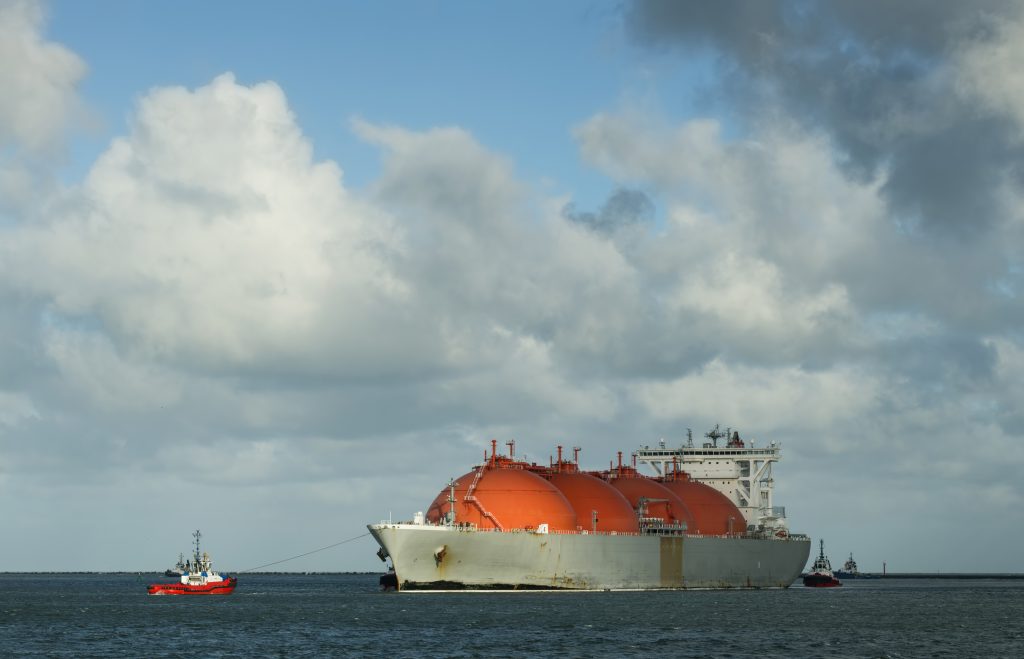
The International Energy Agency (IEA) has stated that the global gas market could remain tight “until later in 2027” as European gas storage levels stand at their lowest point in a decade ahead of the winter season.
Presenting its “Global Gas Security Review 2026” report, the IEA noted that depleted storage inventories will heighten Europe’s reliance on global liquefied natural gas (LNG) supplies to meet peak demand, particularly in the event of a colder-than-expected winter.
“Under colder-than-average weather conditions and prolonged disruptions to LNG flows through the Strait of Hormuz, EU gas storage levels could drop to below 10% of working capacity by the end of March 2027,” the report said.
Depleted stock levels could intensify competition for the limited volume of flexible LNG cargoes with countries in Asia and South America that have limited storage options, putting upward pressure on prices this winter.
The IEA noted, “Low storage levels in Europe could also significantly increase gas injection requirements to replenish stocks through the summer of 2027, potentially extending tightness in the global market well into next year.”
With the effective closure of the Strait of Hormuz cutting more than 60 billion cubic metres of supply from Qatar and the United Arab Emirates, Asian and European prices have already reached their highest levels since the 2022-23 gas supply crisis.
The report stated that an increase in LNG supply, particularly from North America, alongside more flexible trading arrangements, has helped cushion the impact of the Hormuz supply shock.
The report forecasts that global LNG supply will drop in 2026 by a record 3%, or around 20 billion cubic metres, compared with 2025.
Global gas demand is expected to fall by roughly 1.5%, or nearly 65 billion cubic metres, driven by lost demand across the Middle East, declining industrial gas consumption in Europe, and power sectors switching from gas to coal across multiple Asian countries.
The IEA said, “These findings highlight the importance of strengthening international cooperation on gas supply security, even as global markets become more flexible.”
The EU was expected to fill its underground gas storage facilities to at least 90% ahead of the winter season.
However, after that requirement was relaxed because of the ongoing crisis, the average fullness rate stood at just 74.6% as of 1 November.
This shortfall was primarily driven by lower-than-normal inventories in Germany and the Netherlands.
The IEA observed that because storage levels for this time of year are at their lowest since 2013, the EU has become uniquely dependent on LNG shipments.
In the event of an exceptionally cold winter, EU storage fullness could drop below 10% by March, leaving the bloc vulnerable to “additional cold spells, technical failures, or other supply disruptions”.
However, the Paris-based energy security agency added that these challenges could extend well beyond the winter months.LNG
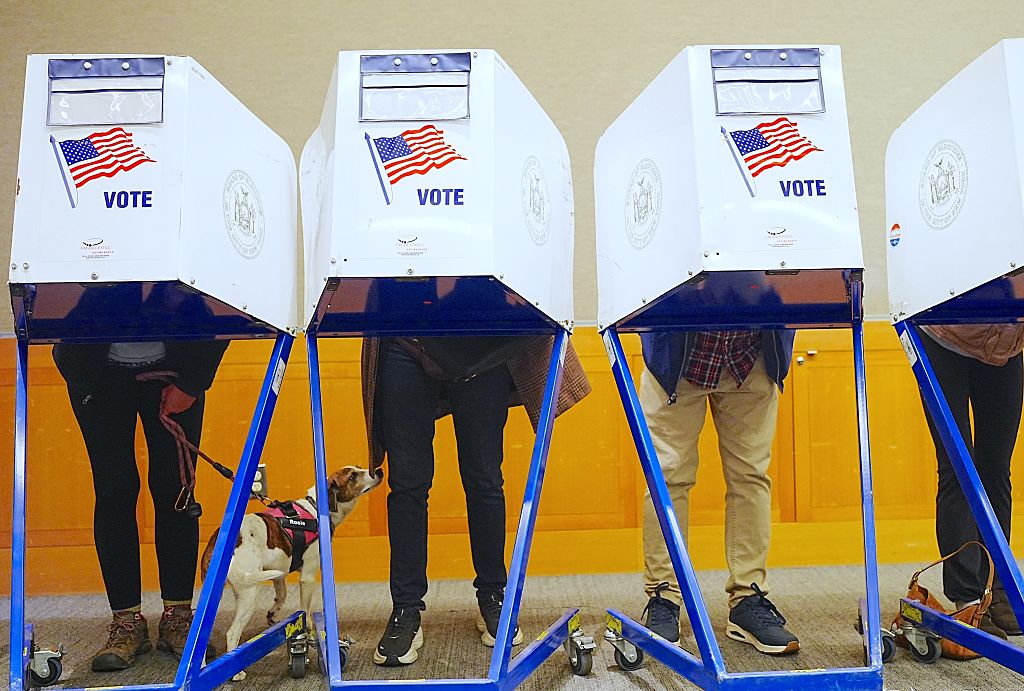
Brussels harbours no hope that a Democratic victory in the US midterm elections will repair transatlantic relations.
Americans head to the polls today (3 November) for elections that will determine control of Congress during the second half of Donald Trump’s presidency.
According to Rapporteur, diplomats and officials in the EU capital remain unconvinced that a shift in Washington’s balance of power would yield a more reliable or friendly America for Europe.
Trump’s repeated questioning of US security commitments, his disputes with European allies over Greenland, and his wavering stance on supporting Ukraine have shaken the bloc’s trust in Washington.
An EU diplomat speaking to Rapporteur said:
“What has been destroyed over the past few years cannot be rebuilt overnight, and a Democratic victory will hardly change our situation here. Anti-European sentiment has become quite pronounced in the mindset of the US elite.”
European capitals have already begun planning for a future in which US military and financial support for Ukraine can no longer be guaranteed.
National governments have stepped up their contributions to fill the vacuum left by Washington.
With the EU providing 97.3 billion euros in military assistance to Ukraine, European countries have collectively overtaken the US as the largest providers of allocated aid.
Total assistance from continental European countries to Ukraine, including humanitarian and financial support, reached 137 billion euros between February 2022 and August 2026.
According to data tracked by the Kiel Institute, the US provided a total of 115 billion euros in aid over the same period.
At a leaders’ summit held last month, EU leaders also agreed to cover Ukraine’s additional financing needs of 70 billion euros for next year.
Trump’s tariff threats and the trade agreement Brussels was ultimately forced to sign have exposed the limits of Europe’s leverage over Washington.
Another EU diplomat noted that a Republican defeat could fuel mounting discontent within the party over the president’s leadership, potentially prompting the administration to adopt either a more inward-looking posture or pursue further conflict abroad to divert attention from itself.
According to Brando Benifei, chair of the European Parliament’s Delegation for relations with the United States, the second option represents a “worrying possibility.”
Benifei noted that the incoming Congress taking office in January could nonetheless become more vocal on matters vital to Europe, including trade, security, NATO, and cooperation on artificial intelligence safety.
“We always hope there will be greater stability and predictability,” Benifei said, adding:
“However, we know that if Trump loses control of Congress, he could focus even more heavily on foreign policy.”
Max Bergmann, director of the Europe Program at the CSIS think tank in Washington, said a sweeping Democratic victory would probably not translate into greater checks on Trump’s authority.
He noted, however, that it would alter strategic calculations in Brussels, making the EU more willing to stand up to Trump to safeguard its values and interests while pushing further ahead toward greater independence from the US:
“This makes Europe realize that we are at the beginning of the end of the Trump era, and it probably leads to a stronger determination not to make certain concessions and not to yield as much.”
In that scenario, the prevailing mindset here would become “we can survive this for another year.”
Javier Carbonell, a policy analyst at the European Policy Centre in Brussels, said the practical impact of the midterms on relations with Europe would probably remain limited.
“On the issues that truly matter, specifically trade and the war in Ukraine, I do not believe there will be a major shift even if the Democrats win the Senate,” Carbonell said.
Noting that much of this policy agenda is set by the executive branch, Carbonell added that Democrats are unlikely to secure the supermajority required to overcome institutional constraints on major legislation.
Even so, lessons could emerge for struggling European left-wing parties at a time when Socialist parties from Spain to Denmark are charting divergent paths between a more populist-left platform and more right-leaning policies:
“What will the character of the Democratic Party look like in the coming years? That remains a major unknown, and I believe that is where the greatest impact will lie. It will significantly shape whom European leaders choose to emulate.”

“Blue wave” fears at Mar-a-Lago: What will the midterms bring for the US?

What are Europe’s ignorant leaders failing to see?

Protesters storm Kyiv site holding soldiers over torture allegations

Right-wing calls to ban left parties and groups mount in Europe

Low EU gas stocks risk stoking global prices, IEA report warns
-

 America2 weeks ago
US wealthy demolish multimillion-dollar mansions for land
-

 Middle East2 weeks ago
Netanyahu unveils security doctrine and regional alliance map
-

 America2 weeks ago
At least 47 major US data centre projects halted or cancelled
-
 Europe2 weeks ago
EU rejects US proposal to resume Russian gas flows through Ukraine
-
 Middle East2 weeks ago
Netanyahu trails Eisenkot in Israeli polls despite Trump backing
-

 Europe1 week ago
Merz visits Asia to seek new markets for German defence firms
-

 Diplomacy1 day ago
Secular dress code dispute exposes deeper Türkiye-Azerbaijan strains
-
 Europe1 week ago
AfD drops Dexit to back single market in new Europe strategy
