
Middle East
Qatar and UAE LNG tankers go dark in Strait of Hormuz to evade security risks

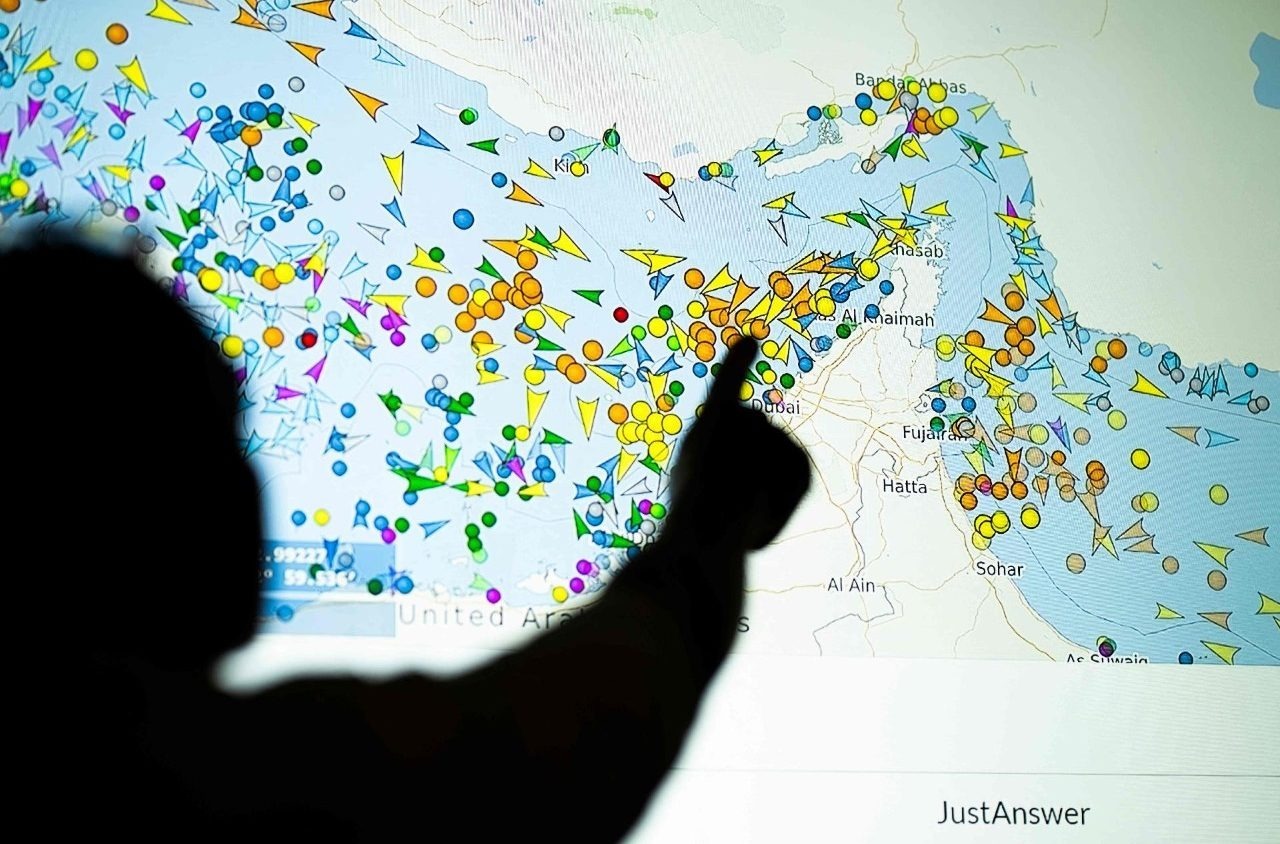
Qatar and United Arab Emirates liquefied natural gas (LNG) tankers are turning off their transponders in the Strait of Hormuz, shifting their logistical strategies in response to ongoing military conflict in the Middle East and the closure of the strategic waterway.
According to a Bloomberg report citing industry sources and vessel-tracking data, as time and patience run thin for both nations, tankers have begun operating under radio silence to conceal their movements and secure their LNG shipments.
The report noted that neither Qatar nor Abu Dhabi, the federal emirate of the UAE, is subject to international sanctions. Despite this, state-owned QatarEnergy and Abu Dhabi National Oil Co. (ADNOC) are employing these “going dark” tactics to minimize security risks for their vessels and crews transiting the Strait of Hormuz.
Vessel-tracking data revealed that in May, at least four Qatari LNG vessels and four tankers linked to Abu Dhabi-based ADNOC transited the Strait of Hormuz without transmitting tracking signals. Sources speaking to Bloomberg stated that Qatari authorities requested captains of state-owned and chartered tankers to turn off their Automatic Identification System (AIS) transponders when navigating around the Ras Laffan port—the world’s largest LNG export terminal—as well as when transiting or exiting the Persian Gulf.
The implemented security measures extend beyond turning off transponders. Sources reported that vessels have been instructed to transit the gulf in pairs to enhance security, and tanker captains who refused to comply with the “shadow” navigation protocols have been replaced.
Industry sources speaking to Bloomberg warned that the increase in covert transits undermines the fundamental rules of international maritime trade and transforms these shipping routes into high-risk areas.
They emphasized that until recently, every cargo in the LNG sector could be tracked in real time, but these newly adopted tactics have eliminated that transparency.
Saul Kavonic, a senior energy analyst at energy consultancy MST Marquee, commented on the situation, saying: “It is entirely natural for Persian Gulf LNG producers to try to avoid Iranian attacks and consequently adopt shadow fleet methods. This could persist as long as Iran continues to control and threaten transits through the Strait of Hormuz. This practice may continue for a long time even after a peace agreement is signed.”
Following the start of US and Israeli attacks on Iran, the Tehran government closed the Strait of Hormuz, a choke point for approximately 20% of global oil shipments and 30% of global liquefied natural gas.
After negotiations in Islamabad failed, US President Donald Trump announced on April 13 that he would impose a blockade on Iranian ports. In late May, he announced that the blockade was lifted as part of the planned peace treaty process with Tehran.









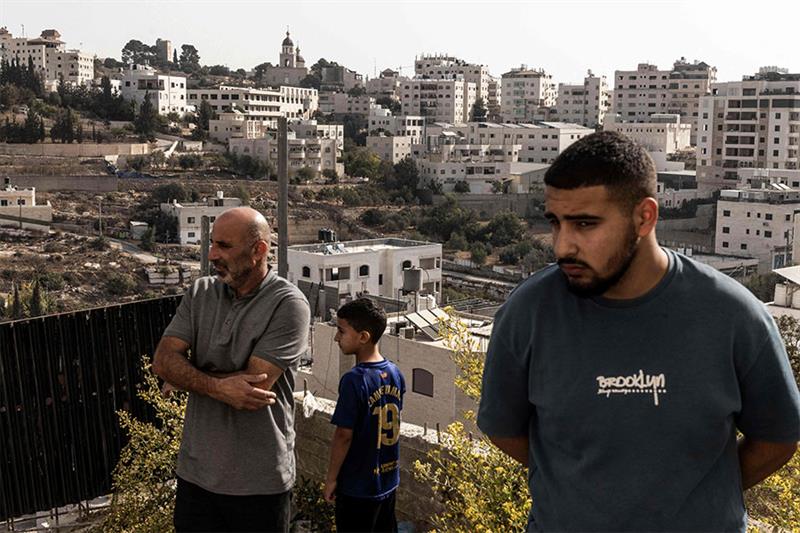
The Israeli army’s siege of the city of Hebron in the occupied West Bank has entered its fifth day. More than 3,000 Palestinians have been forced to flee their homes as raids, house demolitions, and forced evictions continue across the city.
According to data shared by Hebron Municipality on 26 October, the number of displaced people has reached 3,189. More than 200 of them are infants.
Municipal authorities announced that roughly half of the total displaced population consists of children and youths under the age of 18.
Palestinian officials in the besieged city declared a state of emergency and established an urgent crisis desk.
Rami Khamis, a member of the crisis desk, highlighted civic solidarity in remarks to Al Jazeera, saying local residents and benefactors who refused to let their fellow citizens stay in temporary shelters opened their homes to displaced families.
A Palestinian forced to abandon his home in haste recounted his ordeal to Al Jazeera on 26 October.
Explaining that they fled with only the clothes on their backs, the resident said their savings, household goods, and official documents were left behind. After placing his family in a relatively safe place, he attempted to return to salvage their belongings, but could not reach the house because the area was no longer safe.
The siege began immediately after an attack on 23 October in which two Israeli soldiers were killed. The two Palestinians who carried out the assault were killed at the scene by Israeli forces.
Citing this incident, the Israeli army blockaded the city and launched wide-ranging operations. The British newspaper The Guardian described the measures carried out in Hebron as “collective punishment”.
Hamas official Mahmoud Mardawi also condemned both the siege in Hebron and the military incursions spreading across the occupied West Bank in a statement on 26 October.
Emphasising that these steps constitute collective punishment, Mardawi warned that escalating tensions on the ground could lead to grave consequences.
Mardawi further argued that Prime Minister Benjamin Netanyahu and his government are using these attacks for propaganda and electoral calculations, stating that military pressure will not break Palestinian resilience and that calculations regarding annexation and mass expulsion will fail to achieve their goal.
Operation rift in Israeli leadership
As the blockade entered its fifth day, a divergence of opinion emerged between Israel’s military brass and the government.
According to a report in the Yedioth Ahronoth newspaper, Chief of Staff Eyal Zamir and Prime Minister Benjamin Netanyahu clashed over the future of the operation.
Zamir argued that the military campaign on the ground had delivered whatever benefit it could provide and that it was now time to bring it to an end.
Military officials said tangible gains achieved throughout the operation remained limited, indicating that whether to sustain the current push required reassessment.
Indeed, the newspaper reported that Israeli forces managed to seize only a limited number of weapons in the city, failing to uncover any unusual arsenals or major arms caches.
However, Chief of Staff Zamir’s proposal to end the operation was rejected. Prime Minister Netanyahu and the Defence Minister dismissed the recommendation and decided to continue the offensive.
At least 70 Palestinians have been detained in Hebron since the siege and operations began. The Israeli army is also continuing extensive demolition activities targeting civilian homes across the city.
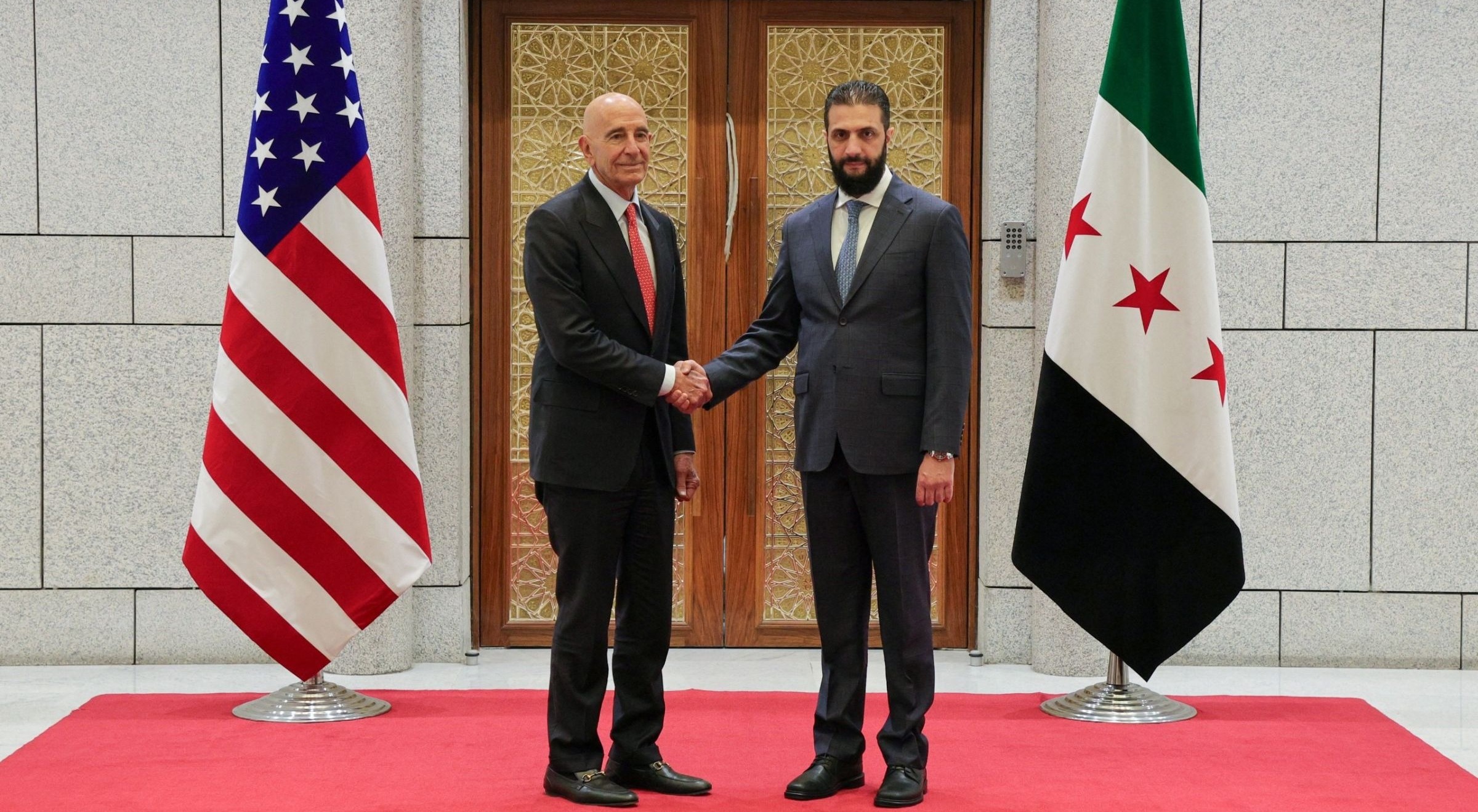
US Ambassador to Türkiye and Special Envoy for Syria Tom Barrack stated that Syria’s interim president, Ahmed al-Sharaa, wants to normalize relations with Israel.
At the same time, he called for an end to Israel’s military operations in Syria and questioned whether Washington should intervene to halt them.
Speaking at the Global Security Forum held in Doha, Qatar, Barrack said Sharaa had managed difficult circumstances well and was trying to reassure Israel that his government poses no threat.
“I think President Sharaa has done a very good job under very difficult circumstances,” Barrack said, describing the message he believes the Syrian leader is conveying to Israel: “I am not aggressive, I have no problem with Israel, I want relations with Israel to normalize.”
Barrack also urged Israel to stop its operations in Syria, while voicing uncertainty over whether the US should step in to end them:
“It’s time to stop this [Israel’s actions in Syria]. I don’t know if it’s time for the US to intervene to stop it.”
Israel intensified its military operations in Syria following the overthrow of Bashar al-Assad on 8 December 2024. Israeli forces entered the demilitarized “buffer zone” along the Golan Heights and took up positions on the Syrian side of Mount Hermon (Jabal al-Shaykh), with Israel describing the deployment as a temporary security measure.
Israeli air strikes have also targeted military facilities and weapons depots across the country.
Barrack pointed to Syria’s political transition as an example of how groups once viewed as adversaries could be incorporated into new political and security structures.
“You can take Nusra, which was once designated a foreign terrorist organization; following the transformation that took place on December 8, many people today evaluate this example as ‘here is a model,'” the US diplomat said.
The Nusra Front was a jihadist group that emerged during the Syrian civil war and, after pledging allegiance to al-Qaeda, announced its departure from the network. The organization was designated as “terrorist” by several countries and bodies, primarily the US and the UN.
The group’s leader, Ahmed al-Sharaa (Abu Mohammad al-Julani), subsequently headed Hayat Tahrir al-Sham (HTS), which led the offensive that ousted Assad.
Barrack also highlighted the integration of the Syrian Democratic Forces (SDF) into the Syrian national army as an outcome many had previously considered unlikely.
“Nobody thought you could reintegrate this Kurdish entity, the SDF, into a national army, but it happened,” the US official said.
Damascus and the Kurdish-led forces signed an agreement on 10 March 2025 to integrate the SDF’s military and civilian institutions into the Syrian state.
However, delays occurred in the implementation of the agreement due to disputes over integration terms and the future of self-administration in the region.
Barrack nevertheless expressed doubts about the effectiveness of earlier US interventions in the Middle East, citing Washington’s involvement in what he characterized as “23 regime changes” across the wider region.
“Whenever we have tried to intervene, to change a person or a regime, it seems to have been a mistake,” Barrack said, while also questioning the value of US intervention in Yemen, describing it as apparently “senseless.”
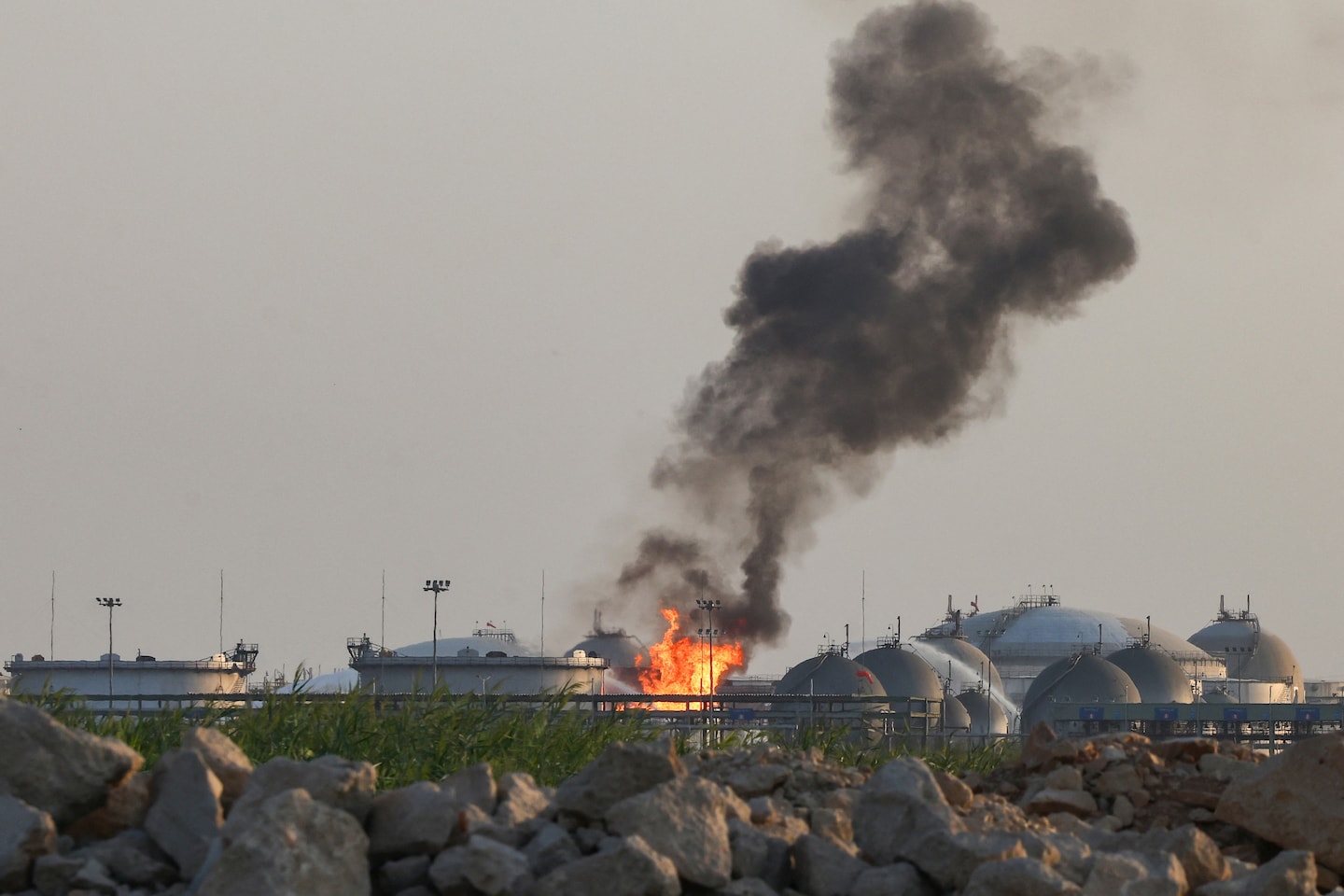
The US and Israeli defence ministries have drawn up plans for a fresh assault on Iran, with the envisioned offensive under consideration to launch after the US Congressional midterm elections on 3 November.
Citing sources, The New York Times reported that the blueprint anticipates a brief but intense campaign.
As military units step up their drills, US Defence Secretary Pete Hegseth discussed prospective strike options with Israeli Prime Minister Benjamin Netanyahu.
The list of targets encompasses Iran’s nuclear sites, its energy infrastructure, and its arsenals of missiles and unmanned aerial vehicles.
Several officials who spoke to the newspaper argued that a new wave of attacks could deal a heavy blow to the Iranian economy, forcing the leadership in Tehran into concessions.
Conversely, other sources doubt whether a resumption of fighting would prove any more successful than the earlier campaign conducted between February and April.
That previous offensive drove energy prices higher and drained US stockpiles of interceptor missiles.
It remains unclear whether US President Donald Trump will authorise the operation.
Domestic political calculations in Israel could also influence the trajectory of the plans, given that the country faces general elections on 27 October.
While some experts speaking to the newspaper contended that Netanyahu could leverage the threat of war to form a national unity government, others pointed to the opposition’s distrust of the prime minister.
Washington fears regional spillover
The US administration also harbours concerns that the fighting could engulf the wider region. On Wednesday, the US State Department ordered non-essential government personnel and their family members to leave Saudi Arabia following attacks by the Iran-backed Houthis.
A US military build-up, comprising three aircraft carriers, fighter aircraft, and special forces units, is slated to be fully deployed to the region by early November.
The targets under review include the deep underground nuclear facility code-named “Pickaxe”. Trump suggested that the high-yield GBU-43/B bomb, known as the “mother of all bombs”, could be deployed against the site, though experts doubt whether the ordnance can destroy a complex buried so deeply.
For its part, Tehran is preparing for a potential escalation, threatening to broaden its target list. Retaliatory options under consideration by Iran reportedly include data centres and subsea internet cables, in addition to shipping and energy facilities.
Mehdi Mohammadi, an adviser to an Iranian negotiator, dismissed US hopes of wrapping up a new campaign within 72 hours as a “fantasy”. Mohammadi warned that Tehran’s response would be more severe and unpredictable.
The Financial Times previously reported that an Israeli strike on Iran set for 10 October had been called off because the US president was unwilling to risk a broader conflict ahead of the Congressional midterms.
According to that report, the Israeli military had prepared a multi-day assault on nuclear sites, Iranian government targets, power plants, and civilian infrastructure on Netanyahu’s orders. The strikes had been designed to exceed the intensity of the campaign begun in February.
Washington seeks to secure an agreement from Tehran covering both the Strait of Hormuz and its nuclear programme.
“It will either be a deal or a strike,” one source told the Financial Times, adding that an operation could get under way in the coming weeks.
Another official who spoke to the paper suggested that Israeli preparations might serve as leverage to squeeze Iran in negotiations.
Axios also reported that the Pentagon had issued orders to prepare for renewed strikes, though the directive contained no specific date and Trump has yet to take a final decision.
The US and Israel launched their offensive against Iran on 28 February. Iran hit back by targeting US and Israeli assets across the region and curbing vessel transit through the Strait of Hormuz.
Although both sides signed a memorandum of understanding in June that provided for a ceasefire and talks to lift the blockade in the Strait of Hormuz, reciprocal attacks between the US and Iran have persisted.

Gaza exposes the myth of the “most moral army in the world”

Over 3,000 Palestinians displaced as Israel’s Hebron siege hits day 5

EU and Canada to deepen defence ties from Arctic to Black Sea

Independent candidate Diane Sare decries US complicity in global wars

Merz visits Asia to seek new markets for German defence firms
-
 Diplomacy2 weeks ago
SWP urges backing for Gulf trade routes bypassing Strait of Hormuz
-

 Europe2 weeks ago
LSE study finds post-bailout Greece turned into a cafe economy
-
 America1 week ago
How Elon Musk fuses private empire with state power, Ben Tarnoff explains
-
 Middle East1 week ago
Egypt delays parliamentary vote on deploying troops to Saudi Arabia
-

 Europe1 week ago
AfD leader Weidel calls funding lost Ukraine war a grave mistake
-
 Diplomacy2 weeks ago
IMF warns global economy is nearing the limits of its resilience
-
 Europe1 week ago
EU rejects US proposal to resume Russian gas flows through Ukraine
-
 America1 week ago
At least 47 major US data centre projects halted or cancelled
