
Diplomacy
The architect of NATO 3.0: Elbridge Colby

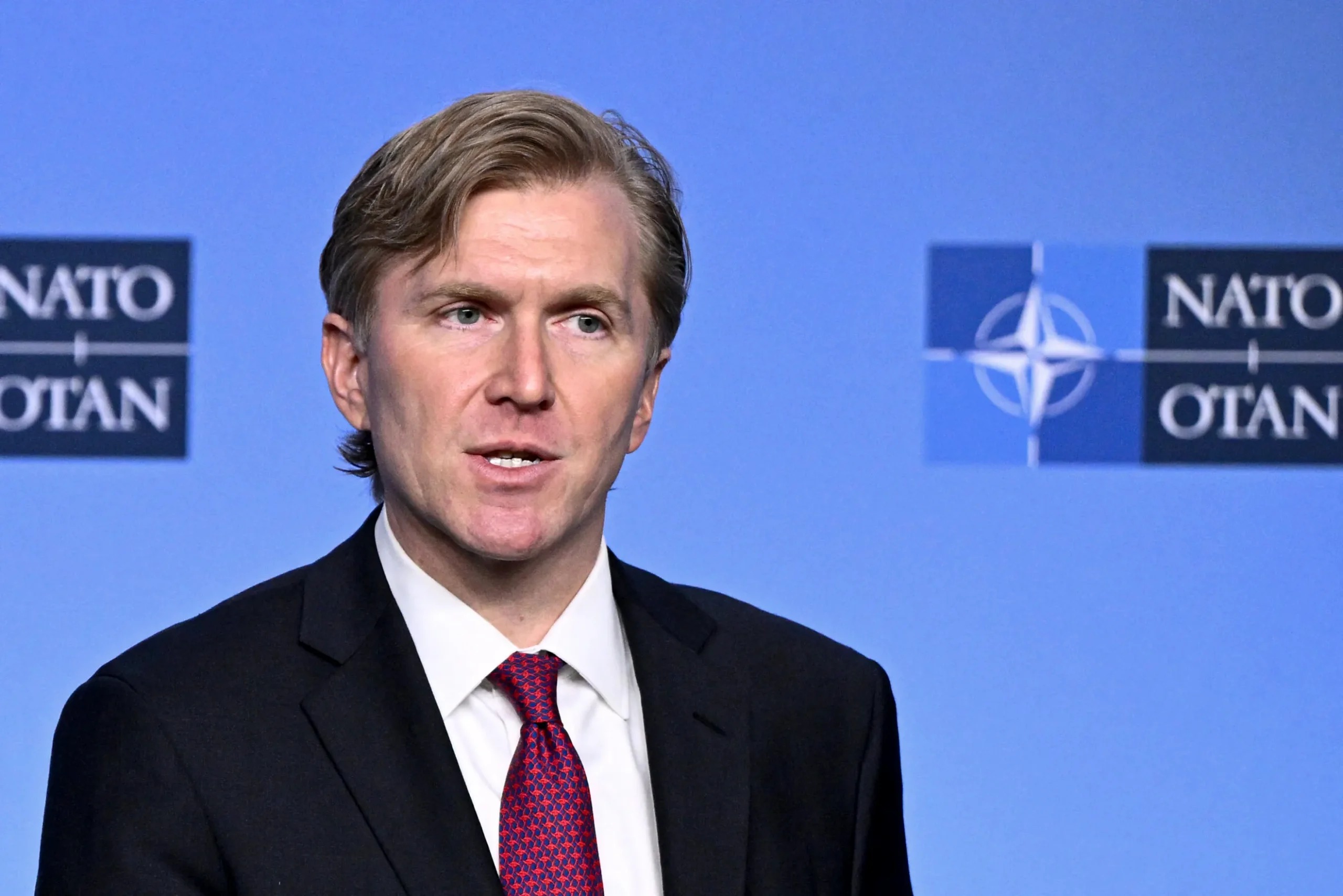
The architect of the new NATO concept (“NATO 3.0”), which is expected to be catalyzed by the Ankara summit, is Elbridge Colby, who serves as a Pentagon undersecretary.
Last February, at the NATO defense ministers’ meeting, he delivered a pivotal speech in place of Pentagon chief Pete Hegseth. The low profile of the US representation was deemed indicative of the Trump administration’s diminishing valuation of NATO; yet Colby, arriving as a “theorist”—and indeed, as the champion of a decisive shift in US military presence from Europe and the Middle East to the Asia-Pacific—had come to assign new homework to his allies.
Also known as the unofficial author of the United States’ latest National Security Strategy, Colby acknowledged in his speech that the post-Cold War “unipolar moment” had vanished, declaring the return of power politics and large-scale military force to the world stage: what was now required was realism and adaptability.
The undersecretary got straight to the heart of the matter, declaring that in light of this new reality, the US was prioritizing “the most serious threats to American interests,” specifically “the defense of the US homeland” and interests in the “Western Hemisphere,” while also reinforcing the principle of “deterrence by denial” in the Western Pacific (Colby also asserted that the Indo-Pacific region was “now the central arena of geopolitics”; we will return to Colby’s views on Asia below).
Accompanying all these priorities—or rather, the role assigned to American “allies” in this new US strategy—was to prepare “for the possibility that potential adversaries could act coordinately or opportunistically on multiple fronts simultaneously.”
The defense of Europe against the Soviet Union and communism during the Cold War (“NATO 1.0”); the shift of NATO operations outside the Continent after the dissolution of the Soviet Union, with Europe fully outsourcing its “defense” to the US (“NATO 2.0”); and now, “burden-sharing” in the era of “multipolarity” so that the US can focus on the Asia-Pacific against the rise of China (“NATO 3.0”)… This is the essence of Colby’s message: “The core strategic reality set forth by the National Security Strategy (NSS) and the National Defense Strategy (NDS),” the undersecretary stated, “is that Europe must assume primary responsibility for its own conventional defense.”
Under this framework, the US would henceforth prioritize only those theaters and challenges where American power could play a decisive role. For Colby, this did not portend a withdrawal from Europe. “On the contrary,” Colby argued, “this is an affirmation of strategic pragmatism and an acknowledgment of our allies’ undeniable capacity to step up and lead in Europe’s defense in a way that makes us all stronger and safer.”
Consequently, a strategy that “assumes the United States can indefinitely serve” as Europe’s “primary conventional defender” while simultaneously “bearing the decisive burden” everywhere else in the world was “neither sustainable nor wise.”
What, then, was to be done? Colby acknowledged the importance of the level of defense spending, stating that there was no substitute for it. Yet, in his view, what ultimately mattered was what these resources yielded: combat-ready forces, readily deployable munitions, resilient logistics, and integrated command structures operating at scale under austere conditions.
Herein lies the crux of the matter. Analogous to the “innovative” transformation within the Pentagon, Colby proposed that European NATO members also undergo a military transformation: prioritizing combat effectiveness over bureaucratic and regulatory inertia.
This meant “making hard choices regarding force structure, readiness, stockpiles, and industrial capacity” that reflected “the realities of modern conflict” rather than “peacetime politics.”
Divergence Within the Pentagon
Colby’s strong position within the Pentagon, having advocated for years to leave Europe and the Middle East to allies and focus on Asia, also delineates the fault lines in American politics.
The 12-day war with Iran last summer had further inflamed this issue. Accordingly, US Central Command (CENTCOM) stood on one side, while the “Asianists” led by Colby stood on the other. While CENTCOM Commander Michael “Erik” Kurilla advocated allocating more resources to defend Israel as Iranian retaliations escalated, Colby, championing a US military focus on China and the Indo-Pacific, opposed shifting military assets from Asia to the Middle East.
The reason for Colby’s opposition was the concern that deployments, such as the relocation of a Patriot missile battery from South Korea to the Middle East in April 2025, could compromise US readiness in future conflicts with China or the Democratic People’s Republic of Korea (DPRK).
In an interview with POLITICO last July, Colby emphasized his personal view that defending NATO’s eastern flank should only involve allocating forces in an amount that would not detract from the United States’ ability to defend Taiwan.
Colby also identified “key capabilities”—including long-range fires, logistics, command and control, and what is known as C4ISR, alongside logistics, munitions, and air defense—as areas where the United States must focus on Asia rather than Europe.
Viewing Europe “Through a China Lens”
Having previously argued that US commitments to Ukraine were overextended, Colby underscored that the most concrete challenge to his country and its interests came economically and militarily from China.
Stating that he also viewed Ukraine “through a China lens,” the strategist maintained that he was not advocating for an abrupt cutoff of all aid to Kyiv, and that while Russia’s actions were “evil,” the assistance provided by the US did not align with the concrete interests of the American people.
When asked what he would advise the US President to do if he were currently serving as an advisor, Colby responded:
“I would say: ‘I don’t want to talk about Ukraine right now. We will talk about Taiwan, China, and Asia first, and once we resolve that problem satisfactorily, we will spend time, political capital, and resources on Ukraine.’”
At the time, the Financial Times (FT) reported that Colby had told British officials that the Trump administration expected the British military to intensify its focus on the Euro-Atlantic region.
In a 2024 interview, Colby argued that the Republican voting base consists of working-class and middle-class Americans, asserting that Washington’s foreign policy fails to serve this constituency.
Noting that a maximalist foreign policy brought “disaster,” the undersecretary stated that Americans were weary of “endless wars.”
The China Obsession
Some figures in his close circle say that Colby is concerned with China “to the point of obsession.”
According to a report in Semafor last year, Colby is so focused on Asia that “he clashes with everyone else doing foreign policy, including Trump loyalists.”
According to Colby, the primary point to which the United States must direct its military and economic resources is Taiwan. Asserting that China is the “New Soviet Union,” Colby points out that NATO currently operates with a “post-Cold War” mindset where the US does everything, whereas what they actually need is a “Cold War mindset” of burden-sharing.
Stating that the US must resolutely resist any Chinese military intervention against Taiwan, Colby notes that this response should include strikes against selected targets on the Chinese mainland.
“Once a war begins, we must not drift to the marginal edge of a conventional conflict,” Colby says, emphasizing the need to prepare for a conventional war in every possible way.
In Colby’s view, a war over Taiwan is now closer due to the reduction of the US military presence in the Taiwan Strait. According to him, the US strongly resembles Britain’s bottleneck situation in the late 1930s: you can appear weak and avoid war, but all your vital interests will be compromised; if you appear strong and arm yourself, the likelihood of your adversary responding militarily increases.
Asia Strategy: Ensuring China Cannot Win
On the other hand, it is worth noting that the framework of Colby’s anti-China stance is built upon a foundation of strategic caution.
Delivering a speech at the Sejong Institute in South Korea last January, Colby outlined the cornerstones of his administration’s Asia policy.
As alluded to above, defining the Indo-Pacific region as “one of the main engines of global growth, the hub of global manufacturing—including South Korea—and the geopolitical axis of the 21st century,” Colby stated, “Consequently, as these documents clearly establish, the long-term security, prosperity, and liberties of Americans will be decisively shaped by developments in this region.”
Yet, acknowledging that “satisfactory stability” in Asia could not be achieved or maintained through “flowery rhetoric, assumed norms, or apparent goodwill,” Colby argued that this stability could only be preserved by “a durable and favorable balance of power that prevents any single state from dominating the region:”
“In this regard, the goal of America’s defense policy in Asia must be clear and reasonable to all. This goal is not conflict with China or any other nation. The objective is to establish a reasonable balance that is acceptable to Americans, our allies, and indeed the entire region. This is not a formalistic and rigid regional order, but an adaptable and evolving one. It is an order defined not by hegemony, but by a favorable balance where sovereignty is respected and peace is maintained—defined not by comforting illusions, but by clarity, strength, and resolve.”
Underscoring that this strategy was about “protecting the interests of America and its allies through stability rooted in credible deterrence and strategic balance,” the undersecretary maintained that the US was not seeking to subjugate, stifle, or humiliate China:
“What we seek—and as the President has consistently articulated—is a genuinely stable balance that works for Americans and our allies, where no single state can impose its hegemony: a favorable balance of power.”
Stating that they were not pursuing regime change in Beijing nor seeking to dominate China, Colby said, “We acknowledge and respect China’s proud history.” What the American strategist proposed was “deterrence by denial along the first island chain” in the Indo-Pacific.
According to Colby, the US was focusing on establishing a military posture along the first island chain in the Western Pacific that would ensure “aggression is impossible, escalation is unattractive, and war is truly irrational.”
This entailed a “resilient, distributed, and modernized force posture” in Japan, the Philippines, the Korean Peninsula, and elsewhere in the region—optimized to “deny swift or decisive gains” through military force, “resilient rather than fragile,” and a posture that “unites us in the pursuit of peace and stability.”
Colby continued:
“This kind of stable peace must be backed by deterrence and therefore secured by hard-power capacity, capability, and will—certainly ours, but also that of our allies.”
Consequently, it should be self-evident that Colby envisions a role for Asian allies similar to the one he and the US deem appropriate for their European counterparts. Quite apart from the invitation of Asian partners to the Ankara summit where the “NATO 3.0” concept is to be declared, Colby himself, referencing the Europeans’ commitment to allocate 3.5% of GDP for core military functions, noted in this speech: “But I must emphasize that these principles apply as much to Asia as they do to Europe.”
“Burden-Sharing” or “Burden-Shifting”?
In a recent interview with the CFR, Colby spoke very candidly about NATO 3.0: as the United States will be drawn into more conflicts, a “recalibration” within the alliance is required.
Pointing to the sheer scale of the military budget in the United States, Colby explicitly speaks of a “national mobilization”; he demands the expansion of the defense industrial base and calls for large-scale production.
The role falling to Europeans and Asians is to purchase American arms and conform to US military standards; Colby is candid on this front as well. Industrial production synchronization is the bedrock of this enterprise, and it appears that writings by figures such as Mark Rutte and Ursula von der Leyen ahead of the Ankara summit, coupled with President Recep Tayyip Erdoğan’s “from Texas to California” emphasis in his address to the NATO Parliamentary Assembly, demonstrate that the message has been received and some ground has already been covered.
This indicates that a significant threshold may have been crossed in providing industrial “fodder” to European NATO countries, which otherwise hold diverging interests on China.












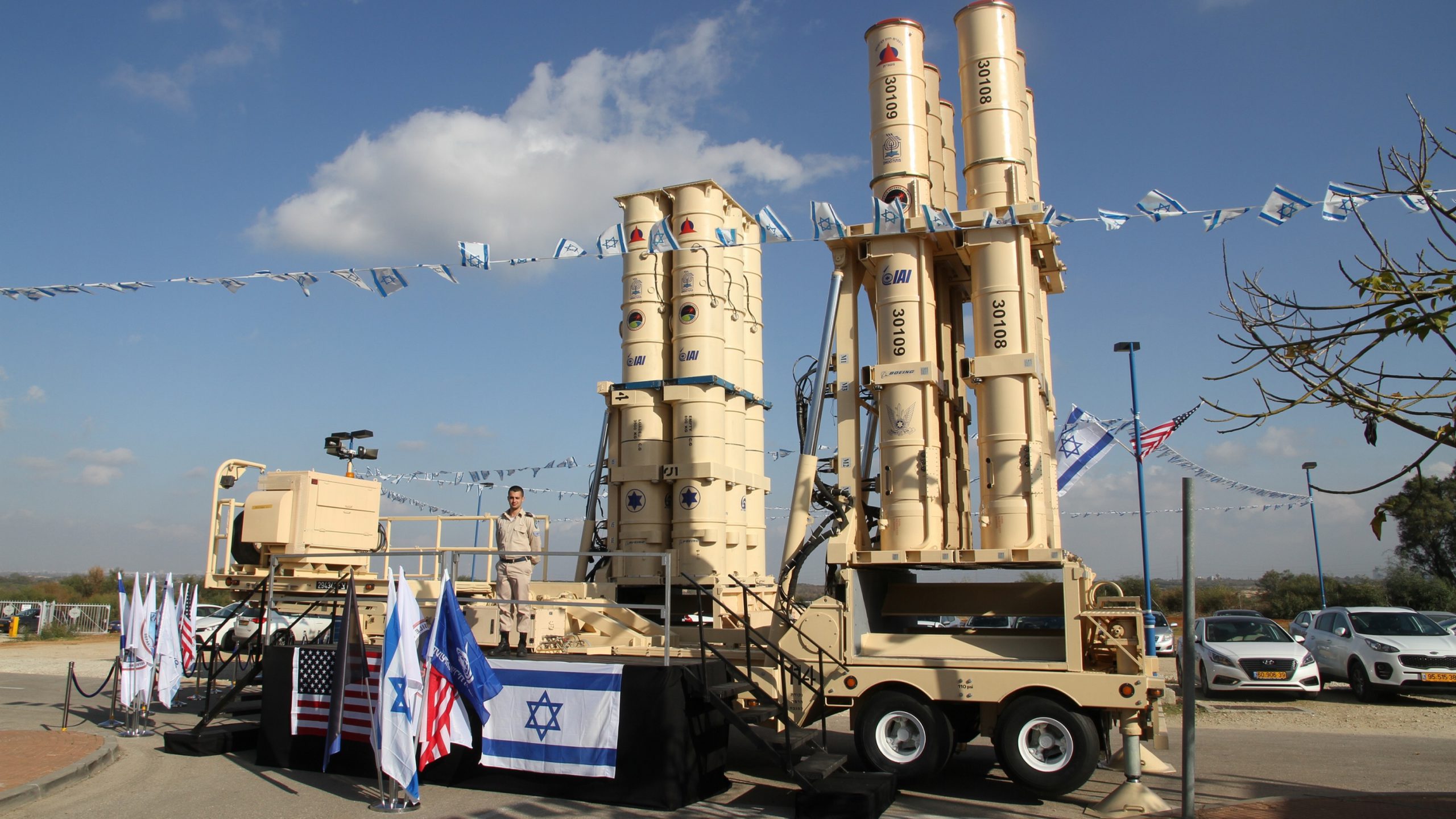
The EU is turning to Israel to bolster its new initiatives in high-tech air defence and space capabilities.
Shimrit Maman, head of the Israel Space Agency, travelled to Brussels this week and met on Tuesday with European Commissioner for Startups, Research and Innovation Ekaterina Zaharieva to discuss key sectors, including artificial intelligence and robotics.
The visit took place ahead of European Commission President Ursula von der Leyen’s first major speech on space, scheduled for Thursday at a summit in Paris.
In the speech, Von der Leyen is expected to warn against mounting hostilities and emphasise the necessity of strengthening Europe’s presence in space.
“It’s very hard to do everything by yourself,” Maman told Politico, adding that the militarization of space is “already happening, it’s just we are not aware of the extent,” and noting that allies are showing growing interest in “dual-use” technologies intended for both civilian and defence purposes:
“One thing we’re working on is early-warning systems. For example, during the last wave [of missile attacks] with Iran, we saw this very clearly. How we were getting the alerts to all the civilians in Israel, and that made the casualties so low. This is part of the system. We’re working on a very holistic view, where you can alert in advance, the system alerts the citizens.”
Following several years of effective disengagement caused by political tensions surrounding the invasion of Gaza, the EU has recently begun forging closer military and technological ties with Israel through a series of agreements.
Competition from Washington and strategic rivalry with Moscow and Beijing have nevertheless underlined the requirement for allies possessing sophisticated industrial capacity.
In 2024, European Commission President Ursula von der Leyen backed calls by Polish Prime Minister Donald Tusk and Greek Prime Minister Kyriakos Mitsotakis to create an EU-funded air defence shield.
Three senior officials involved in the discussions said, however, that the plans stalled after officials in the Commission and several national capitals concluded that the project would require reliance on Israeli air defence technology, which was considered too sensitive one year into the Gaza conflict.
Yet Israel’s Rafael, which is expanding its European operations significantly, has now confirmed that it will open a factory to manufacture the Iron Dome air defence system at a former Volkswagen plant in Germany.
One week ago, Greece signed a 3 billion euro agreement with the Israel Ministry of Defense.
The deal provides for the establishment of a new multi-layered air defence network designed to shoot down drones, hostile jets, and rockets.
“We see everything integrating into this multi-layer defence approach,” Maman said, highlighting satellite imagery and artificial intelligence modelling as primary focal points for joint development efforts:
“I’m not only seeing defence as ballistic missiles from Iran… think about a fire, a flash flood or even a long drought… we have a proven track record, and we’re getting really good results.”

The UK has reportedly engaged in behind-the-scenes talks to avoid a backlash from the US over anti-Israel sanctions scheduled for announcement today.
According to a report by Bloomberg, Andy Burnham’s government is expected to ban trade with Israeli settlements in the West Bank today.
Burnham is seeking to pursue a firmer stance on an issue of high importance to the governing Labour Party, though one that risks angering US President Donald Trump.
Foreign Secretary Ed Miliband will unveil a new sanctions regime targeting Israel but limited to Jewish settlements in the West Bank, according to sources familiar with the matter.
Burnham and Trump spoke by telephone on Monday, the Prime Minister’s Office said. A statement noted that the two leaders discussed a two-state solution for Israel and the Palestinian territories.
The discussion suggests that Burnham used the call to notify Trump that sanctions against Israel were imminent.
The proposals under review included a new sanctions regime with measures to block the exchange of goods and services with Israeli settlements.
Miliband also evaluated expanding existing human rights sanctions to encompass the blocking of aid, which has drawn criticism for exacerbating the humanitarian crisis in Gaza.
The Foreign Secretary further considered explicitly endorsing the International Court of Justice’s non-binding 2024 opinion that declared Israel’s occupation of territory currently recognised by the UK as the State of Palestine to be unlawful.
Even so, UK officials fear the announcement could cause an early setback in Burnham’s relationship with Trump.
To defuse a backlash from the Trump administration, British diplomats privately informed the US that the sanctions are largely symbolic and will have no tangible impact on the UK’s broader trade or security ties with Israel, according to sources familiar with the discussions.
The proposals were drawn up after Israel decided to issue tenders for the construction of 1,200 settlement housing units in an area of the West Bank.
Disputes between Israeli settlers and Palestinians have intensified in recent months as Israeli Prime Minister Benjamin Netanyahu faces a difficult battle to retain his seat in a general election scheduled for 27 October.
Burnham joined the leaders of Canada and five European governments, including France, Germany, and Italy, in signing a statement that condemned the housing plan as “unacceptable” and urged Netanyahu to withdraw the tender.
In a separate statement, German Chancellor Friedrich Merz condemned a call by Israeli National Security Minister Itamar Ben Gvir for “nightly assassinations” in Gaza.
Burnham is eager to demonstrate early to the Labour Party that he is adopting a more critical approach toward Israel than his predecessor, Keir Starmer.
Although Starmer hardened his stance against Israel during his two years in office, including by formally recognising the State of Palestine, his initial refusal to demand that Netanyahu halt military operations in Gaza divided the party.
This division led to a decline in Labour’s poll ratings and boosted electoral gains for the Green Party across the country.
Burnham’s return to Parliament last month led to Starmer’s resignation. Burnham apologised for Labour’s handling of Israel’s military operation in Gaza under his predecessor, stating that the party “did not adopt the right stance”.
Last month, Burnham’s new Defence Secretary, Wes Streeting, who faced intense competition from a Muslim independent candidate in his northeast London constituency at the last general election, stated that Israel had fallen “short” of international standards.
US Ambassador to Israel Mike Huckabee told the BBC’s “Newsday” programme that there would “undoubtedly” be a US response.
Accusing the Labour Party of “discriminating against the Israeli government”, Huckabee said: “It is like throwing a rock and not knowing where it lands. The UK is a sovereign country and can do as it pleases, but so is the US.”
Republican Florida Congressman Randy Fine also warned that British firms would be barred from doing business with local governments in the state if sanctions were imposed.
In a post on X, Fine said: “Florida has made its stance clear. Any company—or country—that boycotts Israel will be boycotted by Florida.”
Labour MPs and Jewish groups have warned the government that any sanctions against the settlements could amount to a “de facto boycott” of Israeli goods and compromise the safety of British Jews.
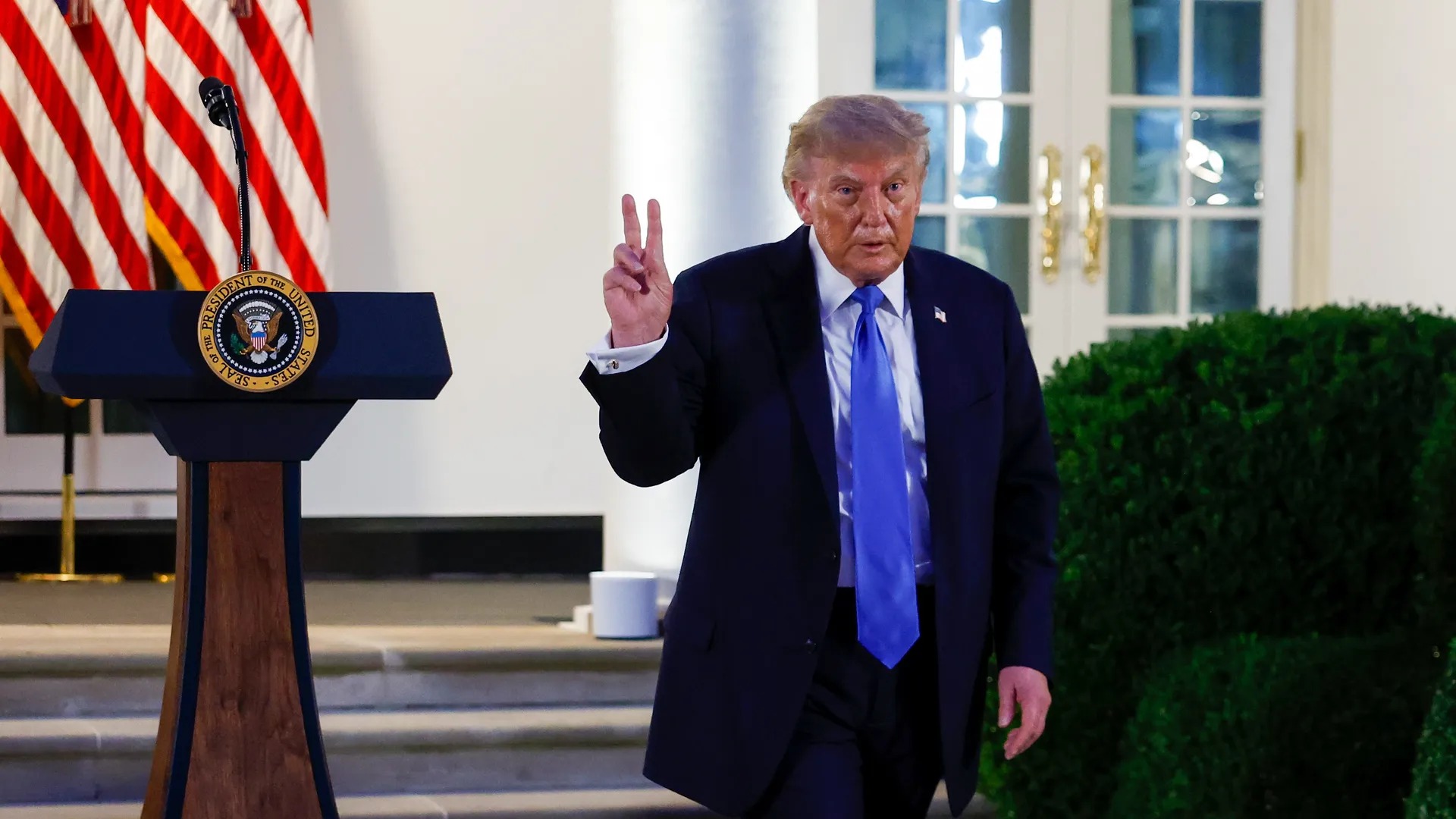
The US administration is working on a post-war strategy focused on containing Iran and expanding the normalisation of relations between Israel and its neighbours.
According to Axios, although the plan remains in the draft stage, it is intended to guide the US approach to the Middle East once the war with Iran concludes and across the final two years of President Donald Trump’s term in office.
Two major events cast a shadow over the planning process: the Israeli elections scheduled for 27 October and the US midterm elections in November.
US officials state that initial work on the strategy is being conducted both at senior political levels within the Trump administration and at an interagency working level.
According to sources, Trump has held two meetings with senior advisers in recent weeks where the plan was discussed and concepts were floated.
In private conversations, Trump reportedly said he is working on “something much bigger” in the Middle East following the war with Iran.
According to sources, three primary elements have been put forward as prospective components of the strategy:
Establishing a regional alliance among US allies, guaranteed by the US, in order to contain Iran.
Pursuing a joint effort to bring the regional fallout of the 7 October 2023 Al-Aqsa Flood operation toward a conclusion by securing the next phase of Trump’s Gaza plan, signing a security agreement between Israel and Syria, and implementing the Israel-Lebanon agreement.
Expanding the Abraham Accords and reaching a normalisation agreement between Saudi Arabia and Israel.
The Trump administration hopes that the new Israeli government formed after the 27 October elections will be willing and able to cooperate on the post-war strategy.
However, some US officials emphasise that Trump will push for the implementation of this strategy regardless of the Israeli election results, even if the vote leads to political deadlock.
A source familiar with the process stated that drafting the strategy would take several more weeks. “They are working on it, but it is not finished yet,” the source said, adding:
“The aim here is to connect many moving parts in the region; how to build a regional alliance after the war. It is not yet clear whether all US allies in the region will participate in this process.”

Russia stays in ITER nuclear fusion project despite EU sanctions

German Christian Democrats clash over proposed AfD party ban

Over half of Latino voters back Democrats in key US House races

Researcher quits Anthropic and warns AI firms gamble with lives

Valdai Forum debates superpower survival amid global anarchy
-

 Europe2 days ago
Germany’s CDU drafts tougher citizenship rules to counter AfD
-

 Russia2 weeks ago
Putin circle weighs tactical nuclear risk as Ukraine talks stall
-
 Russia1 week ago
What to know about Russia’s upcoming State Duma elections?
-

 America2 weeks ago
Pentagon to fully purge Anthropic AI from systems by end of September
-

 Europe1 week ago
Marine Le Pen leads all 2027 French presidential scenarios, poll shows
-
 Russia2 weeks ago
CIA Director John Ratcliffe travels to Moscow for official talks
-

 Asia2 weeks ago
China-Nepal border flood leaves at least 160 dead, over 1,000 missing
-
 Middle East2 weeks ago
Mazlum Abdi announces dissolution of Syrian Democratic Forces
