
Interview
Ulrich Heyden: I can see that the German elites have sold out Germany

With the official start of the war in Ukraine in February 2022, not only were all clocks in the US and Europe set on Russia’s military defeat, but all opinions outside the mainstream were put under immense pressure.
Especially in Germany, public debate and the crumbs of freedom in the German media have been eliminated. Israel’s bloody occupation of Gaza and Lebanon has further darkened the atmosphere. Voices calling for a diplomatic solution to the war in Ukraine and for Berlin to take the initiative have been silenced in many cases.
German journalist Ulrich Heyden has been writing about Ukraine and Russia for years, in addition to his book The War of the Oligarchs, which has also been translated into Turkish. We spoke to Heyden, who currently lives in Moscow, about the Maidan coup, the most important stop on the road to war, Ukrainian and Russian societies, and the present and future of Germany. Heyden shares his analysis and news on his website.
It is widely believed that the war in Ukraine started in February 2022 and that Russia is waging a war of aggression. However, in your book The War of the Oligarchs, which has also been translated into Turkish, you start with the massacre at the trade union building in Odessa on May 2, 2014 and argue that the road to war was paved by the protests on Maidan. When exactly do you think this war started?
I think the story of the civil unrest and the coup in Ukraine is very long because we had a coup in 2014 and I think the main energy that came out of it did not come from the Ukrainian people. Or maybe it came from part of the Ukrainian people, mostly from Western Ukraine. In 2005 and 2014 we saw it coming very strongly from western institutions, western funds and I think Germany, the US, Great Britain and the Netherlands and other western countries were interested in Ukraine as a region where they could process their products; they could use Ukrainian land for agriculture.
After 2014 it was very clear that Ukraine is a region where you can destabilize the border with Russia and put Russia in a very unfavorable position because no state can sit quietly when there is a very aggressive state policy against another state on the border.
The problem is that Ukraine is a multinational country and I think 30% of the people living there speak Russian and this 30% live in Russian culture. For them Russian culture is important, that is, religion and the history of the second world war and the victory over German fascism and also the victory of the Western Ukrainians over fascist organizations like the organization of Ukrainian nationalists around Bandera, which worked with the fascist German forces… I mean, there are people with very different views in a country and it is impossible for a state to exist if you don’t respect each other or try to have a dialogue.
So every government in Ukraine should try to have a tolerant and liberal attitude towards each of these minorities, not only Ukrainians and Russians, but also Hungarian minorities and other people living in the west of Ukraine.
For 20-odd years, from 1991 to 2014, it was possible to achieve peace between nations in Ukraine. But then I think the US decided to escalate and heat up this conflict in the country and they paid Western Ukrainians to come and go to the Maidan in Kiev and they held some meetings in this square for months and they bought weapons.
They stole weapons from police stations in Western Ukraine and they came to Kiev with these weapons and all this was known to people who were interested in Ukraine. But nobody writes about it in the western media, in the newspapers I write, they only write that the people of a European country want to have closer contact with the western economy, “western democracy and we must help these brothers and sisters who love democracy like us.”
Yes, we read in the western newspapers that the Ukrainian people wanted to join the European Union and NATO, but Russia was blocking them.
But this is not true because Russia was not against Ukraine being part of the European Union or European trade links. Russia was only against Ukraine joining NATO, but the western leaders demanded that Ukraine decide whether it wanted to be a member of the European Union or not, otherwise they would get nothing from them.
The President of Ukraine [Viktor] Yanukovych decided that he could not go through this planned path to become a member of the European Union and this moment was used by the western countries to escalate the situation in the country.
Ukraine and we only saw these demonstrators on western TV, we didn’t see people from Donetsk, Luhansk, Odessa who were not fans of Maidan because they wanted friendly relations with Europe, but they wanted a future for Ukraine.
Yanukovych was right when he said that they needed a lot of economic help from the European Union to build the industry at a higher level because their industry was not far enough ahead, but at that moment when they linked [Ukrainian industry] with the European Union, it would have been a disaster for the industry.
But I think the intellectual and media influence of the west has been there since the collapse of the Soviet Union in 1991, and even then people from the Ukrainian diaspora in Canada and Germany started actively coming to Ukraine, they received money from western funds to take part in building a new Ukraine. But they wanted these people from the diaspora, because most of them wanted an anti-Russian Ukraine, not a Ukraine between NATO and Russia, between the blocs, but a really anti-Russian Ukraine.
This was a minority, but this minority was financed by western funds and they invited students, they helped young people to set up NGOs in Ukraine. They funded these NGOs. So the intellectual atmosphere and the mindset in Ukraine changed a lot.
For example, if you look at the results of opinion polls, until 2014 most Ukrainians were against Ukraine’s NATO membership. Now you cannot trust these opinion polls because there is no democracy in Ukraine now. We have only one media. Opposition parties are banned. Opposition media is banned. Many people from the opposition are in jail or have fled the country.
When you look now, they tell you that the majority of Ukrainians are in favor of NATO membership, but there is no control. Who is doing these opinion polls? Because it is not a democratic society.
I mean, this is true for everybody who is interested in Ukraine. Some western newspapers say, “Okay, Ukraine is a democratic country with some faults. Okay, there is corruption, but overall Ukraine is doing very well.” But how can you say that when there is no opposition in the parliament? I mean, I mean, when we haven’t even elected a president for months.
Russian leader Vladimir Putin said that they understood that the Minsk agreements were designed to distract them. Do you think Europe, and Germany in particular, was the instigator of the war in Ukraine after 2014, or was it just forced to follow Anglo-American interests?
It is very sad for me to say this, but I actually see that a large part of the German establishment is ready and in favor of this militant path, this military path. They are not following the path of the Minsk agreements. They are going to the path of military confrontation.
And it is very sad because there are many people and alternative media also in Germany and there are also people in our parties who are not compatible with this aggressive way, this conflict way and using Ukraine only to set fire to the Russian border. Many Germans understand this, but they are not heard in our media. This is a very sad situation.
Maybe I can say that there are normal people in the Christian Democratic Party, in the Social Democratic Party. They understand these things but they have no weight. The main speakers are supporters of the American way of confrontation and now I have no hope.
This situation will only change when the peace movement in Germany gets stronger. After the elections in Saxony and Thuringia, we saw that the AfD and Wagenecht [BSW] parties received the votes of almost half of the East German voters. But after this clear statement from the East German voters, we saw that even Ukraine changed its choice of words. Now everyone is talking. Zelenskiy said we should have a new peace conference and German politicians started talking, “We should have some peace talks and peace is the way out of this crisis.”
But these are just an ornament in my opinion. The hard way is different. The hard way is that America has decided to put new long-range rockets in Germany, and they are arguing about giving missiles to Ukraine. This is going on and will go on.
Do you mean the Taurus missiles?
Yes, the Tauruses. I think it’s very clever, to escalate the military situation and on the other hand to show that we are for peace… But it’s terrible. I mean, I don’t know. I really don’t know at the moment. I don’t see how it can end. It can only be a catastrophe this way. Disaster and nuclear war.
But then again, Germany has seen energy prices rise dramatically after the Ukraine war, and there is an ongoing debate about the deindustrialization of Germany in particular and Europe in general. Why is the German political elite following or pursuing Anglo-American interests, even if it means war with Russia, high inflation and the deterioration of people’s livelihoods?
Russians in Moscow ask me this question every day because they are not anti-German. For example, this is very, very interesting. Most Russians don’t think like that even when Germany sends arms to Ukraine.
The problem is that Germany was built after the Second World War mainly by American and British advisors, and in the last 20 years in the German media you see more and more often that our main newspapers, our editors are attending conferences of the Atlantic Council, and this very close contact with the American establishment is so strong, and that’s why our culture is so tied to America that sometimes I get the feeling that Germans are part of America.
Nobody knows anything about Russia and Russian culture, only some educated people. But American culture is completely dominant and the American way of life, American movies and culture are always present in Germany. So there is this thesis that we have to live for democracy and democracies in America, politicians talk about it every day and people trust it.
But now they are starting to feel it. What does that mean? Maybe it’s just an illusion. When we talk about democracy, we see that we are getting poorer and poorer and now our party system is collapsing because the parties in our government, the green liberals and the social democrats, were defeated in the elections in East Germany. For example, the Greens are the party with the strongest support that said we should give arms to Ukraine. They were defeated. They didn’t get more than 5 percent. So they are now not represented in the parliaments of the two East German states.
I have never been a friend of strong national rhetoric, but I must say that at the moment our government is not working for the nation. They are not working for our nation, for Germany. They are working for something else.
Because when people are getting poorer and poorer, when Berlin is getting dirtier, when conflicts with migrants are increasing, these problems are not well organized.
I mean, I see my country falling into a chaos, a chaotic situation. Everybody sees it. And who is benefiting from this situation? America, German business. They go and invest in America because energy is cheaper there than in Germany.
I would like to look inside the heads of the German elite and know why they are going in this way, in this pro-American way and selling their country. It’s crazy. I think we should wait a few years to find out the truth. Right now I can only see that they are selling out the German country, Germany.
In order to legitimize the so-called “Special Military Operation” that began in February 2022, Putin has at times developed a rhetoric that questions Ukraine’s statehood and emphasizes that historically it was a state “invented” by the Bolsheviks. As a journalist, you have also been to Ukraine. Can you share with us your observations on Ukrainian society and state structure? Is it an artificial country or a country fabricated by the Bolshevik conspiracy?
No, I don’t think so, because it is a reality. There is Ukrainian and there are Ukrainians, there are Ukrainian citizens. This nationality exists mostly in the center and west of Ukraine. So there are official documents, official sociological researches of the Ukrainian state about who is Russian, who is Ukrainian, who is Hungarian.
You see that the Russian nationality is strong in southern and eastern Ukraine and the Ukrainian nationality is strong in central and western Ukraine. When you look at history, you see Bogdan Khmelnitsky, a Ukrainian soldier who 300 years ago refused to accept that Poland was becoming more important in Ukraine along with the Catholic religion. Hmelnitskiy made a deal with the Tsar, with Russia, and Ukraine became a friend, a partner of Russia. And from that time Ukraine became part of the Russian empire.
After the Second World War, the Western elites, in my opinion, waited for the moment when the Soviet Union would weaken. And when that moment came, they were happy. And they were very happy because the Soviet Union was a superpower, it was very strong.
Now we see that Russia has to do a lot to have the military and economic power that the Soviet Union had at that time.
But I mean, I don’t agree with what Vladimir Putin said, for example, he made very strong arguments when he said that Lenin’s national policy was like putting a bomb under the Russian empire. I think this is not true. Lenin only did this, he saw that there was a Ukrainian nationality and in order to include this nationality in the Soviet empire he gave it special rights and special support, sometimes even more support than the Russians, more than Russian culture.
I also see a continuity in what Putin is saying, because at the time of the collapse of the Soviet Union, there were discussions about what would happen after the Soviet Union with the Slavic brotherhood, that is Belarus, Russia and Ukraine. So there were people around Yeltsin who thought that some parts of Ukraine like Odessa, Donbas and Crimea were part of the historical Russian empire. Even at that time, during the collapse of the Soviet Union, there were some powerful Russian elites who were claiming parts of Ukraine against this Bolshevik policy of nationalities. So I think there is a continuity in Putin’s claim that Ukraine is part of the de-communization of Ukraine and part of Russia’s claim to all this Crimea and Donbas, don’t you think?
Yes, you are right. When you say that there are these voices in the Russian establishment, for example, the mayor of Moscow, Yuri Lujkov, has said very strongly that Crimea is Russian.
But you have to remember that in 1991 the Russian people, the head of Crimean politics and the people did not want to be part of Ukraine, they tried to hold a referendum, they held a referendum in ’91 to become something like an independent republic, but it was not strong enough at that moment because Russia did not support Crimea’s policy of independence, Russia was completely weak and it was really a strategy for the Russians.
So in ’91 20 million Russians were living outside Russia, they were living in Kazakhstan, they were living in Turkmenistan, in Kyrgyzstan, in Romania, in Ukraine and all these Russians were in danger because there were huge economic difficulties in these republics and at that time some aggressive nationalists started attacking Russians in these former Soviet republics.
We had this kind of nationalism since 2014 when the Ukrainian army started attacking civilian villages and cities in Donetsk, in Luhansk with weapons. Western media doesn’t write about it, they don’t see a problem in these attacks.
The problem you are talking about, I mean, is Ukraine a state or not? I mean when I hear Russian politicians, especially Putin and Lavrov, I think they are basically saying that Ukraine is a state, but we cannot accept a state under the control of NATO or under the control of the West. For them Ukraine should be a politically neutral state – I mean the kind of state that we had from 1991 to 2014.
So there was Russian influence in Ukraine, there was Western influence, I think this form can exist again, it can exist again when the war is over now. There are other countries like Switzerland with three official languages and influenced by different other countries, why not Ukraine?
Now in this situation of course there are some radicals within the Russian society. People are very emotional when they see Russian soldiers dying, western tanks fighting against the Russian army like in the Second World War, and you hear some people saying, “We’re taking Ukraine, we’re taking it all, we’re going to Lviv,” but I think it’s an emotional thing. If Russia really wants to think for the future, I think a total occupation of Ukraine is out of the question.
So you are saying that the radical views that say let’s take over Ukraine do not reflect the views of the Russian state.
It is very difficult to say that because we are living in a state of war. For example, Stalin never talked like Morgenthau or some American politicians who wanted to divide Germany into five parts. The Red Army went to liberate East Germany and they created a German state under Soviet control.
I think something similar could happen in Ukraine because we had a second German state under Soviet control between 45-90 and something similar could happen in Ukraine.
The other option, if Russia cannot withstand this very strong military support, maybe there will be a peace negotiation and Ukraine will be divided. So the east and the south will be part of Russia.
These talks maybe won’t work at the moment because we have a war situation and everything is flowing. Nothing is stable. I mean, how can you talk about the Ukrainian state when the Russian army is shelling Lviv, which is the west of Ukraine? I think the Ukrainian state is in a very unstable situation. And perhaps the most tragic thing is that western advisors in western financial institutions say that they completely control the central part of Ukraine, the western part. There is no such thing. There is no oligarch or political person who represents a truly independent Ukraine. This independent Ukraine does not exist at the moment because Zelensky, who is represented by the western media, is, in my opinion, a spokesman for a section of the Democratic Party of the United States of America, because he is not elected now, he has not been elected president for four or five months.
There is no really independent democratic discourse in Ukraine, there is no debate with different meanings, because it is impossible for a nation, the only voice of a nation to be a person like Zelenskiy. This is not a sign of democracy. Anyone who thinks a little bit deeper understands this.
I wrote an article about these Ukrainian oligarchs. At the beginning of 2014 they were independent oligarchs with their own interests and they had the illusion that they could do politics for their own interests. But in the last nine years these oligarchs have come completely under the control of American and British politics and financial companies.
[Igor] Kolomoyskiy is under arrest on corruption charges. I think this anti-corruption policy is also a tool of the Western governments that are trying to establish a new order in Ukraine, an economic order that serves only Western interests, economic interests and strategic interests in Ukraine. So they are using private institutions, for example the anti-corruption agency, as an additional institution to the official law of Ukraine. This is crazy.
America is very good at using progressive words and progressive thinking in these matters for its own interests and it is very, very sad for the Ukrainian people. I know them very well because I lived in Kiev in 1992 and after 1992 I traveled a lot to Kiev and other regions and I had contacts with Ukrainian patriots. My best friend was Ukrainian. He thought that Ukraine could only survive without Russian influence. In 1992 this was an interesting position for me. Now I cannot accept this position. We are not friends now because it is normal to have Russian influence in Ukraine. Russian culture in Ukraine is part of Ukraine and you cannot defeat it, you cannot eliminate it.
You are living in Moscow now. Can you tell us a little bit about how the war has affected the daily life in Moscow and Russia? The Russian economy has surprised a lot of people, especially in the West, but we know that there is also harsh criticism from some quarters inside the country against the economic management, especially the Central Bank. Do you have any idea where Russia is heading after the war?
Let’s talk about the current situation, because after the war, I have some ideas, but okay, let’s talk about today.
I see that there is inflation in Russia like in the West. I mean, it’s not that bad, but when I go to big markets, supermarkets, I see fewer people than before. I see that. I mean, according to official statistics, the number of Russian millionaires is increasing, but the number of people with less income is also increasing. So, the gap has gotten bigger.
But the government is trying to provide special support for the stabilization of families, children, especially those families that would normally exist, and they are succeeding. I don’t see any poverty on the streets in Moscow, I was in St. Petersburg and I didn’t see it there either. I don’t see people begging for money on every corner, for example, as I saw in the 90s.
The cities are not really dirty, they are clean. Some people, some Germans told me that Moscow is much cleaner than Berlin
Okay, we have a stable situation overall, I think. But underneath this stability there are some questions, some problems. For example, the owner of the best-known online startup Wildberries [Tatyana Bakalchuk] was the richest woman in Russia. She had a dispute with her husband.
I think there was a shootout in Moscow.
Yes, yes, they both owned this company. And I think this woman has 7 billion dollars. Many people remembered the situation in the 90s, already securities and gold got into some companies, they tried to get them by force. In the 90s we had this every week and people were dying. This conflict in Wildberries was also a sign for me, I hope it doesn’t happen more. These cases and some interesting discussions are going on.
I think nowadays some powerful people from the Russian church and some other people have started a debate on the theory of evolution. Do you have any information about this?
Yes. So, there are some reactionary tendencies that one has in this period. They are getting stronger and stronger. But on the other hand, I wouldn’t say that the Russian leadership has officially put direct pressure in this direction. For example, I know that Putin is not a friend of the demand to ban abortion. Does she want a baby or not? It’s the woman’s decision. I mean, there are strong sectors in the Orthodox Church and in society that want to ban abortion.
After the terrorist act in the Krokus building in Moscow, there was also some emotional debate. Like the death penalty, which we had during the Soviet era. Russia became part of the Council of Europe and declared a moratorium on the death penalty and capital punishment. This moratorium is still in place now, but there are some reactionary forces that are trying to implement it. This is very popular when you go out on the street. I mean, you hear even some Russians saying, yes, we have to fight against corruption in very strong ways. We shoot these people in the head and the problem is solved.
So, what you hear is real, especially in this heated situation, in this emotional situation with the war, a lot of people are in favor of this tough policy. This is a fact.
For example, some of the liberal voices that were very strong in Moscow and St. Petersburg in the last 30 years are not so loud anymore, the political debates are quieter now. For example, the Communist Party never demonstrated in Moscow after the corona, they were not allowed to do that because of the corona infection.
And the political life is now a bit, no no no, very quiet, because the war situation dominates everything. I mean, we are really feeling the war more and more because for example, I think ten days ago, in the town of Ramanskoye, southeast of Moscow, a Ukrainian drone destroyed part of a big house.
For example, in the center of Moscow, you cannot use a navigation device for the car because the navigation device shows you the wrong way because there is electronic jamming.
I have been in Donetsk many times, I have been in Luhansk until 2022. I saw people in wartime, they were going on with their lives, living as usual, because you have no other choice. You would see that nobody ran away. Now in Moscow you only see big posters inviting you to enlist to fight on the front. There are big posters with a few medals on the body, with soldiers who fought on the front and graduated.
War is the main theme in Russian media, in Russian television. It is completely typical media, typical television. No, there is some humor. A little bit. You have it too. It’s a mixture of everything. A little bit of humor and a little bit of war.
You mentioned that liberal voices are not very popular in Moscow and St. Petersburg these days, but there’s someone like [Central Bank Governor] Elvira Nabiullina, you know. And people like [Mikhail] Dalyagin are harshly critical of the financial circles around the Central Bank. And yet Vladimir Putin chose Nabiullina to serve the Central Bank. How is this possible even in a state of war? Because it seems that she also has a lot of connections with western institutions and she seems to be some kind of an agent of western financial powers in Russia. How is both possible?
I know that the Russian opposition or opposition thinkers have such a position. They criticize the financial block of the Russian government. Very, very harshly. I can’t say anything about these words that the Governor of the Central Bank of Russia [Elvira Nabiullina] is connected to western politics. I mean, this is a strong, very strong statement and there is no truth about it.
It’s impossible that now in Russia one person is running the central bank and working for western interests. There are such discussions, I can say for myself that I understand the criticism, people who criticize the central bank because interest rates are high and it is difficult for small businesses to get loans. It is very expensive to buy a house.
To create a more active economic and political environment, the state needs to invest more, put money into the economic process and people need to work and produce.
But for example, the Russian industry for the military is in a very, very good situation, very, very active and producing at a very high rate, but there are many problems with engineers. After the Soviet period many schools of technical education and engineering education were closed. Now Russia has to buy technological equipment from Turkey, China, other India.
This is a result of the completely neoliberal policies of the 90s and later. It was the main result of the economic process wherever the whole leadership of the state was oriented towards or supported the policy of selling oil and gas.
Now we see the results of that, that there are huge gaps in Russia’s economic structure.
There are different political wings in Russian society and in the Russian leadership. Maybe there is still liberal thinking in the economic sector of the government, but in the economy, too, state-oriented politics is getting stronger.
The fact that Putin has chosen a new defense minister who is stronger, tougher than [Sergei] Shoigu in this policy, for example.
Russia is forced to organize its domestic life very strongly in case of war. It is not possible to be anti-national policy in Russia. So maybe some other people in the Russian government will be replaced by stronger people.
Finally, let’s talk a little bit about Germany. On October 3rd, on the so-called German Unity Day, a group of pacifists will organize a rally calling for a diplomatic solution in Ukraine. Some people we spoke to in Germany last year said that they had never seen so much restriction of freedom of thought and expression in the country after the war in Ukraine. The Israeli attacks on Gaza since October 7 seem to have reinforced this pessimistic mood. Another issue is the undisputed victory of the “far-right” AfD, especially in East Germany. Where do you think Germany is heading?
I think Germany is now in a completely chaotic situation. Especially the Greens are a sign of that. The party that shouted the loudest for sending weapons to Ukraine, for changing the energy policy rapidly, for demanding that homeowners modernize their homes with special generators for heating, for banning heat pumps, and this party suffered a complete defeat in these elections.
Our Chancellor [Olaf] Scholz played a very strange role. He was not the loudest advocate of this very strange policy against Russia, this strange energy policy. He was not the loudest. It was the Greens who spoke the loudest and this Chancellor, who is not a good orator, has no charisma as a leader of a country. He is in a good position now because his party in Brandenburg has become the strongest party, but that was only because the old media, the German nationalists, opposed Alternative for Germany and people maybe voted for the social democrats because the whole media was full of controversy. The AfD was something like a new NSDAP, a new fascist party. I think the AfD is not a fascist party. There are some fascists in this party but it is not a fascist party. Mainly the people who vote for it are not fascists. I mean, maybe a small percentage, but not a big percentage.
I have a bad feeling about the migrant problem, because when a state is in an unstable situation and the government doesn’t really have a concrete plan on what to do, how to make life better for normal people, it comes back again.
Yes, we have problems with migrants and they come into our country without any control. They are linked to some aggressive acts against civilians in Germany. This has become the main topic of the last month. I think there are really problems and maybe it is really necessary to have a stronger control on immigration and immigration policy.
It is necessary, but it is used as a trick that people don’t talk about social problems and social policy and weapons for Ukraine. Migrants from other countries are used to distract attention from the mistakes of the government.
Sometimes I see the same thing in Russia. I mean, there are some migrants here too. There are many migrants from Tajikistan and Kyrgyzstan. They are building houses, streets and a lot of things here. Without these migrants Russia would be in a bad situation. But there is no real integration of these migrants and from what I see it is not a very good situation.
All the Germans I have talked to about the situation in Germany are very sad. They are sad and they have no idea what to do.
For me this is the end of the liberals. For me this is the end of radical liberal politics, gender politics, economic politics.
Now we will see, I think Germany is following a stronger national oriented policy. Maybe the first signs of this stronger national oriented policy will be stronger against immigrants, more propaganda for the German army, more money for the German army.
Germans have always had a difficult connection with the army. It was hard for Germans to be proud of the army because after the second world war we had no pride. We don’t know what this national pride is. Other European countries have this pride and we don’t.
Now it’s very sad because I’m a German and I’m proud of our poetry, I’m proud of our technology, I’m proud of science, German science and music, but I’m not proud of our army because they are doing things that are not good.
But I think in times of crisis, always in history, you see some people who want social unrest in Germany trying to channel people’s emotions in a direction that suits them.
So our leadership does not want that. That’s why they make some emotional speeches against migrants. That’s why they make emotional speeches in favor of arming the Ukrainian people to protect free Europe from the dictator Putin.
For my part I would like to say that I have always been a supporter of the brotherhood of nations and normal civilized processes between nations. When I lived in Germany, for example, I worked with Turks in a factory and I felt that they helped me. They helped me when they saw that I was not fast enough to pick up the machine parts.
And now I am in a different situation. I live in Moscow and our situation has changed because we have a lot of immigrants from Tajikistan and I have good relations with them too. Now, I don’t feel any regulation from the state in Moscow on these issues.
I imagine in Germany in the 70s and 80s when there was formal integration. Okay, that was another time. At that time we really did not have enough labor force. I’m not sure that Germany needs millions of immigrants now. I don’t think so. On the other hand, I don’t want to support the nationalist propaganda of the AfD, which says that Germany’s main problem is migrants. That is completely wrong.
If we Germans and Russians cannot find a normal way, a civilized way in these situations… It is very important that the contact between nations and countries should be in a normal civilized dialogue, not in a dialogue about who is stronger and who is weaker.









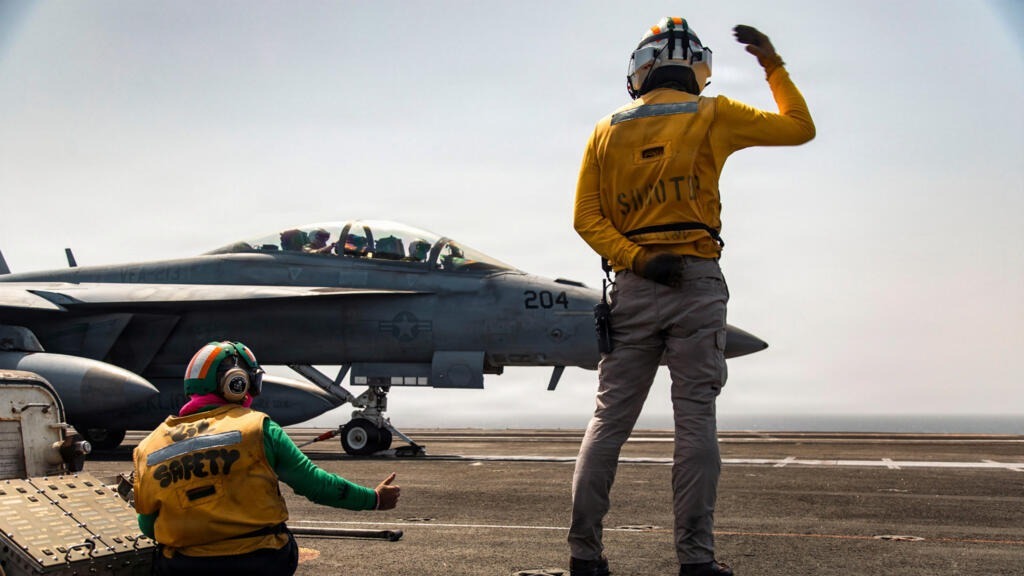
Retired US Army Lieutenant Colonel and military analyst Daniel Davis discussed the US military operation against Iran, decision-making mechanisms in Washington, US-Israel relations, transformations in modern warfare doctrine, and the global balance of power in an interview with Harici Media.
Answering questions of Harici Editor-in-Chief Tunç Akkoç regarding the Iran war, retired Lieutenant Colonel Daniel Davis stated that the US administration lacks an achievable military strategy on the ground. Davis said: “I would say the US has a desire, not a strategy. It wants to subjugate the Iranian side, corner them, seize control of the Strait of Hormuz, prove they pose no threat to anyone in the region, and ensure they never possess nuclear weapons. That is our desire. But there is no strategy to achieve any of these goals.”
Drawing on his past military experience, Davis detailed the geographical and technical challenges on the ground: “As a soldier with direct combat experience, having gained combat experience in some of these mountains between Afghanistan and Pakistan, for example, I know that many of the mountains inside Iran belong to the same mountain category. I knew what a difficult military task it would be to conquer a country as large as most of Western Europe, where such mountain ranges cover the entire western front. Therefore, I knew you could do nothing on the ground. However, I also knew that you could not subjugate a country with this kind of defense capacity and of this nature through air power alone.”
Pointing out that Iran’s defense infrastructure spans many years, Davis continued: “You cannot do this, especially when they have anticipated this for twenty years and made all kinds of preparations by constructing underground caves, production facilities, and storage facilities, and developing production capabilities for their unmanned aerial vehicles and missiles. There is no way you can defeat them. Because such facilities were designed not only to withstand all our strike missiles, such as Tomahawk, Jasmine cruise missiles, PSM, or ATAC, but also to survive. Most are capable of surviving nuclear explosions as well. I have been inside some of these here in the US. I have been in some physically located beneath a mountain. I know they were specifically designed when constructed to withstand the largest nuclear weapons the Soviet Union might possess. The ones there are of the same kind. If you know before embarking on an act of starting a war that the enemy is this large, possesses these types of defenses, and everyone knows these are resistant to our non-nuclear conventional munitions, why would you start a war to force them into something you clearly cannot achieve?”
Addressing the assumptions behind the war decision, Davis said: “I think this is a fantasy stoked by Benjamin Netanyahu. It was said, ‘If we assassinate their leaders, the same thing will happen as happened to Maduro in Venezuela. You went there, captured him, and disabled him; when you did that, you took control of the entire government, they basically handed the country over to you, and the same will happen here.’ Anyone who thinks Venezuela is like Iran has paid attention to nothing. The culture, history, religion, experiences, and everything that has transpired over the last 47 years are radically different from those in Venezuela, and you do not have an insider to facilitate the process as we had in Venezuela. But President Trump appears to have thought this way.”
“When he started the war on February 28, he sealed our fate; we lost this war”
Pointing to inconsistencies in US President Donald Trump’s decisions and the trajectory of the operation, Davis stated: “This situation is proof that he is stuck. Because, in my view, when he started the war on February 28, he sealed our fate. We lost this war. Even if it is ongoing right now, there is no logical way for us to win it. Because we cannot eliminate the trump card held by the Iranian side.”
Stating that military pressure mechanisms are insufficient, Davis explained: “We still have our missiles, aircraft, aircraft carriers, and all such elements. That is why it appears feasible. It is thought, ‘Maybe if we make a good enough deal, or put enough pressure on them, or impose a blockade and leave the public in a dire enough position to change the government’s mind.’ This is a fantasy. This is the only thing President Trump has. Because if he were acting based solely on military reality, strategic reality, and cultural and religious reality, he would know this was an unwise move, but he does not know.”
Describing Trump’s negotiation approach and the breakdown of the reached agreement, Davis used the following expressions: “He is a transactional individual who wants relationships resolved overnight. For example, during the memorandum of understanding period, this duration was to be 60 days. After starting the war, no achievable military objectives remained. Whatever your desires were, you can no longer reach them because you have confronted reality. Now he is trying to find an exit route, but even within this understanding, he cannot arrive at a rational and consistent perspective. Any rational person would think that when the memorandum of understanding was signed on June 17, it provided him with an exit route. You implement the terms of this memorandum, the crisis is resolved, the dual blockade is lifted, and the Strait of Hormuz could reopen.”
Addressing the clauses of the agreement text and subsequent developments, Davis said: “The terms Trump signed stated that Iran had administrative control of the Strait of Hormuz but could not demand any transit fees for 60 days. Iran accepted this, but accepted only one condition: the ‘for 60 days only’ stipulation. Subsequently, they publicly announced that they would collect fees later, but not during these 60 days. The US was not mentioned in the text in any way. We had no say. The authority to decide how operations would run was left to Iran together with Oman. We gave them 30 of the 60 days to prepare their plan for this. But after four or five days passed, the US suddenly declared a new southern corridor together with Oman.”
Detailing the process of reversing the decision, Davis noted: “While a step to reopen the strait had been agreed upon, traffic had risen to approximately one-third of pre-war levels, and many shipments had passed directly on the first day, Trump personally turned back this development toward finding a reasonable exit route from the unfolding disaster. According to reports from some sources in Washington, he came under intense pressure from pro-war figures in his inner circle and those on the Israeli side. He backed down under this pressure and modified the terms by inserting himself into the fifth paragraph. He never made Israel implement the first paragraph, which covered Lebanon and envisioned a ceasefire on all fronts. We did not even give them 30 days; we intervened before five days had passed. Trump has a goal, fails to reach it, puts forward another condition, and then withdraws that as well. He is very easily manipulated; he reaches a decision, then someone speaks with him, and he changes his mind.”
Recalling that a similar situation occurred in relations with Saudi Arabia, Davis said: “He said he made a great deal with Saudi Arabia, and the next day he changed the condition by saying, ‘as long as they sign the Abraham Accords.’ Saudi Arabia, on the other hand, announced that this was not part of the agreement and had never been discussed. This situation shows that President Trump constantly makes concessions when pressured. On this basis, how can any agreement be reached with the US? This situation means that no military or diplomatic exit point remains because he does not permit it.”
“Control is no longer an economic matter; it is a national security imperative”
In response to a question about whether a mutual exit opportunity remains from the current impasse, Davis said: “We had the memorandum of understanding; we had secured this agreement. However, President Trump and his Secretary, Scott Bessent, said, ‘as long as it is a deal we like, we want a new deal.’ You already had a deal; what deal are you talking about now? Why would the Iranian side negotiate a new deal that differs from an agreement made two months ago? This is completely illogical. The Iranian side holds military superiority through its missile cities and half a dozen alternative methods to control the strait. As their official authorities stated on social media, control of the strait is no longer merely an economic matter; it is a national security imperative because it is the only tool with which they can balance their American adversary, who is far stronger militarily.”
Evaluating the impact of the oil crisis, Davis stated: “Strategic Petroleum Reserves are declining. This situation has prevented a crisis so far, but it cannot cover products like jet fuel, diesel, and fertilizer. If it continues this way and the problem is postponed, the reserves will be depleted one day, and economic activity cannot be sustained without oil. Pressure is on President Trump, and the Iranian side is aware of this. They know the blockade will harm them, but they have calculated that they can endure much longer and deeper pain than our side. This is an existential matter; they know that if they surrender their only trump card to an unpredictable president, they will be attacked again later.”
“Reflexive support for Israel in society has been broken”
Touching upon relations between the US and Israel, Davis said a clear divergence has begun in American society. Davis noted: “In the past, across all segments of society and all generations, it was reflexively said, ‘Of course we are pro-Israel, they are our democratic ally.’ This situation continued until the Gaza process following October 7. Israel was attacked on October 7, and no one found it strange that it responded. However, what happened afterward created problems. Israel used this opportunity to destroy the Gaza Strip, increase pressure in the West Bank, bring in new settlers, and discuss annexation.”
Describing the rift between political elites and the public, Davis explained: “There is a major divide in America. Elites are unaffected by genocide or the killing of women and children in the West Bank and Gaza; they close their eyes, arguing that Israel is an ally. However, the eyes of the American public are not closed. They see human suffering on social media and do not carry the memorized assumptions of the past. These elites are not merely bought with money; for decades, they genuinely believed that our interests and Israel’s interests were one and the same. In their minds, saying something negative about Israel is equivalent to saying something negative about the US. Younger generations in particular, and a growing portion of all generations, recognize that our interests are not the same.”
Drawing attention to the cost of the war to the US, Davis noted: “We elected President Trump to apply the America First principle, not Israel first, Britain first, or Germany first. There is anger against those who sacrificed America’s needs by entering the war. According to figures reflected in the public domain, at least 600 Americans were injured; according to what I have heard, this number is over a thousand. Money has been spent, our facilities have been damaged, and our aircraft destroyed; around 40 to 50 of our aircraft were damaged or destroyed. Our bases were ruined and will likely never be rebuilt. We have also lost our geopolitical influence in the region. I doubt that relations with Saudi Arabia, Qatar, the United Arab Emirates, and Kuwait can return to their former state. Because the foundational assumption of this entire structure was that we could protect them; we could not even protect ourselves.”
“We are still living as if it were 1992”
Evaluating the shift in military technology, Davis stated that the US has lost its traditional military superiority. Davis said: “A large number of people in America are still living as if it were 1992. The Soviet Union had just collapsed, China was a peasant army developing militarily and economically, and we held absolute dominance following Operation Desert Storm. We are no longer in 1992. The Russians corrected their mistakes after the initial phase of the Ukraine war in 2022; they became a much stronger land force, missile, and drone force. China, meanwhile, reached immense technological and industrial capacity.”
Explaining the current situation through the example of Iran, Davis said: “We thought we could crush Iran like a fly, but we could not do so due to their missile cities and technologies. If we cannot eliminate Iran, what can we do against China or Russia, which possess power far beyond that? We have fallen behind in categories such as hypersonic missiles and the new Oreshnik missile. When I saw the Bayraktar TB2 vehicles used by the Turks in the 2020 Armenia-Azerbaijan war, as someone with an armored unit background, I understood that the nature of war had changed. The US, meanwhile, talks about producing 300,000 drones by 2030. In an environment where tactics change every six weeks on the Ukrainian and Russian battlefield, our systems remain extremely slow. Ukrainian soldiers mocked the tank platoon manual published last year, saying that with these methods, one could not survive on the battlefield for even ten minutes.”
“The idea of containing China is a fantasy”
Criticizing the US military approach toward China, Davis evaluated: “There is talk of a strategy to militarily contain China. Will you prevent their activities within their own borders, their technological developments, or the expansion of their military? You cannot stop a country with a strong economy and a massive population. We can achieve no result other than entering a war with China in the Asia-Pacific region and losing it. China’s shipbuilding capacity is approximately 200 times ours; they are vastly superior to us in artillery ammunition, aircraft, and missile production. Our methods left over from the Cold War no longer work. What we need to do is keep our own defense strong and ensure deterrence, not spend billions of dollars in the region to establish forward bases that will be hit.”
Touching upon the potential for diplomatic relations between the two countries, Davis said: “I think President Trump personally knows that going to war with China is unwise. However, the Pentagon and the military-industrial complex view China as a constant enemy, demanding more budget, more bases, and more missiles every year. No one considers diplomacy. Yet we can develop peaceful, stable relations with China based on mutual benefit, even if not friendly. Regarding Taiwan as well, I think leaders realize after seeing what occurred in the Middle East and Ukraine that help will not come, and they will adopt a more cooperative stance by withdrawing independence rhetoric. China does not want to start a war; it desires a model similar to Hong Kong. Even if a conflict breaks out in the worst-case scenario, it is between China and Taiwan; the US should not choose to join the war and lose.”
Emphasizing that the arms lobby inside the US maintains its power, Davis stated: “The military-industrial complex remains extremely powerful and holds all levers of power. They maintain control through members of Congress, the media, and public relations networks; I see no sign that this structure is weakening.”
“They did not want someone who would tell the truth about Israel”
Providing information about the process surrounding the cancellation of his appointment within the Office of the Director of National Intelligence, Davis recounted the issue in these words: “When Tulsi Gabbard came to me and asked me to become the number three executive in the Office of the Director of National Intelligence, I said I would be honored to serve my country. However, I stated that I had openly opposed the policies pursued by Israel since October 7 and the war in Gaza and Lebanon, and that these views might not be welcomed within the administration. She thought my accurate past analyses would compensate for this situation. One of my duties was to present the daily intelligence briefing to the president.”
Describing the stage at which his candidacy was withdrawn, Davis said: “Articles against me appeared in the Israeli press and American media. I never hid my views; I said Benjamin Netanyahu’s policies were harming Israel and dragging us down as well. I advocate the ‘America First’ principle, but there are many people within the administration who say ‘Israel First’ and have zero tolerance for any criticism directed at Netanyahu. They did not want someone who would tell the truth regarding Israel. The process expanded following posts by figures like Laura Loomer. On the day I passed the CIA polygraph test and was set to begin duty, Susie Wiles was informed that I had put the president in a difficult position regarding the Russia-Ukraine war. While Trump was saying there would be a ceasefire, I stated on my program that Vladimir Putin would not agree to a ceasefire given his current advantage. Although I stated that I supported a ceasefire, this was made a pretext, and my appointment offer was withdrawn,” completing the interview.

In an interview with Harici Media, Trita Parsi, Executive Vice President of the Quincy Institute for Responsible Statecraft, stated that global unipolarity is coming to an end, transitioning into an increasingly multipolar order.
Parsi addressed shifting global power dynamics, US foreign policy toward China, structural domestic pressures in Washington, and the strategic miscalculations surrounding the ongoing US conflict with Iran.
Parsi noted that while many analysts declare the arrival of a post-American world, the transition will not be an abrupt moment. Instead, he described a phased emergence where it becomes clear that no single superpower possesses deterministic influence over global affairs.
Parsi observed that many governments have been slow to internalize this reality or adjust their policies accordingly, creating the superficial illusion that a unipolar system remains intact. “Whether it’s fully multipolar or other configurations, we can be debated. What I think is clear is that the unipolarity is coming to an end,” Parsi said.
“Unipolarity is an aberration, an abnormality”
Regarding Washington’s readiness for a multipolar world, Parsi asserted that the US political establishment remains unprepared and has historically denied the shift. He recalled that during the first two years of the Biden administration, describing the world as multipolar was dismissed as a Russian propaganda narrative.
However, Parsi highlighted a shift under US Secretary of State Marco Rubio, who stated in a February 2025 interview that unipolarity was an anomaly. Parsi explained, “He actually went further. He said that unipolarity is an aberration, an abnormality, a historical accident. If you believe that it’s a historical accident, if you believe that it’s an abnormality, then I think it comes from that, that any effort to try to restore unipolarity should be rejected.”
Addressing US policy toward China, Parsi noted that despite the summit between US President Donald Trump and Chinese President Xi Jinping in Beijing, there is no structural indication that Washington views Beijing as a potential partner rather than a rival.
He contrasted the Biden administration’s aggressive posture—which assumed an existential struggle for dominance—with the Trump administration’s softer but poorly planned approach.
Parsi argued that neither power can decisively defeat the other, making mutual coexistence and co-governance essential to avoid a catastrophic zero-sum confrontation.
“An effort to indefinitely contain China is a recipe for disaster”
Parsi rejected the feasibility of military containment against Beijing, warning of severe consequences. “I think an effort to indefinitely contain China is a recipe that will bring about great power competition and a confrontation between the US and China that is going to be completely disastrous,” Parsi stated.
He observed that despite significant US strategic errors, such as the conflict with Iran, China has exercised restraint rather than exploiting American vulnerabilities. Parsi argued that if Beijing were dead-set on aggressive power competition, it would have acted differently.
Economically, Parsi argued that containing China through tariffs or Soviet-era containment models is a losing proposition.
Unlike the Soviet Union, which maintained an isolated economic model, China is deeply integrated into global trade and serves as the primary trading partner for most nations, including those in Latin America such as Brazil. Parsi emphasized that economic containment is unviable against a state with such vast global integration.
“This confrontation will be the deadliest conflict in human history”
Evaluating the risk of the “Thucydides Trap,” Parsi criticized the Washington foreign policy establishment for its structural inability to envision peaceful coexistence.
He noted that the political culture in Washington is built around zero-sum competition and conflict rather than diplomatic management.
Parsi emphasized that while historical precedents exist, humanity is not bound to repeat them, particularly when the stakes involve existential risks. Parsi warned that an unmanaged confrontation between the US and China “would be the deadliest conflict in human history if it is allowed to happen,” threatening human survival itself.
Parsi attributed this narrow strategic focus to structural domestic forces, particularly the US military-industrial complex and influential lobbying groups. Working alongside the grand strategy of liberal hegemony, these forces require US military dominance worldwide, especially in Asia.
Parsi explained that institutional inertia makes it extraordinarily difficult for Washington to alter its strategic trajectory.
“The US had an unrealistic plan A and no plan B”
Turning to the conflict with Iran, Parsi asserted that Washington lacks a coherent strategy, having relied on an unrealistic plan that failed within the first three days.
He stated that the US expected a swift regime collapse or surrender within four days, but faced horizontal escalation from Iran, including threats to the Strait of Hormuz and regional strikes.
“The United States had a very unrealistic plan A and no plan B, and it’s been stuck in that situation ever since,” Parsi said, adding that Washington has been improvising and executing tactical operations without strategic success.
Parsi attributed President Trump’s shifting decisions on Iran to this absence of strategy and his personal demand for immediate results. When military action failed to yield swift progress, Trump turned to diplomacy, only to lose patience within three weeks and resume military strikes. Parsi questioned whether the global community could afford a superpower acting in such an erratic manner.
“Without Israel’s push, there would not have been a war with Iran”
Addressing Israel’s role, Parsi stated that Israeli pressure was a decisive factor in driving US policy toward confrontation with Iran.
“Without Israel’s push, there would not have been a war with Iran. Without Trump agreeing to the Israelis, there would not have been a war with Iran. Both of them were needed,” Parsi remarked, noting that Israeli efforts since 1995 elevated Iran into a primary US national security concern disproportionate to actual US interests in the region.
Parsi identified a growing divergence between US and Israeli interests in the Middle East. While the US benefits from reducing its regional military footprint of 50,000 troops, Israel requires continuous US military presence and intervention to maintain a favorable regional balance of power.
Parsi noted that this divergence has created a visible rift between Washington and Tel Aviv following the poor execution of the war and subsequent diplomatic maneuvers.
“Israel’s standing amongst the American public has plummeted”
Parsi highlighted a major shift in American public opinion regarding Israel, noting that sympathy for Palestinians has surpassed sympathy for Israel across almost every demographic category, except Republicans over the age of 65.
He attributed this decline directly to Israel’s military actions in Gaza and its perceived role in drawing the US into a disastrous war with Iran, which mirrored earlier public grievances over the Iraq War.
Regarding a resolution to the conflict, Parsi stated that a dignified exit for both the US and Iran remains possible, though the window is narrowing due to personal hostility and political miscalculations.
Finally, addressing Trump’s political image, Parsi clarified that Trump was never strictly anti-war, but rather anti-risk.
He explained that Trump entered the conflict because Israeli officials convinced him that war with Iran posed little risk and would be concluded within 100 hours. Parsi concluded that had Trump not been misled into believing the operation would be a swift success, he would not have initiated it.
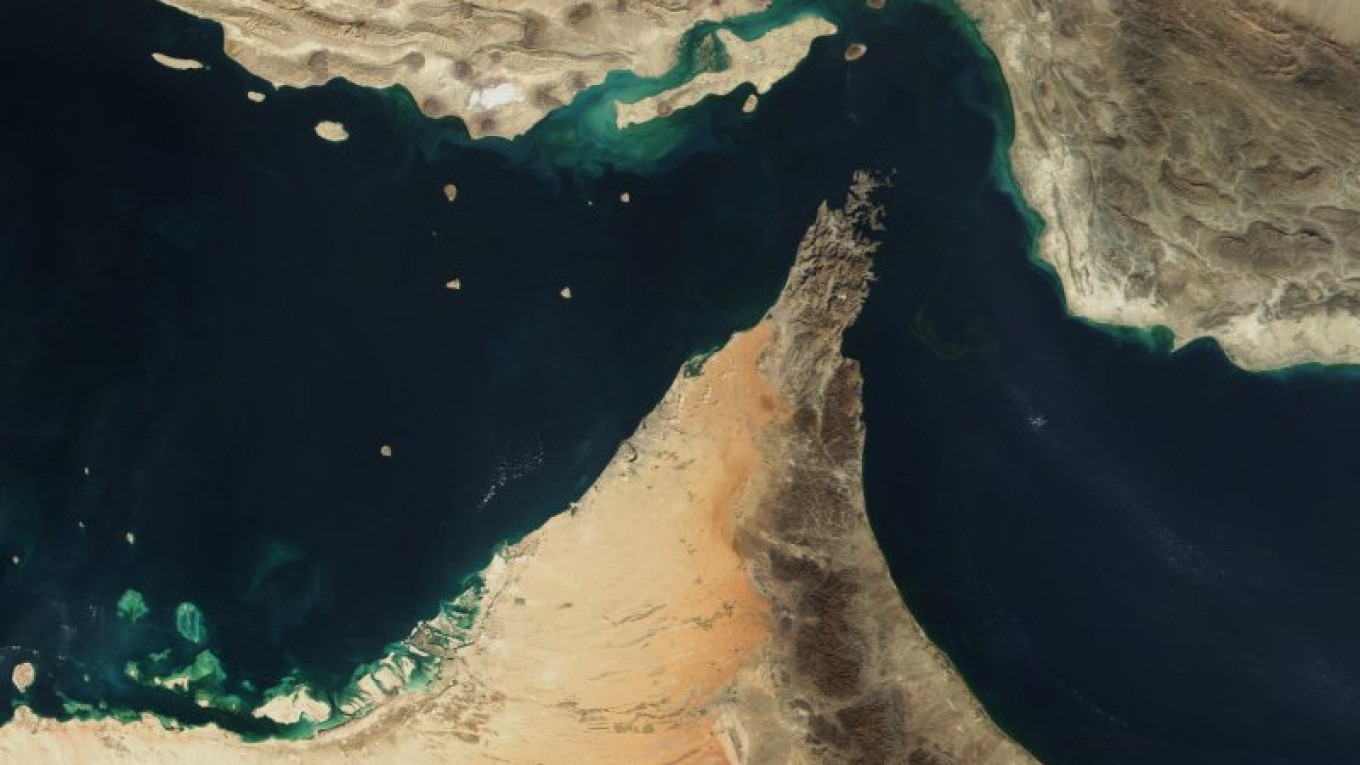
Conflicting statements from the US and Iran regarding the potential resumption of diplomatic negotiations have emerged, while ongoing tensions in the Strait of Hormuz have once again brought global energy concerns to the fore.
Addressing these developments on the Harici live broadcast of Strategic Compass, international relations scholar Prof. Dr. Hasan Unal and Alptekin Dursunoglu, journalist, author, and Editor-in-Chief of Yakin Dogu Haber (YDH), evaluated the internal, regional, and strategic dimensions of the conflict. The discussion focused on the shift in Iran’s military doctrine, the political strain within the US administration, the economic vulnerability of Gulf monarchies, and the broader realignments reshaping Middle Eastern geopolitics.
Why did Trump step back from a decision to launch a new attack on Iran?
Opening the discussion, Prof. Dr. Hasan Unal offered a sharp critique of the political rhetoric originating from Washington, contrasting executive declarations with the tactical outcomes on the ground. Unal argued that public statements made by former US President Donald Trump increasingly lack analytical consistency, complicating efforts to decipher official US strategy.
“He has reached a point where he tells more lies than the daily meowing of stray cats,” Unal remarked during the broadcast. “I do not know which part of his statements we ought to analyze, but if we evaluate him within a broader framework, it becomes possible to reach certain conclusions.”
Unal described the military confrontation between Washington and Tehran as an uneven cycle of escalation, noting that US forces continue to suffer casualties and incur immense financial costs without altering the strategic baseline. “The situation has effectively transformed into something like a defeated wrestler who never grows tired of wrestling; America repeatedly approaches and confronts Iran, yet the outcome is obvious from the outset,” Unal stated. He added that American military personnel are being deployed into conflict zones where national interests remain obscure: “I am certain that American soldiers there largely believe they have no personal interests at stake… and that it serves at most the interests of Israel.”
Dursunoglu contextualised the current phase of hostilities as part of an extended campaign, comparing the recent clashes to a second round of a broader regional conflict following earlier engagements in 2025. He noted that despite assertive claims from Washington regarding the destruction of Iranian military infrastructure, operational continuity on the Iranian side forced a shift in US messaging.
Reflecting on official declarations from US Central Command (CENTCOM) and executive statements following intensive strikes, Unal highlighted the internal contradictions in Washington’s narrative: “Trump claimed Iranian naval forces were sent to the bottom of the sea, the air force beyond the atmosphere, and the ground forces deep into the magma. Yet suddenly he declared, ‘I have forgiven Iran,’ while CENTCOM figures suggested they had reached ‘target saturation’—as if there was simply nothing left to hit.”
Is Iran insisting on its conditions regarding the Strait of Hormuz?
A central focus of the analysis was Iran’s response mechanism following the breakdown of initial ceasefire frameworks. Dursunoglu highlighted a significant structural transition in Tehran’s military posture, moving from traditional reactive containment to proactive deterrence across multiple theatres.
Dursunoglu pointed out that during the escalation, Iran did not restrict its target matrix to immediate points of contact. Instead, Iranian forces conducted strikes against US installations and logistical networks across the region, including facilities in Bahrain, Kuwait, Jordan, and Oman.
“Iran’s traditional defence doctrine was defensive and based on proportional retaliation,” Dursunoglu explained. “However, after the US halted strikes, Iran proceeded to target assets in Jordan and Kuwait without immediate prior attacks on those specific vectors. This indicates that Iran has begun executing preemptive strikes, effectively adapting its strategic posture.”
Unal underscored the severity of these strikes on regional logistics, noting that Iranian counter-strikes targeted the port of Aqaba and airport infrastructure in Jordan, alongside American operational facilities in the Gulf. “According to the accounts, Iranian forces began hitting American installations in Gulf states and Jordan within minutes of initial strikes, effectively neutralizing the operational depth the US relied upon,” Unal noted.
The operational status of the Strait of Hormuz remains a decisive point of leverage. Under previous draft frameworks negotiated through Omani mediation, administrative oversight of maritime traffic through the Strait was slated to transition to Iran in coordination with regional littoral states. However, subsequent US efforts to establish an independent naval corridor along the Omani coast triggered a fresh wave of Iranian interdictions.
Dursunoglu outlined the ongoing negotiations surrounding the maritime passage, noting that attempts to bypass Iranian oversight proved unviable for commercial shipping. Under the latest proposals under discussion via Omani channels, incoming maritime traffic into the Gulf would pass through Iranian-designated corridors under Iranian authorization, while outgoing traffic would proceed along Omani coastal waters following notification and approval.
“If an agreement is finalized on these terms, it represents an explicit recognition of Iran’s control over the Strait of Hormuz by the US regime,” Dursunoglu said. He noted that while initial terms provided free passage during a temporary 60-day window, long-term frameworks anticipate structured administrative mechanisms for commercial vessels. Unal added: “Whether designated as transit fees, environmental charges, or security provisions, formalizing maritime oversight secures a permanent structural advantage for Tehran.”
Under what conditions will negotiations begin?
The economic ramifications of maritime disruption have also altered the calculations of Gulf export nations. Following attempts by Saudi Arabia to engage Ansar Allah (Houthi) forces in Yemen, retaliatory actions against critical infrastructure—including the Yanbu crude oil pipeline on the Red Sea—severely constrained alternative export routes.
“By drawing Yemeni forces back into active conflict, Saudi Arabia inadvertently placed its secondary export avenues under direct fire,” Unal observed. “The vulnerability of the Yanbu pipeline demonstrates that reliance on the Gulf cannot be bypassed easily, effectively increasing regional dependence on stability within the Strait.”
Beyond the maritime domain, the broadcast addressed heavy Iranian military engagements in northern Iraq, targeting opposition groups including the Kurdistan Democratic Party of Iran (KDPI), Komala, Pak, and Free Life Party of Kurdistan (PJAK) along the Erbil-Suleimaniyeh axis.
Dursunoglu and Unal noted that cross-border strikes destroyed substantial ammunition depots established near border regions, followed by reported ground operations conducted by specialized Iranian units.
“Iranian special forces executed targeted ground operations across the border,” Dursunoglu stated, pointing to secondary explosions captured in operational footage as evidence of extensive pre-positioned armaments.
Unal noted that these operations underscored the strategic limitations of non-state actors aligned with Washington: “The expectations placed on armed factions in northern Iraq collapsed when confronted with direct military pressure. The narrative that these groups could serve as an internal wedge against Tehran proved to be a costly miscalculation for US planners.”
Reports indicating the start of a repositioning of US personnel and heavy military equipment from bases in Iraq and the Gulf toward Jordan and Israel were identified as a direct consequence of this vulnerability. “US forces are consolidating toward Jordan and Israel because their facilities in Bahrain and Kuwait sustained structural operational damage,” Dursunoglu observed. “When a state can no longer defend its forward command centers—such as the 5th Fleet infrastructure in Bahrain—it is forced to retreat to secondary defensive perimeters.”
How effective is the pressure from Gulf countries for negotiations?
Concluding the evaluation, Unal and Dursunoglu examined the broader diplomatic landscape, focusing on security dialogues among regional powers, including Turkey, Egypt, Saudi Arabia, and Pakistan. Both analysts agreed that any sustainable security architecture in the Middle East must incorporate Iran rather than seek its exclusion.
“How can you construct a new regional order by excluding the very nation that demonstrated the capacity to neutralize external military dominance?” Dursunoglu questioned. “An architecture that relies on Western guarantees or Israeli alignment fails to address the underlying security dynamics of the region.”
Unal reflected on the historical trajectories of Turkish foreign policy, criticizing past ideological approaches that fuelled regional fragmentation and sect-based antagonisms. He noted that realpolitik dictates close functional coordination between Ankara and Tehran despite historical differences.
“Iran’s resistance ultimately prevented the imposition of a security framework dictated entirely by external actors,” Unal concluded. “Responsible analysis requires recognizing that stability in the Middle East cannot be achieved through foreign intervention or regional fragmentation, but through direct, autonomous security coordination among the region’s core nations.”

What is scale in foreign policy? How is success measured in foreign policy?

Musk boosts Republican midterm funding despite pledge to curb spending

IMF warns global economy is nearing the limits of its resilience

NATO unveils 32-nation defence strategy to counter adversaries

Germany detains two Turkish suspects over Polish Starlink arson
-

 Europe2 weeks ago
German interior ministers drop unanimity rule to counter AfD veto
-
 Diplomacy2 weeks ago
US Ambassador Guilfoyle faces backlash in Greece over alleged remarks
-
 Europe2 weeks ago
Key European allies excluded from US-led NATO meeting in Poland
-
 Diplomacy2 weeks ago
While the West breeds crises, Eurasia weaves peace and development, says Prof. Zhang Weiwei
-
 Middle East2 weeks ago
Netanyahu holds secret UAE talks with Saudi Arabia and Arab officials
-
 Europe2 weeks ago
EU drafts plan to curb national vetoes in radical expansion reform
-

 America2 weeks ago
Canada diversifies oil and gas exports away from US
-

 Diplomacy2 weeks ago
The European Union’s peace project has collapsed, MEP von der Schulenburg says
