
America
US controls $13 billion in Venezuelan oil revenues with little transparency, raising congressional concerns

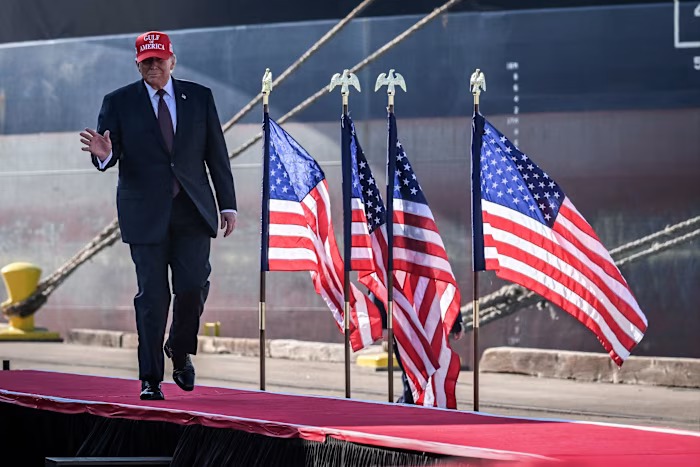
The Trump administration has generated more than $13 billion in revenue from Venezuelan oil sales this year but has provided almost no public explanation regarding the final destination or usage of these funds.
The Financial Times (FT) calculated Venezuela’s estimated oil revenues using data on crude oil shipments from the country since January, compiled by the shipping and data analytics platform Kpler.
To determine these figures, the FT utilized price assessments from the pricing agency Argus Media for Merey crude—an extra-heavy grade produced in Venezuela—as well as Boscan and Hamaca, two less common Venezuelan crude grades.
The pricing data does not cover all varieties of Venezuelan petroleum and begins only from February onward.
The value of the barrels shipped since January for which direct price estimates are available currently stands at approximately $11.5 billion.
However, based on historical pricing trends, it is estimated that the barrels without established price assessments bring the total figure to more than $13 billion.
The Venezuelan government established a website to track the revenue generated from US-managed oil sales, but the site currently contains only a single entry: a $300 million transfer completed in March.
The US seized control of Venezuela’s oil exports and suspended certain sanctions in January, after removing Nicolás Maduro and installing Vice President Delcy Rodríguez as leader.
Oil revenues account for approximately one-quarter of Venezuela’s GDP. The easing of sanctions was widely expected to provide a significant boost to an economy that was in crisis even before the devastating earthquakes that struck the country last month.
However, six months after the US seized control of the funds, economists point out that evidence of an economic recovery in Venezuela remains relatively weak.
This lack of recovery is seen as a potential sign that Washington is not returning the entirety of the revenues to Caracas.
Washington has offered contradictory explanations regarding what it has done with the money, ranging from a presidential executive order describing its role as maintaining “calm” to statements by President Donald Trump asserting that the US has “made a lot of money” from Venezuelan oil.
US lawmakers from both political parties have begun pressing the administration to clarify where the money has gone and what measures are in place to prevent corruption during its allocation.
Joaquin Castro, a prominent Democratic Congressman, told the FT that Congress has been “kept in the dark” on the matter.
“Trump’s intervention in Venezuela has been about oil, power, and corruption from the very beginning; billions of dollars in Venezuelan oil revenue are being controlled by the Trump administration without transparency or safeguards,” Castro said.
During a hearing on Tuesday, Representative María Elvira Salazar, a Republican from South Florida, called for the public release of reports on these funds, emphasizing “the importance of transparency regarding where the money is going.”
The fate of Venezuela’s oil revenues has become an even more urgent issue following two devastating earthquakes on June 24. The UN estimates that the cost of damage to buildings and infrastructure alone will reach $37 billion.
Benjamin Gedan, a former senior official responsible for Latin America at the White House during the Obama administration, said that Democrats could investigate the oil funds if they win control of one or both chambers of Congress in November.
“This would be a really juicy target. You can anticipate a lot of subpoenas and requests for testimony regarding the distribution of Venezuelan oil revenues,” Gedan said.
Shortly after the January intervention, President Trump stated that the revenues would be under his control. Since then, the administration has issued a series of conflicting statements on how the oil funds might be utilized.
The initial executive order issued in January stated that the funds belong to the government of Venezuela and would be held in US government accounts in a “fiduciary and official capacity.”
Conversely, the US Department of Energy stated that the funds would be distributed “for the benefit of the American people and the Venezuelan people.”
In June, Trump stated that the US had recovered the cost of its military operation in Venezuela “28 times over” through oil, adding that the US “also made a lot of money.”
“It took 48 minutes to win that war. We brought out millions of barrels of oil,” Trump said.
In April, senior State Department official Michael Kozak said that approximately $3 billion in oil revenues had been sent to Venezuela and that the accounting firm KPMG was auditing the bank accounts.
Kozak stated that the administration would submit quarterly reports on the funds, but Democrats on the Foreign Affairs Committee say they have received no information since then.
US officials indicate that control of the oil funds is being used to exert pressure on Rodríguez, who currently governs the country partly under instructions from Washington.
During a congressional hearing last Wednesday, Kozak said: “It is their money but… they need our permission.”
The official noted that funds have been released to cover expenses such as public sector salaries and oil industry equipment.
The State Department stated that under this system, “billions of dollars have been injected into the Venezuelan economy,” adding that “financial monitoring continues to ensure the funds benefit the Venezuelan people.”
Given that Venezuela was forced to sell its oil at a steep discount on international markets to bypass US sanctions until January, many economists expected the country to experience a robust economic recovery this year. The government introduced a new resource law to encourage oil and gas investment, and production has increased this year.
However, Francisco Rodríguez, a Venezuelan economist at the Center for Economic and Policy Research in Washington, pointed out that the official first-quarter growth rate was 2.5%, representing the lowest level in five years.
“Venezuela likely did not grow faster in the first quarter, despite rising oil revenues, because the US did not transfer all of the increased oil revenues to the Venezuelan government,” Rodríguez said.
José Guerra, a Venezuelan economist and former opposition lawmaker, said that oil revenues should be significantly higher than in recent years. “Where is the money? There is no transparency, and the US government is not giving us information,” he said.
Alejandro Grisanti, director of Ecoanalítica, a consultancy specializing in Venezuela, noted that there have been signs of large-scale dollar inflows over the past two months.
Grisanti expected the economy to accelerate in the fourth quarter of the year, but said the earthquake would likely delay this recovery until the middle of next year.
Since the earthquake, Rodríguez has been lobbying for access to funds held abroad, including assets held by the IMF and Venezuelan gold held in the custody of the Bank of England pending the outcome of a lawsuit.
The US has set aside a $386 million aid package for disaster relief and has deployed hundreds of troops to Venezuela to assist with relief efforts.
John Barrett, the US Chargé d’Affaires in Caracas, stated this month that money from the oil revenue accounts has also been “allocated for this specific reconstruction effort,” though he did not specify the amount.
US officials noted that the estimated oil revenue figure does not include revenues from mining exports, a portion of which has also been collected by the government.







Republican backing from US President Donald Trump’s own party for the war he is waging against Iran is declining swiftly.
According to a CNN/SSRS poll published on 22 September, the proportion of Republicans who approve of Trump’s handling of the war dropped from 73% in March to 60% in September.
A majority of Republicans under the age of 45, as well as Republican voters outside the MAGA movement, no longer approve of Trump’s war policy.
Three-quarters of Americans believe that the Iran war is not worth its human and financial toll.
Regarding the war, which has been ongoing for roughly seven months, 78% of respondents stated that Trump is not making sufficient efforts to end the conflict. Approximately two out of every three people disagreed with the view that the US is winning the war.
Approval of Trump’s overall foreign policy stewardship remained at just 29%. This marked the lowest level recorded by CNN across Trump’s two presidential terms.
Share of those viewing Israel as an ‘enemy’ at record level
The proportion of respondents defining Israel as an enemy of the US rose to its highest point in CNN surveys conducted since 2000. This figure reached approximately double the level recorded in March 2025.
In a separate Reuters/Ipsos survey conducted among 1,277 adults, Trump’s overall approval rating slipped within a single week from 35% to 32%. This represented the lowest approval rating measured throughout Trump’s political career.
Discontent among Republican voters over the cost of living is also mounting. The proportion approving of Trump’s performance in this area stood at merely 17%.
While the cost of living remains the paramount issue for voters ahead of the 3 November midterm elections, the sharp surge in fuel prices since the onset of the war has exacerbated unease within the Republican base.
82% believe the war will be prolonged
Earlier this month, Trump said the war would conclude “right after” the elections. However, 82% of poll respondents believe the fighting will continue for a prolonged period.
Tehran, meanwhile, has shown no sign of backing down in the face of US military and economic pressure.
In a report published on 10 September, The Wall Street Journal revealed that US Vice-President JD Vance, Secretary of State Marco Rubio, and other senior officials had warned Trump in private discussions.
Officials reportedly said that Iran could continue resisting Washington’s military and economic pressure and withstand this coercion even beyond January 2029, when Trump’s term in office concludes.

In the debate surrounding the dangers posed by artificial intelligence, almost everyone is attempting to market a product.
While the mainstream media portrays artificial intelligence as an imminent mass extinction event, US President Donald Trump frames the issue within the context of a new Cold War with China, arguing that the US cannot afford to slow down.
In his analysis, journalist Ken Klippenstein emphasizes that Silicon Valley elites profit directly from this intense attention.
A new generation of the tech class is occupying the public mind with various doomsday scenarios, ranging from bioterrorism to machines taking over the world.
While this dynamic transforms artificial intelligence into a “national security” issue, it elevates the technology to the level of nuclear weapons and removes it from public oversight.
The intelligence community thinks the A.I. apocalypse narrative is BShttps://t.co/DpyAIXx4ob
— Ken Klippenstein (@kenklippenstein) September 15, 2026
Although not immune to the tendency to exaggerate threats, reports from US intelligence agencies paint a picture far removed from the hysterical tone in the media.
The US intelligence community assesses that artificial intelligence merely magnifies risks that already exist.
Sensational headlines run by legacy media are fueled by social media figures who spread claims of human extinction to millions of followers. In this way, fears themed around “existential risk” or “doomsday” take root in the public imagination.
On the other side of the coin are those who oppose disaster narratives while pursuing their own commercial interests.
Prominent figures in this camp include Yann LeCun, former chief AI scientist at Meta, and Andrew Ng, co-founder of Google Brain and head of AI Fund.
In October 2023, LeCun accused OpenAI chief Sam Altman, Google DeepMind chief Demis Hassabis, and Anthropic chief Dario Amodei of running a “massive lobbying effort” designed to tilt the regulatory landscape in their own favor.
LeCun warned that if these fear politics succeed, artificial intelligence will be monopolized by a small number of corporations.
Ng, for his part, described the claim that artificial intelligence would destroy humanity as “mind-bogglingly stupid”, arguing that large corporations are stoking extinction fears to avoid competing with open-source models.
Although these criticisms carry truth regarding corporate aims, the conflicting interests of both sides remain striking.
LeCun and Ng advocate open-source artificial intelligence models, whereas Anthropic and OpenAI favor proprietary models that keep their source code secret and lease access to users.
While major players producing proprietary models possess the capacity to comply with prospective federal licensing rules, open-source enterprises stand to be damaged by such statutory mandates. The common ground shared by doom-mongers and deregulation advocates is their lack of concern for the actual risks artificial intelligence generates.
The US intelligence community provides a more measured framework regarding tangible dangers.
In the Annual Threat Assessment, which catalogues China’s military strength, Russian influence operations, and drug cartels, the threats posed by artificial intelligence are summarized in just three items:
“It is essential to ensure that the use of machines and AI remains under human control.”
“These applications also carry risks that require careful human engineering to properly mitigate the risk of AI autonomy before they are widely deployed.”
“Emerging technologies such as AI and quantum computing are expected to have significant implications for national security.”
The official assessment by the 18 agencies comprising US intelligence on the perils of artificial intelligence remains limited to these statements. The reports contain no determinations concerning superintelligence, the annihilation of humanity, or an uprising of machines.
The US Department of Homeland Security Threat Assessment notes that artificial intelligence merely introduces fresh layers of complexity to existing threats. The department outlines five primary issues:
Disinformation, fabricated video or audio recordings (deepfakes), and election interference;
Cyber operations and financial crime;
The exploitation of this technology by violent extremists, alongside radicalization;
The proliferation of chemical and biological knowledge;
The circumvention of AI security controls and the poisoning of training data.
All of these risks were familiar prior to the emergence of artificial intelligence. AI-enabled disinformation permits legacy propaganda methods to be deployed with greater speed and intensity.
Cyber operations, financial crime, and elements of radicalization have likewise ranked as familiar subjects for many years.
Concerns regarding biological and chemical threats date back to the Bill Clinton administration, while the fifth item stems entirely from humans tampering with AI security controls.
The Global Catastrophic Risks Assessment report by the Pentagon-funded RAND Corporation think tank defines artificial intelligence as an “entropy source”.
The report states:
“AI can be thought of as adding entropy and chaos to thorny problems humans face. Chaos does not require the development of superintelligent or supercapable AI; it is possible with current and near-term AI capabilities.”
Another research study conducted within RAND identifies genetically engineered pathogens, geoengineering, and nuclear war as three plausible pathways to human extinction.
However, numerous physical and operational constraints prevent artificial intelligence from triggering these catastrophes.
In a follow-up report investigating whether large language models facilitate the planning of a mass biological attack, RAND Corp. researchers identified no statistically significant difference between plans formulated with AI assistance and those produced independently.
The US National Academy of Sciences similarly notes that the primary barrier to bioterrorism is not an absence of access to information.
The decisive bottleneck lies in DNA synthesis screening, hands-on laboratory skill, culturing, formulation, and aerosolization: procedures that all demand human intervention, carry high costs, and remain prone to failure.
Having no commercial product to release or corporate shares to protect, official analysts record with balanced language that artificial intelligence does nothing beyond compounding the scale and velocity of current problems.
Observing that all factions resort to exaggerated rhetoric to capture attention, Klippenstein points out that in the debate over whether a chatbot will transform into a god, the major actors turn a profit while foisting the cost onto the public.
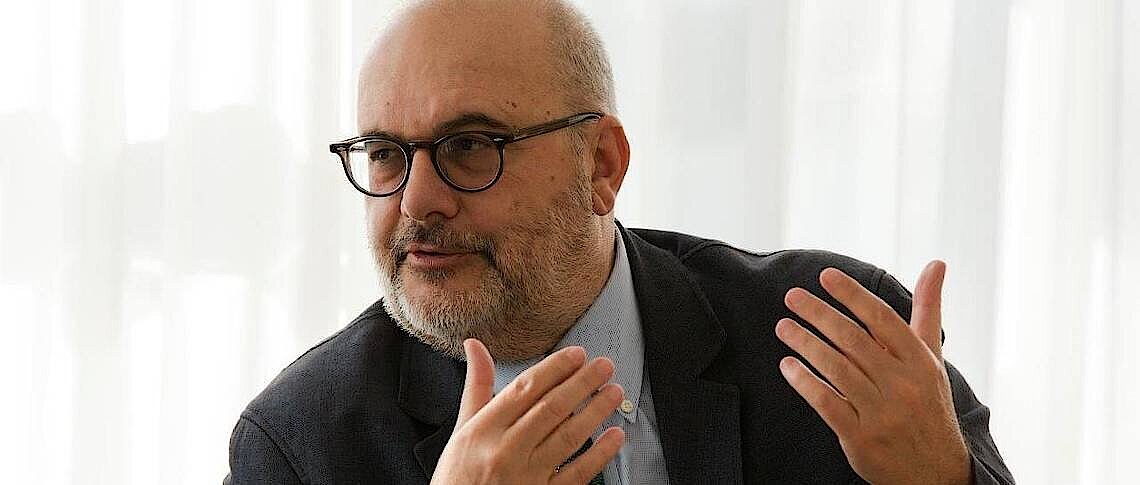
Branko Milanovic, who served as a lead economist in the World Bank Research Department for nearly two decades and currently holds posts as a research professor at the Graduate Center of the City University of New York and a visiting professor at the London School of Economics, gave an interview to Jorge Fontevecchia, co-founder of the Argentine newspaper Perfil.
Milanovic, the author of “The Great Global Transformation”, noted that the era of neoliberal globalisation has ended, giving way to a new order that is liberal internally but mercantilist externally.
Assessing the upheavals in global politics and economics during a visit to Buenos Aires, Milanovic stated that leaders such as Donald Trump, Xi Jinping, and Vladimir Putin came to power by harnessing societal backlashes that were already present.
Emphasising that the primary conflict in the contemporary world lies between monetary power and political authority, the veteran economist warned that if capital owners prevail, humanity could face a scenario reminiscent of the Roman Republic, where the masses were placated solely with bread and circuses while oligarchs mobilised the populace against one another.
When Fontevecchia observed that the title of his latest book evokes economic historian Karl Polanyi’s classic 1944 work, Milanovic explained the societal reaction against the excessive expansion of market relations:
“The title of my book does not recall Polanyi by accident. I have read Polanyi’s work three times, and my most recent reading took place about a year before I began writing my own book. Developments witnessed on a global scale showed me this connection clearly. Polanyi addressed the Industrial Revolution in England, the commercialisation of human relations that were not previously part of market logic, and society’s protective counter-response to this state of affairs. Neoliberal globalisation operated through a very similar process; it spread the market mechanism across the entire globe, including China, India, and Africa. At this juncture, we are at the end of an era. Societal resistance is mounting against this hyper-commercialisation. This does not mean we will return to a different system, but it clearly demonstrates that political balances have transformed and globalisation is retreating, at least on ideological terrain.”
Addressing the long-term rhythm of economic fluctuations, Fontevecchia recalled Nikolai Kondratiev’s cycle theories and asked about the historical placement of the current rupture.
Milanovic pointed out that an ideological cycle has reached its conclusion, rather than standard economic fluctuations:
“I am not speaking of conventional cycles in the classical sense where the economy expands and then enters a slump. The issue I mean is the completion of the era in which domestic as well as foreign policy was shaped ideologically under the guidance of neoliberalism. This model meant price flexibility, tax cuts, and deregulation domestically. Internationally, it rested on the free movement of capital, goods, technology, and to a certain degree, labour. Today, what is preserved is domestic-level freedom; on the international plane, we are transitioning to a new mercantilist phase. This is the primary reason I chose ‘National Mercantilist Liberalism’ as the subtitle for my book.”
Milanovic stated that with the rise of Asia, the gap in income, technology, and productivity that opened in favour of the West two hundred years ago as a result of the Industrial Revolution has begun to close.
Evaluating the new balance of power centred on China and the US, the economist stated:
“My book essentially centres on the axis between China and the US. China has transformed into an immense economic powerhouse that accounts for 23% of global gross domestic product in purchasing power parity terms, and 17% at market exchange rates. In the early nineties, no one foresaw that Beijing would grow to this extent. In the 1980s, Washington wanted to establish close relations with China, which it viewed as a counterweight to the Soviet Union and as a market promising immense profits economically. Indeed, a narrative was put into circulation suggesting that as a middle class developed in the country, the regime would automatically evolve into a democracy, as seen in the examples of South Korea or Taiwan. Personally, I do not believe people truly believed this, but at least they said so. Over the past decade, China has acquired the identity of a formidable global competitor. The shift of manufacturing to Asia and the saturation of markets with Chinese goods shook the middle class in wealthy nations. This phenomenon triggered deep political convulsions first in the US, and now in Germany.”
Responding to Fontevecchia’s question as to why global trade still revolves around the US dollar and why international financial institutions remain under Western control even though China has become the world’s largest manufacturer, Milanovic pointed to historical lags:
“Financial and military power still rests predominantly in the hands of the US. While the American military has bases in eighty countries, China has only a single base in Djibouti. When we look at history, a long time lag elapses between a country taking the lead in production and becoming a financial centre. The US surpassed the British economy around 1880 or 1890; yet London retained its status as the centre until the end of the interwar period. New York’s definitive primacy was certified only after 1944. Consequently, even if China is the power producing the most industrial goods, expecting finance to shift instantly to Shanghai or Hong Kong is unrealistic. Furthermore, the yuan does not possess the character of a currency with full freedom of capital movements. Roughly 90% of global transactions are still conducted in dollars. Even so, countries continue their search to diversify reserves and achieve independence from the dollar by deploying crypto assets or local currencies.”
Addressing the current state of the famous elephant curve depicting global income distribution, Milanovic recounted the delayed political repercussions of the 1988 to 2008 trajectory:
“That chart became almost like a band’s hit song that audiences constantly demand. Data between 1988 and 2008 documented that the top 1% of the global population and the Asian middle classes centred in China achieved massive income gains, whereas the middle class and workers in the West stagnated. There is a time lag between economic reality and its political consequences. Indeed, the bill for that era was reflected at the ballot box in 2016 with the Brexit vote and Donald Trump winning his first election. Today, however, the shape of the curve has transformed. Following the 2008 financial collapse, income growth for the top 1% in the West lost its former momentum; it took five years for American elites to recoup their losses. On the other hand, China climbed from the middle tiers of global income distribution towards the upper brackets.”
Milanovic confirmed the parallel between the shrinking income disparity among citizens worldwide and the rise of anti-establishment movements in wealthy countries:
“When we examine the two-hundred-year record from 1820 to 2023, the only era in which global income inequality declined continuously is the period of neoliberal globalisation from the 1990s to the present. The achievement of high growth rates by countries such as China, India, Vietnam, and Indonesia, which house nearly half the world’s population, narrowed the disparity on a global scale. However, global inequality lacks a direct political counterpart; there is no single world government to hold accountable. By contrast, the gap between rich and poor widened within the US, within the United Kingdom, or within China itself. It is precisely this polarization at the national level that people react to politically and that alters their voting preferences. Even if the world attaining a fairer income distribution is welcomed in theory, it does not suffice to offset the political destruction wrought by inequality within national borders.”
Sharing his projections for the coming quarter-century, Milanovic stated that assuming Asian countries grow two percentage points faster than members of the Organisation for Economic Co-operation and Development, an interesting demographic balance will emerge:
“My calculations show clearly. A generation from now, roughly as many wealthy Chinese as wealthy Americans will feature among the world’s affluent class. The weight of Asians in the top 10% or 20% will increase while the presence of Westerners will diminish. This development will create a serious loss of self-confidence for the Western world, because for the past two centuries Westerners sat uncontested at the top of the prosperity pyramid. When we look at the Eurasian landmass, we can anticipate that while Western Europe on the Atlantic coast and China on the Pacific coast grow wealthier, the belt comprising Russia and Central Asia in between will remain a sparsely populated and relatively low-income corridor.”
Evaluating the decline of Western countries in the Programme for International Student Assessment results and the success of East Asia, Milanovic said that screen addiction, pandemic lockdowns, and the weakening of critical thinking faculties played a role in the loss of educational quality.
Milanovic stated that the substitution of mental effort by advancing artificial intelligence tools could worsen this picture further.
Explaining the dynamics of the national mercantilist liberalism regime that replaced neoliberalism, Milanovic outlined how classical liberal ideals were abandoned:
“In classical liberalism, harmony existed between domestic policy and foreign trade. State intervention was kept to a minimum, incentives were provided through low taxes, and the profit motive was deemed valid both domestically and across borders. Foreigners and citizens were subject to similar treatment on the economic plane. In the current model, market freedom is preserved only within the country; in foreign relations, we are returning to the zero-sum mercantilist policies of the interwar period. Even if the ratio of trade volume to national income does not drop immediately, coercive measures such as investment bans, technology transfer barriers, and barring foreign firms from stock exchanges are direct products of this new mindset. The protectionist approaches of German economist Friedrich List are back on stage. Countries are now erecting walls on the grounds of protecting their industries. Regional free trade blocs like Mercosur for South America may endure, but the global market is fragmenting entirely. The approach the West terms ‘friendshoring’ essentially represents the logic of ‘we will not invest in China, but we will go to our ally Vietnam’.”
Pointing out that this dual structure contains serious theoretical incoherence, Milanovic continued:
“Behind neoliberalism lay decades of intellectual preparation by figures such as the Mont Pelerin Society, Hayek, and Mises. Today, no coherent doctrine exists. There is no systematic theoretical framework explaining Trump’s tariffs or Europe’s restrictions directed at China. We are inside an ambiguous fog. We are traversing an interim period governed by pragmatic, day-to-day decisions where market rules operate domestically while protectionism is imposed externally.”
Commenting on the position of Argentine President Javier Milei, Milanovic highlighted the contradiction between free-market radicalism and Trump-style protectionism:
“Milei stands beyond even the line of Margaret Thatcher and Ronald Reagan. Libertarianism is the most extreme form of neoliberalism. Nevertheless, similarities exist between Milei and Trump in terms of transforming politics. We are witnessing an era worldwide where traditional parties and classical ideologies are dissolving. Communism has vanished, and what social democracy represents has become ambiguous. What remains are anti-immigrant movements lacking a defined philosophical backbone. As I understand it, Milei symbolises the tendency to strip politics of its traditional forms. Trump likewise maintains no classical ties to his party; his Republican identity amounts to a mere formal cover.”
Examining the crisis of centre-left movements considered the architects of the neoliberal era, Milanovic explained that social democracy had lost its base:
“In the West, leaders such as Tony Blair, Bill Clinton, and Gerhard Schroeder turned social democracy into part of the neoliberal project. Clinton cut social welfare, Blair followed the same path, and Schroeder transformed employment contracts in Germany to the detriment of workers. Overwhelmed by income disparity, declining social transfers, and mounting precarity, working classes seeking actors to defend their interests turned to right-wing populist movements. Even if your income remains the same on paper, you become unsettled if you do not feel your future is secure. The left’s inability to offer a tangible alternative to this discontented populace paved the way for Marine Le Pen in France or the far right in Germany to gain strength. In Argentina, a similar exhaustion underpins poor strata turning at the ballot box to Milei’s party instead of the traditional Peronist movement.”
Pinpointing the 2008 global financial crisis as the origin of the rupture, Milanovic expressed how the system lost its legitimacy:
“The year 2008 created a major awakening in society. Millions lost their jobs; banks foreclosed on the homes of hundreds of thousands of families in the US and Spain. While the giant financial institutions that plunged the system into crisis were bailed out with public funds, ordinary citizens unable to pay mortgage debts were abandoned to their fate. This experience showed everyone whose interests the rules served. The final step of the political transformation was taken when Trump challenged the Republican Party elites in 2015. I recall he was openly mocked in the US media. While other candidates carried pages of tax calculations and technical briefs, Trump took the stage without briefing binders. When journalists asked what he would say, he replied: ‘The American working class is falling behind every day, coastal elites are taking their money, and China is benefiting from this; that is what I will tell people.’ Ultimately, he defeated first his party’s establishment figures and then Hillary Clinton to march to power.”
Stating that he discusses the infiltration of economic relations into daily life and the moral erosion caused by consumer culture in the final chapter of his book, Milanovic drew upon philosophical concepts:
“Every sphere of our lives has become commercialised. Tasks previously resolved within the family, from cooking at home to caring for the elderly, children, and pets, have turned into commercial sectors. People have begun measuring every action through the logic of monetary return. This feeds an insatiable greed. Plato defined this state as ‘pleonexia’, an irrational lust for gain that knows no bounds. Karl Marx termed this ‘abstract hedonism’. Abstract hedonism is the drive to possess even things you cannot consume or enjoy, purely for the sake of ownership. Corporations constantly want to sell people more, producing an endless dissatisfaction at the individual level.”
Responding to Fontevecchia’s question regarding the vision of classical economists, Milanovic recalled that Adam Smith valued the balance of power as much as the free market:
“Smith was not a blind champion of the market as commonly assumed; he vehemently opposed large monopolies and entities such as the East India Company using the state for their own interests. In ‘The Wealth of Nations’, he states that free trade would close the technological and military distance between nations, and that mutual fear would ensure global peace once the parties became equal. Smith thought commerce would establish peace by producing a balanced distribution of military power. Today, trade competition has transformed directly into an instrument of supremacy and coercion.”
Emphasising that end-of-history theses have lost validity, Milanovic stated that the current national mercantilist regime is also not permanent:
“In my lifetime I have witnessed the unraveling of two major ideological systems. The first was the dissolution of the Soviet system, and the second is the exhaustion of neoliberal globalisation that we are experiencing today. Francis Fukuyama’s end of history concept, formulated with reference to Hegel, does not reflect reality. The current mercantilist phase may last perhaps twenty, perhaps forty years. Thereafter, central planning models directed by artificial intelligence or other political structures we do not yet know may emerge. As power balances shift, humanity will search for new institutional patterns.”
Finding it analytically deficient to group Trump, Xi, and Putin together under a single label, Milanovic noted that all three leaders drew strength from resentment over elites accumulating excessive power:
“Uniting these three leaders solely under the autocrat label is to oversimplify the issue. Their common ground is the ability to use the unease generated by the neoliberal era as a stepping stone to power. In China, during the era of Hu Jintao, wealthy capitalists began infiltrating Communist Party mechanisms and decision-making processes directly. When Xi Jinping assumed leadership, he broke this influence by relying on the bureaucracy. The Chinese model permits becoming wealthy, but draws a strict line against attempts to buy political power. In Russia, Putin ended the oligarchic domination of the Boris Yeltsin era, tying the distribution of wealth directly to the supervision of security agencies and the state apparatus. Trump similarly converted grievances against American globalist elites into political power.”
Evaluating Perfil’s observation that tech billionaires like Elon Musk and Peter Thiel aspire to assume financial, political, and institutional roles, Milanovic concluded:
“Capital circles desire power to be concentrated directly in their own hands. They believe all societal problems can be resolved through technological or economic instruments. Yet distributing minimum stipends for mere survival to vast unemployed masses does not provide a solution; people seek meaning and purpose in their lives. If these plutocrats overcome the state apparatus and establish direct dominance, the world will be dragged into the conditions of the late Roman Republic. Masses of whom 30% are unemployed, minimally fed, connected to the internet, but possessing no productive purpose in life will be driven into the streets with promises of bread and circuses during power struggles waged by one oligarch against another. The primary existential struggle in today’s world is playing out between politics claiming to represent the public will and wealth owners who believe they can buy everything.”

Palestinian factions confront legitimacy crisis at Istanbul talks

The strait changes hands: How the Red Sea design collapsed into Iran’s favour

Sharaa says 7 October must not shape Israel policy on Syria

European intelligence chiefs divide over risk of Russian attack

AfD weakens CDU across state elections as Weidel offers Merz talks
-
 America1 week ago
Milanovic declares global neoliberalism dead, warns of plutocracy
-

 America2 weeks ago
Over half of Latino voters back Democrats in key US House races
-

 Asia2 weeks ago
Iran and China run secret barter network to bypass oil sanctions
-

 America2 weeks ago
Trump energy shares rose by up to $4.4m during Iran war, CNBC reports
-

 America1 week ago
Five minutes to doomsday – 4: American capitalism at the frontiers
-

 Asia1 week ago
DeepSeek engineer warns AI will lead to communism or Cyberpunk
-

 America1 week ago
Big Tech profits from AI extinction hype, Ken Klippenstein says
-

 America2 weeks ago
Researcher quits Anthropic and warns AI firms gamble with lives
