
Europe
NATO countries bordering Russia increase military spending by 32%

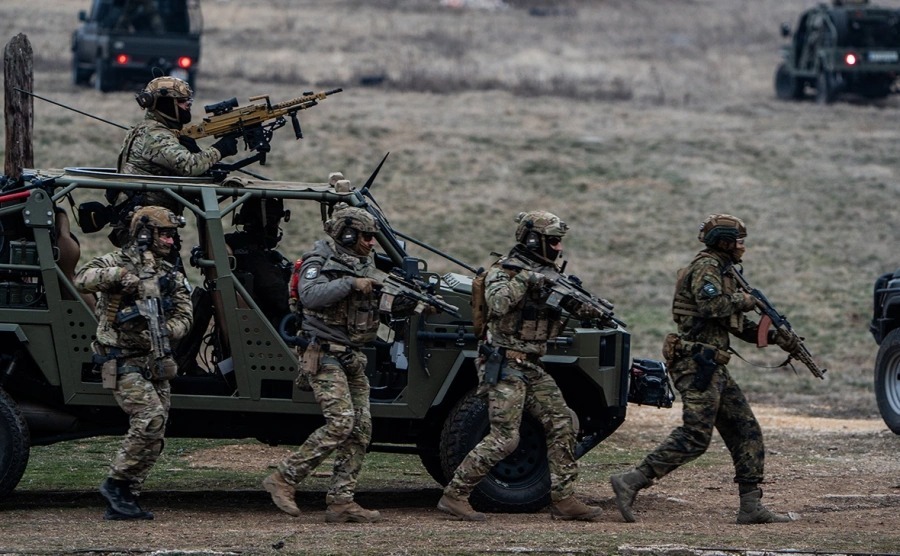
According to data from the Stockholm International Peace Research Institute (SIPRI), the military spending of the NATO “belt” countries bordering Russia increased by 32% in 2024, rising from $88.5 billion to $116.6 billion.
The share of GDP these countries allocated to defense was 1.7% in 2021, increasing to 2.1% in 2023 and reaching 2.5% in 2024. This growth rate is significantly above the alliance’s overall average, which saw spending increase by 12% in one year.
Of the 12 NATO countries extending from Türkiye to Norway with a land or sea border with Russia, Belarus, or Ukraine, 10 joined the organization after 1999 as part of the alliance’s eastward expansion waves.
Border spending increased by a third
Among these countries, Poland had the highest defense spending in 2024 at $38 billion, a 44% increase compared to 2023. Poland was followed by Türkiye, which increased its spending by 28% to $25 billion, and Sweden, with a 38% increase to $12 billion.
Ukraine’s military budget for 2024 was set at $65 billion, with two-thirds of this amount, $41 billion, covered by foreign financial aid. Including $44 billion in Western military shipments, Ukraine’s total military budget reached $109 billion (57% of its GDP).
When Ukraine is included, the total spending of this NATO “belt” reaches $226 billion. This figure is one and a half times greater than Russia’s spending, which SIPRI estimates at $149 billion for 2024.
Looking at the period since 2021, the defense budgets of NATO countries bordering Russia have risen from $47 billion to $87 billion in three years.
The increase relative to the economy was 0.8% of GDP. Poland, in particular, increased its spending from 2.2% to 4.2% of GDP, surpassing even the US in this regard and becoming the most militarized member of the alliance.
Kyiv’s total military budget, including foreign military aid, increased from $10 billion to $118 billion.
NATO’s 5% target: “Unfeasible”
At the NATO summit in June, member countries committed to allocating 5% of their GDP to defense by 2035.
This commitment requires at least 3.5% of GDP to be spent on basic armament needs, with the remaining 1.5% dedicated to infrastructure protection, civil defense, innovation, and the development of the military-industrial complex.
However, Spanish Defense Minister Margarita Robles stated on June 27 that this target is “absolutely unfeasible.”
Prime Minister Pedro Sanchez also added that a 5% expenditure would be wasteful, stating, “Spain will spend 2.1% of its GDP on defense, no more, no less.”
“There is no industry that can meet either 5% or 3.5%; neither the American nor, of course, the European industry,” Robles said. As an example, the minister pointed to the Patriot missile systems that Spain ordered in 2024 but will not receive before 2030.
In 2024, the defense spending of 14 of the 32 member countries remained below the previously agreed-upon target of 2% of GDP. Europe’s average spending rose from 1.65% of GDP in 2021 to 2.02% in 2024. US spending remained stable at 3.4% of GDP.
“Russian threat” rhetoric and spending plans
The arms buildup in Europe is escalating alongside rhetoric about the “Russian threat.” At the June summit, NATO Secretary General Mark Rutte said, “Russia is increasing and restructuring its armed forces at a surprising speed.”
“In three, five, or seven years, Russia could successfully attack us. That is why we must be prepared,” Rutte added, emphasizing the need to increase military spending.
In contrast, Russia plans to reduce its military spending over the next three years. Following the statements from NATO officials in June, Russian President Vladimir Putin remarked, “Everyone [in the government] is thinking in this direction. Europe, on the other hand, is thinking about how to increase its spending. So, who is preparing for aggressive actions? Us or them?”
Putin continued, “If everything of ours is falling apart, how do we intend to attack NATO? They are talking nonsense, and they absolutely do not believe it themselves. But they are trying to convince their own people. Why? To extract more money from people and make them accept the heavy burden of spending in the social sphere.”
In March, the European Union approved a rearmament plan called ReArm Europe worth €800 billion. According to the program, financing for this plan is intended to come from aid programs for the EU’s less developed regions, raising budget deficit and public debt thresholds, and more actively attracting private capital.
NATO Secretary General Rutte stressed the need to establish additional production lines, stating that the priorities are ammunition, maneuverable ground forces, long-range missiles, and air defense systems.
“You can raise taxes, increase debt, or find savings elsewhere. But that is the job of national politicians, not mine. All I have to do is make sure we have what we need so that we don’t collectively have to take Russian language courses,” Rutte suggested.
France’s military spending as a proportion of GDP rose from 1.98% in 2021 to 2.05% in 2024.


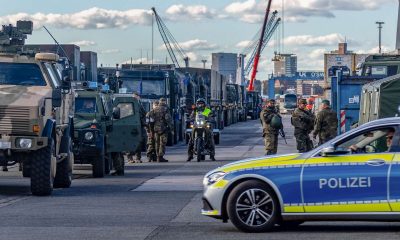





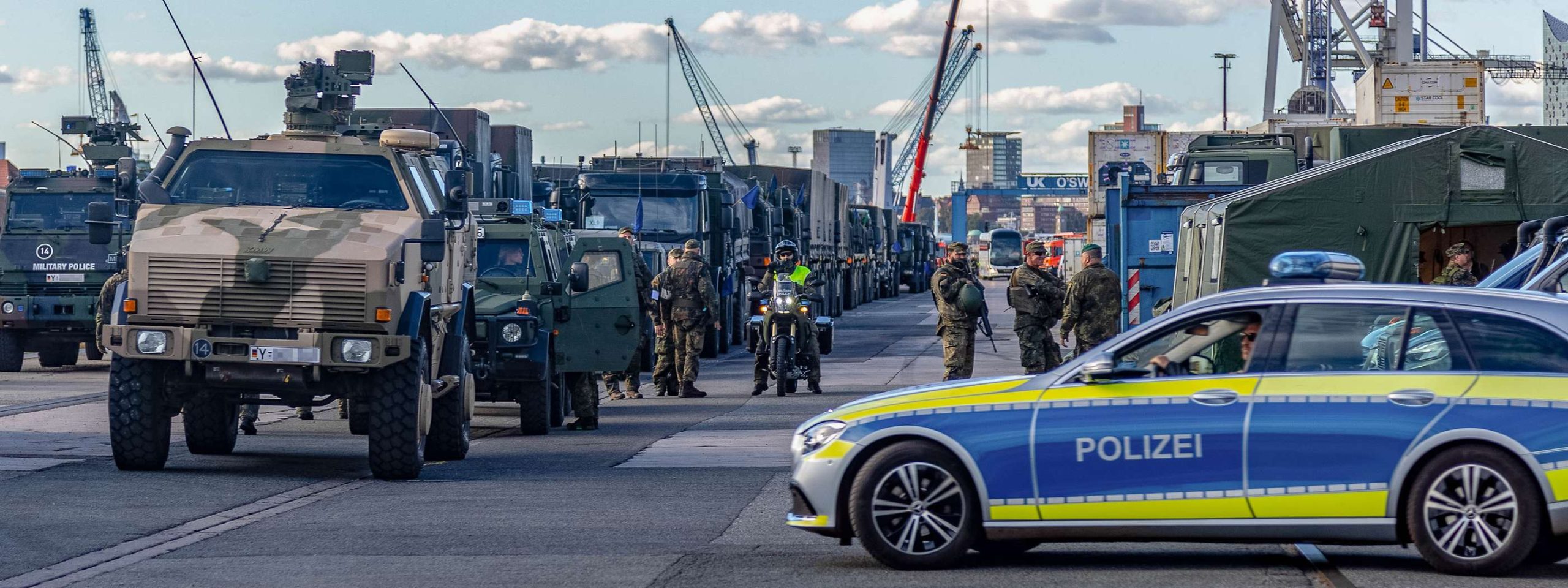
Since Thursday, the German Armed Forces and civilian agencies in Hamburg have been conducting drills simulating the deployment of troops to NATO’s eastern flank.
The core scenario of the “Red Storm Charlie” exercise is a mobilization toward the Baltic states ahead of a potential Russian attack: prior, that is, to any declaration of a state of emergency or defense alert.
According to German Foreign Policy, this means that emergency laws, which permit a massive domestic clampdown, would not be enacted.
Begun two years ago with Red Storm Alpha and continued last year with Red Storm Bravo, the Red Storm exercise series centres on mobilizing “civilian support services” for military deployment against Russia.
According to the German Armed Forces (Bundeswehr), a total of 500 soldiers with heavy equipment are training for deployment to the Eastern Front.
The drill is taking place not only on military training grounds, but also in the very midst of civilian life.
Lieutenant Colonel Juergen Bredtmann of the responsible Hamburg State Command remarked after Red Storm Bravo that the soldiers were “smiling” and “extremely excited [because] they could finally implement such a thing in a satisfying manner.”
Such “free-range” exercises in civilian settlements are being conducted with increasing frequency.
Neither peace nor war
According to Lieutenant Colonel Bredtmann, the military plans to carry out these convoy movements across the urban area of Hamburg predominantly at night.
The German officer acknowledged that, in peacetime, “moving a convoy through rush-hour traffic on a Friday afternoon would be difficult.”
In the event of war, the German Basic Law permits state agencies to exercise sweeping emergency powers, compelling civilians and business owners to contribute labour and material in the service of the armed forces.
These measures include, for example, converting corporate premises into rest staging areas for military vehicles, requisitioning civilian lorries, or obliging healthcare personnel to work in military hospitals.
In such circumstances, the scope of coercive measures also widens; this includes deploying the military against insurgents, which is constitutionally permitted.
Yet with the Red Storm Charlie exercise, the armed forces are now openly training for a “precautionary redeployment of military forces to eastern alliance territory.”
In other words, mobilization to the east is taking place prior to any frequently cited “Russian attack.”
Regarding Red Storm Charlie, the Bundeswehr states:
“In the scenario depicted, a state of tension or a state of defense determined by the German Bundestag does not yet exist; consequently, from a legal standpoint, we remain at peace.”
Civilian forces integrated into the military
In its domestic national defense, Berlin relies primarily on civilian forces to free up as many soldiers as possible for combat on the Eastern Front.
Only a few soldiers are to remain behind; remaining tasks will be undertaken by “homeland defense forces” (meaning military reserve units) and civilians.
The stated objective of Red Storm is to “enhance the operational capabilities of all participants.”
Alongside the Federal Police, participants include police forces from Hamburg, Lower Saxony, and Schleswig-Holstein; the fire brigade and the Federal Agency for Technical Relief (THW); the University Medical Centre Hamburg-Eppendorf; the German Red Cross; the airport, port, and the Hamburg elevated railway system; the Chambers of Commerce and Crafts; Lufthansa; Airbus; Blohm + Voss; Philips; the Hamburg Trade Fair; and Edeka.
Local media are also lending active support: on the occasion of the exercise, public broadcaster NDR published recommendations from the Federal Office of Civil Protection and Disaster Assistance (BBK).
Under these guidelines, all Germans should stockpile 20 litres of water, 14 days of food, medicine, an emergency kit, and a hand-crank radio in preparation for war with nuclear-armed Russia.
Supermarket chain joins war preparations
The Edeka retail chain is not only supporting this year’s Red Storm exercise, but is also actively participating in the implementation of the BBK’s war-preparedness measures.
Alongside public relations efforts promoting war readiness and involvement in the convoy initiative, Edeka and its discount subsidiary Netto are marketing a “specially developed emergency backpack” as a “compact foundation for private crisis preparedness” in connection with the war games. The backpack includes a packing checklist and a hand-crank radio.
Edeka is also taking part in Red Storm Business, a Chamber of Commerce initiative in which the Bundeswehr is not explicitly involved.
Through Red Storm Business, a civilian training programme, the Chamber of Commerce seeks to enable enterprises to “gain practical experience with a specific crisis scenario within their own operations” in order to test their “autonomous operational capacity.”
The drill simulates an extended power outage. More than 160 companies have signed up voluntarily, including Edeka, Airbus, Rheinmetall, Deutsche Bahn, Unilever, and Hamburger Hochbahn, as well as small and medium-sized enterprises.
German military prepares for potential protests
Civilian society, however, is not merely offering cooperation; it is also voicing opposition.
Numerous groups from the expanding anti-war movement, ranging from trade unions such as the GEW to organizations such as Disarm Rheinmetall, are calling for protests and active resistance against the exercise.
Handling public protests is an explicit component of the Red Storm series: footage from last year showed a simulated sit-in blockade featuring red pyrotechnics and demonstrators glued to the ground.
Bundeswehr troops were required to clear this blockade during the exercise.
Accordingly, the federal government anticipates that, in a mobilization scenario, the population would stage mass protests ranging from escalating demonstrations and blockades to sabotage.
Ukraine war critics monitored by domestic intelligence
According to Sinan Selen, vice president of Germany’s domestic intelligence agency (the Federal Office for the Protection of the Constitution, or BfV), even “discontent” or mere “criticism of the existing system” must be treated as suspicious, as it creates “vulnerabilities” to “Russian narratives.”
According to Selen, the “Do Not Become a Disposable Agent” campaign, conducted jointly by the BfV and the police, seeks to target individuals who “approach the Ukraine conflict critically… and are interested in Russia.”
When several electrical substations were attacked recently, police investigated not only a suspected “far-left background” but also whether the incidents constituted “sabotage directed by a foreign state.”
Federal Interior Minister Alexander Dobrindt suggested that links could exist “between extremist elements and state terrorism,” adding that whether “one is tied to the other is always examined as part of the investigations.”
With the expansion of civil-military cooperation, state agencies are increasingly blurring the boundaries separating the armed forces, police, and domestic and foreign intelligence services.
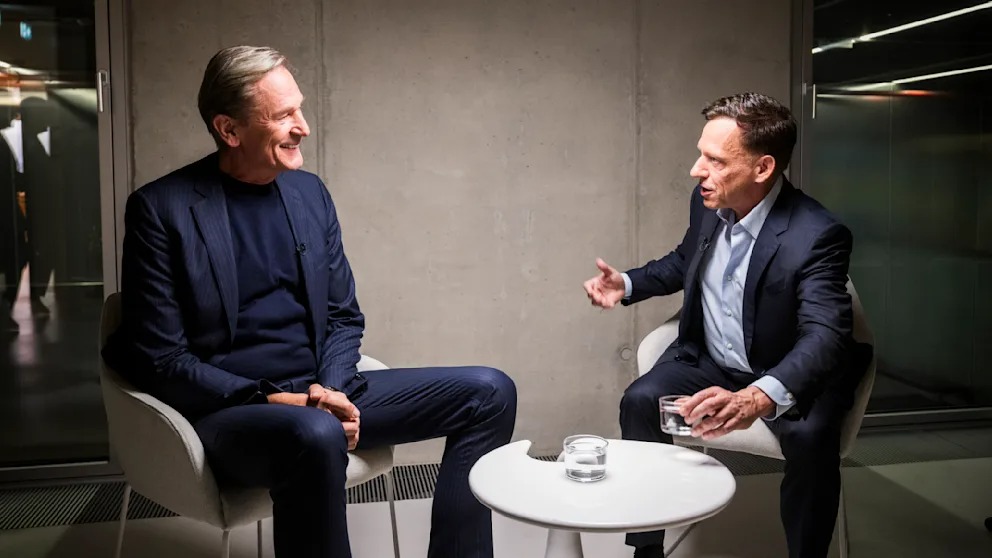
Palantir founder Peter Thiel has received an award from the Axel Springer media group and, in an accompanying interview, criticised Pope Leo and the Chinese Communist Party (CCP).
Speaking after accepting the Axel Springer Award, Thiel delivered a sharp critique of certain sections of the media.
Addressing the ceremony in Berlin, Thiel said he wondered why large parts of the media had turned into “a kind of leftist hate factory”.
Asserting that the media landscape was “very, very one-sided” and “far from being as free as we would like”, the investor also praised Springer CEO Mathias Döpfner and US journalist Bari Weiss of CBS.
Thiel argued that without individuals such as Döpfner and Weiss, the situation would be “really very, very bad”.
Expressing his appreciation to Döpfner, Weiss, and Axel Springer staff for their “courage”, Thiel described them as “dissident voices” within this media landscape.
Thiel also addressed the success of The Left party in the recent Berlin House of Representatives elections.
Emphasising that he could understand why people voted for this party, the American said there was a “very real problem”, noting that housing was too expensive and excessively regulated.
Arguing that The Left lacked sound solutions to the issue, Thiel claimed that rent controls would likely “turn Berlin into a slum”.
According to Springer, the Axel Springer Award honours figures who “exceptionally transform markets”.
In his speech, CEO Döpfner stated that Springer was honouring Thiel for his entrepreneurship, willingness to take risks, and unconventional thinking.
Past recipients of the award include Facebook CEO Mark Zuckerberg, Amazon founder Jeff Bezos, Tesla CEO Elon Musk, and World Wide Web inventor Tim Berners-Lee.
On the sidelines of the award ceremony, numerous people participated in a protest rally against Thiel. According to police, the demonstration proceeded without incident. Left-wing groups had called for the protest.
Outside the Axel Springer building, a banner reading “Thiel Shall Not Pass” was among those displayed.
The German Journalists’ Association (DJV) had also previously criticised the presentation of the award to the technology billionaire.
A brief disruption occurred during the award ceremony. According to information provided by Springer, an employee of a service provider walked onto the stage carrying a banner that read: “They know that we know that they are lying.”
In response to an enquiry, Springer stated that the man was escorted off the stage by security personnel and that no one was injured.
In his interview with Mathias Döpfner, Thiel argued that the encyclical on artificial intelligence issued by Pope Leo in May would do nothing to rein in China’s AI ambitions, but could lead the US and its allies to impose heavy restrictions on the technology.
Thiel added: “It is certain that the Chinese Communist Party will not listen to the Pope. But there is a possibility that people in the US will listen. Consequently, the Pope’s encyclical actually played into the hands of the Communist Party. I am not saying he is an agent of the communists, but at the very least he was acting as a ‘useful idiot’ for the CCP.”
“I think AI may be more important than the internet and possesses the potential to accelerate growth; along with all the positive and negative consequences that come with it,” Thiel said.
“Theoretically, if there were genuine and deep cooperation at a global level, it might be possible to slow this development down,” the Palantir founder said, adding, however, that he believed this would require a world government with real authority and real power.
Thiel said: “The classical liberal in me believes that this would be going from ‘bad to worse’. The cure would be worse than the disease.”
According to Thiel, the danger is that progress will be curtailed in the West while proceeding unchecked in China.
Touching upon the electoral gains of the AfD and The Left, Thiel said this “reflected the failure of centrist parties to design an economic future for Germany that benefits all of society”.
Regarding the AfD, Thiel said: “I think one can have a rational debate about Ukraine, China, and Israel. But at the same time, I think the AfD is wrong on all three issues. And it is not possible to be wrong on all three of these issues.”
Arguing that Germany once possessed the “ability to found significant new companies”, Thiel pointed out that alongside the Mittelstand, there were also much larger enterprises that emerged in the late 19th and early 20th centuries.
According to Thiel, this capability has largely disappeared since 1995.
Comparing the wealthiest Germans with Americans, the super-wealthy figure claimed: “In the US, nine out of these twelve people earned their wealth through their own efforts. In Germany, twenty out of twenty people inherited their wealth. None of them created anything new, earned a new fortune, or built a large company that could be properly scaled.”
Voicing his views on the Trump administration, Thiel said that during the first Trump term there were individuals in the team who could not agree on anything, whereas in the second administration, in attempting to correct this error, they had “gone to extremes”, filling the administration with “highly loyal people, even if they are not very intelligent”.
Stating that he still supported JD Vance over Marco Rubio, Thiel said: “However, I fear it will be difficult for either candidate to win.”
Addressing the November midterm elections, the American said:
“If Republicans suffer a heavy defeat in this autumn’s midterms, Democrats will believe they are already certain to win in 2028. And then there will probably not be such a strong barrier against a victory by a democratic socialist. (…) I think the Democrats will achieve a good enough result in the midterms a month and a half from now; in that case, whether their presidential nominee comes from the centre-left or the far-left wing will ultimately not matter much to them. And then the race will be wide open, and the outcome completely uncertain.”
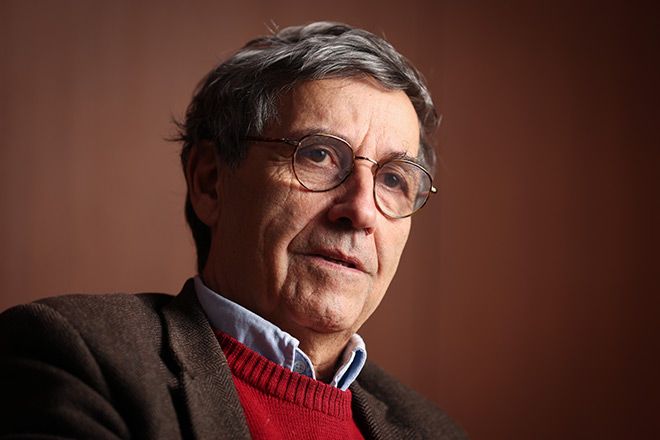
Emmanuel Todd, a French historian, anthropologist, sociologist, and political scientist at the National Institute of Demographic Studies in Paris, stated during a live broadcast on Le Figaro television that the Western world has entered a phase of major collapse and disintegration.
Stating that global balances have been overturned, Todd noted that conflicts in the Ukrainian and Iranian theatres have laid bare the structural weaknesses of the Western system.
Appearing in the studio alongside strategic analyst François Heisbourg, Todd offered assessments drawn from his new book, The Rupture, a sequel to his earlier work, The Defeat of the West.
Discussing the work, which comprises extensive interviews conducted with journalist Diane Lagrange, the French thinker shared the global ramifications of institutional erosion across the European and US axis.
“European leaders live in an absolute kingdom of illusions”
Expressing that the Russian threat articulated in European capitals lacks an objective basis, Todd stated that continental politicians have succumbed to a psychological illusion. The French anthropologist remarked that Europe is generating artificial fears by projecting its own internal crises outward.
Todd offered the following assessment regarding the posture of decision-makers in Europe: “European leaders appear to harbour a desire for open war with Russia. To put it bluntly, the picture before us shows that Europe has turned into a veritable kingdom of illusions. This entire narrative suggesting that Russia wants to invade Europe is nothing more than a fantasy detached from reality.”
Emphasising that the military objectives of the Moscow administration remain limited, the historian clearly delineated Russia’s strategic boundaries. Recalling that Russia seeks to advance as far as the Dnieper river and secure control over the port of Odesa, Todd noted that it lacks the demographic and logistical power to push beyond.
Todd used the following phrases regarding Russia’s intentions: “I defined Russia’s war objectives very clearly in my book. They want to reach the Dnieper line, take Odesa, and perhaps turn the remainder of Ukraine into a satellite state. However, they will stop there because they have no intention of going further. They possess neither the demographic resources to achieve that nor such a strategic objective.”
“Russia is a target onto which our deep internal pain is projected”
Emphasising that the dominant discourse in Europe must be analysed, Todd stated that the mindset of decision-makers reflects a societal anxiety. He expressed that Europe and the US have lost their internal cohesion, a condition that has poisoned their perception of the external world.
Noting that the disintegration of Western civilisation lies at the root of the problem, Todd spoke as follows: “It is possible to explain this threat rhetoric partly in psychiatric terms, because a significant proportion of those who articulate it are entirely sincere. Yes, there is a serious paranoia that has seized the mechanisms of control. The real issue is the internal disintegration not only of Europe, but of Germany, France, the general Western system, and the US. This process of disintegration produces an outlook that views the world paranoically. Russia is therefore merely a target onto which our deep internal pain and unease are projected.”
Referring to topics to which he dedicated substantial space in his book, Todd stated that the reality of the West losing its own identity lies at the centre of the global system. He stressed that xenophobia and security paranoia are the direct consequence of the internal loss of values.
“Trump is the defeated party in this war, not the victor”
Stating that the conflict in Ukraine has reached a point of no return for the West, Todd noted that the reality on the ground cannot be obscured through propaganda. Expressing that the course of the conflict will become definitive within this year, the thinker drew attention to the acceleration along the frontline in Russia’s favour.
Reporting that European leaders have grown anxious over the fear of accountability as the end of the war nears, Todd said: “This year will be the period when the picture in Ukraine becomes clear. Balances on the frontlines are shifting rapidly, and the gap is closing. This conflict is taking on an increasingly dirty character. This is precisely why European leaders are acting with such panic. Everyone will have to confront their own record once the war ends. History will write what we actually did for the Ukrainians: whether we drove them to suicide or genuinely helped them.”
Entirely rejecting claims of a covert partnership between US President Donald Trump and Vladimir Putin, Todd pointed to Washington’s failure on the ground. He emphasised that the American military industry has failed to produce the ammunition required to sustain Kyiv’s army, which is why the conflict has been lost.
Todd conveyed the condition of the White House in the following words: “The narrative that the US and Europe are divided into two opposing camps, and that the US and Russia are friends seeking to fleece the Europeans, is an utter illusion. Donald Trump is a president of defeat. The Americans lost this war because they could not provide sufficient weapons to the Ukrainian army. The American military-industrial complex is in an extremely dire state. The Trump administration is attempting to make people forget this American defeat; that is why it browbeats Europeans, stages political theatre, and embarks on diversionary operations.”
“Germany has entered a rearmament process in the Merz era”
Stressing that the most fundamental rupture within the Western alliance has occurred in Germany, Todd expressed that Berlin has abandoned its cautious foreign policy line to adopt a confrontational stance. He stated that the government led by Christian Democrat Friedrich Merz has focused on armament policies.
Noting that German industry was mobilised to close the American military shortfall, Todd spoke as follows: “The primary development on the scene since my previous book, The Defeat of the West, has been Germany’s mobilisation for war. Following the cautious line of the Social Democrats, the accession to power of the Christian Democrats led by Merz directly propelled Germany, the continent’s leading industrial power, into a process of rearmament. When American industry proved inadequate, German industry stepped in, and this gave Trump renewed hope. Since Merz came to power, Trump has authorised the Central Intelligence Agency to direct Ukrainian missiles directly at Russian targets. Therefore, the notion that Trump and Putin are walking hand in hand is complete nonsense.”
“Russians are strategic realists who do not impose values”
Expressing that Russia acts out of motives of state security and sovereignty rather than expansionist ambitions, Todd said Moscow does not recognise a Western-centric hierarchy of values. Arguing that Russia’s strategic approach coincides with American realism, the thinker noted that moral sermons in international relations have lost their validity.
Stating that Russian statecraft is based on the vision of a multipolar world, Todd offered the following assessment: “Russia’s strategic theory runs in almost the exact same direction as the approach of the American John Mearsheimer. They are strategic realists thinking through national sovereignty and raison d’etat. Their most distinctive characteristic is the principle of not imposing their own moral or cultural values on their partners. When the Russians speak of a multipolar world, they mean not only a balance of power, but also diversity in the sphere of values. They even explicitly state that Westerners may live as they wish, and that this does not concern them.”
Emphasising in particular that he is no sympathiser of Russia while offering these observations, Todd said: “I feel almost uncomfortable falling into this strange position of appearing to defend Russia. Yet I have no such intention. In my book, I openly confess that I harbour a deep sympathy for the Iranian people, but I have never felt such an affinity towards the Russians.”
“The Iran war is a kind of Vietnam disaster for Washington”
Stating that the Iranian intervention launched by Donald Trump in February 2025 has led to a global economic impasse, Todd expressed that the surge in natural gas and oil prices has choked Western economies. Expressing that Washington acted with strategic blindness, the author stated that this decision has culminated in a major failure.
Relating that the Iran operation was a diversionary manoeuvre designed to cover up the debacle in Ukraine, Todd continued his remarks: “A dynamic of systematic failure exists here. Following the American defeat experienced in Ukraine, the Washington administration continually resorted to diversionary moves. First they dreamt of acquiring Greenland, applied pressure to Europeans, tried to bring Venezuela to its knees, and sought to encircle Cuba and Iran. Relative success in Venezuela pulled the wool over the eyes of the Americans. They turned towards Iran to make people forget the Ukraine defeat, yet Iran is an entirely different country. It is a society packed with engineers, undergoing extremely rapid cultural change.”
Emphasising that the resistance the American administration encountered in Iran has transformed global balances, Todd said: “For the Americans, this war is a first-order strategic disaster. It resembles a Vietnam War, which was lost over five or six years, lost this time within a few days. This is a complete fiasco, and in truth everyone except Trump is aware of it.”
“Ukraine and Iran have now turned into a single war”
Expressing that a deep chasm has opened between the discourse constructed by the media and the material balance of power on the front, Todd noted that the Western industrial base has eroded. He stated that the Ukrainian and Iranian fronts have practically merged, turning anti-Western forces into a unified bloc.
Todd explained the military reality on the ground with these words: “The most striking element in the process we are experiencing is the profound divergence between the debates in the media and the concrete reality of the war on the ground. There is a demographic in the West that speaks and comments constantly, yet war is conducted through military-industrial capacity on the ground. At this stage, the Ukraine War and the Iran War have effectively turned into a single war. On both fronts, the inadequacy of the West’s military-industrial capacity has been exposed. While a missile shortage is experienced on one side, ammunition is running out on the other. These acts of aggression, which initially appeared disconnected, have bonded a tripartite power comprising Russia, Iran, and China. These countries are conducting extraordinarily close cooperation. While the Americans direct Ukrainian missiles, the Russians designate the targets of Iranian missiles.”
Recalling that the exhaustion of American arsenals is not limited to the Iran war, Todd added that reports by the Pentagon and the think tank Rand Corporation documented the air defence crisis long before the attack on Iran.
“Our constant aggression hardened the conservative line in Iran”
Examining from an anthropological perspective the form assumed by the Iranian political system in the face of Western pressure, Todd expressed that external interventions played a decisive role in the hardening of the Tehran regime. Conveying his own observations, the thinker recounted the contacts he has maintained with Iranian diplomats since the early 2000s.
Sharing an assessment conveyed to him during the era of Mahmoud Ahmadinejad by a diplomat, Todd said: “At that time, a young Iranian embassy counsellor spoke these words to me: ‘Every irrational step taken by the Americans strengthens Iran’s strategic hand in the region. On the other hand, however, American attacks unite Iranian national consciousness around conservatism, consolidating the position of hardliners in the administration.’ The situation I describe in the book is precisely this long-term dynamic.”
Explaining the differences in societal structure between Russia and Iran through anthropological family models, Todd said: “In my capacity as an anthropologist, I examine the links between family systems, political ideology, and political temperament. Russian and Iranian political temperaments are fundamentally different from one another. Russia possesses an authoritarian culture where power is organised vertically. Putin did not create the system; this communitarian Russian family culture created Putin. In contrast, the Iranian family possesses a nuclear and individualistic structure. Individualism raises individuals open to debate and negotiation, as seen in the tradition of Shia thought. Had it not been for the unending aggression of the West, this dynamic could have evolved along its natural course. Our interventions reversed the process.”
Expressing that he is a Westerner of the older generation, the thinker offered the following evaluation: “I am an old Westerner who believes in an environment of free debate and pluralism. I am a researcher trained in Cambridge and living in Paris. Yet what we call the West today has severed itself entirely from the values of the past, turning into a mechanism that generates intolerance towards the world. A historian does not look at issues through who is at fault; he analyses historical dynamics.”
“The rise of the far right in Germany is a historic danger”
Expressing that nation states have returned to their ancient reflexes during the disintegration of the Western alliance, Todd stated that the political transformation in Germany has reached alarming proportions. Criticising the radicalisation and war rhetoric in German politics, the historian stressed that memory is being targeted for erasure.
Evaluating electoral dynamics in Germany, Todd said: “I devoted a very detailed chapter to Germany in my book. Truly bizarre developments are taking place there. A far-right party, an extension of the National Socialist heritage, has reached levels of 45%. No one can say that I am the only person concerned by this. On the other side is a Chancellor who is losing ground yet rapidly dragging his country into direct conflict with Russia. In his speeches, he characterises the Russians as barbarians. Yet they forget the fact that the force which slaughtered 25 to 27 million Soviet citizens in the past was the German military. We are witnessing the return of historical dynamics, and we must manage to see ourselves as we truly are.”
“Gross domestic product figures are an empty universe of signs”
Finding the growth narrative driven by US economic supremacy and leadership in artificial intelligence misleading, Todd noted that economic indicators do not reflect genuine societal prosperity. He argued that despite American gross domestic product rising on paper, decay is occurring across fundamental indicators.
Emphasising that economic indicators do not match reality on the ground, Todd shared the following observations: “A large proportion of the minds working in the field of artificial intelligence in the US are not of American origin; they are reliant on highly skilled labour coming from outside. American gross domestic product appears to be growing constantly, yet these measurement methods do not reflect reality. Life expectancy in the US has fallen behind Europe. We saw that Ukrainian refugee children arriving in France surpassed local pupils in mathematics classes in French secondary schools. We live in a universe of signs that has entirely no substance behind it. The awakening from this illusion will be quite shocking, alongside the impending energy crisis and the collapse of the European economy.”
Expressing that the American economy remains afloat through its trade deficit, the thinker used these phrases: “The most concrete proof of the unreality of the American economy is the incessantly growing trade deficit. America can no longer produce what it consumes. It has even begun to run a trade deficit in agriculture. They are dependent on their allies in Europe and Asia for food products; in other words, it is we who feed the Americans. Through irresponsible energy policies, Washington is also crashing the peripheral economies that it needs in order to survive.”
“Elderly electoral dominance has produced a gerontocracy in France”
Expressing that population ageing in Western societies represents an indicator of strategic collapse, Todd drew attention to demographic rupture in France. He stated that infant mortality rates in France have begun to climb again, resembling the final era of the Soviet Union.
Emphasising that France’s political structure has been shaped according to the interests of the elderly population, the author said: “While preparing for my discussions with Diane Lagrange, I examined demographic statistics in depth. Infant mortality rates in France have begun to rise again. This datum recalls the collapse process of the Soviet Union. On the other hand, while Europe is retreating in births and child numbers, it reaches high figures in life expectancy for individuals aged over 60. The metabolism of society is slowing, and the values of the elderly are becoming dominant.”
Reporting that political power has been held hostage by older generations, Todd concluded his words as follows: “When France does not have a population as old as Italy or Germany, how did it surrender to such an elderly-oriented system? Because the primary power of the elderly is the ballot box, the votes they cast. If you remove democracy and the voting mechanism, you would see that the elderly would not pour into the streets to protect their privileges. A strong liberal democratic tradition allowed the older generation to make maximum use of its ballot power, and France drifted into a gerontocratic regime.”
Expressing that market capitalism and the individualistic concept of economic man have destroyed the family, the French thinker stated that the global decline in birth rates stems from economic selfishness. He added that having children demands self-sacrifice and devotion, whereas market values destroy this instinct.
Stating that artificial intelligence represents one of the greatest ruptures in human history, Todd warned that this technology carries existential risks that threaten the continuity of the species, much like nuclear weapons.

Hamburg drill tests Baltic deployment prior to formal defense alert

EU explores cooperation with Trump-backed Peace Board for Gaza aid

Peter Thiel receives Springer award, targets Pope Leo and CCP

Emmanuel Todd says West faces collapse amid Ukraine and Iran crises

EU states weigh stricter asylum rules and third-country return hubs
-
 America2 weeks ago
Milanovic declares global neoliberalism dead, warns of plutocracy
-

 America2 weeks ago
Five minutes to doomsday – 4: American capitalism at the frontiers
-

 Asia2 weeks ago
DeepSeek engineer warns AI will lead to communism or Cyberpunk
-

 America2 weeks ago
Big Tech profits from AI extinction hype, Ken Klippenstein says
-

 Middle East2 weeks ago
Iran used Chinese satellite imagery in deadly US base attack: report
-

 Europe2 weeks ago
UK faces £258bn infrastructure gap as commission urges private funds
-
 Middle East2 weeks ago
Saudi exportable crude stocks risk depletion within a week
-
 Europe2 weeks ago
Wolfgang Streeck links German polycrisis to capitalism and AfD rise
