
Europe
Priceless French crown jewels stolen in brazen daylight robbery at the Louvre

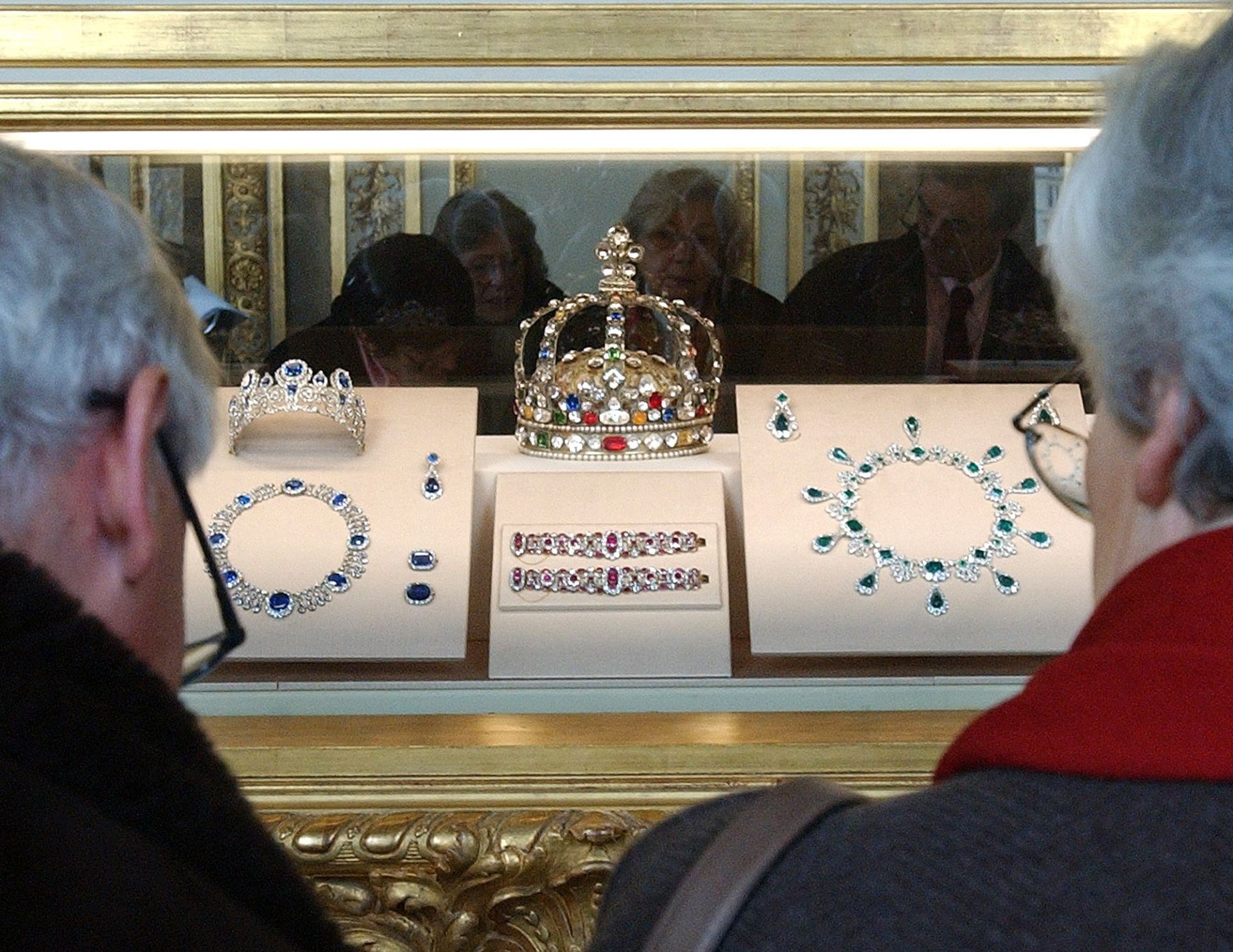
France’s priceless crown jewels were stolen in an armed robbery at the world-famous Louvre Museum in Paris on Sunday morning.
According to reports from French press outlets AFP and BFMTV, the thieves used a chainsaw and electric cutting tools to enter the museum.
The robbery occurred between 9:30 and 9:40 AM, shortly after the museum opened to the public at 9:00 AM local time.
Investigative sources told AFP that the robbers used a scooter and a construction-type lift to reach a window overlooking the Seine River, gaining access to the historic Galerie d’Apollon. This gallery is known for housing France’s crown jewels.
Paris Public Prosecutor Laure Beccuau stated that four suspects threatened security guards with angle grinders, which they then used to smash the glass display cases.
The thieves’ operation lasted approximately seven minutes, and the suspects fled the scene on scooters before police arrived.
Eight priceless artifacts stolen
The French Ministry of Culture announced that “eight cultural heritage artifacts of incalculable value” were stolen from two high-security display cases.
Among the stolen items were an emerald and diamond necklace gifted to Napoleon’s wife, Empress Marie Louise, and a tiara belonging to Empress Eugénie, the wife of Napoleon III.
Authorities later found Eugénie’s 19th-century tiara damaged near the museum. The tiara, adorned with golden eagle figures, 1,354 diamonds, and 56 emeralds, was reportedly found broken on the pavement.
According to AFP, the thieves reached the gallery’s window on the Seine facade using an electric ladder, typically used for moving furniture.
Witnesses speaking to TF1 television said that two individuals climbed the lift, broke the window, and entered the museum within 30 seconds. A cyclist named Samir also reported seeing four people speeding away on scooters shortly after.
Museum evacuated, soldiers stand guard
The Louvre, home to the Mona Lisa and the world’s most visited museum, was completely evacuated to preserve evidence and remained closed for the rest of the day.
The museum administration reported that the glass pyramid entrance was secured by soldiers, and visitors were kept behind a police cordon.
Minister Nunez: A serious security failure
Interior Minister Laurent Nunez confirmed that the stolen items were taken from the Galerie d’Apollon, describing them as “priceless.”
Nunez announced that 60 detectives have been assigned to investigate the incident. The minister, a former Paris Police Prefect, stated that the robbery highlights “a serious failure in the security of France’s national museums.”
Additionally, the Ministry of Culture reported that the thieves’ haul included a necklace from a sapphire jewelry set belonging to Queen Marie Amélie and Queen Hortense, as well as emerald earrings belonging to Marie Louise.
A source close to the investigation told AFP that the famous Regent Diamond, estimated by Sotheby’s to be worth over $60 million, was not among the stolen artifacts.
“Jewels are unsellable in their current state”
The director of the Drouot auction house in Paris told the LCI channel that the stolen jewels are “completely unsellable” in their current form.
The director noted, however, that there is a possibility the stones and metals could be dismantled and introduced into the market.
Macron: This is an attack on our history
In a post on the social media platform X, French President Emmanuel Macron described the event as “an attack on our heritage, which is a part of our history.”
Macron stated, “We will recover these artifacts, and the perpetrators will be brought to justice.”
A series of similar museum robberies have occurred across France in recent months. Gold specimens worth approximately 600,000 euros were stolen from the Paris Natural History Museum, and artifacts valued at 6.5 million euros were stolen from a museum in the city of Limoges.
The Louvre, originally built as a royal palace during the reign of Louis XIV, has rarely experienced a large-scale robbery in the modern era.
The museum’s most famous theft occurred in 1911 when an Italian worker stole the Mona Lisa; the painting was recovered two years later.
President Macron had announced earlier in the year that the Louvre would undergo a major renovation, which would include the implementation of new security measures.
Minister of Culture Rachida Dati had also shared details of this plan with the public.
Police are continuing their investigation into Sunday’s robbery. Based on security camera footage and witness statements, they are attempting to track the four suspects who were identified fleeing towards central Paris on scooters.










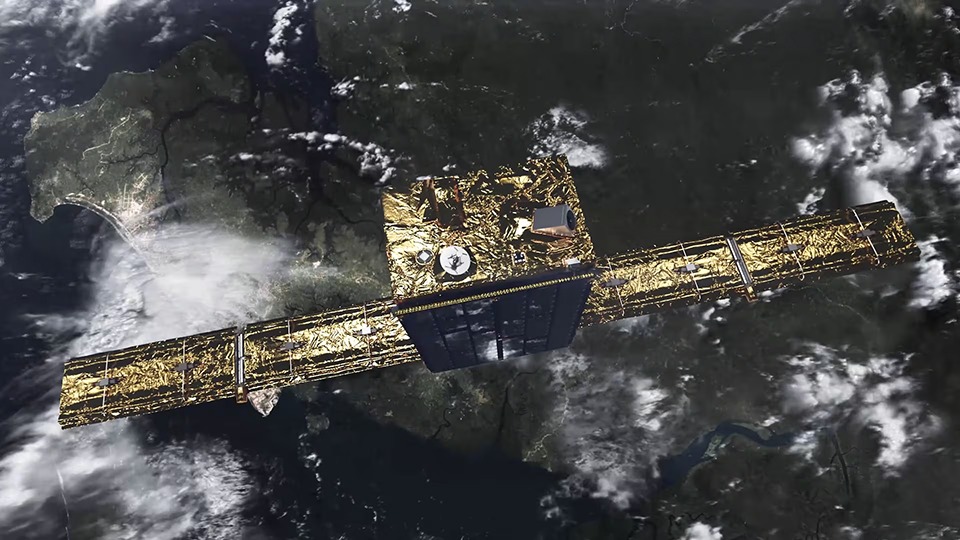
Nokia and space technology company ICEYE have signed a memorandum of understanding with Ukraine’s Ministry of Defence to establish a satellite communications network controlled directly by the Kyiv government.
A press release issued by Nokia noted that the parties will jointly assess the feasibility of implementing a Ukrainian-controlled communications system.
The agreement was announced on 22 October during the Finnish Prime Minister’s visit to Ukraine. The primary goal of the cooperation was described as bolstering the country’s defence capabilities, first and foremost by strengthening its independent satellite communications capacity.
Earlier in October, ICEYE and Nokia announced that they would jointly develop secure broadband communication systems operating in low Earth orbit for public institutions.
Designed for defence, border security, emergency services, and disaster response teams, these European-origin technologies are stated to allow states to directly own and independently operate their own satellites, ground infrastructure, and terminals.
In remarks on the matter, ICEYE Chief Executive Officer and Co-Founder Rafal Modrzewski stated that Ukraine requires secure, sovereign, and high-capacity satellite communications systems under its complete control.
Mikko Hautala, Nokia’s Director of Geopolitical and Government Relations and Chairman of the Nokia Defence Board, pointed out that satellite networks ensure the continuity of communications even when terrestrial transmission infrastructure suffers damage.
Hautala said that together with ICEYE, they will explore how reliable and sovereign satellite communications can enhance Ukraine’s resilience and provide the Kyiv government with control over communications on which it depends.
Based in Finland, space company ICEYE develops and manufactures radar satellites and makes data obtained from these satellites available for use.
According to information shared by the company, its technologies are used in defence and intelligence, as well as in environmental monitoring, insurance, and emergency response operations.
Reports indicating that restrictions had been placed on the US satellite connection used by the Ukrainian military surfaced just before this agreement.
In a post on the night of 14 October, former Ukrainian Defence Ministry Adviser Serhiy Sternenko stated that terminals were losing connection when travelling at speeds of 160 kilometres per hour, and that these disruptions later began occurring at speeds of 60 to 70 kilometres per hour as well.
SpaceX head Elon Musk maintained that the US government owns and manages Starshield, the military version of Starlink, and that restriction decisions were therefore taken by US authorities.
The White House, meanwhile, stated that it had nothing to do with the restrictions.
According to a 22 October report in The Wall Street Journal citing US officials, US President Donald Trump personally asked Musk to lift the restrictions in question.
Following the discussion, US and Ukrainian officials stated that the system began operating more stably, while some Ukrainian representatives said functionality had not yet fully returned to its previous state. Trump confirmed that Ukraine’s Starshield access had been restored.
The restrictions met with backlash across Europe.
Accusing Musk of playing political games, Polish Foreign Minister Radoslaw Sikorski posted on the X platform: “We are your European customers, we are watching you.”
Poland has purchased approximately 25,000 Starlink terminals for Ukraine since 2022 and continues to cover the satellite connection costs of the Armed Forces of Ukraine.
Following these developments, the European Commission also announced that Ukraine’s inclusion in the Govsatcom programme is under consideration.
Bringing together the existing satellite capacity of EU member states, the secure communications programme is planned by Brussels to be expanded with commercial services at the start of 2027.
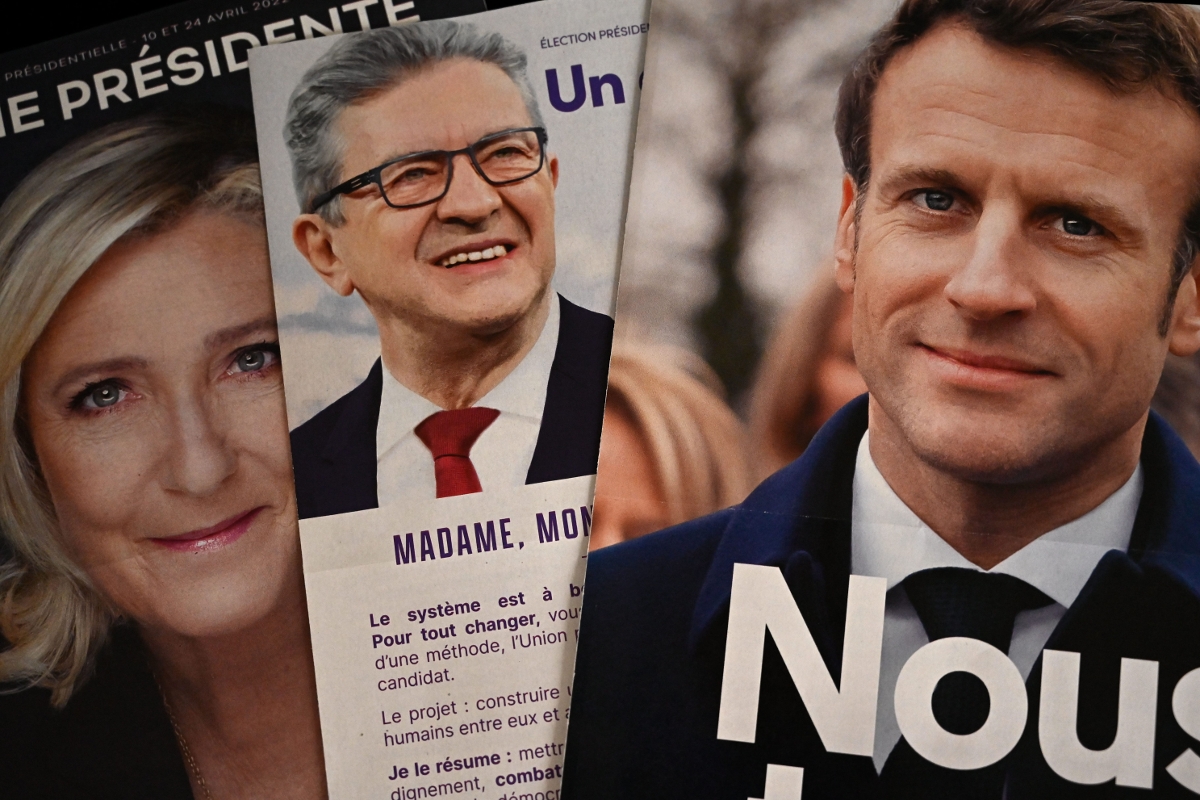
Following the unrest in France this month, the country finds itself split between Jean-Luc Mélenchon’s project of a “new France” and Marine Le Pen’s call for “law and order”.
Triggered alongside the student revolt, the question of national identity has moved to the centre of the presidential race.
“This is Mélenchon’s ‘new France’,” said National Rally (RN) leader Jordan Bardella and Identity and Freedom (ID) party leader Marion Maréchal Le Pen, linking the scenes of violence directly to the phrase.
According to several recent speeches by the leader of France Unbowed (LFI), “new France” signifies a country transformed positively by immigration, women’s rights, shifting family structures, social mobility, and the political demands of younger generations.
Mélenchon contends that this optimistic vision can become a reality if voters elect him president next year.
Two Frances to clash this weekend
Yet as the April 2027 elections draw closer, Mélenchon’s vision of a “new France” has turned into a recurring target for Marine Le Pen’s party, the RN, because it encapsulates a fundamental rift over French identity.
While Le Pen’s party draws on nostalgia for a revived nationalist past, Mélenchon’s vision of a “new France” envisages a clean break with the old order.
These two visions appear set for a direct collision this weekend. Le Pen will stage a gathering in Orléans before 10,000 supporters, which RN officials say will focus on authority, French identity, and public order.
Mélenchon’s party, LFI, is expected to join demonstrations against the RN alongside other left-wing forces and trade unions in the historic French town associated with Joan of Arc, which Le Pen treats as a nationalist symbol.
Echoes of Sartre in “new France”: Change over essentialism
Defending the concept of “new France” against its critics, LFI argues that it cannot be understood without reading a little of the philosopher Jean-Paul Sartre and grasping the legacy accumulated from the left’s long ideological battles.
From a Sartrean perspective, “new France” is not a fixed, essentialist identity, but a fluid, changing reality.
Rather than declaring “this is who we are”, this outlook is grounded in “this is what we live through”, describing the varied realities confronted by precarious workers, women, people of non-French origin, and young voters.
According to this view, their lived experiences fit neither the right’s nor the left’s traditional national representations.
Mélenchon identifies women as the face of the “new France”. This category also encompasses blended families, young people, LGBT rights, long-distance commuters, and French citizens whose ancestors were born abroad.
Broadsides from the right, criticism from the left
Although he has used the phrase for years, pollsters note that it has become increasingly prominent as identity politics has come to occupy a larger share of his campaigning.
For critics across the political spectrum, “new France” implies casting “old France” aside.
Conservative Bruno Retailleau, for example, describes it as “the end of France”.
Former LFI ally François Ruffin criticises Mélenchon from the left. In Ruffin’s view, the LFI leader is trading class-based political appeal for an appeal directed at diverse urban electorates, sacrificing working-class towns and deindustrialised regions in the process.
Others dismiss the phrase as a slogan fabricated to drive polarisation across every cultural fault line.
Promoting the concept in May ahead of the French municipal elections, Mélenchon said: “The new France is not one part of France set against another; it is the whole of France.”
A month later, he noted that crowds at his rallies chanted “On est chez nous!” or “This is our home!”
Usually associated with far-right gatherings through the variant “France belongs to us”, the slogan, according to Rapporteur, offers a simpler expression of what the two camps are actually contesting: who gets to define French identity, and who feels at home in France.
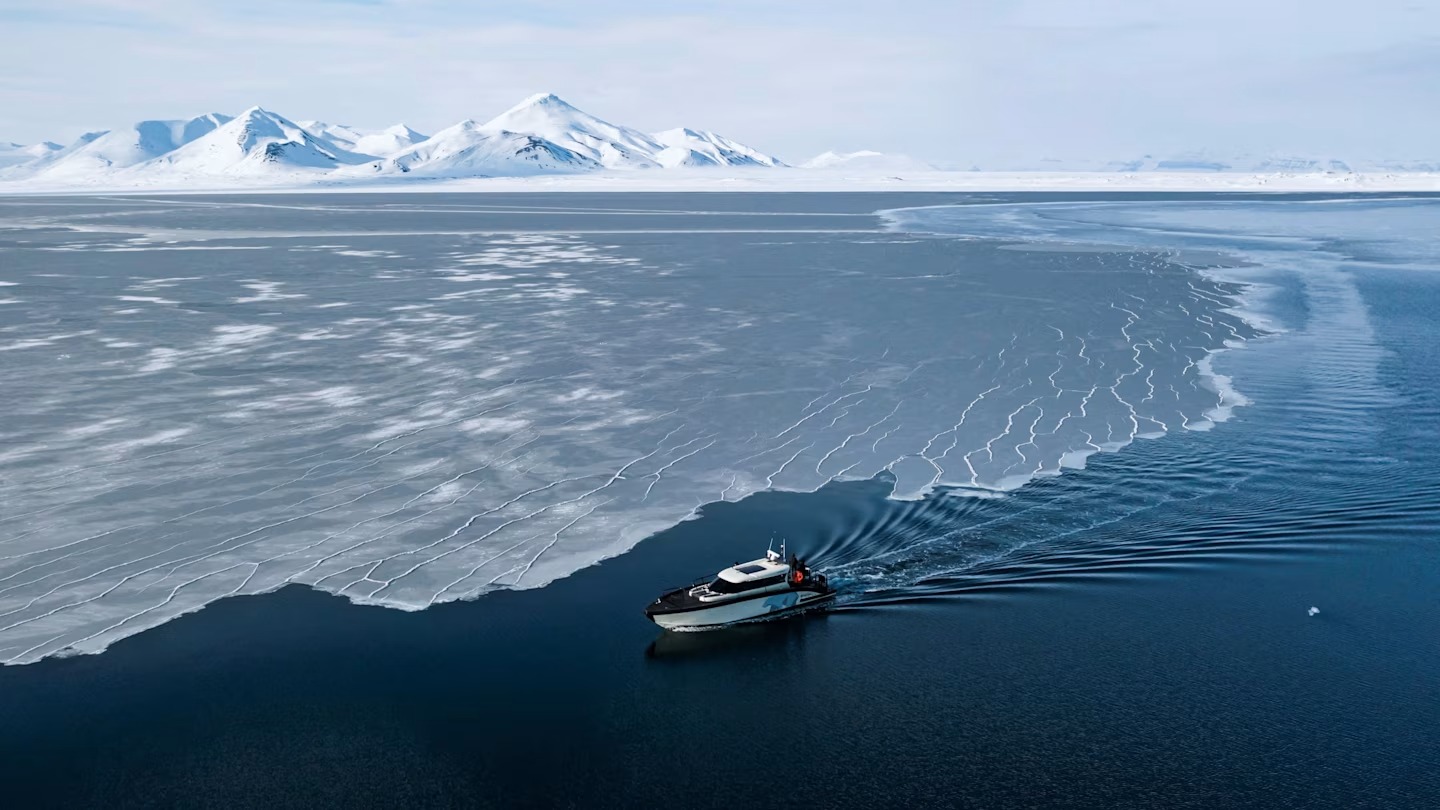
The EU is developing plans to enhance its military mobility in the Arctic and aims to establish “multimodal military movement corridors” across the High North.
According to a report by German Foreign Policy, this initiative was outlined in the EU’s new Arctic strategy presented by the European Commission in Brussels on Tuesday.
Under the strategy, a complex logistics network consisting of “ports, airports, and their inland connections” will be created across the Arctic, designed to “remain operational even under adverse weather conditions.”
The strategy paper also announces that “exercises or stress tests” will be conducted to ensure the smooth deployment of military forces and capabilities to the Arctic.
Through this strategy, the EU is responding to the reality that climate change-driven Arctic ice melt is facilitating access to regional natural resources while opening new sea routes, such as the Northeast and Northwest Passages, which can now be used for both commercial and military operations.
The Arctic strategy aims for greater independence from the US and envisages laying a “pan-Arctic” submarine cable running from Europe through the polar region to East Asia.
Arctic natural resources
The EU’s new Arctic strategy addresses, among other topics, the natural resources located in the Arctic, both beneath the seabed and on land.
Due to thawing ice, these resources are already accessible or will soon become easier to reach, and Brussels supports their extraction.
Specific projects highlighted include a rare earth element extraction venture near Kiruna in northernmost Sweden and a plan to mine molybdenum in eastern Greenland.
Departing from its previous 2021 Arctic strategy, the Commission no longer advocates an outright ban on oil, gas, and coal extraction in the Arctic within a multilateral framework.
This policy shift comes as Norway has emerged as the bloc’s most vital natural gas supplier, providing approximately 30% of all its natural gas imports following the EU’s phased reduction of Russian energy imports.
However, production from Norway’s existing fields is expected to decline in the 2030s. Consequently, Norway plans to explore new deposits in the Barents Sea, where vast reserves are estimated to lie.
Dependent on raw material supplies from Norway as well as strategic cooperation with Oslo, the EU no longer opposes these exploration plans.
New sea routes opened by melting ice
The EU is also turning its attention to the gradual opening of new Arctic shipping routes.
For instance, the Northeast Passage, running along Russia’s northern coastline from East Asia to Europe, is now open to navigation between August and October.
This route is considerably shorter than the conventional transit via the Indian Ocean, significantly reducing shipping costs, especially in light of current oil prices.
A Chinese shipping firm launched regular services via the Northeast Passage this summer, while a South Korean vessel recently returned to the port of Busan after completing its maiden commercial voyage along the corridor.
Although used by few vessels to date, the Northwest Passage has also come into operation as a route extending from the North Atlantic through Canada’s northern archipelago and north of Alaska toward East Asia.
Experts believe that, during the summer months, this passage could offer advantages over the traditional route via the Panama Canal “for certain vessel types and transport routes.”
The emergence of new military capabilities was underscored in September when four Russian warships navigated the Shokalsky Strait between two Russian Arctic islands for the first time in history.
Military mobility in the High North
This development represents another driver behind the EU’s new Arctic Strategy placing particular emphasis on military aspects.
Russia has been strengthening its Arctic military positions for some time, partly because the headquarters of its Northern Fleet, which hosts part of its second-strike capability, is located on its north-western coast, and partly because its exceptionally long northern coastline remains strategically vulnerable.
NATO has likewise been expanding its activities in the Arctic considerably, holding numerous exercises across northern Finland, Sweden, and Norway, as well as in Iceland and Greenland, alongside its new “Operation Arctic Sentry.”
The strategy document states that the EU must now strengthen its own posture in the Arctic.
This objective is to be pursued both in cooperation with NATO and through independent EU measures.
For example, situational awareness must be enhanced, including by leveraging EU satellite systems, particularly Copernicus and Galileo.
Additionally, the planned IRIS2 satellite constellation, conceived as Europe’s counterpart to Starlink, should be expanded to cover the Arctic to improve communications.
To coordinate these initiatives, the EU plans to establish a Maritime Security Centre.
The EU places special emphasis on military mobility in the Arctic. According to the document, rapid and large-scale troop deployments must be feasible in the region at any time if required.
To this end, “multimodal military movement corridors” incorporating ports, airports, and their inland connections need to be established.
These facilities will be designed as a unified, complex logistics system “capable of remaining operational even under adverse weather conditions.”
Realising this plan will require preparation for “ice clearance,” “the handling of heavy and oversized military vehicles on frozen ground,” and “the rapid repair of damaged infrastructure.”
Looking ahead, the EU is urged to organize “exercises or stress tests focused on the smooth deployment of forces and military capabilities to and within the Arctic” in cooperation with NATO or like-minded partners.
Viewing these capabilities as vital for “credible deterrence,” the EU also underscores the need for its own icebreaker fleet to clear pathways through the ice for warships.
The Arctic’s role in “strategic autonomy” vis-a-vis the US
Throughout this process, the EU is not only adopting a clear stance toward Russia, but is also pursuing greater independence from the US.
On one hand, the strategy encourages deepening ties with Greenland, which is part of Denmark, does not belong to the EU, and has faced threats of US annexation. The document designates this relationship as a cornerstone of the new Arctic strategy.
On the other hand, the text calls for intensifying cooperation as part of a “Northern Neighbourhood” strategy with Norway, Iceland, and Canada, as well as with the UK, which occupies a strategically advantageous position despite not being an Arctic coastal state.
The EU maintains a security and defence dialogue with Norway, holding its fifth session this past April, alongside launching an “Arctic Dialogue” with Oslo this year.
Canada is classified by the European Commission as a “natural ally” in the Arctic. Observers note that while Canada is mentioned dozens of times throughout the strategy, the US is cited only a handful of times.
This contrast is seen as evidence that the EU is seeking independence from Washington in the High North.
Accordingly, the document explicitly references “European strategic autonomy” as an “integral component of the Arctic.”
Pan-Arctic cable plan extending to Japan
The EU Arctic Strategy also identifies Japan and South Korea as cooperation partners in the region.
This partnership is linked to plans to connect Greenland to the EU via a submarine cable, which would subsequently be extended across the Bering Strait to Japan and South Korea.
Berlin has advocated the construction of such a “pan-Arctic cable” for some time.
According to a statement issued in early July by the Berlin-based German Institute for International and Security Affairs (SWP), such an infrastructure project is highly desirable for multiple reasons.
First, data traffic between Europe and Asia, 90% of which currently passes through the Red Sea and the strait between Djibouti and Yemen (Bab el-Mandeb), “suffers from a high failure rate and a lack of redundancy.”
Furthermore, the Arctic route is “significantly shorter,” resulting in reduced latency and fewer transmission delays.
International equity trading in particular stands to benefit from “real-time data transmission” enabled by a new polar cable link.
SWP outlines two potential routes for the cable: one running west of Greenland and the other running east.

Nokia and ICEYE sign deal to build sovereign Ukraine satellite network

Mélenchon’s “new France” vision triggers fierce cross-party debate

US envoy says Syria interim leader Sharaa seeks Israel normalization

Unauthorised AI agents access customer accounts at major US banks

US drafts Ukraine plan with Nord Stream restart and sanctions relief
-
 Europe2 weeks ago
Berlin Left Party backs Israel’s right to exist for coalition pact
-

 America2 weeks ago
Trump weighs presidential memorandum to cut surging US diesel prices
-
 Diplomacy2 weeks ago
EU and China reach preliminary deal to curb hybrid car imports
-
 Diplomacy1 week ago
SWP urges backing for Gulf trade routes bypassing Strait of Hormuz
-

 Europe1 week ago
LSE study finds post-bailout Greece turned into a cafe economy
-
 America2 weeks ago
Energy firms enlist ex-US officials to tap Venezuelan oil
-

 America2 weeks ago
Thiel targets Pope and Obama over AI in new ‘Antichrist’ lectures
-

 Russia2 weeks ago
Russia relaxes diesel export curbs after talks with Trump
