
Europe
Italy’s proposed school reforms dropping Marx from curriculum spark backlash

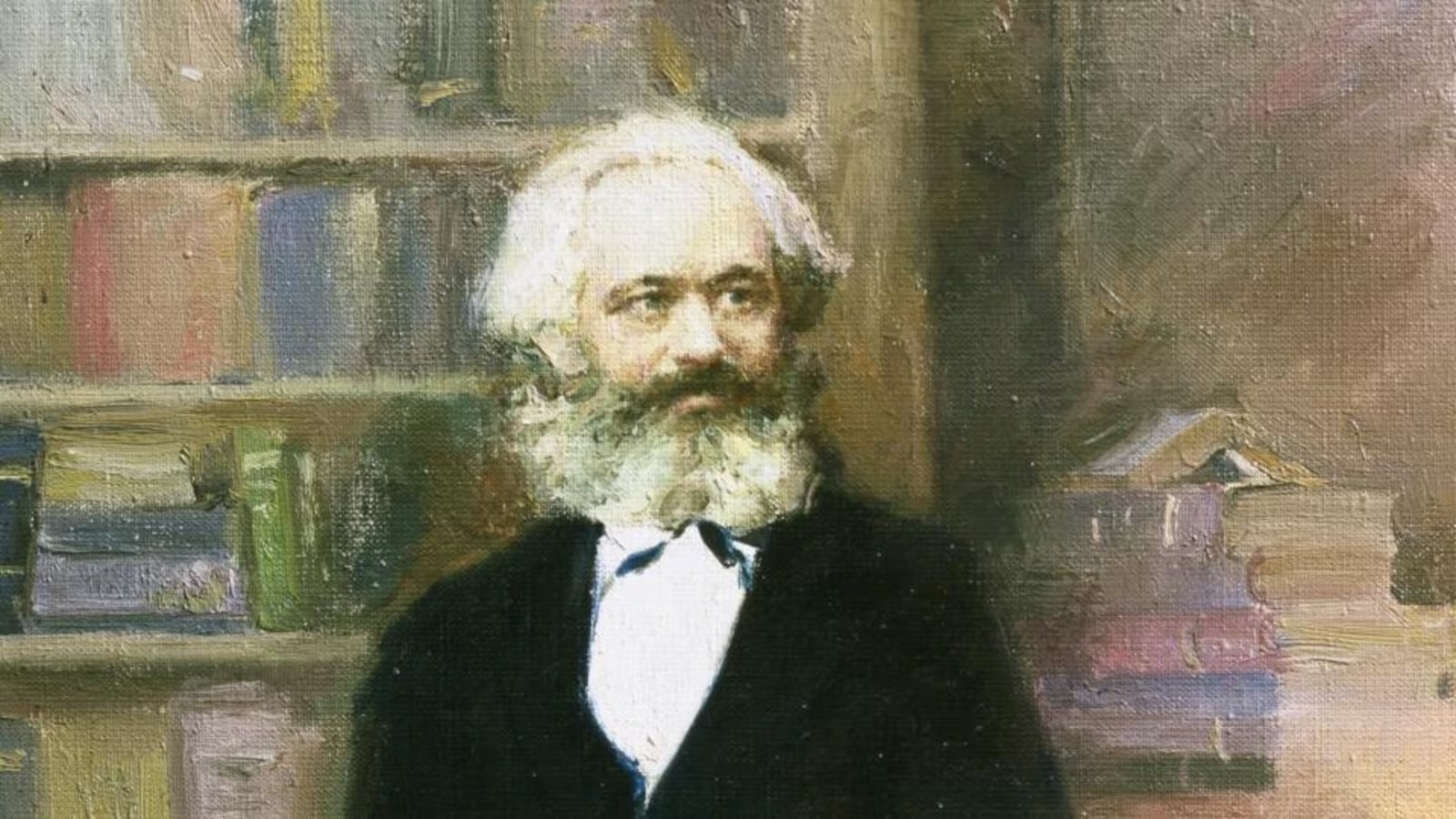
Italy’s proposed changes to the national school curriculum, which would remove the teaching of Karl Marx while giving greater prominence to conservative Italian thought, have triggered fierce backlash.
The Italian education ministry’s proposals for the secondary-school philosophy curriculum, studied by more than half of Italian students, omit thinkers such as Marx, Fichte, Schelling and Spinoza.
At the same time, the list of figures set to be included in the curriculum features philosopher Giovanni Gentile, who served as education minister under Benito Mussolini and co-authored “The Doctrine of Fascism” with the dictator in 1932.
The proposals have prompted accusations that the far-right government led by Giorgia Meloni is attempting to reshape Italy’s “cultural hegemony”, or dominant ideological norms.
The concept itself was developed by Italian Marxist Antonio Gramsci, one of the thinkers removed from the curriculum.
“I think there is a political motivation behind this,” said Giorgio Cesarale, professor of political philosophy at Venice’s Ca’ Foscari University.
Cesarale is among 60 philosophers who signed an open letter objecting to the proposals, which has gathered more than 14,000 supporters online.
“The Meloni government has, for several years, been trying in various ways to impose what it calls its ‘new cultural hegemony’,” Cesarale said.
“They believe we need to replace the left-wing or Catholic-democratic hegemony with a conservative one, and they are pursuing this by occupying senior positions in cultural institutions and by introducing into philosophy teaching an approach directly opposed to the great rationalist, secular, atheist, materialist and Marxist thought of the modern world.”
The idea of cultural hegemony was developed by Gramsci in his Prison Notebooks, written while he was imprisoned by Mussolini’s fascist regime.
Culture Minister Alessandro Giuli, a former journalist and far-right activist, is the author of the book “Gramsci Lives”, which examines cultural hegemony from a right-wing perspective.
A module introduced into the curriculum guidelines in 2010 that included Gramsci has disappeared from the new version.
“Without Marx, you cannot understand anything, because a large part of philosophy since then has been a dialogue with Marx or about Marx,” said Francesco Toto, an associate professor at Roma Tre University.
“You cannot understand modernity, or the various struggles by workers or colonised peoples for freedom. Removing him means erasing an important part of history, but also erasing the hopes for freedom and equality that have shaped the last two centuries.”
The proposals also newly incorporate the influence of women in philosophy, but critics say the list of proposed thinkers is superficial and focused on religious mystics.
Defending the plans, Loredana Perla, head of the ministry commission responsible for drafting them, said the process formed part of a “democratic consultation” and that “every contribution will be taken into account”.
Italy’s constitution protects freedom of teaching, and teachers will retain the freedom to diverge from the proposals, since the guidelines are intended as advisory rather than “an attempt to impose a mandatory list”.
Critics argue, however, that textbook publishers will still follow the guidelines closely and that teachers may face pressure within schools to comply with them.
“The ministry guidelines are, of course, only guidelines,” said Stefano Visentin, an associate professor at the University of Urbino.
“Nevertheless, it is clear that teachers may not be able to resist them, especially if school administrations reinforce this pressure, and that this will create pressure on teachers.”
Philosophy is a compulsory core subject in Italy’s classical high schools. Slightly more than half of school students attend these institutions, while the remainder enrol in technical or vocational schools.
That system is considered part of Gentile’s legacy. Although an idealist philosopher, he served as minister during the fascist era and introduced the system through a 1923 reform designed to provide the children of the ruling classes with a grounding in classical works and philosophical thought.
“That is why changing the teaching of philosophy is such an important political step,” Cesarale said.
“It touches on a sensitive point. It redirects education as a whole in a different direction and shapes the young men and women who will become the future ruling class.”
The dispute is the latest controversy to erupt over the proposed revision of the national school curriculum.
The proposals place Italian, European and Western history back at the centre of the history curriculum, rather than broader study of world history and other civilisations. The plan describes this as a deliberate choice.
According to the proposals, the decision is based on “the enormous importance this history has had, and continues to have, in world affairs”.
“This history has provided the universally adopted forms of the modern state, the theoretical foundations of scientific inquiry and progress, the basis of human rights and freedoms, and even the very concept of history itself.”
Teachers and former university lecturers have also criticised the new philosophy curriculum for high schools. In the open letter, 60 professors and intellectuals, including Massimo Cacciari, Giuseppe Licata and Gaetano Lettieri, complained that authors such as Marx, Spinoza, Fichte and Schelling had been omitted.
The group described the removal of these thinkers as a “disaster” for students’ cultural and critical education, arguing that philosophy is essential to developing critical thinking and understanding complexity, and should therefore occupy an important and high-quality place in the curriculum.
According to the signatories, the list of authors included in the new curriculum is “far too indebted to the project of an imagined ‘cultural hegemony’ that a retreating government, with the legislative term nearing its end, is trying to leave behind as a poisoned gift for the world of schools, teachers and, above all, new generations”.
In her response, Perla first thanked the signatories for their views and said:
“At present, a democratic consultation process is under way involving all those concerned with formulating the National Guidelines in the best possible way, and every contribution will be taken into consideration.”
She added that extensive meetings had recently been held with all Italian associations concerned with philosophy.
“During these meetings, alongside appreciation for the formulation of the Guidelines, useful proposals for changes were put forward,” she said.
The draft remains open for public consultation online until May 31. The aim is to implement the reform from the 2027/28 academic year onward.








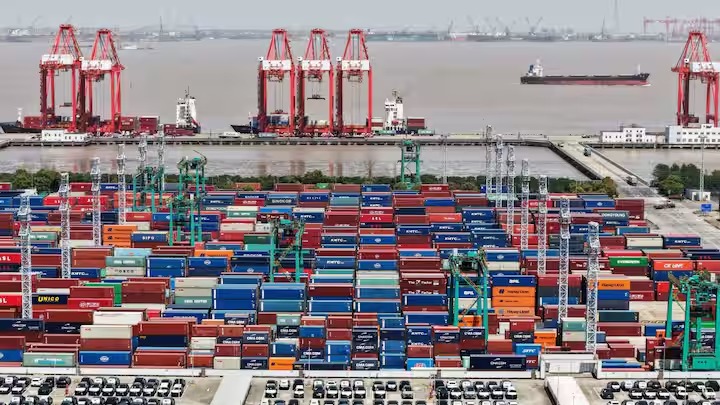
A coalition of 44 European industrial associations has urged the EU to take tougher action against what they describe as “unfair Chinese trade practices”.
The associations, representing sectors such as metals, chemicals, and automotive components, stated that these practices threaten European manufacturing and could trigger further job losses.
The groups demanded that EU member states deploy existing trade defence instruments more effectively and introduce new mechanisms to redress market distortions.
The appeal comes as the EU grapples with a goods trade deficit with China exceeding €1 billion per day. In this context, EU Trade Commissioner Maroš Šefčovič travelled to Beijing to hold talks with his Chinese counterpart.
European leaders are scheduled to debate the bloc’s response at a summit in Brussels next Thursday.
The outcome of the discussions in Beijing appears poised to shape that debate substantially.
In their appeal, the industrial groups urged the European Commission to examine entire value chains when reviewing trade complaints and to recruit additional staff to resolve cases more swiftly.
They also called for new tools to counter state-driven market distortions, whilst warning against measures that could adversely affect close European partners such as the UK, Norway, and Switzerland.
EU Trade Commissioner in Beijing
The purpose of Maroš Šefčovič’s two-day visit to Beijing is to secure concessions from China to help reduce the trade imbalance.
Discussions with Chinese Commerce Minister Wang Wentao focused on vehicle exports that are growing increasingly prevalent across the European market, particularly plug-in hybrid cars.
According to a Politico report published on Thursday, one in eight cars purchased in the EU in August was of Chinese origin, a trend driven primarily by a surge in plug-in hybrid sales.
The EU introduced additional countervailing tariffs on Chinese-origin battery electric vehicles in 2024, but plug-in hybrids were excluded from the scope of those measures.
European negotiators aim to restrict China’s exports in this sector in some manner.
According to Politico’s reporting, if meaningful commitments fail to emerge from the negotiations, the European Commission is considering the imposition of unilateral trade restrictions on cars, including import quotas and tariffs, to protect European carmakers.
The EU is also preparing protective measures for other industrial sectors. European Industrial Commissioner Stéphane Séjourné said the Commission plans to introduce targeted safeguards for plastics and composite materials, depending on demand from EU governments.
Germany urges UK to raise tariffs
According to a source close to Berlin’s stance who spoke to Politico, Germany wants the UK to raise tariffs on Chinese-origin electric vehicles in exchange for an exemption from “Made in Europe” rules.
The source stated that the government of Friedrich Merz believes this move would reflect reciprocity in trade and serve as an answer to accusations from other EU member states that Britain is attempting to “cherry-pick” the benefits of EU membership.
The development follows Prime Minister Andy Burnham’s meeting with the German Chancellor during his first official visit to Germany this week.
Burnham and Merz were set to discuss the prospects of Britain’s future relationship with the EU, as the British prime minister has returned the issue of rejoining the bloc to the UK political agenda for the first time in a decade.
Berlin’s position on electric vehicle tariffs is significant because Germany, unlike countries such as France that have adopted tougher stances, had generally pursued an accommodating policy towards the UK on trade issues since Brexit.
In response to the trade practices of rivals such as China and the US, the EU is preparing new “Made in Europe” rules designed to favour European manufacturers over producers outside the bloc.
The UK fears these measures could harm British business, particularly car manufacturers, and is seeking assurances from Brussels that it will be exempted from the application of these rules.
If Berlin has its way, these assurances could be contingent upon adopting EU trade policy regarding Chinese-origin electric vehicles.
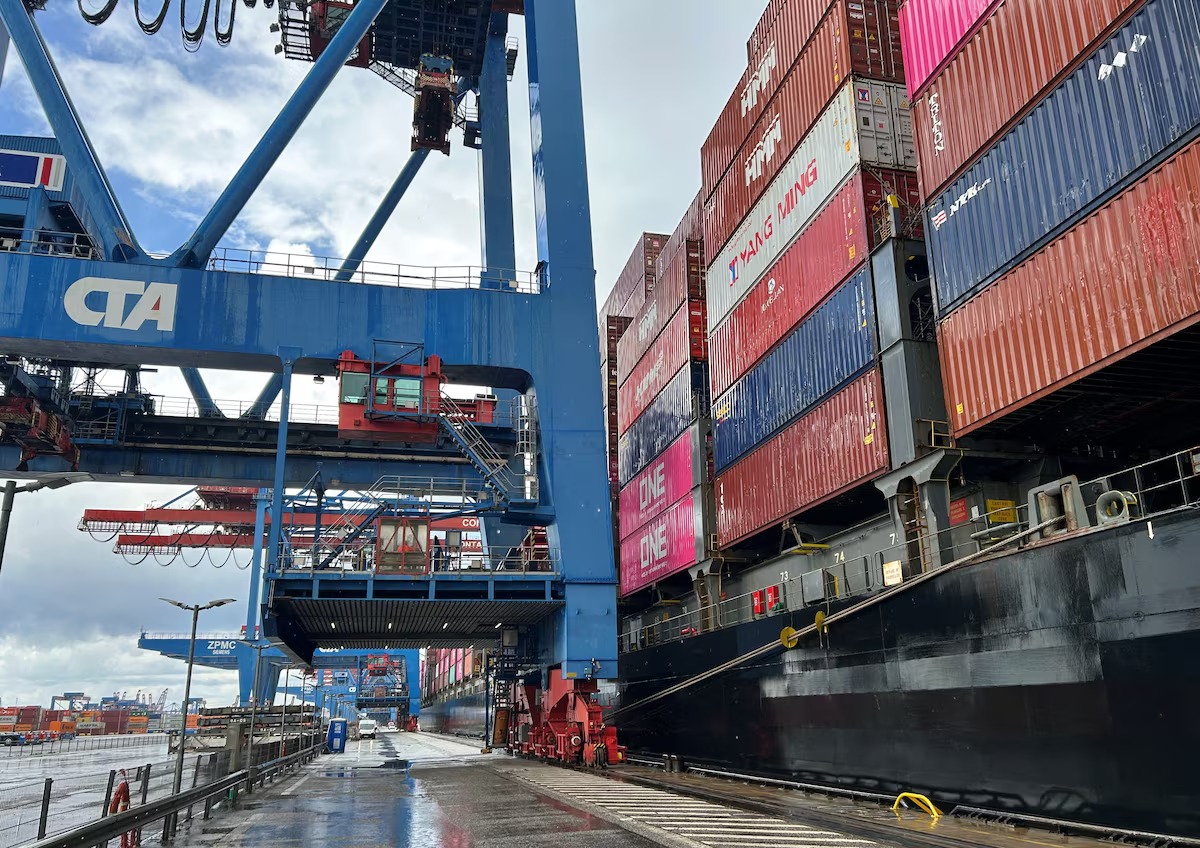
Central and Eastern Europe is becoming increasingly vital for the German export sector amid declining shipments to China and the US.
While German exports to the world’s two largest economies have dropped significantly in recent times, rising exports to Central and Eastern Europe have more than offset these losses.
Trade with the Visegrad Group countries in particular is expanding with considerable strength, according to German Foreign Policy.
In the first half of 2026, German exports to Poland grew by 9.2%, while exports to the Czech Republic rose by 14%.
During the same period, exports to China fell by 12.4%, and exports to the US contracted by 6.5%.
Germany currently exports nearly 50% more goods to Poland than it does to China.
The German Eastern Business Committee describes the region as a “key region for German exports” and is demanding the expansion of the EU single market through the admission of eastern and south-eastern countries into the EU.
At the same time, China’s economic influence in Eastern Europe is also expanding. However, Chinese companies are not merely competing with German firms; they are also becoming increasingly integrated into European production chains.
The EU and its neighbourhood carry great weight for German industry
An intensifying international competitive environment is elevating the importance of the EU single market for the German export sector.
In 2024, just under 54% of all German goods exports went to EU member states. In 2019, this share stood at approximately 51%.
The five largest export markets within the EU in 2024 were France, with goods valued at 111 billion euros; the Netherlands, with 105 billion euros; Poland, with 90 billion euros; Italy, with 78 billion euros; and Austria, with 72 billion euros.
Approximately 52% of Germany’s exports to the EU consisted of intermediate goods, such as metals, basic chemicals, or electrical components, which undergo further processing in other EU countries, often at the foreign facilities of German companies.
Capital goods, such as machinery and equipment, accounted for 17% of exports, while consumer goods comprised approximately one-third.
The growing concentration on Europe carries certain risks. Because the German economy had diversified its trade heavily towards Asia, it was less affected by the eurozone crisis than other EU member states.
The decline in this geographical diversification heightens the vulnerability of the German export model to crises.
The export boom in Eastern Europe
Central and Eastern European countries in particular managed to compensate for the declines in exports to China and the US.
One reason for these declines is that the People’s Republic of China has begun producing domestically many high-tech products previously imported from Germany; another is that exports to the US were adversely affected by Trump’s tariffs.
Cathrina Claas-Müller, chairwoman of the German Eastern Business Committee (OA), told the Handelsblatt newspaper: “Central and Eastern Europe has become a key region for German exports.”
While the volume of German exports to China and the US fell overall by just over 10 billion euros, Central and Eastern Europe more than made up for these drops with an increase of approximately eleven billion euros.
Claas-Müller emphasised that “Central and South-Eastern Europe […] cannot, of course, replace China and the US.” However, she stated that recognizing the region’s importance for Germany’s economic development is vital.
For this reason, the chairwoman argued that the European single market must be expanded rapidly towards the east and south-east so that the region’s potential can be utilized in the best possible way, even beyond existing EU borders.
The OA chairwoman stressed that progress in EU accession negotiations conducted with Ukraine, Moldova, and the Western Balkan countries must be “courageously seized.”
Germany’s industrial core: the Visegrad countries
Within Central and Eastern Europe, the Visegrad countries (Poland, Hungary, the Czech Republic, and Slovakia) occupy a prominent position.
These countries have become some of the most critical manufacturing hubs worldwide for German industry.
From Germany’s perspective, these countries offer several investment advantages: geographical proximity to Western Europe, a well-developed industrial infrastructure, an extensive pool of skilled labour, and relatively low wage levels.
German companies maintain a strong presence in this region across core sectors such as mechanical engineering and the automotive industry, alongside the chemical and electrical sectors.
In the first half of 2026, German exports to China fell by 12.4% compared with the same period of the previous year, while exports to the US declined by 6.5%.
In contrast, German exports to Hungary rose by 6.7%, exports to Poland grew by 9.2%, and exports to the Czech Republic increased by up to 14%.
From January to June, Germany exported goods worth 53.8 billion euros to Poland. Exports to China, by comparison, reached only 36.3 billion euros.
This means Germany exported nearly 50% more goods to Poland than to China.
Poland has ranked as the fourth most important market for German companies since 2024; China currently sits in only ninth place.
Even the Czech Republic, a much smaller country, came close to China with 30.3 billion euros in German exports.
Poland between Germany and China
At the same time, Poland is also increasing its imports from China.
In the first half of the year, the country imported German goods worth 43.1 billion euros (18.6% of total imports) and Chinese goods worth 36.7 billion euros (15.9% of total imports).
The US ranked third, with imports valued at 12.7 billion euros (5.5% of total imports).
In July, for the first time, more goods were shipped to Poland from China than from Germany.
A tripartite trade pattern is becoming increasingly pronounced in Poland: China is gaining importance as a supplier of electronics, automobiles, and other consumer goods, while Germany retains its central position in terms of investments and European production chains.
In parallel, Germany remains the undisputed leader when it comes to Polish exports: Poland exported goods worth 59.7 billion euros to Germany. This figure constitutes 26.3% of Poland’s total goods exports.
Czechia and France follow, each accounting for approximately 14 billion euros.
Competition and division of labour between Germany and China
Chinese companies in Central and Eastern Europe are not solely competing with German firms.
This dynamic is clearly visible in the German automotive industry’s network in Hungary. In 2022, Contemporary Amperex Technology (CATL), the Chinese firm that is the world’s largest battery manufacturer, announced that it would establish a new factory in Debrecen in eastern Hungary.
CATL also supplies batteries to companies including BMW, Mercedes, Volkswagen, and Stellantis, which manufacture in Hungary as well.
In 2023, other Chinese companies, such as Huayou Cobalt and Sunwoda Electronics, also invested in Hungary.
In 2024, Eve Energy joined this trend by establishing a factory to supply BMW.
The integration of Chinese car manufacturers and suppliers into European automotive production has now become a widespread strategy to address the automotive crisis.
In Spain, France, and Italy, Stellantis plans to utilise idle production capacity by building models for Chinese companies Leapmotor and Dongfeng. Leapmotor models will be produced at Stellantis plants in Madrid and Zaragoza.
Plans in France call for the joint production of an electric car with Dongfeng, while in Italy, joint production of a compact electric car with Leapmotor is planned.
Production of an Opel SUV using Chinese technology is also planned in Madrid.
Volkswagen’s new strategy likewise aims to produce VW models previously sold only in China for the European market.
The plan to bring its Chinese models to the European market involves both imports from China and, at a later stage, the manufacturing of the vehicles or their components in Europe.
General decline in German exports
German exports contracted unexpectedly in August due to a sharp drop in shipments to the US.
This development revealed that momentum in the eurozone’s largest economy waned following a robust first half of the year.
According to data released on Thursday by the Federal Statistical Office, exports fell by 0.8% compared with the previous month.
The outcome fell short of the 0.6% increase forecast in a Reuters poll.
Carsten Brzeski, global head of macroeconomics at ING, said: “Trade is the area where Germany’s resilience is faltering.”
Brzeski noted that while German exporters benefited in the second quarter from Asian rivals being more heavily affected by the closure of the Strait of Hormuz, the third quarter has so far experienced a setback.
Volker Treier, head of foreign trade at the Association of German Chambers of Commerce and Industry (DIHK), said: “The current decline shows that the recovery in exports is merely a light breeze.”
Imports rose by 0.9% on a calendar- and seasonally adjusted basis compared with July.
Consequently, Germany’s trade surplus narrowed from 21.6 billion euros in July to 19.5 billion euros in August.
Despite rising prices caused by the Iran crisis and uncertainty triggered by US tariffs, the German economy demonstrated resilience in the first half of the year.
Germany grew by 0.4% in the first quarter and by 0.3% in the second quarter.
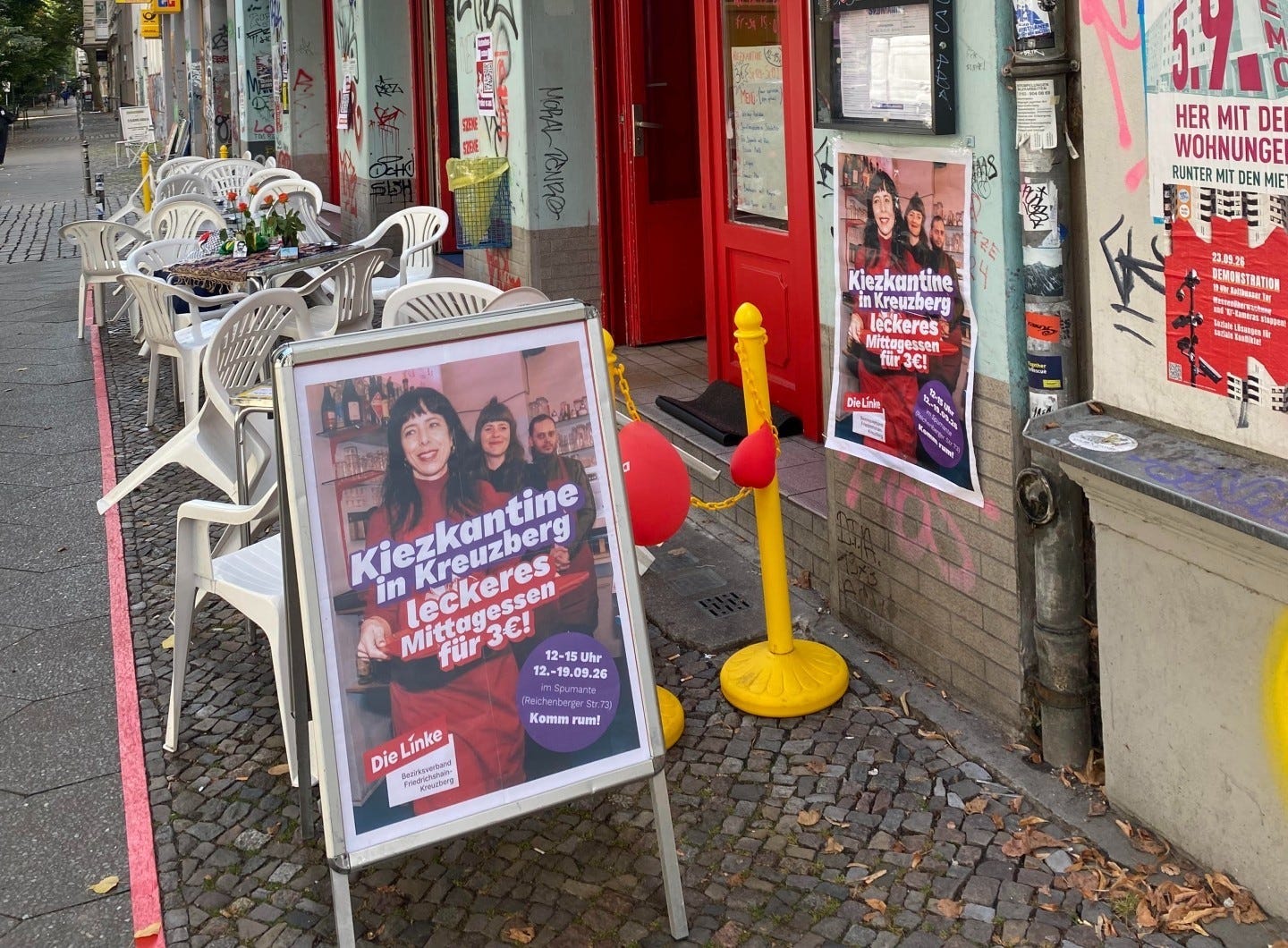
Following its victory in the Berlin state election, the Left Party (Die Linke) agreed to a series of binding decisions regarding antisemitism and Israel during coalition negotiations with the Social Democratic Party (SPD) and the Greens.
Accused of antisemitism across mainstream political and media circles over the stances of certain members, the party announced that it explicitly rejects the BDS movement and recognises “Israel’s right to exist”.
A joint declaration issued by the three parties stressed Berlin’s “historical responsibility to protect Jewish life, safeguard the open freedom of religious expression, allocate resources for security measures at Jewish institutions (personnel and infrastructure improvements), and support Jewish and Israeli students, academics, and cultural projects.”
The statement further indicated that the parties would “commit to preserving historical memory, supporting memorial sites, and vastly expanding efforts to prevent antisemitism in schools, teacher training, and youth work.”
While “Israel’s right to exist” was reaffirmed, the suffering and devastation endured by the Palestinian civilian population in Gaza and the West Bank were also “explicitly acknowledged.”
In their joint statement, the parties affirmed that “legitimate criticism of the Israeli government does not justify antisemitism, and vice versa.”
The Left Party explicitly rejected the BDS (Boycott, Divestment, Sanctions) movement, ruling out any cooperation with or public participation alongside organisations and actors that spread antisemitism, glorify violence, or fuel conflict.
Clear internal party and parliamentary group mechanisms will be established to address infractions by members who breach these principles, ranging from disciplinary sanctions to expulsion from the parliamentary group.
Furthermore, the three parties proposed an amendment to the Berlin State Constitution, modelled on the example of Brandenburg, to enshrine explicit constitutional protections against antisemitism, antiziganism, racism, and other forms of group-focused enmity.
The first casualty of Berlin’s prospective red-red-green coalition could be Left Party lawmaker Vanessa Emde. The 45-year-old Emde was elected in the Nord-Neukolln constituency after securing 46.2% of the first-preference votes.
According to Tagesspiegel, Emde remains a contentious figure even within the Left Party due to her pro-Palestinian views, and some party members have considered expelling her from the parliamentary group to avoid jeopardising the coalition with the SPD and the Greens.
During the election campaign, Emde drew scrutiny for anti-Israel statements and opposed the Left Party’s entry into government.
On election night, she was photographed with Ibrahim Ibrahim, an individual alleged to have ties to the PFLP.
Emde is also a member of the internal party working group “Palestine Solidarity” and, according to reports, stated in May 2026: “States do not have a right to exist; it is human beings who have a right to exist.”
In this context, Emde has expressed support for a “one-state solution” across Israel and Palestine.
As noted in reports, Emde’s remark was perceived within the Left Party as an argument in favour of a “Greater Palestine”, running counter to the party’s official recognition of “Israel’s right to exist”.
Emde’s statements could therefore be deemed a breach of this commitment, particularly as all Left Party candidates signed a pledge during the election campaign binding them to the party and electoral platform.

European industry urges EU action against China trade practices

Israel opposition seeks Netanyahu probe over 7 October call logs

German exports pivot to Eastern Europe amid drops in US and China

Thiel targets Pope and Obama over AI in new ‘Antichrist’ lectures

Energy firms enlist ex-US officials to tap Venezuelan oil
-
 Diplomacy2 weeks ago
East-West Forum in Istanbul highlights irreversible shift to multipolarity
-
 Europe2 weeks ago
European unions urge governments to scrap all Palantir deals
-

 Europe2 weeks ago
Emmanuel Todd says West faces collapse amid Ukraine and Iran crises
-
 Europe2 weeks ago
Rome protests AfD poster depicting South Tyrol as independent state
-
 Europe1 week ago
German interior ministers drop unanimity rule to counter AfD veto
-
 Europe2 weeks ago
German industry stockpiles critical minerals before EU-China talks
-
 Europe1 week ago
Key European allies excluded from US-led NATO meeting in Poland
-
 Europe2 weeks ago
Hamburg drill tests Baltic deployment prior to formal defense alert
