
Europe
Merz and net contributors reject two-trillion-euro EU budget draft

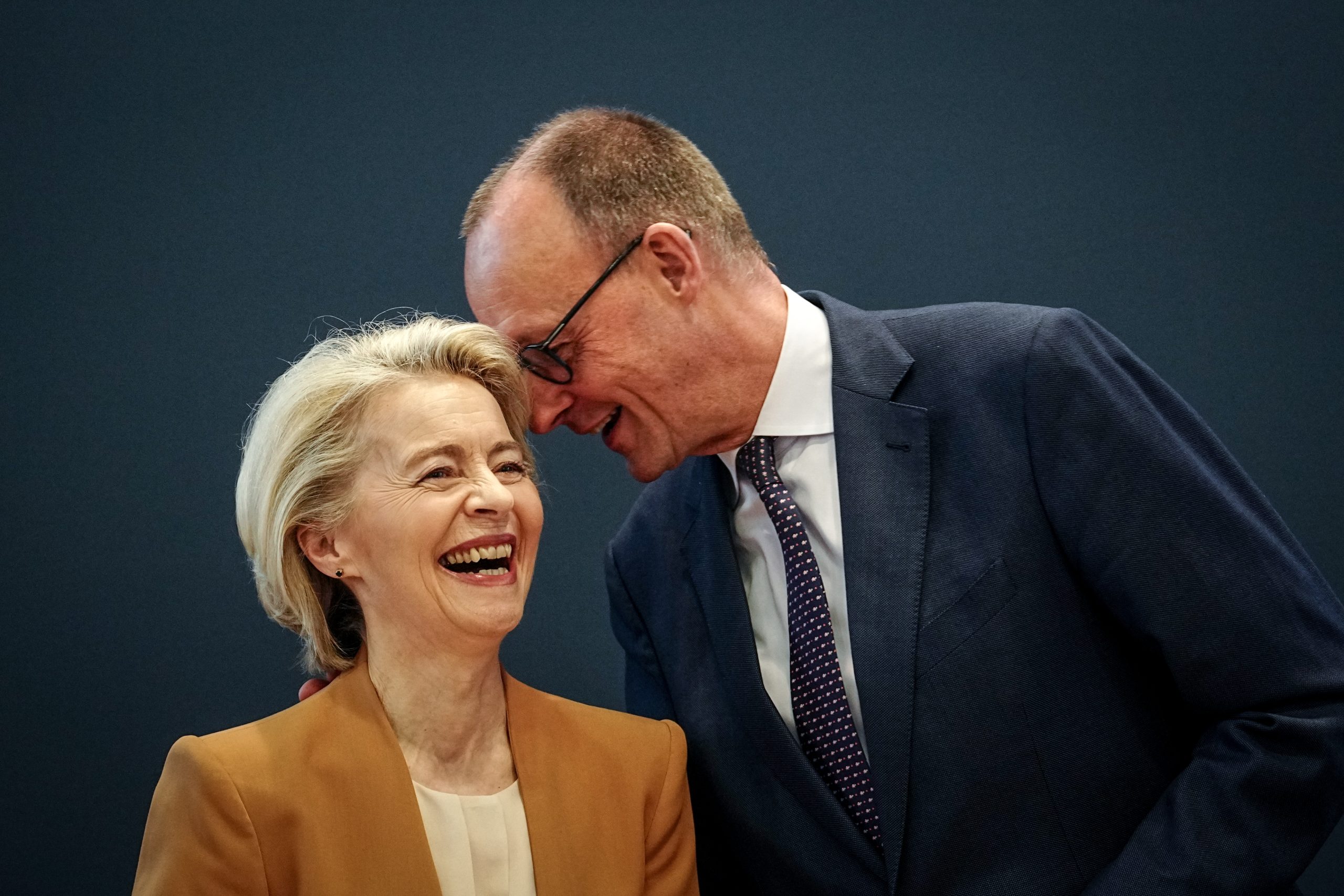
German Chancellor Friedrich Merz has met with allied net-contributor nations in Berlin and launched a fierce battle against Brussels over the European Commission’s draft budget, which projects a 60% increase for the next budgetary period.
Appearing before the cameras alongside the heads of government of Austria, Denmark, and Finland at a press conference held at the Chancellery on Thursday, Chancellor Merz, a member of the Christian Democratic Union (CDU), underscored one particular point, saying: “We are not penny-pinchers.”
Merz stated that the elevated financing demands emerging from Brussels were entirely out of step with current realities.
Coming as negotiations for the EU’s next seven-year budget enter their most critical phase, this intervention marks the opening salvo in intensive bargaining over Europe’s future financing and political direction in the coming months. Between October and December alone, four separate EU summits at the leaders’ level are scheduled to take place.
Merz invited the heads of government of three countries to Berlin in preparation for this negotiating marathon, while the prime ministers of the Netherlands and Sweden joined the talks via video conference.
The common denominator uniting the six countries acting together in Berlin is their status as the highest net financial contributors to Brussels. Merz described the coalition by stating: “We are the group of the largest contributors to this budget.” The German Chancellor noted that these six countries single-handedly finance almost 40% of the total budget of the 27 EU member states, while also providing approximately 70% of bilateral aid delivered to Ukraine.
Austrian Chancellor Christian Stocker, of the Austrian People’s Party (ÖVP), joined Merz in rejecting accusations of miserliness, stating: “No one can accuse us of being unwilling to contribute.” However, he noted their insistence on the necessity of greater savings and comprehensive reforms.
Objection to the two-trillion-euro budget proposal
The joint message delivered by the six leaders conflicts directly with the expectations of Brussels and numerous other EU member states. While the European Union’s current seven-year budget covering the 2021–2027 period stands at 1.2 trillion euros, the European Commission is proposing a budget of approximately 2 trillion euros for the 2028–2034 cycle, representing a net 60% increase when the impact of inflation is included.
Emphasising that this proposal is entirely unaffordable at a time when all member states are undertaking fiscal consolidation in their own public finances, Merz assessed: “In this group, we are all of the same opinion: the proposals must be trimmed by hundreds of billions of euros. These cuts must cover all areas without exception.” Merz stated that they demand a realistic and reform-oriented budget, adding: “We cannot meet the challenges of the 21st century with a 20th-century budget.”
Danish Prime Minister Mette Frederiksen adopted a similar stance, saying: “The EU budget may be larger than it is today, but the proposal currently on the table has certainly been set too high.”
The joint declaration adopted by the six heads of government included an additional concrete financial justification: it stressed that an extraordinarily large sum of approximately 300 billion euros in the current budget period had never been requested or utilised by member states. The leaders argued that this figure provides clear proof that excessive funds are being transferred to Brussels.
Bloc divisions and security priorities
Although the Berlin summit was intended to project a message of strength and unity, Merz and his allies remain in a numerical minority across the wider EU. A broad group of member states ranging from the Baltic countries to Poland, Hungary, Italy, and Portugal openly supports the Commission’s 2-trillion-euro draft. As net recipients drawing more resources from the budget than they pay in, these countries demand that the budget’s traditionally largest expenditure lines—agricultural and regional development funds—remain untouched.
In contrast, Merz wants cuts to agricultural and regional funds in order to redirect resources toward Europe’s global competitiveness and defence capabilities.
Defence matters occupied a substantial place in the Berlin discussions. Finnish Prime Minister Petteri Orpo recalled that his country shares a 1,340-kilometre land border with Russia, emphasising that this reality creates very concrete security, infrastructure, and economic challenges in its eastern and northern regions. Orpo stated that the new EU budget must recognise this new reality emerging on the eastern border.
Nevertheless, at the press conference where leaders read solely from prepared statements and took no questions from journalists, a notable divergence of views surfaced among the participants. Austrian Chancellor Stocker explicitly distanced himself from Merz’s call for cuts across all areas, remarking: “From Austria’s perspective, agricultural and regional development funds must never be forgotten.”
Contrasting message from von der Leyen in Paris
Another statement illustrating how arduous the negotiations starting in the autumn will be came from European Commission President Ursula von der Leyen. Speaking in Paris at a meeting of the Movement of the Enterprises of France (MEDEF) nearly simultaneously with the Berlin gathering, von der Leyen said: “The next budget will be the financial backbone of our independence.”
Drawing attention to Europe’s geopolitical standing vis-à-vis China, Russia, and the US, von der Leyen argued that the budget must be increased. The Commission President said: “Europe cannot set new targets for itself without providing the resources to finance them.”
The critical turning point in the trajectory of the negotiations will be the new compromise proposal expected to be submitted in early October by Ireland, which holds the rotating EU presidency.
Merz and his allies hope that the text prepared by the Dublin administration will take their demands for hundreds of billions of euros in cuts against the 2-trillion-euro draft into account as much as possible.
Member states have until the end of the year or early 2027 at the latest to reach a compromise. If an agreement cannot be secured within this timeframe, the French presidential election process threatens to suspend talks for months and plunge negotiations into deadlock.
In France, right-wing populist candidate Marine Le Pen has already announced that, should she win the election, she will slash France’s contributions to the EU budget by half. It is assessed that negotiations would reach a complete impasse if this pledge were realised.
Meanwhile, the subject of France constituted one of the most sensitive background agenda items in Berlin on Thursday. French President Emmanuel Macron, nearing the end of his term in office, did not attend the Berlin meeting despite having recently agreed with Merz to maintain close coordination on budgetary matters.
Macron advocates financing the new budget through new EU own resources, such as a special tax on US technology giants. However, this proposal carries the risk of a new trade war with US President Donald Trump. Merz, for his part, opted not to touch upon this contentious topic at all in his remarks in Berlin.



The European Union is preparing to take a direct role in the diplomatic negotiations surrounding the war in Ukraine.
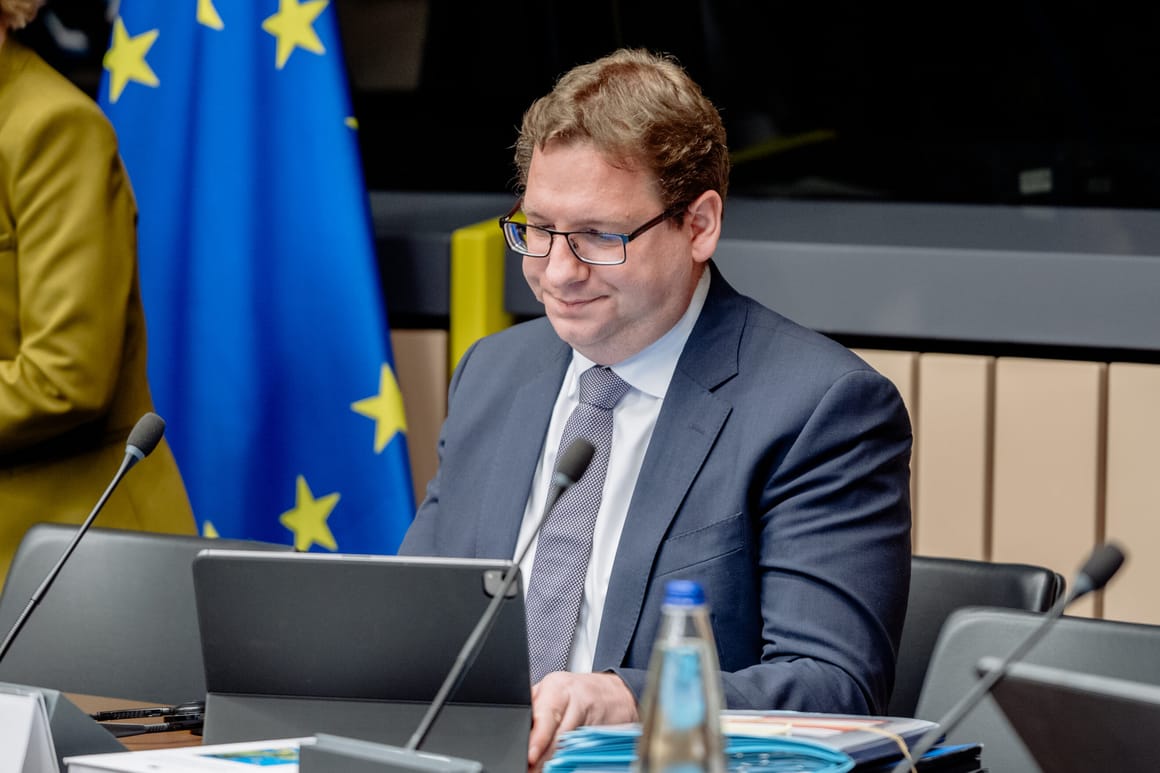
According to a report by Euronews television, the European Commission and the European Council are establishing a joint delegation of high-ranking officials to attend an upcoming round of talks between the parties. Björn Seibert, the head of cabinet to European Commission President Ursula von der Leyen, will lead the delegation.
The German diplomat, described in the report as an influential bureaucrat, is expected to head the team attending the talks scheduled to take place in Abu Dhabi in early November.
“We are strongly committed not only to ending the war, but also to achieving a just and lasting peace. This is our goal, and this is precisely the position we defend in the current talks,” a European Commission representative said in a statement on the matter.
Brussels’s key figure behind the scenes
A European bureaucrat of German descent, Björn Seibert has long been recognized as von der Leyen’s closest aide.
Seibert first joined von der Leyen’s team in 2013 during her tenure as Germany’s defence minister, later moving with her to the European Commission.
According to reporting by Politico magazine, Seibert gradually developed into one of the most powerful figures behind the scenes of European politics.
The magazine noted that Seibert has been directly involved in clearing senior appointments and has played an influential role in managing relations with both the European Parliament and the US.
This setup has also sparked controversy within the institution. Critics claim that concentrating power in the hands of the cabinet chief and von der Leyen leads to excessive centralization in administration, whereas supporters argue the model ensures rapid, efficient decision-making.
If these multilateral contacts materialize to bring together delegates from Europe, Ukraine, the US, and Russia under one roof, they will mark the first talks held in this specific format during the peace process.
Diplomatic engagements so far have been conducted either bilaterally between Russia and the US or as trilateral meetings that included Ukraine.
However, the EU delegation’s participation at the negotiating table is not yet finalized, as the issue remains under consultation.
European capitals have actually spent months searching for a similar diplomatic channel. Politico reported in January that EU member states had discussed appointing a special envoy to lead talks with Moscow over Ukraine, an effort backed by French President Emmanuel Macron and Italian Prime Minister Giorgia Meloni.
The Telegraph newspaper reported in October that, alongside Meloni, Finnish President Alexander Stubb, Czech President Petr Pavel, Norwegian Prime Minister Jonas Gahr Støre, and Danish Prime Minister Mette Frederiksen were being mentioned for the European representative role.
The newspaper noted that officials were also weighing the option of creating a joint delegation of representatives instead of choosing a single figure.
Reservations from Moscow over European intentions
Moscow, for its part, views Europe’s position as potentially decisive in resolving the conflict. “It is not enough to talk only with Kyiv; it is necessary to talk with the whole of Europe, which fully backs Kyiv in its desire to prolong the conflict. Perhaps Europe’s stance is of key importance here,” Russian Presidential Aide Yuriy Ushakov said.
Kremlin spokesman Dmitriy Peskov also stated that Moscow would support the emergence of an EU negotiator. “Having a negotiator is good. If that negotiator genuinely seeks to contribute to a peaceful settlement, it would be much better,” Peskov said.
Conversely, Russian Foreign Minister Sergey Lavrov struck a cautious tone on 27 October regarding European countries’ interest in joining the talks. Lavrov stated that Europe wants a seat at the table without altering its outlook toward Moscow.
Arguing that Europe disregards Russia’s position on the root causes of the conflict, Lavrov emphasized that European nations do nothing beyond levelling accusations and demanding a halt to hostilities.
“This merely demonstrates the Europeans’ desire to join the negotiation process. However, the positions with which they would enter the process remain a major question mark,” the Russian minister said.
Despite these conflicting signals, Russian President Vladimir Putin previously noted that Moscow has not closed the door to dialogue with European nations.
As a preferred European negotiator, Putin previously named former German Chancellor Gerhard Schröder.
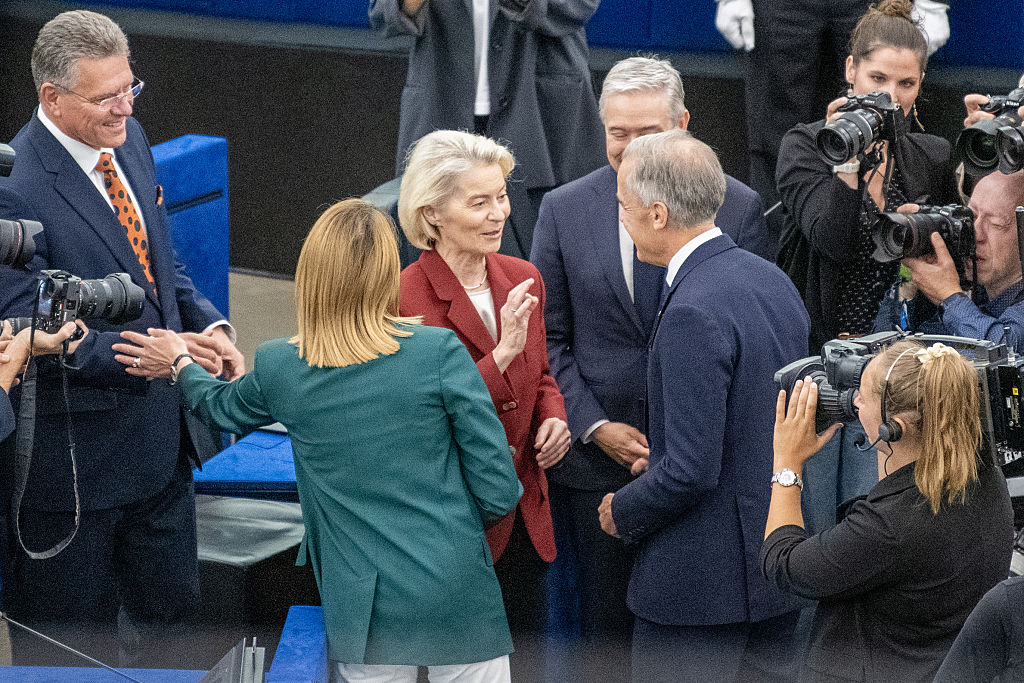
The EU and Canada will strengthen their partnership to address shared security challenges by deepening defence cooperation stretching “from the Arctic to the Black Sea”.
A draft joint statement prepared for a summit to be held in Montreal on 29-30 October addresses all of these matters comprehensively.
“Canada and the EU are strategic partners in taking more responsibility for our common security and defence,” reads the draft EU-Canada Joint Summit Statement obtained by Rapporteur.
The two sides will “accelerate the implementation” of the Security and Defence Partnership and broaden cooperation across international peace and crisis management, sanctions, defence industry, maritime and space security, hybrid threats, and resilience.
The summit follows a significant political push aimed at bolstering EU-Canada ties.
On 16 September, Canadian Prime Minister Mark Carney attended European Commission President Ursula von der Leyen’s State of the European Union address in Strasbourg.
In that speech, von der Leyen suggested making Canada the bloc’s first “associate member”.
The document welcomes Canada’s interest in reinforcing its participation in EU Common Security and Defence Policy (CSDP) missions and operations, as well as Ottawa’s ongoing commitment to European security, “notably on the Eastern Flank from the Arctic region to the Black Sea”.
In the Arctic, both sides plan to reinforce cooperation on “peace, security and resilience”.
The summit statement will also launch “a new, dedicated dialogue on the Arctic, foreign information manipulation and interference, climate security and transport”.
The draft also reaffirms EU and Canadian support for Ukraine’s sovereignty and territorial integrity, pledging continuous military and other assistance to Kyiv alongside increased pressure on Moscow.
According to Article 10, the partnership also turns toward the Middle East. There, the EU and Canada aim to work more closely “to support de-escalation, address humanitarian needs”, and contribute to conditions necessary for lasting peace in Palestine based on a two-state solution.
Defence industry cooperation is another priority. The draft highlights existing cooperation pursued through the EU’s Permanent Structured Cooperation (PESCO), Canada’s participation in capability coalitions, and its inclusion in the Security Action for Europe (SAFE) mechanism.
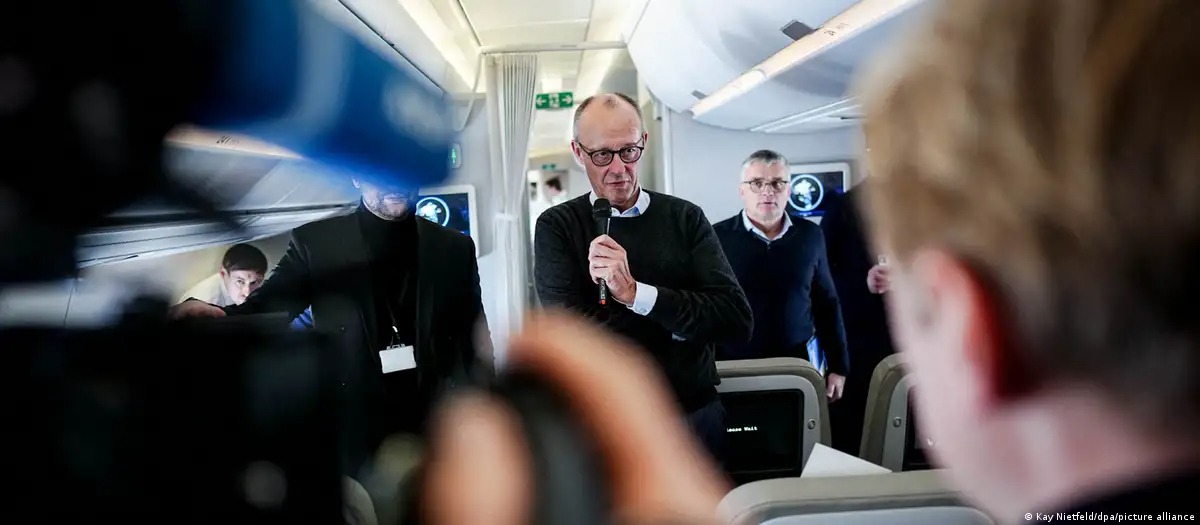
On his third trip to Asia since taking office, Chancellor Friedrich Merz is seeking new markets, particularly for German defence industry companies.
Alongside drone manufacturer Quantum Systems and Airbus Defence & Space, at least two defence industry firms are among the business delegation accompanying the chancellor on his visits to Singapore, Japan, and South Korea starting on Monday.
Merz is generally attempting to broaden sales markets across the region, partly because German exports to China have suffered a sharp decline.
German industry is consequently seeking alternatives at present. While the federal government now intends to open the way for new arms exports, a military exercise in Japan involving around 100 medical personnel from the Bundeswehr is drawing to a close.
Part of the scenario involves an incident causing numerous casualties on the island of Okinawa.
This is a real threat should war break out over Taiwan, located just 600 kilometres away. That distance is not particularly far for US fighter jets stationed on Okinawa.
Germany is systematically expanding its military and defence cooperation with Japan.
Alternatives to exports to China
Chancellor Friedrich Merz’s trip to Singapore, Japan, and South Korea comes at a time when German companies are making intensive efforts to find alternatives to China for their business in Asia.
Wolfgang Niedermark, an executive board member of the Federation of German Industries (BDI) and Asia expert, observed, for example: “In recent years, we may perhaps have relied too much on China, which is naturally our most important industrial partner.”
To explain the search for alternatives, Niedermark cites “geopolitical” reasons, referring to the rivalry between the West and China, alongside “industrial competition” with China.
Chinese companies are now producing many items they previously imported from Germany for a long time, including high-tech products.
As a result, German exports to China, which still stood at around 107 billion euros in 2022, have dropped sharply since then.
In 2025, they recorded a further decline of approximately 9.7%, reaching a value of just over 81 billion euros.
German exporting companies are consequently searching for alternative markets at present, and Asia stands out as a key export destination.
Asian giants also want to reduce dependence on the US
During his first trip to Asia in office in January, Merz sought to strengthen economic ties with India, including expanding exports to that country.
Japan and South Korea are also promising options. While they are the second and third largest markets for German exporters in Asia, they have so far accounted for only a quarter of the value of Germany’s exports to China. This indicates further potential exists.
Japan and South Korea, like Germany, are also attempting to diversify their economic relationships.
Confronted with fierce attacks from the Trump administration, these countries are seeking to establish profitable ties with alternative partners.
On Thursday, Merz will open the biennial German Business Asia-Pacific Conference, which is being held in Seoul this year.
The event will be led by Economy Minister Katherina Reiche and Siemens Chief Executive Roland Busch.
Busch is travelling with a business delegation of about 30 people that previously accompanied Merz to Tokyo and will accompany him to Singapore this time as well.
Singapore is regarded as the commercial and financial centre of the entire rapidly growing Association of Southeast Asian Nations (ASEAN).
German arms industry sets its sights on Asia
At least two defence industry companies are included in the business delegation accompanying Merz: drone maker Quantum Systems and Airbus Defence & Space.
Quantum Systems supplies the German Armed Forces and the Armed Forces of Ukraine, among others, and is now planning broader growth extending into Asia.
Since the German government withdrew from the French-German FCAS (Future Combat Air System) project, which aims to build a sixth-generation fighter jet, Airbus Defence and Space has been seeking an alternative and is currently considering joining the British-Italian-Japanese GCAP (Global Combat Air Programme) project.
More detailed talks with British company BAE Systems are scheduled to take place this week.
London maintains an open stance towards Germany joining GCAP because it can barely finance this exceptionally expensive project.
However, London, like Japan, is pressing for swift project implementation; the fighter aircraft is envisioned to become operational by 2035.
The German defence industry is not known for implementing its projects quickly.
Airbus also insists on playing a key role in development and production. Shares in GCAP have largely been allocated.
Talks with Japanese project partner Mitsubishi Heavy Industries are expected to take place.
German-US-Japanese exercise on Okinawa
A ten-day military exercise organised by the Japanese armed forces will also conclude on Thursday.
Alongside troops from the US, the Philippines, and New Zealand, the German Armed Forces are taking part in the exercise with around 100 soldiers from their medical unit.
The main venue for the exercise is the Japanese island of Okinawa, situated on the first island chain off the Chinese coast and home to the largest US Air Force base in the Asia-Pacific region.
Okinawa lies approximately 600 kilometres from Taiwan. If conflict breaks out over the island, US troops would probably be expected to intervene from Okinawa. A Chinese attack on the military bases there is also probable.
Exercise Keen Sword, which began last Monday, includes providing initial medical treatment in an incident involving numerous injured personnel, among other elements.
According to the scenario, the Bundeswehr will transport medical supplies and blood products to Okinawa using an Airbus A400M aircraft and subsequently fly the wounded to a suburb of Tokyo.
German medical personnel will take over further treatment of the injured there.
Through this exercise, the Bundeswehr, which is currently preparing primarily for a potential war against Russia, is simultaneously preparing to participate in a large-scale war against the People’s Republic of China.
Relationship between German and Japanese militaries to deepen
Federal Defence Minister Boris Pistorius indirectly confirmed this during his visit to Tokyo in March.
At the time, he was quoted as saying that in addition to focusing on NATO’s eastern flank and “other conflicts, such as in the Middle East,” we must “not lose sight of other regions and the challenges in those regions.”
In this context, cooperation between the German and Japanese armed forces will now become “significantly more intensive.”
As the Defence Ministry indicated at the time, German warships and fighter aircraft were most recently in Japan in 2024 for a port visit and exercises, respectively.
In return, a task force from the Japan Maritime Self-Defense Force was in the Port of Hamburg in 2024.
In 2025, Japanese F-15 fighter jets, based on a US model, visited the German Air Force.
Furthermore, as early as 2024, Germany and Japan signed a “comprehensive logistics agreement.”
In the defence industry, the ministry noted that close cooperation already exists between Airbus Defence & Space and Kawasaki Heavy Industries.
Both companies have collaborated for decades on the construction of H145 multi-role helicopters, which are also used by Bundeswehr special forces.
Pistorius stated at the time that “much more potential” still exists for this cooperation.

EU prepares Ukraine peace mission to Abu Dhabi led by Björn Seibert

US warns Gulf allies of possible Iran strikes after midterms

Steinmeier seeks to de-escalate German-Chinese tensions on visit

Defeated Flávio Bolsonaro flees Brazil for Miami despite travel ban

US and Russia weigh energy deals and corporate return in peace talks
-
 America1 week ago
How Elon Musk fuses private empire with state power, Ben Tarnoff explains
-
 Europe1 week ago
AfD leader Weidel calls funding lost Ukraine war a grave mistake
-
 Middle East1 week ago
Egypt delays parliamentary vote on deploying troops to Saudi Arabia
-

 America7 days ago
US wealthy demolish multimillion-dollar mansions for land
-

 America1 week ago
At least 47 major US data centre projects halted or cancelled
-
 Middle East1 week ago
Netanyahu unveils security doctrine and regional alliance map
-
 Europe1 week ago
EU rejects US proposal to resume Russian gas flows through Ukraine
-
 Diplomacy2 weeks ago
Ex-BND head Hanning tied to former Mossad chief amid spy inquiry
