
Diplomacy
CK Hutchison shares fall after China criticizes Panama port sale


Shares in Hong Kong-based conglomerate CK Hutchison fell 5% on Friday after China criticized the sale of its Panama Canal ports and suggested it should “think twice” about a $22.8 billion deal with US asset manager BlackRock.
A strongly worded commentary, which first appeared in Hong Kong’s Beijing-backed newspaper Ta Kung Pao and was reposted late Thursday by China’s top office in charge of the territory’s affairs, accused the US of using “despicable means” to pressure the deal.
The article stated, “[Critics] say this is a spineless, fawning, profit-seeking move that sells out integrity for personal gains and disregards national interests. [It is an act of betraying and selling out all the Chinese people].”
It emphasized that China’s maritime transport and trade would be hindered by the US and that CK Hutchison should “think twice” about “what position and side it should be on.”
Dan Baker, a senior equity analyst at Morningstar, said concerns over whether the deal would be completed after securing approval from the Trump administration were reflected in Friday’s share price decline, but that the move might be an “overreaction.”
“To the extent that the company still has assets in China, if the Chinese government is angry with them for making this sale, there is probably some potential investor concern about what might happen to their businesses that are still there,” Baker said.
Mainland China and Hong Kong accounted for about 14% of CK Hutchison’s 2023 revenues, while revenues from the UK and Europe accounted for about 50% of that.
CK Hutchison did not immediately respond to a request for comment. Its shares had risen more than 20% in Hong Kong when the deal was first announced last week.
At the time, Chinese Foreign Ministry Spokesperson Lin Jian declined to comment on the sale but denied Trump’s claims that China controlled the canal.
Under the agreement in principle, 43 ports owned by billionaire Li Ka-shing’s CK Hutchison company, located at both ends of the Panama Canal, will be sold to a consortium that includes BlackRock.
These ports include those in the UK and Germany, as well as Southeast Asia, the Middle East, Mexico, and Australia.
According to the Financial Times, BlackRock CEO Larry Fink briefed senior officials from the Trump administration, including the President and Secretary of State Marco Rubio, to secure their support for the takeover.
The deal was planned a few days after Donald Trump took office. The President said in his inaugural speech: “The Panama Canal is operated by China… and we are taking it back.”
Li, who retired as chairman of CK Hutchison in 2018 and still serves as a senior advisor, was actively involved in the negotiations.


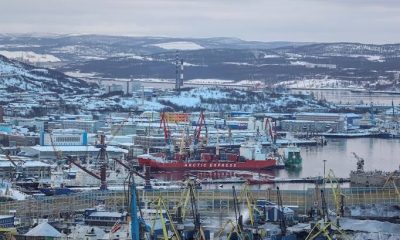






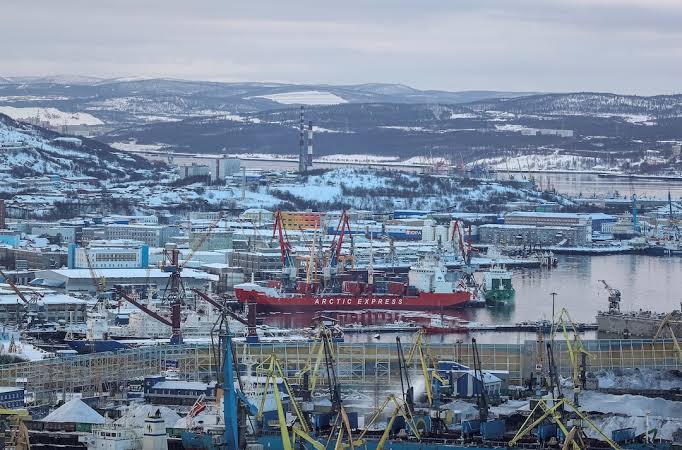
The melting of Arctic glaciers and disruptions across Middle Eastern shipping lanes have markedly increased interest in the Northern Sea Route.
According to a report by the Financial Times based on Lloyd’s List Intelligence data, 133 voyages were recorded on this route in September.
This figure represented a 46% increase compared with August and quadrupled the 2022 data, reaching a record level.
The newspaper noted that nearly half of the voyages were carried out by Russian-flagged vessels.
Chinese shipping companies, seeking alternative corridors to the European market due to disruptions in the Red Sea and the Middle East, are also among the actors choosing this line.
The increase in maritime transport is seen as directly linked to the retreat of the ice cover in polar seas and risks across traditional trade routes.
The threat posed by Yemeni Houthis in the Bab al-Mandab Strait at the entrance to the Red Sea is cited among the primary reasons.
Bridget Diakun, head of maritime analytics and research at Lloyd’s List, stated that official authorities and shipping companies are turning to routes that are less affected by geopolitical upheavals.
It saves 16 days compared with the Red Sea
The Chinese-owned container vessel Dubai Tower reached Felixstowe in Britain from the port of Qingdao via the North Pole in 24 days in September.
The newspaper noted that a voyage undertaken via the Suez Canal or the Cape of Good Hope would take at least 40 days.
Another vessel belonging to the same company entered the polar route on 27 September en route from Ningbo to Felixstowe.
September, when the ice sheet recedes to its seasonal low, forms the busiest period in the region as it allows vessels to pass without an icebreaker.
Asian companies turn to the route
The infrastructure operations of the Northern Sea Route, which extends along Russia’s northern coastline, are managed by Rosatom, the Russian State Atomic Energy Corporation, which is responsible for regulating maritime traffic and developing facilities.
Transit permits for vessels are issued by GlavSevmorput, which operates within the agency.
Aleksey Likhachev, director general of Rosatom, reported in August that transit permits had been granted for seven vessels belonging to the Chinese shipping company Sealegend Shipping.
The company planned eight voyages between China and Europe between August and October, ice conditions permitting. Likhachev stated that the plan included weekly voyages throughout the navigation season.
South Korea is also among the countries taking an interest in the Northern Sea Route. According to an August report by Reuters, preparations were made for a first commercial voyage from Busan to Europe over the pole using the container vessel PanStar Acro.
While the voyage encompassing the ports of Felixstowe, Rotterdam, and Gdańsk was projected to take 40 to 45 days, South Korean officials calculated that the polar corridor shortened travel time by about 35%.
In a statement in April, Likhachev announced that Rosatom aims to exceed 40 million tonnes of cargo carried along the Northern Sea Route in 2026.
Cargo volume carried over the past two years has remained above 37 million tonnes.
Diplomacy
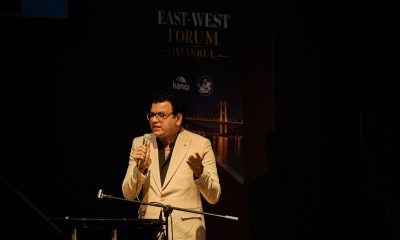
Russian Senator Shenderyuk-Zhidkov speaks at the East-West Forum: “Türkiye should be an independent pole”
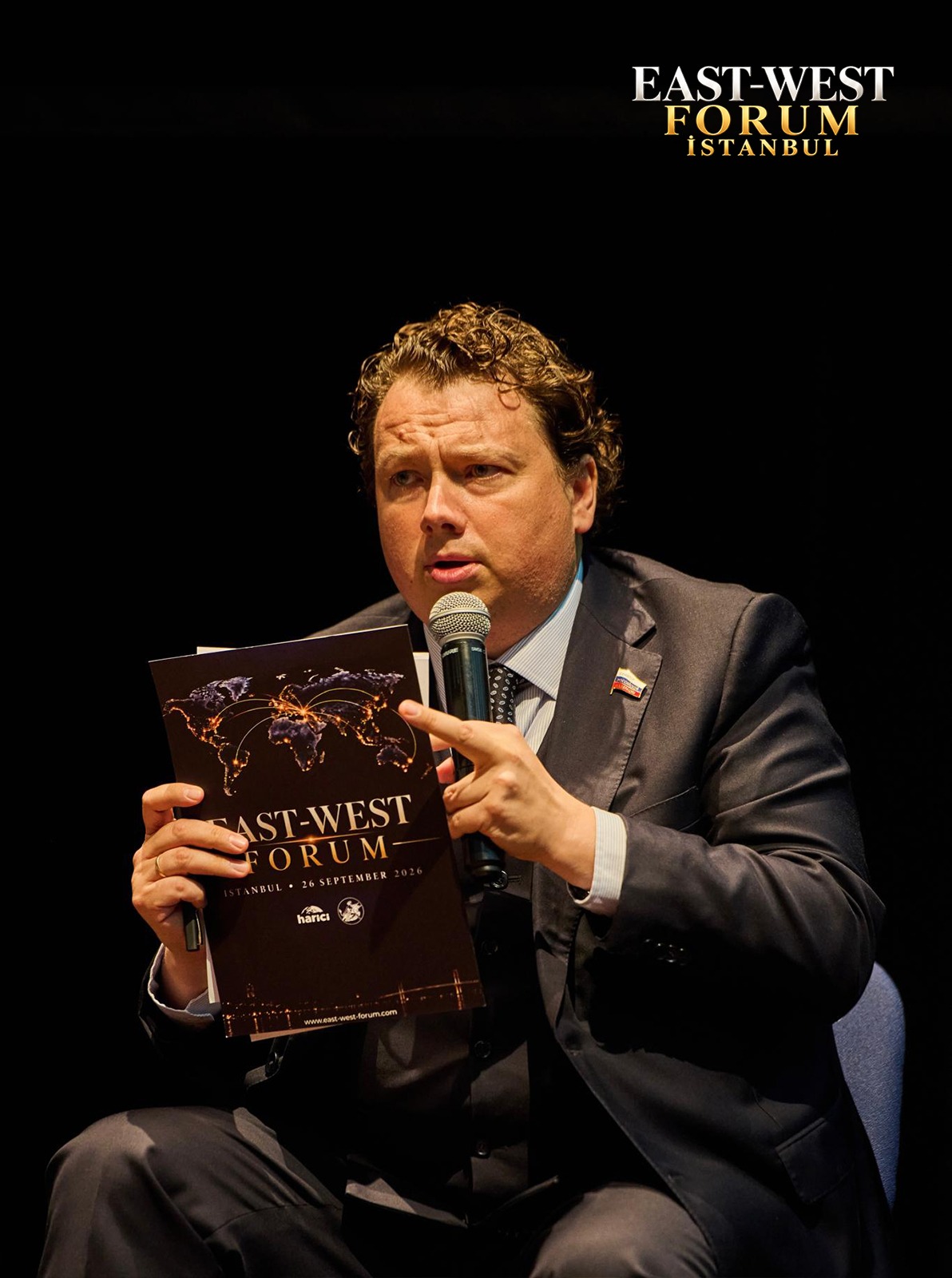
Editor’s note: Alexander Shenderyuk-Zhidkov, Representative of the Kaliningrad Region in the Federation Council of Russia and First Deputy Chairman of the Committee on Budget and Financial Markets, evaluated post-Cold War Russia-West relations and current geopolitical fault lines in his address at the East-West Forum held in Istanbul on September 26. Stating that Moscow opened its doors in good faith to the liberal world in the 1990s but faced hunger and conflict in return, Shenderyuk-Zhidkov noted that the West’s anti-sovereignty stance triggered these crises. Grounding the Russian conception of civilization in the legacies of Dostoevsky and Immanuel Kant, the Russian representative expressed that genuine universalism lies in understanding the other without compromising one’s own identity. Pointing out that artificial intelligence technology must not turn into a new tool of unipolar domination, the senator called for the preservation of a multipolar world order.
I’m from Kaliningrad. I was born in Kaliningrad. I have lived in Kaliningrad for 43 years. And you know, Kaliningrad was previously named Königsberg and it is the motherland of Immanuel Kant. And you know, for example, my wife, she’s now in Holland. She walks past the so-called philosophical path of Immanuel Kant every day because she has to go to university. And that is why if you are born in Kaliningrad, it’s very difficult not to be a philosopher, you know. And of course, perpetual peace.
That said, as Ulrike Guerot said a few hours ago, it is in the heart of any Kaliningradian, so let me talk a little bit about our view on peace and our view on the story. Everybody on this panel talked about 1992. Let me start from this. And you know, in 1992, we were very open to the new liberal world. American analysts sat in the Kremlin and helped our president Boris Yeltsin to make a new Russia. And what we got was hunger. And as a result, the Chechen war. So we opened our heart to the liberal world and received a war in our home.
And we were so sad. And we understood that the liberal world doesn’t need our happiness, they need our sovereignty. And when Putin in 1999 came to become Russian president, he came with only one phrase: let’s make Russia great again, 16 years before Trump, you know. And you know, we tried to build our sovereignty again. We tried to rebuild our country brick by brick. We tried to gather our lands. And as a result, the liberal world was not happy with this and brought us war in 2022 again. And of course, we are not so happy again.
And you know, I have a Ukrainian last name. I have two last names, Shenderyuk and Zhidkov. And both of them are Ukrainian. The founder of my family, Yakov Zhidkov, who was a Ukrainian Cossack, came to Emperor Peter the Great in the 18th century and asked him for land in the center of Russia, more than 1,000 kilometers from Kyiv. And the Russian Empire was not against it. It did not divide Russians into Ukrainians and Russians. We were all one nation. And you know, Oswald Spengler called us a young Russian civilization. He called us children of Dostoevsky. He called all Russians children of Dostoevsky.
But maybe some of them have not read Dostoevsky. I read Dostoevsky. I made a monument to Dostoevsky in the center of Kaliningrad and would like to say a few words about how we see Dostoevsky’s civilization, Russian civilization, and our Russian future. You know, that is why I need to look into my notes.
You know, Dostoevsky spoke of universal responsiveness of Russians. Not about dissolving into what is foreign, but about understanding the other while remaining oneself. That is the gift to enter another world without giving up your own. Liberal universalism offers the opposite from my point of view: first give up your history, your tradition, your form of life, then perhaps we will recognize you. And that is not openness from our point of view. You can’t be open to other nations and other countries if you are not a pure Russian.
You can’t be open to other countries if you are not your own nation. And this is our view and Dostoevsky’s view on this. But anyway, we are open to any country. And from my point of view, it is very close to perpetual peace. What Immanuel Kant was talking about. I can give you an example.
In 2005 we celebrated 750 years of Königsberg. And Mr. Putin attracted the President of France Jacques Chirac and Prime Minister of Germany Schröder to celebrate with us in Kaliningrad 750 years. And moreover, Mr. Putin named my university, my alma mater, after Immanuel Kant. And as of today, my alma mater is called Immanuel Kant University. Without link to any situation in the world. But times have changed. And my view is that mostly it was changed by Europeans and Americans. And now the situation is different. And all of us are talking about AI. And I would like to say that from my point of view, I like the Chinese way of viewing AI.
And I fully agree that one of the very important things with AI is that it should be open to all of us and we should know how it works. It is because of two things. First of all, I think all of us are worried that AI will destroy our lives. And the second is also very important. We should do our best to ensure that AI does not return us back to a unipolar world. Our world today is multipolar. And no country should have a chance to turn us back.
You know, I would like to say a few words about Germany, if you are not against it. Mr. Brzezinski in the middle of the 90s wrote his famous book The Grand Chessboard. And in this book he pointed out that Poland and Türkiye should be… That Americans should focus on Poland and Türkiye to help them stop Russia. And of course, this is the idea of sea civilization. If you are a civilization like America, you should turn your attention to very important centers like Istanbul, where the whole sea… And it was a very good idea from the NATO point of view.
But now Türkiye has the second largest NATO army in the world. First is the US. The US is only the fourth or fifth trade partner of Türkiye. China and Russia have much more, and the EU has a bigger trade turnover with Türkiye than the US. And my question is, why do you need Türkiye to be a partner of the USA? First, maybe you should be a new pole, part of our multipolar world. And Poland.
You know, Brzezinski was a very clever guy. And if you look at our Ukrainian war, it was taken from the pages of this book. But you know, this story with Poland turned out bad not only for Russia, it turned out bad also for Germany. My house is 40 km from the Polish border. And I know how for the last 30 years the Polish built their economy, used EU money, and built their roads. And I know that today Polish roads are better than German ones, unfortunately. I know that Mr. Dostoevsky lived in Germany for a long time and he liked Germans.
And I feel that anywhere, anywhere in this multipolar world, every one of us can find a vector, a multi-vector, how to link to each other and have peace between each other. And we believe that we can build new bridges. You know, Kaliningrad, that’s also like Istanbul, a city of bridges. Maybe you know the Seven Bridges of Königsberg puzzle. And you know, in April we built a new pedestrian bridge in our city in Kaliningrad to the grave of Immanuel Kant. I hope this forum can give us a chance to build a new bridge. Thank you very much.
Diplomacy
We are no longer in 1992, the US has lost its military superiority, Ret. Lt. Col. Davis says
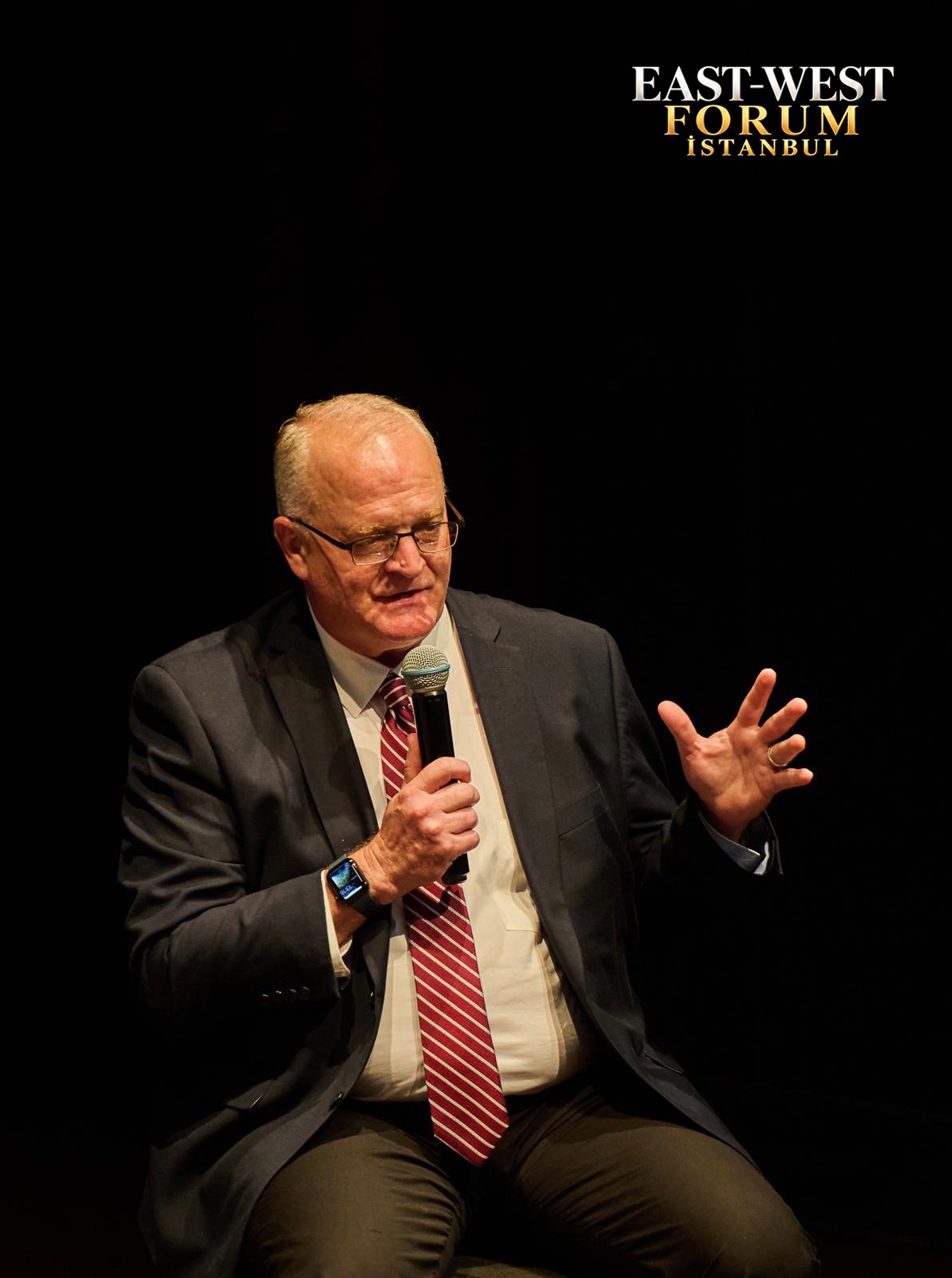
Editor’s note: In a presentation delivered at the East-West Forum in Istanbul on September 26, retired US Army Lieutenant Colonel Daniel Davis argued that Washington has lost its post-1992 unipolar military superiority. Stating that the American administration and its European allies fail to read new military realities, Davis noted that China, Russia, and Iran are fully aware of shifting balances. He stressed that UAV systems such as the Bayraktar TB2 rendered conventional armored warfare doctrines obsolete in the Karabakh War and on the Ukrainian front, while the US has fallen far behind its adversaries in the unmanned systems race. Pointing out that Iran has built a formidable line of defense with underground mountain facilities and ballistic missile capabilities, the senior officer noted the necessity of returning to realistic diplomacy rather than military impositions.
So I have some breaking news to report. It is no longer 1992. Apparently I have to break that news because there are Those in Washington D.C. and in Europe that don’t seem to know that in 1992 the United States had just finished Operation Desert Storm where it completely took down the military of Iraq in just record time with its coalition.
The Soviet Union had just disbanded, the Warsaw Pact had disbanded. The surviving Russian military was. Its navy was rusting in ports and it couldn’t do anything on any conventional level. It had its nuclear weapons, of course, but on a conventional level it was nothing. China was still basically an infantry based army.
And so up until that point, the United States was definitely the supreme military power all on the on the global stage, we could deploy power better than anybody else. We could use it conventionally. And of course, we had our nuclear weapons.
It’s not 1992 anymore. The United States acts like today. It’s still 1992, and we are still this unipower military power dominant. But China’s not confused on this point. Russia’s not confused on this point. Now Iran is not confused on this point. They know that we are no longer the most powerful military force on the planet.
And you’ve had President Trump, you’ve had Secretary of War Pete Hexth, the Speaker of our House, Johnson. They commonly and routinely say we are the most powerful military force on the planet in history. Nobody else is even close. Well, there’s a lot of people that are close, but they’re close. Like on the other side of us right now.
We’re still trying to operate in the 21st century militarily, like it’s still the 20th century. We’re behind the scales here, and that has enormous implications.
You can’t be a unit power force, and you can’t tell people what they’re going to do, and you can’t try to dominate over people unless you have a military to do it. We no longer have that military. And it’s now becoming evident to everybody except us.
And, and that is so dangerous because if our leaders believe what they’re saying, that we’re the most powerful military, we can do whatever we want.
And unfortunately, one of the worst examples of that appearing to be true was Venezuela. So President Trump had what a colleague of mine called catastrophic success. He thinks that he was told by many people there could be a lot of problems with it, and there would have been if Venezuelans had actually fought.
But, but because we had some insider information and some people cooperating on the inside, it was basically a bloodless, near bloodless coup. There was still about 80 people that got killed. So definitely wasn’t bloodless for them, but it was a big success for Trump.
And so he came to the conclusion that all the people who said, all these naysayers said it would be a problem, it would be difficult, it would turn into a new Vietnam, something like that. They’re not. They’re nuts. So now then, he thinks everything will work.
And so he’s operating on this belief that we could go into Iran, that we could maybe go into Cuba, maybe go at least up until recently, maybe Greenland. Basically, he sees there’s. There’s nothing that we can’t do.
But we have now proven graphically that that is not true. And you know, and you and I were talking about this a couple of days ago.
To me, as a, as a former tank officer, I fought in a Desert Storm. Just so you know, I fought in the biggest tank battles Since World War II up until that point, the Battle of 70 Easting, I was the second in command of an armored cavalry squadron for the U.S. 1st Armored Division in the, in the 2000s in Germany. And so I was responsible for training and getting ready for combat. And then was the modern war.
So that was after the 2003 Iraq war that we fought, which was also conventional. It’s also not 2003, by the way, because in those fights we didn’t have to worry about an enemy that had air force, drone force, ballistic missile force. We didn’t have to worry about any of that kind of stuff.
The war that I fought in in 2000, my first one in 1991 in Desert Storm, we couldn’t do that today because of the presence of missiles, as Iran has absolutely graphically shown.
But in 2020, the Armenia, Azerbaijan War and the Baktiyar 2 drone, et cetera, showed that conventional warfare had radically changed forever. I thought there’s going to be a radical transformation in the U.S. army, especially our ground forces. And I thought ground forces all over the world, I thought everybody is so.
But you can never again fight on the ground the way we did even as recently as 2003 in Baghdad. You just can’t do it anymore because now you mass formations on the ground and armor, it doesn’t matter how good your tanks are, they’re going to blow up. And same with armor, so you can’t move in mass anymore. So you’re going to have to come up with some new ways to fight.
Russia, to my surprise, didn’t get that memo because when they had their initial operations into Ukraine 2022, they were still behind the curve. Ukraine was actually ahead of them at that point. They had, in fact, they used the Bakyar 2 drones in the early phases to significant effect.
Russia came around though. They definitely figured it out. And now then they are, in my view, the global leaders. Now Ukraine is very close and they’re really good at this sort of thing. But I think Russia has overtaken them, certainly in mass and scale.
We’re way behind. We’re still in the, in the 20th century. We haven’t even caught up. We’re just to show you we’re thinking now we would like to have at the end of 2027, about 300,000 drones of various types.
Russia’s making that many in what, two weeks? Something like maybe less than that. And Ukraine as well, even with their limitations and far cheaper, way cheaper. That’s just as important. So our mentality is still like a snail’s pace. And so we don’t understand it.
Well, we can’t do this, tell everybody what they’re going to do anymore, but we’re still trying. So President Trump won’t use the leverage he has to end the Russia, Ukraine war.
And he keeps having this fiction that we can keep helping them strike deeper into Russia and to make it more difficult than with some fantasy that that’s going to cause Russia to say, all right, I tell you what. Sure, go ahead. We’ll do whatever Ukraine wants to do. We’ll end it on their terms here. It’s absurd to even say, but that’s what we’re acting like.
Even more absurd in a certain sense is our war against Iran right now. I was screaming this from the rooftops before the war started, that militarily it can’t be won.
If you look at what the Uranian defensive systems are and in their attack systems with their ballistic missiles and their drones and a lot of the technology they got from Russia, which Russia improved upon and then probably returned some of that technological capability.
So Iran has this ability, they Learned from our 2003 war, that don’t put all your factories on the ground that can be easily hit by American missiles, put them under the mountains that we can’t reach. And they did all that.
And so now they have shown that whatever they shoot, they’re going to hit whatever our defensive capabilities are with PAC 3 interceptors or THAAD interceptors. It’s not sufficient. And Iran can hit whatever they shoot.
It is. It is remarkable how much restraint Iran has shown up to this point, because they could already have burned the Middle east down, which would have catastrophically impacted all of our national security and economic security for the world. They haven’t done that yet.
But you see President Trump in his nice speech that he gave the other day at the United Nations General assembly, which you may have seen some of you, that something I published on that right afterwards.
I was humiliated as an American and angry because I think of some of the great Americans like John Kennedy and Eisenhower, who had made some great speeches about, let’s find a way to get together with people. It’s work, peace and all this.
And now that here he’s setting himself up like a godlike thing that I can either grant peace and security for Iran or annihilate their country. And of course, that almost certainly means nuclear weapons, because you can’t do it conventionally.
He didn’t say it out loud, but whatever he was thinking, he’s thinking that we can and we can’t. We can kill a lot of Iranian people, no doubt about that. But you can’t take out their military capacity or prevent them from having a catastrophic impact on everywhere else.
The United States has got. I pray to God can come to sober recognition. It’s not 1992 anymore. And we can’t just tell people what to do.
There’s still an out. There’s an out in the Russia, Ukraine war, there’s an out in the Iranian war if we’ll sober up and take it. And we don’t even have to surrender. We just have to acknowledge reality.
But if we don’t, if we keep going down and thinking that we are this, this unipower, it’s still 1992 and we can, then everybody else has to do what we tell them, then it’s going to be catastrophic for everybody.
And I’m almost surprised more at the Europeans than the Americans. I’m disgusted about what a lot of the American leaders are doing, but I’m puzzled about the Europeans because this stuff is self evident. It’s not hard to see.
They, you see what we’ve tried to do, what we failed to do. And I’m talking like through nearly five years in Russia, Russia, Ukraine, war, and then all these years in Iran and none of it is militarily working. And yet we keep claiming the next time it’s going to work.
And you know, Trump, if they don’t do this, then I will not. You can’t. And it would. You see, Saudi Arabia, they recognized that that wasn’t going to work and they begged Trump not to attack the last time because they knew they were in the crosshairs and they could be devastated. And who knows if they’re going to survive if they lose their oil capabilities.
It is time for us. And that’s why I’m so excited about this opportunity here. That’s why I didn’t hesitate to come to this, because we’ve got to get recognition that we are not this military dominant power that can do anything at once.
And that’s good, because if you think you can, too many people die because you just say, if you don’t do what I tell you, I’m going to kill you. That’s not diplomacy.
A lot of the stuff we’re doing with Iran is not diplomacy. We’re saying, if you’ll agree to our terms, we won’t kill you. That’s not diplomacy.
And now then they have the ability to resist and they’re going to. And Russia is not going to just give in to that and say, okay, yeah, sure, if you say you’re going to hit us, then yeah, we’ll just do whatever you say. They’re never going to do that. It’s an existential threat for them too.
All of these things are self evident. And I just pray to God that we can find some way to come back to sanity before it’s too late.
Because there’s too much chance for a nuclear threshold to be crossed in both the Middle east and in Europe. And that would be catastrophic for all of mankind, no matter where it comes from.

Spain’s Sánchez calls snap election for 29 November over housing

US AI spending needs 9% of GDP by 2032 to justify capital boom

Arctic shipping traffic surges 46% in a month to reach record high

Le Pen proposes German-style debt rule to soothe French bond market

Flavio Bolsonaro leads Lula as Brazil election heads to run-off
-
 Diplomacy1 week ago
East-West Forum in Istanbul highlights irreversible shift to multipolarity
-

 Europe1 week ago
European unions urge governments to scrap all Palantir deals
-
 Europe1 week ago
Emmanuel Todd says West faces collapse amid Ukraine and Iran crises
-
 Diplomacy2 weeks ago
East-West Forum in Istanbul to debate multipolarity and global order
-
 Europe2 weeks ago
European intelligence chiefs divide over risk of Russian attack
-
 Middle East2 weeks ago
Sharaa says 7 October must not shape Israel policy on Syria
-
 America2 weeks ago
Republican support for Trump’s war with Iran drops sharply in polls
-
 Europe1 week ago
Rome protests AfD poster depicting South Tyrol as independent state
