
America
Anthropic posts $80.7bn loss ahead of IPO as computing costs soar


Anthropic, developer of the artificial intelligence model Claude, reported a net loss of $80.7 billion for the first six months of 2026 ending 30 June.
According to a report by The Wall Street Journal citing the company’s draft initial public offering prospectus, this recorded loss nearly doubled the $42 billion loss incurred across the entirety of 2025.
The vast majority of that enormous figure, accounting for $72 billion, stemmed from accounting-driven book-value write-downs.
In contrast, the company saw a sharp surge in revenue, with turnover in the first half of the year climbing to $16.3 billion from $1.1 billion in the same period of the prior year.
During this period, Anthropic spent approximately $9 billion on computing power and infrastructure needs, surpassing in just six months the $7.3 billion spent across the whole of 2025.
The company has commitments to pay roughly $450 billion over the next seven to 10 years under cloud service contracts.
Under these obligations, contracts are planned for $111 billion with Google Cloud, $110 billion with Amazon Web Services, and $31 billion with Microsoft.
Anthropic will also spend up to $86 billion by 2033 and 2034, respectively, to lease Nvidia chips through smaller AI-focused cloud providers Nscale and Lambda.
The company could spend an additional $750 billion in the coming years to expand its computing capacity.
Roughly a third of the draft IPO prospectus was dedicated directly to risk factors.
The document highlighted the possibility that models could cause tangible real-world harm, noting that artificial intelligence could exhibit a “self-preservation” tendency and produce responses resembling “blackmail”.
Anthropic warned that the scale of damage caused by an AI-driven “catastrophic event” could render insuring against such risks impossible.
According to market expectations, Anthropic’s IPO could rank among the largest transactions in history, potentially surpassing SpaceX’s record.
Following the market debut, the company’s market valuation is projected to reach up to $2 trillion.













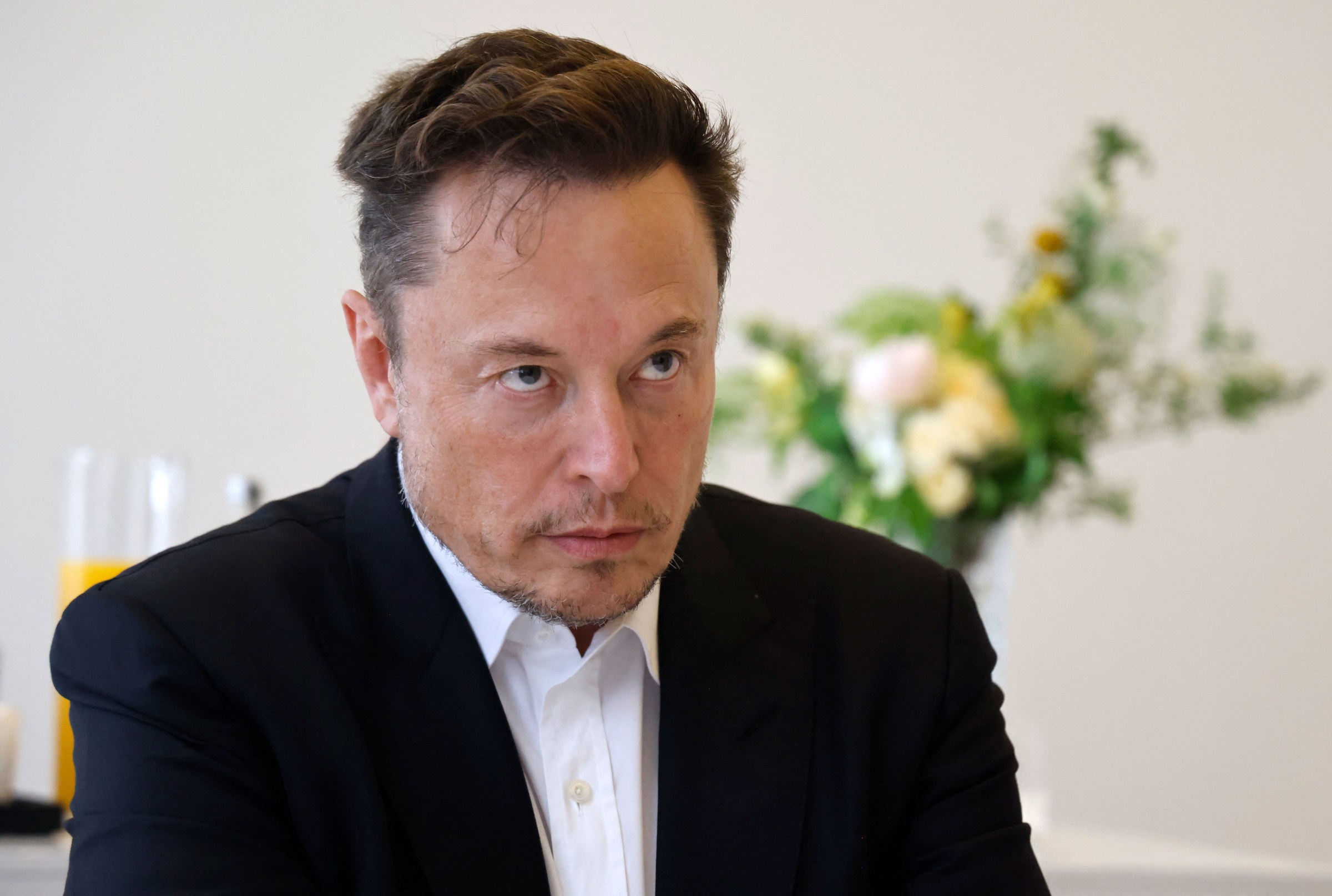
Democrats in the US plan to launch sweeping corruption inquiries into President Donald Trump’s administration and billionaire businessman Elon Musk if they win a House of Representatives majority in November’s midterm elections.
According to Politico, the potential inquiries would focus on Musk’s activities leading the Department of Government Efficiency (DOGE), his companies’ multi-billion-dollar federal contracts, and his role in restricting the Ukrainian military’s access to the Starlink satellite network.
Pramila Jayapal, a member of the House Foreign Affairs Committee, said: “What happens when somebody gets a massive contract with the government and then uses it to cut off communications during a war that is critical to the US’s support of Ukraine? There are so many different manifestations of corruption around Musk.”
The disruptions to Starlink terminals in Ukraine emerged during a period of friction between the US and Ukraine.
Musk maintained that Starlink cannot be used for offensive military actions, while Starshield, the defence-focused protected network, is owned and operated by the US government, with any restrictions imposed by Washington.
Sources cited by The Telegraph claimed Musk suggested restricting Starlink terminals in Ukraine to Trump, who approved the proposal. US President Donald Trump stated that neither he nor Musk blocked Ukraine’s Starlink access.
House committees take action
Sara Guerrero, spokesperson for House Oversight Committee member Robert Garcia, said: “We have a lot of questions about Elon Musk’s role in DOGE and plan to conduct an investigation.”
Some Democratic lawmakers have already begun preparations. In September, Democrats on the Homeland Security Committee demanded sworn testimony from Musk regarding a report alleging DOGE exaggerated its budget savings.
The Budget Committee called for an investigation into allegations that data was stolen from the Social Security Administration system in connection with DOGE.
Zoe Lofgren, a member of the Science, Space, and Technology Committee, indicated that committee members would “learn in more detail about the harm DOGE has done to scientific agencies.”
Lofgren said Musk helped facilitate “the systematic liquidation of government programmes” and that the conflicts of interest recorded during his tenure reached striking proportions.
The Oversight Committee, noted as having the most powerful investigative staff among congressional panels, also aims to examine Musk’s deals.
One of the panel’s lawyer members described the situation by stating: “A third of the members are lawyers, and we see lawlessness and deliberate violations of the law.”
Hundreds of millions of dollars in donations to the Republican Party
Politico reported that Musk, who openly backed the Republican Party in the upcoming elections, became one of its largest financial benefactors by donating at least $276 million to party committees and candidates.
Oversight Committee member Greg Casar stressed the need to unravel the quid-pro-quo nature of the influence Musk obtained.
“Our committees must oversee both the Trump administration and the corporations and ultra-wealthy who are trying to buy our government. Elon Musk is at the top of that list,” Casar said.
The Department of Government Efficiency was established under one of the first executive orders signed by Trump when he took office on 20 January 2025, aimed at slashing public spending and restructuring federal agencies.
Musk, appointed to lead the department, left his post at the end of May following the expiry of his contract and disputes over an omnibus legislative package proposed by Trump.
Originally slated to operate until July 2026, DOGE was dissolved in November 2025, eight months before its term was due to end. Politico noted that following Musk’s departure, the department lost its government influence and numerous key staff members stepped down.
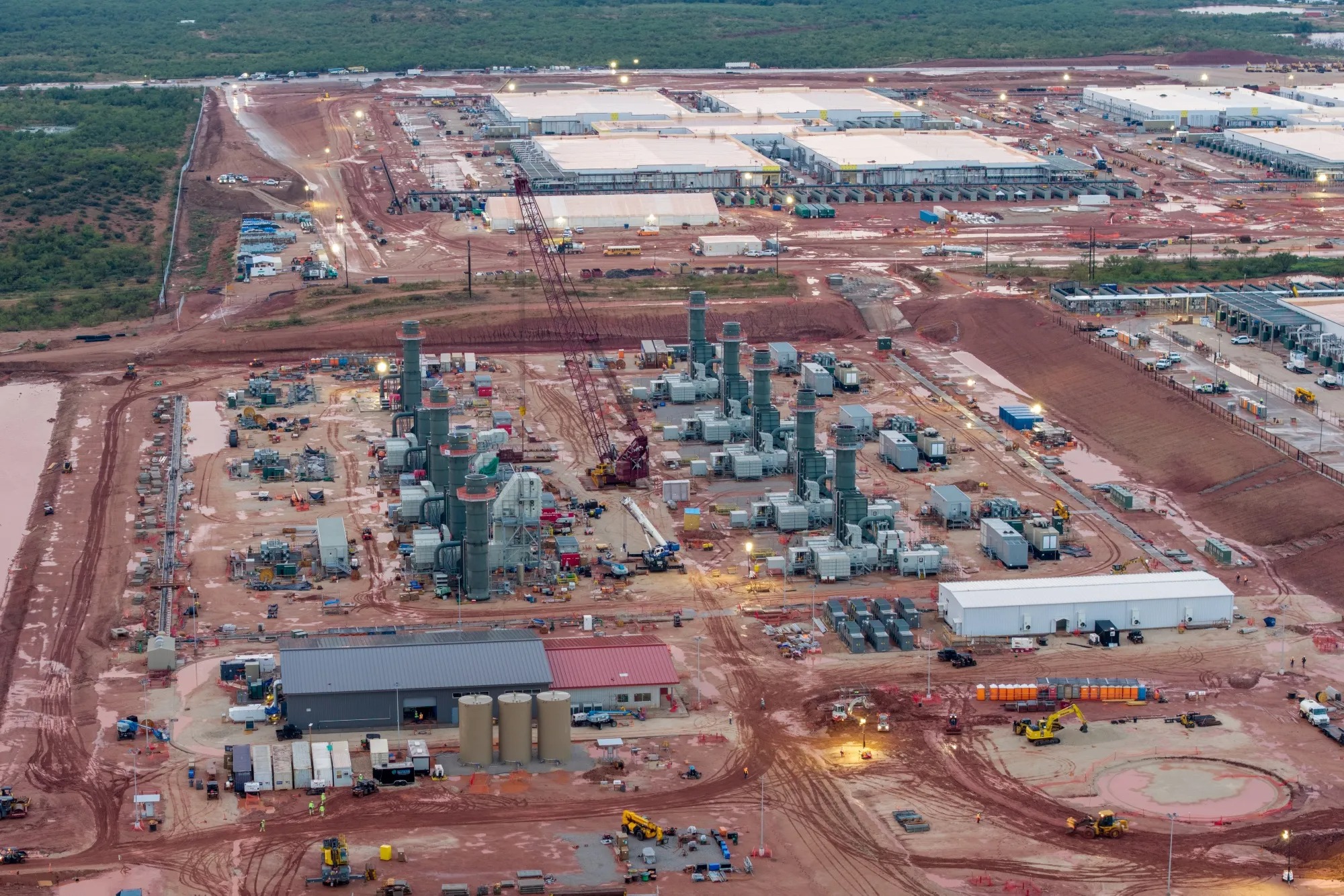
At least 47 large data centre projects have been halted or cancelled across the US, as a massive $10 trillion investment wave in artificial intelligence infrastructure begins to stumble amid construction delays, rising borrowing costs, and local public pushback.
According to a report by the Financial Times, this emerging picture threatens the future of hundreds of projects while deepening investor doubts over returns on the colossal sums being spent.
Data from research firm RegLayer shows that at least 47 major data centre projects across the US have been delayed, cancelled, or brought to a complete standstill.
In an assessment published in October, analysts at financial firm Bernstein pointed out that only about 35% of the projects planned across the country can be considered realistic.
Local authorities and the bond market apply the brakes
The obstacles facing investments are not limited to technical plans. More than 1,000 localities across the US have sought to impose moratoriums or other restrictions on AI infrastructure construction this year.
The sector’s growth depends directly on whether next-generation cloud providers, often referred to as “neoclouds”, can secure financing for these giant buildouts.
However, high interest rates, inflation, and disruptions across the bond market have shaken investor confidence in the ability of companies such as OpenAI and Anthropic to generate revenues that cover their expenses.
This loss of market confidence prompted investors to rapidly exit debt securities tied to AI infrastructure companies. Shares in cloud provider CoreWeave plunged by around 25% in a single week.
Similarly, SoftBank unit SB Energy and Nvidia-backed Firmus delayed or suspended their plans to go public. OpenAI also indicated that it deferred its own initial public offering, citing safety and security reasons.
Delays hit giant Stargate project
Difficulties on the ground are directly affecting construction sites. Delays have hit several Oracle sites tied to the $500 billion Stargate project, which OpenAI is pursuing to build data centres.
These schedule slippages could grant customers the right to walk away from contracts if facilities are not completed on time, while contractors could demand additional financing.
Investments could exceed $10 trillion
Despite the mounting challenges, the volume of capital flowing into the sector remains at record levels.
Columbia Business School economist Stijn Van Nieuwerburgh calculates that US AI infrastructure spending between 2025 and 2032 could exceed $10 trillion, equivalent to roughly 3.6% of the country’s gross domestic product each year.
As investors weigh risks far more strictly, obtaining building permits for data centres and connecting facilities to the power grid have grown increasingly difficult.
In a report published in late July, the Financial Times noted that Google, Amazon, Microsoft, and Meta had collectively invested $1.1 trillion since the AI boom began in 2023.
Big tech companies plan to allocate $745 billion this year toward data centre construction, advanced chip purchases, and building computing capacity.
Returns on these investments hinge on whether OpenAI and Anthropic can generate the resources needed to cover their computing costs.
Although spending has boosted corporate revenues, particularly in the cloud sector, supply chain strain has triggered memory chip shortages, adversely affecting even players that have fallen behind in the AI race, such as Apple.
The Swiss Federal Department of Foreign Affairs has lifted a precautionary asset freeze imposed on Marleny Contreras, the wife of Venezuelan Minister of Interior, Justice and Peace Diosdado Cabello, and Jorge Arreaza, a lawmaker from the United Socialist Party of Venezuela (PSUV).
Officials described their inclusion on the sanctions list as an “error”, stating that neither individual held any assets on Swiss territory and that neither faced corruption charges.
The precautionary measure had been enacted on 5 January, two days after US forces bombed Caracas and abducted Venezuelan President Nicolás Maduro.
The government in Bern had stated that the decision was intended to prevent illicit funds from being moved out of Switzerland while potential legal investigations proceeded.
The legal measure, which will remain in force until 2030, includes a formal pledge that all funds proven to have been acquired illicitly will be returned to the Venezuelan people.
More than 40 current and former Venezuelan officials, alongside their immediate relatives and alleged associates, remain on the list.
Switzerland adds six new names to sanctions list
According to a report by Venezuelanalysis, the Swiss government added six new names to the list concurrently with the removal of Contreras and Arreaza.
Those newly listed include Álex Saab, a former special envoy of the Venezuelan government and minister of industries, alongside his business partner Álvaro Pulido.
Pulido, who was handed over by Venezuelan authorities to stand trial on money-laundering charges, appeared in a Miami court on 13 October.
Saab, who was surrendered to US agencies, also pleaded guilty to money-laundering charges and pledged to cooperate in other investigations.
The blacklist was also expanded to include lawyer José Vicente Amparan Croquer, who is accused of laundering proceeds from a $1.2 billion corruption scheme at the Venezuelan state oil company PDVSA.
Businessman Mario Enrique Bonilla Vallera, alleged to be a front for the stepsons of Nicolás Maduro, was also placed on the new sanctions list.
The Swiss authorities additionally brought the wives of two previously listed former deputy electricity ministers under the measures.
Within this framework, Milagros Coromoto Torres Morán, the wife and business partner of Nervis Villalobos, and María Consuelo Pardi Celis, the former wife of Javier Alvarado Ochoa, were added to the list.
Dialogue steps between Washington and Caracas
The Swiss move came two days after the US Department of the Treasury removed Jorge Rodríguez, the president of the Venezuelan National Assembly and the chief negotiator in the dialogue process with the opposition, from its sanctions list.
Rodríguez is the brother of interim President Delcy Rodríguez, who had herself been removed from the Specially Designated Nationals and Blocked Persons (SDN) list in April.
Jorge Rodríguez had first been sanctioned on 25 September 2018, during Donald Trump’s first presidential term.
Individual sanctions freeze the targeted persons’ assets on US territory and prohibit US citizens and companies from conducting transactions with them.
David Alandete, the White House correspondent for the Spanish newspaper ABC, characterised the assembly president’s removal from the sanctions list as a reward for cooperation in a new phase of relations between Caracas and the White House.
The decision was announced on the day that Delcy Rodríguez’s interim government and an opposition delegation led by former lawmaker Dinorah Figuera began a third round of US-backed talks in Caracas.
The talks aim to pursue the renewal process of the Supreme Tribunal of Justice (TSJ) and address political rights and guarantees.
Despite these steps, 254 individuals and entities remain on the sanctions list maintained by the US Treasury’s Office of Foreign Assets Control (OFAC).
The Trump administration also maintains sweeping coercive measures against key Venezuelan economic sectors, including oil, mining, and banking.
Since January, Washington has implemented sanctions waivers that allow certain Western companies to access Venezuelan oil and mineral resources under favourable terms.
Although the White House has authorised some US-based companies to trade with the country, export revenues are held in an account at the US Treasury, and US officials determine the volume of transfers to Caracas.
Most recently, the Trump administration issued General License 60A.
The regulation authorises humanitarian relief transactions until 21 April 2027 to address damage caused by the twin earthquakes that struck Venezuela on 24 June.

Japan plans curbs on short-term home sales to cool urban prices

Trump midterms calculus halts Israeli strike plan against Iran

EU urges Britain and Canada to help close Ukraine’s €70bn budget gap

Anthropic posts $80.7bn loss ahead of IPO as computing costs soar

Netanyahu trails Eisenkot in Israeli polls despite Trump backing
-

 Europe2 weeks ago
Bill to drop NATO membership goal submitted to Ukrainian parliament
-

 America2 weeks ago
How will Brazil’s presidential runoff work?
-

 Europe2 weeks ago
Marine Le Pen unveils fiscal programme pledging French budget cuts
-

 Europe2 weeks ago
Berlin Left Party backs Israel’s right to exist for coalition pact
-
 Europe2 weeks ago
EU seeks Chinese trade signal in Beijing as surplus widens
-
 Diplomacy2 weeks ago
The West is preparing for war not with Russia, but with its own people, French analyst Georges Kuzmanovic insists
-
 Middle East2 weeks ago
Eisenkot ties Syria pact to withdrawal of Russian and Turkish forces
-
 Diplomacy2 weeks ago
Europe has been under US occupation since World War II, Italian journalist and author Thomas Fazi says
