
America
Dimon advises stocking bullets, not Bitcoin, amid economic and security concerns

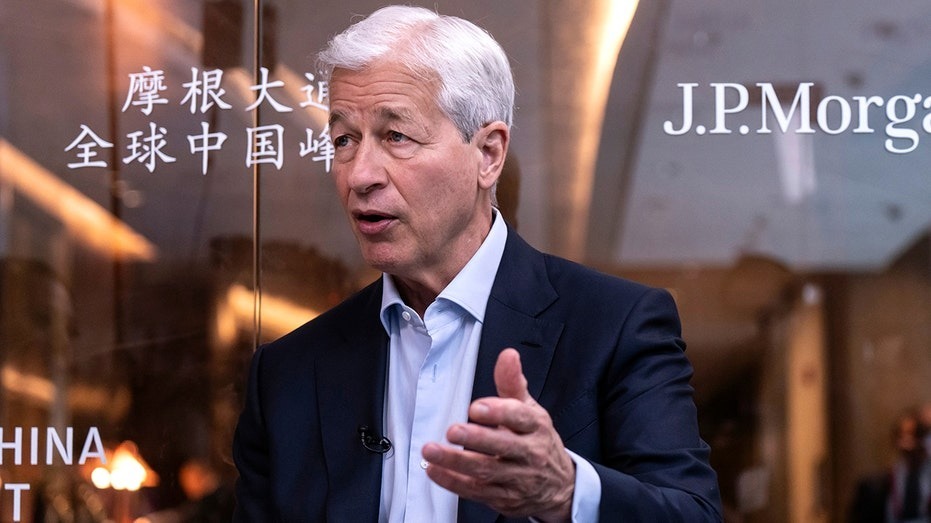
Jamie Dimon, Chairman and CEO of the international investment bank JPMorgan Chase, offered striking assessments on a wide array of topics, from the US economy and national security to technological advancements and leadership, during an interview with Fox Business at the Reagan National Economy Forum last week.
Dimon specifically addressed the Senate bill concerning spending cuts and the continuation of tax rates, emphasizing the importance of stability to enable business investment and foster growth.
‘I am excited that they passed the bill’
Commenting on the Senate bill, which some senators criticized for insufficient spending cuts, Dimon stated, “First of all, I am excited that they passed the bill.”
Noting that House Speaker Mike Johnson did “an incredible job” on this matter, Dimon expressed that the Senate should also finalize the bill.
Dimon assessed, “Increasing stability, ensuring tax rates continue, and allowing small and large businesses to invest is genuinely important for growth. If we look back at the 2017 bill, it brought trillions of dollars back to the US and created numerous jobs and significant growth. Those examining these figures are not actually articulating what they represent. So, it will work.”
Dimon later suggested that instead of implementing cuts in areas such as Medicare, Medicaid, and Social Security, the focus should be on enhancing efficiency, adding, “I think it is better for them to conclude this matter as effectively as possible. The smaller the deficit, the better.”
When queried about his confidence in the extension of tax cuts, Dimon replied, “Not so much for JPMorgan. However, if you converse with small businesses uncertain whether their rate will be 28% or 40%, they require it. If you speak with numerous companies engaged in substantial R&D or significant equipment expenditure, they need certainty.”
He stressed that uncertainty must be dispelled promptly to prevent the postponement of investments.
‘Bond markets will face a challenging period’
Addressing concerns regarding debt and budget deficits, Dimon described this as a “major issue” and a “genuine problem.”
Dimon cautioned, “One day, bond markets will face a challenging period. I do not know if it will be in six months or six years. Therefore, I believe we need to concentrate on this.”
Asserting that the primary focus should be on growth, pro-business policies, appropriate regulations, permit reforms, and the reduction of bureaucracy, Dimon said, “Achieve this growth. That is the optimal path. Then, reform certain programs that everyone acknowledges can be appropriately reformed.”
When asked to clarify his statement about a potential “break” in the bond market, Dimon explained, “What the public needs to comprehend is that approximately $30 trillion worth of securities are traded daily. These are investors from across the globe. Foreigners hold $35 trillion in American securities. They possess roughly another $30 trillion in private investments in the US. People vote with their feet and will scrutinize the country, the rule of law, inflation rates, central bank policies, what they wish to hedge against, and what they do not.”
Dimon stated that these rates are not dictated by central banks but can be influenced, “If people decide that the American dollar is not where it ought to be, yes, you could see spreads widen, credit spreads widen. And that develops into a problem.”
Recalling that this scenario occurred previously during the COVID period, in 2019 and 2020, Dimon remarked, “It will happen again, I can almost guarantee you. I just do not know precisely when or what the trigger will be.”
Dimon noted that such volatility would adversely affect small businesses raising capital and credit markets, rather than large banks.
Growth expectation for the second half of the year
When asked about growth expectations for the latter half of the year, Dimon indicated that his own economists project a figure around 1.5%, but he himself is uncertain.
Stating he did not concur with Kevin Hassett’s 4% growth forecast, Dimon commented, “I hope he is correct. I simply do not know.”
Also touching upon JPMorgan’s own growth figures, Dimon explained that the company’s success stems from 15 years of continuous investments, new branches, new bankers, and dedicated customer service.
Dimon said, “Profits fluctuate for many different reasons, but we enjoy undertaking this, and we are quite confident that we can expand our company.”
Expressing that they encounter significant competition, including from fintech companies and foreign banks, Dimon observed, “I always examine those who outperform us and the reasons for their success; I do not merely focus on our own performance.”
‘Stablecoins, data, and real-time payments have a future’
Responding to a question about the impact of stablecoin legislation on banks, Dimon replied, “Firstly, we have a JPMorgan Coin. If by crypto you mean stablecoins, moving data, real-time payments, and combining data and payments, these elements are real. We will be at the forefront of this.”
Stating that JPMorgan Coin can currently move money and data, and that they plan to open it to external use in the future, Dimon highlighted the importance of legal regulations such as anti-money laundering (AML), the Bank Secrecy Act (BSA), and Know Your Customer (KYC) protocols.
Dimon said, “We already transfer $10 trillion daily, and that is digital. There will be very beneficial applications for blockchain.”
Noting that JPMorgan invests approximately $20 billion in technology, Dimon specified that this expenditure covers areas such as networks, large data centers, artificial intelligence policies (mentioning that billions have already been allocated to AI alone), and cybersecurity (billions of dollars to protect customers).
China observations and US internal problems
Sharing observations from his recent visit to China, Dimon acknowledged that cyberattacks are a significant issue but stated, “I am not afraid of them.”
Observing that China is forging its own path with substantial investments in areas like artificial intelligence, automobiles, and robotics, Dimon remarked, “They will possess 30% or 40% of new pharmaceuticals in a short period. They are proceeding in their own way. However, they also have vulnerabilities. They still contend with considerable poverty. They exist in a very challenging neighborhood. Many of their neighbors are rearming. They must contend with us. We remain the most prosperous economy on the planet.”
Emphasizing that his primary concern is not China, but the US’s “inability to resolve its own internal problems,” Dimon asserted, “If America manages its affairs correctly—deregulation, permits, education, pro-business policies, economic expansion, aiding low-income individuals through economic growth, rectifying immigration—we will be in an excellent position. In 30 or 40 years, we will be the preeminent military and economic power. If not, the world will be a vastly different place from what we experience today.”
‘We should stock bullets, tanks, and missiles, not Bitcoin’
Also addressing national security policies, Dimon stated that the world relies on the US military umbrella, and this is significant.
“It becomes a problem if countries begin to look elsewhere for their national security. This is directly linked to their economic security,” Dimon said, underscoring the importance of issues such as investment, development finance, and the education of American values, in addition to trade.
When asked what should be stocked, referencing a prior statement, Dimon replied, “I said we should stock bullets, tanks, and missiles, not Bitcoin.”
Stressing that the most crucial element for national security is resilient supply chains, Dimon declared, “From medical supplies to everything that goes into our F-35s, rare earth elements, and related items. Things like two-nanometer AI chips. Yes, we assert this is important for American national security. We require resilient supply chains.”
He added that the military needs greater flexibility and multi-year budgeting.
‘Markets are complacent’
To a final question regarding the current state of the markets, Dimon responded, “Complacent. Prices are high; things appear to be progressing smoothly. Prices somewhat indicate a soft landing. I hope that is accurate. I am merely informing people that the probability of this occurring is lower than others perceive, and it will be a surprise. Numerous factors are in motion, from deficits to geopolitics and trade. It is complex, and things can go awry. And when things go awry, it is usually a surprise.”
He further noted that his role is not to predict the future but to be prepared to serve customers regardless of what the future may hold.














Wealthy buyers in the US are tearing down multimillion-dollar homes shortly after purchasing them for hundreds of millions of dollars.
According to a report by The Wall Street Journal, the trend is driven by a shortage of land in prestigious locations, particularly along coastlines.
For ultra-wealthy buyers, the prime factor has become the land’s location rather than the structure standing on it. After the acquired properties are flattened, newer, more modern homes are built on the cleared lots.
Drawing attention to the shift in the luxury real estate market, the report noted:
“The home itself, formerly the primary driver of an expensive real estate purchase, is now almost beside the point. Buyers are competing first and foremost for well-located land, situated on the ocean or a mountaintop.”
The newspaper cited moves by US billionaire William Lauder as an example. Lauder purchased the oceanfront estate of radio host Rush Limbaugh, who died in March 2023, for $155 million and had it completely demolished in July.
Lauder had previously torn down two homes situated on roughly 1.2 hectares of land along the Palm Beach coast. Having initially planned to construct his own residence on the parcel, Lauder subsequently sold the cleared plot for approximately $200 million.
Jonathan Miller, a real estate appraiser, stated that such transactions are becoming increasingly common as land prices rise.
Amid this momentum, estate agents have also begun marketing luxury homes directly as teardown lots.
Listings use artificial intelligence-generated imagery to showcase how the land would look without the structures on it.
Marketers avoid using the word “demolition” directly, resorting instead to terms such as “adaptive reuse”.
Teardown listings rise across luxury housing market
The trend is not confined to the coast and is spreading to other regions across the US.
Data from property brokerage Redfin reveals that references to demolishing buildings are becoming more frequent in sales listings.
The share of such listings exceeds 15% in the Bunker Hill Village area of Houston, while standing at 6.67% in Pimmit Hills, Virginia.
Dina Goldenteyer, a real estate agent working in Miami, remarked that serial demolitions have become more frequent because buyers no longer appreciate homes older than a decade.
Former retail executives Jamie Dooley and Christine Scott spent $3.7 million in 2020 to demolish a seaside home near Destin, Florida.
Although the couple spent five years building a modern home on the cleared site, they listed the resulting new structure with a demolition condition, citing the fact that no one wanted to buy the property as it stood.
William Paddock, an employee at the environmental consultancy WAP Sustainability, pointed to the environmental damage caused by this construction cycle.
Paddock emphasized that tearing down a home of roughly 1,000 square metres and replacing it with a new building of approximately 2,700 square metres generates a carbon footprint equivalent to the annual emissions of an average 250 American households.

An uptick in September inflation as the US midterm elections approach has pushed the cost-of-living debate back to the centre of the agenda for Democrats seeking to regain control of Congress from Republicans.
Annual inflation stood at 3.7% in September, according to the Consumer Price Index published by the Bureau of Labour Statistics, with energy, petrol, and electricity costs rising on a monthly basis.
Food prices remained flat from August to September, recording a 2.5% increase compared with the same period last year.
Democrats are anchoring their election campaigns to pledges of easing the cost of living, blaming the price increases on President Donald Trump’s tariffs and the war with Iran.
Trump and Republicans, pointing to the numerous left-wing candidates who won primary elections this year, contend that the opposition has become captive to “communists” within the party.
When annual inflation stood at 2.4% in February, the US and Israel launched the Iran war on the final day of that month, and prices continued to climb throughout the conflict.
The recent acceleration has not entirely reversed the retreat from the 40-year peak of 9.1% recorded in June 2022; however, the rate has remained above the Federal Reserve’s 2% target for over five years.
Fed policymakers raised the benchmark interest rate by a quarter of a percentage point last month, citing the battle against stubborn inflation. Officials will convene again next week to consider whether to raise rates or hold them within the 3.75% to 4% target range.
Energy and fuel record sharpest increase since first month of war
In September, energy prices posted their largest monthly jump since March, the first full month of the war with Iran, climbing 20.4% year-on-year. Energy costs had risen 2.1% from July to August, after falling 1.5% from June to July and 5.7% from May to June.
Recent escalations in Iranian attacks on oil tankers in the Strait of Hormuz, alongside more frequent strikes by Ukrainian forces against Russian refineries, have strained global crude oil and refined product markets, driving up US petrol and diesel prices.
Petrol prices also recorded their sharpest monthly increase since the first month of the war, climbing 9.1% from August to September, bringing the annual increase to 35.3%.
American Automobile Association (AAA) data shows the average price of regular petrol across the US stands at $4.26 per gallon; while below the level of roughly $4.48 recorded a month ago, it remains more than $1.20 higher than a year earlier. Average gallon prices exceed $6 in California and $5 in both Washington state and Nevada.
Electricity prices rose 0.2% from August to September, offsetting the 0.2% decline between July and August, and were up 4.4% year-on-year.
Heavy power demand from new data centres is feeding through into local household electricity bills. Trump argued that companies must cover the cost of the electricity required by their data centres themselves.
In a post on Truth Social, Trump claimed that he was requiring large data centres to generate their own power and feed the surplus back into the local grid, suggesting this could bring about “a major drop” in electricity prices.
Used vehicle market posts monthly rise as food costs stabilise
The cost of food at home fell 0.1% month-on-month in September, while dining out increased 0.2%.
Egg prices dropped to $2.27 a dozen, falling roughly 35% compared with September 2025 and remaining well below the 20-year peak of $6.23 recorded in March 2025.
Ground beef prices rose roughly 2.4% compared with September 2025, but at $6.48 a pound, they remained below the 20-year high of $6.98 reached in June.
Chicken held steady at its year-earlier level of $2.06 per pound last month, having fluctuated between $2.01 and $2.09 since November 2024.
Used car and truck prices fell 1.5% compared with September 2025, but rose 0.7% month-on-month in September following 0.4% increases in both July and August.
Heather Long, chief economist at Navy Federal Credit Union, noted that the sector faces severe pressure stemming from a combination of expensive replacement parts and a shortage of skilled labour.
Speaking to The Hill, Long emphasised that every cost pressure across the market is being felt directly at local auto repair shops.

Anthropic, developer of the artificial intelligence model Claude, reported a net loss of $80.7 billion for the first six months of 2026 ending 30 June.
According to a report by The Wall Street Journal citing the company’s draft initial public offering prospectus, this recorded loss nearly doubled the $42 billion loss incurred across the entirety of 2025.
The vast majority of that enormous figure, accounting for $72 billion, stemmed from accounting-driven book-value write-downs.
In contrast, the company saw a sharp surge in revenue, with turnover in the first half of the year climbing to $16.3 billion from $1.1 billion in the same period of the prior year.
During this period, Anthropic spent approximately $9 billion on computing power and infrastructure needs, surpassing in just six months the $7.3 billion spent across the whole of 2025.
The company has commitments to pay roughly $450 billion over the next seven to 10 years under cloud service contracts.
Under these obligations, contracts are planned for $111 billion with Google Cloud, $110 billion with Amazon Web Services, and $31 billion with Microsoft.
Anthropic will also spend up to $86 billion by 2033 and 2034, respectively, to lease Nvidia chips through smaller AI-focused cloud providers Nscale and Lambda.
The company could spend an additional $750 billion in the coming years to expand its computing capacity.
Roughly a third of the draft IPO prospectus was dedicated directly to risk factors.
The document highlighted the possibility that models could cause tangible real-world harm, noting that artificial intelligence could exhibit a “self-preservation” tendency and produce responses resembling “blackmail”.
Anthropic warned that the scale of damage caused by an AI-driven “catastrophic event” could render insuring against such risks impossible.
According to market expectations, Anthropic’s IPO could rank among the largest transactions in history, potentially surpassing SpaceX’s record.
Following the market debut, the company’s market valuation is projected to reach up to $2 trillion.

German officials urge fighter jet alliance with Sweden and Spain

US wealthy demolish multimillion-dollar mansions for land

US and Israel weigh Iran strikes after midterm vote, reports say

Pentagon plans covert spy ring for economic war on China, report says

EU reopens debate on naming envoy for Ukraine talks with Putin
-

 America2 weeks ago
How will Brazil’s presidential runoff work?
-

 Europe2 weeks ago
Berlin Left Party backs Israel’s right to exist for coalition pact
-

 Diplomacy2 weeks ago
The West is preparing for war not with Russia, but with its own people, French analyst Georges Kuzmanovic insists
-

 Russia2 weeks ago
71 EU lawmakers demand closure of Russian Houses in 15 member states
-

 Europe2 weeks ago
MI6 investigates potential leaks after former BND chief is detained
-

 Russia2 weeks ago
US and Russian figures discuss American stake in Nord Stream lines
-

 Russia2 weeks ago
Drone strike shuts down Yandex data centre in Russia’s Ryazan region
-

 America2 weeks ago
Trump weighs presidential memorandum to cut surging US diesel prices
