Diplomacy
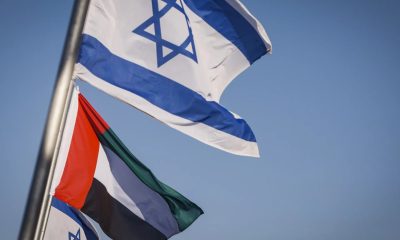
EU explores cooperation with Trump-backed Peace Board for Gaza aid
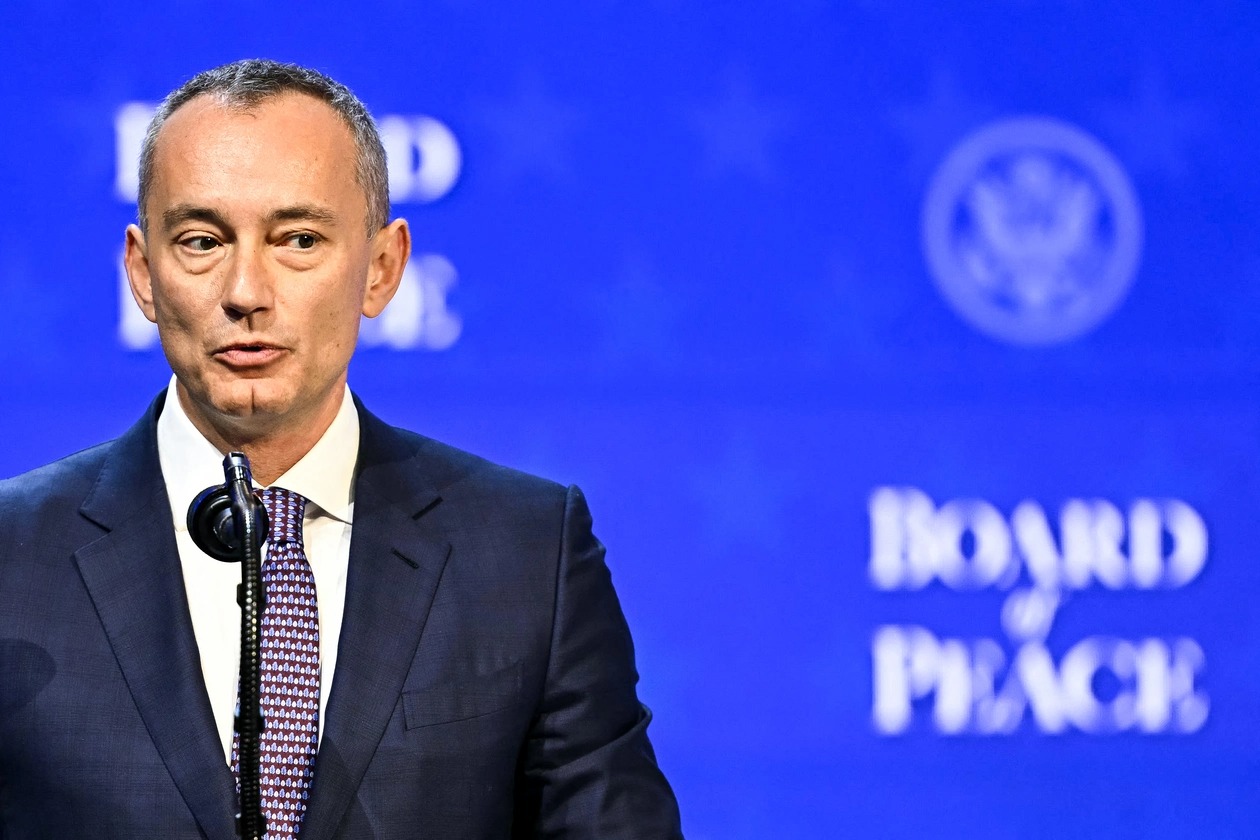
EU countries that shunned the “Peace Board” when its formation was announced a year ago are beginning to cooperate with the organization on humanitarian aid projects in the Gaza Strip.
According to a report in Politico, although the European Commission is cautiously embarking on projects with the group established by President Donald Trump, the Peace Board’s ambitious vision to disarm and rebuild Gaza remains largely on paper.
Even so, the Board remains a political force to be reckoned with, tied to Trump’s closest allies and too significant to ignore.
Europe is therefore seeking avenues to cooperate with the organization without fully endorsing it.
“All traditional donors are ready to work in parallel, but they are reluctant to channel money into the Peace Board,” said Norwegian Minister of Foreign Affairs Espen Barth Eide.
Although Norway is not an EU member, it coordinates with the bloc regarding donations to the Palestinians.
Eide explained that Norway would prefer to work with “established institutions” such as the World Bank.
The Peace Board does not publish its budget or organizational chart. Furthermore, despite holding an account at the World Bank, it also maintains separate accounts at JPMorgan.
“The Peace Board’s mechanisms will not be compatible with our reporting arrangements,” Eide said.
This hesitation was clearly evident on Wednesday during a briefing with Peace Board officials on the sidelines of the UN General Assembly.
At the event, Dubravka Šuica, the European Commissioner for the Mediterranean, announced that she would sign on to two European-funded projects in partnership with UN agencies and “aligned with the priorities of the Peace Board”.
Yet her characterization of the cooperation with the Board was hardly glowing. “The important thing is to remain pragmatic,” Šuica said.
In a statement, the European Commission noted: “Given the immense early recovery needs in Gaza, coordination and alignment at all levels are of course necessary to achieve concrete results on the ground.”
The EU and most of its member states refused to join the Peace Board, partly over concerns that it could supplant the UN.
Since then, European countries have invited Peace Council representatives to their meetings and attended Security Council briefings alongside Council President Nikolay Mladenov.
The joint projects mark the first concrete step toward cooperation.
This acceptance, however reluctant, extends even to the UN Relief and Works Agency for Palestine Refugees in the Near East (UNRWA), which handles Palestinian refugees in Gaza and which Israel and the US want sidelined.
Christian Saunders, the acting head of UNRWA, said the Peace Board was “the only game in town” and added: “Everyone needs to get behind this initiative.”
Romanian Foreign Minister Oana-Silvia Țoiu struck a diplomatic tone regarding the Board’s role during an interview.
Noting that her country works in cooperation with the UN and the EU, the minister said: “Yes, where we see complementary elements, we certainly support the work being carried out at the Peace Board level.”
The minister added that she attended a meeting with Mladenov at the UN on Thursday.
This approach, however, does not enjoy unanimous support. Speaking on condition of anonymity, a French official stressed that “the UN must remain the primary platform for facilitating the delivery of humanitarian aid to Gaza, resolving disputes, and advancing the political process.”
In November of last year, the Peace Board sought and received the UN’s backing as “a transitional administration to set the framework and coordinate financing for the reconstruction of Gaza”.
Yet the Board operates independently, and critics contend this constitutes a capitulation to Trump and Israel.
“This is a doorway to Washington at the top, and to Palestinian technocrats at the bottom,” said Amjad Iraqi of the International Crisis Group, who maintains close contact with European, Arab, and Palestinian officials, though he asked “who makes the decisions” and added that “Israel is making the calls.”
Iraqi highlighted ongoing restrictions on the entry of heavy machinery and reconstruction equipment, which Israel has stated it will not permit until Hamas is disarmed.
Meanwhile, the Peace Board’s plan to disarm Hamas has fallen through. Furthermore, Israel has continued its deadly strikes against what it identifies as Hamas targets in Gaza, albeit on a smaller scale compared to last year.
An Arab diplomat from a Peace Council member state noted that the council addresses Israel on civilian casualties in a “private capacity”, adding: “Whether that is sufficient is open to debate.”
Țoiu stated that for a problem on the scale of Gaza, “major players must be involved in the process”, noting that this includes “the US as a key facilitator of developments that could emerge as pressure toward the disarmament of Hamas”.
Ali Shaath, head of the Peace Board’s Palestinian technocratic committee planned to govern Gaza, argued at Wednesday’s event that the Peace Board is needed to bring order to a “fragmented” situation.
Tens of thousands of personnel from the Palestinian Authority, municipalities, the Gaza Strip’s de facto government, and numerous UN agencies and international NGOs operate across the territory, and he stated that his committee would unite them under a single roof.
“We are committed to one principle: one authority, one law, and one gun,” Shaath said.
Mladenov also acknowledged the tensions of operating amid hostilities. At this week’s event, he stated that the Board is working on an “advanced deconfliction mechanism” to resolve security issues before they reach a “kinetic phase”.
On Wednesday, the Peace Board released a list of 66 projects with a total value of $2.45 billion that are expected to begin soon, ranging from the provision of insulated trailers to public transit support and the repair of hospitals.
The plan is to complete these projects within six months of their start date.
Jared Kushner, Trump’s son-in-law and a member of the Peace Board’s governing board, said at the same event: “What you are seeing looks very much like the establishment of a very, very large startup.”
Tom Warrick, who led post-invasion Iraq planning for the US Department of State and remains in contact with European officials, said the lack of detail is precisely what makes Europe and other potential partners nervous about the Board’s plans.
“This plan looks good on paper, but the missing piece is how we get from here to the actual starting point of most of the projects in this plan,” Warrick said.
At the Peace Board event, Mladenov hinted that little progress could be made before the Israeli elections on 27 October, stating: “The discussions we are currently holding with Israel are not easy because of the elections there.”
Mladenov emphasized that his goal remains an enduring peace that includes the disarmament of Hamas:
“We are not bound by a timeline or by dates. We are bound by verification. We want to ensure that this works.”
Diplomacy
East-West Forum in Istanbul to debate multipolarity and global order
The end of the post-Cold War unipolar world order and the need to redesign the global system are bringing international thinkers and strategists together in Istanbul.
Organised in partnership between Harici Media and the Berlin-based think tank European Transcontinental Initiative (ETI), the East-West Forum (EWF) will convene on 26 September 2026 at the Akatlar Cultural Centre.
Pursuing an independent and non-partisan course, ETI will focus on Europe’s role in a multipolar world in the light of the principles of equality before the law, social responsibility, subsidiarity, federalism, freedom, and social justice.
The forum will focus on simultaneous paradigm shifts such as resource scarcity, climate stress, overpopulation, trade wars, global rearmament races, the artificial intelligence revolution, regional conflicts, and the dysfunction of the United Nations system.
Against the conventional approaches of the G7 and G20 frameworks – which reduce progress solely to technology, recognise power only in states, and do not question capitalism – the EWF will seek heterodox answers, develop alternative social and political concepts, and aim to “debate the impossible”.
Advocating an economic model that serves human beings and respects nature, the organisation will aim to construct a realistic utopia for the 21st century.
Seeking to offer an alternative to traditional security conferences held in Western capitals that interpret the world entirely through a Western-centric lens, the initiative draws its inspiration from the earliest map of Europe, dated 1534.
Aiming to revive this historical perspective – facing East yet standing firmly on Eurasian ground – the forum will open discussions on building a constructive bridge of dialogue between Western countries, BRICS, and the Global South, and, in the long term, on a mediating European identity possessing strategic autonomy beyond the borders of the European Union.
🌐 East-West Forum 26 Eylül’de İstanbul’da!
📍 ABD’den Çin’e, Avrupa’dan Orta Doğu’ya, Rusya’dan İran’a uzanan geniş bir coğrafya İstanbul’da buluşuyor
💬 15 ülkeden 20’yi aşkın seçkin konuşmacı, değişen küresel düzeni, yeni güç dengelerini ve geleceğin güvenlik mimarisini… pic.twitter.com/0n2wmoTom9
— harici (@haricitr) September 1, 2026
Opening panel to debate the end of the liberal order
Following the official opening at 10:00, the conference will begin with the first plenary session moderated by Prof. Ulrike Guérot.
The opening panel, titled “The World in Transition: Multipolarity and the End of the Liberal Order”, will feature Prof. Zhang Weiwei, Prof. Glenn Diesen, Anatol Lieven, and Prof. Jagannath Panda as speakers, with the initial assessment delivered by an official from the Papal Representation.
The panel will examine the consequences of liberal exceptionalism and its capacity to penetrate other cultures, imposed globally by the US since 1989.
The loss of memory and cultural depth experienced by deep-rooted civilisations during colonial and neo-colonial processes, the concept of the “civilisation-state”, and the possibility of carrying pre-modern traditions into the 21st century will be addressed.
Participants will discuss the extent to which the EU reflects European philosophical roots such as Christianity, the Enlightenment, modernity, and peace; the effects of the US on EU architecture; and the role of a neutral Europe as a global mediator.
Assessments will also consider whether rising actors such as China, Russia, India, Iran, and Brazil can rebuild the state as a protector of the public good; how China’s concept of order, prioritising harmony over hegemony and equality over coercion, can be institutionalised with the UN Charter; and the possibilities for transitioning to an equitable partnership.
Experts to discuss escalating war risks and Eurasian security
Beginning at 11:55 under the moderation of Prof. Hasan Ünal, the second plenary session will carry the theme “Escalating Tensions: Preventing a Devastating World War – Co-constructing and Peacefully Institutionalising a New Order”.
The panel will feature Prof. Zhou Bo, Daniel L. Davis, Michael von der Schulenburg, Alexander Shenderyuk-Zhidkov, and Ali Asghar Soltanieh as speakers, while Roger Köppel will deliver the session’s opening evaluation.
The session will focus on the risk of tensions between the West and BRICS or Global South nations escalating into a global war due to blocked diplomatic channels, the absence of arms control mechanisms, and AI-enabled warfare methods.
The possibilities of a balanced Eurasian security architecture covering both Ukraine and the Middle East (Palestine, Israel, Iran, Lebanon, Syria) will be addressed.
Panellists will examine whether Russia can serve as an East-West bridge while preserving its European identity, the EU’s militarist escalation spiral and potential disintegration, the future of the UN Charter, and the threats posed by unmanned aerial vehicles and robotic warfare.
The discussion will also analyse the protection of the civilian sphere against neurological and information warfare, the role of middle powers such as Türkiye in an era shaped by the decline of 500 years of Western hegemony, the necessity for the US to transition from a military empire to a nation-state, Iran’s regional position, concrete regional stability projects of the Gulf Cooperation Council such as water desalination, and the Mecca Joint Defence Agreement.
Discussions to focus on the quest for European autonomy
Following the lunch break, the third plenary session will commence at 14:20 under the direction of Isabelle Casel.
In the panel titled “Europe Beyond the EU and Its Philosophical Foundations: Atlanticism, Eurasia, and Strategic Autonomy”, presentations will be delivered by Hauke Ritz, Thomas Fazi, Prof. Dragana Mitrović, and Georges Renard-Kuzmanovic, with Walter Komarek speaking as the first commentator.
The session will focus on the strategic future of Europe, which currently lacks the character of an independent actor in the global balance of power yet remains vital to establishing a multipolar world.
Discussions will address how Europe can break free from the transatlantic framework, regain its digital sovereignty against US-centred digital platforms, and build long-neglected deep ties with Eurasia, Asia, BRICS, and the Global South.
While trade and energy flows across the Eurasian continent are examined, questions will be raised over the locking down of European state institutions, media, universities, and churches in ways that impede alternative debate.
Panellists will examine proposals to generate an alternative to the American conception of progress based purely on technological advancement by reviving humanism, Enlightenment philosophy, labour movements, and the mixed economy tradition, as well as constraining uncontrolled AI and genetic engineering through balances established with the East.
Panellists to examine regional proxy wars and the Gaza crisis
The fourth and final plenary session of the day will convene at 16:00, moderated by Pascal Lottaz, under the title “Examining the Details: From the Big Picture to the Realities and Prospects of Regional Proxy Wars”.
With Muhammad Shehada, Prof. Richard Sakwa, Andrew Day, and Prof. Abdullah Baabood serving as speakers, the initial evaluation will be presented by Ahmed Moustafa.
The panel will focus on the intersections between regional crises and the transformation of the international system, as well as the risk of global war.
The session will examine how 50 years of US hegemony and prior British influence in the Middle East transformed Arab-Islamic culture, how the genocide in Gaza shook Western legitimacy in the region, and the potential role of BRICS regarding the Palestinian question.
Avenues to halt the expansionist “Greater Israel” visions of the far-right Israeli government and the future of the Hague Group will be scrutinised.
Participants will evaluate the conflict lines in Ukraine and Iran, the military-industrial complex’s relationship with intelligence, media, and academia, and the posture Europe would adopt in the scenario of a collapse of NATO and EU security structures.
The conference will conclude at 17:25 with a closing session featuring general evaluations from a line-up of speakers that includes Serdar Yurtçiçek.
Organisation aims for permanent think tank network and annual books
The East-West Forum will continue on the morning of Sunday, 27 September 2026, between 09:30 and 13:00, with an evaluation meeting and working breakfast.
Five core objectives will be implemented at this stage: turning EWF meetings into a permanent and annual global platform shaping multiple paradigm shifts; publishing conference outputs internationally as an annual book series in partnership with the Germany-based publisher Westend Verlag; establishing three-month EWF expert groups operating year-round; launching the EWF Network representing critical global intellect; and founding the EWF Business Council to ensure coordination with the corporate sector.
Conference to be held at Besiktas Akatlar Cultural Centre
The conference will take place at the Akatlar Cultural Centre in the Besiktas district. The facility, located at Akat Mahallesi Zeytinoglu Caddesi No: 16, is accessible by public transport and private vehicles.
Participants choosing the Yenikapi-Haciosman M2 metro line can transfer at Levent station to the M6 Bogazici Universitesi/Hisarustu line and alight at Nispetiye station, reaching the centre via a short bus or taxi ride.
Passengers using Marmaray can follow the same route via the Yenikapi transfer. Those arriving from Istanbul Airport can access the M2 and M6 connections from the M11 Gayrettepe line.
Bus number 58A departing from the Zincirlikuyu metrobus hub drops passengers at the Zeytinoglu stop, while route 58N stops at Sari Konaklar, immediately adjacent to the cultural centre.
Diplomacy
Trump meets regional leaders as tensions over Iran and Gaza mount
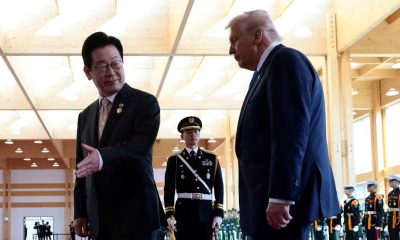
US President Donald Trump met leaders from Egypt, the Gulf, Jordan, Lebanon, Syria, and Türkiye on the sidelines of the UN General Assembly.
Trump described the countries represented as “friends, allies, and partners of the United States.” Speaking about peace and prosperity in the Middle East, Trump said:
“It is an honour for me to be here with some of America’s greatest and closest friends, allies, and partners, to continue our efforts towards a safer and more prosperous Middle East. This is a special place, and it has become even more special in the time since I entered politics… I have many great friends sitting at this table. They are all magnificent people, and we are ensuring that their lives go well.”
Adding that every country around the table was “extraordinary”, Trump thanked them for US investments originating from these nations totalling approximately $21 trillion since he took office in January 2025.
In particular, he spoke of his close relationship with President Recep Tayyip Erdoğan, with whom he has forged a close friendship since his first term in office. Thanking Erdoğan, he described him as a “great man” and a “tough cookie”.
The US president also noted that a recent meeting held between US and Iranian representatives had been productive.
Trump observed humorously that the region was filled with high energy, though he noted this sometimes meant “too high energy.”
Trump said there was “great momentum” towards reaching an agreement with Iran. A few hours before this statement, speaking from the rostrum of the UN General Assembly, he had asserted that the US could either make a deal with Tehran or “destroy” it.
In his address of approximately 35 minutes to world leaders earlier on Tuesday, Trump said: “I have a big decision to make. Will a deal be made with Iran that will allow them to rebuild the country and make it much greater than before, perhaps one of the greatest countries in the Middle East or even the world? Or will I destroy the Islamic Republic, and do it quickly, without ever giving them the chance to kill and destroy people and countries again?”
Stating that the US aims “to completely isolate Iran financially”, Trump added: “I hope they do the right thing quickly before it is too late; you know that one day it will be too late, and we will have no chance left to allow their survival as a nation.”
Trump also addressed Iran’s nuclear programme, stating that preventing Tehran from acquiring a nuclear weapon remains one of the primary objectives of the US campaign.
Trump continued:
“A large part of what we did, perhaps 99%, was to ensure Iran did not obtain a nuclear weapon; those facilities were blown up. We might have to blow up one more, Mount Kazma. We do not see much activity there, but if we do, we will blow it up immediately.”
Asked by Al-Monitor whether there was a consensus on a roadmap forward, the US Ambassador to Türkiye and Special Envoy for Syria and Iraq, Tom Barrack, said: “There is a consensus that we need a roadmap forward; that is the only consensus.”
In a separate development, King Abdullah of Jordan told Al-Monitor that the meeting went “very well”.
Asked by a reporter about the meeting with Iran, Witkoff replied: “I feel very good right now.”
Gulf states are attempting to keep diplomatic channels with Iran open while the conflict continues. On Sunday, UAE presidential adviser Anwar Gargash told Al-Monitor that talks between Washington and Tehran must be accompanied by a parallel regional dialogue.
Gargash said: “We need a new mindset that these kinds of discussions about what kind of region we all want, what kind of stability we pray for, and what core elements of development we need: which are very closely linked to stability: can take place at an Iran-US level, but must also take place at an Iran-Arab level.”
At the UN General Assembly, regional leaders took a sharp line against Israel. King Abdullah II of Jordan highlighted the Palestinian issue during his address at the 81st UN General Assembly in New York, stating that Israel was a “regional threat” acting with “frightening impunity”.
On the opening day of the event, he delivered a passionate speech referencing a “unique moment in history” where “the scale of information and the speed of change are unprecedented.”
The King added: “Every day, a new crisis, a new tragedy, a new emergency arises demanding our attention. Every generation believes that the challenges it faces are unique; perhaps for us, this is true.”
Hussein continued:
“If anyone has any doubt that a crisis in this part of our world will remain confined solely to this region, let them look at the energy and grocery bills of ordinary families from Mumbai to Madrid and Minnesota. The Iran war has demonstrated how quickly instability can disrupt trade, investment, and the lives of people outside the region.”
Recalling that he has warned at the UN for years about the dangers of leaving the Palestinian-Israeli conflict unresolved, the King argued that the international community has chosen to “manage” the conflict rather than confront and resolve it, questioning the value and legitimacy of international law in light of “one of the longest-running occupations in the world.”
The King of Jordan continued:
“If international law can be ignored for decades, then what exactly is the value of this law? And how can we enforce it if we do not even name its violations? In Gaza, the evidence is stark: at least 300 Palestinian children were killed in the first 300 days of the so-called ceasefire.”
The King condemned the Israeli government for “changing the rules”, continuing attacks and the destruction of civilian infrastructure in Gaza, and refusing to withdraw from the war-torn Palestinian territory.
Stating that Israeli actions in the West Bank must be regarded as a policy of forced displacement, Hussein called on the international community to treat Gaza and the West Bank as integral parts of a single whole belonging to the Palestinian people.
Diplomacy
Finkelstein says US campus clampdown has surpassed McCarthyism
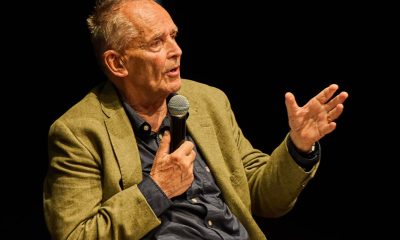
Appearing as a guest on the online programme hosted by American journalist and television presenter Tucker Carlson, political scientist, academic, and author of “The Holocaust Industry” Norman Finkelstein evaluated post-October 7 developments in Gaza, Israel’s military operations, free-speech crises across American universities, and the historical background of Gaza.
Responding to Carlson’s question regarding conditions in Gaza prior to the October 7 actions, Finkelstein stated that the roots of the issue trace back to 1948.
“Gaza became Gaza in 1948”
Explaining that the current demographic structure of the Gaza Strip was shaped by the forced displacement of 1948, Finkelstein said:
“Gaza became Gaza in 1948 as a result of Israel expelling approximately 750,000 Palestinian Arabs from the lands it incorporated into its borders. Around 300,000 of those 750,000 expelled individuals were sent to Gaza, and this population constituted roughly 80% of Gaza’s inhabitants. The indigenous population was overwhelmed by this massive influx of refugees. At that time, Gaza was part of Mandate Palestine under British rule.”
Finkelstein noted that conditions in the territory, which fell under Egyptian administration after 1948, drew the attention of international observers from the earliest years.
Recalling that United Nations officials serving in Gaza as early as the 1950s explicitly compared the territory to a concentration camp, Finkelstein cited historical accounts from the era:
“In July 1967, Al Gore Sr., then a senator from Tennessee, visited Gaza. Describing what he witnessed upon his return to the US Congress, he characterised Gaza as a concentration camp established on sand. Consequently, this has been the common terminology used by external observers visiting the region since 1948.”
Drawing attention to statements by Giora Eiland, former head of Israel’s National Security Council, Finkelstein noted that Eiland does not project a pro-peace profile, continues to advise the current Israeli government, and has publicly stated that he would welcome the outbreak of epidemics in southern Gaza.
Finkelstein continued:
“During a 2004 meeting with senior American officials, Giora Eiland described Gaza as a huge concentration camp. Eiland was an Israeli, a Jew, and head of the Israeli National Security Council. He naturally understood very well the historical gravity of designating a piece of land a concentration camp. The most painful aspect is that those days were Gaza’s best days.”
“A concentration camp kept on the brink of starvation”
Finkelstein recounted that former US President George W. Bush’s administration forced Palestinians into holding elections in 2006 as part of its democracy promotion agenda, noting that Hamas initially hesitated to participate on grounds that it would legitimise the 1993 Oslo Accords.
Hamas won the election backed by public support reacting against corruption within the Palestinian Authority, Finkelstein recalled, citing former US Secretary of State Hillary Clinton’s subsequent remarks expressing regret over the outcome. Observing that former US President Jimmy Carter monitored the process on the ground and described the balloting as completely free and fair, Finkelstein offered the following evaluation:
“Immediately after the elections, Israel, followed by the US and the European Union, imposed an almost medieval blockade on Gaza. Lengthy lists were drafted for items prohibited from entering Gaza. The entry of chocolate, chicks, potato crisps, spices, musical instruments, and notebooks was barred. Official documents were later exposed; they declared that they would keep the population of Gaza at a bare minimum humanitarian nutritional level. This was the diplomatic cover for keeping people living on the edge of starvation. Their objective was to induce the public to overthrow Hamas by keeping Gaza’s economy on the brink of collapse. When Salvador Allende’s government took power in Chile in 1971, the US had said it would make the economy scream. Israel did precisely that in Gaza.”
Finkelstein noted that former UN High Commissioner for Human Rights Mary Robinson observed during a 2008 visit that an entire civilisation was being destroyed, adding that prior to October 7, 2023, international bodies had described Gaza as a sinking ship and a toxic slum.
Pointing out that Israel for years termed its recurring military campaigns under the metaphor of mowing the lawn, Finkelstein stressed that this phrase assumes a horrifying dimension in light of the fact that half of Gaza’s population consists of children.
“Targeting children is an indicator of genocide”
Finkelstein described Operation Cast Lead in 2008, Operation Pillar of Defence in 2012, and Operation Protective Edge in 2014 as waves of high-tech slaughter.
Citing former International Committee of the Red Cross President Peter Maurer, who visited the territory following the 2014 assault and stated that he had never in his life seen destruction on the scale present in Gaza, Finkelstein illustrated the gulf between past attacks and the current situation with figures:
“During Operation Protective Edge, 18,000 homes were destroyed or severely damaged. Around 2.5 million tonnes of rubble were left behind. Since October 7, however, the number of destroyed dwellings has exceeded 325,000. Accumulated debris in Gaza has reached 61 million tonnes. While the 2014 devastation was considered unprecedented, it is no longer even a footnote alongside the current picture.”
Turning to the scale of casualties in Gaza, Finkelstein highlighted that in addition to those killed by direct bombardment and artillery fire, children have lost their lives to starvation and collapsed immune systems.
Noting the difficulty of establishing an exact figure, Finkelstein addressed the matter within the framework of debates over genocide:
“The United Nations’ latest report on child fatalities treats the direct targeting of children as a primary indicator in distinguishing whether a conflict constitutes a war or a genocide. According to Gaza Ministry of Health data, children account for roughly 30% of those killed. Out of the 6 million Jews who died in the Nazi Holocaust, 1.5 million were children; this proportion corresponded to roughly 25%. If we all agree that the Nazi slaughter was a genocide and 25% of its victims were children, the fact that 30% of those slaughtered in Gaza are children provides powerful evidence that this is a genocide.”
Responding to Carlson, who noted that the International Holocaust Remembrance Alliance’s working definition of antisemitism prohibits comparing Israeli policies to those of the Nazis, Finkelstein pointed out that Israeli politicians have historically and continually equated their adversaries with Adolf Hitler.
Recalling that Gamal Abdel Nasser, Saddam Hussein, Iranian leaders, and Hamas have all been compared to Hitler by the Israeli leadership itself, Finkelstein pointed to the contradiction in barring critics of Israeli actions from making such comparisons.
“The goal is not just genocide, but emptying Gaza entirely”
Emphasising that the destruction in Gaza has been denser and more devastating than even the World War II bombing of Dresden, Finkelstein explained that 97% of schools have been flattened, while hospitals, medical personnel, United Nations staff, and journalists have faced unprecedented targeting.
Finkelstein explained Israel’s primary intent in the following terms:
“I do not believe Israel’s primary objective is to commit direct genocide. Israel’s fundamental goal is to empty Gaza completely. They want to carry out ethnic cleansing. The method they use is to destroy the people of Gaza until they abandon their land. Because the borders are shut and neighbouring states refuse to accept them, they will continue this slaughter until their goal is attained. They are resolved to solve the Gaza problem once and for all. For them, solving this problem means entirely expelling the population. They regard committing genocide as the only means of convincing the people to leave and forcing neighbouring countries to take them in.”
Noting that international legal experts, Human Rights Watch founder Aryeh Neier, the organisation’s former executive director Kenneth Roth, Israeli human rights group B’Tselem, and the International Court of Justice have evaluated Israel’s actions within the framework of genocide, Finkelstein shared striking demographic data:
“Between 30% and 40% of American Jews believe that Israel is committing genocide. This is extraordinarily striking. We are talking about an educated community that has been inculcated from childhood with unconditional affection for Israel, learning this loyalty in synagogues as a condition of belonging. That these people, who cannot be easily duped, have reached such a conclusion constitutes a historic stance.”
“Unprecedented assault on academic freedom”
Finkelstein stated that defending Israeli conduct openly grew difficult after October 7, noting that dual-citizen soldiers serving in the Israeli military posted their own deeds on social media, rendering the horror impossible to conceal, at which point financial leverage was deployed.
Asserting that billionaire donors blackmailed university administrations, Finkelstein addressed presidential resignations at Harvard, the University of Pennsylvania, and Columbia:
“Figures such as Bill Ackman targeted university leaderships publicly. They announced they would withhold alumni donations unless student encampments supporting Gaza were dismantled. Even at institutions with immense endowments like Harvard, where a single alumnus donates between $50 million and $300 million, this pressure proved effective. Harvard President Claudine Gay, University of Pennsylvania President Elizabeth Magill, and Columbia University President Minouche Shafik were removed from office. When Magill stepped down, she uttered only two words to a close acquaintance of mine: ‘Money talks.'”
Stating that a pervasive climate of fear has been erected across universities, hospitals, and cultural institutions, Finkelstein said healthcare professionals have lost employment over social media postings, while New York libraries and arts institutions have fallen into silence because of financial dependence.
Drawing on his background as a scholar who has examined historical eras of academic suppression across the US, Finkelstein compared the current landscape:
“Nothing like this has ever been seen in our country’s history. There has never been an attack on academic freedom of this brazen magnitude, including the Red Scare of the early twentieth century or the McCarthy era. All three ousted university presidents were women, and two belonged to minorities. Despite possessing every progressive cultural safeguard, none could preserve her post. Outlets such as The New York Times remained silent. This wave of terror persists. Since the spring of 2024, I have received invitations to speak at only two universities across the entirety of the US. As someone who formerly delivered lectures and conference addresses at 40 different institutions annually, I have not been invited to a single institution in New York, where I live.”
Describing how students have had their faces projected onto mobile billboard trucks branding them terrorists, even facing public exposure in their family neighbourhoods, Finkelstein noted that he personally read Harvard University’s 312-page report on antisemitism.
Asserting that the report contained no concrete incidents and instead lumped Israeli students feeling alienated into the category of antisemitism, Finkelstein recalled that Harvard President Alan Garber was forced to concede that the vast majority of claims in the report amounted merely to political criticisms of the state of Israel.
Pointing out that US Supreme Court precedent establishes constitutional protection under free speech even for burning the American flag or advocating the violent overthrow of the government, Finkelstein argued that attempts to criminalise the slogan “From the river to the sea” lack any legal foundation.
“Netanyahu is a perfect reflection of Israeli society”
Answering questions regarding the personal political future of Israeli Prime Minister Benjamin Netanyahu, Finkelstein dismissed claims that Netanyahu is poised to fall from power.
Recalling that Netanyahu is the longest-serving prime minister in Israeli history, Finkelstein characterised the politician’s connection to the public:
“It is constantly claimed that Netanyahu will be ousted, that he will be erased from politics because of corruption trials, but that never happens. The sole reason for this is that Netanyahu is a perfect reflection of Israeli society. He embodies an arrogant, self-righteous Jewish supremacist. When Israeli society looks at him, it sees its own reflection. The corruption allegations or personal scandals surrounding him simply do not matter to the Israeli public.”
Finkelstein recounted that he was barred from entering Israel in 1989 and 2004 while travelling to the occupied Palestinian territories, noting that numerous Jewish intellectuals who opposed the occupation, including Noam Chomsky, were placed on Israeli blacklists.
Stating that he placed the search for justice at the core of his life from his youth and has always remained prepared to pay the price, Finkelstein turned to the obstructions he encountered throughout his academic career.
Disclosing that he remained entirely unemployed for 13 years after his tenure bid at DePaul University was rejected in 2007 following outside pressure and intervention by academic Alan Dershowitz, Finkelstein described the ordeal:
“From 2007 until 2020, I could not find a single job. I was completely unemployed. The rhythm of people’s lives is determined by external obligations; you go to work, you have responsibilities. I had to wake up every morning and invent a purpose for my existence. It was a dark chapter of my life. Later, I taught adjunct courses at institutions such as Hunter College and Brooklyn College. As a scholar of 40 years, I experienced humiliating situations, going weeks without receiving my salary and being treated as an hourly contract lecturer. Yet all I loved was engaging with young minds and teaching them to think.”
Contending that classrooms must not serve as venues for political indoctrination, Finkelstein recalled British philosopher Bertrand Russell’s observation that in every great debate, strong arguments exist on both sides.
He stressed that an academic’s primary duty is to teach students how to weigh evidence rather than imposing one’s personal convictions.
Describing how, as a graduate student, he conducted months of archival work systematically exposing demographic fabrications in Joan Peters’ book, which claimed that Palestinian lands had been largely uninhabited and settled by incoming Arab migrants, Finkelstein recalled that academic doors closed to him one after another following that period, despite earning the endorsement of Noam Chomsky.
“Not a shred of evidence confirms systemic sexual violence on Oct 7”
Responding to Carlson’s inquiries regarding his new book, “Gaza’s Gravediggers”, Finkelstein stated that while he does not deny that Hamas and other armed factions committed grave crimes on October 7, claims of systemic rape are unsupported by physical evidence.
Stating that he devoted the opening chapter of his volume to scrutinising these allegations, Finkelstein noted that he examined in detail the 300-page report released by the Israeli civil commission headed by Dr Cochav Elkayam-Levy:
“The commission announced that it possessed 10,000 photographs and video recordings from October 7. They indicated that reviewing this material would take a single investigator working eight hours a day more than seven months. They stated they had amassed footage from dashcams, helmet cameras, security cameras, and mobile phones. Yet across that vast archive, there is not a single frame of footage showing Hamas members committing rape or sexual violence. Amnesty International has likewise not confirmed the existence of such visual evidence. They justified the lack of forensic proof by citing the rapid burial of corpses according to religious rites. However, that not a single digital recording has emerged defies credulity.”
Pointing to inconsistencies in the report’s testimonies, Finkelstein argued that claims by the primary witness, who hid inside a windowless caravan and purported to hear sounds from a distance, lack legal validity.
Noting that none of the victims named in the report, including released hostage Amit Soussana, provided direct testimony that they had been raped, Finkelstein sharply criticised the documentary produced by former Meta executive Sheryl Sandberg:
“Sandberg is an intelligent Harvard graduate who studied economics, so she understands evidentiary standards well. Yet throughout her film, she looks at a mobile phone pretending to be horrified. While no footage substantiating the claims exists, they turned this into an instrument of propaganda. Facts no longer matter; all that counts for them is keeping their ideological cause alive at all costs.”
“The US supplied 70% of the weapons”
Asked by Carlson whether accountability proceedings would ever commence before international tribunals, Finkelstein asserted that judicial mechanisms cannot function when an entire society is complicit in crime.
Arguing that the Israeli leadership will never be held accountable, Finkelstein concluded:
“The US would never permit it. A fear of a domino effect prevails. If Israeli officials were placed in the dock, what would happen to Joe Biden and Antony Blinken? The US itself supplied 70% of the weapons used in the genocide in Gaza. Washington was the sole power capable of severing the arms flow, yet it refused to do so. In 1964, they staged the Gulf of Tonkin incident to justify entering the Vietnam War on the ground; at least they devised a pretext. In Israel’s recent direct strikes against Iran, they did not even bother seeking such a cover. From the United Nations Security Council, not a sound emerged. Indeed, through Resolution 2803, the Security Council effectively surrendered governance of Gaza to Donald Trump. My sole purpose in writing my new book is to transmit an unvarnished record of the historic evil inflicted upon the people of Gaza to future generations, knowing that no one will ever be brought to justice.”
-
America2 weeks agoMilanovic declares global neoliberalism dead, warns of plutocracy
-
America2 weeks agoFive minutes to doomsday – 4: American capitalism at the frontiers
-
Asia1 week agoDeepSeek engineer warns AI will lead to communism or Cyberpunk
-
America1 week agoBig Tech profits from AI extinction hype, Ken Klippenstein says
-
Diplomacy2 weeks agoAnthropic uncovers Claude use by Iranian, Houthi, and Russian units
-
Europe2 weeks agoChinese carmakers expand European share as Stellantis loses ground
-
Europe2 weeks agoAfD’s Siegmund links German rearmament to remigration plans
-
Europe2 weeks agoUK faces £258bn infrastructure gap as commission urges private funds