
America
Five minutes to midnight – 2: The war of the churches

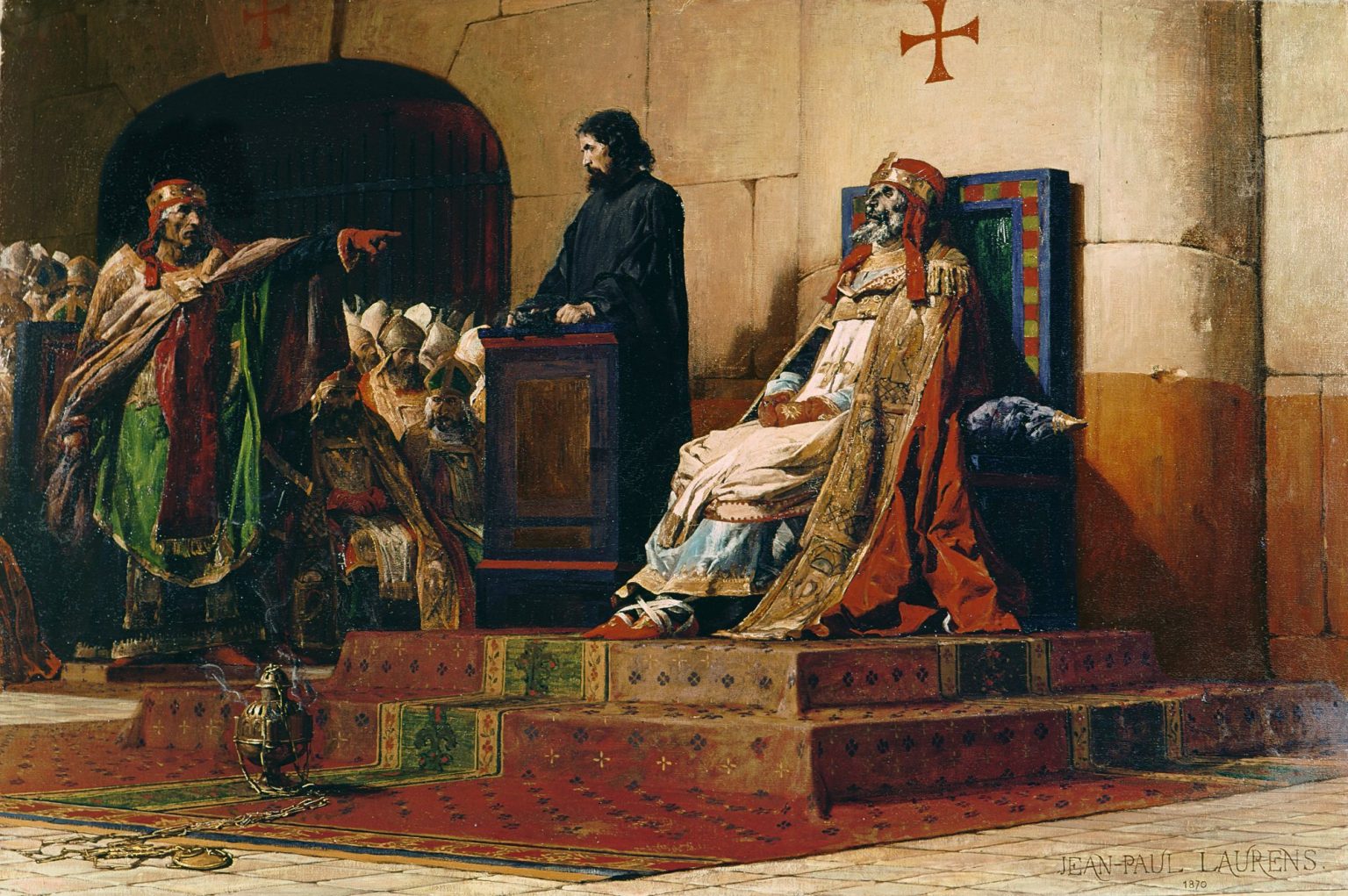
US Vice President JD Vance describes his 2019 conversion to Catholicism as “joining the resistance.”
He recalls having constant conversations about religion with his grandmother—and that the old woman he called “Mamaw” harbored a deep hatred for “organized religion.” Thus, he wonders what she would have said had she learned that the boy grew up to become a Catholic.
In his memoir Hillbilly Elegy, which became a bestseller following its publication in 2016, Vance diagnosed the maladies of American society, believing he had finally found what he was looking for:
“I felt a desperate need for a worldview that understood our bad behavior as both social and individual, structural and moral; that recognized we are products of our environment; that we have a responsibility to change that environment, but that we are still moral beings with individual duties.”
We must concede that he found—or at least believed he had found—a socio-political response of the very same nature to a socio-political problem. When one embraces Catholicism as an antidote to what has gone awry in American society, one inherently embraces a particular strain of Catholicism. By way of an imperfect analogy, we might also call it “political Catholicism.”(1)
Yet it already bears a name, and one that Vance himself champions: postliberalism. Postliberals share certain familiar conservative positions, such as opposition to abortion and LGBT rights. In this regard, their kinship with mainstream American religious thought is unmistakable.
However, there is a fundamental departure: whereas American Catholic conservatives previously viewed the expansion of the state as a problem, postliberals demand a strong state.
Their divergence from the liberal conception of the state lies, first and foremost, in declaring the notion of the “neutral state” to be a “myth.” Postliberals believe the state should not be neutral; rather, it must actively contribute to the realization of social salvation.(2)
This movement, of which Vance proudly professes to be a part, pursues a “counter-revolution” wherein they intend to capture the state bureaucracy and institutions such as universities from within, replace establishment elites with their own, and govern according to their vision of the “common good.”
Patrick Deneen, one of the movement’s foremost figures, spoke in his 2023 book Regime Change of the need for the “peaceful but vigorous overthrow of a corrupt and corrupting liberal ruling class.” The formula for political alliance Deneen proposed was “aristopopulism,” in which those at the very top and those at the very bottom would mobilize against the “establishment.”(3)
Nevertheless, I must point out that the crucial crux of this elite substitution hinges upon the premise that establishment elites are “not elite enough.” Moreover, it is worth recalling that postliberalism—and in our present case, Vance himself—equates this eliteness with IQ scores. In his polemic with Rory Stewart, whom we shall mention below, Vance questioned his adversary’s intelligence, stating: “I’ve said it before and I’ll say it again: the problem with Rory and his ilk is that they have an IQ of 110 and think they have an IQ of 130. That misplaced arrogance is the root cause of so many elite failures over the last 40 years.”
In last year’s series of articles, I pointed out that Silicon Valley ideologues approached biological hierarchies and IQ scores (“neurocastes”) with genuine zeal. In the case of Vance, we see once more how facile the leap from the culturalist arguments that flared up during the Trump years to biological structures truly is. Furthermore, while the aristokratia in “aristopopulism” is thrust directly into our faces, the populus once again quietly vanishes from view.
Ordo amoris: The Popes Against JD Vance
In an interview with Fox News on January 30, 2025, Vance invoked a curious reference to defend the Trump administration’s crackdown on “illegal” immigrants:
“As an American leader, but also just as an American citizen, your compassion has to go first to your fellow citizens. That doesn’t mean you hate people outside of your borders. But there’s an old-fashioned [concept]—by the way, I think it’s a very Christian concept—you love your family first, then you love your neighbor, then you love your community, then you love your fellow citizens, and only after that do you focus on and prioritize the rest of the world. So much of the far left has completely inverted this. They seem to hate their fellow citizens and care more about people outside their borders. You cannot run a society that way.”
Feeling compelled to respond, former British Member of Parliament and Jackson Institute professor at Yale University Rory Stewart linked Vance’s commentary to a “tribal” and “un-Christian” form of religiosity, noting: “Bizarre take on John 15:12–13—closer to pagan tribalism than Christianity. We should start worrying when politicians turn theologian, dare to speak for Jesus, and begin telling us whom to love in what order.”
Vance’s retort opened with the words: “Google ordo amoris.”
Arguing that the idea of there being no hierarchy among obligations runs “contrary to basic common sense,” Vance asked: “Does Rory really think his moral obligations to his own children are the same as his obligations to a stranger living thousands of miles away? Does anyone really believe that?”
Deriving from Augustine, ordo amoris is interpreted in The City of God as “rightly ordered love” and serves as the very definition of “virtue.” Its literal rendering is the “order of love.” What Vance understands by this order is a hierarchy among the objects toward which love is directed.
Recall from the first article that Peter Thiel had written, half-jestingly, that Pope Francis might be the Antichrist. It was this very Francis who, shortly before his death, leveled sharp criticisms at Vance’s conception of ordo amoris in a letter addressed to US bishops concerning immigration. Rejecting the claim that Christian love is “a concentric expansion of interests that gradually extends to other persons and groups,” the late Pope underscored that man is not merely a relatively open-minded individual endowed with certain benevolent sentiments, continuing:
“The true ordo amoris to be promoted is that which we discover through continuous contemplation of the parable of the Good Samaritan—that is, through contemplation of a love that establishes a fraternity open to all, without exception.”
An X account belonging to the current Pope Leo XIV, then Cardinal Robert Prevost, had reposted an article published in the National Catholic Reporter titled “JD Vance is wrong: Jesus doesn’t ask us to rank our love for others.”
Coming to Vance’s aid would be his reputed “intellectual mentor,” James Orr. Prior to joining the advisory staff of Reform UK leader Nigel Farage, Orr—a theologian who led The Centre for a Better Britain (CFABB),(4) a project he described as “post-Brexit, pro-nation, pro-sovereignty, pro-Britain”—had become a prominent figure in the “National Conservatism” movement and attended as a guest the gathering hosted by the US Vice President in the Cotswolds last summer.
In his published response, Orr dismissed Stewart’s critique as the “egalitarianism of secular liberalism,” arguing that “to the cosmopolitan egalitarians of late liberalism, the ‘hierarchies of the heart’ are as suspect and objectionable as any other.”
Divided Catholicism in the End Times
This division is not confined strictly to the question of immigration. Otherwise, the new Pope Leo would not seize every available opportunity to assault Trumpian immigration policy. For instance, most recently at the Meeting for Friendship Amongst Peoples held in Rimini, Italy, Leo stated, “Before borders, definitions, and institutions, there are always human beings.” Invoking his predecessor Francis’s 2020 encyclical Fratelli Tutti [All Brothers], he remarked that social friendship is “the public, dynamic, and concrete expression of fraternity” and that when we recognize one another as children of God, “we come into contact with what fundamentally unites people, beyond any difference, division, or conflict.” Contrast this with the emphases in Vance’s speech from last year. To his mind, America was a place “in a particular geography, with a particular people, possessing a particular faith and a particular way of life.” What defined the United States had to mean, above all, “sovereignty.” American citizenship, then, meant belonging to a nation that protected the sovereignty of its people—a sovereignty setting it apart, specifically, from “a modern world determined to erase borders and national character.”
Yet the theater of conflict spans far wider. From DEI and LGBT rights to the ordination of women and abortion, nearly all the familiar culture-war battlegrounds of American politics are bound up in this parcel, alongside the Palestinian question and interfaith dialogue. When the debates ignited by Pope Francis’s reformist drives within the Church converged with the post-2008 search for a way out of catastrophe and the political ascent of Trump, all factions began securing open or covert allies across the political establishment.
Among the countries with which the Vatican has allied for its own agenda, the United Kingdom stands prominent. Last year, King Charles became the first British monarch since Henry VIII’s rupture with Rome in the sixteenth century to pray publicly alongside a pope, praising “the Catholic Church and the Church of England joining hands.” The Royal Household noted that the service “symbolized the joining of hands between the Catholic Church and the Church of England.” Meanwhile, the MAGA postliberals—it goes without saying—march in lockstep with the European New Right and right-wing religious Zionist circles.
Yet precisely at this juncture, a curious contradiction—or rather, an entanglement—surfaces. First, between the postliberals and their Silicon Valley allies: Matt Sleat, who has also written a book on this movement, argues that on the plane of economic policy, postliberals—contrary to the unyielding free-market fundamentalism of Reaganite conservatives—maintain that neoliberalism has enabled massive corporations to reap unprecedented profits while inflicting harm on workers, devastating local communities, and degrading the environment. They contend that free trade has failed to raise living standards for all, particularly for the working class. Instead, they call for breaking up powerful monopolies, reindustrialization, family-supporting wages, the protection of workers (including the self-employed), and the robust support of trade unions and professional associations. Sleat unearths a historical parallel: rather than aligning with the free-market philosophy of the 1980s, postliberals appear far closer to the 1930s New Deal, wherein the state served as a countervailing force against capital. This “statist” posture visibly parts ways with Vance’s primary benefactor, Peter Thiel, and the deregulatory cohort surrounding him.
The entanglement becomes even more telling. For instance, Pope Francis, whom postliberals abhor, advanced an economic vision throughout his pontificate that called for a radical transformation to ensure capitalism served people rather than profit: honest leadership, human-centered focus, ethical responsibility, and contributing to the shaping of a world that serves and uplifts humanity rather than exploiting it. It was this same Francis who decried the excesses of globalization, “predatory capitalism,” and an “economy that kills”:
“Francis traced the roots of the 2008–09 global financial crisis to a profound anthropological crisis that, in his own words, ‘creates new idols.’ In his view, the ancient biblical ‘worship of the golden calf’ had resurfaced, albeit in a modern guise. We were now confronted with the ‘fetishism of money’ and the ‘dictatorship of an economy’ that failed to serve the people.”
Indeed, in his encyclical Laudato si’, Francis emphasized the potential of business to serve the “common good,” writing: “Business is a noble vocation, directed to producing wealth and improving our world… especially if it sees the creation of jobs as an essential part of its service to the common good!”
Rerum Novarum, penned by Leo XIII—whom the current Pope regards himself as following—primarily against ascendant socialism, yet concurrently against “unfettered capitalism,” is regarded as the cornerstone of Catholic Social Teaching. Leo XIII is also remembered as the “social Pope” and the “Pope of the workers.” One might say he produced the first systematic publication of Catholic social doctrine regarding the “social question” that defined the second half of the nineteenth century. It was likewise the inception of the Catholic Church’s international theorization of what came to be known as the “third way”: an ethical-political reformist movement would flourish by drawing upon Rerum Novarum against those “warring brethren,” liberalism and socialism. The workers and the impoverished, cast into ruin by the Industrial Revolution, were to be redeemed through the ideal of “justice” and a just wage (a “living wage”); in an era where all social bonds were reduced to the cold calculus of economics, a remedy for the misery wrought by the social question would be forged through the Christian organization of workers and employers alike.
Indeed, upon his election, Pope Robert Francis Prevost (Leo XIV) explained the principal rationale for adopting the name Leo during his inaugural address before the College of Cardinals:
“Feeling within myself the call to continue along this path, I resolved to take the name Leo XIV. There are various reasons for this, but the principal one is that Pope Leo XIII, in his historic encyclical Rerum Novarum, addressed the social question within the context of the first major industrial revolution. Today, the Church offers the treasury of her social teaching to all people in response to another industrial revolution and to advancements in artificial intelligence, which present new challenges for the defense of human dignity, justice, and labor.”
Consequently, the landscape grows increasingly tangled: on one side stands Leo, who in his encyclical(5) Magnifica Humanitas warns of the perils of artificial intelligence and calls for its regulation, evoking an apocalyptic specter by referencing the “Tower of Babel”; on the other side are conservative Catholics whose presence deems the Pope’s call for sanctions against AI insufficient. Hostility toward neoliberalism—or, at the very least, the conviction that it has been “surpassed”—is present on both sides of the divide.
Theologian David Congdon approaches postliberalism as an “apocalyptic politics.” Drawing upon figures such as Patrick Deneen, he illustrates how postliberal intellectuals construct a narrative of “cultural catastrophe.” According to this narrative, liberalism has not merely failed; it has precipitated the outright collapse of Western civilization.
In this context, the idea of the apocalypse binds these Catholic factions together, however divergent their paths may be. For apocalyptic propaganda performs an insidious political function: through a narrative of existential civilizational crisis, both the postliberals and their opponents legitimize extraordinary measures that would otherwise be unthinkable—or at the very least, ensure that the rumor of crisis is no longer perceived as worse than the reality itself.
Yet does such a crisis not exist? In the next article, we shall examine the death throes of capitalism and attempt to disentangle eschatology from the rigorous, scientific analysis of crisis.
(1) Writing on postliberalism at the Centre de recherches internationales (CERI), Nadia Marzouki employs the term “political Christianity” to describe these types of Christian movements in the United States.
(2) Another postliberal, Harvard law professor Adrian Vermeule, advocates through what he terms “integralism” that church and state must be integrated for the sake of the “common good.” Vermeule argues that the Church ought to be accorded its rightful authority to guide the state and government in spiritual and moral affairs.
(3) In his analysis of Deneen’s work, theologian David Congdon argues that this author contends liberalism’s emphasis on individual liberty leads to “permanent revolution and cultural destruction.” Deneen’s alternative anchors language, religion, law, and governance within local group identities, yielding what Congdon characterizes as the conditions for an “authoritarian, homogeneous society that violently suppresses individual dissent.”
(4) Asserting that the United Kingdom has accumulated excessive debt and will soon be dragged into a debt crisis, CFABB leans upon the claim that “Britain is completely broken” and posits that the nation requires “rapid, radical reform.” Among its foremost priorities is the drafting of constitutional reforms and new policy options to “assist in preparations for the new government to be formed in 2029.” The think tank’s blueprint draws manifest inspiration from the Heritage Foundation’s “Project 2025.” The group has also begun making its presence felt in the United States, establishing an entity in Dallas, Texas, to draw inspiration from the MAGA movement—which twice carried Donald Trump to the White House—and to raise millions of dollars. For detailed information, see here.
(5) Leo’s reflections on finance, while largely comprised of familiar tropes, remain worthy of note. In paragraph 160 of the encyclical, he writes:
“In recent years, the importance of finance has grown, and significant innovations have occurred in this field, partly with the emergence of cryptocurrencies. The reflections and observations found in the teachings of my predecessors, particularly in papal encyclicals, have emphasized that when the financial intermediation sector operates ‘deprived of the necessary anthropological and moral foundations, it not only leads to manifest abuses and injustice, but also demonstrates the capacity to create a systemic and global economic crisis.’ Likewise, income derived from capital tends to supplant income derived from labor, which is often marginalized from the primary concerns of the economic system. Yet the conversion of savings into credit for the real economy—thereby creating opportunities for both employment and self-employment—remains of central importance for the investments that must accompany processes of development and ongoing transformation. The social function of credit is irreplaceable. Finance as an end in itself is fundamentally distinct from financing directed toward development, creation, and the evolution of labor.”
I would remind the reader that these commonplace assessments regarding finance are not the exclusive domain of “progressive” Catholicism; they are equally embedded within the postliberalism we have discussed at length. We shall return to this subject in subsequent essays.










The US Congress is unlikely to approve the Donald Trump administration’s record $1.5 trillion defence budget request for the 2027 fiscal year.
According to a report by The Washington Post citing congressional sources, budget negotiations have stalled due to cross-party disagreements.
Roughly 30 US lawmakers interviewed by the newspaper said that defence policy and spending bills had reached an “impasse” following the total collapse of bipartisan consensus and personal friction between members of Congress and US Defence Secretary Pete Hegseth.
The Trump administration aims to divide the requested funding into two tranches, seeking support from a portion of Democrats for an initial $1.15 trillion package while pushing through a second $350 billion portion solely with Republican votes.
According to the report, Republicans have failed to secure even internal consensus to pass this second $350 billion package.
The US defence budget for 2026 stands at approximately $1 trillion, which includes a one-off allocation of $150 billion approved by Congress last year for priority objectives ranging from the development of advanced weapons systems to incentivising the American defence industry.
The new budget requested by the administration foresees a 40% increase in defence spending, covering funding for new weaponry and replenishing stocks of precision-guided missiles expended during the war with Iran.
Defence Secretary Hegseth also asked Congress to allocate an additional $67 billion for military operations, including the conflict with Iran.
The Washington Post noted that lawmakers have very limited time to resolve the crisis, as only 20 working days remain for Congress before the end of the year.
Bill for Middle East military operations mounts
The US proposed that defence spending be taken into account when allocating privileges within NATO.
According to a report by The Hill based on a US Central Command (CENTCOM) assessment, Washington’s expenditure on military operations targeting Iran has risen by more than $3 billion over the past month, reaching $47 billion.
The CENTCOM document indicates that munitions procurement constitutes the largest share of military spending at $29 billion.
Additional costs tied directly to conducting combat operations amount to roughly $12 billion, while $6.1 billion is needed to replace lost military equipment and hardware.
Expenditures for supporting personnel deployed to the region, air transport, communications, and logistical transit in the theatre of operations are calculated at $7.6 billion.
Expenses required to repair and rebuild US military bases in the Middle East were not included in this official cost breakdown.
In July, the House of Representatives narrowly passed a $1.15 trillion defence budget bill by a margin of just 216 votes to 212.
Six Democratic lawmakers voted in favour of the bill, while seven Republican lawmakers voted against their own party.
The Washington Post had previously reported that the Pentagon faced a severe funding shortfall.
The White House had requested an urgent $67 billion from Congress to cover military spending.
The newspaper noted that if lawmakers failed to act, the military would soon be forced to make far more painful concessions.
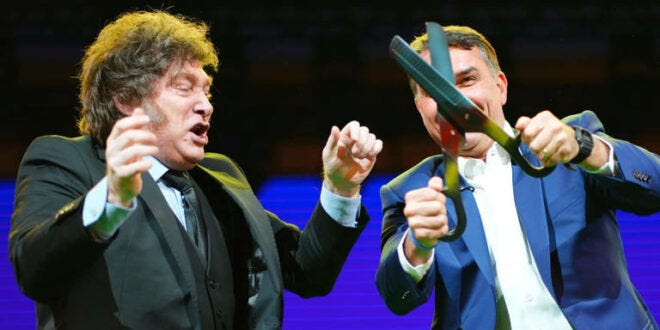
Flávio Bolsonaro fled Brazil on a plane belonging to the fleet of Argentine company Baires Fly, a firm linked to a businessman associated with a convicted drug trafficking conspirator, according to allegations.
The company, tied to an entrepreneur with business links to Federico “Fred” Machado, who faced drug trafficking charges in the US, is also named in a corruption investigation involving disability agency funds under the administration of Javier Milei.
Fórum Investiga, the investigative unit of Revista Fórum, uncovered these connections through court documents and public records in Argentina and the United States.
Sergio Daniel Mastropietro, a commercial broker for Baires Fly, was a business partner of Machado and currently faces money laundering and illicit association charges in connection with the scandal at Argentina’s National Disability Agency (ANDIS).
The company’s role drew scrutiny after the Argentine government confirmed early Wednesday that Bolsonaro entered the country with his wife and two daughters and boarded a private Baires Fly aircraft bound for Guayaquil, Ecuador.
According to Argentina’s National Directorate of Migration, the family crossed the border via the Tancredo Neves International Bridge between Foz do Iguaçu and Puerto Iguazú on Tuesday at 22:50.
The family boarded the plane at 23:30, and the Gulfstream G400, registered as LV-JQW, took off at 00:22 on Wednesday.
The journey followed an order by Federal Supreme Court Justice Alexandre de Moraes seizing Bolsonaro’s passports and barring him from leaving Brazil.
The drug trafficking link traces back to Argentine aviation businessman Federico Andrés Machado, known as Fred Machado, who was accused in the US of participating in an international ring tied to cocaine trafficking and money laundering.
Machado was a partner with Sergio Mastropietro in SO VAIN S.A., a company formed in 2010 for aviation-related ventures. Argentine investigations also documented shared travels, commercial ties, and common Buenos Aires addresses between the two men.
In February 2021, the US Department of Justice unsealed indictments against eight individuals for their roles in an international conspiracy involving narcotics trafficking, money laundering, and financial fraud.
Machado was among those indicted and was identified as an operator engaged in the purchase and sale of aircraft through his firm, South Aviation.
The investigation encompassed a network utilizing US-registered aircraft, several of which were seized in other nations while carrying large shipments of cocaine.
Machado was extradited from Argentina in November 2025 and subsequently reached a plea agreement with US prosecutors.
In August 2026, a federal court in Texas convicted him of conspiracy to commit money laundering and wire fraud.
The initial drug trafficking charge was dismissed as part of that plea agreement.
Machado’s commercial connection is with Mastropietro rather than directly with Baires Fly. The official owner of the company is Luis Grande, who has operated in Argentina’s private aviation sector for decades.
The other scandal involving Baires Fly centres on ANDIS, the agency responsible for providing assistance to people with disabilities in Argentina.
That inquiry examines allegations of contract steering, overbilling, kickbacks, and money laundering in questionable tenders during the Milei administration.
According to documents from the investigation led by federal prosecutor Franco Picardi, two ANDIS providers, Prolite Orthopedics and Probock, transferred 95.06 million Argentine pesos into a Baires Fly bank account on 10 September 2025. That sum represents approximately $62,000 based on exchange rates from 28 October 2026.
The payments occurred after Mastropietro sent the firm’s banking details to Miguel Ángel Calvete, who was identified as one of the figures behind the fraudulent scheme under investigation.
Following those transfers, invoices were issued for the advance purchase of flight hours on company aircraft.
Investigators suspect these commercial transactions were used to lend an appearance of legality to funds derived from irregular public contracts.
Financial tracking uncovered even larger sums. Documents reviewed by Argentine courts show Baires Fly billed five companies tied to the investigated contracts approximately 1.097 billion pesos, or around $720,000, between 2023 and 2025.
This figure reflects registered commercial transactions; it represents a fully confirmed amount of embezzled funds.
On 16 October, federal judge Ariel Lijo ordered formal charges against Mastropietro on suspicion of aggravated money laundering and illicit association.
The ruling also expanded charges against former ANDIS director and former Milei ally Diego Spagnuolo, alongside others allegedly involved in the conspiracy.
Argentina’s Federal Prosecutor’s Office stated that the probe revealed suspected fraud in contracts for medication, prosthetics, and equipment intended for assistance programme beneficiaries.
The airline maintains business relationships with figures across Argentine politics. In November 2023, days after winning the presidential election, Javier Milei used a Baires Fly plane to travel to the US. Luis Grande, the company’s owner, piloted the flight.
In the ANDIS investigation, Mastropietro denied managing Baires Fly or being formally part of the company, saying he acted only as an intermediary arranging aviation services.
The company maintains that it has no connection to the money laundering allegations.
The documents do not show that Bolsonaro was involved in the ANDIS scheme or in any drug trafficking activity.
There is also no evidence that Fred Machado played any role in arranging the flight.
In the United States, the Trump administration has unveiled its plan to support electoral reforms in Venezuela and lead the country toward presidential elections.
US Secretary of State Marco Rubio told international journalists during a press conference on Monday that Venezuela’s current electoral infrastructure was “designed to rig elections”.
As the chief architect of the administration’s Venezuela policy, Rubio argued that this system must be overhauled quickly to enable a valid vote.
According to Rubio, talks between the government of Interim President Delcy Rodríguez and opposition factions led by Dinorah Figuera are moving toward a concrete timetable.
The sides are preparing to appoint a new Supreme Tribunal of Justice (TSJ) before the end of the year, followed immediately by the renewal of the National Electoral Council (CNE).
“We obviously need to use our leverage over the interim Venezuelan authorities to ensure that the process moves forward responsibly. Our goal is to hold elections,” Rubio said, welcoming what he described as “serious progress” in that direction.
The US secretary issued a warning, saying, “Whoever tries to derail the process will do serious damage to Venezuela.”
Speaking at a separate press briefing, an unnamed senior US Department of State official outlined the step to follow institutional renewal, according to a report by the Venezuelanalysis portal.
According to the official, once both the TSJ and the CNE are reconstituted, the Venezuelan presidency will be declared permanently vacant, triggering a constitutional six-month window to conduct elections under “competitive conditions”.
The same official stressed that political guarantees must be provided and media access rules regulated during this phase.
Advocating the inclusion of pro-government factions in the “transitional period”, the official said peaceful democratic transitions often require the cooperation of outgoing groups, citing Spain and Portugal as precedents.
Electoral timetable and judicial work accelerate
Asked about a definite election date, Rubio said the Rodríguez administration had complied with US timelines so far.
Emphasising that they would not wait two years for an election, Rubio said: “That is not going to happen. In the best-case scenario, I have two years and two months left in this job.”
Rubio’s remarks coincided with statements by Dinorah Figuera, who heads the opposition delegation in the negotiations with government representatives.
Figuera had predicted that presidential elections would take place in late 2027 or early 2028.
Meanwhile, during the third round of political dialogue in Venezuela, the parties agreed to review four pieces of legislation governing political participation, pluralism, and the autonomy of political organisations, including the Law on Political Parties, Public Meetings, and Demonstrations.
The discussions also addressed disqualifications from public office and the examination of legal frameworks governing political rights.
In parallel, Venezuela’s National Assembly officially initiated the process to renew all 32 justices of the Supreme Tribunal of Justice.
Applications from legal professionals seeking seats on the court will be accepted from Wednesday, 28 October until Wednesday, 11 November. The fourth round of dialogue is scheduled for 11 to 15 November.
Rodríguez and other senior Venezuelan officials have not yet commented on the US Department of State’s statements.
Machado’s return and convoy controversy
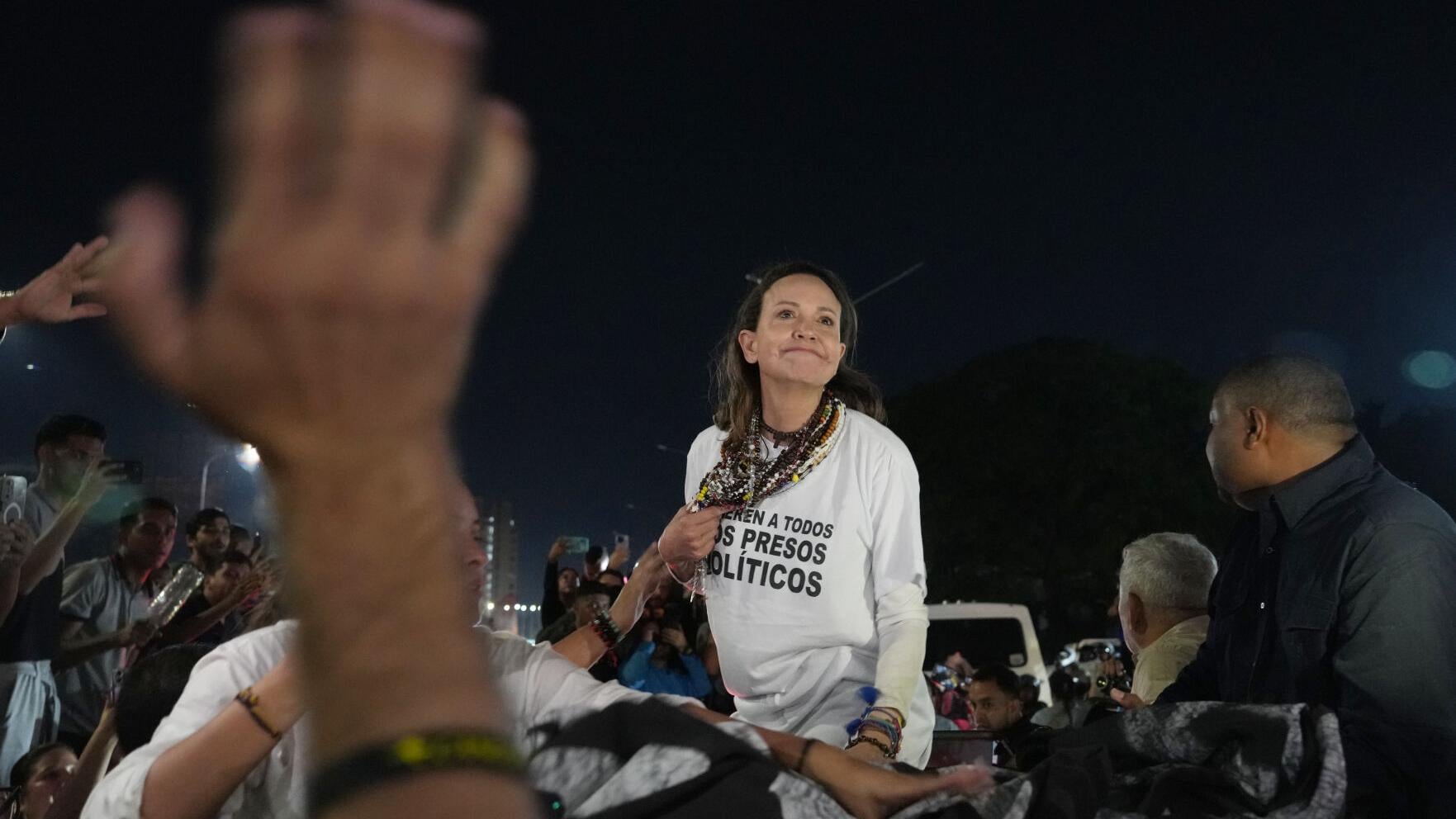
The White House’s assertions regarding Venezuelan reforms and elections coincided with the return of far-right opposition leader María Corina Machado to the country on Sunday.
Supporters of Machado, who had lived abroad for more than a year, called for their leader to be included in the ongoing negotiations.
Responding to questions about Machado’s return, Rubio said he had told the Rodríguez government “weeks ago” that she should be allowed to return to the country unhindered.
Denying claims that Washington obstructed Machado’s return, the Secretary of State said the opposition leader had merely been advised not to travel immediately following the twin earthquakes on 24 June.
Interim President Rodríguez, however, criticised the manner of the opposition politician’s return.
Characterising it as a “show” that could have been avoided, Rodríguez addressed Machado’s journey to Caracas at the head of a vehicular convoy covering 400 kilometres, following her appearance at a church in Lara state amid chants of “freedom” and calls for immediate presidential elections.
“The airports are right there. Let us stop putting on a show. Many people who benefited from this process aimed at peaceful coexistence and from the amnesty law were able to enter the country through the airport’s new transit structures,” Rodríguez said.
The interim president declined to reveal which route Machado had used to re-enter Venezuela.
Machado, who in recent years backed economic sanctions against Venezuela as well as foreign military intervention, left the country in December 2024 to travel to Oslo to receive the Nobel Peace Prize, which she subsequently dedicated as a gift to Trump.
While Machado and her party maintain that the government had previously barred her from returning seven times, Venezuelan authorities deny the allegation.
Asked whether the judiciary would act against Machado, Rodríguez said she hoped to see “remorse and a change of direction” from the opposition figure, adding that the opposition leader could make “some contribution to the country”.

North Korean hackers blamed for record $6.3bn Binance theft

CDU youth wing urges military deployment against student protests

Canada pursues closer EU partnership as summit opens

Ukraine economy set to shrink for first time since 2022, bank says

Congress poised to block Trump team’s $1.5 trillion defence budget bid
-

 America2 weeks ago
How Elon Musk fuses private empire with state power, Ben Tarnoff explains
-
 Europe2 weeks ago
AfD leader Weidel calls funding lost Ukraine war a grave mistake
-

 Middle East2 weeks ago
Egypt delays parliamentary vote on deploying troops to Saudi Arabia
-

 America1 week ago
US wealthy demolish multimillion-dollar mansions for land
-

 America1 week ago
At least 47 major US data centre projects halted or cancelled
-

 Middle East1 week ago
Netanyahu unveils security doctrine and regional alliance map
-
 Europe1 week ago
EU rejects US proposal to resume Russian gas flows through Ukraine
-
 Middle East1 week ago
Netanyahu trails Eisenkot in Israeli polls despite Trump backing
