
Europe
Germany loses ground in global innovation race as R&D spending falls behind US and China

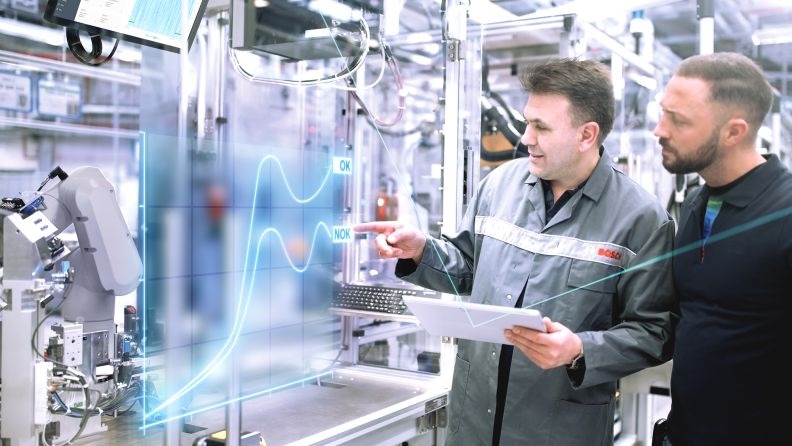
The German economy is falling behind its global competitors in research and development (R&D) expenditure, undermining the long-term profitability and commercial returns derived from its technological investments.
Furthermore, despite the federal government’s public declarations of support for a domestic “high-tech agenda,” public spending is increasingly being diverted toward the defense sector.
A recent study conducted by the German Economic Institute (IW) on behalf of the Bertelsmann Foundation reveals that Germany’s share of global R&D expenditure declined from 8.5% in 2008 to 5.6% in 2021.
Similarly, Germany’s share of global patent applications has fallen significantly, dropping from 21.9% in 2000 to just 15% in 2022.
Faced with these domestic headwinds, German companies are increasingly relocating their research departments abroad. This shift places German industry under intensifying pressure within key future-oriented sectors, where it is steadily losing ground, particularly to China.
While the federal research budget remains capped at 4.15% of the total federal budget—prompting complaints of stagnating innovation funding from small and medium-sized enterprises (SMEs)—the official defense budget already accounts for more than 15% of federal spending and is projected to double in the near term.
Relative Decline Against the US and China
The IW study on the innovative strength of German industry assesses R&D expenditure alongside the volume of patent applications as the primary indicators of industrial innovation performance.
The authors conclude that although Germany’s absolute spending on industrial research and development has risen slightly, the country has lost substantial ground in international comparisons.
This relative decline is driven by the United States and China, both of which have accelerated their R&D spending at a much faster rate.
Consequently, Germany’s share of global R&D expenditures contracted from 8.5% in 2008 to 5.6% in 2021, while its share of global patent applications fell from 21.9% in 2000 to 15% in 2022.
This downward trend has particularly impacted the pharmaceutical, chemical, electrical, and automotive sectors. Among major industrial segments, only the German mechanical engineering sector managed to strengthen its international standing in terms of patent applications.
Foreign Control Over Key Technologies Increases
The study highlights the issue of patent ownership and control over key technologies as a matter of geopolitical and economic sensitivity.
According to the research, between 2000 and 2022, 29% of all international patents generated within Germany—amounting to approximately 189,000 filings—were registered by foreign-owned enterprises, primarily based in the US and, increasingly, China.
As a result, operational control over these patents resides outside the Federal Republic of Germany.
By contrast, German companies registered and retained control over only 102,000 patents filed abroad during the same period, leaving the country with a negative net balance in transnational patent control.
To illustrate the strategic implications of this imbalance, the study points to the defense sector. The ongoing debate surrounding Germany’s purchase of F-35 fighter jets from the US defense contractor Lockheed Martin highlights the potential risks of relying on foreign-controlled technologies. Without explicit US authorization, spare parts cannot be secured, and the aircraft may be rendered unable to take off.
Geographically, the state of Hesse recorded the highest share of foreign-controlled patent applications in Germany, at 42%. The primary drivers behind this concentration are the Opel manufacturing facilities in Rüsselsheim—which hold a vast patent portfolio and operate as part of the multinational group Stellantis—alongside the highly concentrated pharmaceutical industry in the Frankfurt am Main region.
Core German Sectors Under Pressure
A sector-by-sector analysis underscores the extent to which the German economy is falling behind in global benchmarks.
In 2021, the German electronics sector ranked sixth globally in terms of R&D investment.
Japan secured the fifth position with spending twice as high as Germany’s.
Meanwhile, China accounted for 35% of global R&D expenditure in the electronics sector, while the US maintained its global leadership.
In mechanical engineering, Germany’s share of global R&D expenditure dropped from approximately 13% in 2008 to below 8% in 2021.
China now commands nearly half of all global spending in this sector, compared to a 15% share held by the US.
Nonetheless, the German mechanical engineering sector has managed to retain its leading global position specifically in terms of patent applications.
In the automotive sector, Germany ranked third globally, with its R&D expenditure accounting for approximately 20% of the world total.
China reached a 22% share, while Japan led the global market at 25%. The US followed in fourth place with 17%.
In the chemical industry, Germany accounted for 9% of global R&D spending. The US held a 15% share, while China dominated global trends with 42% of total investment.
In the pharmaceutical sector, Germany’s share plummeted from 13.1% in 2000 to just 4.4%, placing it fourth internationally.
The top spots in pharmaceutical R&D are held by the US, China, and Japan.
Defense Spending Takes Precedence Over R&D
The federal government maintains that it is actively working to counter these negative trends. Chancellor Friedrich Merz has frequently championed a “high-tech agenda” designed to support and revitalize German industry.
“The federal government will do everything in its power to ensure that Germany remains a successful and innovative business hub,” Merz declared at the Hannover Messe trade fair in late April.
However, the allocation of funds within the federal budget indicates that Berlin’s actual priorities lie elsewhere.
The draft 2026 federal budget, which totals 525 billion euros, allocates 21.8 billion euros to the Ministry of Education and Research. In addition, the ministry is set to receive 1.1 billion euros from the “Infrastructure Special Fund.” According to the ministry, these specific funds are earmarked for initiatives “particularly in the New Space sector,” which holds high strategic importance for the defense industry.
Excluding this special fund, federal innovation spending accounts for just 4.15% of the total budget.
By comparison, the 2026 budget allocates 82.69 billion euros directly to the German Armed Forces (Bundeswehr). When combined with an additional 25.51 billion euros drawn from the military’s own “Special Fund” (Sondervermögen), total defense spending reaches approximately 108 billion euros.
By 2029, Germany’s regular defense budget is projected to rise to 152 billion euros.
The Bundeswehr’s share of the core federal budget (excluding special funds) already stands at 15.75%, and this percentage is expected to increase rapidly.
Corporates Relocate R&D Activities Abroad
As a consequence of these shifting domestic priorities and rising operational pressures, a study by professional services firm Deloitte and the Federation of German Industries (BDI) reveals that 13% of surveyed German industrial companies have already relocated their research departments abroad.
Furthermore, 35% of surveyed firms plan to follow suit within the next three years. According to the Innovation Report published by the Association of German Chambers of Commerce and Industry (DIHK), the German economy’s propensity to innovate has fallen to its lowest level since 2008.
Industry representatives attribute this decline in part to the federal government’s neglect of Germany’s traditional Mittelstand—the small and medium-sized enterprises, alongside established family-owned businesses, that serve as the backbone of the country’s export economy. Key public funding programs for these businesses have stagnated for years.
Of particular concern to the sector are the Central Innovation Program for SMEs (ZIM) and the Inno-Kom program for small businesses, both of which are administered by the Ministry for Economic Affairs and Climate Action.
“In the meantime, more money is flowing to the large players,” stated the Association of Innovative Enterprises (VIU). VIU President Uwe Möhring warned of the structural risks ahead: “In light of this ongoing reallocation of funds, we are deeply concerned about the future of project financing, which is vital for our survival.”










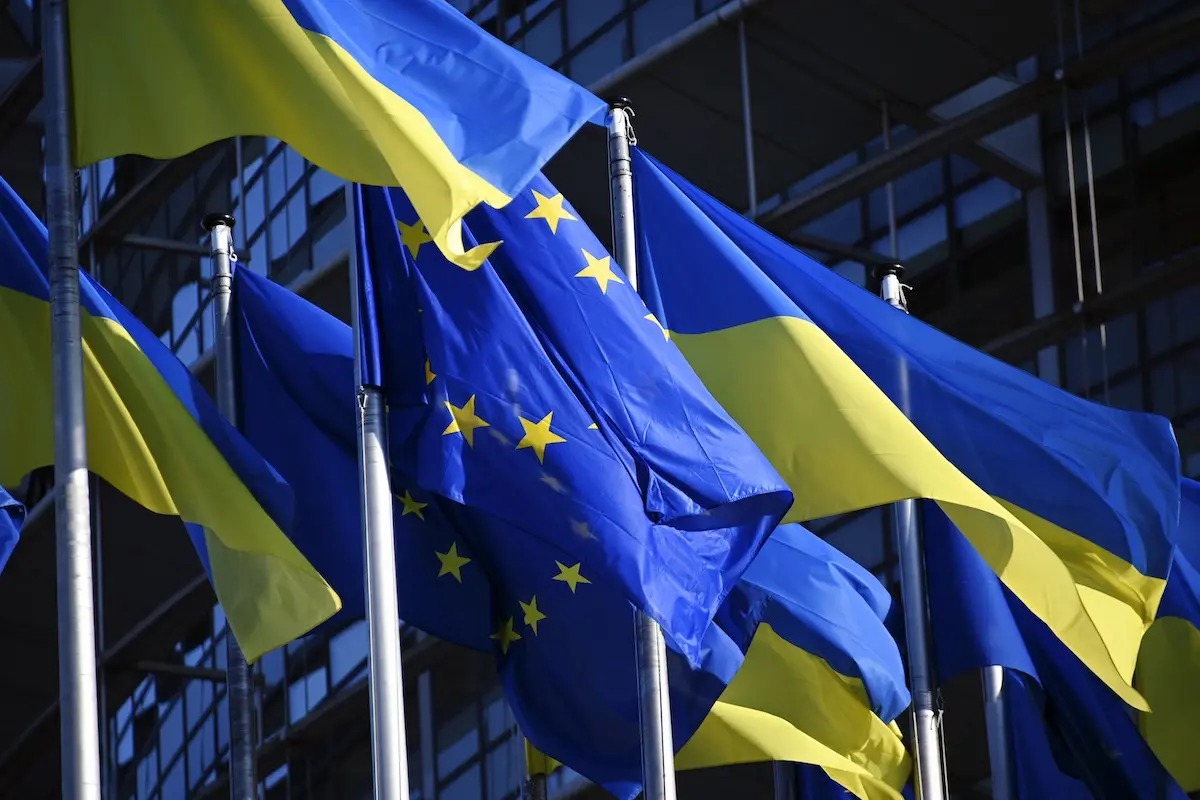
An opinion survey conducted across the European Union has revealed that 53% of bloc citizens oppose admitting Ukraine to the EU through an accelerated process in the coming years.
According to the study carried out by the Bertelsmann Foundation, 47% of EU residents support the idea of fast-track membership.
The most pronounced opposition to rapid accession was recorded in Romania at 60%, followed by Germany at 59%, and France and Poland at 57% each.
The lowest resistance to Ukraine’s accelerated membership was found in Sweden at 31%. This figure stood at 37% in Spain and Portugal, and remained at 43% in the Netherlands.
Domestic support for the process remains exceptionally high; 83% of the public in Ukraine want to join the bloc as soon as possible.
Europeans differ over defence contributions and strategic benefits
The survey also examined perceptions regarding the defence of the continent. Some 58% of Ukrainians believe that their “resistance against Russia’s military campaign protects the entire continent and the EU as a whole.”
In contrast, 29% of bloc citizens share the view that the EU and its member states contribute more to defending the union than Ukraine does.
While 23% of participants view the efforts of both sides as equal, the share of those who consider Ukraine to be the bloc’s “primary protector” remains at 16%.
The study also indicates that low expectations concerning the tangible benefits Ukraine would provide to the bloc contribute to the limited support for its membership.
Only 14% of surveyed Europeans believe that this accession will make the EU stronger and more influential on a global scale. Meanwhile, the proportion of respondents who anticipate that Ukraine’s entry will increase the bloc’s resilience was measured at 11%.
Timetable debate persists in the negotiation process
Ukraine applied for membership immediately after Russia’s military intervention and gained candidate status in 2022.
The accession process encompasses a 33-chapter reform package organised under six clusters, which aims to guarantee democratic and economic standards.
Formal accession talks began in June 2024. The negotiation process, which had long been blocked by Hungary, made progress after Peter Magyar took office as the country’s prime minister.
Magyar also succeeded in having the term “accelerated accession” for Ukraine removed from EU texts.
Magyar argued that a contrary approach would send the wrong message to Western Balkan nations, such as Serbia, Albania, Montenegro, and North Macedonia, which have worked towards membership for years.
Ukrainian President Volodymyr Zelenskyy has called for the membership process to be completed by 2027, stating that this would provide a fundamental security guarantee for both Ukraine and Europe.
On the other hand, circles within the bloc that oppose rushing the process insist on the complete fulfilment of all conditions, including anti-corruption measures.
Meanwhile, the EU Ambassador to Ukraine, Katarina Mathernova, points to 2030 as a likely accession date.
For membership to take place following the completion of negotiations, all 27 EU member states must grant unanimous approval.
So far, only the first of the six chapter clusters, covering fundamental values and principles such as the rule of law, human rights, and the judiciary, has been opened for Ukraine.
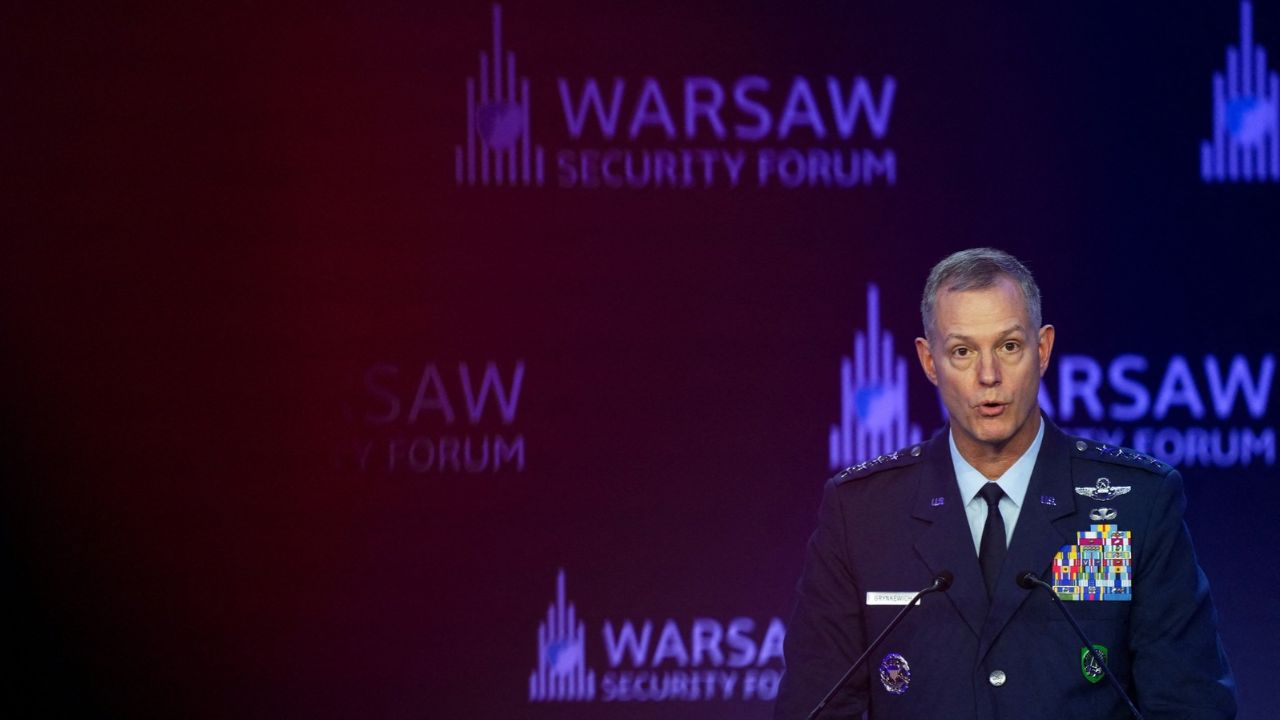
NATO Supreme Allied Commander Europe (SACEUR) Alexus Grynkewich has unveiled a new defence strategy aimed at rendering any attack against an alliance member entirely futile.
Speaking at the Warsaw Security Forum, Grynkewich said the concept, titled the “Theory of War”, is designed to prevent hostile elements from infiltrating NATO territory and waging conflict there.
Arguing that they aim to reassure the one billion people living within the alliance’s borders, Grynkewich maintained that they also wish to send a message to adversaries such as Russia that NATO is prepared for a potential invasion.
“If we are attacked, we are ready to fight even tonight,” Grynkewich said.
Three-stage defence plan enters into force
Approved by all 32 alliance members, the plan combines land forces and conventional weapons systems with advanced technologies such as unmanned aerial vehicles, counter-drone systems, and artificial intelligence.
Lessons drawn from ground and air combat in Ukraine, as well as current conflicts in the Middle East, play a decisive role in shaping the strategy.
According to Grynkewich, the new defence doctrine rests on three fundamental phases that form the core of NATO’s approach:
The first pillar of the plan, the “block” phase, focuses on preventing hostile forces from seizing allied territory.
In this context, NATO ground components will engage directly with attacking units, restrict their manoeuvrability, and neutralise forces attempting to breach alliance borders.
Should the assault continue, the second phase (“blunt”) will come into play, deploying autonomous systems requiring minimal human intervention alongside advanced sensor networks to slow the momentum of the attack and wear down advancing forces.
These systems will detect threats in real time, combining capabilities across different operational domains to halt the adversary’s advance.
The final stage, the “break” phase, will target not the attacking units directly, but the operational warfighting system that sustains them.
Command centres, supply chains, and logistics routes will be struck using long-range precision strike systems and sensor networks, eliminating the adversary’s ability to sustain military operations.
“Enemy commanders will not be able to direct their troops, their supply lines will be severed, and their logistics vehicles will be destroyed,” Grynkewich said.
Strategy aims to defend borders rather than gain territory
Noting that NATO has no intention of acquiring territory and that the strategy is entirely defence-oriented, Grynkewich said, “We have no plan, intention, or ambition beyond protecting our citizens and our territory.”
Stating that he considers the likelihood of a direct attack on alliance territory to be low, the commander nevertheless stated that they would respond without hesitation to any attempt targeting allies.
Addressing questions regarding US commitment to the alliance, Grynkewich recalled that Washington reaffirmed its adherence to Article 5 at the NATO summit in July.
Article 5, which forms the cornerstone of NATO’s collective defence principle, stipulates that an armed attack against one ally is considered an attack against all members.

Polish authorities have announced that German police detained two Turkish citizens suspected of setting fire to a Starlink station near Warsaw last month.
Tomasz Siemoniak, Poland’s minister coordinating the special services, told a news conference in Warsaw on Monday that Poland has requested the suspects’ extradition and has “no doubt” that Russian secret services were behind the arson attack.
“It should also be noted that Russian intelligence agencies are increasingly turning to people linked to the criminal underworld,” Siemoniak said at the press conference.
In a post on X, Prime Minister Donald Tusk described the incident as another “act of hybrid warfare” and said those responsible for the sabotage would be brought to justice in Poland.
Interior Minister Marcin Kierwinski said the two Turkish citizens would be charged in Poland with carrying out an act of sabotage on the orders of a foreign intelligence agency.
Power supply equipment at a Starlink ground station serving Eastern Europe, including Poland and Ukraine, caught fire on the night of 23 September.
The incident did not cause a major disruption to internet service. The blaze, however, completely destroyed the station’s electrical system and backup generator.
Poland, a key transit route for Western aid to Ukraine, has faced a series of suspicious incidents recently.
Numerous cyberattacks have targeted public utilities, including water and energy infrastructure as well as hospitals.
In addition, damage to a railway line between Warsaw and the Ukrainian border was attributed by officials to Russian sabotage.
In late July, a Russian missile also landed in Poland.

Ex-BND head Hanning tied to former Mossad chief amid spy inquiry

Iran war costs US economy $265 billion as household burden mounts

Trump dismisses US envoy to Greece Kimberly Guilfoyle

Most EU citizens reject fast-track Ukraine accession, poll finds

Ex-US official says air defences fail against Yemeni airport strike
-

 Europe2 weeks ago
German interior ministers drop unanimity rule to counter AfD veto
-

 Europe2 weeks ago
Key European allies excluded from US-led NATO meeting in Poland
-

 Diplomacy2 weeks ago
While the West breeds crises, Eurasia weaves peace and development, says Prof. Zhang Weiwei
-

 Middle East2 weeks ago
Netanyahu holds secret UAE talks with Saudi Arabia and Arab officials
-

 Diplomacy2 weeks ago
The European Union’s peace project has collapsed, MEP von der Schulenburg says
-

 Opinion2 weeks ago
A new world in the East, old dogmas in the West
-

 America2 weeks ago
Musk appointed co-director of Pentagon future warfare initiative
-
 Asia2 weeks ago
South Korea plans $120B spend on eight US nuclear power plants
