
Diplomacy
Global peace coalition warns of devastating economic fallout and unchecked war crimes amid US-Iran escalation

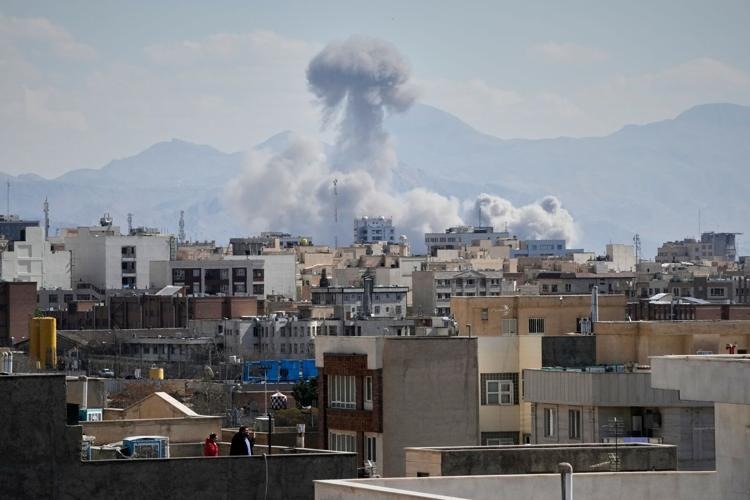
The 144th consecutive meeting of the International Peace Coalition convened amid profound global tumult, underscoring the necessity of uniting the international peace movement. Moderator Anastasia Battle, alongside co-moderator Dennis Speed, opened the forum by imploring participants to disseminate the dialogue across diverse philosophies, religions, cultures, and nationalities. Emphasizing the critical nature of the current geopolitical juncture, Helga Zepp-LaRouche, founder of the Schiller Institute and initiator of the coalition, delivered the strategic overview.
“There are circumstances beyond their control”
Zepp-LaRouche issued a stark warning that the world is on the precipice of a full-fledged economic and financial crisis, entering the seventh day of a rapidly expanding war. The economic fallout is already materializing, with Gulf nations halting production as the Strait of Hormuz is practically blockaded. Consequently, the export of liquefied natural gas (LNG) and oil has been crippled. Qatar, invoking force majeure, has explicitly signaled that these disruptions stem from circumstances entirely outside their jurisdiction, sending global energy prices skyrocketing.
Furthermore, the Gulf states—including Saudi Arabia, the United Arab Emirates, Kuwait, and Qatar—have initiated a comprehensive review of their massive overseas investments. These sovereign wealth funds, previously heralded as a crowning achievement of the Donald Trump administration, are now being leveraged to pressure the US president into a diplomatic pivot. Russian sovereign wealth fund executive Kirill Dmitriev pointedly questioned German leadership, noting their impending lack of energy resources while German opposition leader Friedrich Merz continues to blindly back the unfolding military operations.
Despite the rapid escalation, Zepp-LaRouche dismantled the western media narrative of a swift, decisive victory for the US and Israel. Iran has executed an unprecedented and highly effective campaign against US defense architecture, systematically destroying radar infrastructure associated with both the THAAD and Patriot systems. This tactical blinding of US forces leaves incoming drones and hypersonic Khorramshahr-4 missiles entirely undefended. The depletion of western interceptor stockpiles is being outpaced by the sheer volume of the assault, with the US expending five days’ worth of Tomahawk missile production in merely the first 72 hours of the conflict.
Zepp-LaRouche expressed grave concern over the deep-seated religious fundamentalism driving the military apparatus. Citing US Secretary of War Pete Hegseth’s barbaric assertion that the conflict was never intended to be a fair fight, she highlighted reports from the Military Religious Freedom Foundation indicating that over 100 US Army officers have inquired about internal briefings linking the war to biblical end-times prophecy and positioning Trump as an anointed figure. She issued an urgent call for international parliaments to investigate this profound religious irrationality currently commanding the world’s most lethal military machine.
“Total destruction of Iran”
The assault’s criminality is glaringly evident in the total suspension of international law. Zepp-LaRouche condemned a double-tap strike on an Iranian school that massacred 180 girls between the ages of 7 and 12, an indisputable war crime designed to obliterate first responders. Domestically, the US War Powers Act was narrowly defeated, yet public support for the war among Trump’s MAGA base has plummeted to a mere 29%. However, relying on midterm elections is a fatal miscalculation given the imminent threat of total war. Reports from the Institute for National Security Studies in Tel Aviv confirm that Israel views this as the endgame, explicitly seeking the absolute destruction of Iran without subsequent rounds of engagement.
Concurrently, the US is reportedly courting Kurdish factions in Iraq to open a new ground flank in northwestern Iran, an invasion scenario Iranian Foreign Minister Abbas Araghchi confirmed Tehran is fully prepared to repel. Trump’s insistence on unconditional surrender, coupled with his unilateral rejection of Ayatollah Ali Khamenei’s son as a successor, underscores a breathtaking disintegration of the global order. Singular voices of moral clarity, such as Pope Francis and Cardinal Pietro Parolin, have warned of an irreparable abyss where justice has capitulated to brute force, a sentiment echoed by Pax Christi. Aside from Spanish Prime Minister Pedro Sanchez, the collective west’s complicity will irreversibly haunt its global standing, alienating the BRICS nations and the Global South. The targeting of Iran strategically disrupts the Belt and Road Initiative and the International North-South Transport Corridor, necessitating an urgent pivot back to the UN Charter and a new international security and development architecture.
“Not a single credible report of even 100 anti-government protesters”
Senator Richard Black, a decorated Vietnam War combat veteran and former Virginia state legislator, delivered a searing critique of the ongoing military campaign. Having sustained wounds and witnessed the battlefield deaths of his radiomen, Black underscored his profound reverence for US troops while denouncing the bellicose manipulation of Christian faith to justify the Iranian conflict. He noted that Operation Epic Fury was fundamentally predicated on the flawed assumption that US bombardment would trigger a joyous, popular uprising against the Iranian government.
Instead, an exhaustive analysis reveals a complete absence of domestic rebellion, with zero credible reports of even nominal anti-government protests. Black highlighted the universal psychological reality: populations inherently unite against foreign aggression. The most potent pressure point remains the 21-mile-wide Strait of Hormuz, a critical chokepoint within Iranian waters that facilitates 20% of global oil transit. The ensuing blockade guarantees that oil prices will violently exceed $100 per barrel, inflicting devastating economic damage on heavily dependent US allies such as South Korea, India, China, and a wholly import-reliant Japan. Europe’s addiction to LNG—exacerbated by the US destruction of the Nord Stream pipeline—further compounds the crisis.
While the administration has floated deploying US destroyers to escort oil tankers, Black warned that any significant American casualties would instantly shatter the already tepid domestic support for the war. Trial balloons regarding boots on the ground—floated by Trump and Representative James Comer—ignore the geographical and typographical immensity of Iran, which dwarfs the primitive terrain of Afghanistan. An invasion driven by demands for unconditional surrender threatens a decades-long “forever war,” resulting in the virtual eradication of Iranian civilization and catastrophic global costs.
The tactical reality resembles a massive chess game where Iran possesses the missile depth to outlast western stockpiles, while the US and Israel leverage absolute air dominance to hunt mobile launchers. Black observed that the recent assassination of aging Iranian leadership, including the relatively moderate 86-year-old Ayatollah Khamenei, resulted from fatal security lapses during deceptive peace negotiations—a hallmark of Israeli military strategy. However, their elimination paves the way for a hardened, dynamic, and less gullible younger generation to assume command. Black concluded with a stark warning against US hubris stemming from the Venezuela operation, cautioning against a covert alliance with captured ISIS and al-Qaeda operatives funneled from Syria into Iraq to subvert the Iranian state.
“The memory is revolutionary”
Former Mexican Congresswoman Maria de los Angeles Huerta forcefully argued that analytical diagnosis must rapidly transition into actionable, coordinated mobilization to halt the global machinery of war and the unchecked impunity of predatory elites. She outlined five ambitious, historical imperatives to counter the fascist elements orchestrating the crisis.
First, Huerta proposed a global citizen investigation network to audit the financial DNA of the war machine. This requires exposing the banks, corporate entities, and fiscal paradises funding the armaments industry and networks of exploitation, ultimately publishing an accessible list of public shame akin to the Epstein logs. Second, she called for massive global campaigns to economically isolate these institutions, utilizing alternative international communication networks to strip away the darkness protecting elite profits.
Third, recognizing that powerful actors deploy armies of lawyers and PR firms to bury their crimes under disinformation, Huerta established that citizen memory must be the revolutionary counter-force. She advocated for a global observatory featuring a “library of infamy” to meticulously archive evidence—from the Gaza massacres to elite trafficking networks—ensuring unhindered access for journalists and victims while initiating relentless legal and political battles against complicit structures. Fourth, she urged the mobilization of multilateral organizations directly from the grassroots base, applying immense pressure through coordinated, visible, non-violent global actions, including symbolic protests and cultural performances outside complicit financial institutions. Finally, Huerta demanded the creation of a robust protection network to safeguard peace defenders from isolation and retaliation.
“Transform our region in a battlefield”
Dr. Beatriz Bissio, associate professor at the Federal University of Rio de Janeiro, contextualized the crisis within the strict parameters of international law, declaring the aggression against Iran wholly illegal and unprovoked. Prior to the attacks, mediators in Oman had confirmed substantive progress in diplomatic negotiations. The assault, devoid of rational justification, serves Israel’s ambition to eliminate a systemic adversary to its expansionism and a staunch defender of the Palestinian people. Echoing UN Special Rapporteur Francesca Albanese, Bissio identified Gaza not as an exception, but as a methodological blueprint utilized by the US and Israel to eradicate all resistance to imperial plans.
Bissio highlighted an ignored open letter sent to President Trump by Khalaf Ahmad Al Habtoor, a prominent Emirati billionaire. Al Habtoor fiercely questioned the legitimacy of Trump’s unilateral decision, demanding to know who authorized the US to drag the Gulf into an unwanted conflict and transform the region into a battlefield. The letter exposes deep-seated frustration among US allies who host American military bases, viewing their national sovereignty as utterly bypassed and mourning the destruction of highly capitalized regional peace initiatives.
As geopolitical immobility shatters, revealing rapid and unprecedented realignments, the domestic stability of the US is also fraying, with rumblings of potential impeachment tied to disastrous midterm prospects. Concretely, Bissio fully endorsed Huerta’s five-point framework and proposed two immediate initiatives. She advocated for an international boycott demanding the cancellation of the June 17 FIFA World Cup across the US, Canada, and Mexico, arguing such a celebration is irreconcilable with the threat of a nuclear event. Furthermore, she insisted that the United Nations must be permanently removed from New York, citing the Secretary-General’s paralysis and the symbolic necessity of establishing a new security paradigm entirely outside the jurisdiction of the United States.
“Humanity is fighting unhumanity”
French intelligence strategist Francois Martin framed the conflict not as a clash between the US and Iran, or the Global North against the Global South, but as an existential battle where humanity itself is fighting unhumanity. He cited the calculated assassination of 165 Iranian girls, emphasizing that such strikes are never operational mistakes. When an aggressor strips a population of its human essence—reducing them to animals or “sinners”—the deliberate slaughter of children becomes a prerequisite to prevent the maturation of future combatants.
Martin pointed to a second atrocity: the sinking of the Dana, an unarmed vessel returning from a peace congregation in Sri Lanka hosted by Indian Prime Minister Narendra Modi. The ship, reportedly carrying American personnel alongside civilians, was annihilated without warning upon exiting Indian waters—an act Martin categorized as pure assassination.
Despite the bloodshed, Martin predicts a brief conflict, driven by logistical exhaustion rather than moral awakening. He assessed that Israeli Prime Minister Benjamin Netanyahu manipulated Trump with false intelligence claiming Iran was unarmed and highly fragile. Instead of a lucrative victory, Trump has thrust his administration into a swarm of wasps. Without the luxury of time to fabricate congressional justifications—as was done for the Iraq War—and facing an imminent depletion of western munitions alongside soaring $90-per-barrel oil prices, Martin anticipates Trump will soon declare a hollow, rhetorical victory and hastily retreat, abandoning Israel on the front lines. He concurred with diplomat Chaz Freeman that Russia and China are maneuvering the US into a position where it must abandon neo-colonialism in favor of a predictable, multipolar world order.
“Pushed toward the loss of our very existence”
Lebanese sociologist Bassam El Hashim, identifying as a Lebanese Christian, dismantled the prevailing Anglo-Saxon media narrative surrounding Hezbollah. He detailed how the organization is not a fundamentalist terror cell, but a necessary resistance movement forged organically between 1982 and 1985 in direct response to the brutal Israeli invasion and occupation of Beirut.
El Hashim described Lebanon as a subjugated US protectorate, managed from a sprawling, 2,000-square-meter American embassy housing up to 7,000 intelligence personnel, operating in tandem with US naval and air bases. This apparatus exerts crushing pressure on the Lebanese government, dictating domestic crackdowns and nullifying state legitimacy. The populations of southern Lebanon, relentlessly displaced and massacred by Israeli militias since 1948, had no recourse but armed defense. While Iran provided crucial initial funding and training post-1979, Hezbollah now operates with profound strategic independence.
The resumption of hostilities is entirely Israeli-manufactured, El Hashim argued. Following a November 2024 ceasefire that Hezbollah scrupulously maintained, Israel spent the subsequent 16 months systematically violating the accord, bombing villages, and forcibly displacing Lebanese citizens northward. He warned that Netanyahu’s display of the “Greater Israel” map at the UN General Assembly signals a definitive intent to subjugate the entire region. Unable to conquer the Arab world militarily, the US-Israeli axis employs deliberate subversion, utilizing regime change and sectarian fragmentation—as seen recently in Syria and Iraq—to ignite civil wars, positioning the Lebanese Armed Forces against Hezbollah to fracture the nation from within.
Concluding the marathon session, Zepp-LaRouche introduced breaking, though unconfirmed, intelligence that Iran has thus far utilized only its antiquated missile inventory, which successfully penetrated the Iron Dome. Tehran is reportedly preparing to deploy an untouched arsenal of advanced, hypersonic weaponry, indicating the tragedy is far from its climax.
In a final, urgent directive, Zepp-LaRouche demanded that western politicians and parliamentarians be forced to publicly address the massacre of the Iranian schoolchildren. The deafening silence from European capitals—save for Spain—exposes an intolerable double standard that strips the collective west of its remaining moral credibility. Condemning the simultaneous strangulation of Cuba, the persecution of Venezuela, and the military operations in Gaza, she warned that this unchecked complicity will trigger a historic geopolitical blowback, calling on the global citizenry to ruthlessly implement the proposals laid out by Huerta and Bissio to forge a new paradigm of international justice.







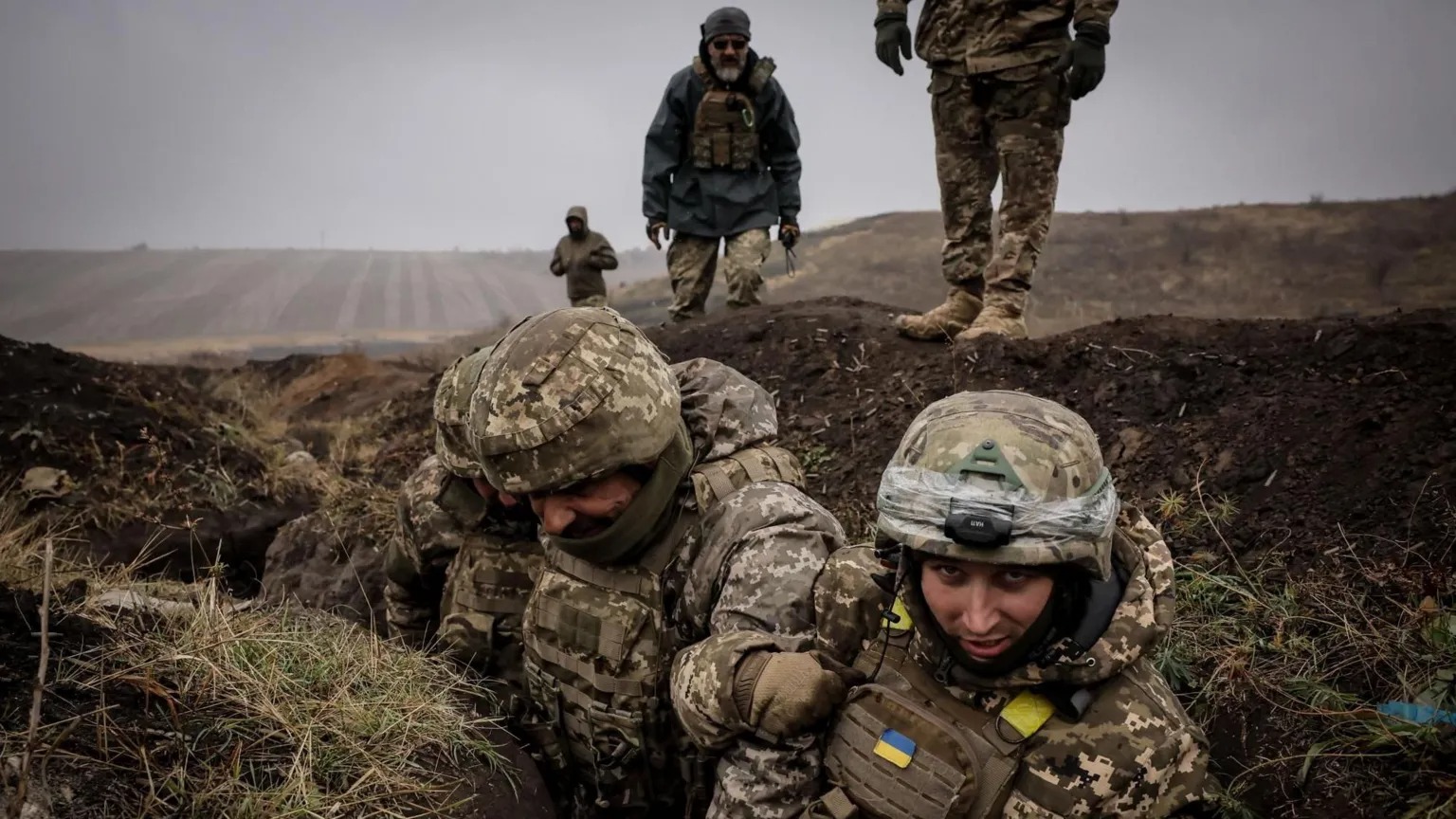
Draft proposals by the US administration to end the war in Ukraine envisage establishing a demilitarised line in the Donbass region, easing sanctions against Moscow, and offering a comprehensive investment package to Kyiv.
According to a report by the British magazine The Economist, citing Ukrainian officials, Washington is working on a broad framework comprising both economic and political points to persuade the parties to reach a settlement.
Under the draft plan reported by the publication, Russia is offered the opportunity to conclude trade agreements with the US, an easing of sanctions, and the normalisation of political relations.
Ukraine, in exchange for relinquishing its goal of NATO membership, is promised direct foreign investment and European Union accession.
The report notes that Ukrainian officials do not possess complete visibility over every detail of the final text on the table, but are closely familiar with its overarching framework.
Nord Stream pipeline and natural gas shipments on the table
The Economist reported that the package designed to persuade the leadership in Moscow also includes items such as the resumption of Russian natural gas sales to the European market and the reactivation of the Nord Stream pipeline.
The magazine also points out that decisions regarding the operation of a pipeline located on European territory do not fall directly under US jurisdiction.
Ukrainian negotiators, meanwhile, are concerned that the Washington delegation may lock in commercial agreements in line with its own economic interests before the fighting formally stops.
Speaking to the magazine, a Ukrainian official summed up the American side’s approach with the words: ‘Why wait and waste time? Time is money.’
Diplomatic contacts intensify at leadership level
Stating that it is ready for talks, the Russian government announced that an agreement had been reached in recent contacts with Washington to launch a trilateral negotiation process that would also include Ukraine.
Russian President Vladimir Putin said: ‘The objective of these negotiations will be to address the issue of ensuring the security of Ukraine and Russia once peace agreements are reached.’
As part of these diplomatic efforts, US President Donald Trump’s special envoy, Steve Witkoff, met Russian leader Putin on 21 October at the Konstantinovsky Palace in St. Petersburg.
Speaking during the portion of the meeting open to the media, Witkoff noted that he had brought documents outlining a pathway to peace and asked Putin to examine these texts.
Kremlin spokesperson Dmitry Peskov announced that the president would evaluate the American proposals.
Noting that concrete ground for a ceasefire had emerged during the St. Petersburg meeting, Witkoff expressed hope for the start of trilateral contacts between Russia, the US, and Ukraine to address technical matters.
Putin thanked Trump for his interest in peace efforts and recounted that the US president had specifically emphasized during their recent telephone calls that the war must end as soon as possible.
Framework prepared in Oslo carried to Moscow
Immediately before his visit to St. Petersburg, Witkoff had attended talks held on 20 October in Oslo, the capital of Norway.
Trump’s son-in-law Jared Kushner joined the meeting remotely due to illness, which was attended by Ukrainian President Volodymyr Zelenskyy, Finnish President Alexander Stubb, and Norwegian Prime Minister Jonas Gahr Store.
According to information provided by Stubb, the parties at the Oslo meeting clarified key security and economic elements that the American envoy would present to Moscow. Air defence systems, energy infrastructure, and partial ceasefire measures were also discussed.
Commenting after the talks in St. Petersburg, Russian presidential aide Yury Ushakov argued that the newly presented approaches did not contain many elements useful for a resolution.
Noting that Witkoff informed Putin about the contacts in Oslo and relayed fresh nuances in the positions of European leaders and the Kyiv government, Ushakov stated that the meeting was thorough and frank, adding that the conflict is ‘moving toward an end.’
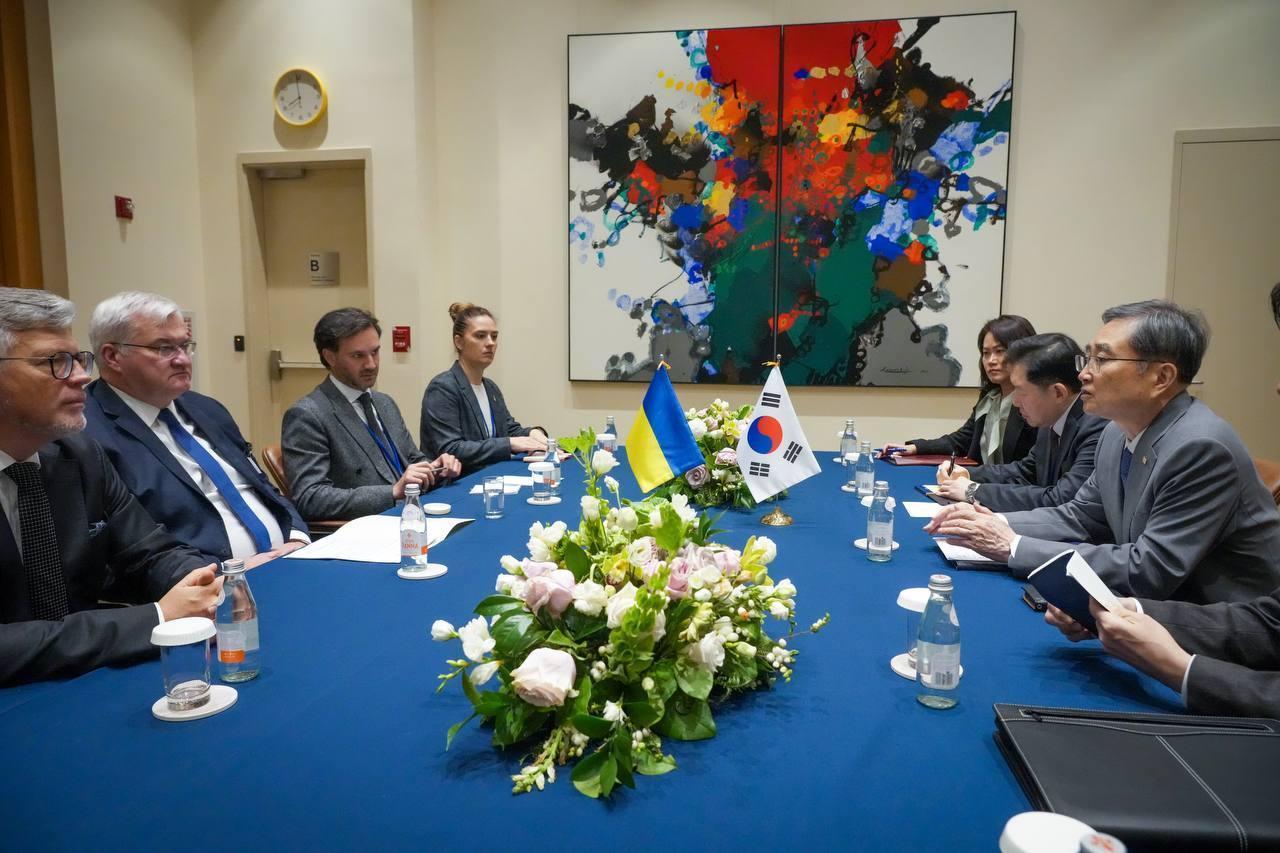
The South Korean government has decided to withdraw part of its embassy staff from Ukraine.
According to the Yonhap news agency, Foreign Ministry spokesman Park Doo-sun cited the Kyiv administration’s failure to take “positive steps” in the dispute that began with the leak of information concerning the handover of North Korean prisoners of war as the justification for the move.
The spokesman also listed the ongoing threat of air strikes, which complicates the safety of diplomats, among the reasons.
Following the withdrawal of part of the personnel, essential diplomatic contacts will continue under the leadership of the charge d’affaires ad interim to Ukraine. All consular staff tasked with protecting South Korean citizens will remain in Ukraine.
Prior to this move, the Seoul administration decided on 8 October to withdraw its ambassador. The Foreign Ministry stated at the time that it was ready to continue consultations with Kyiv to resolve the emerging issues constructively.
Tensions between the two countries began with a speech delivered by Ukrainian President Volodymyr Zelenskyy at the United Nations General Assembly in September.
Zelenskyy announced that two captured soldiers from the North Korean army had been handed over to South Korea.
South Korean President Lee Jae-myung, meanwhile, accused Kyiv of breaching a confidentiality agreement.
Lee said the disclosure of this information endangered the prisoners’ families and stability on the Korean Peninsula.
Seoul expects a public apology
Dmytro Lytvyn, an adviser to the Ukrainian president, denied the existence of a confidentiality agreement.
The South Korean Foreign Ministry summoned Ukrainian Charge d’Affaires Andriy Veshkin on 28 September and issued a note of protest against Lytvyn’s remarks.
President Lee Jae-myung warned in a statement on 2 October that they would take additional measures against Kyiv if Ukrainian authorities did not acknowledge the agreement and make a public apology. Lee stated that Ukraine itself had initially requested that the transfer of the prisoners be kept confidential.
Ukrainian Foreign Ministry spokesman Heorhii Tykhyi said the dispute stemmed from differing interpretations of the confidentiality regime.
Tykhyi noted that Seoul, based on its constitution which recognises the entire Korean Peninsula as its own territory, requested that the prisoners be handed over “like its own citizens”.
Describing the handover as a “gesture of goodwill”, Tykhyi stated that they were conducting closed-door negotiations to resolve differences of opinion.
Ambassador Park Ki-chang returned to Seoul on 10 October. According to a report by The Korea Times newspaper citing the ministry, recalling the ambassador served as a diplomatic protest against the leak of information regarding the prisoners.
The newspaper wrote that South Korea had last taken a similar step in 2008 by withdrawing its ambassador to Japan.
Moscow warned foreign diplomats
On 3 October, the Russian Foreign Ministry reiterated its warning to foreign nationals, including diplomatic mission staff, against remaining in Ukraine.
The ministry recalled its advice to leave Kyiv, citing ongoing strikes against military targets.
The ministry noted that those who failed to heed the warnings would bear responsibility for the potential consequences.
Kremlin spokesman Dmitry Peskov said in a statement on 24 September that they had no information regarding Kyiv handing over two North Korean prisoners of war to Seoul.
Peskov, noting that prisoner matters fall under the authority of the Defence Ministry and intelligence services, said, “Contacts through the special services are continuing.”
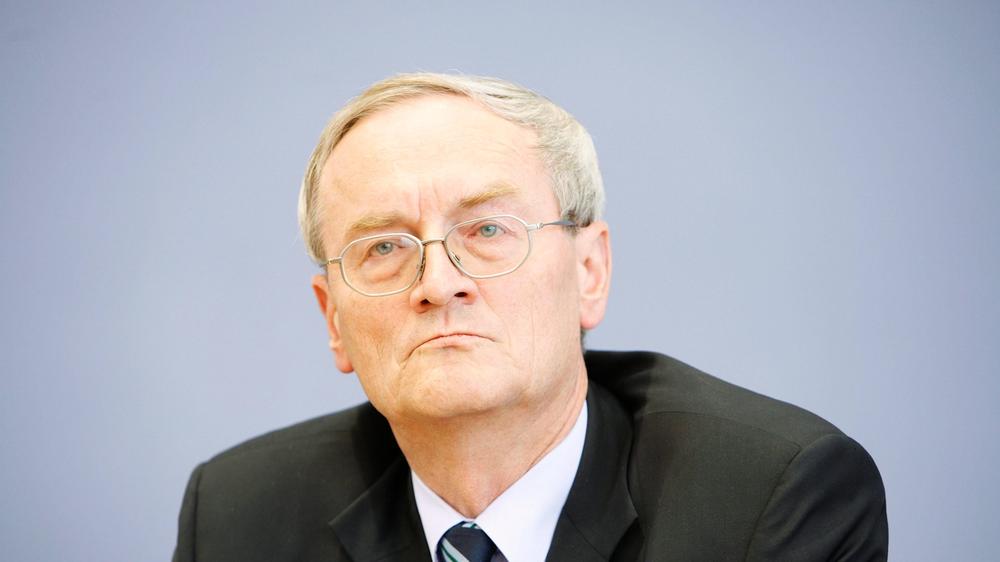
August Hanning, who led Germany’s Federal Intelligence Service (BND) between 1998 and 2005, was arrested on 6 October on allegations that he obtained roughly 2,000 classified agency documents and used them during contacts with intelligence officers from a foreign state.
Accused of high treason and espionage on behalf of a foreign intelligence agency, the former spy chief is alleged to have procured the documents from former BND employee Manfred D.
Prosecutors stated that the leaked records included internal briefing notes presented to senior German officials, though the Berlin government has not yet publicly disclosed which country received the classified data.
According to an exclusive report by Jake Green for The Cradle, seized email exchanges revealed extensive ties between the arrested Hanning and former Mossad director Danny Yatom.
The correspondence shows that the two former intelligence directors built an ongoing network of contacts following their public service, combining commercial ventures, efforts to secure political influence, and intelligence links.
This dynamic has triggered debate that using personal connections and official access for private gain has left Germany’s intelligence apparatus vulnerable.
Intelligence notes for 10,000 euros and campaign proposals
According to the reviewed emails, Hanning told Yatom in a 2018 message that he could prepare an “overall assessment based on information obtained from senior German officials and intelligence agencies” concerning an unidentified candidate.
The former BND head committed to completing the report by 13 July in exchange for 10,000 euros.
Contacts between the two men subsequently expanded to cover domestic political processes in Germany. Ahead of the September 2021 federal election, Yatom asked Hanning to approach leading candidates.
Describing CIY Global as a “political campaign company”, the former Mossad chief noted that he aimed to introduce its capabilities to German politicians, and he mentioned his intention in the same exchange to transfer documents concerning a cybersecurity firm.
Cybersecurity partnership and surveillance operations across Europe
The partnership between Yatom and Hanning reached beyond political lobbying initiatives into the cybersecurity sector.
Hanning reportedly served as a consultant for World Health Energy Holdings, a cybersecurity company linked to Yatom.
Firms of this type, established or managed by former intelligence personnel, provide commercial platforms on the international market for Israeli-origin surveillance, cyber intelligence, and political influence capabilities.
The operational presence of private Israeli-based surveillance technologies across Europe has recently entered judicial records through scandals in Poland, Spain, and Greece.
Polish prosecutors announced on 12 October that data collected under the previous government via Pegasus spyware against political opponents had been transferred out of the country, adding that manufacturer NSO Group maintained access to the technical infrastructure.
In Spain, the 2022 CatalanGate investigation established that at least 65 people, including politicians, lawyers, and civil society representatives, were targeted using Pegasus or Candiru software, with Citizen Lab researchers publishing strong evidence linking the operation to Spanish authorities.
In Greece, the surveillance operation targeting journalist Thanasis Koukakis and Member of the European Parliament Nikos Androulakis was determined to have used Predator software, linked to Intellexa, a company founded by former Israeli intelligence officer Tal Dilian.
In the German espionage investigation, the traffic between Hanning and Yatom involving paid reporting, contacts with electoral candidates, and commercial partnerships does not yet provide conclusive legal evidence regarding the final destination of the roughly 2,000 classified documents.
Nevertheless, the disclosed correspondence gives German investigators a concrete line of inquiry to assess whether classified state secrets reached commercial networks tied to Israeli intelligence.

“The AfD is not a fascist party, but a party for fascists”

Nokia and ICEYE sign deal to build sovereign Ukraine satellite network

Mélenchon’s “new France” vision triggers fierce cross-party debate

US envoy says Syria interim leader Sharaa seeks Israel normalization

Unauthorised AI agents access customer accounts at major US banks
-

 Europe2 weeks ago
Berlin Left Party backs Israel’s right to exist for coalition pact
-

 America2 weeks ago
Trump weighs presidential memorandum to cut surging US diesel prices
-
 Diplomacy2 weeks ago
SWP urges backing for Gulf trade routes bypassing Strait of Hormuz
-

 America2 weeks ago
Thiel targets Pope and Obama over AI in new ‘Antichrist’ lectures
-
 Diplomacy2 weeks ago
EU and China reach preliminary deal to curb hybrid car imports
-

 Europe2 weeks ago
LSE study finds post-bailout Greece turned into a cafe economy
-
 America2 weeks ago
Energy firms enlist ex-US officials to tap Venezuelan oil
-

 Russia2 weeks ago
Russia relaxes diesel export curbs after talks with Trump
