
Europe
Le Pen vows radical spending cuts to ease French debt fears at Medef

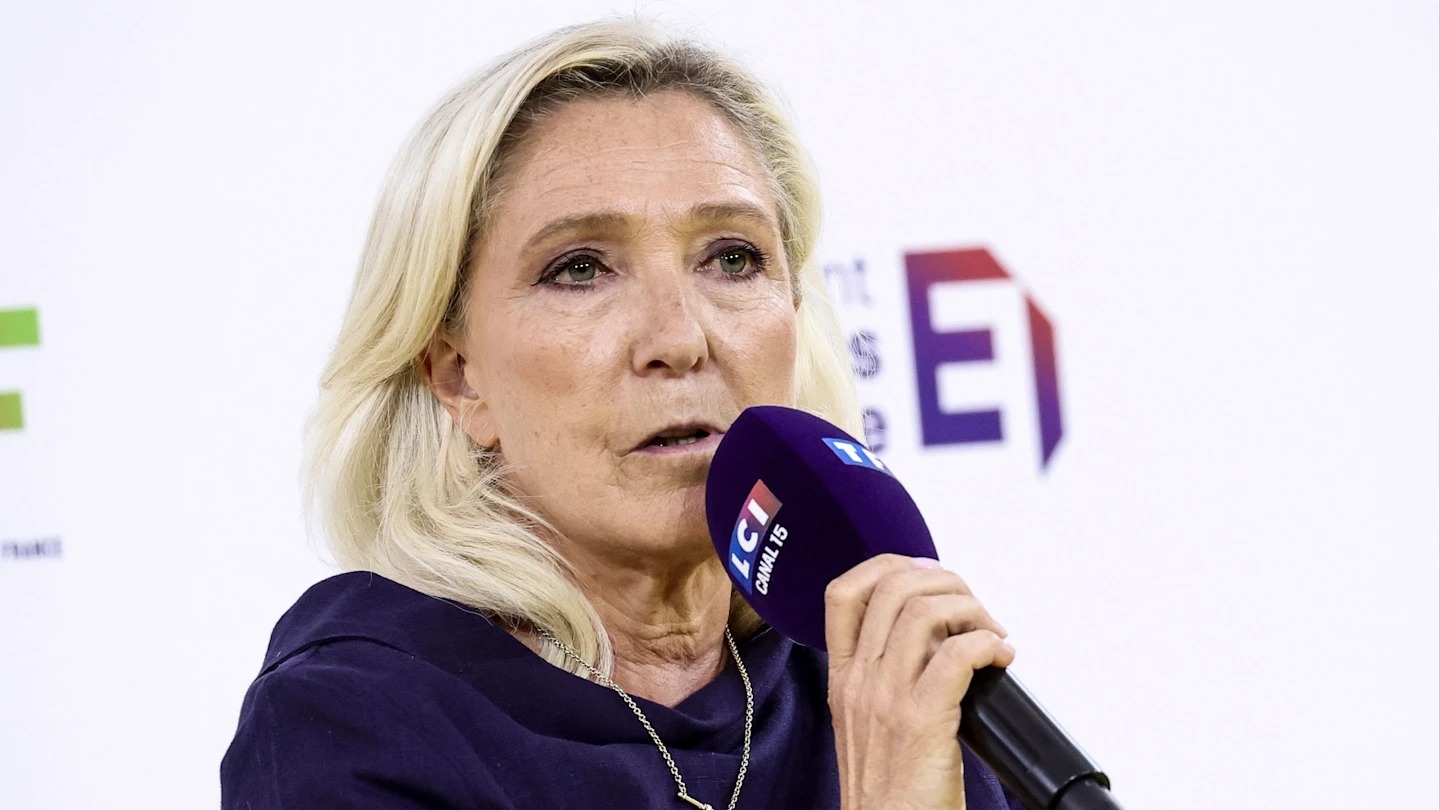
Marine Le Pen has pledged to implement sweeping cuts to public expenditure if she wins next year’s presidential election.
During the first presidential debate held yesterday, seven candidates clashed over how to handle France’s high debt levels and how to finance the pension system.
This laid bare sharp divisions on economic issues that have left investors unsettled.
The French government is struggling to reduce the country’s budget deficit, which stands at more than 5% of GDP and represents one of the highest shortfalls in the eurozone.
Le Pen, who is mounting her fourth presidential bid in the election scheduled for next spring and stands as the frontrunner, is attempting to win over corporations that have long been sceptical of her policies, according to the Financial Times, while seeking to shed the National Rally’s (RN) image as a free spender.
Speaking at a forum organised by Medef, France’s principal business lobby group, the French politician stated, “I am extremely concerned about the trajectory of our debt,” adding that the state must cut spending “radically”.
Le Pen said for the first time that she supported the concept of a balanced budget rule establishing a statutory equilibrium between revenue and expenditure, though she did not provide details.
Stating that the RN would present a €125 billion savings plan ahead of parliamentary debates on France’s 2027 budget, Le Pen said this plan would include reductions in payments to the EU alongside welfare cuts for immigrants.
This contrasted with a proposal made this week by Jean-Luc Melenchon, the presidential candidate of the left-wing LFI, who argued that the European Central Bank should cancel the French debt it holds and “throw it into the fire”.
Melenchon went further with this idea during the debate, stating that terminating all subsidies to corporations could also feature among other radical measures aimed at reducing the budget deficit.
The proposals put forward by Le Pen and Melenchon were criticised by rival presidential candidates such as Edouard Philippe and Gabriel Attal as “unworkable” or “dangerous”.
Medef members applauded when Socialist Party candidate Raphael Glucksmann condemned Le Pen’s fiscal plans and said halting all immigration would harm the economy.
Opinion polls, however, consistently project that Le Pen will advance to the second round of the two-round presidential election.
Recent surveys indicate she could even defeat centre-right candidate Philippe.
Polls conducted in recent days show that Melenchon also has the potential to reach the run-off against Le Pen.
Yet election day remains eight months away, and intense competition persists among the contenders.
Among corporate leaders, Le Pen is viewed as a less acceptable figure than RN President Jordan Bardella, who has held talks with companies and is perceived as more flexible on certain key RN policies, such as raising the retirement age.
According to a person familiar with the matter, Bardella’s adviser Francois Durvye, who worked to soften the RN’s stance on pensions and facilitate discussions with leading corporations, has departed Le Pen’s election campaign.
Insisting on her position regarding pension reform on Thursday, Le Pen said she wants to lower the retirement age to 60 for individuals who began working before the age of 20, while maintaining it at 62 for others.
During the debate, Attal remarked, “Some of you will be disappointed, but the smokescreen created by Bardella [on economic policy] has definitively dissipated.”
Macron’s drive to raise the retirement age to 64 was suspended last year during parliamentary budget debates.







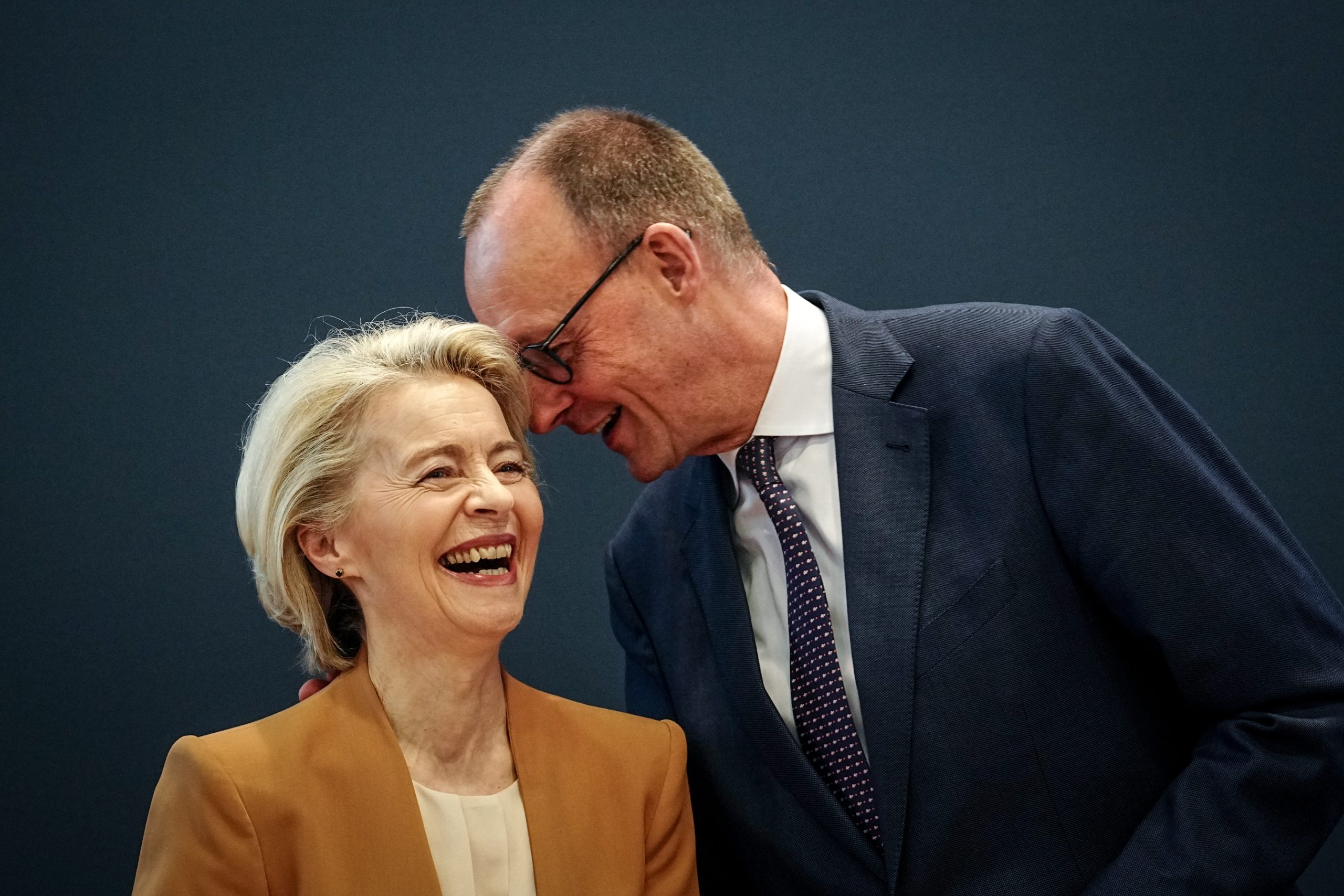
German Chancellor Friedrich Merz has met with allied net-contributor nations in Berlin and launched a fierce battle against Brussels over the European Commission’s draft budget, which projects a 60% increase for the next budgetary period.
Appearing before the cameras alongside the heads of government of Austria, Denmark, and Finland at a press conference held at the Chancellery on Thursday, Chancellor Merz, a member of the Christian Democratic Union (CDU), underscored one particular point, saying: “We are not penny-pinchers.”
Merz stated that the elevated financing demands emerging from Brussels were entirely out of step with current realities.
Coming as negotiations for the EU’s next seven-year budget enter their most critical phase, this intervention marks the opening salvo in intensive bargaining over Europe’s future financing and political direction in the coming months. Between October and December alone, four separate EU summits at the leaders’ level are scheduled to take place.
Merz invited the heads of government of three countries to Berlin in preparation for this negotiating marathon, while the prime ministers of the Netherlands and Sweden joined the talks via video conference.
The common denominator uniting the six countries acting together in Berlin is their status as the highest net financial contributors to Brussels. Merz described the coalition by stating: “We are the group of the largest contributors to this budget.” The German Chancellor noted that these six countries single-handedly finance almost 40% of the total budget of the 27 EU member states, while also providing approximately 70% of bilateral aid delivered to Ukraine.
Austrian Chancellor Christian Stocker, of the Austrian People’s Party (ÖVP), joined Merz in rejecting accusations of miserliness, stating: “No one can accuse us of being unwilling to contribute.” However, he noted their insistence on the necessity of greater savings and comprehensive reforms.
Objection to the two-trillion-euro budget proposal
The joint message delivered by the six leaders conflicts directly with the expectations of Brussels and numerous other EU member states. While the European Union’s current seven-year budget covering the 2021–2027 period stands at 1.2 trillion euros, the European Commission is proposing a budget of approximately 2 trillion euros for the 2028–2034 cycle, representing a net 60% increase when the impact of inflation is included.
Emphasising that this proposal is entirely unaffordable at a time when all member states are undertaking fiscal consolidation in their own public finances, Merz assessed: “In this group, we are all of the same opinion: the proposals must be trimmed by hundreds of billions of euros. These cuts must cover all areas without exception.” Merz stated that they demand a realistic and reform-oriented budget, adding: “We cannot meet the challenges of the 21st century with a 20th-century budget.”
Danish Prime Minister Mette Frederiksen adopted a similar stance, saying: “The EU budget may be larger than it is today, but the proposal currently on the table has certainly been set too high.”
The joint declaration adopted by the six heads of government included an additional concrete financial justification: it stressed that an extraordinarily large sum of approximately 300 billion euros in the current budget period had never been requested or utilised by member states. The leaders argued that this figure provides clear proof that excessive funds are being transferred to Brussels.
Bloc divisions and security priorities
Although the Berlin summit was intended to project a message of strength and unity, Merz and his allies remain in a numerical minority across the wider EU. A broad group of member states ranging from the Baltic countries to Poland, Hungary, Italy, and Portugal openly supports the Commission’s 2-trillion-euro draft. As net recipients drawing more resources from the budget than they pay in, these countries demand that the budget’s traditionally largest expenditure lines—agricultural and regional development funds—remain untouched.
In contrast, Merz wants cuts to agricultural and regional funds in order to redirect resources toward Europe’s global competitiveness and defence capabilities.
Defence matters occupied a substantial place in the Berlin discussions. Finnish Prime Minister Petteri Orpo recalled that his country shares a 1,340-kilometre land border with Russia, emphasising that this reality creates very concrete security, infrastructure, and economic challenges in its eastern and northern regions. Orpo stated that the new EU budget must recognise this new reality emerging on the eastern border.
Nevertheless, at the press conference where leaders read solely from prepared statements and took no questions from journalists, a notable divergence of views surfaced among the participants. Austrian Chancellor Stocker explicitly distanced himself from Merz’s call for cuts across all areas, remarking: “From Austria’s perspective, agricultural and regional development funds must never be forgotten.”
Contrasting message from von der Leyen in Paris
Another statement illustrating how arduous the negotiations starting in the autumn will be came from European Commission President Ursula von der Leyen. Speaking in Paris at a meeting of the Movement of the Enterprises of France (MEDEF) nearly simultaneously with the Berlin gathering, von der Leyen said: “The next budget will be the financial backbone of our independence.”
Drawing attention to Europe’s geopolitical standing vis-à-vis China, Russia, and the US, von der Leyen argued that the budget must be increased. The Commission President said: “Europe cannot set new targets for itself without providing the resources to finance them.”
The critical turning point in the trajectory of the negotiations will be the new compromise proposal expected to be submitted in early October by Ireland, which holds the rotating EU presidency.
Merz and his allies hope that the text prepared by the Dublin administration will take their demands for hundreds of billions of euros in cuts against the 2-trillion-euro draft into account as much as possible.
Member states have until the end of the year or early 2027 at the latest to reach a compromise. If an agreement cannot be secured within this timeframe, the French presidential election process threatens to suspend talks for months and plunge negotiations into deadlock.
In France, right-wing populist candidate Marine Le Pen has already announced that, should she win the election, she will slash France’s contributions to the EU budget by half. It is assessed that negotiations would reach a complete impasse if this pledge were realised.
Meanwhile, the subject of France constituted one of the most sensitive background agenda items in Berlin on Thursday. French President Emmanuel Macron, nearing the end of his term in office, did not attend the Berlin meeting despite having recently agreed with Merz to maintain close coordination on budgetary matters.
Macron advocates financing the new budget through new EU own resources, such as a special tax on US technology giants. However, this proposal carries the risk of a new trade war with US President Donald Trump. Merz, for his part, opted not to touch upon this contentious topic at all in his remarks in Berlin.
Protests are mounting against a draft law approved by the federal government to expand the powers of German intelligence agencies.
Through the new legislation, the government aims to grant German intelligence agencies sweeping new powers.
The bill seeks, among other things, to facilitate agency access to information technology systems, extend data retention periods, and automate data analysis.
Agencies will also be permitted to conduct “online searches” in the future.
According to German Foreign Policy, a major change is that, for the first time since the end of German fascism, intelligence agencies will once again possess the authority to implement “operational measures”.
Under the banner of “defence against hybrid attacks”, Berlin is further blurring the lines separating the police, intelligence agencies, and the military, while increasingly eliminating the distinction between external enemies and domestic critics.
The new intelligence law marks another step by the Federal Republic towards “strategic autonomy”.
A hefty “wish list” for intelligence services
With the draft law on the “reform of the Intelligence Service Act”, the federal government aims to systematically expand the powers of German intelligence services in almost every area.
In this context, Interior Minister Alexander Dobrindt explicitly thanked Defence Minister Boris Pistorius. Working in close cooperation, the two ministries succeeded in completely rewriting the Intelligence Services Act, doing so “quietly”.
According to the British newspaper The Guardian, the new law fulfills the “wish list of the intelligence services”.
Under these provisions, intelligence agencies will in the future be able to retain collected telecommunications data for longer periods (content data for up to six months and metadata for up to twelve months). This will enable them to analyse this data “retrospectively” as well.
The law also aims to streamline the analytical process, for instance by permitting AI-supported automated analyses and “removing administrative obstacles”.
The “use of tools for biometric comparison of image data, the application of artificial intelligence, and the further processing of data for research and development purposes”, as well as the transfer of data to “other state agencies and private entities”, will be facilitated.
According to the explanation, the overall objective is to “strengthen access to information technology systems” ranging from “smart refrigerators” to private mobile phones and CCTV cameras in public spaces.
BND granted operational powers
Under this legislation, the federal government is also granting the Federal Intelligence Service (BND) and the Federal Office for the Protection of the Constitution comprehensive powers that, in the words of Interior Minister Dobrindt, “go far beyond intelligence gathering”.
The objective is not merely for the agencies to “see and hear better” in the future, but above all to “take active measures against enemies”.
Alongside online searches, this includes permission to “tamper with” data in the future. The minister justifies this by stating, “This is our mission.”
This measure appears to represent a historical turning point. For the first time since the defeat of Nazism, German intelligence agencies are being granted permission to employ “operational powers”—namely, to take “active measures”. These powers had been reserved exclusively for the police since 1945.
The new powers explicitly encompass “tampering with instruments used in crimes […]”. They also permit “manipulating goods shipments by inserting defective components, targeted intrusion into IT systems in drone factories or chemical weapons laboratories for sabotage purposes, or shutting down or disabling servers belonging to state-sponsored cyberattack groups or disinformation actors”.
Furthermore, all of these actions may now be carried out “proactively”.
Opposition reactions
The proposed draft bill has drawn widespread criticism. For instance, Konstantin von Notz (Alliance 90/The Greens), former chairman of the Parliamentary Oversight Panel for the intelligence services, criticises the bill for failing to distinguish between police work and intelligence work.
Notz supports expanding the powers of the foreign intelligence service (BND), but considers granting the same powers to the domestic intelligence service (BfV) to be “questionable in terms of the rule of law”, as well as “poorly designed and dangerous”.
Under the new law, the domestic intelligence service will in the future be able to enter doctors’ and therapists’ practices undetected, for example.
Consequently, the National Association of Statutory Health Insurance Physicians (KBV) and the German Medical Association sharply criticised the measure on the grounds that it would “undermine medical confidentiality and violate the confidential doctor-patient relationship, which must be protected”.
The president of the Hesse State Medical Association regards the draft as “disrespectful to the medical profession”, stating that it damages the relationship of trust between doctor and patient.
Dobrindt rejected this criticism, stating, “I do not agree with this at all, because we always act appropriately.”
The German Journalists’ Association (DJV) emphasised in a statement that “very broad terms” are used in the draft bill. According to the DJV, this means that “even peaceful activities” could fall under intelligence agency surveillance.
Journalists will no longer be able to guarantee the protection of sources in the future. In addition, the “grading of intervention thresholds based on nationality and place of residence” is unconstitutional.
According to the association, contrary to what is envisaged in the bill, foreign journalists and German journalists working abroad must also be protected from the intelligence services.
Who will oversee the intelligence agencies?
Former Federal Data Protection Commissioner Louisa Specht-Riemenschneider had previously warned against centralising oversight authority over the BND within the Independent Oversight Body.
Ulrich Kelber, an honorary professor of data ethics and Specht-Riemenschneider’s predecessor, shares this criticism: intelligence agencies will themselves take the “final decision” regarding “what can be subjected to oversight”.
According to the data protection expert’s assessment, the Independent Oversight Body, which will serve as the sole oversight body in the future, will not be able to appeal against denied access.
The “state of consent” introduced in the bill grants the BND “extensive special powers” while further restricting oversight options.
Moreover, the agency will be able to do this without requiring the Bundestag to declare a state of tension or a state of defence, which had been necessary until now.
Kelber regards this as an “unconstitutional shift of power away from the elected parliament”.
The draft law, which the federal government supports partly by pointing to a purported improvement in oversight mechanisms, gives him the “impression that independent oversight of the intelligence services is being deliberately sabotaged”.
Intelligence treats incidents of unclear origin as “Russian attacks”
Dobrindt also justifies this domestic move by citing a threat emanating from Russia.
Dobrindt asserts that Germany is “the target of hybrid warfare every day”, stating that expanding the powers of the intelligence agencies is merely “a response to the current threat situation”.
During a hearing before the parliamentary oversight committee, Sinan Selen, Vice President of the Federal Office for the Protection of the Constitution, admitted that his agency also classifies incidents that cannot be clearly attributed to a specific source as Russian “hybrid attacks”.
This situation further blurs the distinction between external enemies and domestic opponents.
Consequently, under the new law, the domestic intelligence service will in the future be able to use not only real or alleged “hybrid attacks”, but also “significant unrest among broad sections of the population”, as justification for operational measures.
Berlin anticipates that the public would show resistance in the event of war, should NATO troops transit through Germany on their way to the new Eastern Front.
German “strategic autonomy” goes hand in hand with militarisation
Interior Minister Dobrindt asserts that Germany has hitherto been dependent on the support of foreign intelligence services.
Berlin hopes that strengthened German intelligence services will give it a better standing vis-a-vis Washington, Paris, and London, turning it into a serious interlocutor on “equal terms” and moving it away from being a junior partner.
The proposed draft bill aims to ensure that German intelligence agencies “no longer lag behind other European partners”.
According to the minister, this will enable Berlin to “justify its claim to a leadership role in European security policy”.
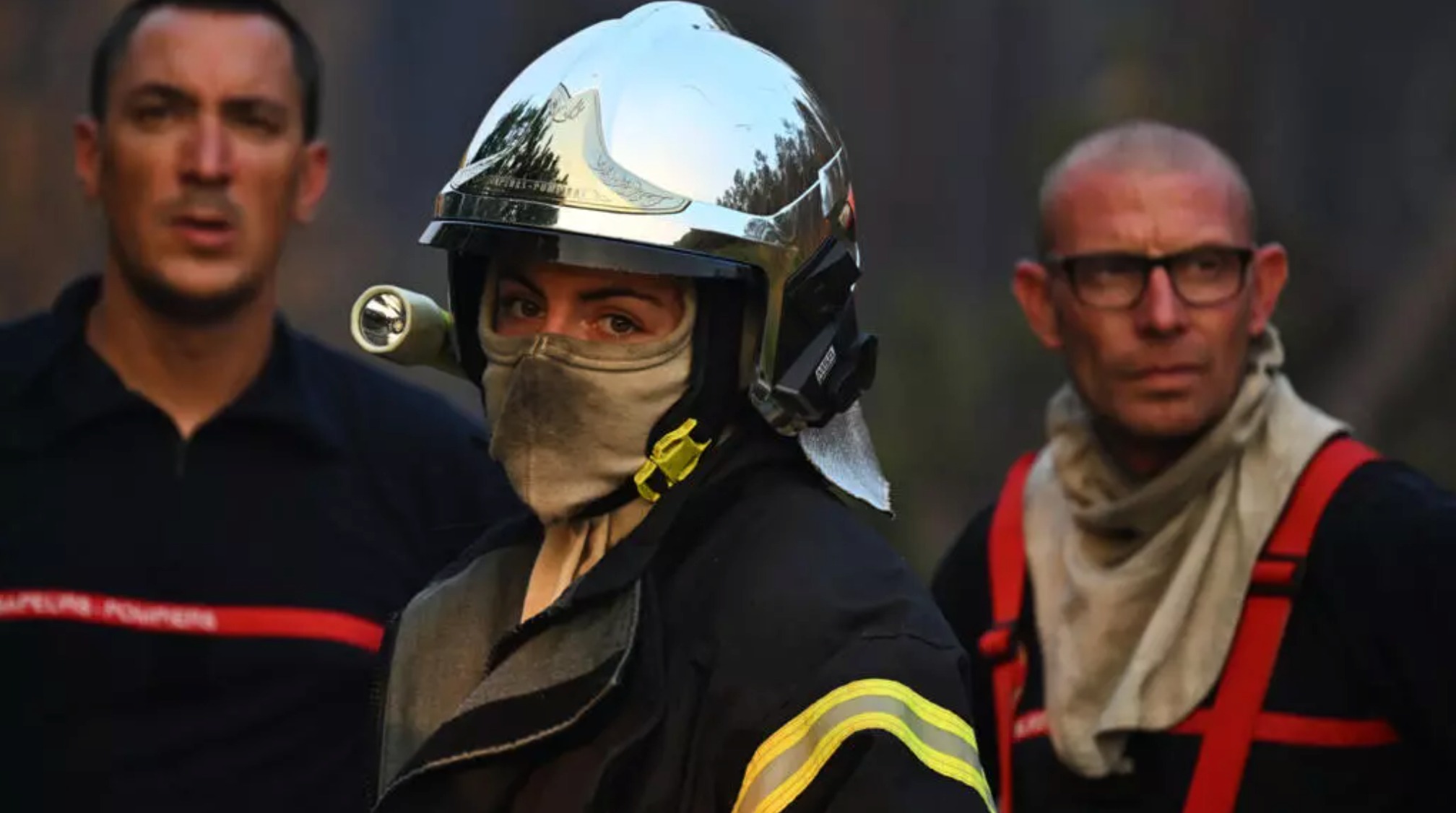
While European Union countries spend the summer months battling massive wildfires, reductions in firefighting budgets are drawing fierce criticism.
According to a report by EUobserver, firefighters have grown tired of being branded “heroes” by politicians.
“We don’t want to be called heroes; we want to be given resources,” said Ludovic Goblet, a representative of the French firefighters’ union Spasdis-CFTC.
His remarks came days after fresh EU figures revealed that the number of professional firefighters across Europe fell by 18,000 during the worst wildfire year on record.
That decline included a reduction of more than 4,000 personnel in France alone.
French firefighters set out three urgent demands
A coalition of trade unions representing France’s fire and rescue services held a meeting lasting approximately two hours with Interior Minister Laurent Nuñez last Thursday.
The coalition put forward three primary demands: additional resources to cope with the surge in emergency calls, the mass recruitment of professional firefighters, and new legislation to modernise civil protection services.
“The minister failed to meet our expectations; we received no concrete response. We have no guarantees regarding funding, funding strategy, or the content of the legislation,” said union spokesperson Xavier Boy.
Boy noted that the resources allocated to fire services have not kept pace with the rising number of interventions and multiplying crises.
Lack of resources fuels strike call for September
Unions have called for a “major mobilisation” on 29 September, a day when public sector workers are also planning to strike.
David Saquet of the UNSA firefighters’ union told AFP that professional firefighters also plan to stage a protest at Place de la Republique in Paris three days earlier.
Firefighters say they are exhausted following one of the worst wildfire seasons in French history, with provisional estimates indicating that at least 120,000 hectares have burned since the beginning of the summer.
Of the 256,400 firefighters registered with the French Interior Ministry, only 44,000—or approximately 17%—are either professional or military personnel.
In recent weeks, applications to become volunteer firefighters have doubled, and in some departments tripled.
Fire officials report that, driven in part by a wave of public gratitude, they have had to process as many applications in a few weeks as they typically receive in six months.
French interior minister plays for time
Nuñez said on Thursday that long-awaited draft legislation to reorganize the country’s civil protection services would be presented on 8 September.
Launched in mid-2024, the initiative aimed to modernise a system widely seen as on the verge of collapse by providing additional financial support. However, the process had ground to a halt since then.
The interior minister welcomed the “very frank discussions” held with unions on Thursday.
The minister stated that the proposal to be presented in September would “more clearly define the missions” of French firefighters, who “currently have to respond to personal medical emergencies just as frequently as they respond to disasters or fires.”
In a statement published on the social media platform X, Nuñez added that discussions regarding the funding of fire services remain ongoing, with additional resources expected to be allocated in the 2027 budget.
European Commission enforces fiscal austerity
Ahead of this summer, the European Commission told member states that they needed to ensure they maintained an “adequately sized and well-prepared” firefighting force.
Yet the Commission is simultaneously enforcing the EU’s strict fiscal rules, which have led to spending cuts in public services, including fire departments.
Poland, for example, recorded the largest drop in firefighter numbers last year. Alongside France, it was placed under the Excessive Deficit Procedure in 2024.
Belgium faces a similar situation: the country’s fire services are tackling wildfires with a 10% reduction in staffing in 2024 and a further loss of 200 firefighters in 2025.
This development is not only hazardous for the public and firefighters. Damage caused by wildfires this summer has already exceeded 3 billion euros.
Conversely, the same fiscal logic is not applied to defence, where massive investments are being channelled into military equipment.
According to EUobserver, in the face of mounting and increasingly complex threats, austerity policies have left Europe weaker, more divided, and less prepared in almost every respect for the challenges ahead.

Le Pen vows radical spending cuts to ease French debt fears at Medef

Tech giants pour billions into media licensing to fuel AI systems

Merz and net contributors reject two-trillion-euro EU budget draft

Germany and Canada vie for top NATO Military Committee post

US in talks to acquire equity stakes in Venezuelan oilfields
-

 Interview2 weeks ago
Daniel Davis warns US strategy fails against Iranian defense grid
-
 Diplomacy2 weeks ago
Erdogan blocked CIA-Mossad plan for armed Kurdish uprising in Iran, report says
-

 America2 weeks ago
AIPAC super PAC pours millions into key Democratic primary races
-
 Europe1 week ago
Marine Le Pen plans French constitutional referendum on immigration
-
 Middle East2 weeks ago
US considers land blockade on Iran involving Türkiye and neighbours
-

 Diplomacy2 weeks ago
The two terrorists: Britain jails tweets while the West crowns al-Qaeda’s man in Damascus
-

 America2 weeks ago
US-Brazil rift widens over proposed sanctions and trade tariffs
-
 Europe2 weeks ago
Ukraine uses British drones for long-range strikes deep inside Russia
