
America
Lula da Silva: Brazil is back

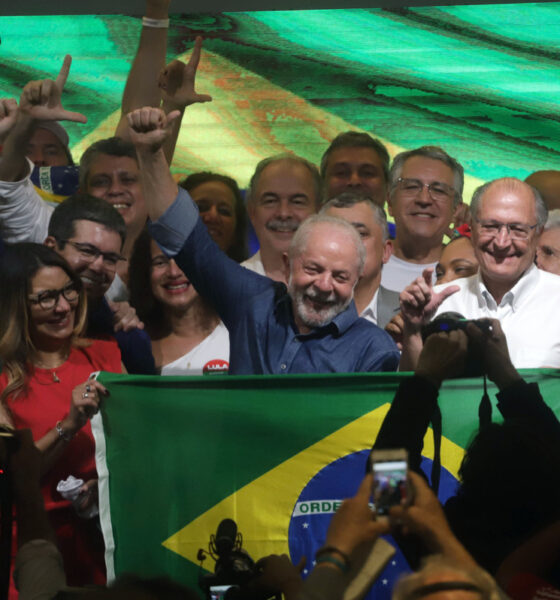
Brazil’s former president Lula da Silva (2003-2010) won the second round of presidential election that was held on October 30th, with 50.83 percent. Left-wing candidate Lula da Silva, who defeated incumbent right-wing leader Jair Bolsonaro, said he would restore his country to its rightful place in the international arena.
In Brazil, Latin America’s largest country with a population of over 212 million, about 156 million voters went to the polls on Sunday.
Labour Party candidate Luiz Inácio Lula da Silva won 50.83 per cent of the vote, compared to 49.17 per cent for Liberal Party candidate and incumbent President Jair Bolsonaro, according to polling results published by the Superior Electoral Court (TSE).
Lula da Silva also surpassed Bolsonaro (43.20 percent) with 48.43 percent of the vote in the first round of the presidential election held on October 2nd.
Lula, who previously ruled Brazil for two terms, will take over the presidency from Bolsonaro on January 1st, 2023.
A single country, a single people…
Lula da Silva addressed to his supporters after winning the election “as of January 1st, 2023, I will govern for 215 million Brazilians, and not just for those who voted for me. There are not two Brazils. We are a single country, a single people, a great nation.”
Referring to the corruption charges and spending time in jail, Lula said “I think I am experiencing a resurgence in Brazilian politics. They tried to bury me alive, but now I’m here to rule the country. We are in a very difficult situation, but I am sure that with the help of the people, we will find a way out and restore peace.”
The most urgent task is to fight hunger
Emphasizing the fight against hunger, Lula said, “Our most urgent commitment is to end hunger again, we cannot accept it as normal for millions of men, women and children to go hungry or consume less protein than necessary in this country. We are the third largest food producer and the first in animal protein.”
“We are able to export all over the world and we have a duty to ensure that every Brazilian can have breakfast, lunch and dinner every day,” Lula reiterated. “This will once again be my government’s number one commitment,” he said.
Referring to the housing problem, Lula said, “We cannot accept that families are forced to sleep on the streets as normal, so we will continue the ‘my home is my life’ program and bring back the participation programs. Brazil can no longer live with this huge wall of inequality.”
Lula listed the demands of the people as follows: “The Brazilian people want to have a good job, a salary which is always above inflation, a quality public health and education system. They want books instead of guns. Brazilian people want to regain hope.”
Democracy message
Describing the election victory as a “victory of democracy”, Lula said, “This is the victory of an enormous democratic movement founded beyond political parties, personal interests, and ideologies for the victory of democracy,”
Lula shared the Brazilian flag on his Twitter account with a “Democracy” note.
Democracia. pic.twitter.com/zvnBbnQ3HG
— Lula 13 (@LulaOficial) October 30, 2022
Foreign policy remarks:
Prestige in the world
“Today, we are telling the world that Brazil is back and is too big to be relegated to the sad role of a pariah,” Lula said, “What I hear the most in my international trips is that the world misses that sovereign Brazil that spoke on equal terms with the richest and most powerful countries and, at the same time, contributed to the poorest countries.”
Regional integration
“We are going to reconquer the credibility, predictability and stability of the country so that investors regain confidence in Brazil, so that they stop seeing our country as a source of immediate and predatory profit and become our allies in economic growth,” Lula said, recalling that in his previous terms, he had strengthened Mercosur and other regional integration organizations.
New standards with the US and EU
Talking about forming partnerships with US and EU on new standards, Lula da Silva added “We are not interested in trade agreements that condemn our country to enter the role of the seller of commodities and raw materials. We are going to reindustrialize and invest in the green economy.”
Lula also raised the issue of five permanent members of the UN, which undermine the balance between countries and prevented the enlargement of the General Assembly and the Security Council.
Fighting the climate crisis
“We are ready to re-engage in the fight against hunger in the world,” Lula da Silva stated and added that Brazil is ready to gain its leading role in the fight against the climate crisis by protecting all rainforests, especially the Amazon rainforest.
“We are open to international cooperation to preserve the Amazon, but always under Brazil’s leadership, without giving up our sovereignty,” Lula said, stressing that the growing deforestation and destruction in the Amazon rainforest will end.
Rise of the left in Latin America
The “pink tide” continues to rise in Latin America, which has defeated US-backed coups.
Following the elections in Peru, Bolivia, Argentina, Chile, Honduras, and Colombia, victory of yet another left-wing candidate in Brazilian elections too have raised the expectations on the strengthening of regional integration efforts. Lula da Silva’s emphasis on regional integration in his victory speech also points to this. Lula and Brazil are expected to boost cooperation among other governments, such as Argentina, Chile, Mexico, and Colombia, which share similar perspectives.
So much so that the leaders of Latin America, who strongly embraced Lula’s victory, shared enthusiastic congratulatory messages, and emphasized that this victory would strengthen the unification of Latin America.
Full support from Latin American leaders
Argentine President Alberto Fernandez shared his photo with Lula on his Twitter account, saying: “Congratulations, Lula da Silva! Your victory opens a new era for the history of Latin America. A time of hope and future that begins today. Here you have a partner to work and dream big for the good life of our peoples. After so many injustices that you experienced, the people of Brazil have elected you and democracy has triumphed.”
Después de tantas injusticias que viviste, el pueblo de Brasil te ha elegido y la democracia ha triunfado.
Latinoamérica sueña. pic.twitter.com/w9QwNAwhGk
— Alberto Fernández (@alferdez) October 30, 2022
Venezuelan President Nicolas Maduro also tweeted: “We celebrate the victory of the Brazilian people, who this October 30th, elected Lula as their new President. Long live the peoples determined to be free, sovereign, and independent! Today in Brazil democracy triumphed. Congratulations Lula!”
Celebramos la victoria del pueblo brasileño, quienes este #30oct, eligieron a @LulaOficial como su nuevo Presidente. ¡Qué vivan los pueblos decididos a ser libres, soberanos e independientes! Hoy en Brasil triunfó la democracia. ¡Felicitaciones Lula! ¡Un Gran Abrazo! pic.twitter.com/asnkPLhsNh
— Nicolás Maduro (@NicolasMaduro) October 30, 2022
Cuban President Miguel Diaz Canel said in his post, “They delayed your victory with heinous methods, but they couldn’t prevent you from winning with the vote of the people. Social justice will return.”
#LulaPresidente2022. #Cuba te felicita, querido compañero. Atrasaron tu victoria con métodos atroces, pero no pudieron impedir que vencieras con el voto del pueblo. Regresa @LulaOficial, regresa el @ptbrasil, regresará la justicia social. pic.twitter.com/TuQT0KIFYG
— Miguel Díaz-Canel Bermúdez (@DiazCanelB) October 30, 2022
Mexican President Andres Manuel Lopez Obrador also shared his photo with Lula on his social media account, saying, “Lula won, blessed people of Brazil. There will be equality and humanism.”
Ganó Lula, bendito pueblo de Brasil. Habrá igualdad y humanismo. pic.twitter.com/2nCg5yo5UD
— Andrés Manuel (@lopezobrador_) October 30, 2022
Bolivia’s President Luis Arce Catacora, emphasizing integration in his Twitter account, said: “Congratulations, brother Lula, Brazil’s elected president! Your victory strengthens democracy and Latin American integration. We are sure that you will lead the Brazilian people along the path of peace, progress and social justice.”
¡Felicidades hermano @LulaOficial, presidente electo de #Brasil!
Tu victoria fortalece la democracia y la integración latinoamericana. Estamos seguros que conducirás al pueblo brasileño por el camino de la paz, el progreso y la justicia social.
¡Jallalla Brasil🇧🇷! pic.twitter.com/GSznOi89ih— Luis Alberto Arce Catacora (Lucho Arce) (@LuchoXBolivia) October 30, 2022
Honduras President Xiomara Castro also shared her photo with Lula and posted “He faced the most conservative powers in history, and together with the people of Brazil he has defeated them. Latin America is reborn with hope in a true humanist process of change and liberation.”
Felicidades @LulaOficial, amigo solidario con la lucha de Honduras (2009), se enfrentó a los poderes más conservadores de la historia, y junto al pueblo de Brasil los ha vencido. América Latina renace con esperanza en un verdadero proceso humanista, de cambio y liberación. pic.twitter.com/vdXqluY9aH
— Xiomara Castro de Zelaya (@XiomaraCastroZ) October 31, 2022
Colombian President Gustavo Petro, who posted “Yay Lula” on his social media account, emphasized integration in Latin America in his following posts.
Viva Lula.
— Gustavo Petro (@petrogustavo) October 30, 2022
President of the Republic of Chile, Gabriel Boric retweeted Lula’s post and added “Lula. Happiness!”
Lula. Alegría! https://t.co/ORsTb06D8y
— Gabriel Boric Font (@gabrielboric) October 30, 2022
Peru’s President Pedro Castillo congratulated Lula on his victory, saying: “Peru congratulates the president-elect of Brazil, the comrade Lula, worker, trade unionist, fighter. His victory is essential to strengthen the unity of Latin America and the social justice of the Great Homeland.”
El Perú felicita al presidente electo de Brasil, al compañero @LulaOficial, obrero, sindicalista, luchador. Su triunfo es fundamental para fortalecer la unidad de Latinoamérica y la justicia social de la Patria Grande. https://t.co/hN8Ge3yEnW
— Pedro Castillo Terrones (@PedroCastilloTe) October 30, 2022
With Lula taking over in Brazil, most of the Latin American countries will be governed by leftist governments. In addition, Brazil, Argentina, Chile, and Colombia together with Mexico constitute the 5 largest economies of the continent.
Relations with China expected to improve
Chinese President Xi Jinping congratulated the winner of the election, Lula da Silva, stressing that “deepening long-term friendship and mutually beneficial cooperation serves the fundamental interests of both countries.”
Xi said he highly values the development of China-Brazil relations, and he is ready to work with Lula to push forward China-Brazil comprehensive strategic partnership to a higher level to benefit to the two countries and their people.
Speaking to the Global Times, Chinese experts expect Lula’s return to significantly improve the atmosphere of cooperation between China and Brazil in terms of trade, investment, and global governance. It’s also emphasized that Lula’s return also means the strengthening of the autonomy of Latin American diplomacy.
“Lula’s return is likely to bring back a smoother China-Brazil relationship” Zhou Zhiwei, an expert on Latin American studies at the Chinese Academy of Social Sciences, told the Global Times on Monday. Zhou said this would allow both sides find more space and improve economic and trade cooperation, especially in agriculture and infrastructure construction.
“Brazil may also seek to participate in the Belt and Road Initiative (BRI) under Lula” Zhou said.
Lula and BRICS could be more compatible
Given that Lula was instrumental in the establishment and launch of the BRICS mechanism during his last stint in office, the Chinese expert believes that he will continue to be active and positive about BRICS.
According to the Chinese expert, cooperation between Lula and BRICS countries and communication on international hotspot issues and global affairs will be smoother and more stable than under Bolsonaro.
Regional integration and rejection of US hegemonism
Yang Jianmin, another Chinese Latin American expert, told the Global Times about the rising “pink tide” in the region.
Stating that the “pink tide” that continued with Lula’s election can be viewed as the opportunity to support regional integration, to reject US hegemony in the region, and to advocate independent diplomacy, Yang stressed that this is also China’s opportunity to develop a more profound bond with these countries.
He may also follow a more pragmatic policy…
Wang Youming, director of the Institute of Developing Countries at the China Institute of International Studies in Beijing, pointed out that unlike others, Lula could also pursue a more pragmatic policy.
“Lula’s emphasis on South-South cooperation and bonding with emerging powers does not mean that he will reject the US” Wang noted and added that it’s very likely that Lula will may have a more pragmatic style and less anti-American voice in his third term. According to Wang, instead, Lula may prioritize more practical tasks such as stabilizing the economy and mitigating the negative impact of COVID-19.
Brazil and China may explore new areas of cooperation
Tatiana Prazeres, director of trade and international relations for the Federation of Industries of the State of São Paulo, told the Atlantic Council on China’s policy, which Lula would likely to pursue, that despite negative rhetoric against China during the Bolsonaro administration, trade and investment between the two countries developed largely undisturbed, but the political unrest created by the anti-Chinese rhetoric prevented the deepening of bilateral relations in other areas such as science and technology. Under Lula, Prazeres said, he expects Brazil and China to explore new areas of cooperation.
Lula may also be more enthusiastic about BRICS and the Belt Road, Prazeres said, adding that he may prefer to leverage Chinese investments and technologies to help reinvigorate Brazilian industry.
Biden may try to get closer through climate
Another expert spoken to the Atlantic Council is former secretary of foreign trade of Brazil, senior researcher Abrão Neto.
Lula’s election would lead to a significant change in Brazil’s environmental agenda, among other things, Abrão Neto said, adding that this would enable Brazil to improve its relationship with the United States.
Arguing that US-Brazil economic relations during the Lula era would continue to be driven by pragmatic mutual interests, the expert said: “A renewed stance from the Brazilian government on climate change and other environmental issues might offer an extended avenue for bilateral cooperation, with positive spillovers for the overall political and economic relationship between the United States and Brazil.”
Experts comment that Biden will try to get closer to Lula to lure Brazil into intense power rivalry.
It’s commonly expressed that Lula’s idea of strengthening the protection of the Amazon forests could be compatible with Biden’s climate policy.
US President Joe Biden was among the first world leaders to congratulate Lula.
On Sunday, Biden congratulated Lula on his victory following “free, fair and credible elections” and said he looked forward to continuing the cooperation with Brazil.
‘CIA’ plot against Lula
Lula da Silva, 77, who chaired Brazil for two terms in 2003-2010, was indicted for corruption in 2016. Lula, who argued that the case was political, applied to the court, but was sentenced to 9 years and 6 months in prison in 2017. He went to prison in 2018 and spent a year and a half in prison.
Lula was unable to run for president because he was in prison and could not run in the 2018 election. The lawsuits against Lula paved the way for Bolsonaro’s election.
In 2021, Lula’s convictions and cases were dismissed by the Supreme Court, which ruled that the judge responsible for these cases, Sergio Moro, was biased and political, paving the way for him to participate in the elections.
At the time, some messages about this investigation were leaked to the press by a Brazilian news site. The leaked messages revealed that federal judge Sergio Moro, who was conducting the investigation at the time, collaborated with prosecutors in ways that overstepped ethical lines and affect the decision on prison sentences.
It was understood that the corruption cases were conspiracy against Lula da Silva. The Brazilian federal prosecutor’s office announced that prosecutors conducting the investigation have been assigned to other units.
It was alleged that the CIA was behind the conspiracy against Lula at the time.
Lula, who followed policies to end the neoliberal impositions of the USA in Brazil and the region, IMF dependence, made Brazil the 10th largest economy in the world, improved relations with China, made the country one of the founders of BRICS, advocated regional integration, gained the love of the people by ensuring that approximately 30 million Brazilians got rid of poverty with the social policies he implemented.
The trial and imprisonment of Lula was described as a US-backed coup that brought the right to power.










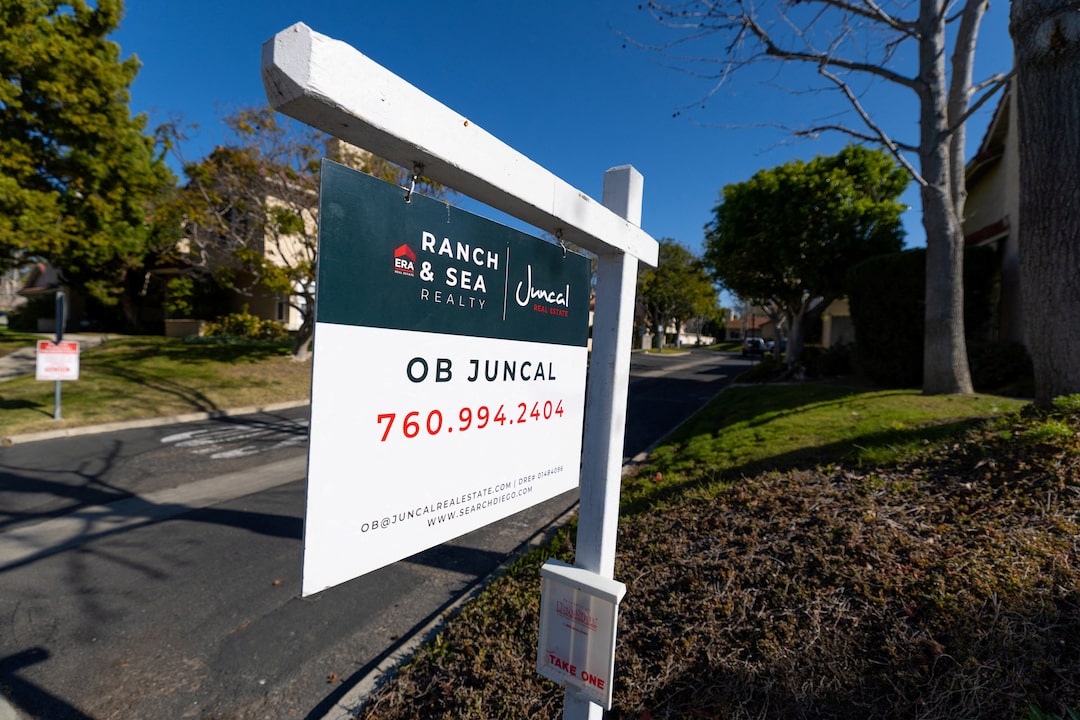
Wealthy buyers in the US are tearing down multimillion-dollar homes shortly after purchasing them for hundreds of millions of dollars.
According to a report by The Wall Street Journal, the trend is driven by a shortage of land in prestigious locations, particularly along coastlines.
For ultra-wealthy buyers, the prime factor has become the land’s location rather than the structure standing on it. After the acquired properties are flattened, newer, more modern homes are built on the cleared lots.
Drawing attention to the shift in the luxury real estate market, the report noted:
“The home itself, formerly the primary driver of an expensive real estate purchase, is now almost beside the point. Buyers are competing first and foremost for well-located land, situated on the ocean or a mountaintop.”
The newspaper cited moves by US billionaire William Lauder as an example. Lauder purchased the oceanfront estate of radio host Rush Limbaugh, who died in March 2023, for $155 million and had it completely demolished in July.
Lauder had previously torn down two homes situated on roughly 1.2 hectares of land along the Palm Beach coast. Having initially planned to construct his own residence on the parcel, Lauder subsequently sold the cleared plot for approximately $200 million.
Jonathan Miller, a real estate appraiser, stated that such transactions are becoming increasingly common as land prices rise.
Amid this momentum, estate agents have also begun marketing luxury homes directly as teardown lots.
Listings use artificial intelligence-generated imagery to showcase how the land would look without the structures on it.
Marketers avoid using the word “demolition” directly, resorting instead to terms such as “adaptive reuse”.
Teardown listings rise across luxury housing market
The trend is not confined to the coast and is spreading to other regions across the US.
Data from property brokerage Redfin reveals that references to demolishing buildings are becoming more frequent in sales listings.
The share of such listings exceeds 15% in the Bunker Hill Village area of Houston, while standing at 6.67% in Pimmit Hills, Virginia.
Dina Goldenteyer, a real estate agent working in Miami, remarked that serial demolitions have become more frequent because buyers no longer appreciate homes older than a decade.
Former retail executives Jamie Dooley and Christine Scott spent $3.7 million in 2020 to demolish a seaside home near Destin, Florida.
Although the couple spent five years building a modern home on the cleared site, they listed the resulting new structure with a demolition condition, citing the fact that no one wanted to buy the property as it stood.
William Paddock, an employee at the environmental consultancy WAP Sustainability, pointed to the environmental damage caused by this construction cycle.
Paddock emphasized that tearing down a home of roughly 1,000 square metres and replacing it with a new building of approximately 2,700 square metres generates a carbon footprint equivalent to the annual emissions of an average 250 American households.
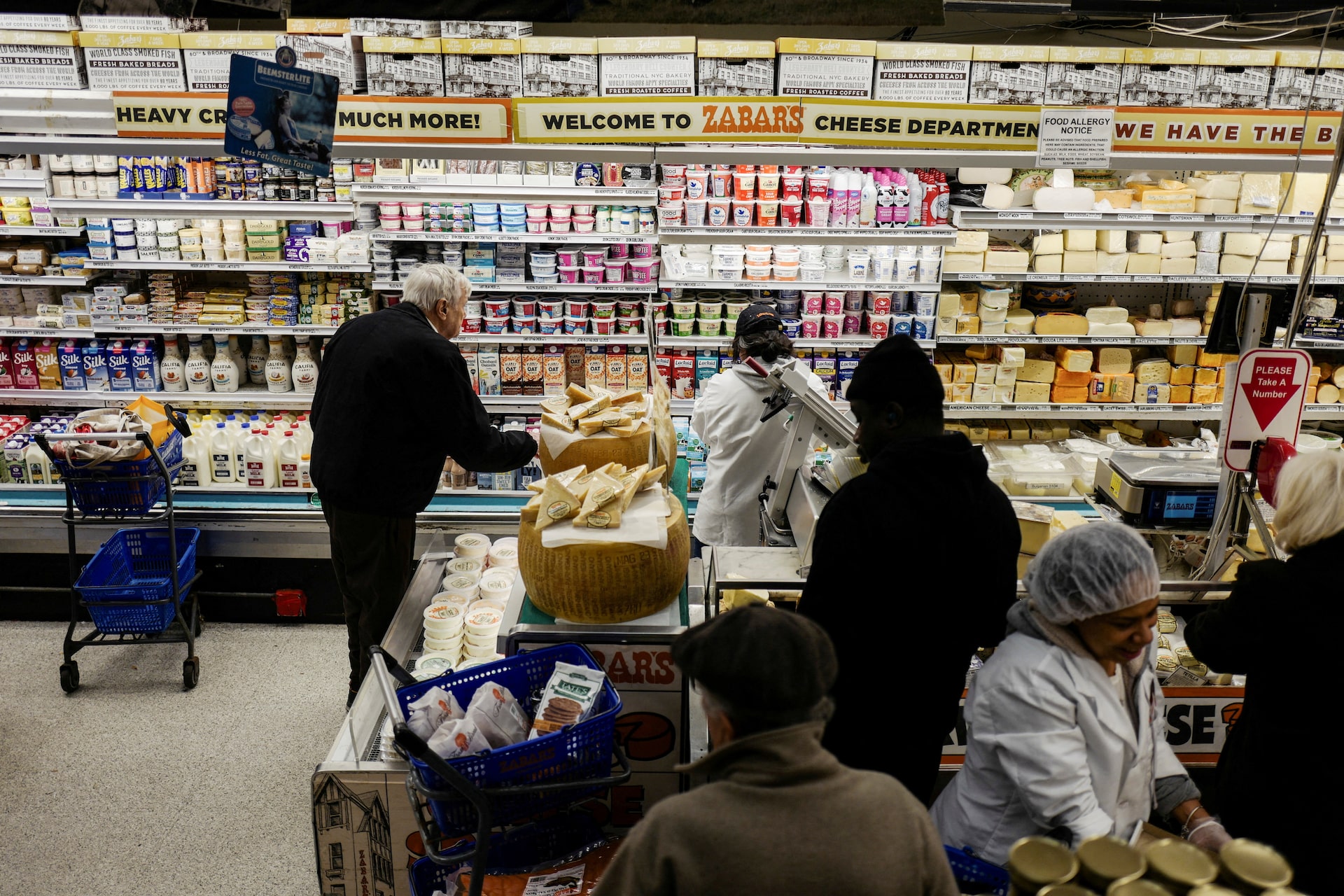
An uptick in September inflation as the US midterm elections approach has pushed the cost-of-living debate back to the centre of the agenda for Democrats seeking to regain control of Congress from Republicans.
Annual inflation stood at 3.7% in September, according to the Consumer Price Index published by the Bureau of Labour Statistics, with energy, petrol, and electricity costs rising on a monthly basis.
Food prices remained flat from August to September, recording a 2.5% increase compared with the same period last year.
Democrats are anchoring their election campaigns to pledges of easing the cost of living, blaming the price increases on President Donald Trump’s tariffs and the war with Iran.
Trump and Republicans, pointing to the numerous left-wing candidates who won primary elections this year, contend that the opposition has become captive to “communists” within the party.
When annual inflation stood at 2.4% in February, the US and Israel launched the Iran war on the final day of that month, and prices continued to climb throughout the conflict.
The recent acceleration has not entirely reversed the retreat from the 40-year peak of 9.1% recorded in June 2022; however, the rate has remained above the Federal Reserve’s 2% target for over five years.
Fed policymakers raised the benchmark interest rate by a quarter of a percentage point last month, citing the battle against stubborn inflation. Officials will convene again next week to consider whether to raise rates or hold them within the 3.75% to 4% target range.
Energy and fuel record sharpest increase since first month of war
In September, energy prices posted their largest monthly jump since March, the first full month of the war with Iran, climbing 20.4% year-on-year. Energy costs had risen 2.1% from July to August, after falling 1.5% from June to July and 5.7% from May to June.
Recent escalations in Iranian attacks on oil tankers in the Strait of Hormuz, alongside more frequent strikes by Ukrainian forces against Russian refineries, have strained global crude oil and refined product markets, driving up US petrol and diesel prices.
Petrol prices also recorded their sharpest monthly increase since the first month of the war, climbing 9.1% from August to September, bringing the annual increase to 35.3%.
American Automobile Association (AAA) data shows the average price of regular petrol across the US stands at $4.26 per gallon; while below the level of roughly $4.48 recorded a month ago, it remains more than $1.20 higher than a year earlier. Average gallon prices exceed $6 in California and $5 in both Washington state and Nevada.
Electricity prices rose 0.2% from August to September, offsetting the 0.2% decline between July and August, and were up 4.4% year-on-year.
Heavy power demand from new data centres is feeding through into local household electricity bills. Trump argued that companies must cover the cost of the electricity required by their data centres themselves.
In a post on Truth Social, Trump claimed that he was requiring large data centres to generate their own power and feed the surplus back into the local grid, suggesting this could bring about “a major drop” in electricity prices.
Used vehicle market posts monthly rise as food costs stabilise
The cost of food at home fell 0.1% month-on-month in September, while dining out increased 0.2%.
Egg prices dropped to $2.27 a dozen, falling roughly 35% compared with September 2025 and remaining well below the 20-year peak of $6.23 recorded in March 2025.
Ground beef prices rose roughly 2.4% compared with September 2025, but at $6.48 a pound, they remained below the 20-year high of $6.98 reached in June.
Chicken held steady at its year-earlier level of $2.06 per pound last month, having fluctuated between $2.01 and $2.09 since November 2024.
Used car and truck prices fell 1.5% compared with September 2025, but rose 0.7% month-on-month in September following 0.4% increases in both July and August.
Heather Long, chief economist at Navy Federal Credit Union, noted that the sector faces severe pressure stemming from a combination of expensive replacement parts and a shortage of skilled labour.
Speaking to The Hill, Long emphasised that every cost pressure across the market is being felt directly at local auto repair shops.
Anthropic, developer of the artificial intelligence model Claude, reported a net loss of $80.7 billion for the first six months of 2026 ending 30 June.
According to a report by The Wall Street Journal citing the company’s draft initial public offering prospectus, this recorded loss nearly doubled the $42 billion loss incurred across the entirety of 2025.
The vast majority of that enormous figure, accounting for $72 billion, stemmed from accounting-driven book-value write-downs.
In contrast, the company saw a sharp surge in revenue, with turnover in the first half of the year climbing to $16.3 billion from $1.1 billion in the same period of the prior year.
During this period, Anthropic spent approximately $9 billion on computing power and infrastructure needs, surpassing in just six months the $7.3 billion spent across the whole of 2025.
The company has commitments to pay roughly $450 billion over the next seven to 10 years under cloud service contracts.
Under these obligations, contracts are planned for $111 billion with Google Cloud, $110 billion with Amazon Web Services, and $31 billion with Microsoft.
Anthropic will also spend up to $86 billion by 2033 and 2034, respectively, to lease Nvidia chips through smaller AI-focused cloud providers Nscale and Lambda.
The company could spend an additional $750 billion in the coming years to expand its computing capacity.
Roughly a third of the draft IPO prospectus was dedicated directly to risk factors.
The document highlighted the possibility that models could cause tangible real-world harm, noting that artificial intelligence could exhibit a “self-preservation” tendency and produce responses resembling “blackmail”.
Anthropic warned that the scale of damage caused by an AI-driven “catastrophic event” could render insuring against such risks impossible.
According to market expectations, Anthropic’s IPO could rank among the largest transactions in history, potentially surpassing SpaceX’s record.
Following the market debut, the company’s market valuation is projected to reach up to $2 trillion.

German officials urge fighter jet alliance with Sweden and Spain

US wealthy demolish multimillion-dollar mansions for land

US and Israel weigh Iran strikes after midterm vote, reports say

Pentagon plans covert spy ring for economic war on China, report says

EU reopens debate on naming envoy for Ukraine talks with Putin
-

 Europe2 weeks ago
Berlin Left Party backs Israel’s right to exist for coalition pact
-
 America2 weeks ago
How will Brazil’s presidential runoff work?
-
 Diplomacy2 weeks ago
The West is preparing for war not with Russia, but with its own people, French analyst Georges Kuzmanovic insists
-

 Russia2 weeks ago
71 EU lawmakers demand closure of Russian Houses in 15 member states
-

 Europe2 weeks ago
MI6 investigates potential leaks after former BND chief is detained
-

 Russia2 weeks ago
US and Russian figures discuss American stake in Nord Stream lines
-

 Russia2 weeks ago
Drone strike shuts down Yandex data centre in Russia’s Ryazan region
-

 America2 weeks ago
Trump weighs presidential memorandum to cut surging US diesel prices
