
Middle East
Middle East war costs tourism sector $600mn a day, FT reports


The conflict engulfing the Middle East is costing the region’s tourism industry an estimated $600 million a day in lost visitor spending, according to projections from a global travel industry body.
Flight cancellations, airspace closures and mounting anxiety among prospective travellers are battering the region’s tourism economy after Tehran launched retaliatory strikes against several Gulf states following US and Israeli attacks on Iran.
“Even short-term disruptions can quickly translate into significant economic losses for destinations, businesses and workers across the region,” Gloria Guevara, president of the World Travel and Tourism Council, which produced the estimate, told the Financial Times.
Travellers moved swiftly to cancel regional holidays. According to reservation data compiled by analytics group AirDNA from platforms including Airbnb and Vrbo, more than 80,000 short-term rental bookings in Dubai alone were cancelled in the week ending March 6.
Before the conflict erupted, the World Travel and Tourism Council had projected that international visitors would spend approximately $207 billion across the Middle East this year.
Cities such as Dubai had flourished by marketing themselves as synonymous with luxury, year-round sunshine and security. Some of the world’s most opulent hotels now find themselves caught in the crossfire. Debris from missile-interception systems rained down on Dubai’s Burj Al Arab, while Accor’s Fairmont The Palm on Palm Jumeirah sustained a direct hit.
Major regional hubs — Abu Dhabi, Dubai, Doha and Bahrain — typically handle more than half a million air passengers each day. Yet five days of flight cancellations across the region stranded an estimated four million passengers last week, according to aviation data provider Cirium.
Hundreds of evacuation flights subsequently departed from Middle Eastern airports to repatriate the tens of thousands of visitors who remained stranded.
Dubai resumed flights last week, restoring roughly a quarter of its services by Thursday. Qatar reopened its airspace over the weekend, only to close it again on Sunday; a handful of flights operated on special permits by Tuesday.
Holiday destinations across the Middle East have previously demonstrated resilience following periods of conflict. Revenue per available room — a key performance metric in the hospitality industry — plunged sharply in Qatar within a week of Israel striking Doha last September, but returned to growth in under a month, according to data from hospitality analytics firm CoStar.
Some analysts expect business travel to rebound, given the region’s strategic position as a transit corridor between Europe and Asia, while leisure travellers may look elsewhere. “If you’re personally searching for somewhere to take your family on holiday, you can easily pivot to another destination that ticks all the boxes,” said Matthew Pohlman, a partner at Goodwin, a law firm specialising in hospitality and leisure.
Others are more sanguine. Richard Clarke, an analyst at Bernstein, offered a measured assessment: “There’s a reason this region is popular. Demand won’t be strong while explosions are continuing… but I think people will come back as soon as this is over. Travellers have shorter memories than investors.”



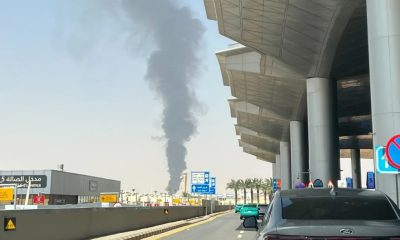







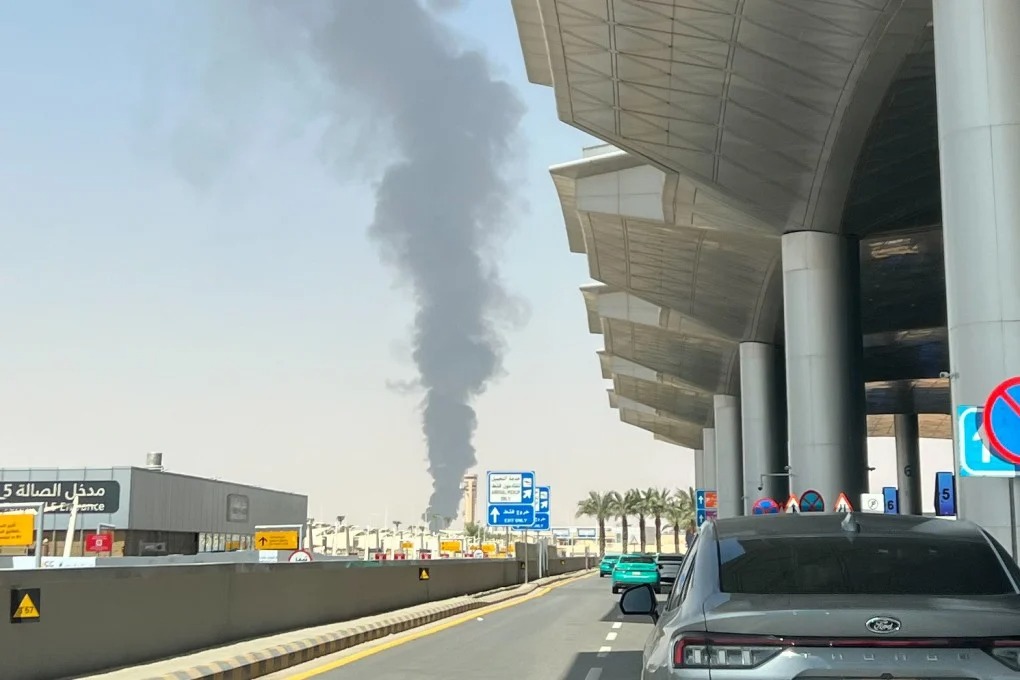
Successful strikes carried out by the Yemeni resistance against King Khalid International Airport in Riyadh have intensified scrutiny over air defence systems.
Stephen Bryen, a former US Deputy Under Secretary of Defence and a prominent expert in security strategy and technology, pointed out in an analysis published on his personal Substack account that it is becoming increasingly evident that even the best existing air defence systems fail to shield critical assets from damage or destruction.
Highlighting that the Yemeni operation employed a coordinated combination of loitering munitions, cruise missiles, and ballistic missiles, the expert noted that the launch sequence unfolded in the order of drones, cruise missiles, and ballistic missiles.
The raid lasted approximately 45 minutes. The most severe destruction occurred at gates 401 to 403, which were struck initially by Quds cruise missiles, each carrying a payload of 150 kg.
According to Bryen, the situation was further compounded when debris from Patriot interceptors crashed into the terminals, causing fires and spreading shrapnel.
Noting that no air raid sirens were sounded and no early warning of the strike was issued, the author stressed that the airport lacked a civil defence system, shelters, or publicized evacuation procedures.
Arguing it was clear that Ansar Allah “aimed to cause mass casualties in order to punish Saudi Arabia for its support of government forces in Yemen”, the author stated that “the Houthi militia had repeatedly issued public warnings regarding their intentions” and had made plain their goal of shutting down the Riyadh airport, even if it was not their sole target.
Bryen continued:
“Despite modern radars and airborne early warning systems, the launches of the unmanned aerial vehicles, cruise missiles, and ballistic missiles went undetected. Saudi Arabia possesses five E-3A AWACS aircraft, two Saab 2000 Erieye AWACS aircraft equipped with modern AESA radars (the E-3A radar being an older pulse-Doppler system), and a series of other dedicated tactical reconnaissance platforms (RE-3A, RE-3B). These systems and coastal radar installations are integrated into a centralized defence network linked to air defence assets such as Patriot, THAAD, and up to 10 batteries of the Korean-made KM-SAM Block-II (Cheongung-II) used for lower-tier air defence against short-range ballistic missiles (SRBMs), cruise missiles, aircraft, and unmanned aerial vehicles (UAVs).”
Pointing out that there are no reports indicating other countries, particularly the US and Israel, detected the Yemeni launches or alerted Saudi Arabia even if they did, the US expert recalled that drone and cruise missile launches are “easily concealed” and wrote that detecting such operations requires high-quality intelligence, typically human intelligence.
“The fact that Saudi Arabia established an initiative named the ‘Mecca Joint Defence Agreement’ … with Pakistan and Türkiye, excluding the US and frustrating Washington’s drive to expand the Abraham Accords to the Kingdom, may have played a role in dampening US interest in assisting the Kingdom with the Houthis and the Yemen issue,” Bryen claimed, arguing that it remains uncertain whether Washington will intervene now.
Emphasising that the Ansar Allah operation was an intensive attack employing new or upgraded technology “originating from Iran and perhaps developed with the support of Russia and China”, the author said:
“The suicide unmanned aerial vehicle used by the Houthis was the Samad-3. The Samad-3 is an extended-range loitering munition powered by a two-stroke, twin-cylinder piston engine (typically identified as a 3W110i B2 or DLE 170 class model) driving a rear-mounted pusher propeller. During long-range operations, such as extended flights exceeding 1,500 to 2,600 km, it generally flies at a lower average cruising speed of 148 to 185 km/h (80 to 100 knots or roughly 92 to 115 mph) to conserve fuel. Western experts do not consider the Samad-3 to be highly accurate, even though the latest variants have been enhanced with more jam-resistant satellite links. Between 30 and 40 Samad drones were deployed in the successive strikes on King Khalid Airport.”
He noted that the Quds cruise missile was more lethal, carried a larger warhead, featured advanced electronics, and was powered by a copy of the commercial Czech PBS TJ100 turbojet engine, pointing out that this copy was manufactured in Iran.
Underlining that the Quds-2 utilizes satellite-assisted navigation (GPS/GNSS) and inertial navigation systems (INS), Bryen said: “As a low-flying cruise missile, it can use terrain masking to evade standard radar coverage and air defence systems. The successful strikes by Quds cruise missiles on Terminals 3 and 4 demonstrate that it possesses effective guidance and anti-jamming electronic systems.”
Saudi officials had asserted that they intercepted a portion of the Burkan ballistic missiles using Patriot systems. According to Bryen, the Burkan missiles were not the elements that inflicted the primary damage on the airport.
Regarding the Burkan ballistic missiles, the author wrote:
“The Burkan is a modernized ballistic missile. Once the boost phase is completed following launch, the warhead separates from the missile body. The high-speed warhead alone is difficult for radar to detect. The Burkan-2H and Burkan-3 feature a separable, triconic (‘baby-bottle’ shaped) warhead inherited from Iran’s Qiam-1 and Shahab-3 designs. The separated warhead lacks active control surfaces, such as grid fins or thrusters, to execute evasive manoeuvres or terminal guidance corrections against interceptors like the MIM-104 Patriot. Nevertheless, the missile body travels along the same trajectory as the warhead, creating discrimination and targeting challenges for systems such as the Patriot.”
The author finds it “striking” that the damage inflicted by the Ansar Allah strike on King Khalid International Airport is roughly equivalent to the Iranian strikes against a series of US and Israeli bases that began with the “Martyr Soleimani” operation hitting Ain al-Asad airbase in Iraq in 2020.
According to Bryen, the takeaway from all this points to “grave intelligence shortcomings, inadequate integration of sensors, including radars.”
Recalling that several of these sensors had been targeted and destroyed by Iran, the author listed those targets: the half-billion-dollar THAAD radar (AN-TPY-2) stationed at Muwaffaq Salti in March 2026, the AN/FPS-132 Block 5 upgraded Early Warning Radar (UEWR) located near Al Khor in northern Qatar supporting US and Qatari ballistic missile tracking efforts, other early warning radars in the UAE, and air defence systems functioning well enough to prevent significant damage.
The author concluded his article by arguing that air defence systems and American base planning must be overhauled entirely:
“The US has focused on refining legacy systems like the Patriot and has introduced some interim systems like NASAMS, but has otherwise neglected developing new air defence solutions. Systems such as THAAD and the Navy’s SM-3 could also play a role, but their utility has remained limited. THAAD was not utilized in the Riyadh strike.
If the Houthi militia and the Iranians can penetrate the air defence networks of the US and its allies, the entire system will require a serious overhaul. Withdrawing from Middle Eastern bases is not a genuine solution; it is merely a short-term temporary fix. Even being pushed out of the United Kingdom should serve as a warning that base defences urgently need to be rethought.”
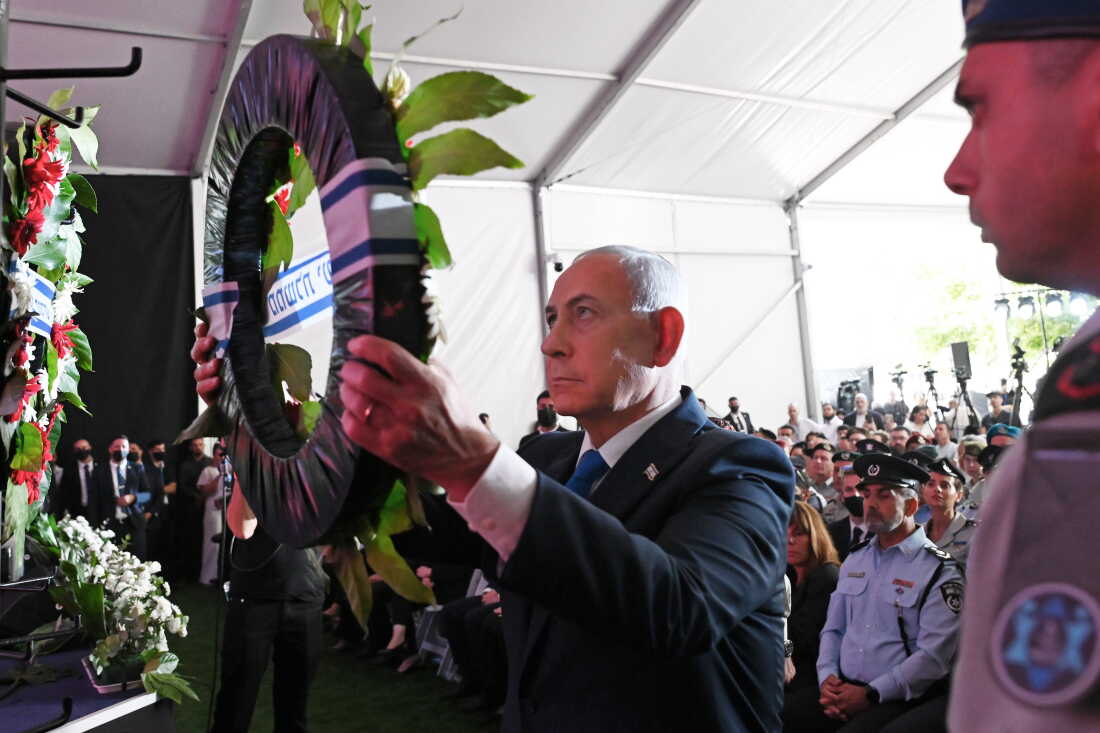
Avi Gil, the former military secretary to Israeli Prime Minister Benjamin Netanyahu, has claimed that attempts were made within the Prime Minister’s Office to alter the timestamps of official call logs from the morning of 7 October 2023.
Following these disclosures, the Israeli opposition petitioned Attorney General Gali Baharav-Miara, demanding the opening of a criminal investigation into Netanyahu and his staff.
Gil, who served as military secretary at the time of the attack, said in an interview with the Israel Hayom newspaper and Channel 12 television that Netanyahu’s chief of staff, Tzachi Braverman, attempted to alter the timing of a critical conversation held that morning.
Arguing that the initiative formed part of a “criminal pattern of behaviour”, Gil stated that he had remained silent until now in anticipation of a state commission of inquiry, but noted that what had been conveyed to the public did not reflect the truth.
Braverman is known to have been questioned and investigated by police over fraud and forgery allegations on suspicion of illegally tampering with official protocols.
Claim that official call time was shifted back
Gil recounted that on the morning of 7 October 2023, he received a call from the office of Shin Bet chief Ronen Bar at 06:12, and during a conversation with Bar over a secure line at 06:17, he was informed that SIM cards had been activated in Gaza and that Hamas operatives had moved underground.
Stating that he first telephoned Netanyahu at 06:29 to wake him, Gil noted that he informed the Prime Minister that Hamas had launched a surprise attack and that he was continuing to gather information.
Gil stated that during a second telephone call at 06:40, he conveyed to Netanyahu the message: “We are at war.”
The former military secretary said that months later, in January, a stenographer approached him and disclosed that Braverman had asked her to alter the time of the second conversation in the official records from 06:40 to 06:29.
Gil noted that this step may have been intended to create the impression that Netanyahu had been issuing instructions from the very first moment of the attack, or to lay the groundwork for the thesis that intelligence had been withheld from the Prime Minister by fostering the perception that the information conveyed in the second call was already known during the first.
Stating that he noticed Netanyahu’s team collecting documents in an unusual manner two weeks after the events began, Gil said that, suspecting minutes were being falsified, he approached Attorney General Baharav-Miara and requested clarification of the rules. Gil pointed out that any prospective commission of inquiry should not content itself with written records alone and must examine the original audio recordings.
Responding to a question regarding allegations that Egypt had issued a warning prior to the attack, Gil stated that he had no knowledge of such a message, but noted that an Egyptian intelligence aircraft had landed in Israel in late September and remained for more than an hour.
Remarking that no aircraft arrives without reason, Gil suggested that the officials who met the delegation or received the message were continuing to conceal it.
Gil also asserted that the security documentation Netanyahu submitted to the state comptroller was incomplete, noting that the document did not reflect the whole truth.
Likud rejects claims: “Gil did not wake PM in time”
The ruling Likud Party rejected the allegations, stating that the claims were politically motivated propaganda targeting Netanyahu and the party.
In a post on his social media account, Netanyahu argued that the opposition’s campaign of lies could not alter the truth.
Likud’s statement alleged that Gil was attempting to cover up his own negligence, claiming that despite an alert message received from the military secretariat’s intelligence officer at 03:55 on the morning of 7 October, Gil took no action and failed to wake the Prime Minister in time.
The party maintained that had Netanyahu been informed in time, developments would have unfolded differently.
Opposition levels treason accusations
Opposition parties, meanwhile, called for legal steps against Netanyahu and his team to be accelerated following the statements.
The Yashar Party, led by Gadi Eisenkot, cited Ronen Bergman’s investigation in Yedioth Ahronoth alongside Gil’s statements to call on the Attorney General to open a criminal probe. The party accused Netanyahu of concealing critical assessments regarding the strengthening of Hamas and its ties to the Iranian axis from the state comptroller.
Yisrael Beiteinu leader Avigdor Liberman said Attorney General Baharav-Miara must immediately launch an investigation into Netanyahu and his aides on allegations of treason and conspiracy.
Liberman also called on the Chief of the General Staff to block attempts to use the military for political ends.
The Democrats Party leader, Yair Golan, described Gil’s testimony as historic, noting that responsibility for the events in which 1,200 people were killed and 251 taken hostage could not be concealed.
Golan demanded that all original audio recordings and documents within the Prime Minister’s Office be placed under immediate protective custody.
The leadership of the October 7 Council also stated that Gil’s remarks refuted the government’s arguments that it was unaware of the situation prior to the attack.
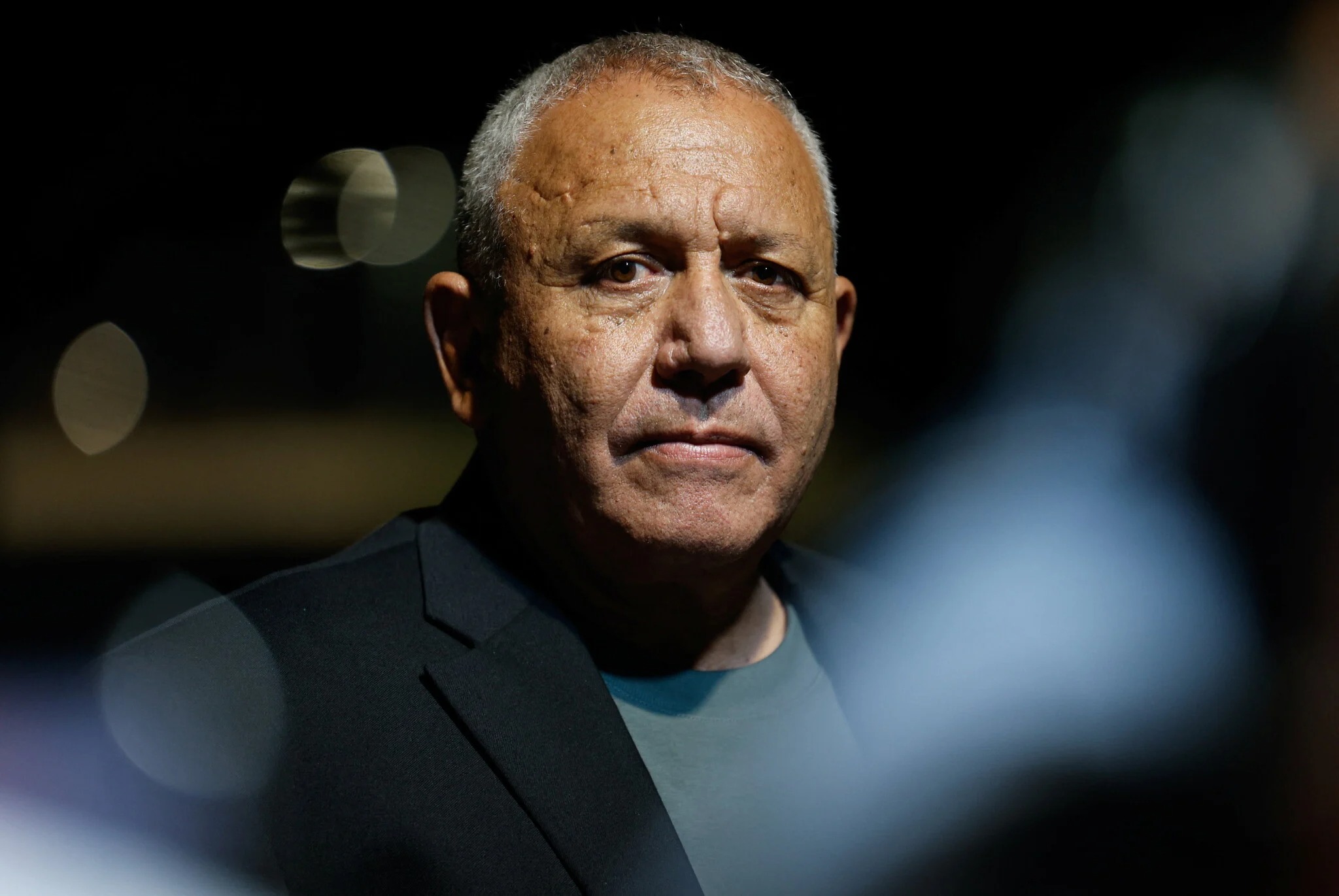
Gadi Eisenkot, Benjamin Netanyahu’s fiercest challenger in this month’s elections, has conditioned any agreement with Syria on the complete withdrawal of Turkish and Russian forces.
In an extensive interview with The Times of Israel (ToI), the leader of the Yashar Party and former chief of staff said it was necessary to take advantage of the “fluid situation” in Syria.
Contending that Syria’s transitional leader, Ahmed al-Sharaa, is “originally a very extreme person, an ISIS member,” Eisenkot remarked: “I have no illusions about him; together with the Americans operating in Syria, I killed many people from his organisation.”
Nevertheless, the opposition leader emphasised that a crucial question must be posed:
“Is there an opportunity to take the 1974 Kissinger interim agreements and significantly upgrade them, with tight security arrangements that will ultimately bring about the withdrawal of foreign forces from Syria?”
Asked by the reporter whether this included Israel withdrawing from Mount Hermon and key strategic positions in Syria, Eisenkot replied:
“The fundamental condition is the complete expulsion of the Turks and the Russians from the area. As for Mount Hermon and the relevant security arrangements, these must be negotiated.”
Arguing that Israel must speak from a “position of strength” backed by “unshakeable American guarantees,” Eisenkot added: “There must be an American protective umbrella, oversight, and commitment that will enable Israel to take calculated risks.”
Pointing to the “extremely problematic situation” created by Netanyahu over the past three years, the Yashar leader described it as an “ever-widening and dangerous gap between American interests in the Middle East and Israel’s interests.”
Noting that Israel shares “deep common interests” with the US, Eisenkot listed them as: “maintaining stability in the Middle East, strengthening the moderate Sunni camp, weakening the radical Shiite axis, weakening the fundamentalist Sunni axis, and subsequently achieving economic prosperity in the region.”
Stating that a “strong Israel as a strategic asset” for the Middle East is also an asset for the US, the Israeli politician emphasised his support for moving towards the establishment of a “NATO of Sunni states.” He stressed that Israel could make major contributions in early-warning intelligence and defence systems, adding:
“We have proven this capability. Today, there are Arab countries in the Gulf that quietly receive Israeli protection. I also connect this to the broader peace effort that Israeli leaders have unfortunately stopped talking about. We want peace.”
Within this framework, Eisenkot noted the necessity of strengthening already signed peace treaties: “These must never be taken for granted, as there is also deep concern that these agreements could slide backwards. Therefore, we must strengthen our relations with Egypt, Jordan, and the signatory countries of the Abraham Accords, and actively involve other countries in the process. I believe there may also be an opportunity regarding Lebanon.”
Contending that Netanyahu’s “blatant foolishness and dreadful political-strategic judgment” had dragged Israel to rock bottom, the opposition leader pointed out that 12 countries are currently waiting to impose sanctions on Israel.
“Even the Americans have begun considering the possibility of imposing sanctions on official Israeli actors in Judea and Samaria [the West Bank],” Eisenkot said.
Noting that the steps he would take in the West Bank would not be a political gesture aimed at bringing Saudi Arabia into the Abraham Accords, but would be done “entirely in Israel’s interests,” Eisenkot said he would improve security conditions in the region, prevent the burning of Palestinian homes and villages by extremist Jewish settlers, and intervene with an “iron fist” against anyone acting outside the law.
“That is exactly how I acted throughout my military service. [Those attacks] did not happen when I was Chief of Staff,” Eisenkot said, referring to assaults by illegal Jewish settlers on Palestinian villages in the West Bank.
The Yashar leader argued that anyone seeking to establish full sovereignty over the West Bank and incorporate another 2.8 million Palestinians into Israel is “endangering the Zionist project and the Jewish demographic majority.”
Addressing Netanyahu’s judicial overhaul, Eisenkot said: “Anyone who seeks to weaken the Supreme Court and crush the judiciary is endangering democracy.”
Accusing Netanyahu of desiring “endless wars,” the opposition leader said: “We will change this through a rational government. Netanyahu’s government is pursuing an entirely irrational policy: it incites conflict solely to consolidate its domestic political base. For this single purpose, it clashes with everyone.”

Ex-BND head Hanning tied to former Mossad chief amid spy inquiry

Iran war costs US economy $265 billion as household burden mounts

Trump dismisses US envoy to Greece Kimberly Guilfoyle

Most EU citizens reject fast-track Ukraine accession, poll finds

Ex-US official says air defences fail against Yemeni airport strike
-

 Europe2 weeks ago
Le Pen proposes German-style debt rule to soothe French bond market
-
 Russia2 weeks ago
US and Russia hold multi-billion-dollar talks on Lukoil foreign assets
-

 America2 weeks ago
US AI spending needs 9% of GDP by 2032 to justify capital boom
-

 Europe2 weeks ago
France and Germany urge EU market kill switch against trade threats
-
 Europe1 week ago
Bill to drop NATO membership goal submitted to Ukrainian parliament
-

 Europe2 weeks ago
Over 500 former European diplomats urge EU sanctions on Israel
-

 America2 weeks ago
Flavio Bolsonaro leads Lula as Brazil election heads to run-off
-

 Europe1 week ago
Marine Le Pen unveils fiscal programme pledging French budget cuts
