
America
Milanovic declares global neoliberalism dead, warns of plutocracy

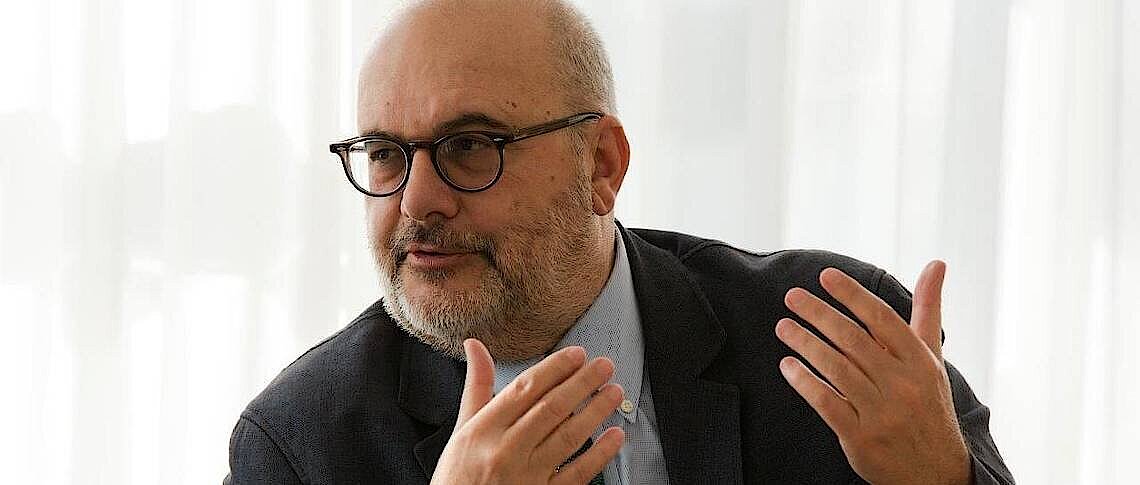
Branko Milanovic, who served as a lead economist in the World Bank Research Department for nearly two decades and currently holds posts as a research professor at the Graduate Center of the City University of New York and a visiting professor at the London School of Economics, gave an interview to Jorge Fontevecchia, co-founder of the Argentine newspaper Perfil.
Milanovic, the author of “The Great Global Transformation”, noted that the era of neoliberal globalisation has ended, giving way to a new order that is liberal internally but mercantilist externally.
Assessing the upheavals in global politics and economics during a visit to Buenos Aires, Milanovic stated that leaders such as Donald Trump, Xi Jinping, and Vladimir Putin came to power by harnessing societal backlashes that were already present.
Emphasising that the primary conflict in the contemporary world lies between monetary power and political authority, the veteran economist warned that if capital owners prevail, humanity could face a scenario reminiscent of the Roman Republic, where the masses were placated solely with bread and circuses while oligarchs mobilised the populace against one another.
When Fontevecchia observed that the title of his latest book evokes economic historian Karl Polanyi’s classic 1944 work, Milanovic explained the societal reaction against the excessive expansion of market relations:
“The title of my book does not recall Polanyi by accident. I have read Polanyi’s work three times, and my most recent reading took place about a year before I began writing my own book. Developments witnessed on a global scale showed me this connection clearly. Polanyi addressed the Industrial Revolution in England, the commercialisation of human relations that were not previously part of market logic, and society’s protective counter-response to this state of affairs. Neoliberal globalisation operated through a very similar process; it spread the market mechanism across the entire globe, including China, India, and Africa. At this juncture, we are at the end of an era. Societal resistance is mounting against this hyper-commercialisation. This does not mean we will return to a different system, but it clearly demonstrates that political balances have transformed and globalisation is retreating, at least on ideological terrain.”
Addressing the long-term rhythm of economic fluctuations, Fontevecchia recalled Nikolai Kondratiev’s cycle theories and asked about the historical placement of the current rupture.
Milanovic pointed out that an ideological cycle has reached its conclusion, rather than standard economic fluctuations:
“I am not speaking of conventional cycles in the classical sense where the economy expands and then enters a slump. The issue I mean is the completion of the era in which domestic as well as foreign policy was shaped ideologically under the guidance of neoliberalism. This model meant price flexibility, tax cuts, and deregulation domestically. Internationally, it rested on the free movement of capital, goods, technology, and to a certain degree, labour. Today, what is preserved is domestic-level freedom; on the international plane, we are transitioning to a new mercantilist phase. This is the primary reason I chose ‘National Mercantilist Liberalism’ as the subtitle for my book.”
Milanovic stated that with the rise of Asia, the gap in income, technology, and productivity that opened in favour of the West two hundred years ago as a result of the Industrial Revolution has begun to close.
Evaluating the new balance of power centred on China and the US, the economist stated:
“My book essentially centres on the axis between China and the US. China has transformed into an immense economic powerhouse that accounts for 23% of global gross domestic product in purchasing power parity terms, and 17% at market exchange rates. In the early nineties, no one foresaw that Beijing would grow to this extent. In the 1980s, Washington wanted to establish close relations with China, which it viewed as a counterweight to the Soviet Union and as a market promising immense profits economically. Indeed, a narrative was put into circulation suggesting that as a middle class developed in the country, the regime would automatically evolve into a democracy, as seen in the examples of South Korea or Taiwan. Personally, I do not believe people truly believed this, but at least they said so. Over the past decade, China has acquired the identity of a formidable global competitor. The shift of manufacturing to Asia and the saturation of markets with Chinese goods shook the middle class in wealthy nations. This phenomenon triggered deep political convulsions first in the US, and now in Germany.”
Responding to Fontevecchia’s question as to why global trade still revolves around the US dollar and why international financial institutions remain under Western control even though China has become the world’s largest manufacturer, Milanovic pointed to historical lags:
“Financial and military power still rests predominantly in the hands of the US. While the American military has bases in eighty countries, China has only a single base in Djibouti. When we look at history, a long time lag elapses between a country taking the lead in production and becoming a financial centre. The US surpassed the British economy around 1880 or 1890; yet London retained its status as the centre until the end of the interwar period. New York’s definitive primacy was certified only after 1944. Consequently, even if China is the power producing the most industrial goods, expecting finance to shift instantly to Shanghai or Hong Kong is unrealistic. Furthermore, the yuan does not possess the character of a currency with full freedom of capital movements. Roughly 90% of global transactions are still conducted in dollars. Even so, countries continue their search to diversify reserves and achieve independence from the dollar by deploying crypto assets or local currencies.”
Addressing the current state of the famous elephant curve depicting global income distribution, Milanovic recounted the delayed political repercussions of the 1988 to 2008 trajectory:
“That chart became almost like a band’s hit song that audiences constantly demand. Data between 1988 and 2008 documented that the top 1% of the global population and the Asian middle classes centred in China achieved massive income gains, whereas the middle class and workers in the West stagnated. There is a time lag between economic reality and its political consequences. Indeed, the bill for that era was reflected at the ballot box in 2016 with the Brexit vote and Donald Trump winning his first election. Today, however, the shape of the curve has transformed. Following the 2008 financial collapse, income growth for the top 1% in the West lost its former momentum; it took five years for American elites to recoup their losses. On the other hand, China climbed from the middle tiers of global income distribution towards the upper brackets.”
Milanovic confirmed the parallel between the shrinking income disparity among citizens worldwide and the rise of anti-establishment movements in wealthy countries:
“When we examine the two-hundred-year record from 1820 to 2023, the only era in which global income inequality declined continuously is the period of neoliberal globalisation from the 1990s to the present. The achievement of high growth rates by countries such as China, India, Vietnam, and Indonesia, which house nearly half the world’s population, narrowed the disparity on a global scale. However, global inequality lacks a direct political counterpart; there is no single world government to hold accountable. By contrast, the gap between rich and poor widened within the US, within the United Kingdom, or within China itself. It is precisely this polarization at the national level that people react to politically and that alters their voting preferences. Even if the world attaining a fairer income distribution is welcomed in theory, it does not suffice to offset the political destruction wrought by inequality within national borders.”
Sharing his projections for the coming quarter-century, Milanovic stated that assuming Asian countries grow two percentage points faster than members of the Organisation for Economic Co-operation and Development, an interesting demographic balance will emerge:
“My calculations show clearly. A generation from now, roughly as many wealthy Chinese as wealthy Americans will feature among the world’s affluent class. The weight of Asians in the top 10% or 20% will increase while the presence of Westerners will diminish. This development will create a serious loss of self-confidence for the Western world, because for the past two centuries Westerners sat uncontested at the top of the prosperity pyramid. When we look at the Eurasian landmass, we can anticipate that while Western Europe on the Atlantic coast and China on the Pacific coast grow wealthier, the belt comprising Russia and Central Asia in between will remain a sparsely populated and relatively low-income corridor.”
Evaluating the decline of Western countries in the Programme for International Student Assessment results and the success of East Asia, Milanovic said that screen addiction, pandemic lockdowns, and the weakening of critical thinking faculties played a role in the loss of educational quality.
Milanovic stated that the substitution of mental effort by advancing artificial intelligence tools could worsen this picture further.
Explaining the dynamics of the national mercantilist liberalism regime that replaced neoliberalism, Milanovic outlined how classical liberal ideals were abandoned:
“In classical liberalism, harmony existed between domestic policy and foreign trade. State intervention was kept to a minimum, incentives were provided through low taxes, and the profit motive was deemed valid both domestically and across borders. Foreigners and citizens were subject to similar treatment on the economic plane. In the current model, market freedom is preserved only within the country; in foreign relations, we are returning to the zero-sum mercantilist policies of the interwar period. Even if the ratio of trade volume to national income does not drop immediately, coercive measures such as investment bans, technology transfer barriers, and barring foreign firms from stock exchanges are direct products of this new mindset. The protectionist approaches of German economist Friedrich List are back on stage. Countries are now erecting walls on the grounds of protecting their industries. Regional free trade blocs like Mercosur for South America may endure, but the global market is fragmenting entirely. The approach the West terms ‘friendshoring’ essentially represents the logic of ‘we will not invest in China, but we will go to our ally Vietnam’.”
Pointing out that this dual structure contains serious theoretical incoherence, Milanovic continued:
“Behind neoliberalism lay decades of intellectual preparation by figures such as the Mont Pelerin Society, Hayek, and Mises. Today, no coherent doctrine exists. There is no systematic theoretical framework explaining Trump’s tariffs or Europe’s restrictions directed at China. We are inside an ambiguous fog. We are traversing an interim period governed by pragmatic, day-to-day decisions where market rules operate domestically while protectionism is imposed externally.”
Commenting on the position of Argentine President Javier Milei, Milanovic highlighted the contradiction between free-market radicalism and Trump-style protectionism:
“Milei stands beyond even the line of Margaret Thatcher and Ronald Reagan. Libertarianism is the most extreme form of neoliberalism. Nevertheless, similarities exist between Milei and Trump in terms of transforming politics. We are witnessing an era worldwide where traditional parties and classical ideologies are dissolving. Communism has vanished, and what social democracy represents has become ambiguous. What remains are anti-immigrant movements lacking a defined philosophical backbone. As I understand it, Milei symbolises the tendency to strip politics of its traditional forms. Trump likewise maintains no classical ties to his party; his Republican identity amounts to a mere formal cover.”
Examining the crisis of centre-left movements considered the architects of the neoliberal era, Milanovic explained that social democracy had lost its base:
“In the West, leaders such as Tony Blair, Bill Clinton, and Gerhard Schroeder turned social democracy into part of the neoliberal project. Clinton cut social welfare, Blair followed the same path, and Schroeder transformed employment contracts in Germany to the detriment of workers. Overwhelmed by income disparity, declining social transfers, and mounting precarity, working classes seeking actors to defend their interests turned to right-wing populist movements. Even if your income remains the same on paper, you become unsettled if you do not feel your future is secure. The left’s inability to offer a tangible alternative to this discontented populace paved the way for Marine Le Pen in France or the far right in Germany to gain strength. In Argentina, a similar exhaustion underpins poor strata turning at the ballot box to Milei’s party instead of the traditional Peronist movement.”
Pinpointing the 2008 global financial crisis as the origin of the rupture, Milanovic expressed how the system lost its legitimacy:
“The year 2008 created a major awakening in society. Millions lost their jobs; banks foreclosed on the homes of hundreds of thousands of families in the US and Spain. While the giant financial institutions that plunged the system into crisis were bailed out with public funds, ordinary citizens unable to pay mortgage debts were abandoned to their fate. This experience showed everyone whose interests the rules served. The final step of the political transformation was taken when Trump challenged the Republican Party elites in 2015. I recall he was openly mocked in the US media. While other candidates carried pages of tax calculations and technical briefs, Trump took the stage without briefing binders. When journalists asked what he would say, he replied: ‘The American working class is falling behind every day, coastal elites are taking their money, and China is benefiting from this; that is what I will tell people.’ Ultimately, he defeated first his party’s establishment figures and then Hillary Clinton to march to power.”
Stating that he discusses the infiltration of economic relations into daily life and the moral erosion caused by consumer culture in the final chapter of his book, Milanovic drew upon philosophical concepts:
“Every sphere of our lives has become commercialised. Tasks previously resolved within the family, from cooking at home to caring for the elderly, children, and pets, have turned into commercial sectors. People have begun measuring every action through the logic of monetary return. This feeds an insatiable greed. Plato defined this state as ‘pleonexia’, an irrational lust for gain that knows no bounds. Karl Marx termed this ‘abstract hedonism’. Abstract hedonism is the drive to possess even things you cannot consume or enjoy, purely for the sake of ownership. Corporations constantly want to sell people more, producing an endless dissatisfaction at the individual level.”
Responding to Fontevecchia’s question regarding the vision of classical economists, Milanovic recalled that Adam Smith valued the balance of power as much as the free market:
“Smith was not a blind champion of the market as commonly assumed; he vehemently opposed large monopolies and entities such as the East India Company using the state for their own interests. In ‘The Wealth of Nations’, he states that free trade would close the technological and military distance between nations, and that mutual fear would ensure global peace once the parties became equal. Smith thought commerce would establish peace by producing a balanced distribution of military power. Today, trade competition has transformed directly into an instrument of supremacy and coercion.”
Emphasising that end-of-history theses have lost validity, Milanovic stated that the current national mercantilist regime is also not permanent:
“In my lifetime I have witnessed the unraveling of two major ideological systems. The first was the dissolution of the Soviet system, and the second is the exhaustion of neoliberal globalisation that we are experiencing today. Francis Fukuyama’s end of history concept, formulated with reference to Hegel, does not reflect reality. The current mercantilist phase may last perhaps twenty, perhaps forty years. Thereafter, central planning models directed by artificial intelligence or other political structures we do not yet know may emerge. As power balances shift, humanity will search for new institutional patterns.”
Finding it analytically deficient to group Trump, Xi, and Putin together under a single label, Milanovic noted that all three leaders drew strength from resentment over elites accumulating excessive power:
“Uniting these three leaders solely under the autocrat label is to oversimplify the issue. Their common ground is the ability to use the unease generated by the neoliberal era as a stepping stone to power. In China, during the era of Hu Jintao, wealthy capitalists began infiltrating Communist Party mechanisms and decision-making processes directly. When Xi Jinping assumed leadership, he broke this influence by relying on the bureaucracy. The Chinese model permits becoming wealthy, but draws a strict line against attempts to buy political power. In Russia, Putin ended the oligarchic domination of the Boris Yeltsin era, tying the distribution of wealth directly to the supervision of security agencies and the state apparatus. Trump similarly converted grievances against American globalist elites into political power.”
Evaluating Perfil’s observation that tech billionaires like Elon Musk and Peter Thiel aspire to assume financial, political, and institutional roles, Milanovic concluded:
“Capital circles desire power to be concentrated directly in their own hands. They believe all societal problems can be resolved through technological or economic instruments. Yet distributing minimum stipends for mere survival to vast unemployed masses does not provide a solution; people seek meaning and purpose in their lives. If these plutocrats overcome the state apparatus and establish direct dominance, the world will be dragged into the conditions of the late Roman Republic. Masses of whom 30% are unemployed, minimally fed, connected to the internet, but possessing no productive purpose in life will be driven into the streets with promises of bread and circuses during power struggles waged by one oligarch against another. The primary existential struggle in today’s world is playing out between politics claiming to represent the public will and wealth owners who believe they can buy everything.”






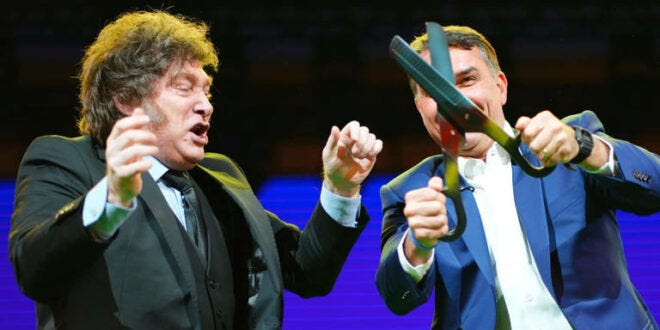
Flávio Bolsonaro fled Brazil on a plane belonging to the fleet of Argentine company Baires Fly, a firm linked to a businessman associated with a convicted drug trafficking conspirator, according to allegations.
The company, tied to an entrepreneur with business links to Federico “Fred” Machado, who faced drug trafficking charges in the US, is also named in a corruption investigation involving disability agency funds under the administration of Javier Milei.
Fórum Investiga, the investigative unit of Revista Fórum, uncovered these connections through court documents and public records in Argentina and the United States.
Sergio Daniel Mastropietro, a commercial broker for Baires Fly, was a business partner of Machado and currently faces money laundering and illicit association charges in connection with the scandal at Argentina’s National Disability Agency (ANDIS).
The company’s role drew scrutiny after the Argentine government confirmed early Wednesday that Bolsonaro entered the country with his wife and two daughters and boarded a private Baires Fly aircraft bound for Guayaquil, Ecuador.
According to Argentina’s National Directorate of Migration, the family crossed the border via the Tancredo Neves International Bridge between Foz do Iguaçu and Puerto Iguazú on Tuesday at 22:50.
The family boarded the plane at 23:30, and the Gulfstream G400, registered as LV-JQW, took off at 00:22 on Wednesday.
The journey followed an order by Federal Supreme Court Justice Alexandre de Moraes seizing Bolsonaro’s passports and barring him from leaving Brazil.
The drug trafficking link traces back to Argentine aviation businessman Federico Andrés Machado, known as Fred Machado, who was accused in the US of participating in an international ring tied to cocaine trafficking and money laundering.
Machado was a partner with Sergio Mastropietro in SO VAIN S.A., a company formed in 2010 for aviation-related ventures. Argentine investigations also documented shared travels, commercial ties, and common Buenos Aires addresses between the two men.
In February 2021, the US Department of Justice unsealed indictments against eight individuals for their roles in an international conspiracy involving narcotics trafficking, money laundering, and financial fraud.
Machado was among those indicted and was identified as an operator engaged in the purchase and sale of aircraft through his firm, South Aviation.
The investigation encompassed a network utilizing US-registered aircraft, several of which were seized in other nations while carrying large shipments of cocaine.
Machado was extradited from Argentina in November 2025 and subsequently reached a plea agreement with US prosecutors.
In August 2026, a federal court in Texas convicted him of conspiracy to commit money laundering and wire fraud.
The initial drug trafficking charge was dismissed as part of that plea agreement.
Machado’s commercial connection is with Mastropietro rather than directly with Baires Fly. The official owner of the company is Luis Grande, who has operated in Argentina’s private aviation sector for decades.
The other scandal involving Baires Fly centres on ANDIS, the agency responsible for providing assistance to people with disabilities in Argentina.
That inquiry examines allegations of contract steering, overbilling, kickbacks, and money laundering in questionable tenders during the Milei administration.
According to documents from the investigation led by federal prosecutor Franco Picardi, two ANDIS providers, Prolite Orthopedics and Probock, transferred 95.06 million Argentine pesos into a Baires Fly bank account on 10 September 2025. That sum represents approximately $62,000 based on exchange rates from 28 October 2026.
The payments occurred after Mastropietro sent the firm’s banking details to Miguel Ángel Calvete, who was identified as one of the figures behind the fraudulent scheme under investigation.
Following those transfers, invoices were issued for the advance purchase of flight hours on company aircraft.
Investigators suspect these commercial transactions were used to lend an appearance of legality to funds derived from irregular public contracts.
Financial tracking uncovered even larger sums. Documents reviewed by Argentine courts show Baires Fly billed five companies tied to the investigated contracts approximately 1.097 billion pesos, or around $720,000, between 2023 and 2025.
This figure reflects registered commercial transactions; it represents a fully confirmed amount of embezzled funds.
On 16 October, federal judge Ariel Lijo ordered formal charges against Mastropietro on suspicion of aggravated money laundering and illicit association.
The ruling also expanded charges against former ANDIS director and former Milei ally Diego Spagnuolo, alongside others allegedly involved in the conspiracy.
Argentina’s Federal Prosecutor’s Office stated that the probe revealed suspected fraud in contracts for medication, prosthetics, and equipment intended for assistance programme beneficiaries.
The airline maintains business relationships with figures across Argentine politics. In November 2023, days after winning the presidential election, Javier Milei used a Baires Fly plane to travel to the US. Luis Grande, the company’s owner, piloted the flight.
In the ANDIS investigation, Mastropietro denied managing Baires Fly or being formally part of the company, saying he acted only as an intermediary arranging aviation services.
The company maintains that it has no connection to the money laundering allegations.
The documents do not show that Bolsonaro was involved in the ANDIS scheme or in any drug trafficking activity.
There is also no evidence that Fred Machado played any role in arranging the flight.
In the United States, the Trump administration has unveiled its plan to support electoral reforms in Venezuela and lead the country toward presidential elections.
US Secretary of State Marco Rubio told international journalists during a press conference on Monday that Venezuela’s current electoral infrastructure was “designed to rig elections”.
As the chief architect of the administration’s Venezuela policy, Rubio argued that this system must be overhauled quickly to enable a valid vote.
According to Rubio, talks between the government of Interim President Delcy Rodríguez and opposition factions led by Dinorah Figuera are moving toward a concrete timetable.
The sides are preparing to appoint a new Supreme Tribunal of Justice (TSJ) before the end of the year, followed immediately by the renewal of the National Electoral Council (CNE).
“We obviously need to use our leverage over the interim Venezuelan authorities to ensure that the process moves forward responsibly. Our goal is to hold elections,” Rubio said, welcoming what he described as “serious progress” in that direction.
The US secretary issued a warning, saying, “Whoever tries to derail the process will do serious damage to Venezuela.”
Speaking at a separate press briefing, an unnamed senior US Department of State official outlined the step to follow institutional renewal, according to a report by the Venezuelanalysis portal.
According to the official, once both the TSJ and the CNE are reconstituted, the Venezuelan presidency will be declared permanently vacant, triggering a constitutional six-month window to conduct elections under “competitive conditions”.
The same official stressed that political guarantees must be provided and media access rules regulated during this phase.
Advocating the inclusion of pro-government factions in the “transitional period”, the official said peaceful democratic transitions often require the cooperation of outgoing groups, citing Spain and Portugal as precedents.
Electoral timetable and judicial work accelerate
Asked about a definite election date, Rubio said the Rodríguez administration had complied with US timelines so far.
Emphasising that they would not wait two years for an election, Rubio said: “That is not going to happen. In the best-case scenario, I have two years and two months left in this job.”
Rubio’s remarks coincided with statements by Dinorah Figuera, who heads the opposition delegation in the negotiations with government representatives.
Figuera had predicted that presidential elections would take place in late 2027 or early 2028.
Meanwhile, during the third round of political dialogue in Venezuela, the parties agreed to review four pieces of legislation governing political participation, pluralism, and the autonomy of political organisations, including the Law on Political Parties, Public Meetings, and Demonstrations.
The discussions also addressed disqualifications from public office and the examination of legal frameworks governing political rights.
In parallel, Venezuela’s National Assembly officially initiated the process to renew all 32 justices of the Supreme Tribunal of Justice.
Applications from legal professionals seeking seats on the court will be accepted from Wednesday, 28 October until Wednesday, 11 November. The fourth round of dialogue is scheduled for 11 to 15 November.
Rodríguez and other senior Venezuelan officials have not yet commented on the US Department of State’s statements.
Machado’s return and convoy controversy
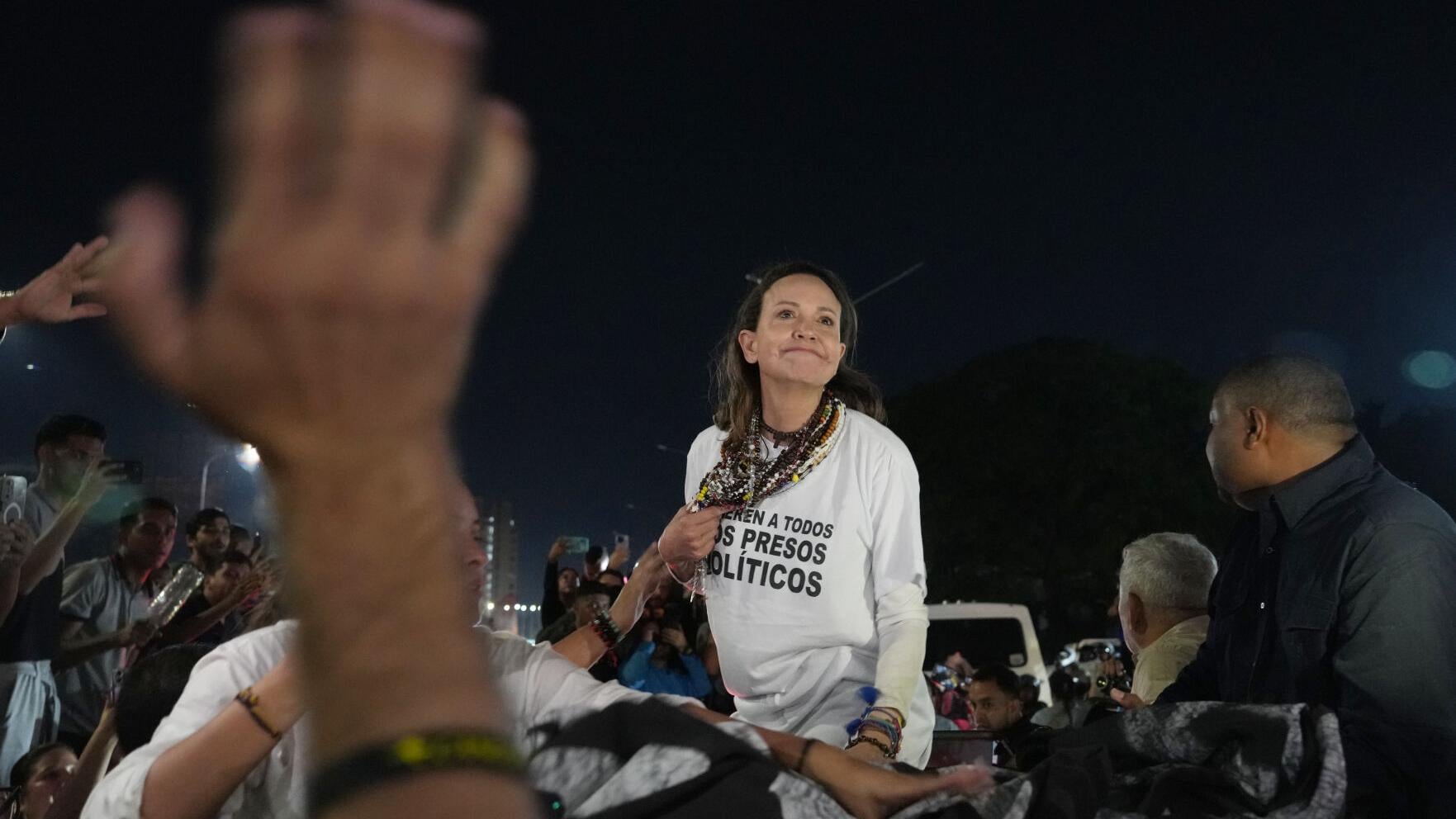
The White House’s assertions regarding Venezuelan reforms and elections coincided with the return of far-right opposition leader María Corina Machado to the country on Sunday.
Supporters of Machado, who had lived abroad for more than a year, called for their leader to be included in the ongoing negotiations.
Responding to questions about Machado’s return, Rubio said he had told the Rodríguez government “weeks ago” that she should be allowed to return to the country unhindered.
Denying claims that Washington obstructed Machado’s return, the Secretary of State said the opposition leader had merely been advised not to travel immediately following the twin earthquakes on 24 June.
Interim President Rodríguez, however, criticised the manner of the opposition politician’s return.
Characterising it as a “show” that could have been avoided, Rodríguez addressed Machado’s journey to Caracas at the head of a vehicular convoy covering 400 kilometres, following her appearance at a church in Lara state amid chants of “freedom” and calls for immediate presidential elections.
“The airports are right there. Let us stop putting on a show. Many people who benefited from this process aimed at peaceful coexistence and from the amnesty law were able to enter the country through the airport’s new transit structures,” Rodríguez said.
The interim president declined to reveal which route Machado had used to re-enter Venezuela.
Machado, who in recent years backed economic sanctions against Venezuela as well as foreign military intervention, left the country in December 2024 to travel to Oslo to receive the Nobel Peace Prize, which she subsequently dedicated as a gift to Trump.
While Machado and her party maintain that the government had previously barred her from returning seven times, Venezuelan authorities deny the allegation.
Asked whether the judiciary would act against Machado, Rodríguez said she hoped to see “remorse and a change of direction” from the opposition figure, adding that the opposition leader could make “some contribution to the country”.
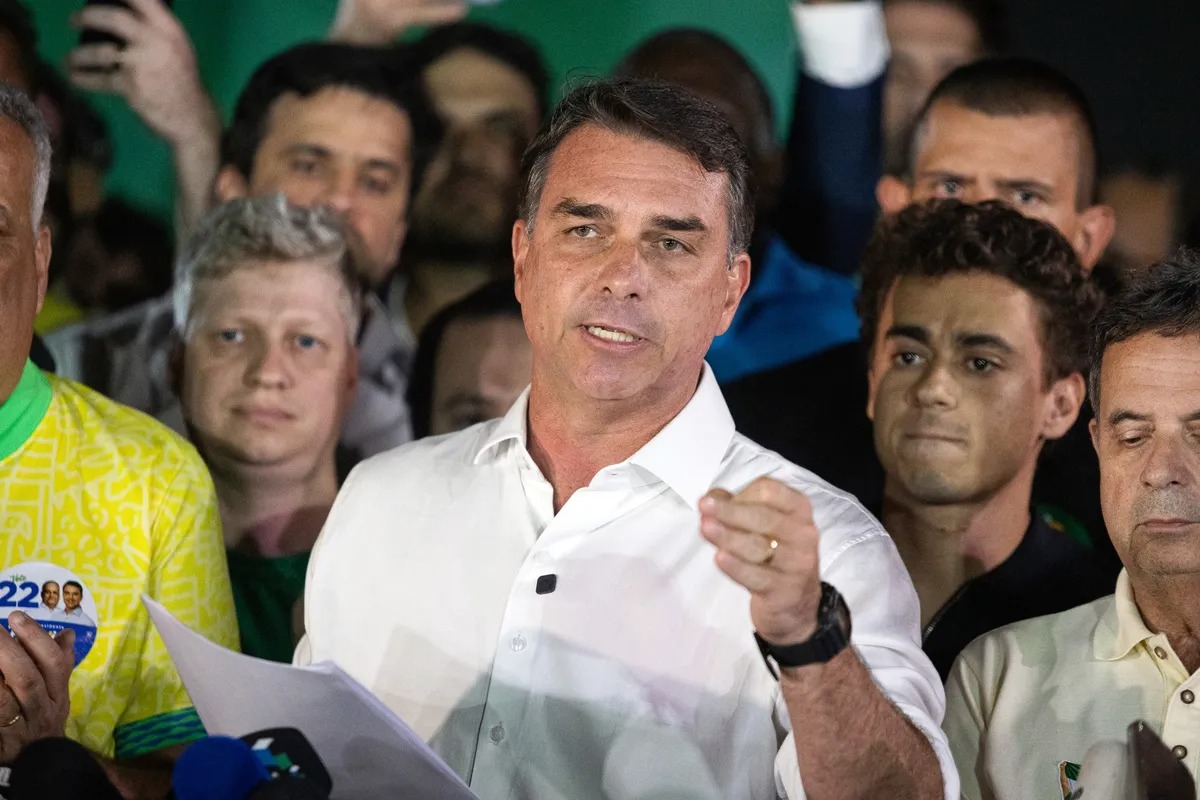
Brazilian Senator Flávio Bolsonaro fled his country following his defeat in the presidential election and arrived in Miami on Tuesday.
According to a report by the O Globo newspaper, Bolsonaro was met upon his arrival in the US by his brother Eduardo.
Eduardo had moved to the US last year to lobby President Donald Trump to assist their father, former President Jair Bolsonaro, who was convicted of plotting a coup, and had lived there ever since.
A senior State Department official said early Tuesday that the US would grant visas to Flávio and his family.
Facing multiple criminal investigations in Brazil, Flávio Bolsonaro had been ordered to surrender his passports to the Federal Police by Tuesday, but failed to do so, according to a police official familiar with the matter.
Supreme Court Justice Alexandre de Moraes, whom the Bolsonaro family has long accused of political persecution, had demanded the surrender of the documents out of concern that the senator was a flight risk.
Bolsonaro’s loss to Luiz Inácio Lula da Silva in Sunday’s runoff election dealt a heavy blow to the family, which had sought to establish a political dynasty in Brazil.
The senator had made the release of his father Jair Bolsonaro, who was sentenced to 27 years in prison for plotting a coup after his 2022 election defeat, the central theme of his campaign.
Speaking to reporters early Wednesday after returning from a campaign trip in Texas, Trump said he would approve Bolsonaro’s entry into the US, though he added that he thought Bolsonaro was in Argentina.
Speaking in Texas on Tuesday afternoon, Trump avoided mentioning Bolsonaro, but repeated his unsubstantiated claims that the Brazilian election was rigged.
After criticizing Democrats as “the biggest election riggers”, Trump added, “Brazil is pretty good at that too.”
The US leader has long been an ally of the Bolsonaro family and had imposed tariffs on Brazilian goods last year in an unsuccessful attempt to help Jair Bolsonaro avoid prosecution in his coup case.
The Trump administration did not officially endorse Bolsonaro’s presidential bid. However, according to The New York Times, the State Department under Secretary of State Marco Rubio had worked behind the scenes ahead of the vote to strengthen Bolsonaro’s standing in Brazil.
On Tuesday morning, neither the police nor allies had any information regarding Flávio Bolsonaro’s whereabouts, after Infobae reported that he had crossed into Argentina and planned to travel to the US from there.
Brazilian police have no official record of Bolsonaro leaving Brazil, and the spokesperson for Argentine President Javier Milei denied that Flávio Bolsonaro had entered the country.
Several Bolsonaro allies told Bloomberg that they had tried to contact him but received no response.
“Fleeing Brazil is a disgraceful act,” Lula said at an event celebrating his 81st birthday.
Bolsonaro faces at least two federal investigations into money laundering allegations, one of which stems from his ties to the former owner of Banco Master SA, who was implicated in the largest bank fraud case in Brazil’s history.
The elder Jair Bolsonaro had also left for the US following his election defeat. He returned months later and was barred from holding public office for eight years for spreading false claims about Brazil’s electronic voting system ahead of the election, before later being convicted of plotting a coup.
On Monday, Flávio Bolsonaro abandoned plans to challenge the election results and posted a social media video stating that the Supreme Court had barred him from leaving Brazil.
Meanwhile, according to sources familiar with the matter who spoke on condition of anonymity to discuss private conversations, Moraes’s decision caused unease among members of the Supreme Court as well as officials in Lula’s government.
According to those sources, the Lula administration had wanted to focus on calming the country and moving past the polarization that flared during back-to-back electoral battles between the leftist leader and a member of the Bolsonaro family.
The administration viewed the move by Moraes, a polarizing justice who presided over Jair Bolsonaro’s case and has long faced censorship accusations from the Brazilian right, as counter to those aims.
Early Tuesday, Supreme Court Justice Flávio Dino ordered federal authorities to investigate possible illegal foreign funding for Bolsonaro’s presidential campaign, including through a group linked to US Vice President JD Vance.
The justice emphasized that the order did not prove illegal foreign funding had taken place, but noted that allegations raised during Brazil’s presidential campaign warranted an investigation.
Speaking at a press conference on Tuesday, Argentine government spokesperson Adrian Ravier said Bolsonaro had not requested asylum in Argentina.

Global dockers strike against war and arms transit to Palestine

Putin proposes Arctic energy cooperation to US to ease gas sanctions

Vučić scrapped plan to hold power after phone warnings, report says

EU scrambles for takers for remaining €21B in SAFE defence loans

Bolsonaro reportedly leaves Brazil on jet linked to scandal-hit firm
-
 America2 weeks ago
How Elon Musk fuses private empire with state power, Ben Tarnoff explains
-
 Europe2 weeks ago
AfD leader Weidel calls funding lost Ukraine war a grave mistake
-
 Middle East2 weeks ago
Egypt delays parliamentary vote on deploying troops to Saudi Arabia
-
 America1 week ago
US wealthy demolish multimillion-dollar mansions for land
-
 Europe1 week ago
EU rejects US proposal to resume Russian gas flows through Ukraine
-

 America1 week ago
At least 47 major US data centre projects halted or cancelled
-
 Middle East1 week ago
Netanyahu unveils security doctrine and regional alliance map
-
 Middle East1 week ago
Netanyahu trails Eisenkot in Israeli polls despite Trump backing
