
Middle East
Pentagon’s top general warns Trump of munitions shortages ahead of potential Iran strike

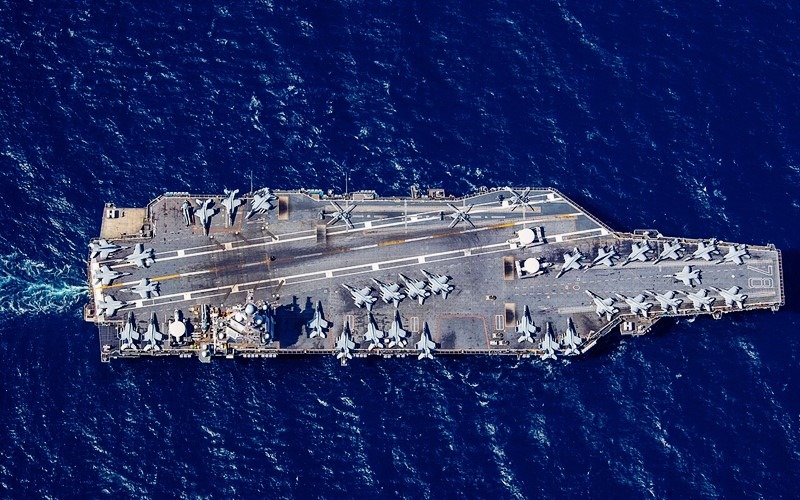
As the Trump administration weighs military options against Tehran, the nation’s highest-ranking military officer has privately warned President Donald Trump and senior officials that critical munitions shortages and a lack of allied support could jeopardize US personnel and the success of any operation.
General Dan Caine, Chairman of the Joint Chiefs of Staff, delivered the sobering assessment during a high-level meeting at the White House last week, according to sources familiar with the discussions. Caine emphasized that the sustained defense of Israel and ongoing military aid to Ukraine have significantly depleted US missile inventories, creating a strategic vacuum that would complicate a large-scale offensive against Iran.
During series of Pentagon briefings this month, Caine reportedly voiced deep anxieties regarding the complexity and sheer scale of a potential campaign. He pointed to the high probability of US casualties and noted that the absence of a broad international coalition would leave Washington to shoulder the operational burden alone.
In a statement, the Chairman’s office noted that, in his capacity as the president’s principal military advisor, Caine “provides a range of military options along with their secondary assessments, implications, and risks to civilian leaders.” The office added that these evaluations are provided in a classified setting. White House spokesperson Anna Kelly stated that Trump “listens to a wide spectrum of views on every issue” and makes decisions based on what is best for US national security, describing Caine as a “talented and highly valued member” of the team.
Following reports of the briefing, Trump took to social media to dismiss assertions that Caine is “opposed to war with Iran.” The president claimed that while the general would prefer to avoid conflict, he believes any such engagement would be a “fight that could be easily won.” However, sources speaking on the condition of anonymity provided a starkly different account of Caine’s warnings, suggesting a level of institutional caution that contrasts with the president’s public optimism.
The Tuesday meeting at the White House included Vice President JD Vance, Secretary of State Marco Rubio, CIA Director John Ratcliffe, Defense Secretary Pete Hegseth, and White House advisor Stephen Miller. Caine’s counsel carries significant weight within the administration, bolstered by his successful oversight of two major recent operations: the summer strikes on Iranian nuclear facilities and the January extraction of Venezuelan leader Nicolás Maduro.
The scope of a military campaign would depend entirely on Trump’s strategic endgame. Neutralizing Iran’s missile program alone would require strikes on hundreds of targets across a geography three times larger than Iraq. According to a former defense official, this list includes mobile launchers, supply depots, air defense batteries, and the logistics networks used to transport hardware.
If the objective shifts toward regime change—the ousting of Supreme Leader Ayatollah Ali Khamenei—the target list would expand into the thousands, encompassing command-and-control centers, security apparatus headquarters, and key government buildings. Such a campaign could last months, require vast quantities of precision-guided munitions, and expose US forces to intensive retaliatory strikes.
While the US has deployed a massive strike force to the region, Trump has acknowledged considering a limited “surgical” strike designed to force Tehran into a nuclear deal on favorable terms. Although Iran has signaled a marginal openness to talks, fundamental disagreements persist over its uranium enrichment capacity. Negotiators from both sides are scheduled to reconvene in Geneva this week.
Some officials remain staunchly opposed to a limited strike, fearing it could trigger an uncontrollable cycle of violence against US diplomatic and military personnel. Proponents of the “limited” approach point to Iran’s historically measured responses to previous US and Israeli actions. Conversely, critics argue that Trump’s open discussion of regime change, coupled with the rising influence of hardliners within the Iranian military, makes a disproportionate and violent response far more likely. Regional allies who met with Trump last week also expressed concern that any attack would permanently scuttle the diplomatic track.
A military move against Iran would further strain ties with regional partners. A senior Gulf official indicated that several Arab nations have informed Washington they will not permit their bases to be used for strikes against Iran. Threats from Tehran to retaliate against any country facilitating a US operation have made neighbors wary of even granting airspace transit rights.
“If Arab countries do not open their airspace, how do we execute this?” asked one former Pentagon official. “How do you hit hundreds, perhaps thousands, of targets across the country without that access?”
The US faces a critical shortage of the very interceptors needed to protect its own troops. The Terminal High Altitude Area Defense (THAAD) and Patriot systems have been utilized at a high tempo in recent regional operations. Patriot missiles, in particular, are in high demand in Ukraine. Ryan Brobst, of the Foundation for Defense of Democracies, noted that the US produces only a few hundred of these interceptors annually—well below the projected needs of a sustained conflict.
The Navy faces a similar “magazine depth” issue with its Standard Missile family. Interceptors like the SM-2, SM-3, and SM-6 have been rapidly expended in the Red Sea against Houthi rebels and in the defense of Israel. Mackenzie Eaglen of the American Enterprise Institute warned that due to complex manufacturing requirements, replacing these sophisticated missiles can take two years or longer.
Katherine Thompson, a recently departed Pentagon official, warned that the US is not currently structured to finance or sustain simultaneous high-intensity conflicts. A protracted war with Iran would require severe trade-offs in other theaters of higher priority.
While the US has executed its largest military buildup in the Middle East since the 2003 invasion of Iraq, the situation remains a volatile stalemate. On Monday, the US ordered the departure of non-essential personnel and families from its embassy in Lebanon. As tensions peak, Trump’s Special Representative Steve Witkoff questioned why Iran has not yet succumbed to the pressure of military threats. Iranian Foreign Minister Abbas Araghchi replied via social media: “You wonder why we don’t surrender? Because we are Iranians.”








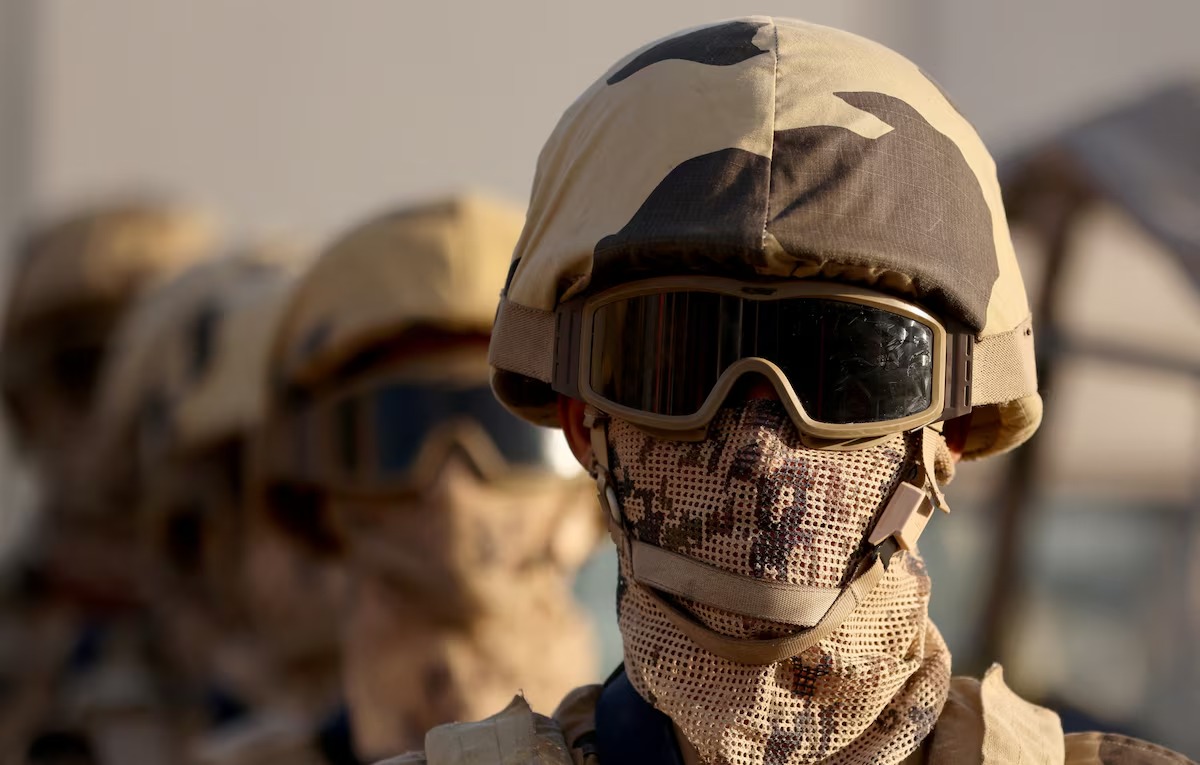
The US State Department stated that it has waived human rights conditions on more than $300 million in military aid to Egypt.
The statement emphasised that this decision was taken in consideration of Cairo’s “helpful role” since the outbreak of the war against Iran.
Egypt began receiving substantial support from the US after signing a peace treaty with Israel in 1979.
Since the late 1980s, the country has received approximately $1.3 billion annually in US military assistance.
A portion of this aid is subject to conditions related to human rights and democracy, which can be waived on national security grounds.
Withholding funds, including during the administration of former US President Joe Biden, has caused tension between Cairo and Washington in the past.
A letter dated 21 September and addressed to various congressional committees, obtained by Reuters, stated that Secretary of State Marco Rubio “decided to waive the certification requirement under the fiscal year 2025 Foreign Military Financing programme for Egypt of $320 million.”
This waiver was subsequently confirmed by the State Department.
An accompanying memorandum justifying the decision stated that this portion of military aid was “essential for counterterrorism, border security, or non-proliferation programmes, or otherwise important to the national security interests of the United States.”
The memorandum, dated 4 September and bearing Rubio’s signature, stated: “Exercising this waiver authority is critical to the US-Egypt relationship and to US national security priorities, particularly given the helpful role Egypt has played in the aftermath of Operation Epic Fury.”
“Operation Epic Fury” is the designation used by the US military for the campaign launched jointly with Israel against Iran in late February.
The State Department memorandum, whose authenticity was confirmed by two sources in Washington familiar with the letter, did not provide detailed information regarding what was termed Egypt’s “helpful role”.
The State Department’s annual decision on military aid to Egypt typically covers funds allocated for the preceding fiscal year, which ends on 30 September.
A State Department spokesperson stated that Rubio waived the certification in the interest of US national security and that the US continues to cooperate with the Egyptian government across a range of issues.
In an emailed statement, the spokesperson said: “This waiver recognizes the importance of maintaining security cooperation with Egypt at a time of significant security challenges in the region.”
The Egyptian Ministry of Foreign Affairs did not immediately comment on the matter.
The spillover effects of the Iran war have imposed a heavy toll on US security partners, including Egypt.
Owing to rising fuel prices and other disruptions, the Egyptian economy is passing through a difficult period.
Under the Biden administration, the US withheld portions of the annual military allocation on multiple occasions over Egypt’s human rights record.
In 2024, following the Hamas-led 7 October attack on Israel and the subsequent war in Gaza, the Biden administration set aside human rights conditions, disbursing the entire $1.3 billion allocation to Egypt for the first time in its tenure.
Human rights organisations have long accused Egypt, under the administration of President Abdel Fattah al-Sisi, of widespread human rights abuses, including torture and enforced disappearances.
This week, Egyptian police detained six journalists from a fact-checking and investigative media outlet, accusing them of spreading false information on behalf of the banned Muslim Brotherhood.
Egyptian authorities state that they have taken steps to address human rights issues. Sisi said stability is paramount and that the government supports human rights by working to provide for basic needs.
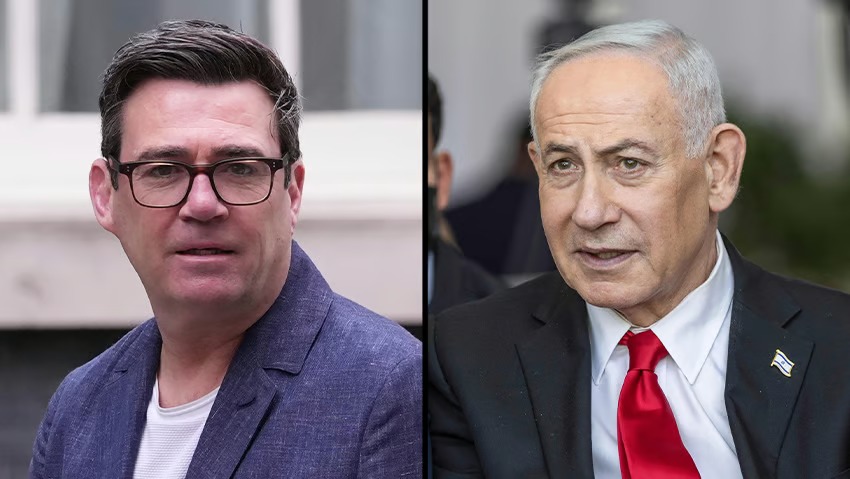
Britain has significantly broadened its military export restrictions targeting Israel, suspending or rejecting more than 80 licences for items the IDF could use in Gaza.
This figure is nearly triple the number affected when the policy was first introduced in September 2024.
United Kingdom Minister of State for the Middle East Stephen Doughty said that as part of what he described as a “tighter system” for assessing exports to Israel, more than 50 further export applications have been refused since approximately 30 licences were initially suspended.
Under the initial decision taken in September 2024, 30 of roughly 350 licences were suspended after the British government concluded there was a “clear risk” that certain military exports could be used to commit or facilitate serious violations of international humanitarian law in Gaza.
The affected equipment included components for military aircraft, drones, naval systems, and targeting gear.
Doughty said additional measures adopted this month established what he termed a “double safeguard” mechanism within the approvals process.
Export applications must now be assessed both against existing international humanitarian law criteria and in light of Britain’s position on the legality of Israel’s presence in the Palestinian territories.
“We have so far suspended or refused more than 80 licences,” Doughty said, adding that he had personally examined each licence.
Despite the wider restrictions, British-origin parts entering the international F-35 fighter jet supply chain continue to be largely exempt.
The UK government argues that preventing British-made components from entering the global F-35 pool could undermine the programme as a whole and have serious consequences for the security of the UK and its allies.
Direct exports of F-35 parts intended specifically for Israel remain suspended.
Doughty defended maintaining the supply of components via the international programme, arguing that halting it could have severe ramifications for the broader European and allied security architecture.
Foreign Affairs Committee Chair Emily Thornberry challenged this position, arguing that the issue was political rather than purely legal.
Thornberry suggested adopting an approach similar to the Dutch model, under which components entering the international supply chain could be flagged as “not intended for aircraft bound for Israel”.
The initial suspension was implemented in September 2024 by then Foreign Secretary David Lammy.
Lammy stressed at the time that the measure did not constitute an arms embargo and applied solely to items assessed as usable in military operations in Gaza.
Since then, the policy has been tightened further under Prime Minister Andy Burnham.
The expanded export restrictions follow the Burnham government’s adoption of a more confrontational policy toward the Israeli government.
Foreign Secretary Ed Miliband drew sustained applause at the Labour Party’s annual conference in Liverpool after delivering a sharp critique of the Netanyahu government’s policies and defending the decision to ban trade with Israeli settlements in the West Bank.
Accusing Israel of committing war crimes in Gaza, Miliband stated that the British government heard public outrage over the conflict, telling delegates: “We hear you. You were right.”
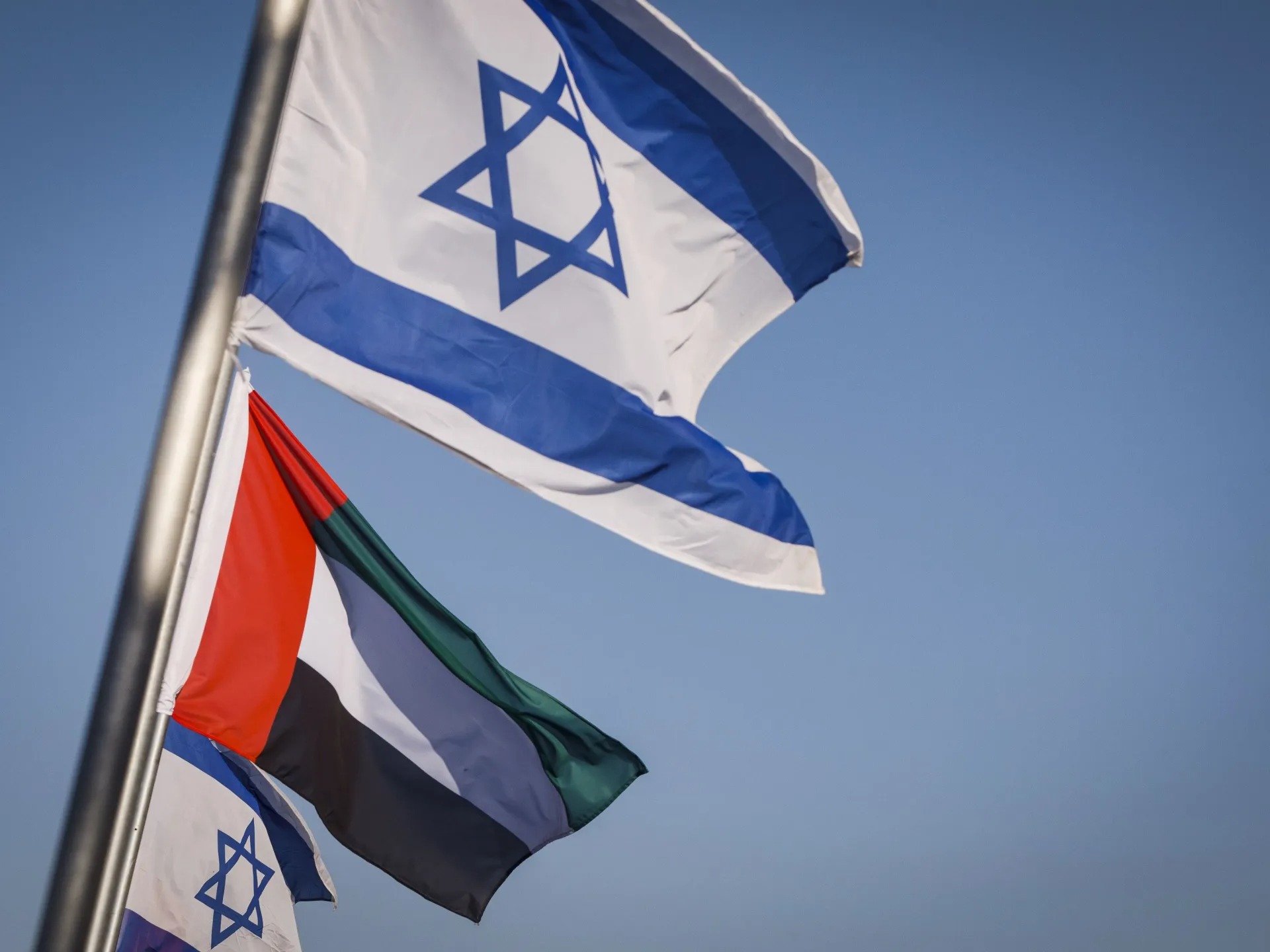
Israeli Prime Minister Benjamin Netanyahu met with representatives of Gulf and Arab nations that lack diplomatic ties with Israel, including Saudi Arabia, during his weekend visit to the United Arab Emirates.
Sources close to the gathering told the Israeli newspaper Yedioth Ahronoth on Monday that representatives from Morocco, Libya, Jordan, and Qatar also took part in the meeting.
Netanyahu made a unannounced visit to Abu Dhabi on Sunday, where he met with the country’s leader, Mohammed bin Zayed Al Nahyan.
According to Israeli media, this marked the first time the United Arab Emirates officially confirmed a visit by Netanyahu.
The meeting was arranged by Mossad Director Roman Goffman “at the request of Saudi Arabia, which asked for Israel’s assistance against Houthi attacks in the Red Sea region,” according to Yedioth Ahronoth.
The discussions addressed Iran and the Houthi militia. The newspaper added that the Arab states heard from Israel that “Israel is prepared to assist countries in the region with air defence systems, just as it aided the UAE during the conflict with Iran.”
Conflict in Yemen intensified in September when Ansarullah militiamen launched a rapid offensive that seized Yemen’s entire Red Sea coastline, including the vital maritime corridor of the Bab el-Mandeb Strait.
The Yemeni resistance also imposed a blockade on Saudi Arabia’s energy exports and staged multiple attacks against the kingdom.
Saudi Arabia reportedly sought military assistance from the US to counter Ansarullah.
Washington declined to attack the Houthis directly, but announced that it would provide intelligence and targeting support.
Reporting on the same visit, The Jerusalem Post said Netanyahu spent six hours in the UAE and that the principal subject of his discussions with MBZ was Iran.
Citing sources familiar with the matter, the newspaper added that the trip came “after Netanyahu exerted heavy pressure on the United Arab Emirates to arrange a meeting ahead of the Israeli elections on 27 October.”
Separately, the Associated Press, citing a person with direct knowledge of the meeting, reported that Netanyahu’s visit to the UAE was arranged in part to ask MBZ to deny reports that he had warned the Israeli prime minister of an impending Hamas threat prior to 7 October 2023.
According to Israeli media, Netanyahu’s office denied the AP report, issuing the following statement:
“Fake news. The visit focused solely on strengthening ties between the two countries and on regional issues.”

We are no longer in 1992, the US has lost its military superiority, Ret. Lt. Col. Davis says

Germany expands North Sea military ports and plans new naval base

Musk appointed co-director of Pentagon future warfare initiative

US waives human rights terms on $320m military aid to Egypt

Putin says Russia did not start war and warns of nuclear risks
-

 Europe5 days ago
European unions urge governments to scrap all Palantir deals
-

 Diplomacy5 days ago
East-West Forum in Istanbul highlights irreversible shift to multipolarity
-

 Europe1 week ago
Emmanuel Todd says West faces collapse amid Ukraine and Iran crises
-
 Europe1 week ago
European intelligence chiefs divide over risk of Russian attack
-

 Diplomacy1 week ago
East-West Forum in Istanbul to debate multipolarity and global order
-
 Middle East1 week ago
Sharaa says 7 October must not shape Israel policy on Syria
-
 America1 week ago
Republican support for Trump’s war with Iran drops sharply in polls
-
 Middle East1 week ago
Palestinian factions confront legitimacy crisis at Istanbul talks
