
Russia
Russian defense minister calls for urgent nuclear test preparations

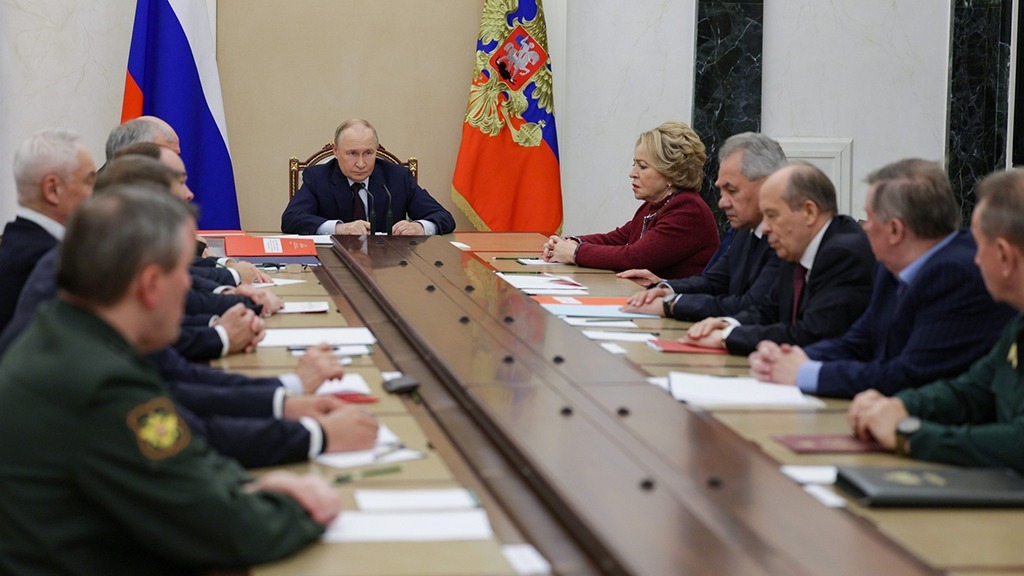
Russian President Vladimir Putin held a working meeting yesterday with the permanent members of the Security Council.
Although the main agenda of the meeting was a presentation on transportation security by Transport Minister Andrey Nikitin, Vyacheslav Volodin, the Chairman of the State Duma, the lower house of the Russian parliament, asked Putin an off-agenda question.
Volodin asked what steps Moscow would take regarding US President Donald Trump’s plans to resume nuclear weapons testing.
Off-agenda question from the Duma chairman
Duma Chairman Volodin stated that US President Donald Trump had announced plans to resume nuclear tests, expressing the concern of Russian parliamentarians over the situation.
“What steps and actions will be taken on our part?” Volodin asked.
In response to Volodin, who stressed that the issue was “extremely important,” Putin acknowledged that the “problem is serious” and gave the floor to Defense Minister Andrey Belousov, who had a prepared report.
US nuclear moves
Russian Defense Minister Andrey Belousov said that the concrete actions of the US should be evaluated rather than the statements of political actors.
Belousov listed five steps taken by the Washington administration in this direction:
The White House has withdrawn from arms reduction and limitation treaties such as the Anti-Ballistic Missile Treaty, the Intermediate-Range Nuclear Forces Treaty, and the Open Skies Treaty. Belousov stated, “The possible withdrawal of the US from the moratorium on nuclear testing could be a very logical step by Washington towards destroying the global strategic stability system in the world.”
The US is modernizing its strategic offensive weapons. New systems are being developed, such as the Sentinel intercontinental ballistic missile with a new nuclear warhead and the B-21 Raider heavy bomber.
Washington is conducting the “Golden Horde” program, which aims to destroy Russian and Chinese missiles before they are launched.
The US military will incorporate the Dark Eagle hypersonic long-range weapon, with a range of 5,500 kilometers, into its inventory by the end of this year. Belousov noted that this system is planned for deployment in Europe and the Asia-Pacific region, which would reduce the time to reach targets in central Russia to as little as seven minutes.
The US is conducting exercises with its strategic offensive forces. Belousov claimed that during one of the recent exercises, Global Thunder, American forces worked on a scenario of preemptive nuclear missile strikes against Russia.
For these reasons, Defense Minister Belousov stated that he deemed it appropriate to immediately begin preparations for full-scale nuclear tests. The minister added that the current condition of the test site at Novaya Zemlya allows for such tests to be conducted in a short time.
Chief of the General Staff: We must not lose time
Chief of the Russian General Staff Valery Gerasimov said that the White House’s lack of an official comment on Trump’s statement does not mean that preparations for nuclear tests have not begun.
“If we do not take the necessary measures now, we will lose time and opportunity to respond to the actions of the US in a timely manner,” Gerasimov stated.
Gerasimov noted that the preparation time for nuclear tests could vary from a few months to several years, depending on the type of test.
According to the chief of the general staff, statements by some high-ranking American officials indicate Washington’s “intention” to conduct and prepare for nuclear tests.
Diplomats’ initiative proves fruitless
Director of the Foreign Intelligence Service (SVR) Sergey Naryshkin, citing information received from Russia’s Ambassador to Washington Aleksandr Darchiyev, reported that Russian diplomats had made inquiries with the US National Security Council and the Department of State but were “avoided from receiving a concrete answer.”
Representatives from the White House and the Department of State informed Moscow that they would convey the information to “higher authorities” and would contact them “to provide clarification on the issues raised by the Russian diplomats if deemed necessary.”
Director of the Federal Security Service (FSB) Aleksandr Bortnikov requested that the agency be given time to study Washington’s plans.
Putin’s instructions to institutions
After listening to the reports, President Putin instructed the Ministry of Defense, the Ministry of Foreign Affairs, intelligence agencies, and civilian institutions to “do everything to gather additional information on these issues, conduct an analysis on the Security Council platform, and present coordinated proposals for the preparation of nuclear weapons.”
Later, Kremlin Spokesman Dmitry Peskov clarified that Putin had requested a study of the feasibility of nuclear tests, not their preparation.
Putin also emphasized that if the US or any other country party to the Comprehensive Nuclear-Test-Ban Treaty (CTBT) conducts a nuclear test, Russia will “respond adequately.”
Putin stated that Russia has always scrupulously adhered to its commitments under this treaty and has no plans to abandon them.
“In my 2023 address to the Federal Assembly, I said that if the US or other participating states of the treaty conduct such tests, Russia must also take adequate responsive steps accordingly,” Putin said.
Security Council Secretary Sergey Shoigu recalled that US Secretary of Defense Pete Hegseth said they would carry out Trump’s order to resume nuclear tests, and Vice President J.D. Vance also spoke of the need to test the nuclear arsenal.
On the other hand, Shoigu pointed to the words of US Secretary of Energy Chris Wright, who is responsible for such tests, stating that the tests would involve new systems and be conducted as “non-nuclear explosions.”
“Based on the analysis of all these statements and announcements, we do not fully understand the subsequent actions and steps of the US regarding whether or not to conduct nuclear weapons tests,” Shoigu concluded.













Russia has announced that it will ship 500,000 tonnes of diesel fuel to the global market under a partial lifting of its diesel export ban, enacted as part of measures concerning the Ukraine crisis and energy markets.
A statement from the Russian government said the decision was implemented in accordance with understandings reached between Russian President Vladimir Putin and US President Donald Trump.
Under the decision, which came into effect on 10 October, an initial phase of 500,000 tonnes of diesel fuel will be supplied to the global market.
“Following the rescinded decision, Russian oil companies, in coordination with the government, will immediately begin signing diesel fuel supply contracts with foreign business partners,” the government statement said.
Assessing the matter, Deputy Prime Minister Aleksandr Novak stressed that the decision would not affect the interests of Russian consumers.
Noting that diesel fuel is produced from Russian crude at domestic refineries, Novak stated that production volumes are sufficient both to meet all domestic market requirements in full and to ship the specified quantities to the global market.
The ban on diesel fuel exports in Russia was initially put into effect on 31 January 2026, covering only non-producing companies.
The government tightened the restrictions on 9 July by expanding them to include direct producers. Previously announced to remain in place until the end of October, the ban was partially relaxed in light of current developments.
Vladimir Putin and Donald Trump held a telephone conversation on 9 October. Following the call, US President Trump announced that an agreement had been reached on the supply of Russian diesel.
Trump said Russia had agreed to send more than 300,000 tonnes of fuel to American and global markets in the initial phase, 500,000 tonnes in November, and 1 million tonnes thereafter.
Trump also stated that an additional shipment of 3 million tonnes could follow at a later stage, adding that they expect this agreement to reduce diesel fuel prices rapidly.
Following the conversation, the US Department of the Treasury, on Trump’s instructions, issued a temporary general licence exempting Russian diesel fuel transactions and shipments to the US—previously prohibited under sanctions—until 7 April 2027.
Putin, in a statement after the call, confirmed Russia’s readiness to supply crude oil and petroleum products to American and global markets, noting that this would have a positive impact on the world economy.
Putin also noted that the two leaders discussed prospects for resolving the conflict in Ukraine, the situation surrounding Iran, and bilateral relations, agreeing to maintain contacts through presidential envoys, intelligence agencies, and other institutions.
A statement issued by Novak’s office after the call said Russia was prepared to ship diesel to the US within October.
Novak stated that export volumes could be increased in November and December as refineries emerge from scheduled maintenance.
Novak also conveyed that Moscow views positively Washington’s steps towards stabilising the global energy market and normalising energy trade.
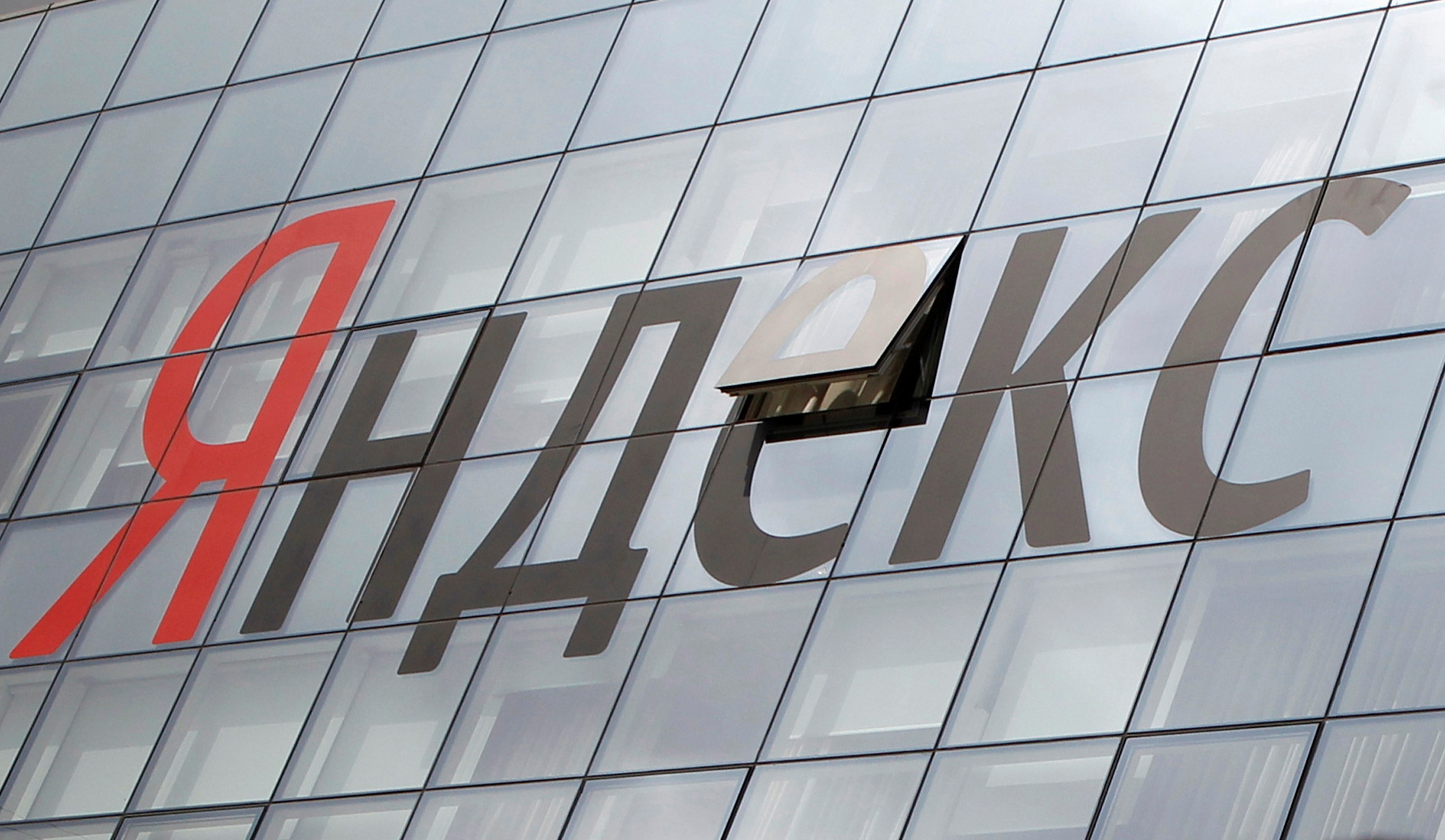
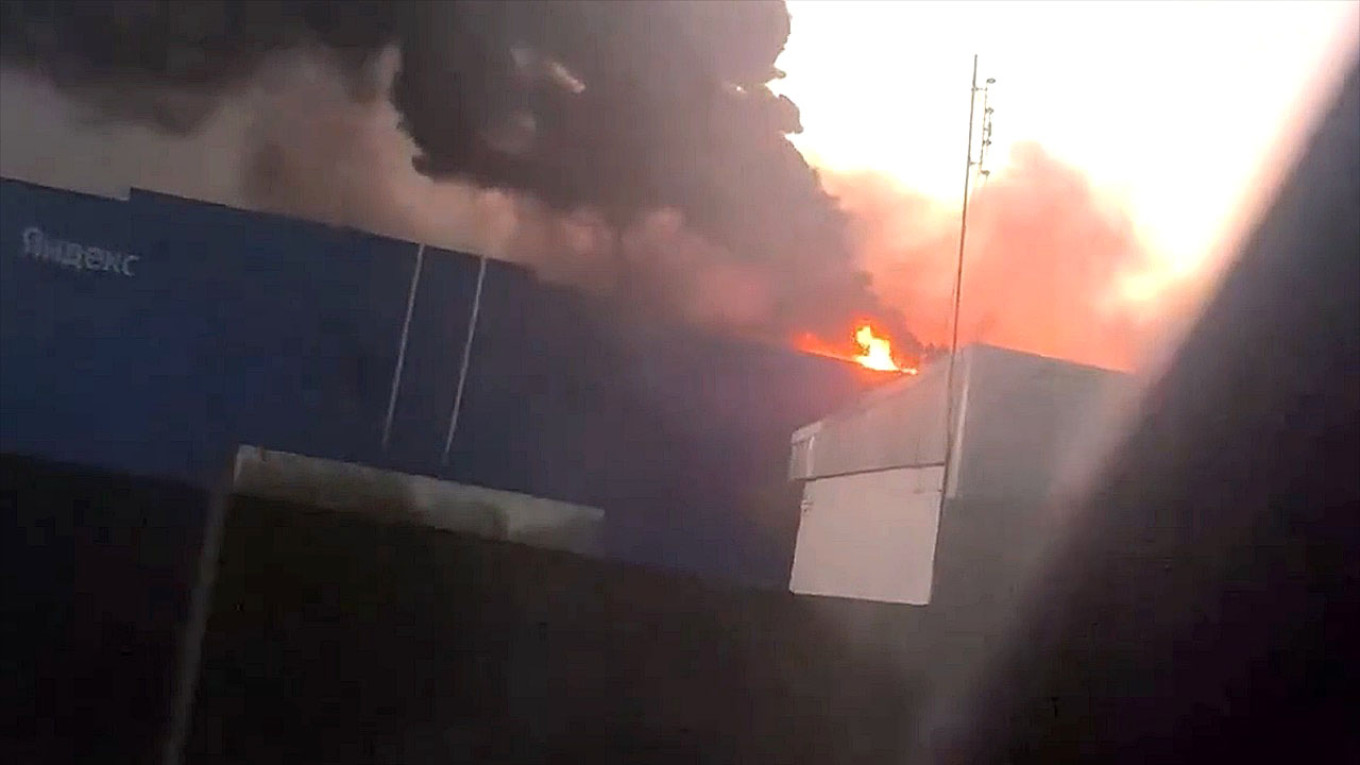
A drone strike has hit a data centre belonging to Russian internet company Yandex in the town of Sasovo, located in the Ryazan region.
The company announced that a fire triggered by the attack damaged part of the infrastructure and resulted in a complete shutdown of the facility’s operations. No casualties or injuries were reported in the incident.
In a statement, Yandex said competent authorities and relevant teams were working at the scene to remediate the damage.
Owing to the facility being knocked offline, it was noted that some of the company’s online services might temporarily become inaccessible to users.
The company provided no details regarding the financial scale of the damage or when the data centre would be brought back into service.
Shares slide, cloud infrastructure curbs introduced
Following the developments, Yandex shares fell by more than 3.4% as of 10:10 Türkiye time.
A drone threat alert was reportedly communicated to residents of the Ryazan region at 23:48 on the night of 7 October, with the alarm lifted at 02:46 on the morning of 8 October. The facility in Sasovo had commenced operations in 2014.
In an advisory issued via the Yandex Cloud Alerts channel, it was reported that power issues were occurring in the system’s “ru-central1-b” availability zone.
The company stated that efforts to transfer data workloads to other availability zones had been completed and that services in other zones continued to operate normally.
However, it was noted that temporary restrictions could be imposed on the creation of new resources within the cloud infrastructure. According to data from outage-monitoring platform Downdetector, an increase in user complaints concerning Yandex, Yandex Cloud, and the real estate platform CIAN was recorded on the morning of 8 October. Reports were observed to have originated predominantly from Moscow and surrounding regions.
Data centre targeted for first time after logistics warehouses
Whether the attack directly targeted the data centre remains unconfirmed. Nevertheless, as of 8 October, this went on record as the first drone strike directed at data centres in Russia.
Beginning in the summer months of 2026, warehouses belonging to Russia’s leading e-commerce platforms had faced drone attacks.
Fires at several warehouses owned by the company Wildberries caused hundreds of billions of roubles in losses for sellers, after which logistics centres belonging to the company Ozon were also targeted.
Both companies amended their contractual terms, shifting liability for damages arising from attacks onto sellers.
Yandex facilities had previously experienced a widespread outage on 30 March 2025 due to a transformer failure, which temporarily disabled services including Yandex Cloud, Yandex Music, and Yandex Lavka.

Senior officials from Russia and the US have reportedly discussed involving an American investor in the Nord Stream natural gas pipelines.
According to a report by the Reuters news agency based on five sources, those taking part in contacts included Kirill Dmitriyev, head of the Russian Direct Investment Fund (RDIF) and the Russian president’s special representative for investment and economic cooperation with foreign states, and Jared Kushner, son-in-law of the US leader.
Two sources providing information on the scope of the discussions said that while it remains unclear how detailed the consideration of the Nord Stream topic was, the matter nevertheless remains on the agenda.
Kushner reportedly views business-oriented cooperation as an instrument in initiatives aimed at ending the war in Ukraine.
A potential agreement could reportedly offer US investors an opportunity to profit from energy shipments to Europe once the war ends.
White House states no recent contacts have taken place
A White House official told Reuters that no negotiations regarding Nord Stream have been conducted recently.
The official emphasised that any agreement with Russia would require approval from the US International Development Finance Corporation (DFC) and the US Department of the Treasury, adding that such steps must yield benefits for US taxpayers and companies.
Another US official described reaching an understanding in the medium term as unlikely due to existing obstacles.
The natural gas pipelines are subject to US and European Union sanctions. A spokesperson for the German Federal Ministry for Economic Affairs and Energy stated that the approval of the German federal government is mandatory for the pipelines to be brought back into service, adding that the Berlin administration does not support such a step.
The spokesperson also recalled that Germany has secured alternative supplies to Russian gas.
The ownership structure of Nord Stream also features among the issues complicating the ground for negotiations.
In the consortium operating the project, Russian energy giant Gazprom holds a 51% stake, while the combined share of two German partners stands at 31%.
The remaining shares are held by France- and Netherlands-based companies.
A source speaking to the agency stated that the German partners wish to retain their stakes in order to preserve their influence in the project should Gazprom’s shares be sold.
What had American investor Lynch proposed?
The concept of involving a US financier in the Nord Stream projects had also surfaced in 2024.
American investor Stephen Lynch, founder of Monte Valle Partners, who conducted commercial activities in Russia for 20 years, had applied to the US administration for a licence allowing him to bid if the Nord Stream 2 pipeline were put up for auction.
Lynch described this potential move as an opportunity to keep Europe’s energy supply under control until the fossil-fuel era ends, as well as leverage against Russia in peace negotiations.
The Alternative for Germany (AfD) party described the possibility of transferring the pipeline to Lynch as an illustration of the German government’s irrational policy.
Separately, The New York Times (NYT) reported earlier this month that Ukraine-related contacts between Russia and the US were expanding to include a multi-billion-dollar oil deal covering Lukoil’s foreign assets.
The assets in question included Lukoil’s refineries in Eastern Europe as well as filling stations in the US.
NYT sources reported that discussions in this framework were also addressed during a meeting between Russian President Vladimir Putin, Steven Witkoff, and Kushner.
The sabotage of the Nord Stream pipelines took place in September 2022, with three of the four lines damaged by explosions.
One string of the Nord Stream 2 pipeline, which had not yet been commissioned at the time, remained intact.
The Federal Security Service of the Russian Federation (FSB) classified the incident as an act of international terrorism, while Putin claimed that “Anglo-Saxons” were behind the attack.
In investigations into the incident, judicial proceedings were pursued against several Ukrainian citizens, including professional diver Vladimir Juravlyov, suspected of planting explosives off the island of Bornholm, and Sergey Kuznetsov, who allegedly skippered the yacht Andromeda.

Ex-BND head Hanning tied to former Mossad chief amid spy inquiry

Iran war costs US economy $265 billion as household burden mounts

Trump dismisses US envoy to Greece Kimberly Guilfoyle

Most EU citizens reject fast-track Ukraine accession, poll finds

Ex-US official says air defences fail against Yemeni airport strike
-

 Europe2 weeks ago
German interior ministers drop unanimity rule to counter AfD veto
-

 Europe2 weeks ago
Key European allies excluded from US-led NATO meeting in Poland
-

 Diplomacy2 weeks ago
While the West breeds crises, Eurasia weaves peace and development, says Prof. Zhang Weiwei
-

 Middle East2 weeks ago
Netanyahu holds secret UAE talks with Saudi Arabia and Arab officials
-

 Diplomacy2 weeks ago
The European Union’s peace project has collapsed, MEP von der Schulenburg says
-
 America2 weeks ago
Musk appointed co-director of Pentagon future warfare initiative
-

 Opinion2 weeks ago
A new world in the East, old dogmas in the West
-
 Asia2 weeks ago
South Korea plans $120B spend on eight US nuclear power plants
